Dr. Stan van der Burght is an Assistant Professor at the Leiden University Centre for Linguistics within Leiden University's Faculty of Humanities. His research focuses on sentence processing and production through neurolinguistic and psycholinguistic lenses, particularly examining prosody's role in communication. Academic Affiliation: Leiden University Centre for Linguistics (LUCL) Collaboration: Psychology of Language department at Max Planck Institute for Psycholinguistics (Nijmegen) Research Interests: Stan investigates how speakers encode prosodic cues (intonation, loudness, duration) during production and how listeners process these cues for sentence comprehension. His work bridges behavioral experiments with neuroimaging techniques to unravel mechanisms of prosody perception and production. Scientific Awards: NWO Veni Grant (2025) for innovative intonation research Publication Trends: Recent studies focus on EEG-based MVPA for stress pattern decoding, speech prosody analysis, and cognitive timing in language production. Keywords span neurolinguistics, cognitive neuroscience, and speech perception.
Leigh Hochberg is the L. Herbert Ballou University Professor of Engineering and Professor of Brain Science at Brown University. He co-directs the Carney Institute for Brain Science and leads the BrainGate clinical trial, focusing on restoring communication and mobility for individuals with paralysis through brain-computer interfaces (BCIs) and neurotechnology research. PhD and MD from Emory University (1999) BS in Engineering from Brown University (1990) Research Interests span ALS , paralysis , spinal cord injury , and stroke , with a translational focus on BCI-enabled communication and neuroprosthetic limb control . His work bridges human intracortical neurophysiology and clinical neurorehabilitation . Publication Trends (15 most recent) highlight advancements in invasive BCI systems , neural decoding , and neuroprosthetic control (2015-2022). Key subfields include motor cortex dynamics , seizure prediction , speech decoding , and real-time neural signal processing . Scientific Awards: Israel Brain Technologies International B.R.A.I.N. Prize (2013) CERF Prize in Medical Engineering (2022) Paul B. Magnuson Award (2022) Grants include funding from the NIH BRAIN Initiative, Department of Veterans Affairs, and National Institute on Deafness and Other Communication Disorders. He collaborates extensively with John Donoghue , John Simeral , and David Borton in neurotechnology development. Labs & Teams include the BrainGate consortium and the Warren Alpert Medical School Faculty , integrating engineering , neuroscience , and clinical neurology disciplines.
Professor Jennifer Chandler is a Professor of Law at the Centre for Health Law, Policy and Ethics and is cross-appointed to the Faculty of Medicine at the University of Ottawa, Canada. She holds the Bertram Loeb Research Chair and serves as Vice-Dean of Research for the Faculty of Law. Additionally, she is an Affiliate Investigator at the Bruyère Research Institute in Ottawa. Professor Chandler leads interdisciplinary research at the intersection of law, ethics, neuroscience, and biomedical technologies, with particular focus on neuroethics and organ donation/transplantation policy. Professor Chandler's research spans several critical areas in bioethics and health law. Her work examines the legal and ethical implications of emerging neurotechnologies, including brain-computer interfaces, deep brain stimulation, and cognitive enhancement technologies. She investigates how these technologies challenge existing legal frameworks related to privacy, autonomy, and personhood. In the realm of organ donation and transplantation, she explores ethical and legal issues surrounding death determination, organ allocation policies, and innovative donation procedures. Her scholarship also addresses mental health law, medical assistance in dying, and the application of biomedical technologies in criminal justice contexts. Professor Chandler's recent publications reveal a strong focus on the ethical, legal, and social implications of neurotechnologies. Her work increasingly examines how artificial intelligence intersects with neural interfaces, the legal conceptualization of human-technology integration, and the protection of cognitive liberties. She has made significant contributions to understanding the regulatory frameworks needed for emerging neurotechnologies and has been instrumental in shaping policy discussions around brain-computer interfaces and neurosurgical interventions for psychiatric conditions. Her interdisciplinary approach combines legal scholarship with insights from neuroscience, philosophy, and social sciences to address complex bioethical challenges. 2024 Steven E. Hyman Award for Distinguished Service to the Field of Neuroethics from the International Neuroethics Society Bertram Loeb Research Chair at the University of Ottawa Professor Chandler actively mentors graduate students and postdoctoral fellows working at the intersection of law, neuroscience, and biomedical ethics. She supervises research on topics including the legal conceptualization of advanced prostheses, lived experiences of brain-computer interface users, and ethical implications of neurotechnology. Her research is supported by multiple grants, including ERA-NET Neuron/CIHR funding for the "Hybrid Minds" project investigating intelligent neuroprostheses. She leads the Bertram Loeb Organ & Tissue Donation Institute research stream and participates in numerous policy initiatives including the Canadian Society of Transplantation Ethics Committee and the Pan Canada Neurotechnology Ethics Collaboration. Professor Chandler directs several major research projects including "Hybrid Minds: Experiential, Ethical and Legal Investigation of Intelligent Neuroprostheses," "The Laws of Neurosurgery for Psychiatric Disorders," and studies on Ulysses contracts related to deep brain stimulation. She also leads important work on organ donation after cardiac death, premortem interventions in donation, and the neurophysiology of the dying process. Her collaborative approach brings together clinical experts, policy-makers, and diverse scholars from multiple disciplines to address complex bioethical challenges.
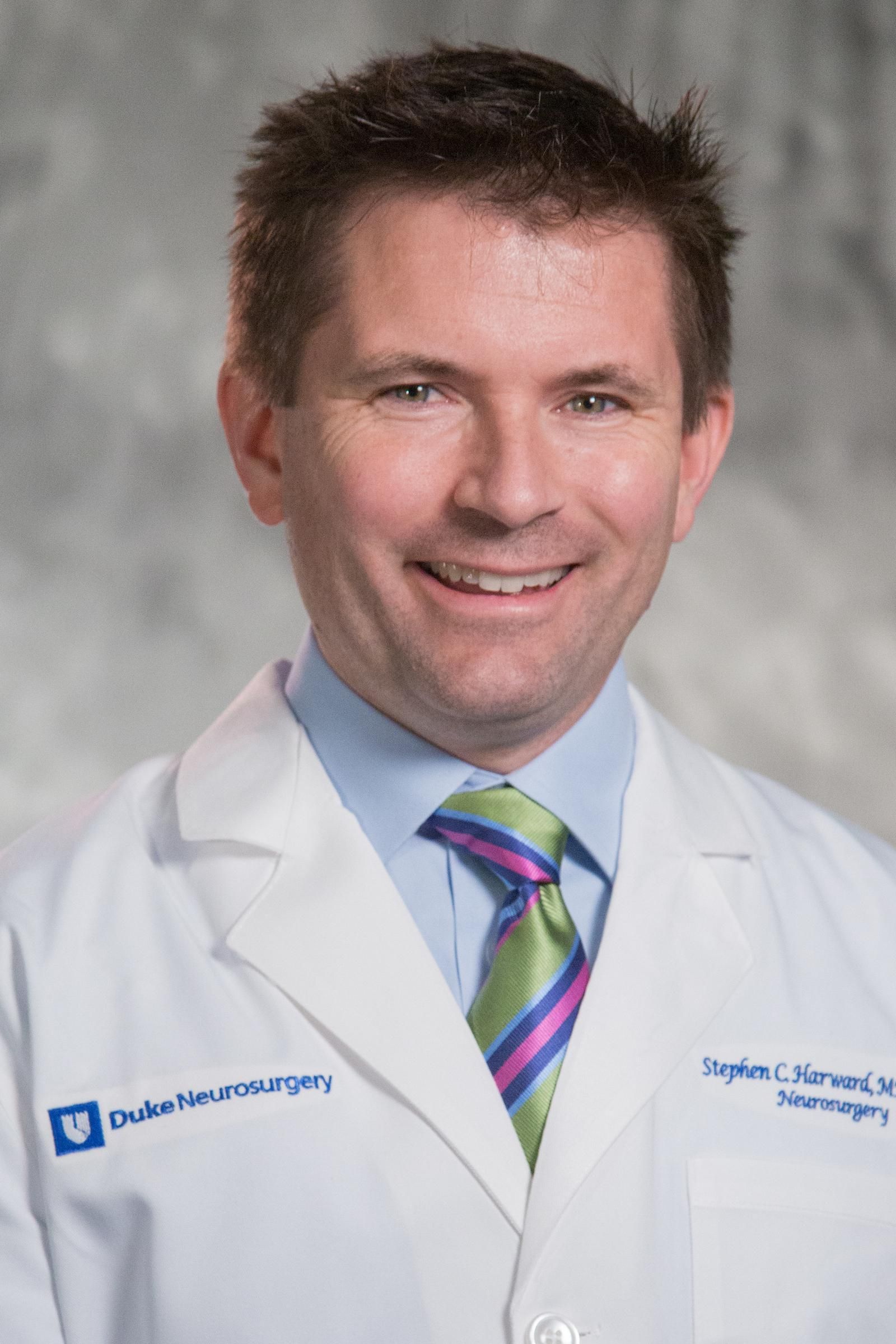
Stephen Harward is an Assistant Professor of Neurosurgery and Neurobiology at Duke University School of Medicine, with clinical and research expertise in advanced neurosurgical interventions. His work focuses on translating innovative technologies like magnetic resonance-guided focused ultrasound into clinical practice for movement disorders and epilepsy. His academic foundation includes: B.A. from Duke University (2006) Ph.D. in Neurobiology from Duke University School of Medicine (2015) M.D. from Duke University School of Medicine (2016) Neurosurgery Residency at Duke University (2016-2023) Dr. Harward's research integrates clinical neurosurgery with basic neuroscience , specializing in focused ultrasound applications for essential tremor and epilepsy, neuromodulation techniques for psychiatric conditions, and molecular mechanisms of synaptic plasticity. His lab employs cutting-edge approaches including high-resolution neural recording and tractography to refine surgical targeting and develop non-invasive therapies. Analysis of his publication trajectory reveals accelerating contributions to focused ultrasound methodology (40% of recent work), with growing emphasis on pediatric applications and neuropsychiatric indications. His team consistently bridges engineering innovations with clinical implementation, particularly in optimizing perioperative protocols for complex cases. Current research support includes: Neurobiology Training Program (2024-2029) Medical Scientist Training Program (2022-2027) Prior funding for synaptic plasticity (2013-2016) and TrkB receptor studies (2012-2015) He mentors students through NEUROSCI 493 independent study courses and collaborates extensively with Duke's Neurosurgery, Neurobiology, and Radiology departments on translational projects targeting neurological disease mechanisms.
Derek Southwell is an Associate Professor of Neurosurgery, Associate Professor in Pathology, and Associate Professor in Neurology at Duke University, with additional appointments as Assistant Professor of Cell Biology and Assistant Research Professor in Neurobiology. He is a Faculty Network Member of the Duke Institute for Brain Sciences and an Affiliate of the Duke Regeneration Center. His education includes a B.S. from MIT, M.D. and Ph.D. from UCSF, and residencies at Stanford and UCSF. His research focuses on cortical inhibitory circuits, epilepsy, and movement disorders. Key interests include understanding inhibitory circuit design in humans and mice, and advancing interneuron transplantation for neural repair. Recent publications emphasize neural engineering, cell-based therapies, epilepsy interventions, and surgical innovations. Recent scientific awards include the Holland-Trice Scholarship (2022), Translating Duke Health Scholar (2018), and Whitehead Scholar (2018). He directs grants such as the NIH-funded study of inhibitory interneurons for epilepsy treatment (2024-2039) and leads the Neurobiology Training Program (2024-2029).
Pushpak Bhattacharyya is a distinguished Professor in the Department of Computer Science and Engineering at the Indian Institute of Technology (IIT) Bombay. He holds the prestigious title of Abdul Kalam National Fellow and is a Fellow of the National Academy of Engineering (FNAE). His academic leadership extends to roles such as Professor Incharge of the IIT Bombay-Monash Australia Academy and Chairman of the MEITY Committee for Indian Language Standards. Professor Bhattacharyya's research spans multiple domains within computational linguistics and artificial intelligence. His work focuses on Natural Language Processing, Computational Linguistics, Machine Learning, Sarcasm Detection, Sentiment Analysis, Multilingual Processing, and Cognitive NLP. He has made significant contributions to Indian language technology, leading NITI Aayog's initiative on creating an Indian Language NLP stack and Virtual Agents. His recent publications reveal a strong focus on multilingual NLP for Indian languages, bias detection in language models, sarcasm and humblebragging detection, mental health applications of NLP, and code generation. His work bridges theoretical advances with practical applications in education, healthcare, and government services. The research demonstrates increasing integration of cognitive aspects with traditional NLP approaches and a growing emphasis on ethical AI considerations like bias detection and cultural competence. FNAE (Fellow of National Academy of Engineering) Abdul Kalam National Fellow Listed among top 10 Machine Learning Researchers in India Listed among most prolific NLP-ML researchers 2012-17 Professor Bhattacharyya has mentored numerous PhD and Masters students who have gone on to make significant contributions in academia and industry. His research has been supported by various grants from government agencies and industry partners, enabling large-scale projects in Indian language technology and NLP. He has led the development of comprehensive NLP resources for Indian languages and has been instrumental in establishing research collaborations between IIT Bombay and international institutions. He leads a vibrant research group at IIT Bombay focused on Natural Language Processing, with active projects in sarcasm detection, multilingual processing, cognitive NLP, and applications of NLP in healthcare and education. His team has developed several notable systems including those for Indian language translation, sarcasm detection, and mental health analysis through text.
Dr. Moritz Herrmann is a postdoc researcher and Reproducibility & Open Science Transfer Coordinator at the Munich Center for Machine Learning (MCML). He is affiliated with the Biometry in Molecular Medicine working group led by Prof. Anne-Laure Boulesteix at Ludwig-Maximilians-Universität München, and contributes to initiatives like the LMU Open Science Center , Open Science Initiative in Statistics (OSIS) , and Open Science Initiative in Medicine (OSIM) . Ph.D. in Statistics from LMU (2022), M.Sc. in Statistics (2018), and B.Sc. in Mathematics/Sports Science (2014) His research focuses on Empirical Machine Learning , Manifold Learning , and Metascience , with emphasis on epistemological foundations and reliability in ML research. He advocates for open science practices and data literacy, as outlined in his ICML 2024 position paper on rethinking empirical ML research. As a member of the Empirical Machine Learning research focus group and the Statistical Learning and Data Science Chair , Herrmann bridges statistical methodology with biomedical applications. His work spans outlier detection, cluster analysis, and reproducibility frameworks, reflected in his recent publications in journals like Biometrical Journal and Data Mining and Knowledge Discovery .
Fivos Iliopoulos is a Research Fellow specializing in Computational Neuroscience of Speech & Hearing, focusing on hyperscanning EEG and neurophysiological correlates of speech. His work bridges experimental neuroscience and biomedical engineering methodologies. His academic credentials include: Bachelor's Diploma in Physics Master's in Biomedical Engineering Dr. Iliopoulos' research integrates advanced electroencephalographic techniques with speech processing analysis, targeting neural synchronization during communication. His expertise spans hyperscanning paradigms, neural oscillation analysis, and computational modeling of auditory perception within interdisciplinary frameworks. He operates within the Computational Neuroscience of Speech & Hearing research ecosystem, which emphasizes collaborative approaches to decoding speech-related brain mechanisms through cutting-edge neuroimaging.
Dr. Srikanth Madikeri is a Lecturer and Senior Researcher at the University of Zurich's Department of Computational Linguistics. He holds a Ph.D. in Computer Science from IIT Madras (2013) and a Bachelor of Engineering from Anna University (2008). Before joining UZH, he spent 11 years at Idiap Research Institute as a Postdoctoral Researcher and Research Associate. His research focuses on low-resource speech technologies, including Automatic Speech Recognition (ASR), Speaker Diarization, Language Recognition, and Spoken Dialog Systems. He specializes in adapting models for challenging domains like air traffic control and criminal investigations. Recent publications demonstrate strong trends in multimodal systems, domain adaptation for ASR, and efficient data selection techniques. His work frequently integrates speech processing with NLP tasks and criminal network analysis. Awards: Best Paper Award in Signal Processing Track (NCC 2011) International Create Challenge 2017 Winner He teaches Speech Technology and Machine Learning for Computational Linguistics at UZH. Professional activities include serving as Area Chair for Interspeech (2021-2022) and developing open-source toolkits like pkwrap for LF-MMI training.
Aude Oliva serves as MIT director of the MIT-IBM Watson AI Lab and director of strategic industry engagement at the MIT Schwarzman College of Computing. As a Senior Research Scientist at MIT CSAIL, she leads the Computational Perception and Cognition group, driving interdisciplinary research at the intersection of human intelligence and artificial systems. Her roles position her at the forefront of translating academic AI research into real-world applications through major industry partnerships. Dr. Oliva earned her MS and PhD in cognitive science from Institut National Polytechnique de Grenoble, France, establishing her foundation in human perception and computational modeling. Her research integrates computer vision, deep learning, and cognitive neuroscience to understand visual information processing in both biological and artificial systems. She develops computational models that mimic human visual recognition while creating AI systems capable of compositional reasoning and efficient video understanding. Current work emphasizes neuroscience-inspired architectures, resource-efficient deep learning, and multimodal representation learning, with applications spanning healthcare, robotics, and human-computer interaction. Her cross-disciplinary approach uniquely bridges theoretical neuroscience with practical AI development. Analysis of recent publications reveals a clear trajectory toward tighter integration of neuroscience and AI, particularly through brain imaging datasets like BOLD Moments. Her group consistently advances efficient deep learning techniques (Trans-LoRA, VA-RED²) while exploring fundamental questions in visual cognition through projects like the Algonauts Challenge. The work demonstrates increasing industry relevance with strong representation in NeurIPS and Nature Communications. Her major recognitions include: NSF Career Award in computational neuroscience Guggenheim fellowship in computer science Vannevar Bush Faculty Fellowship in cognitive neuroscience As director of the $240M MIT-IBM Watson AI Lab, Dr. Oliva oversees substantial research funding while advising graduate students through MIT's EECS department. Her lab benefits from unique industry-academic synergy, with students gaining access to IBM resources and real-world deployment challenges. The collaborative environment fosters innovation in efficient AI systems with tangible societal impact. The Computational Perception and Cognition group operates as a dynamic hub where computer scientists, neuroscientists, and cognitive scientists collaborate on fundamental questions of intelligence. Current projects focus on making AI systems more human-like in visual reasoning while ensuring computational efficiency for real-world deployment, leveraging the unique resources of the MIT-IBM partnership.
Ozcan Ozdamar is a Research Professor in the Department of Biomedical Engineering at the College of Engineering, University of Miami, with additional affiliations in Otolaryngology and Neuroscience departments, reflecting his interdisciplinary research approach. Dr. Ozdamar's research spans several key areas in neural signal processing: Visual Evoked Potentials (VEPs) and Pattern Electroretinography (PERG) Brain-Computer Interface (BCI) development Auditory processing and binaural hearing Signal processing techniques for neural response extraction Neurophysiological assessment methods His methodological innovations focus on improving signal-to-noise ratios and developing more efficient data acquisition protocols. Recent work demonstrates continued productivity with publications in high-impact journals such as Journal of Vision, Journal of the Acoustical Society of America, and Translational Vision Science & Technology. His research shows consistent methodological innovation across visual and auditory neuroscience domains. Dr. Ozdamar has developed novel approaches including: Deconvolution methods for simultaneous extraction of neural responses Quasi-steady-state stimulation paradigms Advanced techniques for measuring full-range auditory event-related potentials Next-generation PERG methods with expanded dynamic range His work bridges fundamental neuroscience with practical clinical applications, particularly for diagnosing conditions affecting visual and auditory pathways, and developing assistive technologies for individuals with disabilities.
Lauramarie Pope is an Assistant Professor in the Department of Speech, Language and Hearing Sciences at Auburn University's College of Liberal Arts. Her work focuses on augmentative and alternative communication (AAC) systems design, with a particular emphasis on accessibility for individuals on the autism spectrum and those with complex communication needs. PhD, Penn State University MS, Penn State University BA, UCLA Research interests include: Augmentative and Alternative Communication (AAC) system design AAC for autism spectrum individuals Naturalistic Developmental Behavioral Interventions (NDBIs) Literacy development for AAC users Equitable access to communication technologies Notable Publication Trends : Recent work examines racial disparities in AAC access (2022), literacy integration in AAC systems (2024), and visual scene display implementation for autism spectrum users (2023-2025). Her research spans both clinical applications and computational linguistics, including large language model bias analysis (2024). Teaching : Courses include SLHS 3100 (Linguistics in SLHS), SLHS 7570 (Evaluation of Research in Speech Pathology), and SLHS 7840 (Augmentative and Alternative Communication).
Behtash Babadi is an Associate Professor in the Department of Electrical & Computer Engineering and a faculty member at the Institute for Systems Research and the Brain and Behavior Institute at the University of Maryland, College Park. He also holds affiliate appointments in the Program in Neuroscience & Cognitive Science and the Applied Mathematics & Statistics program. Education: Ph.D. in Engineering Sciences, Harvard University (2011) M.Sc. in Engineering Sciences, Harvard University (2008) B.Sc. in Electrical Engineering, Sharif University of Technology (2006) Research Interests: Dr. Babadi’s work focuses on statistical and adaptive signal processing frameworks for understanding neural systems. Key areas include: Neural signal processing and systems neuroscience Granger causality and functional connectivity analysis Dynamic modeling of neuronal assemblies Applications to auditory processing and cognitive recovery Scientific Contributions: His recent publications address cortical network dynamics, MEG source analysis, and robust causal inference. Notable methods include Network Localized Granger Causality (NLGC) for direct connectivity estimation and multitaper spectral analysis for neuronal spiking data. Awards: NSF CAREER Award (2016) E. Robert Kent Teaching Award (2019) GSAS Merit Fellowship (Harvard, 2010) Collaborations: Dr. Babadi collaborates with institutions like MIT, Harvard, and Massachusetts General Hospital, and participates in interdisciplinary initiatives such as the Brain and Behavior Initiative (BBI) and NIH BRAIN grants.
Felix Tripps is a Researcher at the University of Siegen's Faculty of Arts and Humanities, German Department, serving as Research Assistant at the Chair of Socio- and Discourse Linguistics since 2018 and Research Associate for the 'digGer|net' project (2023-2024). His doctoral research examines the concept of 'threat' in legal and media discourse at the intersection of political and legal linguistics. His educational background includes: MA in Media Culture Research, Albert Ludwig University of Freiburg (2015-2018) BA in English and American Studies & Business Administration, Albert Ludwig University of Freiburg (2011-2015) Study Abroad Year at York University, Toronto (2013-2014) Tripps' research integrates strategic communication, discourse linguistics, and socio-linguistics with legal and political contexts. He specializes in corpus-based analysis of risk discourses in security policy, war rhetoric, and right-wing populist communication, employing computational methods to decode semantic struggles in juridical language and media narratives. His work bridges theoretical linguistics with real-world applications in democratic discourse cultivation. Publication trends reveal increasing focus on practical discourse intervention tools, including the Discourse Monitor platform and strategic communication glossaries. His recent work systematically analyzes contemporary crises like the Ukraine war through linguistic lenses, documenting semantic shifts in terms like 'Zeitenwende' (turning point) and 'Gefährder' (threat agent), while exposing manipulative discourse strategies in refugee debates and copyright reform discussions. Tripps actively contributes to the Forschungsgruppe Diskursmonitor und Diskursintervention and discursive – Academy for Participatory Communication, developing workshops for democratic engagement. His teaching portfolio spans 15+ seminars since 2018 on strategic communication, crisis linguistics, and media discourse analysis at the University of Siegen. Current projects include his doctoral research on risk discourses in internal security and the Discourse Monitor platform for real-time strategic communication analysis.
Shailee Jain is a postdoctoral researcher at the Chang Lab in the Department of Neurosurgery at University of California, San Francisco (UCSF). Previously, she completed her PhD in Computer Science at the Huth Lab, University of Texas at Austin, with collaborations at Google AI Language and Intel Brain-Inspired Computing Lab. Her work bridges artificial neural networks with biological language processing systems. Education : PhD in Computer Science (2023), UT Austin; BSc at NITK Surathkal Shailee's research focuses on Neuro-AI intersections, particularly interpreting neural NLP models to understand brain language processing . Her recent work explores voxel function modeling , context-sensitive speech encoding , and geometric signatures in neuro-AI systems . Key publications include: 2024: Frameworks for generative causal testing in language neuroscience 2023: Natural language fMRI dataset for voxelwise modeling 2022: Self-supervised speech modeling for cortical response prediction Awards & Recognition : 2025: Rookie of the Year Award (CogHear'25) 2024: Glushko Dissertation Prize 2024: SNL Dissertation Award 2023: UT Austin Graduate School Fellowship Active in academic service as Handling Editor for JoCNForum and Co-organizer for BayLI meetings, Shailee mentors through Women in Computer Science and reviews for top-tier venues. She teaches at summer schools like Cajal's NeuroAI program in Lisbon.