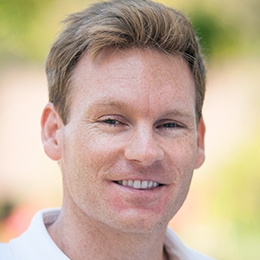
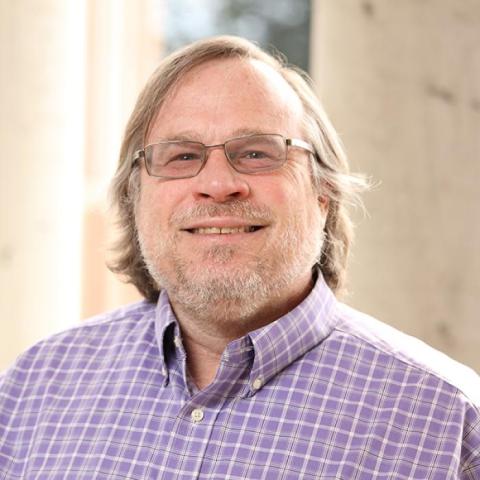
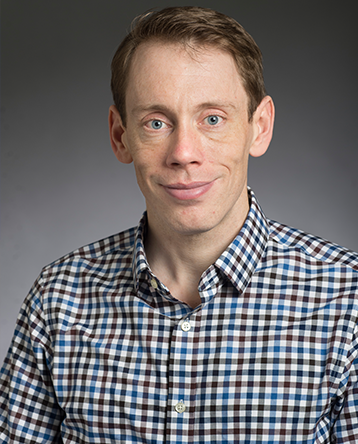
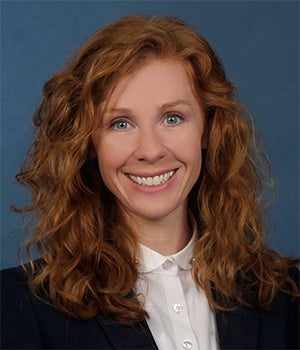
Tyler Johnson, PhD, is an Associate Professor in the Department of Natural Sciences and Mathematics at Dominican University of California's School of Health and Natural Sciences. His expertise lies in Natural Products Chemistry , Bioorganic Chemistry , and Medicinal Chemistry , with a focus on biomedical applications. Johnson's research emphasizes discovering therapeutic lead compounds and molecular probes from marine and terrestrial natural products. His research team investigates chemotypes like mycothiazole , zampanolide , fijianolide , and latrunculin from Indo-Pacific marine sponges. These compounds exhibit potent cytotoxicity (IC50 1~5 nM) against cancer cell lines through mechanisms including microfilament disruption , mitochondrial complex I inhibition , and microtubule stabilization . Current work explores mycothiazole as a molecular probe for mitochondrial aging. Key publications span 2024-2002, covering topics from sponge-derived anticancer agents to inflammation modulation and environmental toxicology. Johnson's laboratory engages in large-scale natural product isolation, spectroscopic validation, and semi-synthetic medicinal chemistry to optimize therapeutic leads. His work integrates undergraduate and graduate students into interdisciplinary biomedical research.
Philippe Rocca-Serra is a Researcher at the Oxford e-Research Centre (OeRC), University of Oxford, and an Associate Member of the Engineering Science Department. Affiliated with Kellogg College, his work focuses on advancing open science through FAIR data principles, interoperable metadata standards, and translational biomedical data systems. He holds a DPhil in Molecular Genetics from the University of Bordeaux, supported by an EMBO Fellowship, and has contributed to major initiatives like the ISA-Tab format, the FAIR Cookbook, and the Translational Data Catalog. His research spans data standards for omics technologies, semantic validation frameworks (e.g., BioValidator), and infrastructure for reproducible research. Key contributions include the ISA API platform, metabolomics standards (nmrML, mzTab-M), and FAIRification frameworks. He actively collaborates with global initiatives such as ELIXIR, the Common Fund, and the Precision Toxicology Initiative. Rocca-Serra’s work emphasizes bridging data producers and consumers through machine-actionable metadata, fostering interdisciplinary research and policy compliance. He leads projects on clinical trial metadata profiling and has published extensively on data governance, computational workflows, and the role of FAIR principles in drug discovery and pandemic preparedness. Education: Ecole Nationale Supérieure d'Agronomie de Rennes (Diplôme d'Ingénieur), University of Bordeaux (PhD, Molecular Genetics) Key Roles: Group Coordinator at OeRC, Co-Investigator on international grants Tools Developed: ISAcreator, COPO, FAIR Cookbook, Data Tags Suite (DATS) Awards: EMBO Fellowship (2001) Labs/Teams: Oxford Data Readiness Initiative, FAIR Implementation Network
Aaron Shugar is a Professor and current Bader Chair in Art Conservation at Queen’s University. With a background in archaeometallurgy and conservation science, he specializes in non-destructive analysis techniques for cultural heritage, including X-ray fluorescence (XRF), Raman spectroscopy, and hyperspectral imaging. His work bridges art history, material degradation, and technological innovation. Honours H.B.A. in Anthropology and Law & Society from York University M.S. in Archaeological Materials from the University of Sheffield Ph.D. in Archaeometallurgy from University College London His research focuses on historic artist’s pigments , ancient metallurgy , and technical history of artifacts , with particular interest in degradation pathways and manufacturing processes. Recent publications highlight trends in AI integration with XRF analysis and preservation of modern materials in art conservation. Bader Chair in Art Conservation Mellon Foundation Professor in Conservation Science Aaron co-directed the Archaeometallurgy Laboratory at Lehigh University, served as a guest scientist at NIST, and remains a research associate at the Smithsonian Institution. He actively contributes to TEFAF’s Scientific Vetting Committee and acts as a forensic materials expert for the Court of Arbitration for Art.
Kevin K. Lehmann is the William R. Kenan, Jr., Professor of Chemistry at the University of Virginia, within the Department of Chemistry in the College of Arts & Sciences. He is a leading researcher in molecular spectroscopy, with a focus on ultrasensitive detection methods such as cavity ring-down spectroscopy (CRDS) and double-resonance techniques. His educational background includes a B.S. from Cook College, Rutgers University (1977), a Ph.D. from Harvard University (1983), and a Junior Fellowship at the Harvard Society of Fellows. Lehmann's research is centered on advancing trace gas sensing using optical methods, particularly CRDS with high-reflectivity cavities and telecom-grade lasers. His group has pioneered Doppler-free two-photon CRDS and sub-Doppler double-resonance spectroscopy using frequency combs, enabling high-precision measurement of molecular transitions in gases like methane and nitrous oxide. These methods have applications in atmospheric science, planetary exploration (e.g., Mars missions), and combustion diagnostics. He also investigates meta-science questions around the reproducibility of spectroscopic data. The recent publications highlight a strong trend in high-resolution, quantum-limited spectroscopic techniques applied to small polyatomic molecules. There is a clear focus on enhancing selectivity and sensitivity through nonlinear optical effects, cavity enhancement, and advanced detection schemes. Applications span environmental monitoring, astrochemistry, and fundamental molecular physics. Fellow of the Optical Society, 2011 W.R. Kenan Professor of Chemistry, 2009 Earle K. Plyler Award in Molecular Spectroscopy, 2003 Thomas A. Edison Patent Award, 2002 Fellow of the American Physical Society, 1995 Lehmann has advised numerous graduate students and postdoctoral researchers, and his lab has been supported by grants from agencies involved in space exploration, environmental science, and fundamental physics. His work has led to commercial instrumentation through Tiger Optics, Inc. He maintains strong international collaborations, particularly with researchers in Sweden on methane spectroscopy. While specific grant details are not listed, the scope and impact of his research suggest sustained funding from NSF, NASA, and DOE. His laboratory focuses on optical cavity-based sensors and high-resolution spectroscopy setups, integrating frequency combs, narrow-linewidth lasers, and cryogenic pre-concentration systems for trace analysis. The team combines experimental innovation with theoretical modeling to interpret complex spectra and improve measurement fidelity.
Shawn Litster is a Professor in the Department of Mechanical Engineering at Carnegie Mellon University, where he leads cutting-edge research in sustainable energy conversion technologies. He is affiliated with the Wilton E. Scott Institute for Energy Innovation and serves as a Scott Institute Energy Fellow, contributing to major national initiatives in hydrogen and fuel cell systems. His work is supported by significant funding from the U.S. Department of Energy (DOE), ARPA-E, and the Office of Naval Research. Education: Ph.D. in Mechanical Engineering, Stanford University (2008) Master of Applied Sciences, University of Victoria (2005) Bachelor of Engineering, University of Victoria (2004) His research focuses on micro- and nanoscale transport phenomena in electrochemical energy systems such as fuel cells, batteries, and electrolyzers. Key interests include electrochemistry, multiphase flow in porous media, microfluidics, catalytic gasification, and computational fluid dynamics . He pioneers innovations in ionomer-free electrodes, high-oxygen-permeability materials, and low-iridium anodes to improve efficiency, durability, and cost-effectiveness. His recent publications (2021–2025) reveal a strong trend toward advanced diagnostics, operando characterization, machine learning integration, and multiscale modeling of fuel cell and electrolyzer systems. These works emphasize performance optimization, degradation analysis, and material innovation for heavy-duty and transportation applications. Scientific Awards: George Tallman Ladd Research Award, Carnegie Mellon University National Science Foundation CAREER Award Lieutenant Governor’s Silver Medal, University of Victoria Best Paper/Presentation Award, The Electrochemical Society Best Paper/Presentation Award, American Society of Mechanical Engineers (ASME) Litster has secured over $50 million in research funding as a sub-awardee in DOE hydrogen projects and led a $3.2M ARPA-E OPEN 2021 project on disruptive fuel cell electrodes. He is an inventor on two U.S. patents related to fuel cell design. He advises graduate students and leads the Laboratory for Transport Phenomena in Energy Systems , where his team develops novel materials and diagnostics for next-generation energy technologies.
Kaitlyn Crawford is an Associate Professor of Materials Science and Engineering at the University of Central Florida, with a secondary appointment in Chemistry. She directs the Functional Materials and Sensors Lab, focusing on sustainable soft materials for flexible electronics and biomedical applications. Her research integrates polymer science and engineering to develop wearable sensors for health monitoring, biodegradable materials to reduce e-waste, and natural polymer composites. Current projects include a $1.5M DHS-funded wearable for firefighter heat-stress monitoring and NASA-funded space applications. Her recent publications emphasize sustainable polymers, bionic devices, and AI-driven diagnostics. Awards include the 2024 ACS PMSE Early Investigator Award and a Jewish National Fund fellowship. She leads multiple graduate students in biomedical and materials research. Awards: 2024 ACS PMSE Early Investigator Award Faculty Fellowship Program in Israel, Jewish National Fund Faculty Excellence Honoree, Women’s History Month (UCF)
Prof. Bettina Valeska Lotsch serves as Director of the Nanochemistry Department at the Max Planck Institute for Solid State Research in Stuttgart and holds honorary professorships at both the University of Stuttgart and Ludwig-Maximilians-Universität München (LMU). She leads a research group focused on the rational synthesis of multifunctional materials with engineered properties, combining solid-state chemistry, molecular chemistry, and nanochemistry approaches. Her research interests span nanochemistry, solid-state chemistry, materials science, energy storage, catalysis, photocatalysis, and the development of two-dimensional materials, porous frameworks, and photonic nanostructures. She investigates structure-property-activity relationships in functional materials with applications in sensing, catalysis, and photo- and electrochemical energy conversion and storage. Her group employs diffraction, spectroscopic, and microscopic techniques to explore these materials. Prof. Lotsch's publication record demonstrates significant contributions to materials chemistry, with over 330 papers, 27,577 citations, and an h-index of 83 (as of February 2025). Her recent work focuses on integrated solar batteries, covalent organic frameworks, metal-organic frameworks, and novel materials for energy applications. The research shows strong emphasis on materials for renewable energy technologies, particularly in the areas of photocatalysis, energy storage, and photoelectrochemical systems. Gottfried Wilhelm Leibniz-Preis (2025) Highly Cited Researcher, Web of Science (2023-2024) Materials Lectureship Award, University of Warwick (2023) ERC Starting Grant (2014) EU-40 Materials Prize, European Materials Research Society (2017) Elected Member of the Heidelberger Akademie der Wissenschaften (2021) Prof. Lotsch leads the SOLBAT initiative funded by the Max Planck Foundation, which focuses on pioneering work in solar batteries and optoionics. She serves on multiple advisory boards including Quantum BW, SFB 1452 CLINT, and the Scientific Advisory Board of ICMol at the University of Valencia. Her department provides extensive research infrastructure including advanced characterization techniques for materials analysis.
Liam Kelleher is a Research Fellow at Swansea University's College of Science, specializing in microplastic pollution and clinical tool development . His work bridges environmental science and health research through advanced spectroscopic techniques . Education : BSc Physics with Nanotechnology (1.1), Swansea University (2015) PhD (Centre for Nanohealth, Swansea University) Research Interests focus on environmental microplastic dynamics, including hydrological drivers , sensor development , and clinical applications of photobiomodulation for traumatic brain injury. His projects span from Arctic monitoring to neurodegenerative disease mechanisms. Recent Projects include POLARSENSE: Polar Online Airborne Nano/Microplastic Sensing (Principal Investigator) The Plastic Brain: Micro/Nanoplastics in Cerebrospinal Fluid (Principal Investigator) ADAPT: Photobiomodulation Device for TBI (Co-Investigator)
Katherine (Kallie) Willets is a Professor in the Department of Chemistry at Temple University's College of Science and Technology. Her research investigates nanoscale heterogeneity in materials using plasmonic nanoparticles, spectroscopy, and microscopy techniques including super-resolution imaging, single-molecule fluorescence, and surface-enhanced Raman scattering (SERS). The Willets Lab studies how nanoscale variations impact optical, electronic, and chemical properties of materials. Her research interests focus on developing advanced microscopy techniques to probe interactions between light, nanomaterials, and molecules. Current projects examine plasmon-mediated processes, single-entity electrochemistry, and nanoscale chemical imaging. The lab combines optical spectroscopy with structural characterization methods like atomic force microscopy and electron microscopy. Dr. Willets received her B.A. in Chemistry from Dartmouth College (1999), Ph.D. from Stanford University (2005), and conducted postdoctoral research at Northwestern University (2005-2007). She has received numerous awards including the Department of Energy Early Career Award, Robert L. Smith Early Career Professorship, and Air Force Office of Scientific Research Young Investigator Award. She currently serves as Associate Editor for ACS Nano. Her educational outreach includes Buckets & Beakers (combining science with basketball), Adventures in Silver (high school chemistry workshops), and mentoring science fair projects. The lab maintains active collaborations and develops tools for nanoscale characterization.
Christopher Hendon is an Associate Professor in the Department of Chemistry and Biochemistry at the University of Oregon, where he leads research in computational chemistry, sustainable materials, and energy storage. He is a key member of the university’s Energy and Sustainable Materials Initiative, promoting interdisciplinary collaboration to address global sustainability challenges. Department: Department of Chemistry and Biochemistry School: College of Arts and Sciences University: University of Oregon Lab: HMS Oregon – located in the Lewis Integrative Sciences Building Education: BSc (Advanced Hons) from Monash University, PhD from the University of Bath, Postdoc at MIT Hendon’s research spans computational modeling of metal-organic frameworks (MOFs), defect chemistry in semiconductors, and the physics of coffee extraction. He uses quantum chemical simulations to study electron transport, doping, and catalytic mechanisms, with applications in batteries, hydrogen storage, and carbon capture. His work in coffee science has revolutionized understanding of water chemistry, grinding, and brewing reproducibility, influencing both industry and academic communities. The recent articles from his group reflect a strong interdisciplinary trend, combining chemistry, biology, environmental science, and sensory analysis. Key themes include coffee quality, food safety (e.g., mycotoxins), microbiome interactions, packaging, and neurocognitive effects of caffeine. The research increasingly integrates data science, consumer behavior, and sustainability metrics. Scientific Engagement: Author of Water for Coffee , a foundational text in specialty coffee Collaborator with World Barista Champions (Maxwell Colonna-Dashwood, Kyle Ramage) COHOP research collaboration in coffee science Developer of a proposed interdisciplinary coffee research lab at UO Hendon actively mentors graduate and undergraduate students and collaborates with experimentalists worldwide. His lab does not handle traditional chemicals but uses supercomputers for quantum simulations. While he currently cannot support postdoctoral scholars due to funding limitations, he encourages applications from motivated graduate students through the UO Chemistry Department. His outreach through coffee has made complex scientific concepts accessible to broad audiences. Lab and Research Team: Graduate Students: Tekalign T. Debela, Parker Brodale, Doran Pennington, Brian Diamond, Casey Clark Undergraduates: Jasper Sterling, Julio Miranda, Maggie French, Laurel Wood, Ian Reynolds, Octavio Solórzano Visiting Scholar: Matthew Sciprint Focus Areas: MOFs, defect engineering, energy materials, coffee science
Christoph W. Juchem is an Associate Professor at Columbia University in the Departments of Biomedical Engineering and Radiology, with prior faculty roles at Yale University. His research bridges Biomedical Engineering , Magnetic Resonance Spectroscopy , and Neurological Disorders like Multiple Sclerosis and Post-Traumatic Stress Disorder . Education: Doctoral studies at Max-Planck Institute and University of Tübingen; physics degrees from University of Bonn and Madrid. His research focuses on optimizing Magnetic Resonance (MR) shimming for improved neuroimaging and cardiac MR , with recent work addressing scientific transparency in neuroimaging. Publications span 1H spectroscopy , neurotransmitter abnormalities , and field stability in clinical settings. Scientific awards include the Clinical and Translational Science Award (CTSA) and multiple ISMRM fellowships . He has contributed to MR technology standardization and served on the ISMRM Annual Meeting Planning Committee .
Stephanie Diem serves as Professor in the Department of Nuclear Engineering & Engineering Physics within the College of Engineering at the University of Wisconsin-Madison. She leads the Pegasus-III Experiment as Principal Investigator, pioneering innovations in solenoid-free fusion startup techniques to advance commercial fusion energy development. Her work bridges experimental plasma physics, international collaboration, and sociotechnical engagement in fusion energy systems. Dr. Diem's educational background includes: BS in Engineering Physics from University of Wisconsin-Madison MA in Plasma Physics from Princeton University PhD in Plasma Physics from Princeton University (National Spherical Tokamak Experiment research) Her research centers on experimental plasma physics for magnetic confinement fusion, with specialized expertise in radio frequency wave applications for plasma heating and current drive. Current investigations focus on electron Bernstein wave (EBW) physics, non-solenoidal startup via local helicity injection, and edge instability control in spherical tokamaks. This work integrates advanced diagnostics, numerical modeling validation, and international collaborations across facilities including Proto-MPEX (ORNL), MST (UW-Madison), NSTX, and MAST (UK). Analysis of her recent publications reveals strong emphasis on spherical tokamak startup physics, EBW heating systems, and sociotechnical dimensions of fusion development. Key trends include machine learning integration for plasma control, impurity transport during startup, and public engagement frameworks for equitable energy transitions. Her work spans fundamental plasma physics to policy-oriented fusion technology assessment. Notable scientific recognition includes: Kavli Fellow (National Academies, 2025) U.S. Science Envoy for Fusion Energy (2024/2025) David J. Rose Excellence in Fusion Engineering Award (Fusion Power Associates, 2023) New Voices of the National Academies cohort (2021, extended to 2024) Thomas H. Stix Graduate Prize (Princeton University) Dr. Diem actively mentors graduate students through NE 790/890/990 research courses while securing major grants for fusion research infrastructure. Her leadership extends to the Global Fusion Forum initiative and development of sociotechnical readiness frameworks for fusion systems. Current efforts include international collaborations under the PPPL-IAEA practical arrangement and U.S. Department of State science diplomacy initiatives. The Pegasus-III laboratory team develops cutting-edge diagnostics including multi-point Thomson scattering, impurity monitoring systems, and EBW emission measurements. The facility serves as a testbed for scalable startup techniques with partnerships spanning Oak Ridge National Laboratory, General Atomics, and international fusion centers.
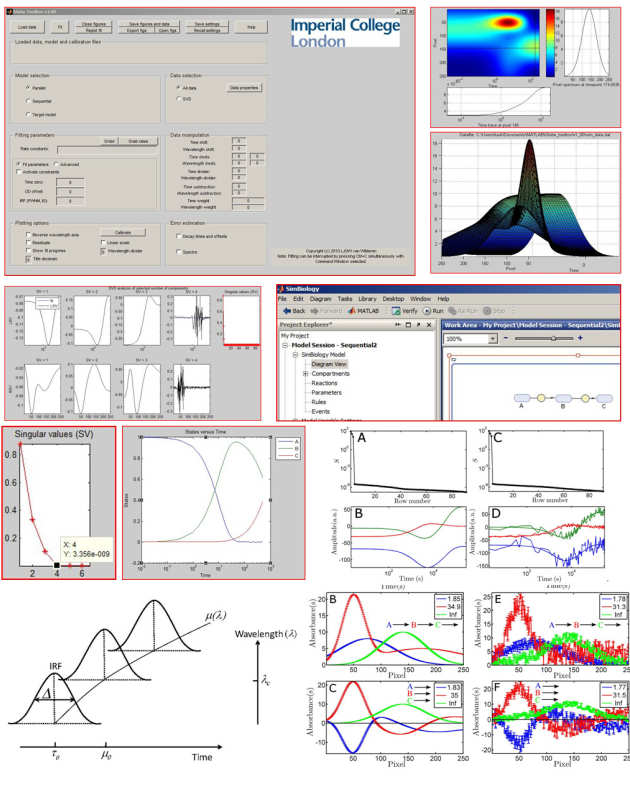
Professor Jasper van Thor is a faculty member at Imperial College London's Department of Life Sciences, part of the Faculty of Natural Sciences. He holds the title of Professor of Molecular Biophysics and leads the Ultrafast Spectroscopy Laboratory and Molecular Biophysics group. His research focuses on ultrafast molecular dynamics using techniques like femtosecond crystallography and spectroscopy, particularly studying light-sensitive proteins such as photoreceptors, fluorescent proteins, and photosynthetic systems. He has pioneered work on structural dynamics using X-ray free electron lasers (XFELs) and developed open-source software tools like the Ultrafast Spectroscopy Modelling Toolbox and PyLDM for data analysis. Education: MSc (1993) and PhD (1999) in Chemistry from the University of Amsterdam, followed by postdoctoral research at the University of Oxford under Dame Louise Johnson, supported by EMBO and HFSP fellowships. He joined Imperial College in 2007, establishing the Ultrafast Spectroscopy Lab. Research Interests: Ultrafast structural changes in proteins, photoactivation mechanisms, coherent vibrational dynamics, XFEL applications in biology, and theoretical modeling of population dynamics. His work bridges molecular biophysics, chemistry, and materials science, with contributions to understanding photosynthesis and protein signaling. Key Achievements: Director of Imperial's Frontiers of Ultrafast Measurement network and PI of the LUXD lab. Developed novel methods for femtosecond infrared crystallography and revealed mechanisms like the 'hula-twist' isomerization in fluorescent proteins. Authored influential papers on protein structural dynamics and spectroscopic analysis tools. Awards: EMBO Research Fellowship (2000), HFSP Long-Term Fellowship (2000), Royal Society University Research Fellowship (2002). Recognized for contributions to ultrafast structural biology. Grants & Labs: Active in XFEL collaborations globally (LCLS, SACLA, European XFEL). Oversees the Electron Microscopy Centre and Energy Futures Lab affiliations. His lab develops open-source software for data analysis, emphasizing reproducibility and accessibility.
Elizabeth T. Papish is a Professor and Director of Graduate Recruiting in the Department of Chemistry and Biochemistry at the University of Alabama. With over 16 years of academic experience since 2003, she leads an active research group focusing on bioinorganic and organometallic chemistry with applications in green chemistry and cancer therapeutics. Her educational background includes: PhD in Chemistry from Columbia University (2002) M.Phil in Chemistry from Columbia University (2001) MS in Chemistry from Columbia University (1998) BA in Chemistry from Cornell University (1997) Dr. Papish's research centers on catalysis, particularly for green chemistry applications. Her work focuses on designing catalysts for carbon dioxide reduction to create sustainable energy solutions, water oxidation for solar energy storage, and developing ruthenium-based compounds for light-activated anticancer therapies. A key innovation in her research involves using proton-responsive ligands that allow 'smart catalysts' whose properties can be instantly tuned by pH changes. Her group's work bridges organic and inorganic chemistry, mimicking enzymatic processes to control reactivity through hydrogen bonding and proton transfer. This approach has led to novel catalysts that operate efficiently under mild conditions with potential applications in energy storage, organic synthesis, and targeted cancer treatments. Analysis of Dr. Papish's recent publications reveals a strong dual focus: advancing carbon dioxide reduction catalysis using earth-abundant metals like nickel and cobalt, alongside continued development of ruthenium-based anticancer agents. Her work demonstrates increasing integration of computational methods with experimental approaches to understand catalytic mechanisms at a deeper level, while maintaining practical applications in sustainable energy and medicine. Dr. Papish has received significant recognition through multiple patents: U.S. Patent No. 11,773,040 B2 (2023) - 'Selective Hydrodeoxygenation of Aromatic Compounds' U.S. Patent 11,103,861 (2021) - 'Light Driven Metal-Pincer Photocatalysts for Carbon Dioxide Reduction to Carbon Monoxide' U.S. Patent 9,527,066 B2 (2016) - 'Dihydroxybipyridine Complexes of Ruthenium and Iridium for Water Oxidation and Hydrogenation' Provisional patent filed in 2015 for 'pH and Light Activated Anti-Cancer Drugs' As an educator and mentor, Dr. Papish has supervised over 50 undergraduates, 18 graduate students, and 5 postdoctoral fellows since 2003. Her research has been supported by NSF funding for carbon dioxide reduction projects, and she is actively seeking NIH funding for her anticancer research. Her students gain comprehensive training in organic and inorganic synthesis, spectroscopy, and experimental design. The Papish Research Group maintains active collaborations with researchers at the University of Mississippi, Mississippi State University, and within the Chemical and Biological Engineering department at the University of Alabama. The group's facilities support synthesis of air-sensitive compounds, various spectroscopic analyses, and biological testing of potential anticancer agents.
Professor Ashley Cadby is a faculty member in the School of Mathematical and Physical Sciences at the University of Sheffield, holding the position of Professor of Soft Matter Physics within the Department of Physics and Astronomy. Her research focuses on cutting-edge imaging techniques applied to biological systems. Her research interests center on Soft Matter Physics , High-resolution Imaging , and Nano-science , with particular emphasis on super-resolution microscopy techniques applied to biological systems. Her work bridges physics, biology, and nanotechnology to investigate cellular structures and processes at unprecedented resolution. Analysis of her recent publications reveals a consistent focus on developing and applying advanced imaging methodologies, particularly super-resolution and correlative microscopy techniques. Her research spans bacterial cell wall architecture, sperm biology, protein dynamics, and nanoscale biological structures, demonstrating interdisciplinary applications across microbiology, reproductive biology, and cellular biophysics. Professor Cadby contributes to teaching through undergraduate courses including PHY 101 Tutorials, PHY 113/114 Computing Laboratory, PHY 245 Materials, and specialized courses in Bio-Physics (PHY 411/412) and Mechanistic Biology (PHY 6120). As Biological Safety Officer and member of the IOP Nano-science group and PARC consortium, she maintains active professional engagement. She leads the Biological Physics Group research team, focusing on innovative imaging approaches to solve complex biological problems through physical methodologies.