Muriel LepereView profile
Researcher
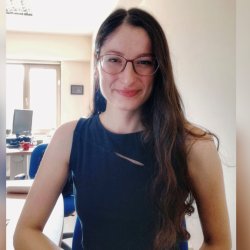
Muriel Lepere is a Researcher at the Institute of Life-Earth-Environment (ILEE) of the University of Namur, Belgium, managing the Technological Platform Optics, Lasers and Spectroscopy. She serves as Principal Investigator for major projects including IRSpectroLabForAtmos (2024-2025) analyzing water vapor and methane for satellite missions, and Etude de la dépendence en pression et en température (2020-2026) using dual-comb and quantum cascade laser techniques to study atmospheric gas mixtures. Her academic credentials include a Doctor of Science from Université de Paris-Sud (1999) with thesis on methyl fluoride collisional broadening coefficients. Research spans high-precision molecular spectroscopy for atmospheric science, focusing on line shape parameters, temperature dependence, and collisional effects in gases like CO 2 , CH 4 , H 2 O, and N 2 O using quantum cascade lasers and dual-comb systems to improve spectroscopic models for climate monitoring and space missions. Recent work reveals increasing emphasis on non-Voigt profile modeling and satellite data validation, particularly for Venus atmosphere studies (2024) and methane retrieval in thermal infrared. Her 148 research outputs demonstrate consistent output since 1995 with spikes in 2022 (17 outputs) and 2024 (11 outputs), reflecting sustained leadership in atmospheric spectroscopy. Award highlights: Winifred Cullis Fellowship (1996) French Community of Belgium Travel Grant (1994) Charles Courtoy Prize for Physics doctoral thesis (2000) Lepere has supervised 44 works and secured funding for 34 projects since 2001, including HighTempSpectroAtmos (2020-2021) on hydrocarbons and Spectroscopy and forward model error improvement for CH 4 retrieval (2019-2020). Her grant portfolio shows strong focus on NASA/ESA-relevant atmospheric validation. She directs the Optics, Lasers and Spectroscopy Technological Platform, providing critical infrastructure for high-resolution gas-phase studies. This facility supports 167 documented activities including international conference presentations and collaborative Venus atmosphere research with teams from France and the US.