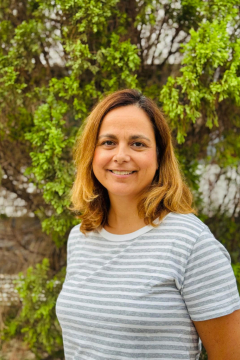
Carlos Pecharromán García is a Senior Scientist at the Institute of Materials Science of Madrid (ICMM), part of the Spanish National Research Council (CSIC), where he leads the Photonic Crystals Group and serves as scientific supervisor for the IR spectroscopy and ellipsometry laboratory. His research centers on percolation phenomena in heterogeneous systems, with core interests including: Percolation Theory in composite material transitions Electromagnetic, thermal, and mechanical property coupling Nanostructured ceramic powders and composite ceramics Exotic material behaviors near percolation thresholds (colossal capacity, optical resonances) Homogeneous component distribution to prevent aggregation Dr. Pecharromán García has led 10 scientific projects and driven technology transfer through approximately 10 patent applications, 3 of which have been successfully commercialized. His laboratory supervision provides critical characterization services for CSIC researchers, implementing advanced spectroscopic measurement techniques for material analysis across the institution. With over 115 scientific publications and an h-index exceeding 33, his work demonstrates significant impact in materials science through both fundamental research and industrial collaboration.
RAUL DE LA FUENTE CARBALLO is a Professor in the Department of Applied Physics at the Faculty of Physics, University of Santiago de Compostela. His institutional affiliations include: Materials Institute (iMATUS) Strategic Grouping in Materials (AEMAT) NaFoMat Research Group (Nanomaterials, Photonics and Soft Matter) He earned his Doctorate from the University of Santiago de Compostela in 1992 with the thesis "Refractive and diffractive phenomena induced by cross-phase modulation," supervised by Dr. Jesús Liñares Beiras. Professor Carballo's research spans Optics , Photonics , and Materials Science , with pioneering work in refractive index characterization of ionic liquids and nanomaterials . His expertise includes interferometric techniques, surface plasmon phenomena, soliton dynamics, and optical microcavity design. The NaFoMat group integrates experimental and computational approaches to study soft matter photonics and material dispersion properties. Analysis of his 2020-2025 publications reveals sustained innovation in optical metrology, particularly white light interferometry for refractive index spectroscopy and advanced spectrometer design. Key contributions include modeling resonant transmission in plasmonic microcavities, characterizing ionic liquid optical properties beyond standard wavelengths, and resolving fundamental phenomena like frustrated total reflection. His work bridges theoretical optics with practical material characterization. As leader of the NaFoMat research group within iMATUS, Professor Carballo oversees projects on nanomaterial photonics and soft matter optics. The group's infrastructure supports advanced interferometry, spectrometer calibration, and optical property measurement of novel materials including metal-doped ionic liquids and thermochromic systems.
Christoforus Satrya serves as a Visiting Faculty in the Department of Applied Physics , affiliated with the Centre of Excellence in Quantum Technology (QTF) and Quantum Phenomena and Devices group. His research bridges quantum thermodynamics, superconducting circuits, and nanoscale device engineering. 2025: Thermal spectrometer for superconducting circuits (Nature Communications) 2024: Superconductor-normal metal interfaces (Journal of Low Temperature Physics) 2023: Microwave circuit approach for qubit heat transport (Journal of Physics Communications) 2022: Cooper-pair box quantum refrigerator architecture (Physical Review Applied) His work focuses on quantum thermodynamics (100% fingerprint), superconducting circuits (84%), and quantum dot systems (72%). Collaborations span Finland, Germany, and international institutions, with 12 similar profiles identified in quantum technology. Current projects include: QTF (2023–present): Quantum dot-based quantum refrigerators SQH (2017–2023): Superconducting quantum heat engines EU ERC grants (2017–2023): Quantum technology infrastructure
Martin Veis is a researcher at the Institute of Physics of Charles University in Prague, Czech Republic. His work focuses on magneto-optical properties , thin film physics , and advanced materials characterization . He collaborates extensively in interdisciplinary projects involving Heusler compounds , tellurite glasses , and carbon nanostructures . Research Themes : Investigation of magneto-optic effects in metallic and van der Waals systems Development of high-performance optical and photonic materials Structural analysis of epitaxial thin films and glassy systems Laser-based processing of boron-doped diamond electrodes Techniques : Spectroscopic ellipsometry, Raman/FTIR spectroscopy, X-ray diffraction, magnetometry, and ab initio calculations His publications demonstrate expertise in materials synthesis , magnetic domain engineering , and optical parameter determination across wide spectral ranges. Recent studies include systematic exploration of Fe 2 YZ Heusler compounds and VI 3 degradation mechanisms .
Pavel Moravec is an Associate Professor at the Institute of Physics , part of the Faculty of Mathematics and Physics at Charles University in Prague. He actively contributes to research in semiconductor materials, with a focus on CdTe and CdZnTe crystals for radiation detectors. His work spans surface preparation, defect analysis, and charge transport phenomena. Department: Optoelectronics and Magneto-Optics Contact: F231, 2nd floor, Ke Karlovu 5, Prague 2 His research interests include: Materials Science : Crystal growth, surface passivation, and microhardness studies Semiconductor Physics : Deep level defects, photo-plastic effects, and mixed conductivity Radiation Detectors : Spectroscopic properties, space charge formation, and leakage current reduction Recent publications highlight his work on: Photo-plastic and electro-photo plastic effects in CdZnTe alloys Surface oxide layer dynamics via XPS and ellipsometry Galvanomagnetic and thermoelectric properties of HgCdTe Passivation techniques for improving detector performance Crystal defect equilibrium and carrier mobility studies Moravec collaborates extensively with researchers like Roman Grill , Jaroslav Franc , and Edgar Belas , contributing to over 100 publications. His work has been supported by grants such as GAČR 15-05259S and the Charles University Grant Agency (project no. 1054213). He also supervises students like Gabriel Korcsmáros and participates in seminars at the FUUK Studio .
Daniel Král is a **Researcher** at the Institute of Physics, Charles University, specializing in condensed matter physics and materials science. His work focuses on advanced magnetic materials, particularly Heusler compounds and their magneto-optical properties. Research Interests: Heusler compounds and their atomic ordering Magneto-optical effects and spectroscopy Magnetic materials characterization Ferromagnetism in alloy systems Spintronics and thin-film technology Publications: His research spans magnetic shape memory alloys, Heusler-like compounds, and magneto-optical characterization techniques. Notable work includes studies on Co2Fe(Ga0.5Ge0.5), Fe75−xMn25Gax, and Ni–Mn–Ga alloys. These publications highlight collaborations across European institutions and experimental validation of theoretical material properties.
Vanya Darakchieva is a Professor and Head of the Semiconductor Materials (HALV) unit at Linköping University's Department of Physics, Chemistry and Biology (IFM). Her research focuses on semiconductor materials for high-frequency and power electronics , with expertise in III-nitrides (GaN, AlN), silicon carbide (SiC), and graphene. She leads projects on sustainable semiconductors funded by the Wallenberg Initiative for Materials Science (WISE) and utilizes advanced terahertz spectroscopy for materials characterization. Research Interests: Her work spans semiconductor device physics, terahertz optical Hall effect for carrier dynamics, epitaxial growth of wide-bandgap materials, and the development of energy-efficient electronics. Key areas include: GaN-based HEMTs for RF/power applications Defect engineering in SiC and AlGaN Terahertz spectroscopy of magnetic and polar materials Sustainable semiconductor design Publications (2024–2025): Recent articles emphasize GaN device reliability, terahertz characterization techniques, and interface engineering. Trends include cryogenic trapping effects in HEMTs, spectroscopic ellipsometry advancements, and novel heterojunctions for energy applications. Over 70% of her 2025 publications involve experimental validation of semiconductor properties under extreme conditions. Infrastructure & Leadership: She oversees the Terahertz Materials Analysis Center (THeMAC), housing Europe's only THz frequency-domain ellipsometer. Her unit collaborates globally on projects such as vertical GaN FinFETs and AlScN/GaN heterostructures.
Bernard Drévillon is a Professor at École Polytechnique since 2001, specializing in photovoltaics and thin-film optical characterization. He founded the Laboratory of Physics of Interfaces and Thin Films (LPICM) in 1986 and co-created the Institut Photovoltaïque d’Ile de France (IPVF) in 2016. His work focuses on spectroscopic ellipsometry for real-time thin-layer growth monitoring, leading to over 250 publications and 30 patents, with commercialization of his ellipsometer by Horiba. Key research areas: photovoltaics, thin-film silicon solar cells, spectroscopic ellipsometry Contributions: LPICM establishment, IPVF collaboration with EDF and TOTAL Impact: Commercialized ellipsometry technology (sold hundreds globally) He has supervised over 20 theses and directed the Master’s in Renewable Energy Science and Technology (REST) since 2011.
Willie Padilla is the Dr. Paul Wang Distinguished Professor in the Department of Electrical and Computer Engineering at Duke University's Pratt School of Engineering. He has established himself as a leading researcher in the field of electromagnetic metamaterials and related technologies across multiple frequency regimes. Padilla earned his Ph.D. from the University of California, San Diego in 2004. His educational background provided the foundation for his subsequent groundbreaking work in metamaterials and electromagnetic theory. Dr. Padilla's research focuses on the theoretical, computational, and experimental investigation of electromagnetic metamaterials and metasurfaces, with particular emphasis on artificial intelligence and deep/machine learning applications. His work spans microwave, terahertz, and infrared frequencies, with applications in spectroscopy, computational imaging, and sensing. His lab specializes in the THz, infrared, optical and magneto-optic properties of novel materials utilizing various spectroscopic methods, including Fourier transform spectroscopy and ellipsometry. A significant portion of his recent work involves tailoring the emissivity of objects with metamaterial coatings and developing active metamaterial arrays for imaging systems. Analysis of his recent publications reveals a strong trend toward integrating artificial intelligence with electromagnetic materials research. His work increasingly focuses on physics-informed machine learning for metamaterial design, inverse problems in electromagnetic theory, and the application of deep learning techniques to accelerate metamaterial simulation and design processes. This represents a significant shift from purely experimental work to a more computational and AI-driven approach to metamaterial research. IEEE Fellow (2025) Optica Fellow (2013) Presidential Early Career Awards for Scientists and Engineers (2009) Dr. Padilla has mentored numerous students, including Yang Deng who passed a milestone examination in the Ph.D. program in 2021. His research has been supported by significant grants that have enabled the development of tunable metamaterials, metamaterial absorbers, and energy harvesting applications using metamaterial technology. His work on metamaterial thermal emission and high-temperature metamaterials demonstrates a strong focus on practical applications of fundamental research. The Padilla Lab at Duke University is a multidisciplinary research environment focusing on metamaterials for various applications. The lab has several major research thrusts including tunable metamaterials using semiconductors, graphene, MEMS/NEMS, and liquid crystals; metamaterial absorbers; energy harvesting applications; and advanced spectroscopy techniques. The lab has made significant contributions to the field of metamaterials, particularly in the terahertz frequency range, and continues to push the boundaries of what's possible with engineered electromagnetic materials.
Maurizio Canepa is a Full Professor at the University of Genoa's Department of Experimental Physics of Matter and Applications. His research focuses on advanced materials for gravitational wave detectors, nanoscale systems, and optoelectronic technologies. He leads the OptMatLab research group and contributes to the Virgo Collaboration, working on improving optical coatings and analyzing gravitational wave data. Key research areas include: optical coatings for cryogenic environments, plasmonic nanostructures, and hybrid transparent conductive oxides. His work bridges fundamental physics with applied nanotechnology, addressing challenges in material characterization and device optimization. Recent publications highlight advancements in spectroscopic ellipsometry for real-time coating analysis, gravitational wave transient detection, and fabrication of 2D material-based sensors. His contributions to the GWTC-3 and GWTC-2.1 catalogs demonstrate expertise in large-scale astrophysical data analysis. Teaching responsibilities include courses on Solid State Physics and General Physics, emphasizing experimental methods and modern materials science. The OptMatLab group collaborates across disciplines to develop novel functional materials for photonics and energy applications.
Paolo Canepa is a Researcher at the University of Genoa's Department of Physics (DIFI), specializing in nanotechnology and biomedical applications. He focuses on biomaterial design, nanovesicle-based therapies, and advanced microscopy techniques like AFM. His research includes developing novel strategies for cancer treatment, antimicrobial nanomaterials, and plasmonic nanostructures for biosensing. Canepa actively participates in academic governance as a member of the Commissione paritetica docenti-studenti di scuola. He teaches courses such as Elementi di Fisica per le Professioni Tecniche and Fisica Applicata alla Biomedicina e ai Biomateriali , integrating his research expertise into education. His work bridges physics, biology, and medicine, with applications in oncology, biomaterials, and nanomedicine. Recent projects include designing cell membrane-derived nanovesicles for targeted therapy and optimizing AFM-based nanolithography for DNA-functionalized surfaces.
Gianluca Gemme is a Contract Professor at the Department of Physics, University of Genoa. His research focuses on gravitational wave astronomy and advanced detector technology, particularly in optical coatings and material characterization for interferometric systems. He contributes to the LIGO and Virgo collaborations, analyzing gravitational wave signals from compact binary coalescences and exploring eccentric black hole mergers. His work also involves developing real-time spectroscopic techniques to monitor optical coatings under thermal conditions. Teaching: Teaches Gravitational Waves in the Master's program in Physics (Course Code 94844). The course details are accessible via university course portals for academic years 2023-2024 and 2024-2025. Research Trends: Recent publications emphasize interdisciplinary approaches combining astrophysical signal analysis with materials engineering. Key themes include thermal behavior of optical components, multi-messenger astronomy linking gravitational waves with gamma-ray observations, and cataloging compact binary systems through advanced observational runs. Labs/Teams: Likely affiliated with INFN (National Institute for Nuclear Physics) and the gravitational wave research groups at the University of Genoa, contributing to detector development and data analysis infrastructure.
Dr. Samet Şahin is a Lecturer in Chemical Engineering at Lancaster University's School of Engineering, where he leads the Şahin Research Group. His research focuses on developing solutions to healthcare challenges through scientific breakthroughs in biochemical systems and material science. He specializes in bioelectrode development, device design, and alternative materials research, with applications in wearable and implantable medical devices. Dr. Şahin has established collaborations across multiple countries and serves on committees for professional organizations including the Institution of Chemical Engineers (IChemE), Society of Chemical Industry (SCI), and Royal Society of Chemistry (RSC). Dr. Şahin holds a PhD and has received professional recognition as a Fellow of Advance HE (FHEA), Associate Member of IChemE (AMIChemE), and Member of the Royal Society of Chemistry (MRSC). His educational background includes a PhD Scholarship from the Republic of Türkiye Ministry of National Education (2012-2017) and a Fulbright Opportunity Grant (2010). Prior to joining Lancaster University, he taught in Chemical Engineering, Bioengineering, Materials Engineering, Biotechnology, and Molecular Biology programs. Dr. Şahin's research vision centers on translating basic scientific discoveries into practical healthcare solutions. His group investigates bioelectrochemical systems with a focus on developing biosensors for medical diagnostics and monitoring. Key research areas include: Development of enzymatic and aptamer-based biosensors for disease biomarkers Creation of wearable and implantable medical devices Investigation of alternative materials, including carbonized biomass sources Electrochemical detection systems for healthcare applications Material science innovations for improved sensor performance His interdisciplinary approach bridges chemical engineering, material science, and healthcare technology to address real-world medical challenges. An analysis of Dr. Şahin's recent publications reveals a strong emphasis on electrochemical biosensing technologies, particularly for healthcare applications. His work spans glucose monitoring, cancer biomarker detection, environmental contaminant analysis, and neurotransmitter sensing. A notable trend is the increasing focus on sustainable materials, with multiple studies utilizing carbonized biomass and green chemistry approaches. His research demonstrates a progression from fundamental electrochemical studies toward more applied medical device development, reflecting his vision of translating basic research into practical healthcare solutions. Dr. Şahin has received numerous professional accolades including: Fellow of Advance HE (FHEA, 2025) Research Excellence Awards from Bilecik SE University (2022, 2023) Fulbright Post Doctoral Fellowship (2020) Winner of Engineering YES Elevator Pitch Prize (2013) Fulbright Opportunity Grant (2010) Dr. Şahin supervises two postgraduate research students and offers undergraduate projects suitable for Chemical Engineering students. He has secured research funding from diverse international sources including the Scientific and Technological Research Council of Türkiye (TÜBİTAK), Health Institutes of Türkiye (TÜSEB), Breakthrough T1D (USA), and the Fulbright Commission. His external review activities demonstrate significant recognition in the field, serving as an expert reviewer for UK Research and Innovation (UKRI), Breakthrough T1D, Fulbright Commission, TÜBİTAK, and TÜSEB. As a STEM Ambassador, he actively engages in educational outreach to promote science and engineering. The Şahin Research Group operates from laboratory facilities in the Engineering Building at Lancaster University. The group maintains an interconnected structure that encourages collaboration among researchers from diverse backgrounds. Current projects focus on developing innovative biosensing technologies for healthcare applications, with particular emphasis on creating cost-effective and environmentally friendly solutions. The group participates in national and international conferences, including recent presentations at Electrochem 2025 at Northumbria University, and maintains active collaborations with researchers worldwide.
Dr. Alex Amato is a researcher at the Paul Scherrer Institute (PSI), leading work in the PSI Center for Neutron and Muon Sciences. His research focuses on advanced materials characterization using muon spin spectroscopy (µSR), gravitational-wave detector technologies, and superconductivity in novel materials. He has contributed to mirror coating developments for LIGO/Virgo/KAGRA detectors and pioneered non-destructive analysis techniques like muon-induced X-ray emission (MIXE) for archaeological and industrial applications. Key domains include: Muon-based material studies Gravitational wave instrumentation Kagome superconductors Magnetic phase transitions His publications from 2022–2025 highlight work on charge-order phenomena in kagome superconductors, magnetic crossover behaviors in topological magnets, and novel detector designs for particle tracking. Collaborations include major initiatives like the LIGO Scientific Collaboration and KAGRA experiments. His work integrates cutting-edge muon beam applications with high-pressure material studies, advancing understanding of superconductivity, magnetism, and quantum phase transitions.
Eva Mª Barea serves as a Senior Researcher at the Institute of Advanced Materials (INAM) within Universitat Jaume I, where she leads critical investigations in Research Group 4 (Advanced Semiconductors) and the Group of Photovoltaic and Optoelectronic Devices. Her work centers on nanodevices for clean energy production and storage, with specialized expertise in photovoltaic technologies and semiconductor synthesis. Her academic credentials include: M. Sc. in Chemistry (2000) Ph. D. in Chemistry (2005) Dr. Barea is a recognized specialist in hydrothermal synthesis of metallic semiconductors and nanoparticles, with extensive hands-on experience fabricating photovoltaic devices including Dye Solar Cells and OLEDs. Current research priorities encompass: Preparation and optimization of novel semiconductor metal oxide nanoparticles Synthesis of advanced metal oxide architectures for electron capitation Development of visible-light-responsive metal oxides Advanced impedance spectroscopy characterization techniques Analysis of her 15 most recent publications reveals dominant research trajectories in perovskite stability engineering and metal oxide semiconductor innovation. Key thematic clusters include interface modification strategies to reduce voltage losses, nanostructured material integration for infrared light harvesting, and chemical engineering approaches to achieve unprecedented operational stability in tin-based perovskites—all converging toward commercially viable solar energy solutions. Her laboratory operates within INAM's Group of Photovoltaic and Optoelectronic Devices, utilizing specialized infrastructure for nanomaterial synthesis and photovoltaic device fabrication. The research environment emphasizes cross-disciplinary collaboration to address fundamental challenges in energy conversion efficiency and long-term device stability through advanced materials design.