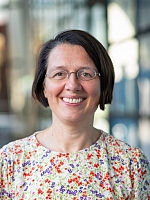
Peter Čermák serves as an Assistant Professor in the Department of Experimental Physics at the Faculty of Mathematics, Physics and Informatics, Comenius University in Bratislava, Slovakia. His office (F2 147) is located at Mlynská dolina campus (842 48 Bratislava), with teaching responsibilities in Acquisition of Experimental Data and Automation of Experiments . His research integrates molecular spectroscopy (ammonia/CO2 absorption spectra), astrophysical diagnostics (meteorite spectral analysis), and plasma physics (vacuum microdischarges). This interdisciplinary work combines laboratory precision measurements with applications in atmospheric science and space research, utilizing advanced spectroscopic and vacuum technologies. Recent publications (2023-2024) demonstrate strong output in high-impact journals, with collaborative projects spanning spectroscopic database development, meteoroid composition analysis, and nanoscale plasma phenomena. His international co-authorship network reflects active engagement with European research communities. As an early-career faculty member, Čermák provides hands-on research opportunities in experimental physics. While no specific lab name is documented, his group maintains active experimental facilities supporting spectroscopy, astrophysical simulation, and plasma discharge studies. His teaching directly complements research through instrumentation and data acquisition courses.
Dr. Anna Schweiger is an Assistant Professor in the Department of Land Resources and Environmental Sciences within the College of Agriculture at Montana State University. She is also affiliated with the Institute on Ecosystems. Her research integrates remote sensing and ecology to address global biodiversity challenges. Her educational background includes: Ph.D. in Geography from the University of Zurich (2015) M.S. in Wildlife Ecology from the University of Natural Resources and Applied Life Sciences (2010) B.S. in Ecology and Biodiversity from the University of Graz (2007) Dr. Schweiger is an ecologist and remote sensing scientist whose research focuses on developing scalable methods for monitoring biodiversity and ecosystem function. She investigates the links between plant spectra, plant form and function, and phylogeny, and applies remote sensing to map plant traits, species, stress, and disease. Her work also extends to using vegetation maps to study animal behavior, including ungulates and birds. She is driven by the need for real-time biodiversity assessment to inform conservation and management. Dr. Schweiger's publication record shows a consistent focus on spectral diversity and its relationship to biodiversity and ecosystem function, with high-impact publications in journals like Nature Communications and Nature Ecology and Evolution. Her recent work has expanded to include applications across trophic levels and in diverse ecosystems. Dr. Schweiger actively secures research funding and currently leads multiple projects: NSF-IOS project on drought recovery mechanisms (2025-2029, Co-PI) NASA-ROSES project on remote sensing of biodiversity across trophic levels (2024-2027, PI) USDA-AMS project on maple syrup quality prediction (2024-2029, PI) Several MSU Undergraduate Scholars programs on spectral databases and grazing effects (2024-present, PI) She mentors students in the Schweiger Lab, which focuses on remotely sensing biodiversity across spatial, temporal, and ecological scales to address global environmental challenges.
Dr. Michiel Min is a researcher at the Netherlands Institute for Space Research and affiliated with the University of Groningen (RUG). His work focuses on astrophysical phenomena related to protoplanetary disks, exoplanet atmospheres, and machine learning applications in astronomy. Research Themes: Protoplanetary Disk Physics, Extrasolar Planet Analysis, Dust Mineralogy, and Atmospheric Retrieval Instrumentation: Expertise in James Webb Space Telescope (JWST) data analysis and mid-infrared spectrography Michiel’s recent publications emphasize dust-gas separation in disks, exoplanet atmospheric modeling using machine learning, and hydrocarbon chemistry in planet-forming regions. Collaborations span institutions like CDS, ESO, and NASA, with datasets shared on platforms like Mendeley. His research contributes to UN Sustainable Development Goals, particularly those related to planetary protection and scientific innovation.
Dr. Kim André Vanselow is a Privatdozent (equivalent to Associate Professor) and currently serves as Scientific Staff Member and Head of Office at the Institute of Geography, Friedrich-Alexander University Erlangen-Nuremberg. His academic career has been deeply rooted at FAU, where he completed his PhD in 2011 and Habilitation in 2022. He has also held part-time positions at the University of Salzburg and teaching assignments at Freie Universität Berlin and University of Vienna. Dr. Vanselow's research focuses on biogeography, geoecology, and human-environment relationships, with particular expertise in pasture ecology in arid and high mountain regions. His work extensively covers the Pamir Mountains in Central Asia, investigating vegetation dynamics, land cover change, and sustainable pasture management using remote sensing and statistical modeling approaches. His research spans multiple continents, with field work conducted in Tajikistan, Kyrgyzstan, Southern Morocco, Honduras, and Ecuador. Current Position: Scientific Staff Member and Head of Office, Institute of Geography, FAU (since April 2024) Habilitation: Completed June 2022, venia legendi granted March 2023 PhD: 2011, FAU Erlangen-Nuremberg Research Funding: DFG, Volkswagen Foundation, Schmauser Foundation Dr. Vanselow's recent publications demonstrate a consistent interdisciplinary approach that bridges physical geography, ecology, and social sciences to address pressing environmental challenges. His work on land cover change in mountain regions, soil science in arid environments, and biodiversity assessment shows methodological innovation and regional expertise. His research has significant implications for sustainable resource management in vulnerable ecosystems facing climate change. Over 30 peer-reviewed publications since 2007 Regular presentations at international conferences Active member of International Biogeography Society and European Geosciences Union As an educator, Dr. Vanselow teaches courses in physical geography, including regional lectures, seminars on biogeography, and field methods. His administrative role in the Department for Teaching and Studies (2017-2024) demonstrates his commitment to academic leadership and curriculum development. His research program continues to expand, with growing emphasis on interdisciplinary approaches that integrate ecological, social, and cultural dimensions of sustainability in mountain regions worldwide.
Prof. Dr. Aysun UĠUR GÖRGÜN serves as a Professor at Ege University within the Institute of Nuclear Sciences and Department of Nuclear Sciences, maintaining active faculty status with no indication of part-time, retired, or former employment. Her research concentrates on Nuclear Physics and Spectroscopy under the broader discipline of Basic Sciences, contributing to physical sciences advancements with alignment to Sustainable Development Goals. The methodology emphasizes experimental nuclear research and spectral analysis techniques. Bibliometric analysis reveals a robust scholarly output exceeding 150 publications (Scopus/Unisis databases) generating over 400 citations, with distribution across journal quartiles including Q1 (1 publication), Q2 (2 publications), Q3 (1 publication), and Q4 (6 publications). Collaborative work shows significant in-house partnerships at Ege University as indicated by co-authorship metrics. Recognition includes formal academic achievements documented in institutional records, though specific award names remain undisclosed in the provided profile. Ongoing research maintains active grant funding as evidenced by sustained publication output and institutional support within the nuclear sciences domain.
Prof. Dr. Janina Kneipp is a Professor (W3) of Physical Chemistry at Humboldt-Universität zu Berlin, where she has led an active research group since 2012. She previously held positions as Assistant Professor at HU Berlin/BAM (2008-2012), Junior Researcher at BAM (2005-2008), and research appointments at Harvard Medical School, Princeton University, and Erasmus Universiteit Rotterdam. Education: Dr. rer. nat. (summa cum laude), Freie Universität Berlin (2002) Undergraduate/Graduate Studies in Biology & Physics, Freie Universität Berlin (1992-1998) Research Focus: Her interdisciplinary work bridges physical chemistry and biospectroscopy, with particular emphasis on: Surface-enhanced Raman scattering (SERS) for complex sample analysis Plasmonic catalysis and hot electron chemistry Multiphoton-excited vibrational spectroscopy Nanoscale biochemical mapping in plant and animal systems Development of advanced plasmonic substrates Publication Trends: Recent work demonstrates strong focus on multimodal spectroscopy applications, with studies combining SERS, hyper-Raman, IR, and synchrotron techniques to address questions in catalysis, nanoparticle-cell interactions, plant biochemistry, and biosensing. Publications frequently incorporate advanced nanomaterials, electrochemical methods, and machine learning-assisted spectral analysis. Scientific Awards: Fellow, European Academy of Sciences (2020) Caroline von Humboldt Professorship (2019) Wilhelm Ostwald Fellow, BAM (2012) Bunsen-Kirchhoff Award, GDCh (2010) ERC Starting Grant (2010) Academic Leadership: Currently advises 5 PhD students and leads multiple collaborative initiatives. Serves as Board Member of Einstein Center Catalysis (since 2019), Head of Chemistry Department (2014-2016), and Speaker of Graduate School SALSA (since 2012). Secured funding through DFG, EU networks, and ERC grants supporting spectroscopy infrastructure development. Lab & Team: Leads the KneippLab research group with 2 postdoctoral researchers, 5 graduate students, and technical staff. Research focuses on developing spectroscopic methods for interrogating biological and chemical processes at nanoscale resolution using plasmonic enhancement strategies.
Professor Kristina Schädler is a faculty member at the West Coast University of Applied Sciences (FH Westküste), where she serves as Professor of Data Processing within the School of Technology. She has been with the university since 2005 and also served as Dean of the Department of Technology. Her academic background includes a PhD in machine learning from TU Berlin, where she was awarded the Chorafas Research Prize for young scientists. West Coast University of Applied Sciences (since 2005) TU Berlin, Institute of Computer Science (1994-1999) Martin Luther University Halle/Wittenberg (1990-1994) Professor Schädler's research focuses on artificial intelligence and machine learning applications, particularly in image processing and data analysis. Her work spans multiple domains including industrial automation, agricultural technology, renewable energy, and animal husbandry. She has led numerous research projects that bridge academic theory with practical industrial applications, with particular emphasis on developing robust image processing systems that can be deployed in real-world settings. Her research portfolio demonstrates a consistent pattern of applying advanced machine learning techniques to solve practical problems across diverse industries. The ANIMET project, which developed facial recognition for horses, and the MaviSeg system for multichannel image segmentation represent her innovative approach to adapting computer vision technologies for specialized applications. Her work often involves close collaboration with industry partners to ensure practical relevance and implementation. Chorafas Research Prize for young scientists Innovationspreis at Equitana (2013) for the ANIMET project Professor Schädler has supervised numerous student theses that have resulted in practical applications across various domains. Her research group has secured funding from multiple sources including the European Commission, BMBF, and regional development agencies. She has established the CICAD project as a sustainable competence center for industrial image processing, which has trained multiple doctoral students through cooperative programs with the University of Lübeck. Her work demonstrates strong industry connections with companies like HIT Hinrichs Innovation + Technik, MBJ Solutions, and Fischer und Tausche Kondensatoren. Her research laboratory focuses on industrial image processing applications, with specialized equipment for 2D/3D imaging, spectral analysis, and machine learning implementation. The CICAD project established a dedicated competence center that continues to develop new applications of image processing technology across multiple industries.
Eric Stempels is a Researcher at Uppsala University's Department of Physics and Astronomy, specifically within the Astronomy and Space Physics section. His work focuses on astronomical instrumentation development and stellar astrophysics research, with significant contributions to major international projects including the Extremely Large Telescope (ELT) and its ANDES spectrograph, as well as the CRIRES+ instrument at the Very Large Telescope. Stempels' research interests center around high-resolution spectroscopy, stellar magnetic fields, T Tauri stars, and exoplanet characterization. His work bridges theoretical astrophysics with practical instrument development, particularly in creating advanced spectroscopic capabilities for ground-based observatories. He has made substantial contributions to understanding stellar accretion processes, stellar magnetic field topology, and the atmospheric properties of exoplanets through his instrumentation work and observational studies. His recent publications reveal a strong focus on next-generation astronomical instrumentation, particularly the ANDES spectrograph for the ELT, which represents the cutting edge of high-resolution spectroscopy capabilities. This work spans both the technical aspects of instrument design and the scientific applications for exoplanet research and stellar astrophysics. Stempels has maintained a long-standing collaboration with international research teams across European observatories and has contributed significantly to the development of astronomical databases like VALD (Vienna Atomic Line Database) and VAMDC (Virtual Atomic and Molecular Data Centre), which support spectroscopic analysis across the astronomical community.
Kijung Shin is an Associate Professor at KAIST (Korea Advanced Institute of Science and Technology), holding dual appointments in the Kim Jaechul Graduate School of AI and the School of Electrical Engineering (Computer Division). He leads the Data Mining Lab and teaches multiple courses including Graph Mining and Social Network Analysis, Data Mining and Search, and other foundational courses in electrical engineering and AI. Education Ph.D. in Computer Science, Carnegie Mellon University (February 2019) M.S. in Computer Science, Carnegie Mellon University (December 2017) B.S. in Computer Science and Engineering, Seoul National University (August 2015) B.A. in Economics (Double Major), Seoul National University (August 2015) Research Interests Professor Shin's research primarily focuses on data mining, graph algorithms, and network science, with particular expertise in hypergraph analysis, tensor decomposition, and graph neural networks. His work bridges theoretical foundations with practical applications, developing algorithms that can efficiently analyze complex real-world networks. His recent research has expanded into multimodal learning, integration of large language models with graph neural networks, and applications in recommendation systems, satellite imagery analysis, and biological data analysis. His approach combines rigorous mathematical analysis with practical implementation, resulting in numerous open-source software tools that have been widely adopted in both academia and industry. His research has significant implications for social network analysis, fraud detection, recommendation systems, and scientific discovery in various domains. Research Trends Professor Shin's recent publications show a clear trajectory toward more complex network structures, particularly hypergraphs that capture higher-order interactions beyond simple pairwise relationships. His work increasingly integrates traditional graph algorithms with deep learning approaches, especially focusing on how graph neural networks can be improved and made more interpretable. There's also a growing emphasis on practical applications in areas like satellite imagery analysis, medical data, and recommendation systems that address real-world challenges. Scientific Awards Received the PAKDD Best Survey Paper Award for 'Multi-Behavior Recommender Systems: A Survey' (2025) Selected as one of the best short paper candidates of ACM RecSys 2024 (top 7) for 'Revisiting LightGCN' (2024) Selected for oral presentation (2.6% of accepted papers) at AAAI 2024 for 'VITA: 'Carefully Chosen and Weighted Less' Is Better in Medication Recommendation' (2024) Received the IEEE ICDM Best Student Paper Runner-up Award for 'TensorCodec: Compact Lossy Compression of Tensors without Strong Data Assumptions' (2023) Received the SIGKDD Best Research Paper Award and CogX Award for Best Student Paper in AI for 'FRAUDAR: Bounding Graph Fraud in the Face of Camouflage' (2016) Received the Best Senior Thesis Award from Seoul National University (2015) Received the Samsung Humantech Paper Award (1st in Computer Science) (2015) Teaching and Mentoring Professor Shin has taught multiple graduate and undergraduate courses at KAIST since 2019, including Graph Mining and Social Network Analysis, Data Mining and Search, and foundational courses in electrical engineering. He has also co-organized tutorials at major conferences including AAAI, KDD, ICDM, and CIKM on advanced topics in hypergraph neural networks and real-world hypergraph analysis. As the leader of the Data Mining Lab, he mentors numerous graduate students and postdoctoral researchers, fostering a collaborative research environment that has produced significant contributions to the field of data mining and network analysis. Research Leadership Professor Shin leads the Data Mining Lab at KAIST, which focuses on developing novel algorithms for analyzing complex networks and high-dimensional data. The lab has produced numerous influential software tools including D-Cube, M-Zoom, CoreScope, and DenseAlert, which are widely used in both academic research and industry applications. His research group maintains active collaborations with institutions worldwide and has received funding from various sources to support their innovative work in data mining and network analysis.