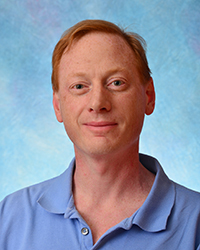
David McKeeView profile
Professor
David McKee is a Professor in the Department of Physics at the University of Strathclyde, Faculty of Science, where he conducts interdisciplinary research at the intersection of marine optics, remote sensing, and oceanography. He is affiliated with key research networks including MASTS (Marine Alliance for Science and Technology for Scotland) and SUPA (Scottian Universities Physics Alliance), and leads major funded projects such as the Persistent Autonomous LiDAR Sensor (PALS) and Optical Geophysical Sensors Networks for Ocean Monitoring. His research interests focus on: Developing ocean colour algorithms for optically complex waters Quantifying zooplankton abundance from space Measuring and modelling light fields in the Arctic Assessing the impact of artificial light at night (ALAN) in marine environments Developing advanced underwater sensing capabilities His recent publications (2024–2025) reveal a strong trend toward integrating satellite observations, in situ measurements, and radiative transfer modeling to study climate-critical marine processes, particularly in polar regions. These works span topics from Arctic sea ice loss and light availability to zooplankton detection and offshore wind farm impacts, demonstrating a consistent focus on environmental monitoring through optical methods. Scientific awards include: 2nd place in Copernicus Masters 2020: BMVI Transport Challenge Finalist in E&T Innovation Awards 2020 NERC Advanced Fellowship (2007) McKee has been a Principal Investigator on multiple research grants, including current projects funded by the Advanced Research + Invention Agency (ARIA), and has contributed to international collaborations through roles in NEODAAS and the NERC Field Spectroscopy Facility. He has supervised research students (5 supervised works recorded), contributed as an invited speaker, workshop organizer, and editorial board member, reflecting strong academic leadership and engagement. He is actively involved in professional activities such as organizing the GlobalHAB/EuroMarine Workshop on Modelling and Prediction of Harmful Algal Blooms and delivering invited talks on polar marine light effects. His lab and team work involves developing autonomous and hyperspectral sensors for long-term ocean monitoring, particularly in climate-sensitive regions like the Arctic and North Atlantic.