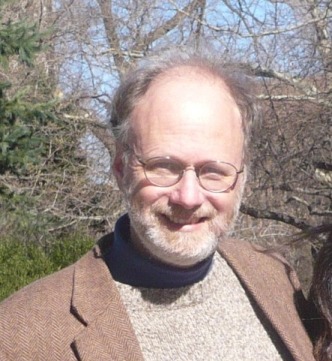
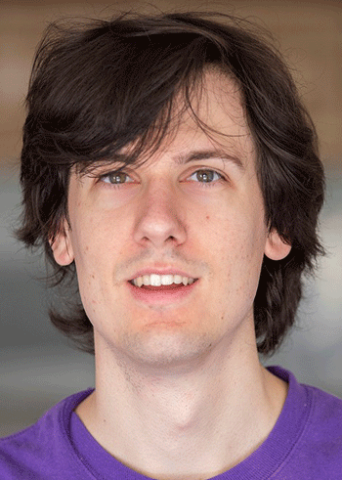
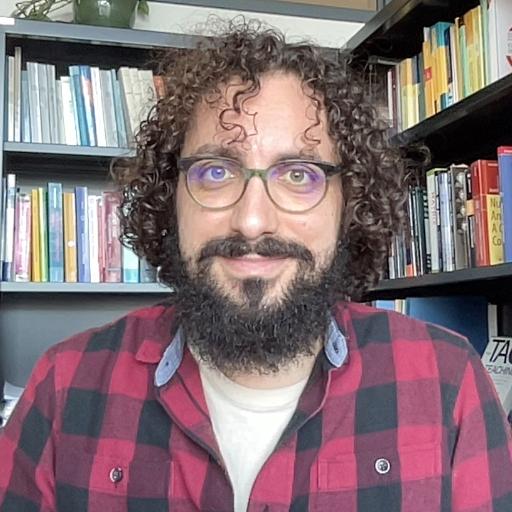
Howard Elman is a Professor in the Department of Computer Science at the University of Maryland, with affiliations to the Institute for Advanced Computer Studies (UMIACS) and as an Affiliate Professor in the Department of Mathematics. His research spans numerical analysis, computational fluid dynamics, and uncertainty quantification, focusing on iterative solvers for partial differential equations. Education: PhD in Computer Science, Yale University (1982); BA in Mathematics, Columbia University (1975); Stuyvesant High School (1971) Elman's research integrates Scientific Computing with Numerical Linear Algebra , Computational Fluid Dynamics , and Uncertainty Quantification . His work addresses Stochastic Galerkin Methods , Reduced-Order Modeling , and Low-Rank Approximations for PDEs with random data. Recent publications emphasize Surrogate Models and Deep Learning in Bayesian inverse problems. His scientific awards include SIAM Fellowship (2009) and roles as Associate Editor for journals like Mathematics of Computation and SIAM Journal on Scientific Computing . He served as SIAM Editor-in-Chief (1998-2004) and Vice President for Publications. Contact: helman@umd.edu | Office: 4210 Iribe Center | Courses: AMSC/CMSC 460 Computational Methods
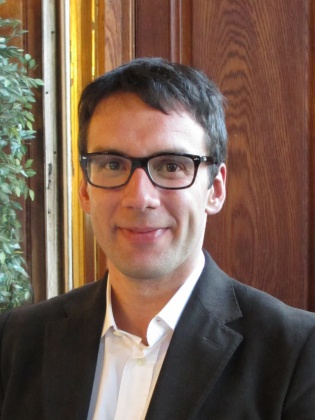
Daniele Venturi is a Professor of Applied Mathematics at the University of California, Santa Cruz, where he has been faculty since 2015, rising from Assistant Professor to full Professor by 2021. Previously, he was a Research Assistant Professor at Brown University from 2010-2015. His academic journey began at the University of Bologna, where he earned both his combined B.S./Sc.M. in Mechanical Engineering (2002) and Ph.D. in Applied Physics with a focus on thermo-fluid dynamics (2006). University of Bologna: B.S./Sc.M. Mechanical Engineering (2002), Ph.D. Applied Physics (2006) Brown University: Research Assistant Professor (2010-2015) UC Santa Cruz: Assistant to Associate to Full Professor (2015-present) Professor Venturi's research spans multiple cutting-edge areas in computational mathematics. His primary interests include stochastic modeling and uncertainty quantification, numerical tensor methods for high-dimensional PDEs, data-driven modeling approaches, approximation of functional-differential equations, and theoretical/computational fluid dynamics. His work bridges theoretical mathematical frameworks with practical computational implementations, particularly focusing on overcoming the curse of dimensionality in complex systems. His recent research has been heavily focused on hierarchical tensor methods for solving high-dimensional partial differential equations. The analysis of his publication record reveals a strong emphasis on developing computational frameworks that address high-dimensional challenges in uncertainty quantification and model reduction. His work frequently intersects machine learning techniques with traditional numerical methods, particularly in developing physics-informed neural networks and multifidelity modeling approaches. A consistent theme across his publications is the development of mathematical frameworks that maintain computational tractability while preserving physical fidelity in complex systems. Professor Venturi has secured substantial research funding from major agencies including the Air Force Office of Scientific Research (AFOSR), Department of Energy (DoE), National Science Foundation (NSF), Army Research Office (ARO), and Defense Advanced Research Projects Agency (DARPA). His most significant current grant is a 2024-2029 AFOSR MURI award totaling $7.5M as co-PI for 'Tensor Network for simulating kinetic systems.' 2024-2029: AFOSR MURI, $7.5M (co-PI) 2023-2027: DoE, $3.8M (co-PI) 2023-2026: AFOSR, $2.5M (co-PI) 2020-2025: NSF TRIPODS, $2.3M (co-PI) At UC Santa Cruz, Venturi teaches a range of courses including Fundamentals of Uncertainty Quantification, Applied Dynamical Systems, Nonlinear Dynamical Systems, and Numerical Methods for Differential Equations. His teaching spans both undergraduate and graduate levels, reflecting his expertise across theoretical and computational mathematics. His lecture notes for these courses are publicly available and demonstrate his commitment to pedagogical excellence in complex mathematical subjects.
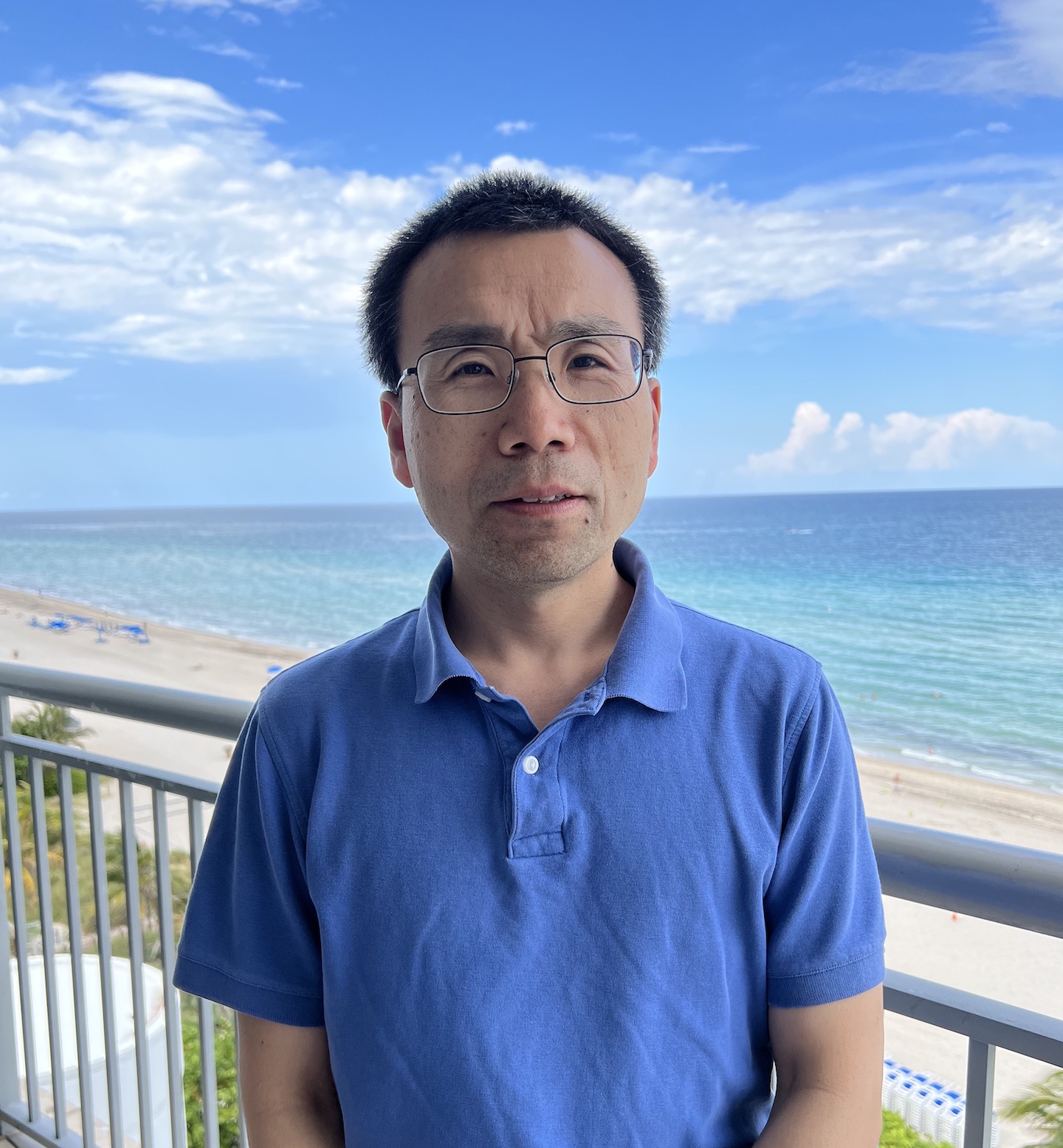
Shaun Lui is Professor and Head of Mathematics at the University of Manitoba's Faculty of Science. His research develops advanced numerical methods for partial differential equations with applications in fluid dynamics and electromagnetics. Education includes B.Sc./M.Sc. from University of Toronto and Ph.D. from Caltech. Research focuses on spectral collocation methods in space-time, domain decomposition, and finite volume schemes. Recent work establishes spectral accuracy for Stokes flows and matrix singularity bounds. Supervises graduate students in numerical PDE projects.
Prof. Dr. Jochen Garcke is a faculty member at the Institute for Numerical Simulation, University of Bonn, with a dual affiliation at Fraunhofer SCAI's Department of Numerical Data-Based Prediction. His work bridges numerical simulation and machine learning, focusing on high-dimensional problems, sparse grids, and optimal control. Key research themes: Sparse grids, machine learning for simulations, reinforcement learning, uncertainty quantification Teaching includes courses on Numerical Methods in Science and Technology and Scientific Computing , emphasizing practical machine learning applications. Recent publications explore hybrid models combining data-driven and physics-based approaches in automotive engineering, wind turbines, and geoscientific modeling. His group employs adaptive sparse grids, graph algorithms, and spectral methods to tackle challenges in crash simulations, fluctuating renewable energy systems, and turbulent flow analysis. Collaborations span Fraunhofer SCAI and industry 4.0 initiatives.
Mahmoud Karimi is a Senior Lecturer at the School of Mechanical and Mechatronic Engineering , University of Technology Sydney (UTS), leading the Vibroacoustics Research Group within the Centre for Audio, Acoustics and Vibration. He holds a PhD in Mechanical Engineering from UNSW with specialization in vibration and acoustics, and has conducted visiting research at University of Cambridge, Technical University of Munich, and INSA Lyon. His research focuses on computational hydroacoustics, vibroacoustics, and uncertainty quantification in noise/vibration problems. Academic Leadership : Editor-in-Chief of Acoustics Australia since 2025 Research Income : Attracted $6M in competitive grants ($2M as Chief Investigator) since 2017 Technical Expertise : Specializes in acoustic black hole structures, flow-induced vibration modeling, and leak detection in buried pipelines Scientific Awards : Recipient of ARC DECRA Fellowship (DE190101412) 2019-2022 Research Trends : His 91+ publications demonstrate expertise in hybrid acoustic modeling techniques, sustainable hempcrete development, and vibration energy harvesting solutions with applications in mining, rail systems, and water infrastructure. International Collaborations: University of Cambridge (UK), Technical University of Munich (Germany), INSA Lyon (France) Teaching Portfolio: Advanced numerical methods, dynamics & control, and computational modeling at UTS
Suchuan Dong is a Professor in the Department of Mathematics at Purdue University , affiliated with the Center for Computational and Applied Mathematics . His work bridges Computational Mathematics and Machine Learning , focusing on High-Order Numerical Methods and Multiphase Flows . Academic Background Post-Doc in Applied Mathematics, Brown University (2004) Ph.D. in Mechanical Engineering, SUNY Buffalo (2001) M.S. in Physics, Zhejiang University (1995) B.S. in Aerospace Engineering, National University of Defense Technology (1992) His research centers on Neural Network-Based Numerical Methods and Data-Driven Scientific Computing , with applications to Computational Fluid Dynamics , Contact Line Dynamics , and High-Performance Computing . Publications highlight Physics-Informed Neural Networks , Energy-Stable Schemes , and Extreme Learning Machines for PDEs. The articles reflect trends in Neural Network Applications to Dynamic PDEs , Phase Field Modeling , and High-Dimensional Computing , often combining High-Order Numerical Methods with Interfacial Phenomena . His recent work focuses on Exact Time Integration Algorithms and Hidden-Layer Concatenation for stability and efficiency. He leads research in the Center for Computational and Applied Mathematics , emphasizing Thermodynamically Consistent Modeling and Flow-Structure Interactions . His teaching includes MA-36600: Ordinary Differential Equations (Spring 2025).
Prof. Dr.-Ing. Andrea Beck is a faculty member and Managing Director of the Institute of Aerodynamics and Gas Dynamics (IAG) at the University of Stuttgart. She leads the Numerical Methods in Fluid Mechanics working group, focusing on high-precision numerical methods for supercomputers, particularly discontinuous Galerkin (DG) methods. Her research spans fluid mechanics, aeroacoustics, plasma physics, and multiphase flows, with applications in wind energy, helicopter systems, and environmental aerodynamics. Role: Professor and Managing Director, IAG Committees: Member of the DFG Review Board, Strategy Committee for National HPC, and steering committee of High Performance Center Stuttgart. Her research emphasizes high-order methods, turbulence modeling, and data-driven approaches. She teaches courses such as 'Numerical Methods in Fluid Mechanics' and 'CFD Programming Projects', and has developed open-source software like FLEXI and HOPR for high-performance computing. Recent articles highlight advancements in entropy-stable DG methods, turbulence simulation using graph neural networks, and multiphase flow modeling. Her work integrates machine learning with CFD to enhance simulation accuracy and efficiency.
Oliver G. Ernst is a Professor of Numerical Analysis at Technische Universität Chemnitz . His research focuses on Numerical Analysis , Uncertainty Quantification , and Inverse Problems , with applications in Thermo-Hydro-Mechanical (THM) processes , Electromagnetics , and Stochastic Partial Differential Equations . He is associated with the Numerical Analysis group at TU Chemnitz. Key Research Areas : Efficient numerical methods for PDEs Krylov subspace techniques Stochastic finite element methods Multi-physics modeling Geoscientific applications Recent Publications (2025-2010): THM simulations under uncertainty Neural network PDE solvers Bayesian inversion frameworks Rational Krylov algorithms Deflated restarting strategies Collaborations : TU Bergakademie Freiberg University of Manchester Technical University of Munich University of Maryland University of Geneva Software Development : Contributor to OpenGeoSys platform Developer of FEMALY MATLAB library Academic Recognition : h-index 32, i10-index 66, with over 4423 citations since 2020.
B. V. Rathish Kumar is a Professor at the Department of Mathematics and Statistics , Indian Institute of Technology Kanpur, with a PhD from SSSIHL, Prasanthinilayam. His research spans Numerical Analysis , Computational Fluid Dynamics , Finite Element Methods , and Biomedical Image Processing . Education: PhD in Applied Mathematics (SSSIHL, Prasanthinilayam) His research interests include Wavelet Methods for PDEs , Cardiac Electrophysiology Modeling , Convection in Porous Media , and AI/ML for Differential Equations . He has pioneered courses like Finite Element Error Estimation and AI/ML Methods for PDEs . His recent publications focus on convection dynamics , image processing , and singularly perturbed equations , contributing to fields like Biomedical Engineering and Thermal Systems . Scientific Awards: Fellow of Indian Association of Mathematical Modelling and Simulation (2018) Fellow of National Academy of Sciences (2009) Erasmus Mundus Fellowship (2004) University Gold Medal (1987)
Ingrid Lacroix-Violet is a Professor at the University of Lorraine , affiliated with the Faculty of Science and Technology and the research institute IECL (Institut Élie Cartan de Lorraine). Her primary research focuses on the analysis and numerical solution of partial differential equations (PDEs), with emphasis on quantum fluid models, Bose-Einstein condensates, and high-order computational methods. She collaborates with the PDE team at IECL and maintains offices at both IECL (Room 214) and Polytech Nancy (Room F316). Her research interests span: Theoretical analysis of fluid models (Navier-Stokes-Korteweg, Euler-Korteweg) and quantum systems (Schrödinger equations). Numerical innovation including linearly implicit methods, exponential integrators, and energy-preserving algorithms for evolution equations. Applications in vortex dynamics, rotating condensates, and stability of computational schemes. Recent publications (2017–2025) demonstrate a consistent focus on advancing numerical techniques for quantum and fluid systems, with recurring themes of stability analysis, high-order discretization, and physical applications like Bose-Einstein condensates. Her work bridges mathematical rigor with computational efficiency in modeling complex physical phenomena.
Tommaso Buvoli is an Assistant Professor of Mathematics at Tulane University, specializing in numerical analysis, scientific computing, and high-performance computing. He holds a Ph.D. in Applied Mathematics from the University of Washington (2018) and dual B.S. degrees in Applied Mathematics and Computer Science from the University of Colorado Boulder (2013). His research focuses on developing novel numerical methods for solving complex differential equations arising in multiscale systems, including weather, combustion, and plasma simulations. Key projects include the Polynomial Time Integration Framework and Parallel-in-Time Methods for non-diffusive equations. Buvoli has secured significant grants, including NSF awards for constructing new time integrators. He actively contributes to academic service, co-organizing Tulane’s Applied and Computational Mathematics Seminar and the Mathematics Colloquium. His teaching spans courses like Scientific Computing and Ordinary Differential Equations. He has advised Master’s and undergraduate students, including Ben Stager, Garrett Gilliom, and Catherine Brooks. Notable software contributions include the Polynomial Integrator Package (PIPack) and Container Job Runner (CJR).
Simone Brugiapaglia is an Associate Professor in the Department of Mathematics and Statistics at Concordia University in Montréal, Canada. His academic journey includes a PhD in Mathematical Models and Methods from Polytechnic University of Milan (2016), an MSc in Mathematics from University of Pisa (2012), and a BSc in Mathematics from University of Pisa (2010), all earned cum laude . Prior to his current role, he held postdoctoral positions at École polytechnique fédérale de Lausanne (2016) and Simon Fraser University (2016-2019). Dr. Brugiapaglia's research bridges mathematics, data science, and computational methods. Key interests include: Foundations of deep learning and neural networks Compressed sensing and sparse recovery algorithms High-dimensional approximation theory Numerical methods for PDEs and diffusion equations Physics-informed machine learning Optimization techniques for large-scale problems His work develops rigorous mathematical frameworks for data-driven algorithms. His publications (30+ including two books) consistently focus on high-dimensional computation , featuring recent advances in neural network theory (e.g., generalization bounds, rank collapse), compressed sensing techniques (e.g., greedy algorithms, unrolled networks), and physics-informed learning. A strong trend involves combining traditional numerical methods with deep learning for PDE solutions. Awards & Fellowships: Concordia Research Fellow (2023) Leslie Fox Prize for Numerical Analysis (2nd place, 2019) PIMS Postdoctoral Fellowship (2016-2018) Multiple INdAM scholarships during graduate/undergraduate studies He has supervised over 20 trainees across postdoctoral, graduate, and undergraduate levels. While specific grants aren't detailed, his fellowship history indicates sustained research funding. No explicit research labs or teams are mentioned, but his supervision record and collaborative publications suggest active leadership in research groups focused on computational mathematics.
Tucker Carrington is a Full Professor in the Department of Chemistry at Queen's University, Kingston. He holds a cross-appointment in the Department of Physics, Engineering Physics and Astronomy within the Faculty of Arts and Science. His research focuses on developing computational methods for studying molecular vibrations and chemical reactions using quantum mechanics. Carrington earned his BSc from the University of Toronto (1981) and PhD from the University of California, Berkeley (1985). His research interests include quantum dynamics, potential energy surface construction, and applications of neural networks in chemistry. He leads projects on anharmonic vibrational spectra, van der Waals systems, and high-dimensional ab initio calculations. Current supervision includes postdoctoral researcher Robert Wodraszka. Key contributions involve iterative eigensolver methods, Smolyak interpolation, and rectangular collocation algorithms. His work bridges computational chemistry with experimental spectroscopy, addressing challenges in molecular energy levels and reaction dynamics. Affiliated with the Canada Research Chair in Computational Quantum Dynamics, he collaborates internationally and publishes in top journals like Journal of Chemical Physics and Physical Review . His research impacts drug design, energy storage, and climate science through advanced computational techniques.
Lassi Paunonen is an Associate Professor in Mathematics at the Faculty of Information Technology and Communication Sciences (ITC), Tampere University. He leads the Systems Theory Research Group, focusing on functional analysis, operator theory, and robust control of infinite-dimensional systems. His work addresses challenges in stability analysis of semigroups, output regulation, and control design for distributed parameter systems. Research Interests: Functional analysis, operator theory, infinite-dimensional linear systems, robust control, stability of strongly continuous semigroups, and mathematical systems theory. Key Contributions: Recent publications explore admissibility in infinite-dimensional systems, boundary control of heat equations, and model reduction techniques for neural ODEs. His research emphasizes theoretical foundations with applications in engineering and physics. Lassi Paunonen collaborates actively through his research group, maintaining professional presence on Systems Theory Research Group and personal website .
Alejandro Sztrajman is a Researcher and Research Associate at the University of Cambridge's Department of Computer Science and Technology, affiliated with the Rainbow Group. He holds a PhD in Computer Science from University College London (UCL), supported by a Marie Curie Fellowship, and has conducted research internships at Microsoft and Adobe. His work bridges machine learning and visual computing, focusing on neural fields, generative AI, and physics-based rendering, with applications in material appearance modeling, scene illumination, and computational photography. His research spans topics like neural BRDF representations, point cloud generation via diffusion models, and interpretable time series analysis. Key contributions include LSCD (irregular time series imputation), NeuMaDiff (material synthesis via hyperdiffusion), and FrePolad (point cloud generation). He has also developed methods for HDR image deglaring and color calibration for OLED displays. Awards include the Wiley Top Cited Paper and Marie Curie Fellowship funding. His work emphasizes practical applications, with publications in top-tier venues like ECCV, CVPR, and ICML. Collaborations involve Professors Cengiz Öztireli and Rafał Mantiuk at Cambridge, and Tobias Ritschel at UCL. His research aims to advance generative AI, neural rendering, and physically grounded machine learning techniques.