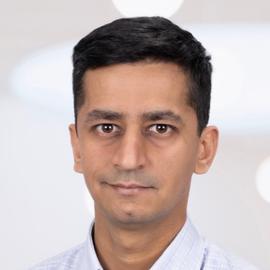
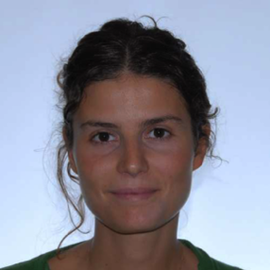
Roger J.E. Jaspers is an Associate Professor at Eindhoven University of Technology (TU/e) and a part-time Professor at Ghent University in Belgium, affiliated with the Applied Physics and Science Education school and specializing in the Science and Technology of Nuclear Fusion. His research focuses on spectroscopic diagnostics of ion processes in fusion plasmas, particularly energetic alpha particles in fusion-born reactions. Collaborations include international fusion experiments like W7-X (Germany), JET (UK), and KSTAR (South Korea). He leads the scientific R&D for the ITER CXRS instrumentation system and has authored over 90 peer-reviewed papers. His work spans topics such as: Relativistic electrons Plasma energy transport Magneto-hydrodynamics (MHD) Fusion reactor instrumentation He contributes to educational initiatives like the TU/e Fusion Master program, FUSENET, and the Erasmus Mundus Programme FUSION-DC.
Magnus Bakke Botnan is an Assistant Professor at the Department of Mathematics, Vrije Universiteit Amsterdam, holding a VIDI career grant (€850,000) since 2018. His research bridges pure and applied mathematics within topological data analysis (TDA), focusing on multiparameter persistence, computational topology, and applications to sciences. PhD in Mathematics, Norwegian University of Science and Technology (NTNU), 2015 Postdoc at TU Munich, 2016-2018 His research group includes postdocs Hannah Rocio Santa Cruz Baur and Rui Dong, and PhD student Enes Devecioğlu. Recent work involves signed barcodes, rank decompositions, and stability of persistence modules. He co-authored the first comprehensive tutorial on multiparameter persistence with Mike Lesnick. Notable contributions include proving the NP-hardness of computing interleaving distance, establishing universality of bottleneck distance for extended persistence diagrams, and developing computational methods for non-branching complexes. Publications span journals like Foundations of Computational Mathematics , Discrete & Computational Geometry , and conferences SoCG, NeurIPS, and ICRA. Scientific Awards: VIDI Career Grant (€850,000) He has taught courses including Complex Analysis, Calculus, Topological Data Analysis, and seminars on analysis and dynamical systems. Actively organizes Applied Topology Days and collaborates on projects integrating TDA with physics, computer science, and statistics.
Prof. Tobias Müller is a Professor at the Bernoulli Institute for Mathematics, Computer Science and Artificial Intelligence at the University of Groningen. His academic journey includes previous positions at Utrecht University, CWI (Centrum Wiskunde & Informatica), Tel Aviv University, and Eindhoven University of Technology, with a doctorate from the University of Oxford under Colin McDiarmid. His research focuses on combinatorics, probability theory, random graphs, percolation, discrete and stochastic geometry, and combinatorial game theory. He has contributed extensively to understanding complex networks, hyperbolic models, and geometric random structures. Research Interests: Random Graphs and Percolation Theory Discrete and Stochastic Geometry Hyperbolic Network Models Probabilistic Combinatorics Geometric Probability Graph Algorithms and Connectivity Notable Contributions: Analysis of Voronoi and Poisson-Voronoi percolation in hyperbolic planes. Studies on Mallows random permutations and their cycle structures. Research on component games and logical limit laws in graph theory. Investigations into the geometry and properties of random geometric graphs. Grants & Collaborations: Active in organizing workshops and conferences on random graphs and geometric networks, including the BIRS Workshop on Random Geometric Graphs and the STAR Workshops series. Labs/Teams: Member of the Bernoulli Institute’s research groups, focusing on stochastic studies, combinatorics, and algorithmic methods.
Michel Mandjes is a Professor at the University of Amsterdam's Faculty of Science and holds a Visiting Professor position at the Faculty of Economics and Business (FEB). His research focuses on stochastic processes, queueing theory, and probability theory, with applications in risk modeling, network analysis, and operations research. Recent publications highlight his contributions to multivariate Hawkes processes , Lévy-driven systems , and dynamic random graphs , emphasizing large deviations, rare event simulation, and statistical inference. His work bridges theoretical probability with practical challenges in traffic flow, financial risk, and social network modeling. The trends in his research include the development of stochastic models for network stability, appointment scheduling optimization, and inference techniques for non-stationary processes. His methodological innovations often leverage advanced probability theory and queueing frameworks to address real-world problems in transportation, healthcare, and finance.
Rodrigo González is an Assistant Professor at the Department of Mechanical Engineering, Eindhoven University of Technology, since 2022. His research focuses on data-driven modeling, estimation, and control methods for high-tech precision systems, with applications in motion control and continuous-time system identification. Education: Ph.D. in Electrical Engineering (KTH Royal Institute of Technology, 2022) M.Sc. in Electronic Engineering (Universidad Técnica Federico Santa María, 2016) His work emphasizes continuous-time system identification, state-space modeling, and Bayesian estimation techniques. Key research themes include motion control tuning, multivariable systems, and noise/disturbance modeling in precision engineering applications. Rodrigo has received the Best Electronic Engineering Student Award (2016) and Best Thesis Award from Universidad Técnica Federico Santa María. He has active collaborations with institutions like Universidad Técnica Federico Santa María through visiting researcher appointments. Scientific awards include: Best Electronic Engineering Student Award (2016) Best Thesis Award (Universidad Técnica Federico Santa María)
Anuj Pathania serves as an Assistant Professor in the Parallel Computing Systems (PCS) group within the Informatics Institute at the University of Amsterdam's Faculty of Science. His research pioneers sustainable computing systems operating under severe power, thermal, and reliability constraints, with significant contributions to energy-efficient hardware design and embedded systems. Education: PhD in Computer Science (2018), Karlsruhe Institute of Technology MSc in Computer Science (2012), National University of Singapore B.Tech in Computer Science (2009), Maharaja Agrasen Institute of Technology Pathania's research centers on low-power design and sustainable systems for constrained environments, with particular expertise in thermal management of 3D-stacked architectures and energy-efficient machine learning inference . His work bridges electronic design automation with real-world reliability challenges, developing novel power budgeting techniques like T-TSP that incorporate transient temperature effects ignored by conventional methods. Current projects include EU-funded initiatives on energy labeling for digital services, addressing ecological impacts through technological, behavioral, and legal frameworks. His publication trajectory reveals a strategic evolution toward zero-waste computing , with recent work (2023-2025) focusing on hardware-software co-design for edge AI, energy modeling across computing continua, and parameter-efficient neural adaptation. Key themes include thermal-aware scheduling for S-NUCA many-cores, cooperative processor utilization in heterogeneous systems, and sustainability metrics for digital services. Scientific Recognition: Best Paper Award Nomination at IEEE Computer Society Annual Symposium on VLSI 2023 for 3D-TTP power budgeting technique Pathania actively mentors 4 PhD students (Ehsan Aghapour, Saeedeh Baneshi, Sudam Wasala, Yixian Shen) and has successfully supervised 5 Master's theses (including Cum Laude defenses by Joris op ten Berg and Jurre Wolff). His research is supported by major grants including Energy Labels for Ecologically Sustainable Digital Services (2023-2024) and Towards Zero-Waste Computing (2021-2025), developing simulation frameworks like HotSniper and CoMeT for thermal analysis. The PCS group maintains strong industry collaborations with ARM and NVIDIA, particularly through tools like ARM-CO-UP for heterogeneous processor utilization.
Dr. Saer Samanipour is a Visiting Professor at the Van 't Hoff Institute for Molecular Sciences, part of the Faculty of Science at the University of Amsterdam. His research focuses on advanced analytical techniques for environmental and biomedical applications, with a strong emphasis on non-targeted analysis, mass spectrometry, and machine learning integration. He leads efforts in developing open-source tools like GcDUO and jHRMSToolBox to enhance data interpretation in complex chemical datasets. Key areas include environmental contaminant detection, chemical exposure assessment via wastewater-based epidemiology, and proteomic analysis of snake venoms. His work bridges computational methods with experimental chemistry to address global challenges in environmental health and toxicology. Primary affiliation: Van 't Hoff Institute for Molecular Sciences Research themes: Non-targeted LC-HRMS workflows, machine learning applications in analytical chemistry, PFAS analysis, and exposome research Software contributions: GcDUO (GC×GC-MS), jHRMSToolBox (HRMS data processing) His publications highlight innovations in data-driven approaches for compound prioritization, toxicity prediction, and method optimization. Recent work explores chemical space exploration and chemometric strategies for complex mixture analysis, with applications to environmental monitoring and forensic science.
Ross J. Kang is a Canadian mathematician currently serving as an Associate Professor at the Korteweg–de Vries Institute for Mathematics within the Faculty of Science at the University of Amsterdam since 2022. He is an active member of the Discrete Mathematics and Quantum Information group and the NETWORKS consortium. Previously, he held positions as Assistant/Associate Professor at Radboud University Nijmegen (2014-2022), Assistant Professor at Utrecht University (2013), and Researcher at Centrum Wiskunde & Informatica (2012-2013). His academic journey includes postdoctoral positions at Durham University (2010-2012) and McGill University (2008-2010), where he was advised by Bruce Reed and Louigi Addario-Berry. DPhil in Mathematics, University of Oxford (2008) - Thesis: 'Improper colourings of graphs', advised by Colin McDiarmid BSc (Hons) in Mathematics and Computer Science, University of Victoria (2003) - Governor General's Silver Academic Medal recipient Ross J. Kang's research focuses on probabilistic and extremal combinatorics, random discrete structures, graph coloring, geometric graphs, and algorithms. His work bridges theoretical mathematics with practical applications, exploring fundamental questions in discrete mathematics. He has made significant contributions to understanding graph coloring problems, particularly in the contexts of list coloring, distance coloring, and strong coloring. His research often employs probabilistic methods to establish bounds and structural properties in graph theory. Kang's work on the hard-core model, local occupancy method, and triangle-free graphs has advanced our understanding of the interplay between local constraints and global structure in discrete systems. Analysis of his recent publications reveals a strong emphasis on graph coloring problems, particularly list coloring variants and their extensions. His work frequently explores the relationship between graph structure (such as degree constraints, girth, or forbidden subgraphs) and coloring properties. A notable trend is his development and application of the local occupancy method to establish improved bounds for chromatic numbers in various graph classes. His research also demonstrates a consistent interest in extremal problems, seeking optimal configurations under specific constraints, particularly in the context of triangle-free graphs and geometric representations. NWO Open Competition M-1 grant entitled 'Asymptotic triangle-free structure (3Free)', 2022-2026 NWO Vidi grant entitled 'On the edge: theory and techniques at the frontiers of edge-colouring', 2017-2023 NWO Veni grant entitled 'Generalised colouring for random graph models', 2012-2015 Van Gogh travel grants (2020-2021 with Marthe Bonamy; 2016-2017 with Louis Esperet) Governor General's Silver Academic Medal (2003) Ross J. Kang has successfully supervised multiple PhD students including Eoin Hurley (defending May 2025), Stijn Cambie (defended April 2022), and François Pirot (winner of 2020 prix Charles Delorme). His research is supported by significant grants from the Netherlands Organisation for Scientific Research (NWO), including the prestigious Open Competition M-1 grant. Kang is actively involved in the academic community through his editorial role at Combinatorial Theory, co-organization of conferences like the Dutch Days of Combinatorics, and leadership in initiatives such as Innovations in Graph Theory, a diamond open access journal he helped launch in August 2023. As a member of the Discrete Mathematics and Quantum Information group at the University of Amsterdam and the NETWORKS consortium, Kang collaborates with researchers across various institutions. He has established strong international connections through his Van Gogh travel grants and participation in collaborative projects like the Sparse (Graphs) Coalition sessions. His research group focuses on theoretical aspects of discrete mathematics with connections to quantum information science, and he maintains active collaborations with researchers across Europe and North America.
Prof. Sylvia Pont is a Professor of Perceptual Intelligence at Delft University of Technology, leading the Perceptual Intelligence lab and section. Her work focuses on multisensory design, lighting science, and ecological optics, emphasizing cross-disciplinary approaches to real-world perception challenges. She coordinates the Master’s course Lighting Design and teaches in human-centered design and multisensory systems. As an Associate Editor for the Journal of Vision , her research bridges art, science, and design, with notable contributions to lighting design methods and material perception. Research Themes: Multisensory experiences, light-material interactions, perceptual intelligence, and healthcare environments. Media & Outreach: Featured in ILI Magazine , Radio Omroep Delft , and public lectures like the Van Leeuwenhoek Lecture on light perception. Professional Roles: Board member of Stichting Dutch Daylight (2022–2026), promoting daylight research and applications. Her publications span lighting science, AI ethics, and healthcare acoustics, reflecting a commitment to interdisciplinary innovation. Recent work includes studies on ICU soundscapes, algorithmic fairness, and the perceptual impact of light color changes.
Laura Toni is an Associate Professor in the Department of Electronic & Electrical Engineering at University College London (UCL). She serves as Director of the MSc in Telecommunications and Internet Engineering and the MRes in Telecommunications. Additionally, she is a Turing Fellow at the Alan Turing Institute and a member of ELLIS (European Lab for Learning and Intelligent Systems). Her research focuses on coding, streaming technologies, machine learning for immersive communications, decision-making under uncertainty, and large-scale signal processing. She leads the LASP (Learning And Signal Processing) group at UCL. Education: MSc (2005) and PhD (2009) from the University of Bologna, followed by postdoctoral research at UC San Diego and EPFL under Professors L. Milstein, P. Cosman, and P. Frossard. Key roles include Technical Program Chair at ACM MM 2022, Keynote Co-Chair at ACM MMSys 2022, and leadership in organizing workshops on graph-based machine learning and emerging technologies in performing arts. She is a Senior IEEE Member and holds editorial roles in IEEE Multimedia Magazine and EURASIP Journal on Signal Processing. Her work bridges communication systems and machine learning, with contributions to adaptive streaming, network optimization, and graph signal processing. She actively promotes diversity and inclusion in technical conferences, including roles as Diversity Chair at MMSys 2021 and PIMRC 2020.
Nikhil Bansal holds the prestigious Patrick C. Fischer Professorship of Theoretical Computer Science in the Department of Computer Science & Engineering at the University of Michigan's College of Engineering. His research program has established him as a leading figure in theoretical computer science, with significant contributions to algorithm design and analysis, particularly in discrete optimization problems. Bansal's research focuses on theoretical computer science with emphasis on design and analysis of algorithms for discrete optimization problems. His work spans multiple areas including discrepancy theory, approximation algorithms, randomized algorithms, combinatorial optimization, complexity theory, machine learning theory, and probability. He has made significant contributions to understanding the limits of approximation algorithms and developing novel techniques for combinatorial optimization problems. Analysis of Bansal's recent publications reveals a strong focus on discrepancy theory, online algorithms, and combinatorial optimization. His work often bridges theoretical computer science with discrete mathematics and probability theory. A recurring theme across his publications is the development of novel algorithmic techniques for solving NP-hard problems with provable guarantees. His research has evolved from foundational work in approximation algorithms to more recent contributions in quantum computing complexity and stochastic optimization. Patrick C. Fischer Professor of Theoretical Computer Science Bansal has advised numerous PhD students including Marek Elias, Shashwat Garg, and Greg Koumoutsous, as well as mentoring several postdoctoral researchers. He has served on editorial boards for top journals including Journal of the ACM, Theory of Computing, and Stochastic Models, and has been active on program committees for major conferences such as STOC, FOCS, SODA, and ICALP, including serving as chair for ICALP 2021. Bansal has organized multiple academic workshops including the STOC 2020 Workshop on Recent Advances in Discrepancy and Applications, several SDP Days at CWI Amsterdam, and the Semester on Bridging Continuous and Discrete Optimization at UC Berkeley in Fall 2017.
Gaurav Rattan is an Assistant Professor in the Department of Applied Mathematics at the University of Twente's Faculty of Electrical Engineering, Mathematics and Computer Science (EEMCS), where he joined in May 2024. His research focuses on the mathematical foundations of machine learning on graphs and discrete structures, with particular emphasis on theoretical aspects of graph neural networks. University of Twente, Department of Applied Mathematics (May 2024-present) TU Darmstadt, Postdoctoral Researcher in Pascal Schweitzer's group RWTH Aachen, DFG Eigene Stelle Researcher in Martin Grohe's group Dr. Rattan completed his PhD at IMSc Chennai under V. Arvind and earned his B. Tech. from IIT Bombay, establishing a strong foundation in theoretical computer science and mathematics. His research spans graph theory, algorithms, and machine learning on graphs, with specific expertise in graph isomorphism, graph homomorphisms, and the theoretical underpinnings of graph neural networks. He applies mathematical techniques from logic and algebra to develop theory-driven approaches for graph learning systems, with practical applications in optimization, bioinformatics, and databases. Dr. Rattan's publication record reveals a consistent focus on the intersection of theoretical computer science and machine learning. His recent work explores Weisfeiler-Leman algorithms, symmetry breaking techniques, and parameterized complexity of graph problems, demonstrating how classical graph algorithms connect with modern graph learning methodologies. His research provides crucial theoretical foundations for understanding the capabilities and limitations of graph neural networks. Active in the academic community, Dr. Rattan regularly presents at conferences including the Netherlands Mathematical Congress, SIGAlgo, LOGAMS, and specialized workshops on graph learning. Recent presentations include "From Graph Homomorphisms Densities to Graph Learning" at the Graph Learning Workshop at NITMB Chicago and "Color Refinement: One Algorithm, Many Facets" at SIGAlgo 2024.
Dr. Harm Bartholomeus is an Assistant Professor of Remote Sensing at the Department of Geo-information Science and Remote Sensing, Wageningen University & Research. He received his MSc in Physical Geography (2000) and a Geography teaching degree (2001) from Utrecht University. His career includes part-time PhD research (2004–2009) on soil property estimation via spectral measurements and vegetation influence. Since 2009, he has focused on remote sensing techniques like imaging spectroscopy, LiDAR, and UAV-based methods applied to forestry, soil science, and climate studies. In 2012, he co-founded the Wageningen UR Unmanned Aerial Remote Sensing Facility (UARSF), advancing UAV research in environmental studies. His expertise spans Ecology, Geographical Information Systems (GIS), Remote Sensing, Soil Science, Spectroscopy, and 3D analysis. He teaches courses such as Advanced Earth Observation, Remote Sensing and GIS Integration, and MSc thesis supervision in Geo-information Science and Remote Sensing. His work integrates cutting-edge technologies for environmental monitoring, including terrestrial laser scanning and drone-based sensing. Research interests include vegetation-soil interactions, UAV applications in agriculture and ecology, and climate resilience. He collaborates on projects like the UARSF and contributes to global initiatives like the IDEAS-QA4EO network. No scientific awards are explicitly mentioned, but his contributions to UAV and LiDAR methodologies are widely recognized. He advises MSc students on thesis and internship projects in remote sensing and geo-information science.
Dr. Maya Aghaei is a Lecturer and Researcher in Computer Vision & Data Science at NHL Stenden University of Applied Sciences, part of the Academy Technology & Innovation. She holds a M.Sc. in Artificial Intelligence and a Ph.D. in Computer Vision from the University of Barcelona. Her academic role includes supervising Minor and Master students while focusing on applying cutting-edge AI techniques to real-world challenges. Prior to her current position, she served as a Postdoctoral Researcher at the Italian Institute of Technology, developing AI solutions for industrial applications. Her research spans Computer Vision, Machine Learning, and General AI with a focus on surveillance systems, autonomous drones, hyper-spectral imaging for environmental analysis, and social signal processing through egocentric data. Notable projects include crime scene classification via trajectory analysis, obstacle detection for BVLOS drones, and psychological trait prediction based on clothing analysis. Dr. Aghaei's work emphasizes real-world applicability, bridging theoretical advancements with practical implementations in industries like agriculture, waste management, and public safety. Her interdisciplinary approach combines technical innovation with societal relevance, addressing challenges from plastic recycling to social distancing compliance through computer vision systems.
Raffaella Mulas is an Assistant Professor in the Department of Mathematics at the Faculty of Science, Vrije Universiteit Amsterdam. She previously served as a Group Leader and Minerva Fast Track Fellow at the Max Planck Institute for Mathematics in the Sciences, where she maintains an ongoing affiliation. Her research lies at the intersection of spectral graph theory, discrete mathematics, and network science. Research Interests: Her work focuses on the spectral theory of graphs and hypergraphs, particularly the properties of discrete Laplacians and non-backtracking operators. She investigates extremal combinatorics problems such as graph coloring and the Turán problem, often applying spectral methods to derive sharp bounds. Her research has strong applications in modeling and analyzing complex networks. Recent Research Trends: Analysis of the 15 most recent publications reveals a consistent focus on spectral characterizations of graphs and hypergraphs, including signed and complex unit hypergraphs. She frequently studies the normalized Laplacian and its extremal eigenvalues, develops non-backtracking operators, and explores measure-theoretic and geometric representations of networks. A strong thread connects spectral bounds to combinatorial invariants like chromatic number. VU Startpremie Grant Elected Member, European Mathematical Society Young Academy (EMYA) Elected Member, Elisabeth-Schiemann-Kolleg, Max Planck Society Minerva Fast Track Fellow, Max Planck Institute Advising and Grants: While no formal students are listed, she is an active researcher with significant grant funding, notably the VU Startpremie Grant. She collaborates internationally and supervises research projects in spectral graph theory and network analysis. Her affiliation with both VU Amsterdam and MPI-MiS enables broad academic mentorship and collaborative supervision. Labs and Research Groups: Raffaella Mulas leads research within the Mathematics Department at VU Amsterdam and is affiliated with the research group at the Max Planck Institute for Mathematics in the Sciences. Her work contributes to advancing theoretical foundations in discrete mathematics with applications in data science and network modeling.