Professor Richi Nayak is an internationally recognized expert in data mining, text mining and web intelligence at Queensland University of Technology's School of Computer Science. As the Applied Data Science Program Leader of the Centre for Data Science, she develops novel methods for text classification, clustering, and information extraction using deep learning, matrix factorization, and ranking-centered approaches. Her research spans three main streams: Text Mining for data organization and understanding, applications of data mining in solving real-world problems across domains including education, healthcare and transportation, and algorithms for automation and personalization. She has successfully commercialized technologies including marketing strategy automation and bias detection systems deployed by Fortune 500 companies. Professor Nayak's recent publications focus on practical applications of machine learning including traffic crash analysis, multimodal learning, biomass modeling, and offensive text detection. Her work consistently addresses real-world problems through innovative machine learning approaches.
Dr. Cyrus Shahabi is the Helen N. and Emmett H. Jones Professor of Engineering at the University of Southern California (USC), holding professorships in Computer Science, Electrical & Computer Engineering, and Spatial Sciences within the Viterbi School of Engineering. His research focuses on geospatial data analysis, spatial databases, and privacy-preserving technologies. With over 20 years of experience, he has pioneered concepts such as spatial indexing and spatial crowdsourcing, contributing to applications in transportation, healthcare, and urban planning. His work is funded by agencies like NSF, NIH, and NASA, and has led to technology transfers and two startups. Dr. Shahabi’s research interests span databases, spatial databases, multimedia databases, geospatial information systems, data mining, and fairness in AI. He has made significant contributions to trajectory analysis, location privacy, and ridesharing systems. His recent work addresses bias, fairness, and privacy in mobility data, with applications in pandemic control, oncology, and environmental management. He emphasizes practical societal impacts, such as optimizing traffic forecasting and enhancing urban sustainability. His recent publications explore innovative approaches in geospatial AI, including trajectory generation with LLMs, privacy-preserving data publishing, and scalable traffic forecasting using graph neural networks. His work has been supported by over 20 grants from federal agencies and industry partners like Google and Microsoft. The developed technologies have been transferred to JPL, NGA, and LA-Metro, and spun off into startups. Awards: Helen N. and Emmett H. Jones Professor of Engineering Dr. Shahabi advises on grants totaling millions of dollars and collaborates with interdisciplinary teams. He leads research initiatives addressing mobility data science, spatial fairness, and pandemic preparedness. His contributions to spatial indexing and trajectory analysis have become foundational in geospatial computing. He is affiliated with USC’s Spatial Sciences Institute and collaborates with industry through the Center for Wireless and Mobile Communications. His lab’s work bridges theoretical advancements with real-world applications, such as improving public transportation efficiency and environmental monitoring systems.
Raul Castro Fernandez is an Assistant Professor of Computer Science at the University of Chicago and co-founder and Chief Research Officer at invocate. He originated the concept of 'data ecology,' which frames his research on how data moves through and transforms technological, economic, and social systems—and how we can design interventions to make those ecosystems more valuable, equitable, and resilient. He co-leads the Data Ecology research initiative at the Data Science Institute and co-runs Chicago Data Night, a forum that brings together industry and academia in Chicago. Dr. Castro Fernandez's research centers on data ecology, data discovery, data markets, and data integration. His work develops both theoretical frameworks and practical systems that help organizations find, evaluate, and use data effectively. He approaches data as a socio-technical phenomenon, examining how data shapes our world and how we can shape it back through technical, economic, and social interventions. His research bridges computer science, economics, and social science to address fundamental challenges in data ecosystems. His recent publications reveal a strong focus on applying large language models to data management challenges, particularly for tabular data discovery and integration. He has developed innovative systems like Pneuma for LLM-based tabular data navigation, Solo for natural language data discovery, and Nexus for correlation discovery in spatio-temporal data. His work also addresses critical challenges in data valuation, data markets, and responsible data sharing, with applications across industry and research contexts. SIGMOD Test-of-Time Award (2023) NSF CAREER Award (2024) Sloan Research Fellowship (2025) Dr. Castro Fernandez actively mentors students across multiple levels, advising PhD students including Qiming Wang, Yue Gong, and Zhiru Zhu, as well as numerous master's and undergraduate students. His group has developed influential systems including Data Station (for trustworthy data sharing), Ver (for view discovery), Metam (for goal-oriented data discovery), and Solo (for natural language data discovery). These systems address fundamental challenges in data discovery, sharing, and integration, with applications across various domains. He leads the Data Ecology research group at the University of Chicago, which focuses on developing technical, economic, and social interventions to make data ecosystems more valuable, equitable, and resilient. His team works at the intersection of database systems, machine learning, and economics to build practical systems that address real-world data challenges faced by organizations and individuals, with a particular emphasis on the socio-technical aspects of data sharing and discovery.
Assoc. Prof. Renata Ďuračiová, PhD., serves as Associate Professor and Head of the Department of Global Geodesy and Geoinformatics at the Faculty of Civil Engineering, Slovak University of Technology in Bratislava. Her academic role centers on advancing geoinformatics through rigorous research in spatial data quality, uncertainty modeling, and mathematical GIS methodologies while leading departmental operations and curriculum development. Her research spans spatial databases, geospatial analyses, and environmental applications including Lidar processing, building footprint detection, and solar radiation modeling. Key contributions address bark beetle infestation prediction using satellite data and machine learning, alongside innovations in fuzzy logic for spatial database querying and heterogeneous data integration. Her work bridges theoretical geoinformatics with practical solutions for forest management and urban planning challenges. Analysis of her 2017-2025 publications reveals consistent focus on spatial data quality assessment, terrain parameter effects on environmental modeling, and algorithmic development for Lidar/satellite data processing. Recurring themes include uncertainty quantification in spatial analyses, cross-source data integration (e.g., OpenStreetMap/INSPIRE), and climate-driven ecological modeling. Her technical expertise manifests in specialized tools like point-cloud solar radiation calculators and predictive models for forest disturbances. Prof. Ďuračiová actively contributes to the geospatial community through leadership roles in the Cartographic Society of the Slovak Republic (Executive Committee since 2011) and Slovak Association for Geoinformatics (Presidency since 2011). Her professional engagement emphasizes advancing geoinformatics standards and applications within Central European contexts while mentoring through courses like Database Systems in GIS and Geodata Quality Analysis.
Mario Nascimento is a Professor at the University of Alberta 's Department of Computing Science within the Faculty of Science. He previously served as department Chair from 2014-2021 (with a 2019-2020 leave) and holds affiliations with institutions including the National University of Singapore , Aalborg University , and others. His current leave-of-absence status allows focusing on specific research initiatives.
Matthew W. Crocker is a Professor of Psycholinguistics at the Department of Language Science and Technology, Saarland University . As Principal Investigator for SFB projects A1 and C3, and Deputy Speaker of SFB 1102, he leads interdisciplinary research on language comprehension mechanisms. His work integrates computational modeling with neuroimaging and eye-tracking to explore how linguistic and non-linguistic context interact. Education: BSc (1986) and MSc (1988) in Computer Science, University of New Brunswick and British Columbia; PhD in Philosophy (1992) from University of Edinburgh's School of Informatics Academic Roles: ESRC Research Fellow (1994-1998); Chair in Psycholinguistics since 2000 at Saarland University Research Interests focus on: Computational Psycholinguistics applying neural networks to language processing Information Theory in linguistic encoding Embodied Cognition through situated comprehension studies ERP Correlates (N400/P600) of integration and retrieval Scientific Contributions : Co-founder of AMLaP conference (1995) Editorial leadership in Frontiers in Language Sciences , Cognition , and Glossa Psycholinguistics 2012 SIGdial Best Paper Award for hearer gaze tracking research Teaching includes courses on Information Theory and Computational Psycholinguistics , with recent 2023 block courses streamed via Zoom and Microsoft Teams. His technical development extends to tools like the GSEARCH Corpus Query System for syntactic structure analysis.
Ravi Sharma is a postdoctoral researcher at the Department of Built Environment at Eindhoven University of Technology, specializing in Industrial Internet of Things (IIoT), Industry 4.0, and data-driven sustainable systems. He earned his PhD from Budapest University of Technology and Economics and a Master's from Indian Institute of Technology, Patna. Role: Researcher focusing on IIoT, ERP integration, and secure data transfer. Projects: Active in the WILSON project for federated digital twinning in building management. Sharma’s research spans IIoT, digital twins, 5G-enabled systems, and blockchain. His work addresses reducing human intervention in industrial data flows, enhancing security, and aligning technology with UN Sustainable Development Goals (SDGs). Recent publications highlight UAV-assisted code dissemination, secure pipeline monitoring, and AI-driven societal advancement. His publications (2025-2020) emphasize IIoT, Industry 4.0, and sustainable computing. Trends include blockchain for data integrity, 5G for real-time positioning, and semantic frameworks for interoperability in construction. Sharma's expertise contributes to SDGs like sustainable cities and responsible consumption. He collaborates across disciplines, including with the WILSON project team for lifecycle building management.
Nikos Pelekis is a Lecturer at the Department of Statistics and Insurance Science and a researcher at the Information Management Group in the Department of Informatics at the University of Piraeus. His research specializes in mobility data management, spatiotemporal databases, and knowledge discovery from moving objects. Research Focus: Design of trajectory database engines (HERMES) Semantic-aware mobility data mining Privacy-preserving techniques for sensitive trajectory data Key Achievements: Best Paper Award at ER'13 and IEEE ICDM'09 Author of "Mobility Data Management and Exploration" monograph Principal researcher in EU projects including GeoPKDD and MODAP
Christos Doulkeridis is a Professor at the Department of Digital Systems, University of Piraeus. Specializing in big data management, distributed systems, and mobility analytics, he has led projects such as CHOROLOGOS (ELIDEK-funded) and contributed to EU initiatives like datAcron and Track&Know. He holds Marie-Curie and ERCIM fellowships, and his work emphasizes energy-efficient data architectures and semantic trajectory analysis. Education: PhD in Informatics, Athens University of Economics and Business (2007) MSc in Informatics, Athens University of Economics and Business (2003) Diploma in Electrical & Computer Engineering, National Technical University of Athens (2001) Research Interests: Big data analytics, cloud computing, spatiotemporal query processing, mobility forecasting (e.g., traffic patterns, maritime monitoring), and semantic trajectory modeling. His work bridges theory with practical applications in smart cities and environmental sustainability. Awards: Winner of SemEval’17 Task4 (sentiment analysis) Best Paper Award at EuroVA’19 Michalis Dertouzos Award (2004) for Human Face of Computing Grants & Projects: Principal Investigator for CHOROLOGOS (semantic spatiotemporal data) Core contributor to datAcron (maritime data ontology) European projects: BigDataStack, RoadRunner (ARISTEIA II) Labs & Teams: Leads research teams developing frameworks like SPARTAN (semantic integration) and ARGO (trajectory prediction). Collaborates on open-source tools like ST_VISIONS (spatiotemporal visualization) and NoDA (unified NoSQL access).
Dr. Aparna Varde is a tenured Associate Professor in the School of Computing at Montclair State University (MSU), NJ. She also serves as Associate Director of the Clean Energy and Sustainability Analytics Research Center (CESAC) and previously held roles as Inaugural Associate Director for Graduate Studies and Research in SoC. She has conducted research visits at the Max Planck Institute for Informatics in Germany and holds degrees from the University of Bombay (BE), Worcester Polytechnic Institute (MS/PhD). Her research focuses on AI, Machine Learning, Data Mining, Environmental Computing, and Robotics. Notable projects include GreenDSS (green data center decision support), CSK-based robotics (e.g., CSK-Detector and Robo-CSK-Organizer), and offshore wind energy analysis. She has secured over $2M in grants from PSE&G, NSF, NOAA, and NJEDA. Dr. Varde advises PhD students (e.g., Xu Du, Michael Pawlish) and serves on editorial/review boards for IEEE/ACM journals. She has received 9 best paper awards at IEEE conferences and is recognized as an outstanding researcher by USCIS. Education: BE (University of Bombay), MS/PhD (Worcester Polytechnic Institute) Awards: 9 best paper awards at IEEE conferences, NSF/NOAA grants, Fulbright mentorship Key Projects: Smart Cities policy analysis, autonomous vehicle CSK integration, drone-based environmental monitoring Her work spans 150+ publications in IEEE/ACM venues and addresses UN Sustainable Development Goals through smart living apps (e.g., food donation platforms, hydro-climate tools). Collaborations include MPII Germany, IBM Research, and Queensland University of Technology.
Christian S. Jensen is a Professor at the Department of Computer Science, Aalborg University, affiliated with The Technical Faculty of IT and Design. His primary research focuses on data management, spatiotemporal systems, and AI-driven solutions for mobility and cyber-physical systems. He leads projects like DiCyPS (Data-Intensive Cyber-Physical Systems) and MALOT (Managing Mobility Data Quality for Location of Things). He has published over 700 papers, with recent work emphasizing time series forecasting, trajectory analysis, and edge computing. Notable contributions include frameworks like Memory Guided Transformers and TEAM for traffic prediction. His work has been recognized with awards including the IEEE TCDE Impact Award (2019) and the Order of Dannebrog (2016). Jensen actively collaborates internationally, holding roles in organizations like the Max Planck Institute and the Villum Foundation. His research bridges theory and practice, addressing real-world challenges in smart cities, energy systems, and autonomous driving.
Tiantian Liu is an Assistant Professor in the Department of Computer Science at Aalborg University, under the Technical Faculty of IT and Design. Her research focuses on data engineering and systems, particularly in the context of indoor location-based services and data science. Research Interests: Her work spans data management, indoor positioning, spatiotemporal databases, and scalable systems. She applies techniques from data science and computer science to solve challenges in real-time data processing, data quality, and context-aware applications. The publication trend from 2020 to 2024 shows a consistent focus on data engineering, with topics including indoor LBS, query optimization, distributed systems, and data integration. Her research combines theoretical database principles with practical system implementations. Scientific Awards: Prize (1) Advising and Grants: While no formal students are listed, she has participated in externally funded research projects. She was a project participant in Data Management Foundations for Indoor LBS (2019–2021), contributing to foundational work in indoor data systems. Labs and Teams: She is a member of the Data Engineering, Science and Systems research group at Aalborg University, collaborating on data-intensive systems and applications.
Alessandro Artale is an Associate Professor in the Faculty of Computer Science at the Free University of Bozen-Bolzano, where he is affiliated with the KRDB Research Centre. His research spans theoretical and applied aspects of knowledge representation, ontologies, and temporal reasoning. He earned his PhD in Computer Science from the University of Florence in 1994 and has held research and academic positions at CNR-LADSEB, IRST (now FBK), and UMIST (University of Manchester). PhD in Computer Science, University of Florence, 1994 His research interests include: Description Logics Ontologies and Conceptual Modelling Temporal and Computational Logics Knowledge Representation and Databases Artificial Intelligence and Natural Language Semantics His recent scholarly activities are reflected in his participation in leading international conferences such as AAAI, IJCAI, ECAI, KR, DL, TIME, and FoIKS. These publications and committee roles highlight a consistent focus on formal methods in AI, particularly in the areas of description logics, temporal reasoning, and ontology-based systems. The research demonstrates a strong theoretical foundation with applications in semantic web technologies and knowledge-driven systems. Notable scientific contributions include: Principal Investigator of the EPSRC project on Temporal Databases using Description Logics (2001–2004) Member of the KnowledgeWeb Network of Excellence Member of the InterOp Network of Excellence Member of the ESPRIT DWQ project on Data Warehouse Quality Artale has advised numerous Master's and PhD students through project supervision and has organized academic events such as the TIME and DL workshops. He has served on the program committees of over 50 international conferences and workshops, demonstrating extensive engagement with the research community. His teaching includes core computer science courses in algorithms, formal languages, compilers, and discrete mathematics. He is actively involved in research labs and teams including: KRDB Research Centre, Free University of Bozen-Bolzano Collaborations with European research networks (KnowledgeWeb, InterOp)
Christian Graugaard is a Professor of Sexology at Aalborg University, affiliated with the Faculty of Medicine and the Department of Clinical Medicine. He is a key member of the Center for Sexology Research and leads Project SEXUS, aiming to study Danish sexual behavior comprehensively. His work emphasizes the intersection of biological, psychological, and cultural factors in human sexuality, challenging simplistic gender-based stereotypes. Research interests include gender differences in sexual behavior, societal norms influencing sexual health, and the cultural dimensions of human sexuality. He actively participates in public discourse, as seen in his DR-podcast interview on 'Ramt af kærlighed,' where he discussed the complex interplay between biology and culture in shaping sexual identities. Though no specific awards or grants are detailed here, his publications span advanced technical domains like spatiotemporal data analysis, federated learning, and trajectory modeling, suggesting interdisciplinary research collaborations. His work on systems like OneDB and SWASH highlights contributions to distributed computing and data science, which may underpin his methodologies in large-scale sexual behavior studies. He currently holds no listed students or formal advisees in the provided texts, and his involvement in labs/teams is limited to the Center for Sexology Research and Project SEXUS.
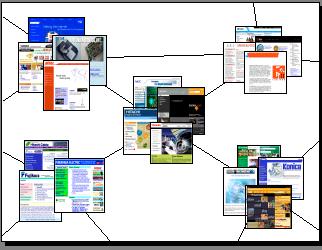
Masashi Toyoda is an Associate Professor at the Institute of Industrial Science, University of Tokyo. He leads the Kitsuregawa and Toyoda Laboratory and is affiliated with the International Research Center for Strategic Information Fusion. His research focuses on web mining, user interfaces, and information visualization. Education: Ph.D. in Computer Science, Tokyo Institute of Technology (1999) M.S. in Computer Science, Tokyo Institute of Technology (1996) B.S. in Computer Science, Tokyo Institute of Technology (1994) His research interests span web mining, user interfaces, information visualization, and visual programming. He has conducted significant work in spatiotemporal web analysis, web spam detection, evolution of web communities, and visualization techniques including zooming interfaces and 3D web graph visualization. Recent publications (2008-2011) demonstrate strong focus on web mining, information visualization, and web security. Research trends include 3D visualization of time-series web data, analysis of blog archives and CGM images, and novel methods for detecting and classifying web spam. The work consistently emphasizes large-scale web data analysis and interactive systems. Scientific Awards: 1st DBSJ Paper Award Winner (2003) FIT Paper Award and Funai Best Paper Award (2002) Best Presentation Award at DEWS2002 Presentation Award at DEWS2000 Best Paper Award at DEIM2011 Conference Excellence Award at IPSJ 72nd National Convention As head of the Toyoda Laboratory at the University of Tokyo, he leads research in web mining, information fusion, and visualization. The lab has developed notable projects including WebRelievo for web structure evolution analysis and KLIEG visual programming environment.