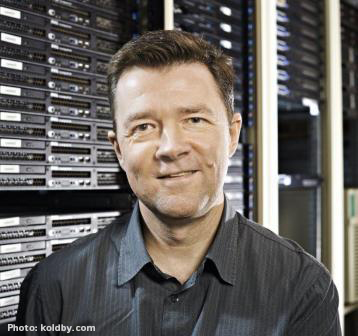
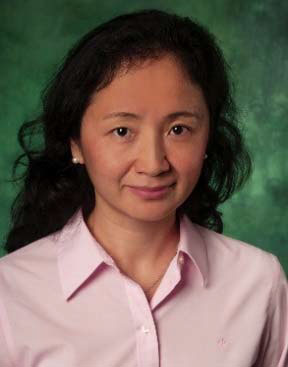
Felix Kiehn is a Researcher in the Department of Informatics at the University of Hamburg, where he focuses on distributed database systems and polyglot persistence architectures. He is currently completing his dissertation titled Design and Implementation of a scalable polyglot database system for data migration and mediation under the supervision of Prof. Dr. Norbert Ritter. His research explores: Polyglot persistence frameworks for heterogeneous data systems Data migration and mediation techniques Scalable architectures for NoSQL databases Distributed query optimization Kiehn's publications primarily address challenges in distributed data management, with recent work focusing on constraint modeling in polyglot systems (2024) and operator placement for spatio-temporal data processing (2022). He actively supervises student research, advising both Bachelor's and Master's theses on database topics. Current projects include contributing to the HADeS (Heterogenous and Adaptive Database System) research initiative.
Demetris Zeinalipour is a Professor of Computer Science at the University of Cyprus, where he founded and directs the Data Management Systems Laboratory (DMSL). He holds a Ph.D. (2005) and M.Sc. (2003) in Computer Science and Engineering from the University of California - Riverside, CA, USA and a B.Sc. in Computer Science from the University of Cyprus (2000). His career includes research positions at Akamai Technologies, University of Athens (as a Marie-Curie Fellow), University of Pittsburgh, and the Max Planck Institute for Informatics (as a Humboldt Fellow). He is an ACM Distinguished Speaker (2017-2020), a Senior Member of ACM and IEEE, and serves on the editorial boards of ACM Transactions on Spatial Algorithms and Systems and Distributed and Parallel Databases. His primary research spans Data Management in Computer Systems and Networks, with expertise in Mobile, Sensor and Spatio-Temporal Data Management; Big Data Management in Parallel and Distributed Architectures; Network, Blockchain and Telco Data Management; Crowd, Web 2.0 and Indoor Data Management; Data Privacy Management; Data Management for Sustainability; and AI and Data Management. His work bridges theoretical foundations with practical applications, resulting in numerous systems including Anyplace Indoor Information Service, ChatUCY, GreenCap, EcoCharge, and Triabase. His research has evolved from early work in sensor networks to current focus on sustainable computing applications addressing climate change challenges. Professor Zeinalipour's publication record shows a strong trajectory toward sustainability-focused data management, with recent work on energy management for smart homes, electric vehicle charging, and solar self-consumption. His research integrates multiple disciplines including spatial databases, mobile computing, IoT systems, and blockchain technologies, with increasing emphasis on addressing real-world environmental challenges through computing solutions. Scientific Recognition IEEE ICDE'24 Outstanding Reviewer Award IEEE MDM'21 Best App Paper Award IEEE MDM'18 Best of MDM Award and Best Demo Award Humboldt Fellow (2016) ACM Distinguished Speaker (2017-2020) ACM and IEEE Senior Member status He has advised numerous PhD students and postdocs, many of whom have established successful careers in both academia and industry. His laboratory maintains strong industry connections and contributes to open-source development. Professor Zeinalipour is deeply committed to addressing real-world challenges through computing research, with recent work focusing on climate change mitigation and sustainable energy management solutions.
Johanna Geiß is a postdoctoral researcher at the Institute of Computer Science , Heidelberg University, specializing in Natural Language Processing , Information Extraction , and Event Detection . She contributes to projects like SCIDATOS (sepsis diagnosis) and EventAE (event-based Linked Data exploration). Education: PhD from University of Cambridge (2011), Magister Artium in Computational Linguistics (Heidelberg, 2006) Her research integrates Geoparsing , Social Network Analysis , and Graph Theory for tasks such as toponym disambiguation and entity resolution. Recent work includes frameworks like HeidelPlace and tools for semantic word clouds. Key awards include the 2010 Lundgren Research Award and multiple grants from the EPSRC and Cambridge European Trust. She has taught courses on Information Networks and Data Mining at Heidelberg University. As a postdoc , she advises on scientific computing applications in healthcare and contributes to open-source tools like NECKAr and EventAE .
Manuela Zude-Sasse is a Research Professor at the Leibniz Institute for Agricultural Engineering and Bioeconomy (ATB) in Potsdam, Germany, and former Professor at Beuth University of Applied Sciences Berlin (2009–2017). As Working Group Leader for Precision Horticulture, she focuses on spectro-optical measurement methods (LiDAR, hyperspectral analysis) for fruit quality assessment, canopy modeling, and data science applications in bioeconomy. M.Sc. in Chemistry/International Agronomy (1996, TU Berlin) Ph.D. in Horticulture summa cum laude (1999, TU Berlin) Habilitation in Applied Plant Physiology (2004, Humboldt University) Her research spans Precision Fruit Production , Plant Phenotyping , and 3D Sensor Integration , with projects like CrackSense (fruit cracking prediction) and horDIGrow (resource-efficient horticulture). She employs LiDAR, hyperspectral imaging, and time-resolved fluorescence to analyze temperate and tropical fruits. Recent publications in Plant Phenomics and Horticulturae demonstrate her work on spatial chlorophyll estimation via LiDAR and fruit water stress indices. Her studies in the Journal of Food Engineering (2024) and Postharvest Biology and Technology (2023) highlight machine learning applications for ripeness detection and 3D canopy analysis. Technology Transfer Award (State of Brandenburg, 2003) Silver Medal for Innovation (Agritechnica, 2017) She leads the SMART Farming Technology Research Center (SFTRC) collaboration in Malaysia and serves on editorial boards for Plant Phenomics , International Agrophysics , and Biosystems Engineering . Her 3D point cloud methodologies enable non-contact fruit biomechanics and nutrient management studies.
Lijun Yin is a SUNY Distinguished Professor of Computer Science at Binghamton University, part of the Thomas J. Watson College of Engineering and Applied Science. He directs the Research Center for Imaging, Acoustics and Perception Science (CIAPS), the Graphics and Image Computing Laboratory, and co-directs the Seymour Kunis Media Core. His research focuses on computational methods in computer vision, graphics, and human-computer interaction, with over 160 publications and 10 patents. Notable contributions include 2D/3D/4D facial expression databases widely used in academia and industry. Education : Bachelor of Science, Beijing University of Post and Telecommunication Master of Science, Shanghai Jiao Tong University Doctor of Philosophy, University of Alberta, Canada (2000) Research Interests : Yin's work spans computer vision, graphics, and image processing, with emphasis on facial expression analysis, 3D object modeling, and human behavior understanding. He has pioneered multimodal data fusion techniques and developed influential facial expression databases. Professional Activities : Yin has chaired major conferences like FG2025 and served on editorial boards of journals like Image and Vision Computing . He is an IEEE Fellow and National Academy of Inventors Senior Member. Awards : Lois B. DeFleur Faculty Prize for Academic Achievement (2019) SUNY Chancellor's Award for Excellence in Scholarship (2014) James Watson Investigator Award (2006) FG2024 Test of Time Award (2024) Students : Yin has advised numerous PhD and master's students (listed in detail above), many of whom hold academic or industry leadership positions. His lab alumni include faculty at institutions like Texas A&M, Missouri S&T, and Amazon Research. Labs & Teams : His laboratories (CIAPS, GAIC) focus on imaging science, perception, and graphics. Collaborative projects include the V4V Challenge for non-contact vital signs estimation and the 3DFAW Workshop on facial alignment.
Eng-Jon Ong is a Research Fellow at the University of Surrey's Centre for Vision, Speech and Signal Processing (CVSSP) within the Faculty of Engineering and Physical Sciences. His work spans computer vision, machine learning, and human-computer interaction, with a focus on facial feature tracking, lip reading, sign language recognition, and biomedical applications of deep learning. University: University of Surrey Department: Centre for Vision, Speech and Signal Processing (CVSSP) Affiliations: CVSSP research group Research Interests: Ong specializes in advanced computer vision techniques, including real-time 3D reconstruction, facial expression analysis, and automated lip-reading systems. His work bridges theoretical machine learning with practical applications like medical imaging (protein localization) and media production (virtual studios). Notable contributions include: Development of robust facial feature tracking algorithms using linear predictors and AAMs Pioneering methods for sign language recognition via sub-unit analysis Deep learning architectures for single-cell protein localization (HCPL system) Real-time lip-reading systems with state-of-the-art accuracy Publications reflect a strong focus on temporal pattern recognition, ensemble learning, and cross-modal interaction analysis. Recent work emphasizes biomedical applications, such as improving protein localization accuracy through novel deep learning ensembles. Labs/Teams: Active contributor to CVSSP's multidisciplinary research projects in computer vision and machine learning.
Kulsawasd Jitkajornwanich is an Assistant Professor in the Department of Professional Communication at Texas Tech University's College of Media and Communication. He holds a Ph.D. in Computer Science from the University of Texas at Arlington, with research focused on computational and data science applied to social media, environmental monitoring, and disaster management. His work integrates GIS, NOSQL databases, and AI techniques to address challenges in crisis communication, precision agriculture, and health misinformation detection. Education: Ph.D. in Computer Science, University of Texas at Arlington (2014) M.S. in Computer Science, University of Texas at Arlington (2009) B.S. in Computer Science, Chulalongkorn University (2004) Research Interests: Computational communication, social media analytics, NLP, big data visualization, and AI-driven solutions for environmental and health crises. His interdisciplinary approach bridges computer science with communication studies to foster impactful research in crisis management and science communication. Awards: 2021 Community Outreach Award for 'Tawai For Health' 2019 National Dissertation Award (Thailand) 2018 Faculty Research Visibility Award (KMITL) Teaching & Grants: Teaches courses like Big Data Analytics and Media Insights. Co-PI on a €93K EU grant (Erasmus+) for educational automation in Thailand. Advises graduate and undergraduate students across 2 PhD, 14 master’s, and 15 undergraduate projects, including a 'Best Paper Award' winner. Labs/Teams: Founded Texas Tech's Media Insights Lab (2023), focusing on computational communication and data-driven media strategies. Collaborates with Thai government agencies on disaster management and health initiatives.
Alberto Belussi is an Associate Professor at the Department of Computer Science within the School of Science and Engineering at the University of Verona. He serves as a member of the PhD Councils, Teaching Boards, and various committees related to academic governance, including roles as Presidente of the University Language Centre's programming and administrative boards. Research Interests: Spatial query processing and optimization in geographical applications Conceptual modeling of spatial databases with emphasis on integrity constraints Machine learning techniques for spatial data Big data analytics with spatio-temporal datasets Development of tools for GeoUML and INSPIRE data specification interoperability Projects: He has led or participated in projects such as INDICE (Digital Innovations for Cultural Industries), Advanced digitization techniques and blockchain for cultural heritage , and Semantic mapping of Italian National Core to EU INSPIRE , among others spanning 2001–2025. Teaching: Belussi teaches courses like Advanced Database Systems, Databases, and Data Management and Machine Intelligence across multiple academic years, including 2025/2026.
Matteo Cristani is an Associate Professor at the University of Verona 's Department of Computer Science , where he teaches courses in Artificial Intelligence , Semantic Web , and Programming across multiple degree programs including Bioinformatics, Computer Science, and Artificial Intelligence. His research focuses on Knowledge Representation , NLP , and Formal Security Analysis , with applications spanning from blockchain technology to geospatial systems. Research Focus Intelligent agents and multi-agent systems Distributed artificial intelligence Formal methods in security theory Network security and cybersecurity NLP and large language models Ontology engineering Projects Active in third-mission activities, Cristani leads projects such as SHIELD (Securing Decentralized Finance and Healthcare Systems), SLOTS (Smart Legal Order in Digital Society), and NOMEN (Next-Gen Cyber Ranges). He has participated in 30+ research initiatives since 2001, including PRIN grants and industrial collaborations in semantic web applications.
Felix Kunde is a Researcher at the Beuth University of Applied Sciences Berlin, contributing to the ExCELL and MAGDa projects. He holds a Bachelor's degree in Geography and a Master's degree in Geoinformation Science. His professional experience includes roles as a database developer for 3D city models and teaching geodatabase systems at universities. He actively participates in conferences such as FOSSGIS, FOSS4G, and WhereCamp, presenting work on topics like traffic forecasting, geospatial data management, and PostGIS extensions. Research interests focus on spatial data management (RDBMS/NoSQL/HDFS), spatio-temporal statistics, linear referencing, machine learning in GIS, and 3D city modeling. Current projects address short-term traffic forecasting with STARIMA/SVM/ANN methods, handling missing data in time series, and scalable geostatistical algorithms on Hadoop. He also works on open data models for traffic in OpenStreetMap and mobile databases using GeoPackage. Education: Bachelor of Geography Master of Geoinformation Science Key Contributions: Co-developer of pgMemento for spatial database auditing Contributor to the 3DCityDB project Lead researcher on ExCELL mobility platform Teaching: Lectures on geodatabases at multiple universities PostGIS workshops at conferences His publications span topics from geodatabase systems to traffic prediction algorithms, with notable work in spatial-temporal data analysis and geoinformatics applications. He advises multiple students on projects related to mobility analytics, data mining, and geospatial technology integration.
Jensen Christian Søndergaard is the Obel Professor of Computer Science at Aalborg University, Denmark. He has held academic positions including Professor at Aarhus University (2010–2013) and Aalborg University, as well as visiting roles at institutions like Google (2008–2009), University of Arizona, and others. He earned a Ph.D. (1991) and Dr.Techn. (2000) from Aalborg University. His research focuses on temporal and spatio-temporal data management, mobile services, and data-intensive systems. Key contributions include advancements in database systems, indexing, and query processing. Education : Ph.D. (1991), Dr.Techn. (2000) in Computer Science, Aalborg University Awards : ACM/IEEE Fellowships, Villum Kann Rasmussen Award, Telenor Nordic Award He has chaired major conferences like VLDB 2005, IEEE ICDE 2013, and served as Editor-in-Chief of The VLDB Journal. His service includes roles in the VLDB Endowment and EDBT Endowment.
Jianwen Su is a Professor at the University of California, Santa Barbara, USA, with a distinguished career spanning over three decades in Computer Science , particularly in Database Systems , Business Process Management , and Web Services . Their research bridges theoretical foundations with practical applications, focusing on data-centric process modeling , formal verification , and spatio-temporal data analysis . Key contributions include the design of artifact-centric workflow models , temporal constraint languages , and query systems for uncertain data . Recent work integrates machine learning with proteomic analysis for stress biomarker discovery and LLM-based extraction of structured data from clinical reports. Notable scientific recognition includes the 2019 ACM PODS Alberto O. Mendelzon Test-of-Time Award . Collaborations span institutions globally, with frequent co-authorship in journals like Information Systems , ACM Transactions on Management Information Systems , and conferences such as BIBM and TIME .
Yan Huang is a Regents Professor in the Department of Computer Science and Engineering at the University of North Texas (UNT). She holds ACM Distinguished Member and UNT Decker Scholar titles. Her roles include Associate Dean for Research and Graduate Studies (2016-2019), Interim Dean of the College of Engineering (2018), Senior Associate Dean (2019-2021), and Interim Chair of Computer Science and Engineering (2020-2021). She has served as a visiting scholar at Microsoft Research Asia and Fudan University. Education: B.S. in Computer Science from Peking University (1997) and Ph.D. in Computer Science from the University of Minnesota (2003). Research interests focus on spatio-temporal databases, geo-stream data processing, smart transportation, and location-based social networks. Her work is funded by NSF, DoD, Texas Department of Transportation, and Oak Ridge National Lab. Notable achievements include a $3.76M grant from the Army Research Lab (2023). Key awards include the Best Paper Award at IEEE IRI 2023 (student work) and recognition as a Regents Professor (2021). She advises multiple Ph.D. students and oversees a lab (DP F205).
Christos Doulkeridis is a Professor at the Department of Digital Systems, University of Piraeus, Greece. He specializes in parallel and distributed query processing, large-scale data management, and spatio-temporal data systems. His work focuses on optimizing big data frameworks for mobility analytics and distributed knowledge discovery. He holds a PhD from Athens University of Economics and Business (2007) and has been involved in several EU-funded projects like EMERALDS, Green.DAT.AI, and MobiSpaces as Principal Investigator or Coordinator. Education: PhD in Informatics (2007), Athens University of Economics and Business M.Sc. in Information Systems (2003), Athens University of Economics and Business Diploma in Electrical and Computer Engineering (2001), National Technical University of Athens Awards: Best Paper Awards at SIGSPATIAL, SSTD, EuroVA Marie-Curie and ERCIM Fellowships SemEval 2017 Task 4 & 6 competition wins His research interests include scalable data processing frameworks, mobility data analytics, and spatio-temporal query optimization. He leads projects like MobiSpaces (Horizon Europe), aiming to create energy-efficient data spaces for mobility data. He has published over 100 papers in top venues like EDBT, SIGMOD, and ICDE, focusing on distributed systems, query processing, and machine learning applications in data management. Teaching: He teaches undergraduate and graduate courses in data structures, data analysis, big data processing, and database systems at the University of Piraeus. His courses integrate practical tools like Spark and Hadoop for real-world data challenges.
Dr. Saida Elmi is an Assistant Professor in the Electrical and Computer Engineering and Computer Science Department at the University of New Haven's Tagliatela College of Engineering, and holds a concurrent Adjunct Assistant Professor position at Yale University's School of Medicine. She earned her PhD in Computer Science from France's National School of Mechanics and Aerotechnics in 2017, followed by postdoctoral positions at Korea University of Technology and Education (2017-2018), National University of Singapore (2018-2021), and Yale University (2021-2022). Her research centers on knowledge discovery through machine learning and spatial data mining techniques, with applications ranging from urban computing to healthcare analytics. Current projects include action recognition for mental disease detection at Yale. Her publication record demonstrates consistent contributions to spatial data processing, prediction models, and uncertain database systems. Analysis of her 15 most recent publications reveals strong emphasis on spatio-temporal prediction models, skyline query optimization, and deep learning applications for urban systems. Recurring themes include POI prediction, traffic/transportation analytics, and uncertainty management in databases.