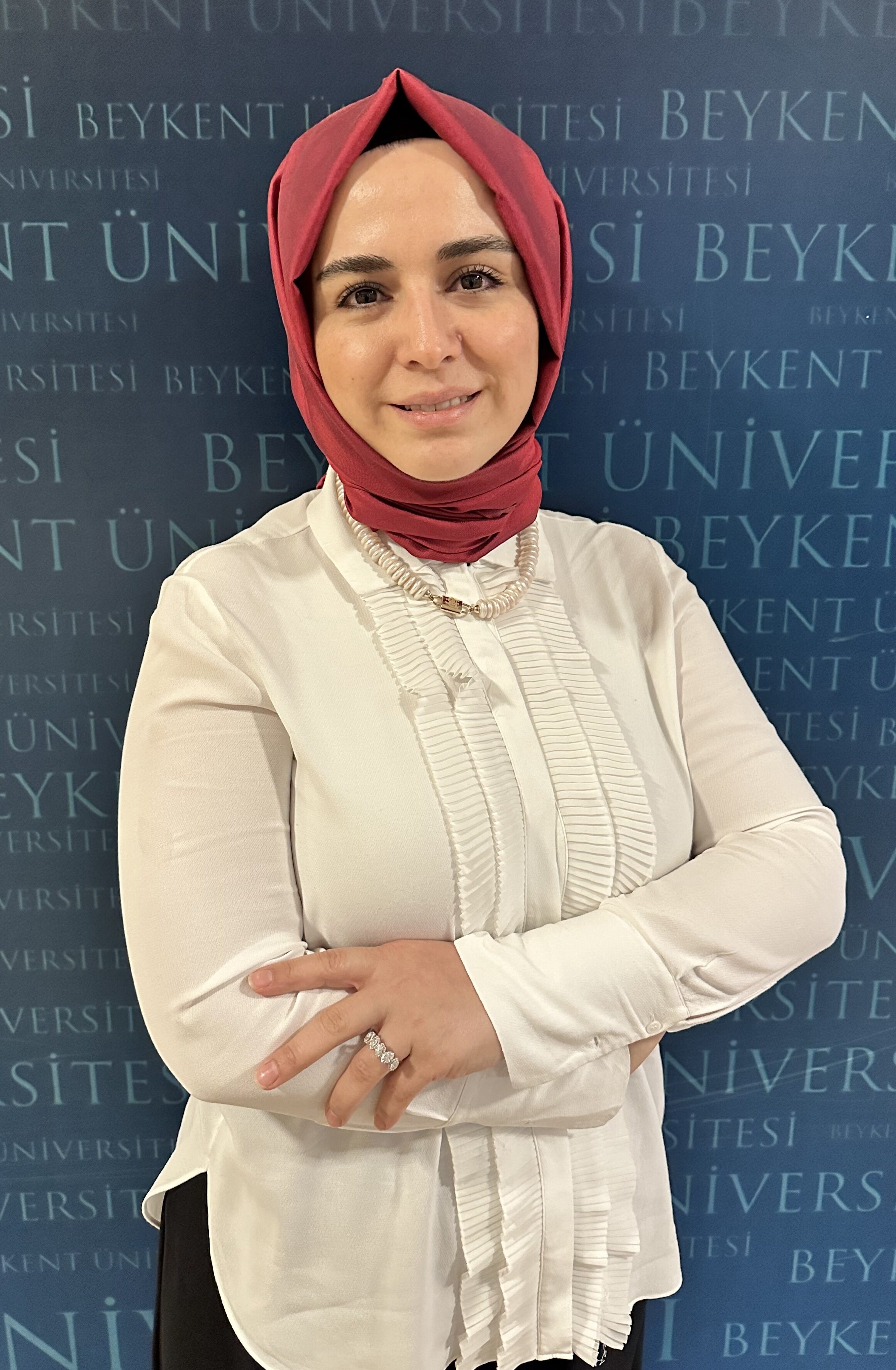
Betül Bulut is an Assistant Professor in the Department of Industrial Engineering at Beykent University , Turkey. She teaches courses such as Technical English , Enterprise Resource Planning , and Engineering Economics , combining industrial engineering principles with applied analytics. Research Focus Her research spans fraud detection , ergonomic risk assessment , healthcare process optimization , and retail analytics . She employs machine learning and simulation modeling to address spatio-temporal patterns in banking fraud, hospital workflows, and retail product clustering. Publication Trends Recent work emphasizes unsupervised learning for ATM fraud detection and multi-agent systems in healthcare. Earlier studies focus on analytical network processes for software selection and ergonomic risk evaluation in occupational safety.
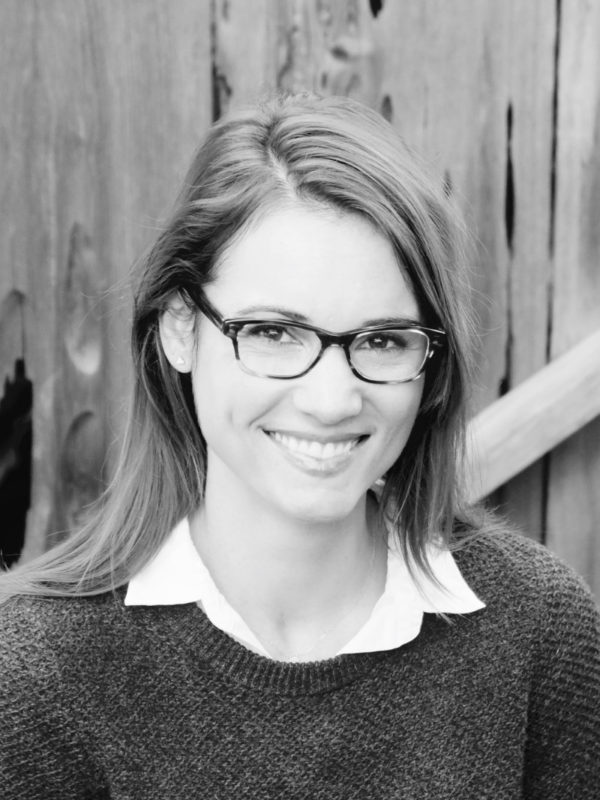
Dr. Craig Robertson is a Lecturer in Marine Biology at the School of Ocean Sciences, Bangor University. He holds a PhD in Macrofaunal Diversity and Functioning within Submarine Canyons (2018), an MSc in Marine Environmental Protection (2008), and a BSc in Applied Marine Biology (2007), all from Bangor University. His career includes commercial marine science experience as a benthic taxonomist and offshore environmental scientist before returning to academia. Research Focus Dr. Robertson's research examines benthic ecosystem functioning using trait-based approaches across environmental gradients. His work in submarine canyons, cold-seeps, and coral reefs investigates: Biodiversity-ecosystem function relationships Anthropogenic disturbance impacts (trawling, hypoxia, microplastics) Spatio-temporal patterns in macrofaunal communities Habitat heterogeneity effects on sediment biogeochemistry He currently leads a NERC-funded project (2023-2027) developing trait-based approaches for mapping benthic ecosystem services. Teaching & Advising He teaches undergraduate/postgraduate modules including: Benthic Marine Ecology Marine Predators (Sharks and Relatives) Environmental Data Analysis Dissertation design He actively supervises MSc and PhD students in marine ecology and welcomes new research candidates. Publications & Impact Robertson's recent publications demonstrate strong thematic coherence in benthic ecosystem research, with 75% focusing on anthropogenic impacts on deep-sea and canyon ecosystems. Key trends include microplastic distribution in canyons (2022), trawling-hypoxia interactions (2022), and standardized assessment methodologies (2025).
Dr. Miriam E. Marlier is an interdisciplinary environmental scientist and Assistant Professor of Global Environmental Change in the Environmental Health Sciences Department at the University of California, Los Angeles (UCLA) Fielding School of Public Health . She also serves as faculty at the UCLA Institute of the Environment and Sustainability and holds an adjunct role at The RAND Corporation . Education: Ph.D. in Earth & Environmental Sciences, Columbia University (NSF Graduate Research Fellow) B.S. summa cum laude in Atmospheric, Oceanic & Environmental Sciences, UCLA Her research examines interactions between environmental change and public health using remote sensing and interdisciplinary modeling. Key projects include forecasting fire emissions and haze impacts in Indonesia, analyzing agricultural burning effects on Indian air quality, studying climate drivers of western U.S. wildfires, and improving disaster response via satellite data. She integrates environmental justice and climate adaptation frameworks into her work. Recent publications focus on wildfire smoke disparities, compound climate hazards (e.g., extreme heat + smoke), PM2.5 health impacts, and forest management trade-offs. Her 2025 studies analyze California wildfires and spatio-temporal smoke patterns, while 2024 works explore disease seasonality, heat-smoke synergies, and emission inventories. Scientific Awards: National Science Foundation (NSF) Graduate Research Fellowship Dr. Marlier collaborates with institutions like Columbia University, RAND Corporation, and UCLA's environmental health labs. Her outreach includes National Geographic features and community vulnerability indices for smoke exposure.
Marc Linderman serves as an Associate Professor in the Department of Geographical and Sustainability Sciences at the University of Iowa, where he maintains a primary affiliation with the Center for Systems Integration and Sustainability. His work bridges geographical sciences and sustainability research through advanced spatial analysis methodologies. Research focuses on quantifying spatio-temporal dynamics in natural systems using remote sensing time-series and socio-ecological modeling, specifically examining human impacts on landscape-scale environmental processes. Key methodologies include: Spatio-temporally explicit modeling frameworks Remote sensing data interpretation for ecological dynamics Integration of biophysical and socio-economic variables Landscape-scale environmental change analysis Human-natural system interaction mapping Regional sustainability assessment techniques The Center for Systems Integration and Sustainability provides his core research environment, facilitating interdisciplinary collaboration on sustainability challenges through integrated modeling approaches.
Sridhar Krishnan is a Professor and Associate Dean (Research, Development and External Partnerships) in the Faculty of Engineering and Architectural Science at Ryerson University, holding the Canada Research Chair in Biomedical Signal Analysis. He serves as Co-Director of the Institute for Biomedical Engineering, Science and Technology (iBEST) and Affiliate Scientist at St. Michael's Hospital's Keenan Research Centre. He earned his B.E. in Electronics and Communication Engineering from Anna University (1993), and M.Sc./Ph.D. in Electrical and Computer Engineering from the University of Calgary (1996/1999). His research specializes in adaptive signal processing with applications across biomedicine, multimedia security, and biometrics. Key focus areas include gait analysis for neurological disorders, cardiac signal interpretation, assistive technologies, and secure biometric authentication systems. His work bridges engineering principles with clinical and security applications through innovative algorithm development. Publication analysis reveals consistent contributions to biomedical signal processing, particularly in movement disorders and cardiac diagnostics, while extending methodologies to multimedia security and behavioral biometrics. This interdisciplinary approach demonstrates strong translational impact from theoretical signal analysis to real-world healthcare and security solutions. Major recognitions include: Fellow of the Canadian Academy of Engineering (2014) IEEE Exemplary Service Award (2014) Innovate Calgary Achievement Award (2013) Sarwan Sahota Distinguished Scholar Award (2011) Engineers Canada Young Engineer Achievement (2007) Multiple best paper awards and chapter leadership honors He has mentored 10 postdocs, 10 PhD, and 39 Master's students while securing significant research funding. His 310+ publications, 12 invention disclosures, and US patent reflect substantial scholarly output. He actively serves on advisory boards for research institutes and innovation centers, driving translational research initiatives. Leading the Signal Analysis Research Laboratory, he directs teams developing assistive technologies and affective computing systems through collaborations with hospitals and industry partners, focusing on practical implementations of signal processing breakthroughs.
Daniel Chillet is a Professor in the Electronics Department at the National School of Applied Sciences and Technology (ENSSAT) , part of the University of Rennes 1. He has held significant administrative roles, including Director of Studies at ENSSAT from 2012 to 2015 and scientific leadership in international collaborations such as the USTH master’s program in Hanoi. Education: Not explicitly detailed in the provided text. Research Interests focus on reconfigurable architectures, real-time scheduling, and energy-efficient embedded systems. His work addresses dynamic reconfiguration for memory hierarchy optimization, energy modeling of FPGAs, and spatio-temporal task scheduling in 3D heterogeneous multi-core systems. He has pioneered the integration of optical networks in chip-level communication and developed neural network-based scheduling mechanisms. Teaching Activities include digital electronics, VHDL language, processor architecture, and real-time operating systems. He has developed pedagogical tools (e.g., JSimVEM, JSimRISC) to illustrate advanced RISC techniques and real-time methodologies like SART. Responsibilities span academic leadership roles at ENSSAT, national committee memberships (CNU Section 61), and international coordination of the USTH master’s program in Hanoi. He chairs workshops like RAPIDO and participates in organizing conferences such as DASIP and PATMOS. Research Projects include collaborations with Thomson CSF, ANR-funded initiatives (Open-People, FosFor), and CNRS-supported efforts. His work involves system-level exploration of reconfigurable architectures, fault management, and optical interconnects for 3D MPSoC. Advising: Supervised 12 PhD theses (e.g., Hai Khuat, Robin Bonamy) and mentored numerous master’s students (e.g., Rim Abid, Gia-Tam Phan). Conference Participation: Member of program committees for DCIS, RAW, ARC, GRETSI, and others. Organizer and General Chair for RAPIDO workshops (2018–2021).
Professor Joseph Powers is a faculty member in the Department of Aerospace and Mechanical Engineering at the University of Notre Dame's College of Engineering. His research focuses on computational fluid dynamics of high-speed reacting flows, particularly in hydrogen-air and hydrocarbon systems. He has held visiting appointments at prominent institutions, including Los Alamos National Laboratory and NASA. Education: Ph.D., Mechanical Engineering, University of Illinois at Urbana-Champaign M.S., Mechanical Engineering, University of Illinois at Urbana-Champaign B.S., Mechanical Engineering, University of Illinois at Urbana-Champaign His research explores ignition, extinction, flame stability, and multiscale modeling strategies for reactive flows. He develops reduced-order models for complex combustion dynamics and emphasizes simulation accuracy. Publications highlight applications in materials synthesis, detonation dynamics, and reaction-diffusion systems. Scientific Awards and Roles: 2025 AIAA Fellow Associate Fellow of AIAA Editor-in-Chief, AIAA Journal of Propulsion and Power
Dr. Changjae Oh is a Lecturer in Multimedia at the School of Electronic Engineering and Computer Science (EECS), Queen Mary University of London (QMUL). He is affiliated with the Centre for Multimodal AI, Centre for Intelligent Sensing, Computer Vision Group, and Advanced Robotics at Queen Mary. His research focuses on embodied agents, combining robotics and computer vision to enable precise environmental perception and action execution. Current research interests include human-to-robot handover, 3D computer vision, robust machine learning, and vision-language models for robot perception. Research group includes PhD students working on topics like adversarial policy learning, vision-language models, and federated learning for malaria prediction. Recent publications emphasize stereo vision, object pose estimation, and transformer-based architectures. Grants include funding from the Royal Society and Korea Institute for Advancement of Technology for projects on generative models and multi-modal foundational models.
Alejandra Avalos-Pacheco is a Tenure Track Assistant Professor at the Institute of Applied Statistics , Johannes Kepler University Linz, Austria. She holds affiliations as an Affiliated Member at Harvard University's Harvard-MIT Center for Regulatory Science. Her academic journey includes a PhD in Statistics from the joint Warwick-Oxford CDT program (OxWASP), postdoctoral work at Harvard-MIT, and research fellowships at the University of Florence and TU Wien. Education PhD in Statistics (2019), University of Warwick & University of Oxford (OxWASP) MSc in Statistics (2014), University of Warwick Her research focuses on interpretable Bayesian models for complex data , particularly in medical applications (cancer, clinical trials). Key areas include high-dimensional inference, data integration, and probabilistic machine learning . She collaborates across institutions like Harvard-MIT, University of Florence, and Dana-Farber Cancer Institute. Notable awards include the 2019 Savage Award for her PhD thesis and multiple ISBA travel awards . She co-leads a €130,000 EULiST-funded project on Bayesian spatio-temporal modeling and contributes to the COMBINERS EU grant for network analysis. Scientific Leadership Co-PI, Bayesian inference for water hyacinth dynamics (2024-2027) External Collaborator, BayesMeCOS (European Union-funded) Senior Associate Editor, ACM Transactions on Probabilistic Machine Learning
Dr. Gustavo Coelho is an Assistant Professor of Water Resources at Furman University since 2022. He holds a Ph.D. from George Mason University and professional licenses in environmental engineering from Brazil and France. His research focuses on hydrology, flood forecasting, and climate adaptation, with a strong emphasis on integrating weather and climate science to enhance water resource management and disaster resilience. He has extensive industry experience in Brazil as a water resources engineer, specializing in watershed management and flood mitigation. Educational Background: Ph.D. in Civil, Environmental, and Infrastructure Engineering (George Mason University) M.S. in Civil, Hydraulic Engineering (University of São Paulo) B.S. in Sanitary and Environmental Engineering (Federal University of Santa Catarina) Professional License in Environmental Protection (ENGEES, France) Research Interests: Dr. Coelho’s work addresses water quantity/quality challenges and natural hazards, particularly leveraging climate science for resilient urban planning. Key areas include real-time flood forecasting, sea level rise impacts, and socio-economic vulnerability assessments. Key Awards: 2022 AGU Frontiers in Hydrology Travel Grant 2021 Summer Research Fellowship (George Mason University) 2021 Best Hackathon Project Award (DesignSafe Academy) Advising & Grants: His professional activities include roles as a volunteer scientist with AGU’s Thriving Earth Exchange (2018–2022) and participation in CUAHSI’s National Water Center program. His teaching philosophy emphasizes experiential learning through real-world case studies in courses like Global Water Issues and Hydrogeology . Labs/Teams: Collaborates with interdisciplinary teams on projects funded by federal and institutional grants, focusing on flood resilience, climate adaptation, and urban water systems.
Ali Zarezade is a researcher at the Max Planck Institute for Software Systems (MPI-SWS), focusing on interdisciplinary research spanning algorithms, machine learning, and social computing. His work integrates theoretical foundations with practical applications in cyber-physical systems, distributed networks, and human-centric AI. Key research areas include human-in-the-loop machine learning, optimal control strategies for social networks, and spatio-temporal modeling of social media activity. His methods often combine stochastic control theory, sparse regression techniques, and online algorithm design to address challenges in education technology, security, and information diffusion. Prior contributions involve developing algorithms like RedQueen and Cheshire for optimizing social network activity, probabilistic models for hyperspectral unmixing, and visual tracking systems resilient to occlusions. His research bridges computational theory with real-world systems, emphasizing scalable solutions for distributed and networked environments.
Dr. Haoran Shi is a Postdoctoral Research Officer at the School of Ocean Sciences, Bangor University. He holds a PhD in Civil and Environmental Engineering from École Polytechnique Fédérale de Lausanne (EPFL), Switzerland (2023). His research focuses on river hydrodynamics, environmental fluid mechanics, and physical limnology, with recent work exploring subsurface heatwaves in lakes, hyperpycnal river plumes, and multivariate extremes in aquatic systems. His methodologies include experimental studies, numerical modeling, and spatio-temporal analysis. Education: PhD in Civil and Environmental Engineering, EPFL (2023); prior degrees not detailed in the text. Research collaborations span international teams addressing coastal sediment dynamics, lake climatology, and vegetation effects on flow patterns. Key contributions include the development of analytical models for vegetated channel hydraulics and improved parameterization of environmental fluid dynamics processes. Dr. Shi’s publications (n=15+) demonstrate expertise in fluid dynamics applications across riverine, lacustrine, and coastal environments. His work bridges fundamental fluid mechanics with real-world challenges like climate impacts on water resources and sediment transport modeling. No awards or grants are explicitly listed in the provided materials. Research activities include laboratory experiments on plume dynamics, field observations of lake thermal regimes, and computational simulations of flow-vegetation interactions. Current projects likely involve integrating remote sensing data with in-situ measurements for environmental monitoring.
Professor Sergey Zelik is a faculty member in the School of Mathematics and Physics at the University of Surrey. His research focuses on partial differential equations (PDEs), dynamical systems, and mathematical analysis, with a particular emphasis on nonlinear dynamics, reaction-diffusion systems, and attractor theory. He has made significant contributions to the study of global attractors, inertial manifolds, and chaos in PDEs. Notably, he was awarded China’s Highest Foreign Research Honour in 2019. His work spans theoretical and applied mathematics, including studies on the Cahn-Hilliard equation, Ginzburg-Landau equations, and wave equations. Recent research includes the dynamics of multi-pulse interactions and the validity of Whitham modulation equations in Sobolev spaces. Zelik’s publications explore topics like Poincaré inequalities, interpolation inequalities, and the long-time behavior of dissipative systems. His findings have been published in top-tier journals such as SIAM Journal on Applied Dynamical Systems , Nonlinearity , and Communications in Partial Differential Equations .
Dr. Christian Rohrbeck is a Senior Lecturer in the Department of Mathematical Sciences at the University of Bath. He holds a PhD in Statistics and Operational Research from Lancaster University and leads projects in statistical climatology through the EPSRC Centre for Doctoral Training in Statistical Applied Mathematics and Centre for Climate Adaptation & Environment Research. His research combines extreme value theory, spatial statistics, and Bayesian methods to analyze environmental and financial data. Current projects focus on flood risk modeling, climate extremes standardization, and monotonic regression techniques. Dr. Rohrbeck accepts doctoral students in extreme value analysis, flood risk, and climate adaptation statistics.
Pranali Roy Chowdhury is a Research Fellow at the University of Alberta's Department of Mathematical and Statistical Sciences, where she leads toxic-based ecosystem modelling research in the Interdisciplinary Lab for Mathematical Ecology and Epidemiology (ILMEE) under Prof. Hao Wang. Previously, she held a postdoctoral position at the Indian Institute of Technology (IIT) Bombay in the Department of Mathematics, contributing to the National Disease Modelling Consortium's work on Respiratory Syncytial Virus (RSV) burden estimation in India. She earned her PhD in Mathematics from IIT Kanpur in 2023. Pranali completed her PhD in Mathematics at the Indian Institute of Technology Kanpur (IITK), India, in 2023. Her doctoral research focused on canards, relaxation oscillations, and transient spatiotemporal patterns in ecological systems. Prior to this, she briefly held a postdoctoral position at IIT Bombay. Her research interests revolve around mathematical modelling in ecological and epidemiological contexts, with a focus on dynamical systems and pattern formation. She explores these topics through interdisciplinary approaches, particularly examining the impact of toxins on ecosystems, slow-fast systems in predator-prey interactions, and spatio-temporal dynamics in fragmented habitats. Her work integrates both theoretical analysis and applied mathematical techniques to address real-world challenges in environmental and public health domains. Her publications reflect a strong emphasis on slow-fast dynamical systems and their applications in ecology and epidemiology. Recent work includes examining methane's ecological impact, oxygen minimum zones in plankton dynamics, and bifurcation analysis in predator-prey models. She also investigates transient dynamics and pattern formation in spatio-temporal systems, highlighting the role of time scales in ecological stability and disease spread modeling. In terms of advising and grants, Pranali Roy Chowdhury is currently leading research projects within ILMEE and previously contributed to the National Disease Modelling Consortium. While she has not listed formal advisees, her work involves collaborations and supervision within these interdisciplinary research environments. Details about specific grants or funding are not explicitly provided in the text. She is affiliated with the Interdisciplinary Lab for Mathematical Ecology and Epidemiology (ILMEE) at the University of Alberta and was part of the National Disease Modelling Consortium during her time at IIT Bombay.