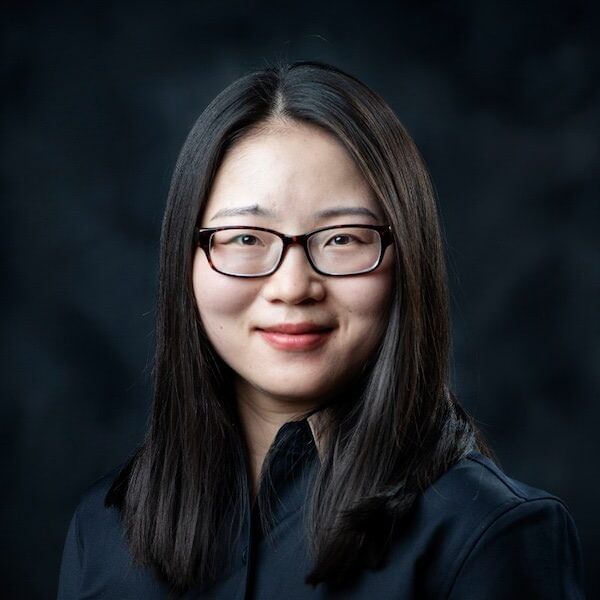
Fangni Lei is a Visiting Assistant Professor of Engineering at Dartmouth College. He holds a BS (2011), MS (2013), and PhD (2016) in Geographic Information Systems from Wuhan University. His research focuses on integrating remote sensing, physical models, and AI to advance understanding of hydrological parameters and land-atmosphere interactions. Key areas include soil moisture quantification, water-energy balance modeling, and agricultural water management. He has held roles at the USDA Agricultural Research Service (visiting student), Mississippi State University (research assistant professor), and the University of Connecticut (assistant research professor at the Eversource Energy Center and Department of Civil and Environmental Engineering). Research interests span remote sensing applications in hydrology, climate change impacts on water cycles, and precision agriculture. His work bridges microwave remote sensing with machine learning to improve soil moisture estimation and flood mapping. Recent studies address errors in land surface models and the coupling between soil moisture and evapotranspiration. Publications highlight advancements in CYGNSS and SMAP satellite data fusion, vineyard soil moisture monitoring, and global-scale hydrological modeling. His work contributes to both theoretical advancements and practical solutions for water resource management.
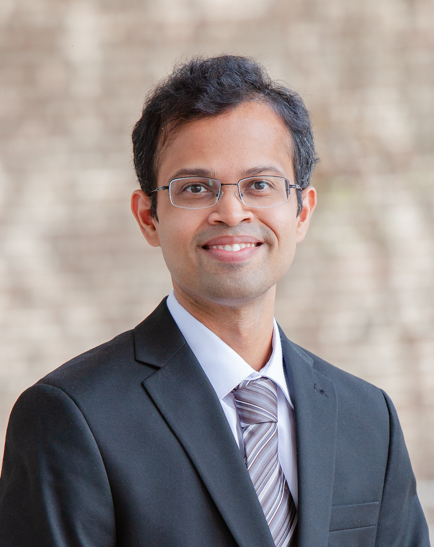
Kishwar Ahmed is an Assistant Professor in the Department of Electrical Engineering and Computer Science at the University of Toledo . Her research focuses on High Performance Computing (HPC) and Cyber-Physical Systems , with emphasis on energy-efficient modeling, resource allocation, and scalable simulation frameworks. Her recent work explores trends in parallel computing education , edge device optimization , and power-aware HPC systems . She has secured a $600K NSF grant for collaborative research with NMSU. Scientific Awards NSF CRII Award Service Roles TPC Member, HiPC 2024 Workshop Organizer, EduHiPC 2023-2024 Program Committee Member, ACM SIGSIM PADS 2019-2024 Journal Reviewer (IEEE TCC, ACM TOMACS, etc.)
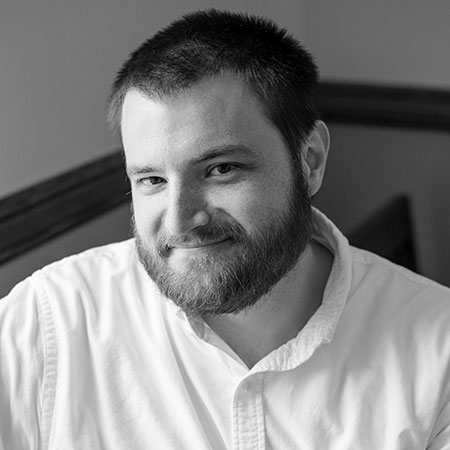
Grant Mosey is an Assistant Professor at the University of Nevada, Las Vegas School of Architecture , specializing in sustainability within urban environments. He teaches Construction Technologies and Design Studio, with prior experience across diverse disciplines. Education Bachelor of Architecture, Illinois Institute of Technology Master of Science in Architecture, University of Arizona PhD in Architecture, University of Illinois at Urbana-Champaign Research Focus His work addresses optimization challenges in harmonizing environmental, economic, and social sustainability. Current projects include: Machine learning applications for indoor air quality improvement Dynamic modeling of urban resilience Spatial analysis of green space accessibility Recent Publications His 2025 publications examine plant-based VOC mitigation and streetlight density impacts on green spaces. Earlier work spans multi-objective optimization of tall buildings (2024), sociohydrological modeling for urban resilience (2021), and integration of input-output economics with spatio-temporal land use (2021). Teaching Focuses on Construction Technologies and Design Studio , with experience in interdisciplinary courses and diverse teaching formats. Contact Phone: 702-895-1958 Email: grant.mosey@unlv.edu
Cristóbal López Sánchez is a Full Professor in the Department of Physics at the University of the Balearic Islands (UIB), specializing in Condensed Matter Physics. He holds a PhD in Physics from UIB and completed postdoctoral research at the University of Rome 'La Sapienza'. His academic career includes serving as a Ramón y Cajal fellow and associate professor at UIB from 2001-2019 before becoming a full professor in December 2019. He maintains active research collaborations with institutions worldwide including the University of Cambridge, ICTP Trieste, and LOCEAN Paris. His educational background includes a Physics degree from the University of Granada and PhD from UIB. International research stays have been conducted at: University of Cambridge (UK) University of Rome 'La Sapienza' (Italy) University of Oldenburg (Germany) Eotvos University of Budapest (Hungary) LEGOS Toulouse (France) LOCEAN Paris (France) ICTP Trieste (Italy) CASUS Gorlitz (Germany) López Sánchez's research focuses on the interdisciplinary applications of Statistical and Non-linear Physics to complex systems. His work centers on understanding emergent behavior in complex systems, particularly transport processes in oceans and their influence on marine ecosystems, as well as collective behavior in biological systems. Key research contributions include characterizing mesoscale mixing and dispersion processes in marine surfaces using Lagrangian Coherent Structures, and studying pattern formation in models of organisms with spatial nonlocal interactions. His broader research portfolio encompasses micro-macro connections in particle systems, biological search dynamics, machine learning applications for spatio-temporal prediction, quantum fluids, sinking particle dynamics, and vegetation pattern formation. His recent publications reveal a strong emphasis on interdisciplinary applications of physics principles to biological and environmental systems. The research demonstrates sophisticated integration of mathematical modeling with real-world phenomena, particularly in ocean transport processes and biological pattern formation. Key thematic areas include Lagrangian transport methodologies, nonlinear dynamics in ecological systems, and computational approaches to complex spatio-temporal phenomena. Scientific recognition includes: Ramón y Cajal fellowship López Sánchez actively mentors graduate students and leads significant research initiatives. His current LAMARCA project investigates Lagrangian transport of marine litter and microplastics in coastal waters, focusing on transport structures and connectivity patterns. He serves as thesis advisor for the PhD in Physics program at UIB and has maintained consistent teaching responsibilities across multiple academic years. His research group Complex systems in life and the environment (CILIA) operates as a Consolidated R+D+I Group at UIB. He directs the Complex systems in life and the environment (CILIA) research group and leads the LAMARCA project on marine litter transport. His laboratory work integrates theoretical physics approaches with environmental and biological applications, particularly through computational modeling of complex systems.
Dr. Apostolos Argyris is an Associate Professor at the Department of Physics, University of the Balearic Islands (UIB), and a member of the Institute for Cross-Disciplinary Physics and Complex Systems (IFISC), a joint UIB-CSIC institute. He holds the Spanish I3 certification with three research merits (sexenios), four teaching merits (quinquenios), and seven trienios of academic experience. His academic background includes: B.Sc. in Physics from Aristotle University of Thessaloniki (1999) M.Sc. in Physics (Microelectronics & Optoelectronics) from University of Crete (2001) Ph.D. in Informatics & Telecommunications from National and Kapodistrian University of Athens (2006) His research focuses on complex photonic systems and nonlinear dynamics, with specific interests in coupled laser networks, chaotic oscillators, neuromorphic information processing, unconventional optical communications, photonic computing, optical chaos applications, and physical random number generation. His work combines theoretical models with experimental photonics to develop next-generation computing and communication technologies. Publication analysis reveals a dominant focus on photonic neuromorphic computing, optical reservoir systems, high-speed fiber communications, and interdisciplinary physics frameworks. Recent works demonstrate increasing emphasis on hardware implementations of machine learning concepts using photonic substrates and silicon devices. Awards and recognitions include: TR35 Young Innovators Award 2006 from MIT Technology Review ERICSSON Award of Excellence in Telecommunications (2006) He leads research projects including: INFOLANET (National Project 2023-2026): Information processing with coupled laser networks POST-DIGITAL Plus (EU Commission 2025-2029): Post-digital computing training network As principal investigator of the consolidated research group 'Fotónica Compleja y Sistemas Neuroinspirados' (FoCo-SiNeu), he directs laboratory activities in neuromorphic photonics and complex systems. He currently supervises doctoral candidates in the Physics PhD program and teaches undergraduate/graduate courses including Medical Physics, Complex Photonics, and General Physics Laboratory.
Jia Yu is a researcher affiliated with Arizona State University , Tempe, AZ, USA. Their work focuses on geospatial data management, database systems, and cluster computing frameworks like Apache Spark. They have collaborated extensively with Mohamed Sarwat and other researchers on projects such as GeoSpark , GeoSparkViz , and GeoSparkSim , contributing to scalable spatial data processing and visualization systems. Key research areas include Learned indexing mechanisms (e.g., GLIN) Microscopic traffic simulation Parallel and distributed data processing Interactive geospatial dashboards Column correlation exploitation for database efficiency Integration of visualization with backend data systems Recent publications (2014-2024) demonstrate expertise in geospatial analytics, database indexing, software testing, and Apache Spark-based systems. Notable projects include Turbocharging Visualization Dashboards , HERMIT Indexing , and Spindra Knowledge Graph Management . Work emphasizes both theoretical innovation and practical implementation for handling massive-scale spatial data.
Moien Rangzan is a Researcher at the Max Planck Institute for Biogeochemistry , affiliated with the International Max Planck Research School for Global Biogeochemical Cycles (IMPRS-gBGC) and the Biogeochemical Integration (BGI) department. His work focuses on cutting-edge applications of remote sensing and machine learning. Research interests include: Remote Sensing (SAR, LiDAR) Deep Learning for Environmental Sciences Explainable AI (XAI) in Earth Observation Foundation Models for Spatio-temporal Analysis Digital Soil Mapping Recent publications highlight his contributions to: Transformer-based frameworks for soil carbon prediction Optical-to-SAR translation techniques Frequency domain approaches for satellite image denoising His technical expertise spans spatio-temporal modeling, GANs, and attention mechanisms applied to environmental data. Current projects include: SoilNet - A framework for soil property prediction TemporalGAN - Optical-to-SAR translation GAN Wave-AR - Wave polarization augmented reality CropMapping - Time series satellite image analysis
Irene Vrbik is an Assistant Professor of Teaching in Data Science, Mathematics, and Statistics at the University of British Columbia Okanagan’s Department of Computer Science, Mathematics, Physics and Statistics. She is part of the Irving K. Barber Faculty of Science and serves as a graduate student supervisor. Her research focuses on mixture models, computational statistics, biostatistics, and applying machine learning to improve curriculum design in education. Dr. Vrbik holds a PhD from the University of Guelph (supervised by Prof. Paul McNicholas) and postdoctoral training at McGill University (with Prof. David Stephens) and UBC Okanagan (under Prof. Jason Loeppky). Her work spans statistical methodologies for genetic data analysis, radiation response quantification in medical imaging, and spatio-temporal modeling of combustion dynamics. She teaches courses in statistics and data science, emphasizing pedagogical innovation through technology integration. Her academic contributions include developing the ‘Fractionally-Supervised Classification’ framework for unifying supervised, semi-supervised, and unsupervised learning under a single statistical model.
Professor Jonathan Bamber is a leading glaciologist and Professor in the School of Geographical Sciences at the University of Bristol, specializing in sea level rise, cryospheric dynamics, and Earth Observation technologies. His research leverages big data analytics and satellite remote sensing to address critical questions about polar ice sheet stability and climate change impacts. With a B.Sc. from the University of Bristol and a Ph.D. from the University of Cambridge, he has established himself as a key figure in polar science through extensive fieldwork and computational modeling. Education: B.Sc. in Geographical Sciences, University of Bristol Ph.D. in Earth Sciences, University of Cambridge Research Focus: Bamber's work centers on quantifying ice sheet contributions to sea level rise using satellite altimetry, gravimetry, and novel machine learning approaches. He investigates Antarctic and Arctic ice dynamics, glacier retreat patterns, and freshwater flux impacts on ocean circulation. His research integrates physics-based modeling with data-driven techniques to improve predictions of cryospheric responses to global warming, with particular emphasis on the vulnerability of polar regions to temperature increases beyond 1.5°C. Publication Trends: Analysis of his recent publications reveals a strategic shift toward AI-enhanced cryospheric monitoring, including physics-aware machine learning frameworks for ice thickness estimation and glacier mapping. His work increasingly focuses on high-resolution datasets (e.g., Bedmap3 for Antarctica), spatio-temporal modeling of ice sheet changes, and quantifying uncertainties in climate projections. The research demonstrates strong interdisciplinary connections between glaciology, oceanography, and climate policy, with growing emphasis on actionable insights for climate adaptation. Awards and Recognition: While specific awards aren't detailed in source materials, his leadership in major projects like ESA's Sea Level Budget Closure (SLBC_cci+) initiative underscores significant professional recognition. Collaborative Frameworks: Bamber actively participates in international research consortia, including contributions to IPCC assessments and CMIP6 climate modeling efforts. His work on the MAGIC Mission Science team demonstrates engagement with space-based Earth observation systems. Current projects like the SLBC_cci+ (2023-2026) exemplify his role in bridging satellite data validation with fundamental sea level science questions.
Winthrop Professor Jie Pan is affiliated with the School of Engineering and the Department of Mechanical Engineering at The University of Western Australia, and is a member of the UWA Defence and Security Institute. His research focuses on acoustics, active noise and vibration control, architectural acoustics, control engineering, industrial noise reduction, and structural dynamics. His work contributes to UN Sustainable Development Goals related to sustainable cities and communities, and responsible consumption and production. Research Interests: Acoustics and vibration control in mechanical systems Active and passive noise mitigation strategies Structural dynamics and finite element analysis Applications in industrial engineering and transformer systems Remote sensing for environmental monitoring Recent Articles Trends: Prof. Pan's recent publications emphasize advanced analytical techniques, experimental validation, and numerical modeling in vibration and acoustics. Key themes include the effects of hydrostatic loading on clamped plates, piezoelectric actuator performance, and the use of UAV-based hyperspectral imaging for disease detection. His work bridges mechanical engineering with environmental and biomedical applications. Grants and Supervision: He has led 30 research projects, including major grants from ARC Australian Research Council and Woodside R2D3. Examples include the Integrated Passive and Active Control of Humming Noise from Haul Trucks and Smart Acoustical Surfaces collaborations. He has supervised 9 doctoral/master's students, though specific advisee names are not listed here.
Dr. Deepti Joshi is a Professor of Computer Science at The Citadel, Military College of South Carolina. She holds a Ph.D. in Computer Science from the University of Nebraska-Lincoln and has additional degrees from institutions in the U.S. and India. Her primary affiliation is with the Department of Cyber and Computer Sciences within the Swain Family School of Science and Mathematics. Her research focuses on spatio-temporal data mining, big data analytics, natural language processing, AI, and computational thinking education. She has secured over $8 million in grants from NSF and DoD, and her work includes developing algorithms to predict social unrest using geospatial data and social media analysis. Dr. Joshi is also deeply involved in STEM education initiatives, particularly in training K-12 teachers to integrate computational thinking into their curricula through the 'Code, Connect, Create' professional development model. Her publications span computational thinking pedagogy, disaster vulnerability assessment, and geospatial clustering algorithms. She has advised over 40 students on projects involving social sensing, text classification, and AI applications. Current research includes leveraging open data sources and regional statistics to build predictive unrest models. Dr. Joshi collaborates with The Citadel's STEM Center on teacher professional development programs aimed at empowering educators to teach computer science and AI in K-12 settings. Grants and funding include multiple awards from The Citadel Foundation, Swain School, and NSF/DoD programs. Her work bridges technical innovation with real-world societal challenges, emphasizing educational equity and community resilience.
Dr. Mieke Massink is a Senior Researcher at the Institute of Information Science and Technologies 'Alessandro Faedo' (ISTI) under the Consiglio Nazionale delle Ricerche (CNR) in Pisa, Italy. Her career spans over three decades with key roles in formal verification, human-computer interaction (HCI), and collective adaptive systems. Research Interests: Formal specification & verification of concurrent systems Spatial/spatio-temporal model checking Collective adaptive systems analysis Stochastic models in user interaction Quantitative extensions of process algebras Recent Publications focus on hybrid AI integration with spatial model checking, polyhedral logic minimization, and scalable verification techniques. Her work bridges formal methods with applications in healthcare and smart environment systems. Projects: Leads EU-NG MUR-PRIN 2022 Stendhal (spatio-temporal logic), MUR-PNRR THE (health ecosystems), and CNR-SRNSF bilateral collaborations. Previously involved in EU-FET QUANTICOL, PRIN CINA, and FP7 ASCENS projects. Teaching: Regularly lectures on Stochastic Model Checking for the PhD Program in Smart Computing (Florence/Pisa/Siena) and has taught formal verification courses at the University of Florence.
Ilya Auslender is an Assistant Professor in the Department of Physics at the University of Trento, focusing on interdisciplinary applications of artificial intelligence to neuroscience. His research bridges computational modeling, mathematical physics, and optogenetics, with a particular emphasis on reservoir computing techniques for neuronal network analysis. Current faculty at the University of Trento Department of Physics affiliation Active research in AI-driven neuroscience Research interests include: Decoding neuronal connectivity and functionality Optogenetic stimulation localization Advanced electrophysiological data analysis Dynamic modeling of synaptic ensembles Development of AI-integrated experimental setups Beam quality optimization in diode pumped alkali lasers Recent publications analyze: Reservoir computing for neuronal network prediction In vitro optogenetic experiments Memory induction through photonic projection Beam quality dependencies in Cs DPAL systems Flowing-gas laser dynamics Key collaborative projects involve: Neural photonic interfaces Hybrid computational-biological systems Multi-electrode data modeling
Jenny Alexandra Cifuentes Quintero is an Assistant Professor at the Department of Quantitative Methods, School of Engineering (ICAI), Universidad Pontificia Comillas, Madrid. She holds a PhD in Automation and Mechanical and Mechatronic Engineering from a double degree program between National University of Colombia and INSA Lyon, France. Her research focuses on pattern recognition, deep learning, and machine learning applications in energy systems, biomedical engineering, and data science. Education: PhD in Automation and Mechanical/Mechatronic Engineering (double degree: National University of Colombia & INSA Lyon, France) Research: Energy Systems Modeling, Pattern Recognition, Medical Gesture Analysis, Data Science, Urban Mobility Her recent publications span deep learning , energy systems , biomedical signal processing , and interpretable AI . Key trends include surgical gesture classification , renewable energy forecasting , and neural network interpretability . She has received recognition for her work on wind power forecasting (Best Paper, IREC 2022) and contributes as a reviewer for journals like IEEE Access and IEEE Transactions on Biomedical and Health Informatics . Scientific Awards: Best paper on wind energy forecasting (IREC 2022) Mentorship: Directed Master thesis by Mora, E. (2021) Research Grants: Participated in projects for Endesa Medios y Sistemas S.L. (2022) and Enel Iberoamérica S.R.L. (2021)
Murat Okatan is an Associate Professor at Istanbul Technical University's Informatics Institute, Department of Computational Science and Engineering. He previously held academic positions at Cumhuriyet University in Electrical and Energy, Biomedical Engineering, and Mechatronics Engineering departments, and served in administrative roles including Department Chair, Head of Discipline, and Vice Dean. He received his PhD from Boston University and completed postdoctoral research at Ankara University and Boston University. PhD, Boston University MS, Syracuse University BS, Boğaziçi University (Dual Degree: Physics and Electrical-Electronics Engineering) His research lies at the intersection of computational neuroscience, neural signal processing, and biomedical engineering. He specializes in extracellular neural recordings, spike detection, brain-machine interfaces, and statistical modeling of neural data. His work includes developing automated thresholding techniques such as truncation thresholds for spike detection, analyzing subthreshold motor cortical activity, and modeling hippocampal place cells using Zernike polynomials. His recent publications focus on statistical significance testing in receptive field estimation and improving signal-to-noise ratio in neural recordings. His recent publications reveal a strong focus on statistical methods in neural data analysis, particularly in spike detection and receptive field modeling. He has developed and refined truncation threshold methods for more accurate action potential identification. His work bridges theoretical statistics with practical applications in brain-computer interfaces and neural decoding. He has also contributed to open-source tools, including Python code for parameter estimation in truncated distributions. YÖK Akademik Teşvik Ödeneği (2016, 2017) 2232 Postdoctoral Return Fellowship, TÜBİTAK (2011) Best Oral Presentation Award, 6th National Neuroscience Congress (2007) Best Oral Presentation Second Prize, 8th National Neuroscience Congress (2009) Presidential University Graduate Fellowship, Boston University (1997) High Honor Degree, Boğaziçi University (1995) Murat Okatan has supervised research projects funded by TÜBİTAK, the Turkish Higher Education Council, and international agencies including NIH, NSF, and ONR. He has served as a project executive and researcher in multiple scientific initiatives, including the Neuroscience and Neurotechnology Excellence Center (NÖROM). He has also acted as a guest editor for the Turkish Journal of Electrical Engineering and Computer Sciences . His lab focuses on developing computational tools for neural data analysis, with applications in brain-machine interfaces and neuroprosthetics. He is a member of several professional societies, including IEEE, IEEE Signal Processing Society, Society for Neuroscience (SFN), Brain Research Society (BAD), and Turkish Biophysics Society. His research group develops algorithms for real-time neural signal processing and contributes to national and international collaborative efforts in computational neuroscience.