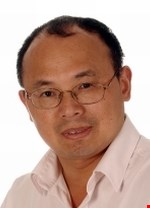
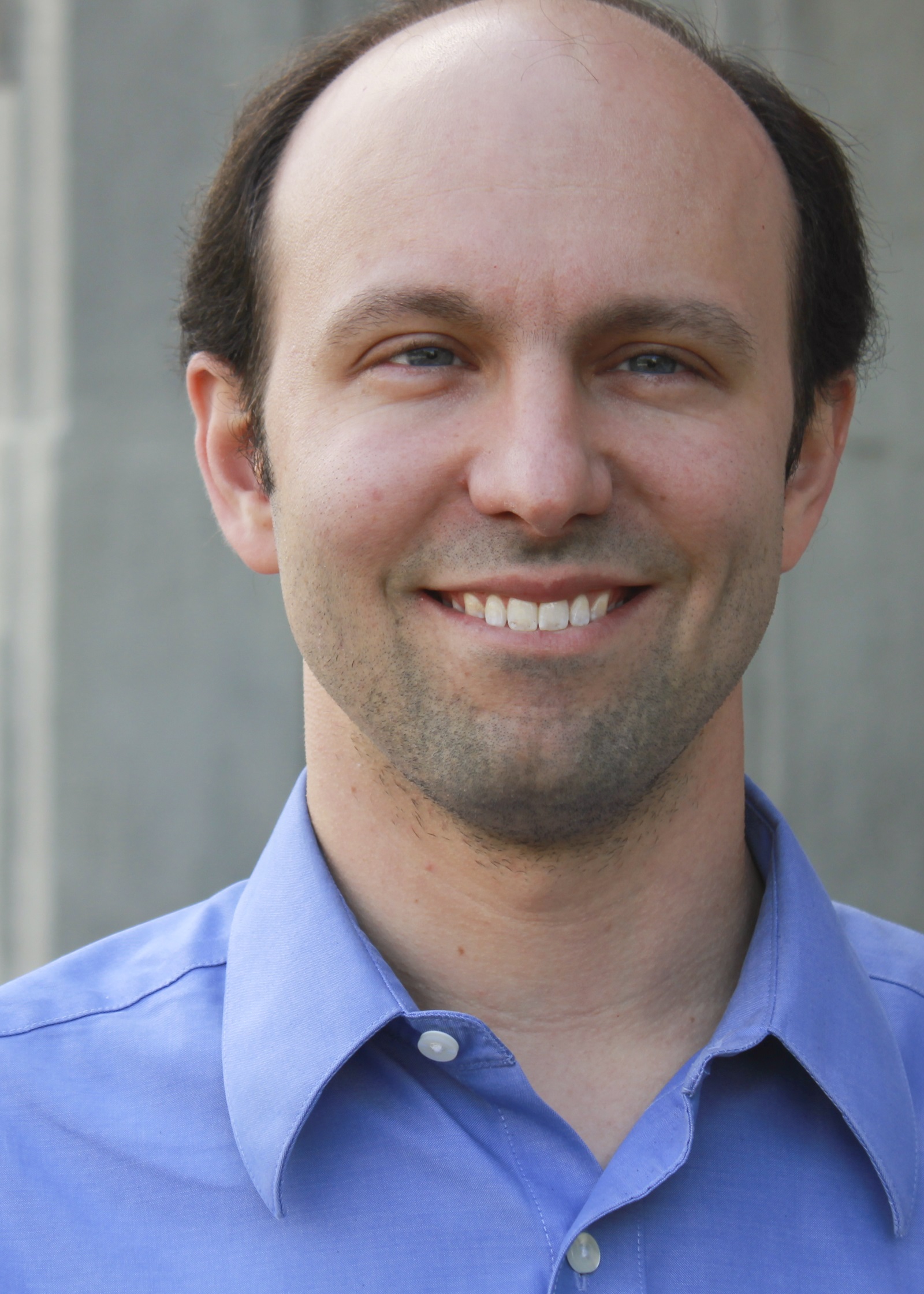
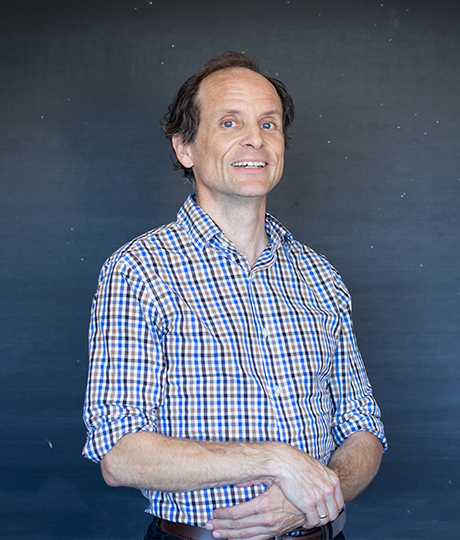
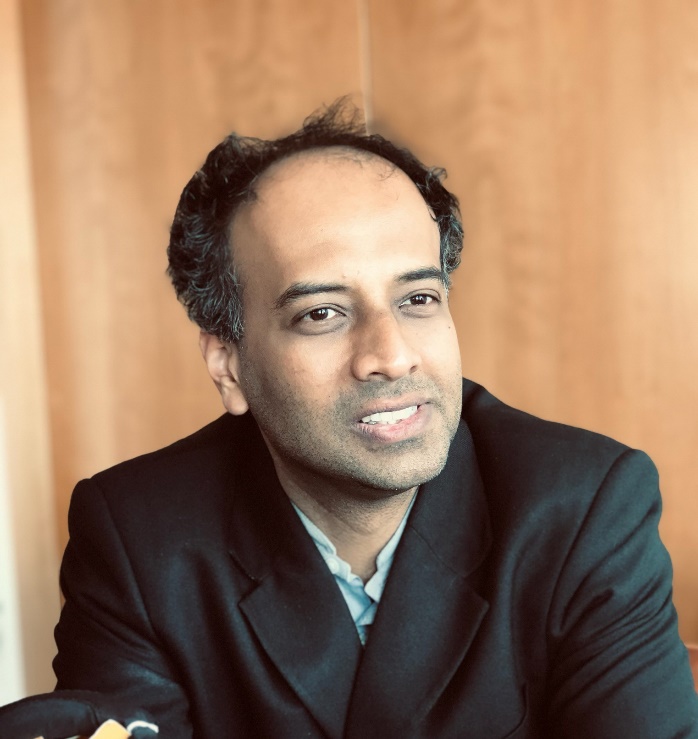
Saurabh Bagchi is a Professor at Purdue University, West Lafayette, USA. He holds a PhD in Computer Science from the University of Illinois Urbana-Champaign (2001). His research focuses on distributed systems security, networking, and embedded systems. Key areas include IoT security, cyber-physical systems resilience, and machine learning applications in edge computing. Bagchi's work spans theoretical and applied domains, addressing challenges in distributed algorithms, fault tolerance, and secure communication protocols. His contributions to firmware analysis, serverless computing optimization, and anomaly detection in industrial IoT systems have been widely recognized. He has published over 300 papers in top-tier conferences and journals such as IEEE Transactions on Dependable and Secure Computing, ACM Transactions on Sensor Networks, and CVPR. He collaborates with researchers in academia and industry to advance resilient networked systems, including projects funded by NSF and industrial partnerships. His lab explores cutting-edge topics like federated learning security, edge computing architectures, and game-theoretic approaches to cyber defense.
Ross Meentemeyer is a Professor and Director of the Center for Geospatial Analytics at North Carolina State University, affiliated with the Department of Forestry and Environmental Resources in the College of Natural Resources. He holds a Ph.D. in Geography from the University of North Carolina, Chapel Hill (2000) and a B.S. in Geography from the University of Georgia (1993). His research focuses on geospatial analytics, ecological forecasting, biological invasions, and forest health, with a strong emphasis on integrating geospatial data and modeling to address environmental challenges. Dr. Meentemeyer's work includes developing decision-support tools for pest management, climate adaptation, and land-use planning. Notable projects involve forecasting invasive species spread via international trade, creating open-source geospatial platforms, and modeling floodplain development risks. He collaborates extensively with federal agencies like USDA, DOI, and NPS to translate research into practical solutions. His grants include multi-million dollar NSF and USDA-funded initiatives addressing plant disease pandemics, agricultural pest threats, and geospatial infrastructure development. Key outcomes include the PAdb system for pandemic prediction and the FUTURES model for urbanization forecasting. He also leads efforts to enhance stakeholder engagement through participatory modeling tools like Tangible Landscape. Research contributions span 20+ years, with over 100 peer-reviewed articles on topics like viewscape modeling, river water dynamics, and wildfire-epidemic interactions. His work bridges ecological and social sciences, emphasizing actionable solutions for sustainable land management and climate resilience.
Roberto Togneri is a Professor and Senior Honorary Research Fellow at the University of Western Australia's School of Electrical, Electronic and Computer Engineering. He has been affiliated with the university since 1988, following his PhD in 1989. His research focuses on signal processing, speech recognition, machine learning, and biometrics, with notable contributions to audio-visual recognition systems and fraud detection. Education: PhD in Electrical Engineering (University of Western Australia, 1989). Research interests include feature extraction for audio signals, neural network models for speech and speaker recognition, and applications of machine learning to fraud prevention. His work has been recognized with awards such as the Education Innovation Award (ICASSP 2019) and grants from the Australian Research Council (e.g., DP110103336 for a 3D Audio-Visual Speech Recognition System). Key projects include developing robust speech recognition systems in adverse environments and advancing graph-based fraudster group detection using spatio-temporal data. He has also contributed to editorial roles in IEEE Signal Processing Magazine and authored over 214 research outputs. Funding highlights include $279,000 for a 3D audio-visual speech recognition system (2011–2013) and $230,000 for robust speech recognition in hostile environments (2010–2012). His research aligns with UN SDGs related to innovation and infrastructure.
Akihiko Nishimura is an Assistant Professor in the Department of Biostatistics at the Johns Hopkins Bloomberg School of Public Health. He holds a PhD from Duke University (2017) and MS and BS degrees from Stanford University (2011 and 2010). His research focuses on Bayesian methods, statistical computing, and public health data science, with applications in precision medicine and observational health data analytics. PhD, Duke University, 2017 MS, Stanford University, 2011 BS, Stanford University, 2010 Nishimura's research centers on developing advanced statistical and computational methodologies for real-world health data. His work emphasizes Bayesian inference, large-scale computing, and software development for reproducible research. He is particularly interested in using observational health data to improve clinical decision-making and advance precision medicine. He co-leads the Bayesian Learning and Spatio-Temporal modeling group (BLAST Group) and the inHealth/OHDSI Lab , collaborating with clinicians and data scientists across institutions. His recent publications reflect a strong trend in methodological innovation in Monte Carlo methods (e.g., Hamiltonian and Zigzag samplers), scalable Bayesian inference, and applications in pharmacovigilance, diabetes management, and infectious disease modeling. The articles span disciplines including biostatistics, computational statistics, public health, and bioinformatics, demonstrating a consistent focus on high-impact, computationally intensive problems in health data science. Nishimura actively contributes to the scientific community through methodological development and open science. He develops statistical software and shares teaching materials on GitHub, emphasizing reproducibility and performant computing. His involvement in the OHDSI community enables large-scale, multi-institutional studies that would not be feasible with single-source data. His work has been recognized through publications in top-tier journals such as the Journal of the American Statistical Association , Biometrika , and JAMA Ophthalmology , and has been picked up by numerous news outlets and social media platforms, indicating broad scientific and public impact. Nishimura teaches courses on performant statistical computing and advanced Monte Carlo methods, training the next generation of data scientists in efficient algorithm and software design. He mentors students and collaborators in statistical methodology and software development, fostering a culture of rigorous, reproducible, and impactful research.
Keming Yu is a Professor and Chair in Statistics at the Department of Mathematics, Brunel University London, within the College of Engineering, Design and Physical Sciences. He is also the Impact Champion for REF in Mathematical Sciences. He joined Brunel in 2005 after holding positions at the University of Plymouth, Lancaster University, and The Open University. He earned his PhD from The Open University and earlier degrees in Mathematics and Statistics from Chinese institutions. PhD in Statistics – The Open University, UK MSc in Statistics – China BSc in Mathematics – China His research centers on quantile regression, Bayesian modeling, survival analysis, and statistical methods for big data . His work spans applications in health, finance, environment, and social sciences. He has made significant contributions to robust and flexible regression methods, including expectile, mode, and censored quantile regression. His recent publications (2023–2025) show a strong focus on streaming data, spatiotemporal modeling, high-dimensional data, and Bayesian methods . He frequently publishes in top-tier journals such as the Journal of the Royal Statistical Society Series A, B, and C , Statistica Sinica , and Computational Statistics and Data Analysis . His work often involves collaboration with international researchers, especially in China and Europe. He has contributed to methodological discussions in leading statistical journals, demonstrating active engagement with the academic community. His work on financial risk, environmental statistics, and health data analysis reflects interdisciplinary impact. Reviewed and contributed to discussions on safe testing, confidence sequences, and betting-based inference. Active in developing methods for nonignorable missing data, censored models, and functional covariates. He supervises PhD students and is involved in teaching and curriculum development, including as Course Director for the MSc Statistics with Data Analytics. His research is supported by extensive publication output and academic service. He leads or contributes to research on Bayesian models, robust regression, and scalable methods for big data , often involving collaborations in interdisciplinary teams. His lab or research group focuses on statistical methodology development with real-world applications.
Daniel B. Neill is a Professor of Computer Science, Public Service, and Urban Analytics at New York University (NYU), jointly appointed across the Courant Institute of Mathematical Sciences, Robert F. Wagner Graduate School of Public Service, and the Center for Urban Science and Progress (Tandon School of Engineering). He also serves as the Director of the Machine Learning for Good Laboratory (ML4G) and is affiliated with NYU's Center for Data Science and Tandon Department of Computer Science and Engineering. Education: Ph.D. in Computer Science, Carnegie Mellon University M.S. in Computer Science, Carnegie Mellon University M.Phil. in Computer Speech, Cambridge University Research Interests: Dr. Neill's research focuses on developing novel machine learning methods for social good, with applications in disease surveillance (e.g., early outbreak detection), healthcare (e.g., anomalous care patterns), and urban analytics (e.g., predicting citizen needs). He also explores algorithmic fairness , causal inference , and pre-syndromic surveillance using unstructured data. His work bridges theoretical machine learning with real-world policy challenges, collaborating with health departments, hospitals, and city governments to deploy data-driven tools that enhance public health, safety, and security. Scientific Awards & Honors: NSF CAREER Award NSF Graduate Research Fellowship IEEE Intelligent Systems' "Top Ten AI Researchers to Watch" Yelp Dataset Challenge Winner Hidden Signals Challenge Runner-Up (DHS) Grants & Funding: He has received significant funding from the National Science Foundation (NSF), including grants on fairness in AI (IIS-2040898), bias in urban analytics (IIS-1926470), and others. He also acknowledges support from UPMC, MacArthur Foundation, and Richard King Mellon Foundation. Laboratory & Leadership: He directs the Machine Learning for Good Laboratory (ML4G) at NYU, focusing on AI for social impact. He previously co-directed NYU's Urban Initiative (2019-2022) and led the Event and Pattern Detection Laboratory at Carnegie Mellon University.
Dimitris N. Metaxas is a Professor in the Department of Computer Science within the School of Arts and Sciences at Rutgers University. His research spans computer vision, medical image analysis, and artificial intelligence, with a particular focus on medical applications including cardiac MRI analysis and foundation models for healthcare. Dr. Metaxas's research interests encompass medical image analysis, computer vision, deep learning, and artificial intelligence. His work demonstrates a strong emphasis on applying advanced machine learning techniques to medical imaging problems, particularly in cardiac analysis. He has made significant contributions to diffusion models, multimodal learning, and efficient AI techniques for medical applications. His research bridges the gap between theoretical computer vision and practical healthcare solutions, with numerous publications in top-tier conferences and journals. His recent publications show a clear trend toward foundation models for medical image analysis, with significant contributions to cardiac MRI segmentation, diffusion models, and multimodal learning. The research spans both theoretical advancements in AI techniques and practical applications in healthcare, particularly focused on improving medical diagnostics through computer vision. His work demonstrates expertise in adapting cutting-edge AI techniques like diffusion models and large language models for specialized medical applications. Dr. Metaxas has mentored numerous students and researchers, as evidenced by his extensive publication record with multiple co-authors across various institutions. His work has received significant attention in the research community, with numerous publications in top venues including CVPR, ICCV, MICCAI, and Medical Image Analysis. His research group focuses on medical image computing, computer vision, and machine learning applications in healthcare. The team works extensively with cardiac MRI data, developing advanced techniques for segmentation, reconstruction, and analysis of 4D cardiac imaging. They are particularly known for their contributions to foundation models in medical imaging and efficient adaptation techniques for specialized medical tasks.
Sabine Süsstrunk is a Full Professor and Director of the Images and Visual Representation Laboratory (IVRL) at EPFL's School of Computer and Communication Sciences. She holds a BS in Scientific Photography from ETH Zürich, MS from Rochester Institute of Technology, and PhD from University of East Anglia. Her career includes positions at Hewlett-Packard Labs and Corbis Corporation. Her research explores computational imaging, computational photography, color processing, computer vision, and image quality. Key interests include near-infrared applications, multispectral imaging, and computational aesthetics. Her work bridges hardware and software solutions for imaging challenges. Publications demonstrate consistent focus on advancing generative models (diffusion models, neural cellular automata), 3D reconstruction (NeRF variants), and media integrity (DeepFake detection). Recent trends show increased emphasis on 3D vision, robustness in generative AI, and video analysis. Awards & Honors: IS&T/SPIE Electronic Imaging Scientist of the Year (2013) Raymond C. Bowman Teaching Award (2018) EPFL AGEPoly IC Polysphere Award (2020) 8 Best Paper/Demo Awards Fellowships: IEEE, IS&T, ELLIS, AIIA She leads the IVRL lab and advises PhD candidates while serving as President of the Swiss Science Council. Research is supported through competitive grants and industry collaborations.
Shaowu Pan is an Assistant Professor of Aerospace Engineering at Rensselaer Polytechnic Institute (RPI), affiliated with the Future of Computing Institute (FOCI) and the Scientific Computation Research Center (SCOREC). He holds a Ph.D. in Aerospace Engineering and Scientific Computing from the University of Michigan and completed a postdoctoral fellowship at the University of Washington’s AI Institute in Dynamic Systems. Education: Ph.D., University of Michigan, 2021 M.S., University of Michigan, 2015 B.E. & B.S., Beihang University, 2013 Research Interests: His work focuses on the intersection of computational fluid dynamics, data-driven modeling, and scientific machine learning. Key areas include operator-theoretic modeling of fluid flows, generative AI for physical systems, and physics-informed neural networks. He develops novel algorithms for reduced-order modeling and stability-preserving surrogate models, with applications in turbulence, plasma physics, and aerodynamics. Key Contributions: Developed PyKoopman , an open-source Python package for Koopman operator approximation. Pioneered mesh-agnostic representation methods like Neural Implicit Flow for spatio-temporal data. Advanced physics-informed neural networks for solving Grad-Shafranov equations and plasma equilibrium problems. Awards & Recognition: John Tichy Junior Faculty Travel Grant (2024) Chinese Outstanding Student Abroad Award (2021) Richard and Eleanor Towner Prize Nominee (2019) Teaching & Mentorship: He teaches courses like MANE 2110: Numerical Methods and Programming for Engineers and mentors multiple Ph.D., master’s, and undergraduate students. His doctoral committee involvement spans interdisciplinary projects in fluid dynamics and AI. Grants & Software: Lead PI for NSF-funded projects on neural representation learning for turbulent flows. Developed software tools like spKDMD and Warp-DG for dynamics analysis and CFD simulations. Labs & Collaborations: Collaborates with institutions like Los Alamos National Laboratory and actively participates in conferences (e.g., AIAA SciTech, SIAM). His research bridges computational science, machine learning, and fluid dynamics to address complex nonlinear systems.
Jesper Rindom Jensen is an Associate Professor in the Department of Electronic Systems at Aalborg University, Denmark, under the Technical Faculty of IT and Design. He is the Head of the Audio Analysis Lab, a leading research group in audio signal processing, since 2023. His work bridges theoretical signal processing and practical applications in artificial intelligence and audio systems. Full Name: Jesper Rindom Jensen Institution: Aalborg University School: The Technical Faculty of IT and Design Department: Department of Electronic Systems Research Lab: Audio Analysis Lab Email: jrj@es.aau.dk Office: Fredrik Bajers Vej 7B, B5-206, 9220 Aalborg Øst, Denmark Education: M.Sc. in Electronic Systems, Aalborg University (cum laude, 2009) Ph.D. in Signal Processing, Aalborg University (2012) Research Interests: Jesper Rindom Jensen's research centers on audio signal processing, with a strong emphasis on artificial intelligence, speech enhancement, noise reduction, beamforming, and multichannel systems. His work applies to diverse domains including robot and drone audition, spatial audio, and active noise control. He develops novel filtering techniques, including variable span linear filters and harmonic beamformers, to improve speech quality and intelligibility in noisy and reverberant environments. Publication Trends: His recent publications (2023–2025) show a strong trend toward integrating deep learning with classical signal processing, particularly in direction-of-arrival estimation, underwater acoustics, and robust multichannel systems. There is a clear focus on real-world applications, including sound zone control, active noise control, and limited-data scenarios using knowledge distillation. His work consistently emphasizes robustness, efficiency, and practical deployment. Scientific Awards and Recognition: AAU Talent for emerging research leaders Recipient of a competitive postdoc grant from the Danish Independent Research Council Advising and Grants: Jesper has supervised multiple PhD and master’s students, including Nørholm, Karimian-Azari, Zhang, and Wang. He has led significant research projects such as 'Sound Processing for Robots and Drones' (2018–2020) and participated in others related to joint audio-visual tracking and speech enhancement. His research has been supported by national funding bodies, reflecting its innovation and impact. Labs and Teams: He is a founding and core member of the Audio Analysis Lab at Aalborg University, which focuses on cutting-edge audio signal processing and AI-driven solutions. The lab fosters interdisciplinary collaboration and has produced numerous publications, datasets, and real-world applications. Jensen’s leadership since 2023 underscores his pivotal role in shaping the lab’s research direction.
Clément Mallet is a Senior Researcher and Director of the LASTIG laboratory at Université Gustave Eiffel, IGN, and École Nationale des Sciences Géographiques (ENSG) in Champs-sur-Marne, France. He leads research in geospatial computer vision, focusing on the intersection of remote sensing, computer vision, and machine learning. His responsibilities include overseeing 75 laboratory members and directing the STRUDEL research team focused on spatio-temporal information modeling. Education: Habilitation (HDR) in Geographical Information Science, Université Paris-Est (2016) PhD in Image and Signal Processing, Télécom ParisTech (2010) Engineering Degree in Geographical Information Science, ENSG (2005) Master's in Remote Sensing, Université Paris 6 (2005) Research Interests: Dr. Mallet specializes in multi-modal land-cover mapping, change detection, geohistorical image analysis, and airborne lidar processing. His work integrates deep learning with geospatial data analysis to solve complex problems in environmental monitoring, urban studies, and historical geography. Current research explores foundation models for earth observation and semantic change detection using hybrid data generation techniques. Publication Trends: Mallet's recent articles (2021-2025) demonstrate strong focus on deep learning applications for geospatial challenges: 40% address land-cover mapping innovations, 30% develop novel change detection methodologies, 20% advance lidar data processing, and 10% explore historical map analysis. His work consistently bridges computer vision theory with operational remote sensing applications. Awards and Recognition: Schwidefsky Medal from ISPRS (2016) 5x Outstanding Reviewer awards (CVPR/ECCV/ICCV 2017-2024) Best Paper Awards at GEOBIA 2016 and ISPRS 2014 Young Researcher Award from GDR ISIS (2010) EuroSDR Best PhD Thesis supervision (2020) Research Leadership: Directs multiple national and international projects including MAESTRIA (ANR-funded multi-modal EO analysis) and HIATUS (historical image analysis). Supervised 14+ PhD students in geospatial AI topics. Secured funding from ANR, CNES, EU H2020 (VOLTA, LandSense), and industrial partners. Leads the STRUDEL team developing cutting-edge methods for territory dynamics analysis. Professional Service: Editor-in-Chief of ISPRS Journal of Photogrammetry and Remote Sensing (2021-present). Organized major conferences including ISPRS Congress (2020-2022 Program Chair) and JURSE events. Active in ISPRS working groups since 2008, currently leading initiatives in large-scale machine learning applications for geospatial data.
Patrick Brown is an Associate Professor at the University of Toronto , affiliated with the Department of Statistical Sciences and cross-appointed to the Centre for Global Health Research and St. Michael's Hospital . His research focuses on spatio-temporal data modeling , Bayesian inference , and non-parametric methods for spatial epidemiology and environmental sciences. Fields of Interest : Spatial Statistics, Cancer Statistics, Statistical Software Education : PhD from University of Lancaster His methodological work encompasses Bayesian inference for non-Gaussian spatial data, Gaussian Markov random fields, and computational techniques like INLA and MRA. Applied research themes include disease mapping, environmental risk assessment, and public health surveillance using real-world data sources such as electronic health records and wastewater monitoring . He has developed key R packages (mapmisc, geostatsp, diseasemapping) supporting spatial statistical applications. Current collaborative projects span diverse fields: Ultra-diffuse galaxy detection with astrophysical applications Multi-pollutant mortality studies in Canadian cities SARS-CoV-2 seropositivity tracking Homelessness population estimation using EHR Geospatial cancer risk tools for Nova Scotia His work bridges statistical innovation with global health challenges , emphasizing computationally efficient solutions for large-scale spatiotemporal datasets.
Krishna Jagannathan is a full-time Professor in the Department of Electrical Engineering at the Indian Institute of Technology Madras (IIT Madras), India. He specializes in stochastic modeling, communication networks, information theory, and queuing theory. He obtained his B.Tech from IIT Madras in 2004, followed by S.M. and Ph.D. degrees from MIT in 2006 and 2010, respectively. After post-doctoral positions at Caltech and MIT, he joined IIT Madras in 2011. Education: B.Tech in Electrical Engineering, IIT Madras (2004) S.M. in Electrical Engineering and Computer Science, MIT (2006) Ph.D. in Electrical Engineering and Computer Science, MIT (2010) Research Interests: His research focuses on stochastic modeling and analysis of communication networks , information theory , and queuing theory . He has made significant contributions to understanding network performance, resource allocation, and risk-aware decision-making in complex systems. He leads the Networks and Stochastic Systems lab at IIT Madras, mentoring a large cohort of Ph.D. and M.S. students working on cutting-edge problems in networking, optimization, and stochastic systems. Scientific Awards: Best Paper Award at WiOpt 2013, Tsukuba, Japan Young Faculty Recognition Award for Excellence in Teaching and Research, IIT Madras (2014) Teaching & Mentorship: He has taught a wide range of courses including Probability Foundations , Stochastic Modeling and Queuing Theory , Convex Optimization , and Signals & Systems , consistently receiving high teaching evaluations. He has supervised over 15 Ph.D. and M.S. students to completion and continues to guide several active researchers.
Uwe Zdun is a Professor at the Faculty of Computer Science, University of Vienna, where he serves as Vice-Director of Studies for Computer Science and Head of the Research Group Software Architecture. His teaching portfolio includes core courses such as Software Engineering 2, Advanced Software Engineering, and Practical Software Courses for Bachelor's and Master's theses across multiple semesters (2024W-2025S). His research spans software architecture with emphasis on microservices, cloud computing, and DevOps. Key focus areas include architectural design decisions, infrastructure-as-code conformance, security in distributed systems, and the integration of machine learning operations (MLOps/RLOps). He investigates cognitive aspects of architecture practices through controlled experiments and develops model-driven approaches for quality assessment in complex systems. Recent publications (2024-2026) reveal three dominant trends: (1) Security and coupling analysis in infrastructure-as-code deployments, (2) MLOps/RLOps integration for Industry 4.0 cyber-physical systems, and (3) Performance optimization patterns for CI/CD pipelines and autoscaling. His work bridges theoretical architecture models with industrial practice, particularly in microservice ecosystems and reinforcement learning applications. Professor Zdun leads the Research Group Software Architecture at the University of Vienna's Faculty of Computer Science. The group focuses on empirical validation of architectural patterns, tool development for conformance checking, and advancing design decision methodologies in cloud-native and AI-driven systems.
Chee-Ming Ting is an Associate Professor in the School of Information Technology at Monash University Malaysia. His expertise lies in machine learning, data science, and biomedical engineering, with a focus on signal processing, computational neuroimaging, and computer-aided detection. Previously, he held positions at King Abdullah University of Science and Technology (Research Scientist) and Universiti Teknologi Malaysia (Senior Lecturer). He has authored over 26 journal papers and 43 conference papers, and has secured research grants totaling RM2.5 million as PI/Co-PI. Education: PhD in Mathematics - Statistics, Master of Engineering in Electrical Engineering, and Bachelor of Engineering (Hons.) in Electrical & Electronics Engineering. Research interests include biomedical signal/image analysis, deep learning, spatio-temporal modeling, and neuroimaging applications for disease prediction and patient monitoring. He has supervised 9 graduate students (4 PhD, 5 Masters) and currently oversees 10 PhD candidates. Awards include the IEEE Signal Processing Society Malaysia's Research Excellence Award (2019, 2022) and several national/international innovation awards. His work contributes to UN Sustainable Development Goals related to health and technological advancement. Key projects include frameworks for neurological disease prediction using brain networks and generative adversarial networks for medical imaging enhancement.