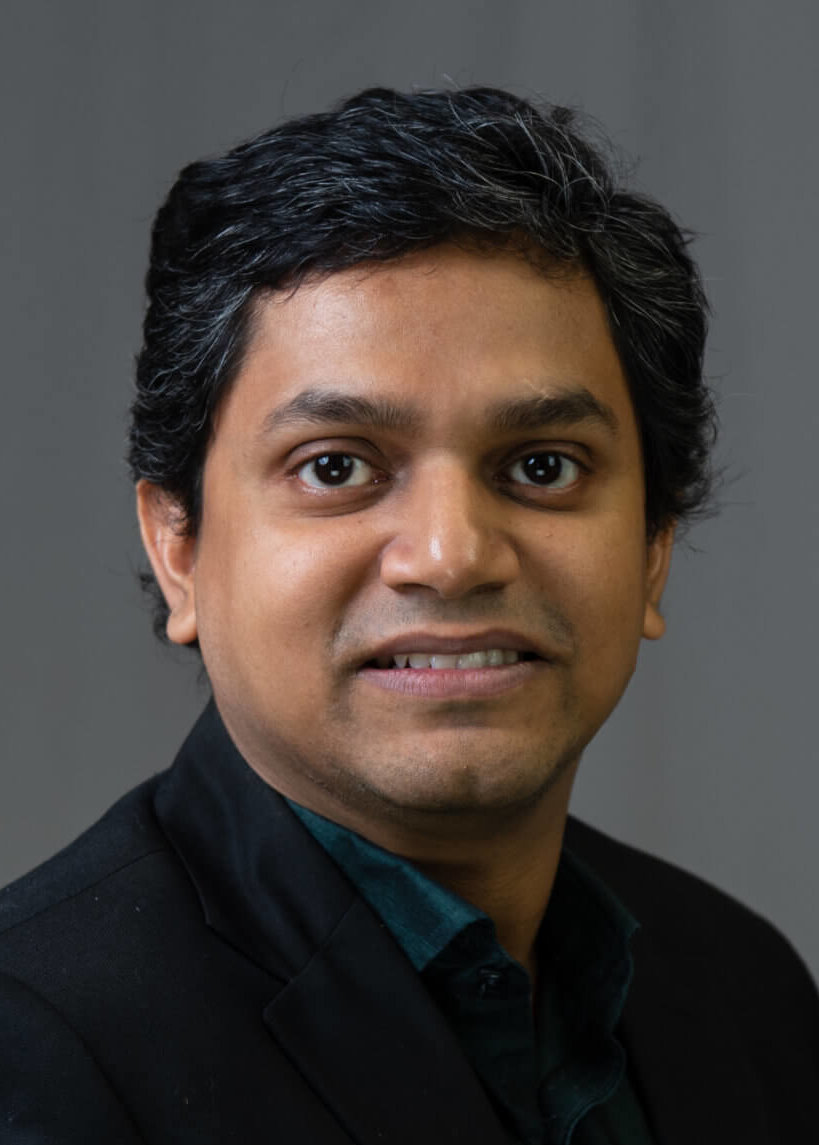
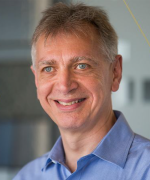
Rajarshi Guhaniyogi is an Associate Professor in the Department of Statistics at Texas A&M University, College of Arts & Sciences. His research focuses on Bayesian methodology for complex biomedical and machine learning applications, including scalable Bayesian methods, spatial/spatio-temporal statistics, and tensor analysis. He has been recognized with prestigious awards such as the 2023 Early Investigator Award from ASA ENVR and the 2023 ECASDS Award from IISA. Key collaborations include work with neuroscientists on multi-modal neuroimaging data and environmental scientists on remote sensing data. His research is supported by grants from NIH, NSF, Department of Energy, and Office of Naval Research. Rajarshi will transition to a Full Professor role in August 2025. Recent work emphasizes distributed Bayesian inference for large datasets, Bayesian tensor regression, and robust computation strategies for high-dimensional data. He has contributed to journals like Biostatistics , Technometrics , and Journal of Machine Learning Research , and serves on editorial boards for Journal of Machine Learning Research and Journal of Computational and Graphical Statistics . His grants include an NIH R01 grant (1 percentile score) for Bayesian multi-object data modeling and a DOE grant for spatial modeling of categorical data. He actively organizes conferences like the NSF-sponsored CBMS conference on causal graphical models.
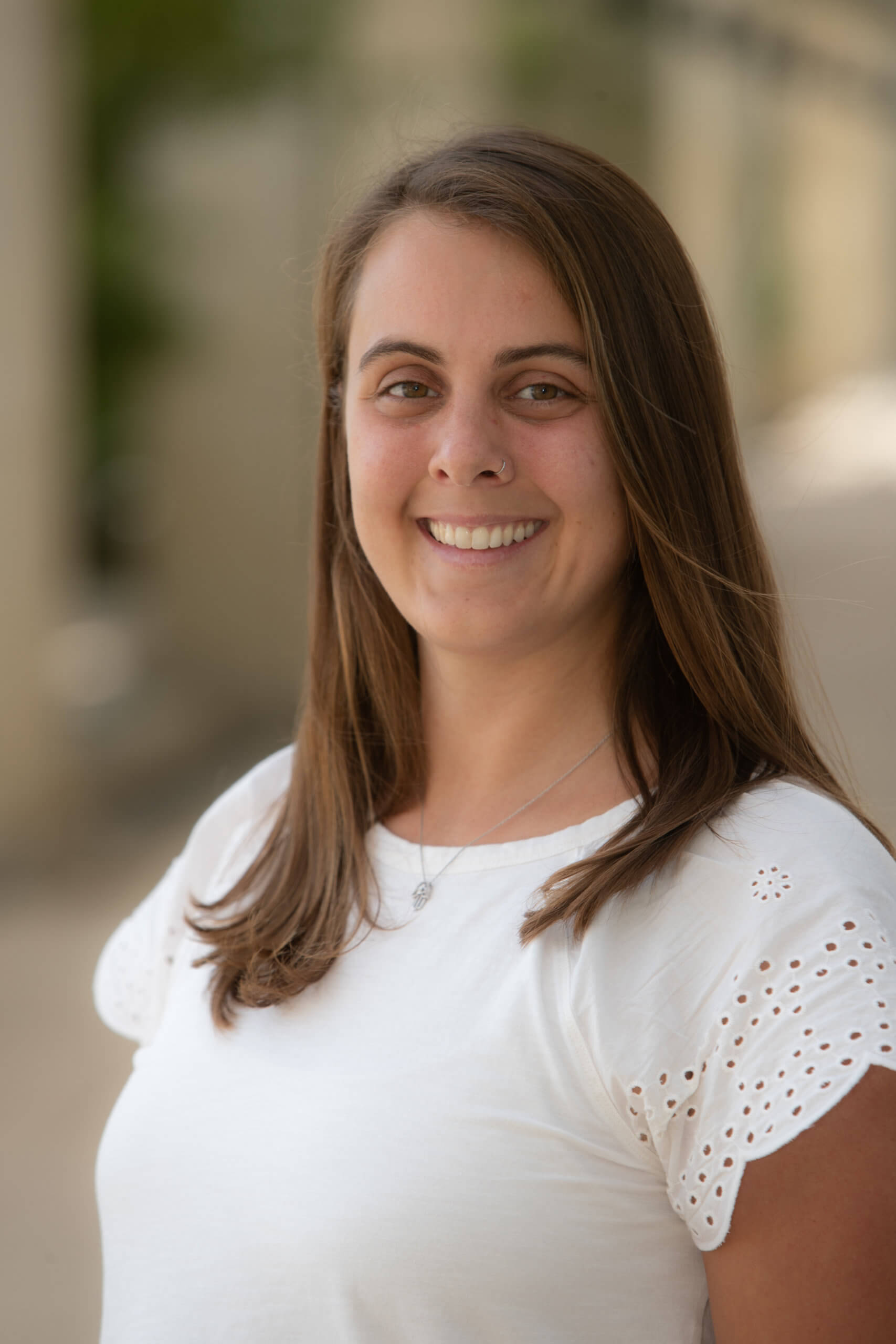
Toryn Schafer is an Assistant Professor in the Department of Statistics at Texas A&M University, holding the 2024 ConocoPhillips Data Science Faculty Fellowship. Previously, he was a postdoctoral associate at Cornell University's Department of Statistics and Data Science, contributing to the NSF-funded PRISM Institute for Trans-domain Systemic Risk. His academic journey includes a PhD in Statistics (2020) from the University of Missouri, an MA in Statistics (2018), and a BSc in Statistics & Wildlife Biology (2014) from Colorado State University. His research interests focus on spatio-temporal statistics, reinforcement learning, Bayesian methods, and machine learning, applied to ecological and environmental systems. He emphasizes interdisciplinary approaches to address challenges in energy, sports analytics, and biodiversity conservation. His recent work explores advanced statistical methods for trend analysis, changepoint detection in time series, and the integration of community science data for ecological modeling. Notable contributions include Bayesian inverse reinforcement learning frameworks for animal behavior analysis and studies on renewable energy impacts on electricity markets. Education: PhD in Statistics, University of Missouri (2020) MA in Statistics, University of Missouri (2018) BSc in Statistics & Wildlife Biology, Colorado State University (2014) Research Themes: His publications reflect a trajectory toward methodological advancements in spatio-temporal modeling, with applications ranging from animal movement patterns to energy grid resilience. Recent articles highlight critical risk indicators for power systems and biodiversity status metrics inspired by financial portfolio theory. Grants & Fellowships: 2024 ConocoPhillips Data Science Faculty Fellowship (Texas A&M University). Labs/Teams: While specific lab affiliations are not detailed, his work intersects with interdisciplinary teams focused on ecological data science and systemic risk analysis.
Ranjit Deshmukh is an Assistant Professor in the Environmental Studies Department at the University of California, Santa Barbara (UCSB). His research focuses on low-carbon energy systems, clean energy access, and electricity markets. He has expertise in renewable energy integration, sustainable energy planning, and geospatial analysis of energy resources. Prior to UCSB, he was an ITRI-Rosenfeld Postdoctoral Fellow at Lawrence Berkeley National Laboratory. Education: PhD in Energy and Resources, UC Berkeley (2016) M.S. in Environmental Systems, Humboldt State University (2008) M.S. in Manufacturing Systems Engineering, UT Austin (2001) B.E. in Mechanical Engineering, Government College of Engineering Pune, India (1998) Research Interests: Strategies for renewable energy integration in electric grids Sustainable energy system planning with techno-economic and environmental criteria Clean energy access in developing regions and low-income communities Climate-water-energy nexus in California His work emphasizes multi-stakeholder collaboration, with projects in India, Africa, and Southeast Asia. He co-leads the Clean Energy Transformation Lab (CETlab) and the MapRE platform for sustainable renewable energy siting. Scientific Awards: Siebel Scholar (UC Berkeley) Link Energy Fellow (UC Berkeley) Schatz Energy Fellow (Humboldt State University) Key Projects: Developing open-source tools for low-carbon grid planning (MapRE platform) Analyzing renewable energy integration in India and Southern Africa Studying equity and justice in energy transitions His research bridges academic and applied domains, working with governments, NGOs, and local communities to advance equitable low-carbon futures.
Dr. Chengchun Shi is an Associate Professor in the Department of Statistics at the London School of Economics and Political Science (LSE). His research focuses on statistical learning methods for individualized decision-making and analyzing complex data, with applications in precision medicine, finance, and ride-sharing. He joined LSE in 2019 after completing his PhD in Statistics at North Carolina State University, supervised by Dr. Wenbin Lu and Dr. Rui Song. His work emphasizes developing computationally efficient algorithms with statistical guarantees for real-world challenges such as personalized treatment regimes, optimal investment strategies, and dynamic resource allocation. He has contributed to reinforcement learning, causal inference, and off-policy evaluation methodologies, addressing issues like interference in spatial experiments and handling high-dimensional, heterogeneous data. Key research areas include reinforcement learning algorithms, causal mediation analysis, and robust policy evaluation. His publications span topics like off-policy evaluation in confounded environments, spatial experimental designs, and deep learning approaches for distributional modeling. Dr. Shi’s research bridges theoretical statistics and practical applications, aiming to improve decision-making across diverse domains. He holds a strong academic background with a focus on high-dimensional statistical models and their applications in dynamic treatment regimes. His work has been recognized for its innovative approaches to tackling complex data challenges through interdisciplinary methods combining machine learning and rigorous statistical theory.
Azin Wright is affiliated with the University of Reading, holding the position of Researcher. Their research focuses on meteorology, environmental science, and hydrology, with a particular emphasis on numerical weather prediction, land surface modeling, and climate science. Wright completed their PhD in 2020 at the University of Reading, titled 'The effect of land surface hydrological process representation on drought prediction, at a range of spatio-temporal scales.' Key research interests include atmosphere-ocean interactions, soil moisture dynamics, and the improvement of land surface models like JULES. Their work integrates spatial analysis techniques and geostatistical methods to evaluate environmental models against observational data. Recent publications (2021–2024) highlight contributions to understanding forecast error correlations in weather prediction systems, refining plant response models under drought conditions, and applying variogram analysis to quantify spatial patterns in environmental simulations. No scientific awards are explicitly mentioned in the provided texts.
Dr Thomas Popham is an Associate Professor and Director of Studies (Systems and Information Engineering) at the School of Engineering, University of Warwick. He holds a PhD in Computer Vision (Warwick, 2010) and previously worked at Jaguar Land Rover as a Machine Learning Engineer (2010-2014) and Technical Specialist/Manager (2014-2017). His research focuses on Computer Vision, Machine Learning, Automated Driving, and Intelligent Vehicle Systems, with contributions to explainable AI (XAI) and vehicle safety systems. He leads the Image Processing and Expert Systems (IPES) Laboratory and oversees undergraduate and postgraduate programs including Systems Engineering, Biomedical Systems Engineering, and Diagnostics, Data and Digital Health MSc. Research Interests: Computer Vision & Machine Learning applications Automated Driving and Vehicle Systems State Estimation and User Preference Learning Intelligent Vehicle Systems Development Recent publications highlight advancements in XAI frameworks (e.g., STX-Search, CHILLI) and vehicular control systems. His educational contributions include curriculum design for STEM induction programs and competency-based peer assessment methodologies. Current PhD advisees include Saif Anwar (ML transparency), Rui Zhou (domain transfer learning), and Alisha Rogers (engineering education). He maintains active collaborations with industry partners like Jaguar Land Rover, focusing on real-world applications of machine learning and safety-critical systems. His work integrates academic research with practical engineering challenges in automotive and biomedical domains.
Prof. Dr. Barbara Hammer is a full professor of Machine Learning at Bielefeld University, Faculty of Engineering, and leads the Machine Learning Group at the Center for Cognitive Interaction Technology (CITEC). She is actively involved in multiple interdisciplinary research centers including the Bielefeld Center for Data Science (BiCDaS), the Research Institute for Cognition and Robotics, and the Institute for Bioinformatics Infrastructure (BIBI). She holds leadership roles in major research initiatives such as the TRR 318 'Constructing Explainability', the graduate school Data-NinJA on Trustworthy AI, and the research network SAIL on sustainable AI systems. Her research focuses on intelligent data analysis , explainable and trustworthy AI , and machine learning in dynamic environments . She investigates foundational algorithms for learning from complex, non-Euclidean, and evolving data streams, with applications in urban infrastructure (especially water systems), life sciences, and socio-technical systems. Her work bridges algorithmic innovation with societal impact, particularly in fairness, ethics, and human-AI interaction. The recent publications highlight a strong trend towards explainability in dynamic environments , concept drift detection and explanation , fairness in streaming data , and real-world applications in critical infrastructure . Her team develops both theoretical frameworks and practical tools, such as EPyT-Flow for water network simulation, and contributes to high-impact AI challenges in health, environment, and industry. ERC Synergy Grant – Smart Water Futures LAMARR Fellow She advises several PhD and Master’s students and leads numerous funded projects from the European Union, DFG, and national agencies. Her leadership extends to editorial roles, including on the IEEE TPAMI editorial board. She is also deeply involved in academic governance, serving on examination boards, habilitation committees, and interdisciplinary research centers, reflecting her central role in shaping AI research and education at Bielefeld and beyond.
Mihai Anitescu is a Senior Computational Mathematician in the Laboratory for Advanced Numerical Software (LANS) within the Mathematics and Computer Science Division at Argonne National Laboratory, a position he has held since 2002. He is also a part-time Professor in the Department of Statistics at the University of Chicago since 2009 and an adjunct Associate Professor in the Mathematics Department at the University of Pittsburgh. Additionally, he is a Senior Fellow of the Computation Institute, a joint Argonne-University of Chicago initiative. He leads the MACSER (MultiTimescale Control of Electric Power Systems) project and previously led the M2ACS project. Ph.D., Applied Mathematical and Computational Sciences, University of Iowa, 1997 Electrical Engineer, Polytechnic University of Bucharest, Romania, 1992 Dr. Anitescu’s research focuses on numerical optimization, uncertainty quantification, and numerical analysis, with applications spanning nuclear engineering, electric power grids, chemical engineering, materials science, biology, mechanical engineering, and robotics. His work develops scalable computational methods for complex systems, particularly leveraging high-performance computing. He has made significant contributions to optimization under uncertainty, stochastic programming, Gaussian process modeling, and simulation of multibody dynamics with contact and friction using differential variational inequalities. His recent publications (2020–2023) highlight a strong and consistent trend in applying advanced mathematical and computational techniques to critical energy infrastructure, particularly the electric power grid. Key themes include stochastic optimization for optimal power flow under uncertainty, risk assessment through extreme event simulation, frequency prediction and estimation using spatiotemporal and Bayesian methods, and the simulation of cascading failures. His work bridges core mathematical advances in optimization, sensitivity analysis, and scalable Gaussian process computation with high-impact applications in grid stability, reliability, and control. Dr. Anitescu is a senior editor of Optimization Methods and Software and a member of the editorial boards of Mathematical Programming and the SIAM Journal on Optimization . He has previously served on the editorial boards of the SIAM Journal on Scientific Computing and the SIAM/ASA Journal on Uncertainty Quantification . He is a dedicated mentor, having advised numerous postdoctoral fellows, Ph.D. students, and M.S. students at Argonne, the University of Chicago, and the University of Pittsburgh. His advisees have gone on to successful careers in national laboratories, academia (e.g., UC Santa Barbara, Purdue, University of Wisconsin), and industry (e.g., Amazon, Citibank, Morgan Stanley, IBM). He has secured and led significant research grants through projects like MACSER and M2ACS, which focus on the mathematical challenges of managing complex, uncertain energy systems. His work is highly collaborative, involving partnerships across institutions and disciplines. Dr. Anitescu leads the MACSER project, a major research initiative focused on developing mathematical and computational tools for the multi-timescale control of electric power systems. This work is central to ensuring the stability and reliability of modern power grids, especially as they integrate increasing amounts of renewable energy.
Miguel-Ángel Fernández-Torres is an Assistant Professor in the Department of Signal Theory and Communications at the Polytechnic School of Universidad Carlos III de Madrid (UC3M). He is also affiliated with the Image and Signal Processing Group at the University of Valencia, where he serves as a Senior Researcher. His academic journey began and concluded at UC3M, where he earned his B.S., M.S., and Ph.D. in Multimedia and Communications. Ph.D. in Multimedia and Communications, UC3M (2019) M.S. in Multimedia and Communications, UC3M (2014) B.S. in Audiovisual System Engineering, UC3M (2013) His research lies at the intersection of machine learning, computer vision, and Earth system sciences. He specializes in explainable deep learning, focusing on anomaly detection, extreme event forecasting, and visual attention modeling. His work applies to domains such as climate science, remote sensing, and biomedical imaging. He has conducted research stays at Purdue University and Technische Universität München, and studied at TU Wien during his bachelor's. The most recent publications reflect a strong trend toward applying deep learning and causal modeling to climate extremes, drought, and wildfire prediction. Themes include explainability, spatio-temporal modeling, and unsupervised learning for Earth observation data. His work increasingly integrates physics-aware models and aims to interpret deep learning outputs in environmental contexts. European Laboratory for Learning and Intelligent Systems (ELLIS) Member Teaching Associate Professor Certification (AVAP, 2023) Teaching Assistant Professor Certification (ANECA, 2019) Spanish Ministry FPU Grant (2013) Excellence Awards from UC3M and Social Council He has supervised numerous B.S., M.S., and Ph.D. students and has served as a reviewer for top journals including IEEE TGRS, Nature npj Climate, and CVPR workshops. He leads and contributes to major projects such as DeepExtremes (ESA), XAIDA (H2020), and USMILE (ERC Synergy). He has taught courses in digital signal processing, machine learning, and multimedia at both UC3M and the University of Valencia. He is actively involved in the research community, having served on the organizing committee for AISTATS 2022 and 2023, and contributed to open-source tools and datasets for climate AI.
John Quigley is a Professor of Management Science at the University of Strathclyde, serving as Vice Dean (Research) of the Strathclyde Business School since 2021. Previously, he was Head of the Management Science Department (2016–2019). He holds a BMath in Actuarial Science from the University of Waterloo (1993) and a PhD in Management Science from the University of Strathclyde (1998). His research focuses on risk modeling and decision support systems, integrating data analysis and expert judgment. Key areas include large-scale manufacturing, offshore windfarm maintenance, and search and rescue (SAR) operations in Arctic regions. Notable projects include the NNSAR initiative (funded by NERC and NRC), enhancing SAR systems in Nunavut and Nunavik, and the Productivity and Sustainability Management project optimizing manufacturing processes via real-time data and probabilistic networks. He collaborates with industries like Rolls-Royce, Scottish Power, and the European Food Safety Agency. Quigley has received awards such as the FAIM 2025 Sullivan Best Paper Award and the 2010 KTP Award. His teaching spans undergraduate, postgraduate, and executive education programs globally, emphasizing technology integration in pedagogy.
Pascal Van Hentenryck is an Adjunct Professor at the School of Computational Science and Engineering, Georgia Institute of Technology. His research focuses on integrating optimization techniques with artificial intelligence, particularly in power systems, transportation networks, and constraint programming. He leads projects on trustworthy optimization learning, grid reliability, and AI-driven solutions for public transit systems like MARTA REACH in Atlanta. Key areas include optimal power flow, machine learning proxies for large-scale optimization, and stochastic decision-making in renewable energy systems. Van Hentenryck's work spans academic and industrial collaborations, including the ARPA-E Grid Optimization Competition and the design of on-demand multimodal transit systems. He emphasizes practical applications of optimization algorithms in real-world scenarios such as supply chain management, rider behavior modeling, and fair policy design. His contributions to constraint programming education and MOOC development highlight his commitment to advancing computational methods in academia. Recent projects include developing frameworks for privacy-preserving convex optimization and analyzing the impact of equity considerations on adversarial vulnerability in AI systems. He explores topics like neural network verification, battery storage integration in grids, and scalable solutions for large-scale scheduling problems using column generation and reinforcement learning.
Tommi Heikkilä is a Visiting Professor in the Department of Mathematics and Statistics at the University of Helsinki. His research focuses on inverse problems, dynamic X-ray tomography, and spatio-temporal regularization methods. He is a core member of the Centre of Excellence in Inverse Modelling and Imaging (2018–2025), contributing to advancements in optimization algorithms and imaging techniques. Key projects include developing the STEMPO dynamic X-ray tomography phantom and advancing regularization methods with optimal space-time priors. His work bridges applied mathematics and computational imaging, with applications in medical and engineering domains. He has contributed datasets for dynamic tomography experiments, including gel phantom studies and cone-beam imaging. His doctoral thesis (2024) explores spatio-temporal regularization in dynamic tomography, reflecting his expertise in both theoretical and applied aspects of inverse problems. Collaborations span international teams in optimization, machine learning, and biomedical imaging.
Dr. Sevvandi Kandanaarachchi is an Associate Professor in the School of Science at RMIT University's City Campus, Australia. Her research focuses on environmental data analytics, hydrology, and civil engineering applications. Key areas include water quality monitoring, sediment transport modeling, and algorithm development for environmental systems. Her work integrates machine learning with environmental science, addressing challenges in early event detection, anomaly identification, and predictive modeling for water resources. Notable contributions include frameworks for high-frequency sensor data analysis and meta-modeling approaches for stream turbidity prediction. Dr. Kandanaarachchi collaborates on interdisciplinary projects involving civil engineering, atmospheric sciences, and computational methods. She holds a PhD and has published extensively in peer-reviewed journals such as Hydrological Processes and PLOS One . No specific grants, awards, or student advisees are listed in the provided information.
Professor Monica Wachowicz holds the rank of Professor of Data Science at RMIT University, within the School of Science. Her academic roles include Associate Dean of Geospatial Science, Research Leader of Cyber and Data Analytics at the Space Industry Hub, and Deputy Director of the Sir Lawrence Wackett Defence & Aerospace Centre. She leads interdisciplinary research in streaming analytics, IoT integration, and smart city technologies. Wachowicz has pioneered innovations in edge computing and geospatial intelligence, collaborating with global firms like Cisco, Siemens, and IBM. She is a founding member of the IEEE Technical Sub-Committee on Big Data and serves on nine editorial boards. Her research focuses on leveraging machine learning for IoT data streams to address sustainability challenges in smart cities, including mobility analytics and energy systems. Over 52 students under her supervision have contributed to industries like tech, finance, and academia. Wachowicz is the first woman engineer in Geomatics awarded an NSERC Industrial Research Chair in Canada and holds an Honorary Visiting Scholar title at Flinders University. Her work emphasizes cross-sector collaboration, advancing green economies and data-driven decision-making. Awards include NSERC Industrial Research Chair (2010s) and Honorary Visiting Scholar (Flinders University, ongoing). Key projects include EVStationSIM (EV charging infrastructure analysis), Smart Campus Integration Lab, and IoT-GIS platforms for real-time analytics. She supervises projects on AI for urban sensing, smart mobility, and space situational awareness.
Jorge Pérez Aracil is an academic researcher at the Department of Signal Theory and Communications at the University of Alcalá. His work focuses on applying artificial intelligence and optimization algorithms to solve complex problems in climate science, renewable energy systems, structural engineering, and extreme event prediction. He leads the GHEODE research group, specializing in modern heuristic optimization techniques for network design and environmental modeling. His research interests span multiple disciplines including machine learning for weather prediction, metaheuristic algorithms for engineering design, vibration isolation systems, and the integration of AI with numerical models for climate analysis. Notable contributions include hybrid deep learning frameworks for energy forecasting, spatio-temporal analysis of droughts, and AI-driven models for understanding heatwaves and their socio-economic impacts. Recent work emphasizes extreme event modeling through projects like Spain on fire (wildfire risk assessment via satellite data) and Autoencoder-based flow-analogue methods for reconstructing heatwaves. He also explores pedagogical innovations, such as hybrid flipped/project-based learning models for AI-era education. Key technical contributions include the CRO-SL optimization algorithm, used in applications ranging from smart grid management to structural design optimization. His publications often bridge theory and practice, with a focus on explainability in AI systems and real-world implementation challenges.