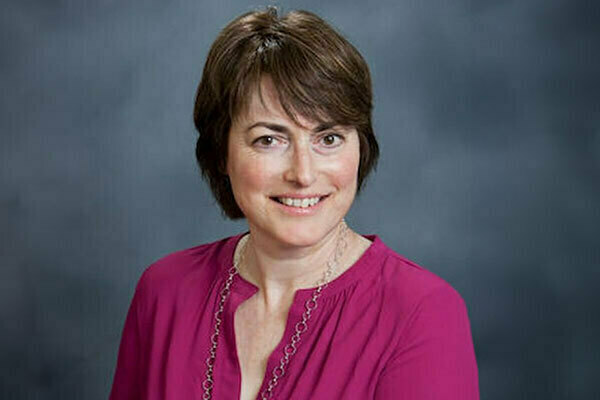
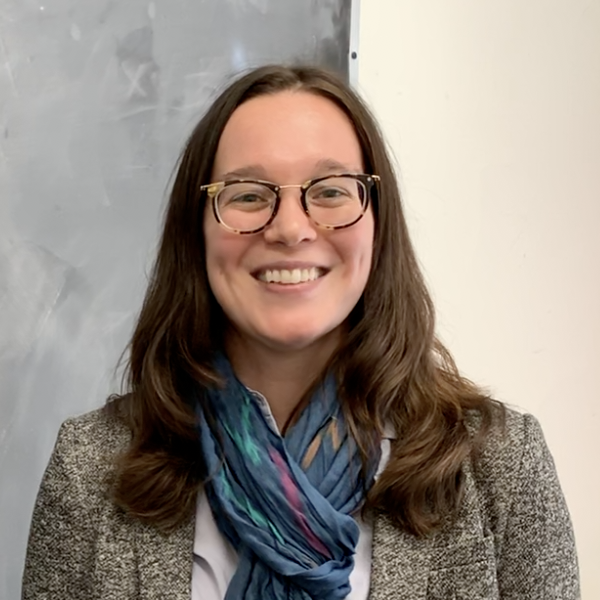
Dr. Dawn M. Gondoli is a Professor in the Department of Psychology at the University of Notre Dame, located in Corbett Family Hall. She serves as the Developmental Area Director and leads the Socioemotional Development Lab, focusing on adolescent development, parenting practices, and psychological well-being within family systems. Her work emphasizes the interplay between stress, parenting, and developmental outcomes in typically developing families and those affected by ADHD. Dr. Gondoli holds a Ph.D. (1994), M.S. (1991), and B.A. (1986) in Psychology from the University of Arizona and SUNY Buffalo, respectively. Her research spans three core areas: (1) parenting and adolescent well-being, particularly in ADHD contexts; (2) body image and disordered eating among mothers, adolescents, and young adults, with a focus on mother-daughter dynamics and interoception; and (3) cognitive processes underlying ADHD and interoceptive awareness. Collaborations with Dr. Bradley Gibson advance interventions targeting cognitive and parent training for ADHD management. Her publications address topics such as maternal stress, ADHD symptomatology, sleep quality, and media’s impact on body image. Notable studies include randomized controlled trials for cognitive interventions and analyses of dyadic relationships in disordered eating. While no explicit awards are listed, her extensive peer-reviewed output underscores scholarly impact. Dr. Gondoli’s advising and grants focus on developmental and clinical research, though specific grant details are not provided. Her lab integrates interdisciplinary methods to address family and individual psychological health, emphasizing translational research to improve clinical outcomes.
Andreas Huth is a prominent researcher at the Helmholtz Centre for Environmental Research (UFZ) in Leipzig, Germany, where he works within the Department of Ecological Systems Analysis. His research focuses on developing and applying computational models to understand complex ecological systems, with particular emphasis on vegetation dynamics, biodiversity patterns, and environmental interactions. Huth is actively involved in several major research initiatives including the FORMIND project, which simulates forest growth using individual-based vegetation models, and contributes to the UFZ's research program on Smart Models and Monitoring. Huth's research interests span ecological modeling, vegetation dynamics, biodiversity assessment, and environmental system analysis. He specializes in developing sophisticated computational frameworks that integrate atmospheric, ecological, and spatial data to model complex environmental processes. His work often involves coupling different modeling approaches, such as connecting atmosphere and vegetation radiative transfer models to study cloud-vegetation interactions. Huth is particularly interested in understanding spatial patterns in ecological systems, species-habitat relationships, and the impacts of environmental change on biodiversity. His methodological expertise includes agent-based modeling, individual-based modeling, and developing digital twin technologies for environmental systems. Analysis of Huth's recent publications reveals a strong focus on integrating different modeling approaches to address complex environmental questions. His work demonstrates a progression from basic ecological modeling toward more sophisticated integrative frameworks that connect atmospheric processes with vegetation dynamics, and social systems with ecological outcomes. A notable trend is his increasing involvement in digital twin technology for environmental systems, particularly for biodiversity monitoring and prediction. His research spans multiple scales - from microbial ecosystems to continental-scale species distributions - while maintaining a consistent methodological thread of spatially explicit modeling and causal analysis in complex systems. Huth collaborates extensively with researchers across the UFZ and internationally, as evidenced by his co-authorship on numerous interdisciplinary publications. While specific awards are not mentioned in the available information, his consistent publication record in high-impact journals and leadership in major modeling initiatives like FORMIND indicate significant recognition within the ecological modeling community. His work has practical applications for environmental policy, conservation planning, and climate change adaptation strategies. Huth is an active member of the Ecological Systems Analysis research group at UFZ, which develops and applies computational models to investigate key mechanisms in ecological systems. He contributes to several major research platforms including FORMIND (an individual-based vegetation model for species-rich forests) and participates in the UFZ's broader research initiatives on environmental monitoring and sustainable technologies. His work is integrated within the UFZ's research program on Smart Models and Monitoring, which aims to develop innovative approaches for understanding and predicting environmental change.
Professor Jacek Banasiak holds a prestigious DST/NRF SARChI Chair in Mathematical Models and Methods in Biosciences and Bioengineering at the University of Pretoria, Department of Mathematics and Applied Mathematics. He also maintains strong academic ties with Lodz University of Technology in Poland where he serves as a research professor in the Department of Mathematical Modeling. His career spans several decades with extensive contributions to mathematical modeling, particularly in population dynamics, fragmentation-coagulation processes, and epidemiological modeling. Professor Banasiak's research interests center on mathematical modeling of biological and physical processes, with particular expertise in singular perturbation theory, semigroup theory, and transport equations on networks. His work bridges theoretical mathematics with practical applications in epidemiology, ecology, and population biology. He has developed sophisticated mathematical frameworks for understanding fragmentation-coagulation phenomena, malaria transmission dynamics, and savanna ecosystem modeling. His publication record shows a consistent trajectory of high-impact research, with recent work focusing on climate-based malaria models, multiscale epidemiological systems, and mathematical analysis of growth-fragmentation equations. His publications appear in top-tier journals across mathematical analysis, epidemiology, and mathematical biology fields, demonstrating the interdisciplinary nature of his work. DST/NRF SARChI Chair in Mathematical Models and Methods in Biosciences and Bioengineering Author of numerous influential publications spanning from 1984 to 2025 Editor of special issues and author of several books including 'Introduction to Mathematical Methods in Population Theory' (2025) Professor Banasiak has supervised over 15 PhD students, many of whom have gone on to successful academic careers. His mentoring spans topics including fragmentation-coagulation with transport effects, telegraph systems on networks, and mathematical modeling of malaria transmission. His research has attracted significant funding, particularly through his SARChI Chair position which supports advanced mathematical research in biosciences and bioengineering.
Dr. Yevhen Suprunenko is a Visiting Researcher in the Department of Plant Sciences at the University of Cambridge, actively contributing to the Epidemiology and Modelling research group. His work bridges theoretical physics and plant pathology to address critical challenges in agricultural sustainability and global food security through advanced spatial modeling of disease dynamics. He holds a PhD in Theoretical Physics (Condensed Matter) from Lancaster University, UK, which provides the mathematical foundation for his interdisciplinary research in plant disease epidemiology. This unique background enables innovative approaches to complex biological systems. Suprunenko's research centers on mathematical modeling of spatial epidemic spread in agricultural systems, focusing on intrinsic scales of epidemics, cropping patterns, and host landscape structure. He investigates how spatially explicit dynamics, stochasticity, and time-variability influence pest/pathogen distribution, epidemic severity, and optimal control strategies for threats like oak processionary moth and cassava brown streak disease. His work integrates computational methods with field data to develop practical solutions for crop protection. Analysis of his publication trajectory reveals a distinct evolution from chronotaxic systems in physics (2012-2017) to advanced spatial epidemiology in plant sciences (2019-2025). Recent work demonstrates increasing sophistication in modeling landscape-pathogen interactions, with strong emphasis on analytical approximations for invasion thresholds, individual-based model frameworks, and real-world applications in crop disease management. Key thematic areas include spatial scaling effects, infection rate optimization, and data refinement techniques for improved predictive accuracy. No scientific awards were explicitly documented in the provided materials. While specific student supervision details are absent from available records, Suprunenko's collaborative publications indicate active mentorship within the Epidemiology and Modelling group. Grant funding specifics are not disclosed, though his research aligns with major initiatives in agricultural security and environmental sustainability at Cambridge. As a core member of the Epidemiology and Modelling research group, Suprunenko collaborates on projects addressing plant-pathogen interactions within the Department of Plant Sciences. His work interfaces with Cambridge's broader environmental research ecosystem including the Centre for Global Wood Security and Global Food Security IRC, contributing to interdisciplinary efforts in ecosystem conservation and agricultural resilience.
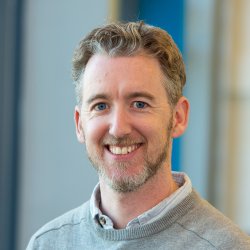
Pascal Mark Gygax is a faculty member at the University of Fribourg , specifically within the Faculty of Philosophy under the Department of Psychology . His academic career spans psycholinguistics, cognitive psychology, and gender studies, focusing extensively on how language structures influence gender perceptions and cognitive biases. With a research profile marked by experimental methodologies, Gygax has published 64 works, including a 2021 book Does the Brain Think Masculine? that critically examines the psycholinguistic impacts of gender-fair language reforms. Role: Researcher at Department of Psychology, University of Fribourg Key Collaborations: Sandrine Zufferey, Ute Gabriel, Anton Öttl Research Focus: Gygax investigates the cognitive mechanisms behind gender representation in language, particularly how grammatical gender systems (e.g., French, German) perpetuate male-dominated mental models. His work explores: Experimental validation of gender-neutral pronouns Discourse connective processing across age groups Impact of language reform on occupational stereotypes Cross-linguistic comparisons of gender perception Implicit bias in performance evaluation (e.g., magic tricks) Recent Publications (2023-2025) demonstrate methodological rigor in studying: Neological intuition in Romance languages Temporal focus and spatial cognition Connective mastery in L2 contexts Participant variability in experimental linguistics Gender ratio norms across global languages Pragmatic constraints on causal connectives Scientific Contributions: While no explicit awards are listed, Gygax's work has significantly advanced: Development of experimental paradigms for gender perception studies Creation of multilingual datasets on role noun norms Validation of facial feedback mechanisms through collaborative research Understanding of discourse coherence in educational contexts Advising & Collaborations: Though specific students aren't named, Gygax collaborates with: Development of the Routledge Handbook of Experimental Linguistics Leadership in SNSF-funded projects Contributions to debates on inclusive language policies
Professor Ian Brunton-Smith is a leading academic in Criminology and Advanced Quantitative Methods at the University of Surrey, Department of Sociology. He holds the role of Professor of Criminology and Research Methods, with affiliations including the Surrey Centre for Criminology and editorial positions at journals such as Sociology and the Journal of the Royal Statistical Society Series A . His research focuses on improving crime measurement, multilevel modeling, Bayesian statistics, and the public understanding of science. He has led projects like the ADR UK Data First Evaluation Fellowship and Re-counting Crime, addressing issues like police under-counting and crime data reliability. He currently supervises PhD student Megan Georgiou and teaches on the MSc Social Research Methods program. His work bridges criminological theory and methodological innovation, with notable contributions to topics like hate crime impacts, prisoner reentry outcomes, and interviewer effects in surveys. He has served on the 2021 REF panel for Sociology and advisory groups for police funding formulas. Education: Holds a PhD in Sociology, with prior academic roles at the University of Warwick (Director of the Warwick Q-Step Centre). His research integrates quantitative rigor with real-world policy applications, particularly in crime prevention and data accuracy. Grants and Projects: Principal Investigator for projects such as 'Re-counting Crime: New Methods to Improve the Accuracy of Estimates of Crime' (ESRC, £299,261) and 'ADR UK Data First Evaluation Fellowship' (£177,202). Collaborations include work on synthetic crime data and carbon footprint analysis of crime prevention measures. Awards and Recognition: While no explicit awards are listed, his extensive editorial roles and leadership in high-impact research initiatives reflect his scholarly influence. Labs and Teams: Co-director of the Surrey Centre for Criminology and involved in cross-disciplinary teams analyzing crime data, survey methodology, and environmental criminology.
Craig S. Kaplan is a Professor at the University of Waterloo's David R. Cheriton School of Computer Science within the Faculty of Mathematics. His research bridges computer science and mathematical art, focusing on computational geometry, geometric pattern design, and algorithmic art. He holds degrees including a Ph.D. and M.Sc. from the University of Washington (2002, 1998) and a B.Math. from the University of Waterloo (1996). His work spans applications of mathematics in art and design, including Islamic geometric patterns, computer graphics, and computational geometry. Notable contributions include developing methods for generating Islamic geometric patterns, exploring aperiodic tilings (including the discovery of an aperiodic monotile in 2023), and creating tools for artistic visualization like RepulsionPak and FlowPak. He also engages with digital art forms such as generative algorithms, stereoscopic 3D rendering, and interactive applications for mindfulness and VR. His publications reflect a focus on geometric algorithms, pattern generation, and interdisciplinary art-science projects. Though no explicit awards are listed, his prolific output and contributions to mathematical art suggest significant recognition in his field. His work often emphasizes computational methods for artistic expression, combining rigorous mathematics with creative outcomes.
Katherine Y. Zipp is an Associate Professor of Environmental and Resource Economics in the Department of Agricultural Economics, Sociology, and Education (AESE) at The Pennsylvania State University, where she is co-funded by the Institutes of Energy and the Environment (IEE). Based at 116 Ferguson Building in University Park, PA, she conducts critical research on the economic drivers and environmental consequences of land cover and land use changes, addressing pressing issues including climate change, habitat destruction, and water pollution through interdisciplinary frameworks. Her research program integrates Environmental and Resource Economics with spatial analysis to investigate Open-space Conservation, Environmental Risk Assessment (focusing on floods, wildfires, and invasive species), Water Quality, and Biofuel Production. She develops sophisticated models that capture the dynamic feedback between economic decisions and environmental systems, emphasizing how land-use policies must account for both human behavior and ecological processes to achieve sustainable outcomes. Her work bridges theoretical economics with practical applications in conservation and resource management. Analysis of her recent publications reveals a consistent focus on spatially explicit economic modeling applied to environmental challenges, particularly in three domains: flood risk and insurance policy (examining market adaptations to flood maps), bioenergy crop adoption on marginal lands (using spatial hot spot analysis), and recreational ecosystem services (linking visitor motivations to management outcomes). Her interdisciplinary approach frequently incorporates natural resource management perspectives and stakeholder engagement, yielding actionable insights for environmental policy design. Dr. Zipp has secured substantial external funding as Principal Investigator and Co-Principal Investigator across multiple high-impact projects: Co-PI on a $748,456 U.S. Fish and Wildlife Service grant (2020-2022) for "Implementing High Priority Objectives, Strategies, and Actions Identified in the Pennsylvania Aquatic Invasive Species Management Plan" PI on a $9,952 PSU ICS Seed Grant for "The Study and Simulation of the Mechanisms Driving Species Migration" Co-PI on a $797,949 U.S. Fish and Wildlife Service grant (2019-2021) for "Advancing High Priority, Objectives, Strategies and Actions Identified in the Pennsylvania Aquatic Invasive Species Management Plan" Co-PI on a $499,500 USDA National Institute of Food and Agriculture grant (2017-2019) for "Flexible Buffer Systems: Enhancing Ecosystem Services and Expanding Agricultural Options in Riparian Areas" PI on a $200,000 FAA ASCENT grant (2016-2017) for "Analysis of Ecosystem service valuation and policy design of water quality improvements associated with perennial grasses and cover crops" Co-PI on a $326,646 USDI Joint Fire Sciences Program grant (2016-2019) for "Firescapes in the mid-Atlantic: Mismatches between social perceptions and prescribed fire use" Co-PI on a $50,000 Center for Rural Pennsylvania grant (2016) for "Flood Mitigation for Pennsylvania's Rural Communities: Community-Scale Impact of Federal Policies" She actively mentors graduate researchers including William L. Rice, X. Li, W. Jiang, and Y-H Shr, whose collaborative work appears in her publication record. Her research teams consistently integrate economists, ecologists, and social scientists to address complex environmental problems, with strong partnerships across federal agencies, state programs, and interdisciplinary research centers at Penn State.
Marty Matlock is a Professor in the Department of Biological and Agricultural Engineering at the University of Arkansas, College of Engineering. He served as Senior Advisor to Secretary of Agriculture Tom Vilsack at USDA from 2021-2022 focusing on food systems resiliency and was Executive Director of the University of Arkansas Resiliency Center. Matlock was elected to the National Academies of Science, Engineering and Medicine's Board of Agricultural and Natural Resources in 2021. B.S., Soil Chemistry, Oklahoma State University M.S., Plant Physiology, Oklahoma State University Ph.D., Biosystems Engineering, Oklahoma State University Dr. Matlock's research focuses on the impacts of humans on the environment at the watershed scale, with expertise in sustainability metrics for water, land, energy, and climate change for agricultural systems. He is a global leader in crop and animal production modeling and life cycle assessment, particularly regarding greenhouse gas emissions. His work spans ecological engineering, food systems resiliency, and environmental risk assessment, with applications in designing sustainable global food supply systems and developing corporate strategies for risk reduction. Analysis of Matlock's recent publications reveals a strong focus on life cycle assessment (LCA) of agricultural systems, particularly food supply chains. His work spans dairy production, fruit and vegetable systems, pulse crops, and livestock feed. A consistent theme is developing methodologies for spatially explicit LCA and creating metrics for sustainability in agriculture. His research increasingly addresses climate change adaptation in food systems and the development of regenerative agricultural practices. 2023 Fellow, The American Society of Civil Engineers 2022 Odom Award for Ecosystem Design 2018 CAST-Borlaug Agriculture Communications Award Multiple design awards for sustainable community planning ASABE Standards Development Award for ANSI/ASABE S629 Matlock has advised more than 40 M.S. and a dozen Ph.D. students over his 25-year career. His research has been supported through numerous grants from USDA, National Academies, and industry partners including The Sustainability Consortium and Field to Market Alliance. He has held leadership positions as Executive Director of the UA Resiliency Center (2018-2021) and UA Office for Sustainability (2012-2018), where he managed significant research initiatives focused on food, water, and community resiliency in response to climate change. Matlock leads research teams working on life cycle assessment of agricultural systems through collaborations with The Sustainability Consortium, Field to Market Alliance, UN Food and Agriculture Organization, and multiple US food and ag industries. His work with the UA Community Design Center has produced innovative approaches to urban watershed management and community food systems, including the Whitmore Community Food Hub Complex and Conway Urban Watershed Framework Plan.
Dr. Michael Charles is an Assistant Professor in the Department of Biological and Environmental Engineering at Cornell University, holding affiliate status in the American Indian and Indigenous Studies Program (AIISP) and serving as a Faculty Fellow at the Cornell Atkinson Center for Sustainability. He is also a Cornell Provost’s New Faculty Fellow (2024) and an Engaged Faculty Fellow (2024). His research focuses on computational sustainability frameworks, integrating dynamic ecological models with community-centered approaches, particularly through partnerships with Indigenous nations. He advocates for Indigenous rights in UN climate negotiations and emphasizes reciprocity and balance in environmental engineering. Charles earned his B.S. in Chemical and Biomolecular Engineering (CBE) from Cornell University and his M.S. and Ph.D. in CBE from The Ohio State University. His postdoctoral work at the Newark Earthworks Center analyzed historical ties between Land Grant Universities and Indigenous dispossession. His lab collaborates on projects such as the NORDvik database in Nunavik and participatory system dynamics modeling to address food systems inequities. He advises graduate students Lesedi Kgatla, Parsa Khayatzadeh, and Ashira Mawji, along with undergraduate researchers Pranati Patnam, Peter Thais, and Jeffrey Wang. Key research themes include spatially explicit nature-based solutions, ecosystem services for public health and well-being, and re-evaluating computing’s sustainability via the Food-Energy-Water nexus. His work bridges institutional science with Indigenous knowledge systems, aiming to transform policy and practice through actionable research. Notable awards include the 2025 Community-Engaged Practice and Innovation Award for his impactful collaborations. Advising and advocacy efforts span mentoring Indigenous STEM students and advancing equity in food systems through initiatives like the Chicago convening on racism in food systems. His lab’s partnerships with Attaniuvik, Laval University, and other institutions exemplify his commitment to community-driven science. Future work involves expanding NORDvik’s consultation workshops and deepening system dynamics models that center racial equity in environmental decision-making.
Charalampos Karagiannidis is a Professor at the University of Thessaly (UTH) in the School of Educational Design (SED), Department of Information and Communication Technologies in Learning and Special Education. He has been affiliated with UTH since 2005 and previously worked at the University of the Aegean, ITI-CERTH, and ICS-FORTH. His academic roles include chairing the TeDISABLE Special Interest Group (SIG) of the IEEE TCLT. Education: BSc in Mathematics, Aristotle University of Thessaloniki MSc in Information Technology, University of London PhD in Electronics Engineering, University of Kent, UK Research Focus: Technology-Enhanced Learning (TEL) Accessibility & Universal Design Assistive Technologies for Special Needs Augmented Reality (AR) and Gamification in Education Educational Robotics for Inclusion Cognitive Assessment Technologies for Aging Populations Publications Trends: Recent work emphasizes ICT applications for autism spectrum disorders (ASD), inclusive robotics, MOOC design for K-12 education, and digital tools to address mild cognitive impairment. His research often bridges theoretical learning models with practical software development, particularly for marginalized populations. Awards & Recognition: No explicit awards listed, but active participation in 150+ publications, editorial roles, and international conference committees demonstrates peer recognition. Grants & Labs: Involved in projects like the TeDISABLE SIG and development of tools such as the Virtual Learning and Social Stories for Autism (VLSS) system . Collaborates on EU-funded initiatives addressing aging populations and cognitive assessment via digital tools.
Professor M. Hashem Pesaran is a leading academic in Econometrics and Macroeconomics at the University of Cambridge's Faculty of Economics. His research focuses on dynamic panel data models, asset pricing, climate change impacts, and spatial econometrics. He has contributed extensively to methodologies addressing cross-sectional dependence, factor models, and policy analysis. Notable works include advancements in testing for alpha in asset pricing, analyzing pandemic transmission via stochastic networks, and assessing climate change's macroeconomic effects. His empirical studies utilize large datasets and advanced econometric techniques, often with real-world policy implications. Key research interests include: Econometric theory (panel data, factor models) Financial economics (asset pricing, risk premia) Macroeconomic policy (climate change, fiscal impacts) Spatial and network analysis (dominant units, SIR models) Recent articles highlight his work on heterogeneous dynamic panels, climate effects on US states, and pandemic modeling. No explicit awards are listed, but his publications indicate peer recognition. Advising and grants are not detailed here, but his collaborative projects suggest extensive academic leadership.
Piotr Szczepan Kisiel is an associated researcher at the Leibniz-Institut für Raumbezogene Sozialforschung (IRS) in the Research Area Contemporary History and Archive. He previously led a BMBF-funded subproject (2021–2024) on city maps as visual media of urban transformation in Central and Eastern Europe (1939–1949) and worked at the University of Konstanz (2018–2020) on industrial heritage in Germany and Poland. Education: PhD in History, European University Institute, Florence (2016) MA in History, Jagiellonian University and University of Dundee (2007–2011) MA in Law, Jagiellonian University (2004–2009) His research focuses on urban history, industrial heritage, memory landscapes, and visual culture in Central and Eastern Europe. He explores how cities transform after conflict and industrial decline, analyzing postcards, maps, and digital platforms as sources of urban memory. His work critically examines the politics of space, nationalism, and heritage in post-industrial and post-socialist contexts. His recent publications (2022–2025) reveal a consistent engagement with themes of urban transformation, post-industrial identity, and visual representation. Articles such as 'Picturing an Industrial City' and 'Invisible Cities' highlight the use of postcards to understand urban narratives, while 'Meaning Beyond Accuracy' and 'Recovering the Past for the Future' analyze maps and reconstruction policies. His work bridges historical scholarship with spatial and cultural analysis, often focusing on cities like Łódź, Chemnitz, and Cottbus. Scientific Awards: No awards mentioned. Although no formal students are listed, his role as a subproject leader and active publication record suggests mentoring and collaboration within research teams. He has not received any explicit grant mentions in the text, but his BMBF-funded project indicates significant research funding involvement. His work appears in both peer-reviewed journals and public forums, reflecting a commitment to academic and societal engagement. He is affiliated with research teams focused on urban transformation and industrial heritage, particularly within the IRS and prior projects at the University of Konstanz. His presentations at international conferences underscore his integration into transnational academic networks in urban and heritage studies.
Kelsey Cundiff serves as an Assistant Professor in the Department of Criminology and Criminal Justice at the University of Missouri-St. Louis within the College of Arts and Sciences, specializing in crime trends, adolescent delinquency, and spatial crime analysis. Education Ph.D. in Criminology from Pennsylvania State University Bachelor's degree from Indiana University Research Focus : Dr. Cundiff's work critically examines longitudinal shifts in adolescent delinquency across decades and employs advanced spatial methodologies for historical crime mapping, notably her 150-year analysis of San Francisco crime patterns. Her scholarship consistently bridges community-level dynamics and individual behavior, particularly investigating how campus environments influence surrounding neighborhoods and how youth employment quality correlates with delinquency outcomes. Current projects extend these themes through spatio-temporal modeling and trend reassessment. Publication Trends : Her 2016-2024 publications reveal three dominant threads: (1) evolving youth-crime relationships through changing labor markets, (2) neighborhood-level crime dynamics using spatial analytics, and (3) historical reassessment of major crime trends like the 1990s drop. This work consistently integrates quantitative rigor with criminological theory, particularly social disorganization frameworks. Professional Engagement : Dr. Cundiff maintains active research productivity with recent publications in top criminology journals, focusing on methodologically innovative approaches to crime pattern analysis and adolescent behavioral development without explicit grant or advising information documented in source materials.
Peter C. Petersen is an Associate Professor in the Department of Neuroscience within the Faculty of Health and Medical Sciences at the University of Copenhagen. Holding a Civilingeniør (MSc) in Technical Physics from DTU and a PhD in Neuroscience, he specializes in systems-level neural mechanisms using electrophysiological approaches. His educational background includes: Civilingeniør (MSc) in Technical Physics, DTU PhD in Neuroscience Petersen's research focuses on neural dynamics in memory and motor systems, combining in vivo electrophysiology with computational modeling. He investigates hippocampal place cells for spatial working memory and rotational dynamics in spinal cord networks, while developing neurotechnology tools like CellExplorer for single-neuron analysis. His work bridges experimental neuroscience, engineering, and data science to decode circuit-level computations. Recent publications (2020-2024) reveal a dual emphasis on hippocampal memory mechanisms (e.g., temperature effects on sharp wave ripples) and innovative methodology (e.g., 3D-printed microdrives). This trajectory demonstrates consistent advancement from tool development to fundamental discoveries in neural coding, with increasing collaboration intensity as evidenced by multi-institutional authorship. Scientific awards: No specific awards were documented in the source material. While explicit advising details are absent, his leadership in software/hardware development (CellExplorer, microdrive systems) implies active mentorship of technical researchers. Grant information isn't specified, though high-impact publications suggest sustained funding for neurotechnology and systems neuroscience projects. Petersen directs the Petersen Lab (https://petersenlab.org/), which employs chronic electrophysiology in rodent models to study memory and movement. The lab maintains strong ties with the Buzsáki lab (hippocampal research) and continues collaborations initiated during his NYU Langone Health tenure (2016-2022), reflecting an integrated approach to neural circuit analysis across institutions.