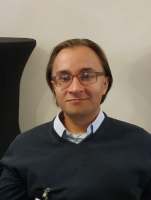
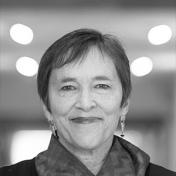
Mohamed Sarwat is an Associate Professor at Arizona State University specializing in databases , spatial data management , and recommender systems . His research focuses on GeoSpark —a cluster computing framework for spatial data—and its extensions like GeoSparkViz for visualization and GeoSparkSim for traffic simulation. Key Contributions: LARS* (Location-Aware Recommender System), Horton* (Graph Reachability), Sindbad (GeoSocial Platform), and Riso-Tree (Graph Database Indexing) Research Themes: Integration of spatial/temporal data with machine learning, efficient indexing for big geospatial datasets, and scalable frameworks for mobility data science His work spans collaborations with 23+ co-authors across institutions like University of Minnesota, University of Melbourne, and University of Salzburg. Current projects emphasize GeoTorchAI —a spatiotemporal deep learning system—and mobility data science infrastructure.
Łukasz Remisiewicz is a Lecturer at the Department of Sociological Theory and Social Research Methodology , Institute of Sociology , Faculty of Social Sciences , University of Gdańsk . He serves as the Editorial Secretary of the journal Miscellanea Anthropologica et Sociologica . His research spans multiple interdisciplinary domains , including sociology of science, philosophy of science, sociology of education, neurosociology, and sociology of examination. He explores the social contexts of academic assessment, cognitive development, and biological dimensions in sociological theory. His 15 most recent publications (2025-2017) focus on evaluative cultures, academic metrics, habilitation processes, family rituals, climate change discourse, disability marginalization, and biology-sociology interfaces. These works reflect his commitment to merging sociological theory with empirical and interdisciplinary analysis. Scientific Awards & Grants : Florian Znaniecki Award, 1st degree (2014) Honorable Mention, Polish Academy of Sciences (2016) Rector's Awards (1st, 2nd, 4th degrees, 2016/17–2024/25) Ministry of Science and Higher Education Scholarship (2017/18) Fulbright Junior Research Award (2018–2019) Mayor of Gdańsk & Gdańsk Scientific Society Award (2024) Florian Awards for 'Discovery of the Year' (2023) and 'Captain of Sociology' (2024) He is an active participant in international conferences, including ESA , Neurodidactics Symposium , and CHER Annual Conferences , presenting on topics ranging from emotional stratification to neurosociological models.
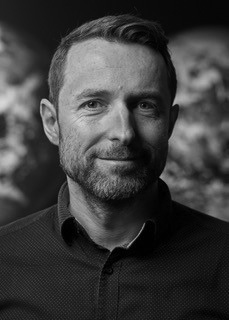
Anders Rønn-Nielsen is an Associate Professor at the Department of Finance and Center Coordinator at the Center for Statistics at Copenhagen Business School (CBS). He holds a M.Sc. in Statistics from University of Copenhagen and a PhD in Statistics and Probability Theory from Aarhus University. His research focuses on applied probability theory, particularly Lévy-based spatial models, and statistical efficiency analysis. His academic credentials include: M.Sc. in Statistics, University of Copenhagen PhD in Statistics and Probability Theory, Aarhus University Research interests span: Lévy processes and spatial stochastic modeling Extreme value theory applications in finance and natural sciences Nonparametric production frontier analysis Efficiency measurement methodologies His publications (18+ articles) emphasize theoretical probability and statistical applications in efficiency analysis. He has served as external examiner at Aarhus University and Copenhagen University for master’s and PhD examinations (2017–2019). His teaching responsibilities include advanced probability theory courses and statistical methods training for economics students.
Kristen S. Kurland is a University Professor at Carnegie Mellon University (CMU), holding appointments in the H. John Heinz III College of Information Systems and Public Policy, the School of Architecture, and a courtesy appointment in the Civil and Environmental Engineering Department. She also serves as an adjunct faculty member at the University of Pittsburgh School of Medicine. Her roles include chairing the Geographical and Geospatial Sciences Committee of The National Academies of Sciences, Engineering, and Medicine, and serving on the Board on Earth Sciences and Resources. Her teaching focuses on GIS, Building Information Modeling (BIM), CAD, and 3D visualization, with courses at Heinz College targeting executive physicians and healthcare management students. Research interests span health and urban systems, geospatial analytics, machine learning, and smart cities. She actively collaborates with healthcare, government, and industry partners globally. Notable awards include the 2020 Carlow University Women of Spirit Award, 2012 Esri Health Communications Award, and multiple teaching accolades. Her funded research includes projects on urban quality of life, 3D visualization, and pediatric healthcare access funded by The Heinz Endowments, Deloitte Foundation, and others. Kurland advises numerous PhD students across architecture, civil engineering, and public policy, and leads grants addressing spatial health equity, urban design, and geospatial innovation. She is co-author of bestselling GIS workbooks like GIS Tutorial for Health and a frequent keynote speaker on geospatial technologies.
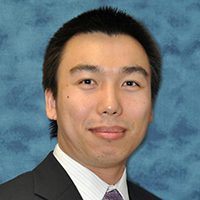
Dr. Tao Hong is the Duke Energy Distinguished Professor and NCEMC Faculty Fellow at the Department of Systems Engineering and Engineering Management, University of North Carolina at Charlotte. He directs the Big Data Energy Analytics Laboratory (BigDEAL) and has been a Founding Chair of the IEEE Working Group on Energy Forecasting (2011-2019). Ph.D., Electrical Engineering & Operations Research (2010), NC State University M.S., Operations Research & Industrial Engineering (2008), NC State University B.Eng., Automation (2005), Tsinghua University His research focuses on Energy Forecasting with applications in power systems operations, renewable integration, risk management, and cross-sector forecasting for healthcare, transportation, and sports. He has led major Delivery point level load analysis (2017-present) Short-term probabilistic forecasting (2016) Demand response modeling using smart meter data (2014-2015) Dr. Hong's scientific contributions include 9+ journal articles on energy forecasting methodologies and 3 major forecasting competitions (GEFCom2012-2017, BigDEAL Challenge 2022). His work has been cited in leading journals like International Journal of Forecasting and IEEE Transactions on Smart Grid . Charlotte Business Journal Energy Education Leader of the Year (2017) IEEE PES PSPI Technical Committee Prize Paper Award (2016) As a dedicated educator , Dr. Hong has advised multiple PhD and Master's students including Shreyashi Shukla (2023), Yike Li (2022), and Jordan McCorey (2021). He teaches specialized courses in energy systems planning and computational intelligence.
Alexander Damm is a Professor and head of the Remote Sensing of Water Systems (RSWS) group, holding a joint appointment between the Department of Geography at the University of Zurich (UZH) and the Swiss Federal Institute of Aquatic Science and Technology (Eawag). His research integrates advanced Earth observation technologies with environmental science to study water systems under changing climatic and anthropogenic pressures. University: University of Zurich Institutional Affiliation: Swiss Federal Institute of Aquatic Science and Technology (Eawag) Department: Department of Geography Alexander Damm obtained his MSc and PhD in remote sensing from Humboldt-University Berlin. Since 2008, he has been contributing to UZH’s leadership in imaging spectroscopy and Earth observation science. MSc, Remote Sensing, Humboldt-University Berlin PhD, Remote Sensing, Humboldt-University Berlin His research focuses on the fundamentals of remote sensing as applied to terrestrial and aquatic ecosystems, particularly in studying water dynamics and environmental change impacts. He specializes in sun-induced chlorophyll fluorescence (SIF), imaging spectroscopy, and the development of methods to monitor ecosystem productivity, drought responses, and biogeochemical cycles. His work bridges physics, ecology, and environmental engineering to improve understanding of plant-water relations and ecosystem resilience. The recent publications highlight a strong trend in using airborne and satellite-based spectroscopy to assess vegetation health, water stress, forest dynamics, and atmospheric constituents. Key themes include SIF retrieval, drought monitoring, canopy structure modeling, and air quality estimation. These works span applications from croplands and forests to tundra and inland waters, reflecting a broad interdisciplinary approach grounded in quantitative remote sensing. Alexander Damm is involved in several high-profile research initiatives, including: ESA’s FLuorescence EXplorer (FLEX) mission SNSF projects: FLUO4ECO, Spatial-sustainable-finance, DeltAs MeteoSwiss: UrbanNature EU Horizon: NextGenCarbon He leads the RSWS group, which develops and applies cutting-edge remote sensing methodologies for water system monitoring. The team collaborates across disciplines and institutions, focusing on integrating field measurements, airborne campaigns, and satellite data for environmental assessment. Damm’s leadership in projects like FLEX and HyPlant underscores his role in advancing spectroscopic remote sensing for global ecosystem monitoring.
Andrew J Whelton is a Professor of Civil and Construction Engineering at Purdue University's College of Engineering, with concurrent appointments in Sustainability Engineering and Environmental Engineering. He serves as Director of the Healthy Plumbing Consortium and Lead for the Center for Plumbing Safety, focusing on water quality, chemical contamination, and public health in building plumbing systems. Professor, Civil and Construction Engineering Professor, Sustainability Engineering Professor, Environmental Engineering Director, Healthy Plumbing Consortium Lead, Center for Plumbing Safety His research spans environmental engineering and public health, with key themes including chemical contamination from plastic pipe degradation, post-disaster water system recovery, wildfire-related water quality impacts, and microbial risks in premise plumbing. Recent work addresses crises like the East Palestine chemical spill and Maui wildfires, while also developing predictive models for water quality and evaluating sustainable infrastructure materials. Scientific awards and recognitions include: Rapid Response Research (RAPID) Grants from NSF for disaster-related studies Environmental Protection Agency (EPA) support for building water quality programs Leadership in interdisciplinary consortia focused on plumbing safety Development of novel tools for water quality monitoring and remediation His publications reveal trends in: Chemical leaching from plastic piping materials Environmental justice in water contamination crises Integration of machine learning for water quality prediction Microbial ecology in stagnant plumbing systems Policy recommendations for disaster response Sustainable material innovation for infrastructure
Hanna Breunig is a Research Scientist at Lawrence Berkeley National Laboratory and Deputy of the Sustainable Energy & Environmental Systems Department. She holds a secondary appointment in the Earth Systems and Society Domain within the Climate and Ecosystem Science Division. Her work focuses on validating emerging energy technologies through process design, techno-economic modeling, and market analysis. Education: PhD in Civil and Environmental Engineering from UC Berkeley (2015), MSc (2011), and BSc from Cornell University (2010). Her research spans hydrogen storage , CO2 capture/utilization , brine management , and technoeconomic modeling for systems in data centers, hospitals, mines, aviation, and ports. She co-leads the DOE HyMARC consortium and the systems analysis team for the ARCHES California Hydrogen Hub. Recent publications highlight advancements in metal-organic frameworks (MOFs) for hydrogen storage, solar hydrogen production , and high-temperature thermal energy storage . She has received accolades like the 2023 Energy & Environmental Science Lectureship and 2014 Schmidt MacArthur Fellowship. Scientific Awards: 2023 Energy & Environmental Science Lectureship 2021 Early Scientific Career Award 2019 CEC Bioenergy Project Leadership 2017 LDRD Early Career Award 2014 Schmidt MacArthur Fellowship Hanna mentors graduate and undergraduate students and contributes to tools like the BioSiting v2 software for U.S. bioeconomy resource analysis.
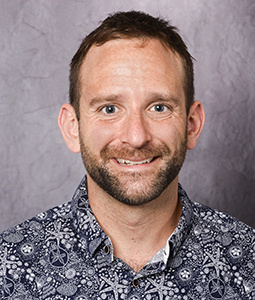
Dr. Daniel Speiser is an Associate Professor in the Department of Biological Sciences at the McCausland College of Arts and Sciences, University of South Carolina. His research focuses on the evolutionary physiology of marine invertebrates, particularly their visual systems and sensory adaptations. Visual Ecology: Studies spatial resolutions, spectral responses, and temporal dynamics of vision in molluscs and crustaceans for predator/prey detection and navigation. Distributed Visual Systems: Investigates neurobiology of multi-eyed molluscs like scallops and chitons with decentralized processing. Complex Trait Co-evolution: Analyzes functional relationships between sensory and locomotory systems in marine invertebrates. Biology of Color: Examines pigment-nanostructure interactions in color production, focusing on butterfly Speyeria . Natural Armor Systems: Explores trade-offs between protection and sensory function in structures like snapping shrimp orbital hoods and chiton shells.
Luca D'Acci is an Associate Professor in Sustainable Urban Forms and Evaluations at the Polytechnic of Turin, affiliated with the Interuniversity Department of Territorial Sciences, Planning and Policies (DIST). He holds additional affiliations as a Senior Research Fellow at the University of Portsmouth and as a member of research networks at the University of Birmingham and Erasmus University Rotterdam. His academic journey includes international roles such as Head of Urban Environment at Erasmus University Rotterdam and visiting researcher positions at the University of Oxford, University of Cambridge, and ETH Zurich. Education: MSc in Architecture-Science of Cities, Polytechnic of Turin (2003, cum laude) PhD in Economic Assessments, Polytechnic of Turin (2007) BSc in Mathematics, University of Turin (2007) BSc in Construction Engineering, Polytechnic of Turin (2009, cum laude) Post-PhD in Urbanism, University of Campinas (2010) Anthropology, University of Oxford (2020, 20 credits) Luca D'Acci’s research focuses on urban morphology, urban allometry, isobenefit urbanism, and the socio-economic-environmental impacts of urban form. His work bridges humanistic and quantitative approaches, integrating engineering, architecture, economics, and anthropology. He investigates how urbanicity, urban form, and spatial configuration influence well-being, sustainability, and resilience. His recent publications (2023–2025) reveal a strong trend toward computational modeling and simulation of urban growth, particularly through the lens of isobenefit urbanism —a concept he has pioneered. These works combine cellular automata, agent-based modeling, and morphogenetic frameworks to simulate sustainable urban futures. He also explores fractal patterns in housing markets, the psychology of urban living, and the mental costs of urbanicity. His research spans disciplines including urban science, environmental psychology, urban economics, and complex systems. Scientific Awards and Honors: Fellow, Erasmus Happiness Economics Research Organisation (EHERO), Erasmus University Rotterdam (2022–) Senior Research Fellow, University of Portsmouth (2017–) Fellow, Cluster for Sustainable Cities, University of Portsmouth (2017–2020) Fellow, Urban Morphology Research Group, University of Birmingham (2016–2021) Member, Cambridge Networks Network, University of Cambridge (2016–) Honorary Fellow, University of Birmingham (2016–) Luca D'Acci actively advises PhD students as a member of the Doctoral Collegium for Urban and Regional Development at Politecnico di Torino (2020–2024). He has secured and contributed to significant research grants, including projects funded by the World Bank, Asian Development Bank, European Commission, EPSRC, Lincoln Institute of Land Policy, and University College London (Future Urban Growth Lab). His editorial roles include membership on the boards of PLOS ONE , PLOS Mental Health , and Humanities & Social Sciences Communications . Labs and Research Networks: Future Urban Growth Lab (UCL, 2019–) LEUr Urban Ecology Lab (UFSC, 2022–) URban Evolution Morphology (UReM, 2024–) Erasmus Universiteit Rotterdam (EHERO, 2022–2024) Spatial Intelligence Unit (SPIN Unit), Estonia (2013–) International Society of Biourbanism (2013–)
Andrea Longhi is a Full Professor at the Interuniversity Department of Regional and Urban Studies and Planning (DIST) at Politecnico di Torino, where he also serves as the Rector's representative for the strategic management and conservation planning of Valentino Castle. He is a member of the Interdepartmental Center R3C (Responsible Risk Resilience Centre) and actively contributes to national and international research on cultural and religious heritage. His research interests include medieval architecture, cultural and ecclesiastical heritage, landscape history, urban history, and the historical development of settlements. He focuses on the interplay between liturgical reform and architectural practice, the resilience of religious complexes, and the adaptive reuse of decommissioned churches. His work integrates historical research with contemporary heritage policy and conservation strategies. His recent publications reflect a strong focus on civic and religious architecture, territorial history, and heritage valorization. Themes include post-conciliar religious architecture, the transformation of urban religious heritage, and the historical significance of medieval civic and defensive structures. He often collaborates on interdisciplinary projects and contributes to digital platforms for heritage mapping and resilience. Scientific Committee member - Leon Battista Alberti Study Center Foundation, Mantua, Italy (2023-) National Consultation for Liturgical Pastoral Care of the National Liturgical Office of the Italian Episcopal Conference, Italy (2022-2027) Steering Committee member - Future for Religious Heritage, Belgium (2020-) Scientific Committee member - ICOMOS Italia - PRERICO and ICORP (2020-) Effective member - ICOMOS Italia (2020-) Scientific Committee member - Observatorio de Arquitectura Religiosa Contemporánea, Spain (2019-) Founding partner - Associazione Piemontese per l'Arte Cristiana "Guarino Guarini", Italy (1999-) Andrea Longhi supervises PhD students, including Giulia Assalve, and teaches in doctoral and master's programs at Politecnico di Torino. He has been involved in evaluating cultural heritage funding programs for institutions such as Fondazione Cassa di Risparmio di Cuneo and Compagnia di San Paolo. He also leads significant research projects, including PRIN grants on civic palaces and the architectural heritage of small Italian municipalities. He is involved in multiple research collaborations and has contributed to the development of digital tools for heritage resilience, such as the Mnemonic atlas. His editorial roles include directing the journal Atti e Rassegna Tecnica and serving on the scientific committees of several academic publications.
Rosella Nicolini is a Professor in the Department of Applied Economics at Universitat Autònoma de Barcelona (UAB). She holds a PhD in Economics from the Catholic University of Louvain (2000) and has extensive visiting positions at institutions like University of Bordeaux, University of New South Wales, and Boston University. Her research focuses on urban economics, demography, regional development, and immigration policy, with a strong emphasis on territorial cohesion and spatial analysis. She has led multiple interdisciplinary projects including 'RURALITIC: RUral Revival' (2025–2028) and 'SOCIAL AND TERRITORIAL COHESION: THE DEMOGRAPHICAL CHALLENGE AND PUBLIC POLICIES' (2022–2025). Her work contributes to UN Sustainable Development Goals related to education and sustainable urbanization. Recent publications explore aging populations in Europe, urban congestion impacts on public transport usage, and spatial segregation dynamics in Barcelona. Nicolini has been a key figure in modeling population distribution and analyzing labor market reforms. She collaborates internationally, having held roles at IAE, Pompeu Fabra University, and the Barcelona Institute of International Studies (IBEI). Her grants include funding from the European Regional Development Fund and the Spanish Ministry of Science. She has supervised over 31 research works, focusing on applied economics methodologies and empirical techniques. Nicolini’s lab and team research integrates spatial econometrics with policy analysis, addressing contemporary challenges in regional development and urban governance.
Caroline A. Jones is a Professor of Art History at MIT's Department of Architecture, specializing in modern and contemporary art with technological dimensions. Her research spans technological production modes, cognitive neuroscience intersections, and global art systems. Academic Affiliation: History, Theory, and Criticism of Architecture and Art Program at MIT Research Focus: Technology's role in art, cognitive perception, systems theory, bio-art, and climate discourse Jones' publications and symposium organization demonstrate her interdisciplinary approach. Key themes include: Postwar artistic technology integration Umwelt theory and interspecies cognition Anthropocene critique through art Cybernetic systems in artistic practice Gut microbiome's role in consciousness understanding Temporal expansion through artistic bio-fiction Her work connects art history with contemporary scientific dialogues through projects like the Seeing/Sounding/Sensing symposium. Awards include prestigious fellowships from National Endowment for the Humanities, Guggenheim Foundation, and Radcliffe Institute. Current research examines cultural evolution, planetary boundaries, and artistic interventions in environmental systems. Jones actively explores how art can challenge human cognitive limitations and foster interspecies symbiosis frameworks.
Wendy Gunn is an Adjunct Professor (Research) in the Department of Design at Monash University. She holds a PhD in Social Anthropology from the University of Manchester (2003) and an MA in Social Anthropology from the same institution (1996). Her research focuses on collaborative design processes, sustainability in healthcare systems, and the integration of anthropological methods into engineering and architectural design. Gunn has extensive experience in interdisciplinary research, particularly in healthcare sustainability, medical device lifecycle management, and sustainable care pathway redesign. She has supervised numerous PhD theses across institutions including NTNU (Norway), University of Cape Town, and RMIT University. Notable collaborations include roles with the Healthcare Without Harm (HCWH) plastics working group, the UK Sustainable Healthcare Coalition (SHC), and the EU-funded GreenCare consortium. Her work contributes to UN Sustainable Development Goals related to environmental sustainability and healthcare innovation. Key research interests include design anthropology, emerging technologies, and the application of anthropological frameworks to collaborative design challenges. Recent work explores digitalization in healthcare, distributed care systems, and the environmental impact of medical packaging.
David Olefeldt is an Associate Professor and Director of Graduate Studies in the Renewable Resources Department at the University of Alberta's Faculty of Agricultural, Life and Environmental Sciences. His research focuses on catchment carbon cycling in boreal and Arctic landscapes, emphasizing wetland functions, permafrost thaw impacts, and greenhouse gas fluxes. He investigates both terrestrial and aquatic aspects of carbon dynamics, including methane emissions and dissolved organic carbon transport. Olefeldt combines fieldwork, laboratory analysis, and remote sensing to address climate change feedbacks in northern ecosystems. Affiliations: Catchment and Wetland Sciences Research Group (CAWS) Teaching: Courses include BIOL 333 (Wetland Science and Management), REN R 250 (Water Resource Management), and REN R 333 (Wetland Sciences and Management). His work bridges soil and aquatic sciences, with recent studies on permafrost carbon vulnerability, wildfire effects on carbon export, and global wetland methane synthesis. He emphasizes connecting small-scale studies to large-scale climate projections, particularly in peatland-rich regions. Labs/Teams: Active in the CAWS group, focusing on integrated catchment studies and wetland science.