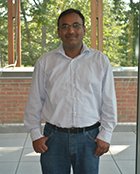
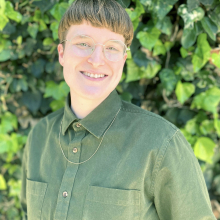
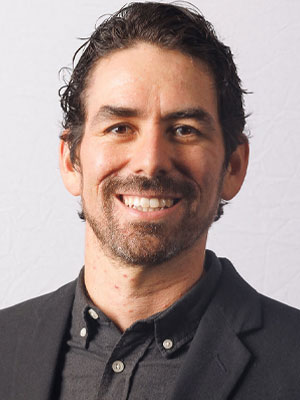
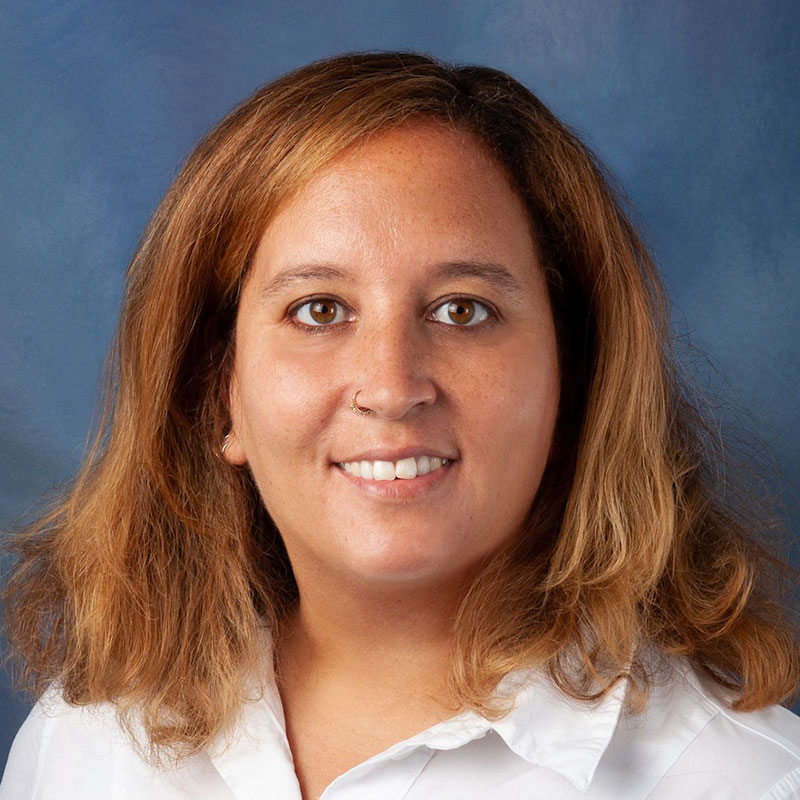
Praveen Tripathi is a Research Assistant Professor in the Department of Computer Science at Stony Brook University. His research focuses on Machine Learning, Data Mining, Spatio-Temporal Data Analysis, and Time Series Data Analysis. He has contributed to trajectory analysis frameworks, recommendation systems with temporal influence, and optimization algorithms. While his biography section is not detailed here, his work emphasizes practical applications of spatio-temporal data and multi-objective optimization. Awards are listed in the menu but specific details are not provided in the text. His publications span cybersecurity, trajectory analysis, and financial market dynamics, reflecting a strong interdisciplinary approach. No advising or grant information is explicitly mentioned in the provided content.
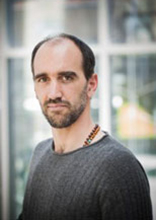
Dr. Tom Gleeson is a Professor and President’s Chair in the Department of Civil Engineering at the University of Victoria, Canada. His research focuses on groundwater sustainability, mega-scale groundwater systems, groundwater-surface water interactions, and fluid dynamics in geologic structures. He integrates geocomputation, data science, numerical modeling, field hydrogeology, and sustainability science to address interdisciplinary challenges. Gleeson holds a PhD from Queen’s University and is a licensed Professional Engineer (P.Eng.). Education: PhD (Queen’s University), P.Eng. License Research Themes: Groundwater sustainability, climate change impacts, socio-ecological systems, and planetary boundaries His work emphasizes global groundwater governance, environmental flow management, and Indigenous reconciliation in water science. Recent research highlights include quantifying groundwater’s role in planetary boundaries, evaluating nitrate contamination risks, and developing open-access groundwater modeling tools (e.g., GroMoPo). He advocates for community-based and arts-informed approaches to hydrogeology. His team, the Groundwater Science and Sustainability (GSAS) group, collaborates internationally to advance sustainable water management. Publications focus on groundwater’s socio-ecological connections, climate adaptation strategies, and innovative modeling frameworks. He actively engages with policymakers, Indigenous communities, and the public through blogs, social media, and open-access platforms.
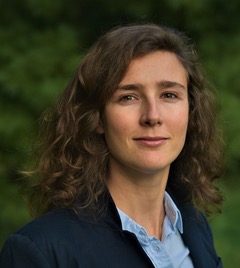
Dr. Laura Minet is an Assistant Professor in the Department of Civil Engineering at the University of Victoria. She leads the Clean Air (CLAIR) lab, focusing on improving urban air quality and reducing health impacts from air pollution through advanced modeling and policy analysis. Her expertise spans air quality, transportation engineering, and population health. Education: BEng/MEng (Ecole Centrale de Nantes), MASc (McGill University), PhD (University of Toronto). Postdoctoral work at the Diamond Environmental Research Group (2020-2021). Research Interests: Urban air quality modeling, vehicle emissions, dispersion modeling, and the intersection of transportation policies with public health. The CLAIR lab develops empirical and physical models to evaluate urban planning impacts and climate-driven changes. Recent research emphasizes machine learning applications in air quality prediction, health co-benefits of zero-emission vehicles, and disparities in pollution exposure. Over 40 publications span environmental engineering, public health, and transportation systems. Recruitment: Actively seeking graduate students/postdocs in environmental engineering, atmospheric science, and related fields. Contact via email with subject 'CLAIR lab opportunities'. Labs/Teams: Director of the CLAIR lab focusing on urban air quality solutions. Engaged in interdisciplinary collaborations involving urban planning, public health, and environmental policy.
Zijiang J He, PhD, is a Professor and Distinguished University Scholar in the Department of Psychological and Brain Sciences at the University of Louisville. His research focuses on visual perception, particularly the mechanisms underlying 3D depth perception and middle-level vision. He holds a B.S. in Biophysics from the University of Science and Technology of China (1983), M.S. in Neurobiology from Shanghai Institute of Physiology (1986), and Ph.D. in Physiological Optics & Neuroscience from the University of Alabama at Birmingham (1990). Postdoctoral training was completed at Harvard University (1994). Research interests include space vision mechanisms and middle-level vision processes. His lab explores how the brain integrates 2D retinal images into 3D spatial perception, leveraging virtual reality and psychophysical methods. Key contributions include studies on sensory eye dominance, binocular rivalry, and perceptual learning protocols for amblyopia. He leads the Visual Perception and Cognition Lab, emphasizing interdisciplinary approaches combining neuroscience, computational modeling, and behavioral experiments. Notable achievements include the Distinguished University Scholar title and impactful publications in *Nature*, *Science Advances*, and *Proceedings of the National Academy of Sciences*. His work bridges ecological regularities and neural processing, advancing understanding of visual system adaptations to spatial environments.
Kevin A. Haas is a Professor of Civil Engineering and Associate Chair for Undergraduate Programs at the Georgia Institute of Technology's School of Civil and Environmental Engineering, part of the team developing Coastal Engineering programs in Savannah. He holds a B.S. (Ohio State University, 1994), M.S. (Ohio State University), and Ph.D. (University of Delaware, 2001) in Civil/Coastal Engineering, followed by a postdoctoral fellowship at the University of Delaware. Education: B.S. in Civil Engineering (Distinction), The Ohio State University, 1994 M.S. in Civil Engineering, The Ohio State University, 1997 Ph.D. in Coastal Engineering, University of Delaware, 2001 Research Interests: Focuses on coastal dynamics, numerical modeling of nearshore circulation, sediment transport, and hydrodynamics of rip currents. Explores wave energy extraction, tidal marsh sediment transport, and applications of video-based field observations. His work bridges environmental engineering and renewable energy, emphasizing sustainable coastal systems. Key Achievements: Recipient of the Delaware Sea Grant Award for outstanding Ph.D. research on rip currents Lead in securing a $1M educational grant for undergraduate programs at Georgia Tech Active in developing tidal and wave energy assessment methodologies Grants & Labs: Principal investigator on projects funded by federal agencies and industry partnerships Conducts fieldwork and modeling at Georgia Tech's Savannah campus and coastal sites Collaborates with USGS, NOAA, and international teams on marine energy initiatives
Giorgos Mountrakis is a Professor in the Department of Environmental Resources Engineering at SUNY College of Environmental Science and Forestry (ESF). His research focuses on environmental monitoring using remote sensing, environmental modeling through geographic methods, and decision support systems for ecological and urban challenges. He holds a Dipl. Eng. from the National Technical University of Athens (1998), an M.S. (2000), and Ph.D. (2004) from the University of Maine. His work integrates advanced technologies like satellite imagery, LiDAR, and machine learning to address land cover dynamics, climate impacts, and wildlife conservation. Current advisees include Atef Amriche (PhD candidate in Geospatial Information Science), Babak Haji Seyed asadollah (PhD in Environmental Resources Engineering), Ahmadreza Safaeinia (PhD in Environmental Resources Engineering), and Zhixin Wang (PhD in Geospatial Information Science). Key research themes include: land use/cover classification using deep neural networks, climate change impacts on forests and rangelands, and optimizing spatial-temporal models for large-scale environmental analysis. His projects span global datasets (e.g., Landsat, MODIS) and regional case studies in the US, Mongolia, and Algeria. Publications emphasize methodological advancements in remote sensing, such as fusion of multisensor data, accuracy assessment frameworks, and applications in biodiversity conservation. His work bridges technical innovation with practical environmental decision-making, addressing issues like urban growth prediction and wildlife-vehicle collision mitigation.
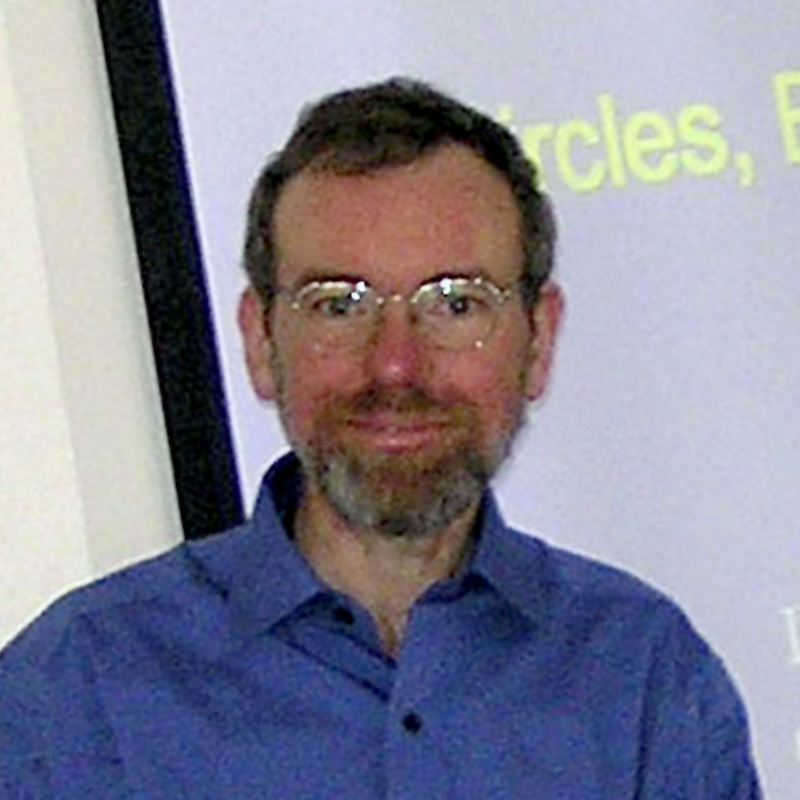
Kevin Kelly is a Professor of Philosophy at Carnegie Mellon University and the Director of the Center for Formal Epistemology. His work bridges formal epistemology, computational learning theory, and philosophy of science, with a focus on Ockham's razor, belief revision, and the topology of inquiry. Key Research Areas: Ockham's Razor, Epistemology, Formal Learning Theory, Modal Epistemic Logic, and Interdisciplinary Applications of Topology. Grants: John Templeton Foundation grant for research on truth-finding efficiency and scientific simplicity. Scientific Awards: John Templeton Foundation grant (2018–2021) Kelly's publications emphasize connections between probabilistic reasoning and qualitative belief, solutions to the lottery paradox, and computational models of knowledge acquisition. His recent work explores lighting design, human-centric ergonomics, and machine learning epistemology, reflecting a deep interdisciplinary engagement with technology and science.
Barbara Shinn-Cunningham is the Glen de Vries Dean of the Mellon College of Science at Carnegie Mellon University (CMU) and holds professorships in Psychology, Biomedical Engineering, and Electrical and Computer Engineering. She is also the founding director of CMU's Neuroscience Institute. Her research focuses on auditory neuroscience, particularly auditory attention, binaural hearing, and multisensory integration, with applications to hearing disorders and assistive technologies. Shinn-Cunningham earned her B.S. from Brown University and her M.S. and Ph.D. from MIT in Electrical and Computer Engineering. Education: B.S., Electrical Engineering, Brown University (1986) M.S., Electrical & Computer Engineering, MIT (1988) Ph.D., Electrical & Computer Engineering, MIT (1994) Research Interests: She investigates how the brain processes sound in complex environments, including spatial hearing, auditory attention deficits in aging and clinical populations, and the neural mechanisms underlying cochlear synaptopathy. Her work integrates behavioral studies, neuroimaging (EEG, fMRI), and computational modeling to bridge basic science and translational research. Awards & Recognition: Fellow, Acoustical Society of America (2009) Alfred P. Sloan Research Fellow (2000) National Security Science and Engineering Faculty Fellow (2008) Helmholtz-Rayleigh Interdisciplinary Silver Medal (2019) Advising & Grants: She mentors a diverse team of graduate students and postdocs, focusing on training the next generation of auditory neuroscientists. Her grants include funding from NSF, NIH, and the Department of Defense. She leads the LiMN Lab, which explores neural mechanisms of sensory processing and attention. Labs & Teams: Director of the Lab in Multisensory Neuroscience (LiMN) at CMU, part of the Carnegie Mellon Neuroscience Institute. Collaborates with engineers, clinicians, and marine biologists to advance auditory technology and neuroimaging techniques.
Gracen Brilmyer is an Assistant Professor at the School of Information Studies , McGill University. Their research bridges critical archival studies and disability studies, examining how disabled individuals engage with archives and how disability histories are obscured. They hold a PhD from UCLA (2020) and an MIMS from UC Berkeley, with a BA from the School of the Art Institute of Chicago. Research Interests focus on: Archival representation of disability Ableism in colonial and natural history archives Accessibility and spatial belonging in archives Critical disability methodologies Publications emphasize disability-centered archival frameworks, such as Crip provenance and crip legibility , while critically analyzing archival erasure and professional ethics. Their work often intersects with social justice, design justice, and anti-colonial praxis. Labs/Teams include the Disability Archives Lab , exploring disability justice through archival innovation. Gracen also advocates for fragrance-free policies and dismantling white supremacy in archives. Grants/Advising details are not explicitly listed, though their website and lab highlight collaborative projects and community engagement.
David J.X. González is an Assistant Professor in the Division of Environmental Health Sciences at UC Berkeley’s School of Public Health. His interdisciplinary work bridges epidemiology and environmental science to address environmental justice and health disparities, particularly in extractive industries and climate-driven disasters. He leads the EQUIS Lab, focusing on oil/gas development, wildfire smoke, and structural racism in environmental hazards. Education : PhD in Environment and Resources, Stanford University MS in Epidemiology and Clinical Research, Stanford University MESc in Environmental Science, Yale University BS in Evolution, Ecology, and Biodiversity, UC Davis Research Interests : González investigates air pollution’s impact on perinatal health, climate change’s health consequences, and systemic racial inequities in environmental exposures. He employs community-engaged methods to translate findings into actionable policies and advocates for diversity in scientific fields. His work emphasizes marginalized communities’ disproportionate burdens from fossil fuels and environmental hazards. Publications & Media : His recent studies highlight fossil fuel health risks, wildfire-oil infrastructure intersections, and disparities in pandemic outcomes linked to oil/gas exposure. He frequently engages with media to communicate science, including op-eds on racial inequality in housing/education systems and language justice in environmental sciences. Awards : None explicitly listed in the text. Labs/Teams : As Principal Investigator of the EQUIS Lab, he coordinates interdisciplinary teams to study environmental justice issues, integrating community voices into research design and policy advocacy.
Auguste Genovesio is a Research Director (DR INSERM) leading the Computational Bioimaging and Bioinformatics team at the Centre for Computational Biology within the École Normale Supérieure (ENS) in Paris. His work focuses on large-scale cellular morphology analysis, integrating machine learning, microscopy, and computational modeling to study cellular responses to perturbations. His team develops algorithms for analyzing high-dimensional biological data, with applications in drug discovery, functional genomics, and neuroscience. Education and Affiliations: Genovesio’s research is anchored at ENS and collaborates with institutions like Institut Curie, Collège de France, and ESPCI. His lab develops open-source tools such as PySpacell and ALFA , advancing spatial analysis and genomic data processing. Research Interests: His group combines deep learning, bioinformatics, and experimental biology to tackle challenges in cellular dynamics, morphological heterogeneity, and predictive modeling. Recent work includes applying diffusion models to reveal subtle phenotypes and optimizing microscopy image analysis pipelines. Key Projects: Cross-modal knowledge distillation for transcriptomics, latent diffusion models for small datasets, and super-resolution microscopy via StyleGAN regularization. Applications: Collaborations in drug screening, neurobiology (e.g., Drosophila memory studies), and cancer cell analysis. Publications: Over 50 peer-reviewed articles since 2007, including work in Nature Communications , Developmental Cell , and NeurIPS . Recent focus on generative AI for biological image analysis and self-supervised learning biases. Grants & Awards: While specific grants aren’t listed, his lab’s cutting-edge research suggests significant institutional and collaborative support. No explicit awards mentioned in texts. Labs/Teams: Director of the Computational Bioimaging group, part of the Functional Genomics section at ENS. Supervises PhD students and postdocs in AI-driven biology and computational microscopy.
Veronica Berrocal is a Professor in the Department of Statistics at the University of California, Irvine (UCI), affiliated with the Donald Bren School of Information & Computer Sciences. Her research focuses on developing statistical models to analyze spatial and temporal data, particularly in environmental health, geophysical processes, and public health outcomes. She collaborates with institutions like Drexel University and the University of Michigan to study the interplay between environmental factors (e.g., built environments, air quality) and health disparities. Her work also addresses calibration of geophysical models and leveraging social media for health behavior analysis. Key research areas include spatial dependence modeling, post-processing outputs from climate/air quality models, and identifying how neighborhood characteristics influence health behaviors (e.g., obesity risk in school children). She develops statistical approaches to reconcile discrepancies between observational data and model outputs, particularly in environmental and health contexts. Her methodological contributions span Bayesian statistics, spatial-temporal data fusion, and multiresolution analysis. Her research often integrates interdisciplinary collaborations, such as combining UAV mapping for disease surveillance (e.g., dengue outbreaks) and using Yelp reviews to assess food environments. She has also contributed to public health initiatives like developing web-based platforms (e.g., MyGoutCare) to improve patient education and outcomes for chronic conditions. While no specific awards are listed, her extensive publications reflect her impact in environmental statistics and health analytics. She advises no listed students but collaborates widely with researchers across disciplines. Her office is located in DBH 2026, and she can be reached at vberroca@uci.edu.
Chantal Stern is Professor and Department Chair at Boston University's College of Arts and Sciences, where she directs the Cognitive Neuroimaging Laboratory and Cognitive Neuroimaging Center. Her research uses fMRI to study memory formation, spatial navigation, and neurodegenerative conditions. Research examines neural mechanisms underlying visual/spatial information processing, memory encoding/retrieval dynamics, and cognitive changes in normal aging and dementia pathologies. Current projects investigate navigation systems, attentional networks, and computational models of reasoning. Publications demonstrate consistent methodological innovation in neuroimaging, particularly in mapping temporal aspects of navigation and developing predictive models integrating perceptual and abstract reasoning systems.
Dr. Judith Verstegen is an Assistant Professor in the Department of Human Geography and Spatial Planning at Utrecht University's Faculty of Geosciences. Her research focuses on geosimulation modeling and spatial optimization, with applications in urban planning, environmental vulnerability assessment, and policy analysis. She leads projects such as HEADS 4 Health (2023-2024), which integrates agent-based models into urban digital twins, and coordinates the GeoSIM research group. Her work emphasizes interdisciplinary collaboration, including projects analyzing linguistic diversity in South America and environmental threats to Amazonian indigenous lands. She is the Program Chair of the MSc Geographical Information Management and Applications (GIMA) program and serves as Editor-in-Chief of the Journal of Spatial Information Science. Notable contributions include methodologies for spatial optimization under uncertainty and agent-based modeling of pedestrian behavior in urban environments. Key research areas include applied data science, complex systems analysis, and the PtS - Transforming Cities initiative. She has advised PhD students on topics ranging from fire prevention optimization to indigenous land vulnerability. Her lab at the University of Münster previously focused on spatial modeling frameworks, and she collaborates internationally with institutions like Leiden University and the PBL Netherlands Environmental Assessment Agency. Recent projects highlight innovation in computational methods, such as Python-based open-source tools for land-use modeling (IMAGE-land) and immersive video experiments for behavioral studies. Her work bridges theoretical modeling with practical policy applications, addressing challenges in sustainable urban development and environmental conservation.
Arno Siebes is Professor of Algorithmic Data Analysis in the Department of Information and Computing Sciences at Utrecht University's Faculty of Science. His research focuses on data mining methodologies, particularly pattern mining and Minimum Description Length (MDL) principles. Key research areas include: Developing efficient algorithms for pattern discovery Applying MDL to data characterization Creating interpretable models for complex datasets Addressing challenges in data science education Recent publications demonstrate applications in diverse domains including mobility analysis, genomic screening, and pandemic response. His work combines theoretical foundations with practical implementations for knowledge discovery.