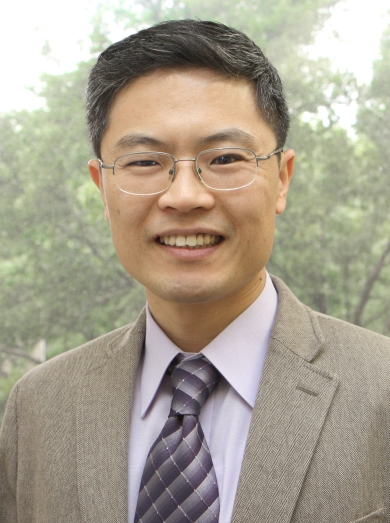
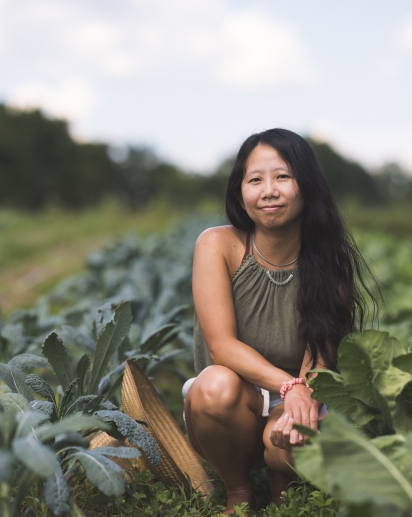
Dr. Manisha Shakya is a Postdoctoral Research Fellow specializing in Aquatic Ecology at the University of New England's School of Environmental and Rural Science. Her research focuses on freshwater ecosystems in the Murray Darling Basin, investigating carbon sources for aquatic biota and the impact of pollutants on biomolecular composition. She collaborates with UNE's Pollution Science Research Group to examine how contaminants alter nutritional landscapes in aquatic food webs. Her research interests center on: Aquatic ecotoxicology and pollution impacts Biomolecular responses to environmental stressors Spatial and temporal variation in aquatic ecosystems Food web dynamics and nutritional ecology Recent publications demonstrate her focus on copper-induced stress responses across aquatic organisms, from microalgae to fish. Her work employs proteomic and biochemical analyses to understand ecological impacts of contaminants.
Horacio Castillo is an Associate Professor in the Department of Physics and Astronomy at Ohio University, affiliated with the Nanoscale Quantum Phenomena Institute (NQPI). His research focuses on condensed matter theory, particularly glassy dynamics, dynamical heterogeneities, and non-equilibrium systems. He explores topics such as fluctuating relaxation times, aging dynamics, and the interplay between structure and dynamics in supercooled liquids and amorphous solids. Key research areas include the study of glass transition phenomena using molecular simulations and theoretical models. His work addresses questions about spatial and temporal correlations in glass-forming systems, dynamic susceptibility, and the application of spin-glass concepts to biological reprogramming processes. Castillo’s contributions span experimental collaborations and computational studies, with a focus on advancing understanding of complex materials and their underlying physics. Publications highlight advancements in characterizing rotational/translational dynamics in supercooled liquids, modeling dynamic heterogeneity, and analyzing aging regimes in silica glasses. His research bridges traditional condensed matter physics with interdisciplinary topics such as biophysics, leveraging tools from statistical mechanics and nonlinear dynamics. Castillo has contributed to the Ohio University community through involvement in academic events like the NQPI-CMSS Joint Poster Session (2015) and mentoring student research projects, as evidenced by his presence in student research expos. His grants and collaborations reflect a commitment to advancing fundamental knowledge in nanoscale and quantum phenomena.
Gabriella Cianciolo Cosentino is a Professor of Architectural History at the University of Cologne and an Associate Scholar at the Kunsthistorisches Institut in Florenz (Max Planck Institute). She holds a PhD in History of Architecture and Preservation from the University of Palermo (2004). Her academic career includes roles as Assistant Professor at the Technical University of Munich (2014–2017) and Coordinator of a cross-disciplinary Pompeii research project funded by the Fraunhofer Society and Max-Planck Society (2015–2019). She currently leads the 'GAP – Graffiti Art in Prison' project, examining graffiti as spatial and cultural markers across historical contexts. Research focuses on the interplay between architecture and decorated surfaces, including Pompeian mural paintings, medieval mosaics, and prison graffiti. Her work bridges art history, architecture, and proxemics, addressing themes like spatial appropriation, materiality, and cross-temporal artistic practices. Key projects include analysis of Palermo’s Palazzo Chiaramonte prison graffiti and transmedial transformations of architectural装饰 into 19th-century iron structures. Notable fellowships include support from MIUR, DAAD, Alexander von Humboldt Foundation, and the Italian Academy at Columbia University. She collaborates with institutions like the Bibliotheca Hertziana and contributes to initiatives promoting global art historical research.
Shimeng Yu is a full professor at the Georgia Institute of Technology's School of Electrical and Computer Engineering, holding the Dean’s Professorship. He earned his B.S. from Peking University (2009) and M.S./Ph.D. from Stanford University (2011/2013). His research focuses on semiconductor devices, non-volatile memories, 3D integration, and AI hardware accelerators. Yu leads SRC/DARPA JUMP 2.0 centers on memory/storage and 3D integration, with over 400 publications and 30,000+ citations (H-index 82). He serves on flagship conference committees (e.g., IEDM, VLSI) and editorial boards (IEEE EDL, JETCAS). Education: B.S., Microelectronics, Peking University (2009) M.S./Ph.D., Electrical Engineering, Stanford University (2011/2013) Research Themes: Emerging non-volatile memories for AI Monolithic 3D integration Energy-efficient computing systems His work spans device fabrication, circuit design, and system-level co-optimization. Recent projects are funded by NSF, DARPA, DOE, and industry partners (TSMC, Intel, Samsung), totaling >$17M. His lab, located at the Pettit Microelectronics Research Center, develops prototypes with cleanroom access. Awards: IEEE Fellow (2024) ACM/IEEE DAC Under-40 Innovators Award (2020) NSF CAREER Award (2016) Multiple editorship roles and distinguished lecturer appointments (IEEE EDS/CASS) Grants & Funding: Lead of two SRC/DARPA JUMP 2.0 centers Total research funding exceeds $17M
Dr. Haidong Lu is an Assistant Professor of Internal Medicine at Yale School of Medicine, specializing in epidemiology and health data science. His research integrates causal inference methods with observational health data to inform clinical and regulatory decisions, particularly in substance use, HIV/AIDS, and pharmacoepidemiology. He holds a PhD from UNC Gillings School of Global Public Health and a pharmacy degree, enhancing his interdisciplinary expertise. Dr. Lu is affiliated with the Janeway Society and Program in Addiction Medicine, and serves as an Associate Editor for International Journal of Epidemiology and AJE Advances . His awards include the NIH/NIDA K99/R00 Award and the Lilienfeld Prize finalist recognition. Research Interests: Causal inference methodologies Substance use disorders and opioid epidemiology HIV treatment outcomes and precision medicine Geographic health trends analysis Artificial intelligence in learning health systems Publications Trends: Dr. Lu's work focuses on methodological advancements in causal inference while addressing real-world public health challenges like opioid addiction, HIV treatment optimization, and fentanyl-related mortality. His recent studies highlight innovative approaches to mitigating selection bias in observational studies and improving accessibility to substance use treatments. Awards and Activities: In addition to editorial roles, he co-chairs the Design and Analysis Group (DAG) and founded the Yale Pharmacoepidemiology Workgroup. His research has been supported by NIH grants and collaborations with institutions like UNC and Johns Hopkins. Labs/Teams: Active in addiction medicine research and interdisciplinary teams focused on causal inference and health equity initiatives at Yale.
Hojjat Adeli is an Academy Professor at The Ohio State University (OSU) with courtesy appointments in the Departments of Neurology, Neuroscience, and Biomedical Informatics. He has held the Abba G. Lichtenstein Professorship in Infrastructure Engineering (2003-2013) and served as Editor-in-Chief of Computer-Aided Civil and Infrastructure Engineering for 25 years. Academy Professor, OSU (2018–present) Professor of Neurology, Neuroscience, and Biomedical Informatics (by courtesy, since 2015-2002) His research interests span interdisciplinary domains at the intersection of engineering and neuroscience, focusing on: Computational neuroscience and neurocomputing Biomedical signal processing (particularly EEG-based diagnostics) Machine learning and computational intelligence applications Smart infrastructure systems and structural engineering Optimization algorithms in civil and biomedical contexts His research trends demonstrate a synergy between: Neural network development for medical diagnostics Wavelet and chaos theory in epilepsy detection Computational intelligence for structural engineering Hybrid models integrating fuzzy logic and genetic algorithms Scientific awards and honors include: Multiple IEEE Fellowships and AAAS Fellow Thomson Reuters Highly Cited Researcher in Engineering and Computer Science Hojjat Adeli Awards for Neural Systems and Innovation in Computing Elections to international academies in Poland, Lithuania, and Spain Scott Award for Engineering Education and Distinguished Member ASCE
Tasso J. Kaper is a Professor and Chair of the Department of Mathematics and Statistics at Boston University. He holds a Ph.D. in Applied Mathematics from the California Institute of Technology (1992). His research focuses on dynamical systems, nonlinear dynamics, reaction-diffusion equations, and mathematical biology. He is a Fellow of both the American Mathematical Society (AMS) and the Society for Industrial and Applied Mathematics (SIAM). He serves as Editor-in-Chief of Nonlinearity (UK Institute of Physics) and has held editorial roles for journals such as the SIAM Journal on Applied Dynamical Systems and Advances in Differential Equations. His work bridges applied mathematics and interdisciplinary fields, including fluid mechanics, climate modeling, and neuronal dynamics. Recent research highlights include studies on bifurcation phenomena, symmetry-breaking rhythms in coupled oscillators, and delayed Hopf bifurcations in reaction-diffusion systems. He has advised over 15 Ph.D. students, many of whom now hold academic and industry positions. Key awards include the AMS and SIAM fellowships, recognizing his contributions to dynamical systems theory and applications. His lab collaborates on topics ranging from glacial cycle modeling to chimera states in oscillator networks.
Efthimios S. Skordas is an Associate Professor of Experimental Solid State Physics at the Department of Physics, National and Kapodistrian University of Athens. Born in Lefkada, Greece in 1960, he holds a Mathematics degree (1984) from the University of Crete and a Doctorate (1992) from Uppsala University, Sweden. His research focuses on seismicity analysis through the lens of natural time analysis, complex systems, and non-extensive statistical mechanics. University of Crete (1984, Mathematics) Uppsala University (1992, Doctorate) His work demonstrates deep expertise in earthquake prediction, detection of pre-seismic anomalies through geoelectric/magnetic field variations, and entropy dynamics under time reversal. Recent publications highlight applications of natural time analysis to diverse domains including cardiovascular health monitoring. He has authored over 120 peer-reviewed publications and two monographs, with an h-index of 32. Skordas' research bridges geophysics with interdisciplinary applications, showing particular emphasis on entropy fluctuations, order parameter analysis, and multi-scale seismicity patterns. His laboratory contributes to understanding the physical interconnection of seismic electric signals with earthquake dynamics.
Jeffrey Doser is an Assistant Professor in the Department of Forestry and Environmental Resources at North Carolina State University (NC State), within the College of Natural Resources. His research focuses on ecological modeling, species distribution analysis, spatial statistics, and biodiversity monitoring. He specializes in developing R software tools for ecological data analysis, such as the spAbundance and spOccupancy packages. His work emphasizes improving statistical methods for occupancy models, integrating acoustic and survey data, and addressing environmental challenges like invasive species and climate change impacts on ecosystems. Key research themes include species-environment interactions, spatially varying coefficients in ecological models, and functional reproducibility in scientific coding. His recent studies address topics such as American chestnut restoration, wild bee community dynamics, and early detection of invasive aquatic species. Doser collaborates on interdisciplinary projects involving forest inventory, avian soundscapes, and long-term ecological monitoring. His publications (2020–2025) highlight methodological advancements in species distribution modeling, occupancy frameworks for multi-season data, and applications of Bayesian approaches. He advocates for rigorous statistical practices and reproducible research in ecology.
Professor Yongwan Chun is a faculty member in the Geospatial Information Sciences program at the University of Texas at Dallas , affiliated with the School of Economic, Political and Policy Sciences. His academic journey includes a PhD in Geography (2007) and MS in Applied Statistics (2006) from the Ohio State University. Research Interests: Methodological advancements in GIScience, spatial statistics, environmental justice, urban crime analysis, population migration, and commodity flow modeling. Awards: Emerging Scholar Award (2017) from the Spatial Analysis and Modeling Specialty Group of the Association of American Geographers. Grants: Multiple awards from National Science Foundation and National Institute of Health totaling $1.4 million. Article Trends reflect expertise in spatial autocorrelation (Moran's I, Geary's C), location-allocation modeling (p-median, p-dispersion), and applications to healthcare accessibility, urban crime patterns, housing market segmentation, and climate impacts. His work integrates GIScience with Bayesian methods, eigenvector filtering, and big data uncertainty. Collaborators: Daniel A. Griffith, Hyun Kim, and students like Dongeun Kim and Changho Lee. Recent Topics: Trauma center accessibility, snowpack variation modeling, and spatiotemporal crime analysis. Contact: ywchun@utdallas.edu | Office: GR 3.208, UT Dallas
Márton Karsai is an Associate Professor and Head of the Department of Network and Data Science at the Central European University in Vienna, and a Research Professor at the HUN-REN Alfréd Rényi Institute of Mathematics in Budapest. He leads the Computational Human Dynamics Lab, focusing on data-driven modeling of social and biological systems. He is also the Editor-in-Chief of the journal Advances in Complex Systems . His research interests lie at the intersection of network science, human dynamics, and socioeconomic systems. He specializes in temporal and spatial networks, modeling contagion processes (both social and biological), and analyzing large-scale human behavioral datasets. His work integrates computational methods with real-world data to understand complex social phenomena such as mobility patterns, migration, segregation, and epidemic spread. He is particularly known for using remote sensing and digital trace data to infer poverty and socioeconomic conditions in urban areas. The recent publications highlight a strong trend in applying network science and machine learning to societal challenges. His work spans high-impact journals in complex systems, data science, and computational social science, with recurring themes in epidemic modeling, urban analytics, socioeconomic inference, and the structure of temporal and spatial networks. The research is highly interdisciplinary, combining physics, computer science, and social science methodologies. He has been invited to speak at major events such as the Conference on Complex Systems, the Lake Como School on Complex Networks, and workshops on data for vulnerability assessment. He served as general co-chair of CCS 2021 in Lyon, demonstrating leadership in the complexity science community. General Co-Chair, Conference on Complex Systems (CCS) 2021, Lyon Invited speaker, 4th Workshop on Data for the Wellbeing of the Most Vulnerable @ ICWSM'23 Invited speaker, Complexity72h Workshop Invited lecturer, Lake Como School on Complex Networks Invited talk, Hungarian Academy of Sciences on COVID-19 modeling While specific grant details are not listed, his coordination of projects on segregation, migration, and poverty inference—often in collaboration with the Complexity Science Hub—suggests active involvement in externally funded interdisciplinary research. He advises students through the Department of Network and Data Science at CEU, though specific advisees are not named. His lab, the Computational Human Dynamics Lab, serves as a hub for data-driven research on social systems.
Prof. Dr.-Ing. Daniela Thrän serves as Professor of Bioenergy Systems at the University of Leipzig's Faculty of Economics and Head of the Department of Bioenergy at the Helmholtz Centre for Environmental Research (UFZ), positions she has held since 2011. She concurrently leads Germany's delegation in IEA Bioenergy Task 44 on Flexible Bioenergy and System Integration and chairs the Social Sustainability Transformations group at UFZ, bridging academic research with national climate policy through roles in the Federal Bioeconomy Council (2012-2023) and Thuringia's Climate Advisory Board. Her academic background includes: Engineering studies in Technical Environmental Protection at Technical University of Berlin (1989-1995) Doctorate at Bauhaus University Weimar (1998-2001) on material flow management in rural regional development Thrän's research centers on bioenergy's role in climate neutrality, specializing in carbon dioxide removal (CDR) via bio-based methods including BECCS, life cycle sustainability assessment, and spatial modeling of renewable energy systems. She analyzes biomass resource potentials within circular bioeconomy frameworks and investigates socio-economic drivers of energy transitions, with recent work focusing on urban-rural biomass integration and flexible bioenergy services for grid stability. Her 2023-2025 publications reveal intensifying focus on bio-CDR implementation challenges and policy frameworks, alongside systematic assessments of biomass allocation in Germany's net-zero pathways. Key trends include AI-enhanced literature mapping for climate research, municipal-scale renewable integration dynamics, and cross-national comparisons (e.g., Germany/Canada biogas systems), with growing emphasis on socio-technical trade-offs in land use and stakeholder acceptance. No scientific awards, prizes, or fellowships were documented in the provided text. Thrän actively mentors doctoral candidates as DBFZ's representative for bioenergy colloquia and leads major initiatives: IEA Bioenergy Task 44: National Team Leader for Germany (2019-present) Helmholtz Climate Initiative (HI-CAM): Co-author of spatial energy transition reports Editor-in-Chief of Springer's "energy, sustainability and society" (2017-present) She directs UFZ's Department of Bioenergy (BEN) and Models team, developing spatially resolved energy system tools like BENOPTex. Her groups focus on techno-economic analysis of biogenic resources, smart bioenergy system services, and socio-ecological impacts of renewable energy expansion, with strong links to European standardization bodies (ISO/TC 238, CEN TC 335) and Germany's aviation biofuels advisory board (aireg).
Theresa Ong is an Assistant Professor of Environmental Studies at Dartmouth College , where she investigates the complexity of coupled human-natural systems, particularly in agriculture and urban ecosystems. Her research integrates agroecology, complex systems theory, and theoretical ecology to analyze how agricultural systems maintain stability under social and environmental stressors. Education: B.A., Williams College M.S., University of Michigan, Ann Arbor Ph.D., University of Michigan, Ann Arbor Research Interests include agroecology, urban agriculture, biocomplexity, biological control, critical transition theory, socio-ecological modeling, and non-linear dynamics. She focuses on how spatial, temporal, and species diversity (biocomplexity) affects the resilience of agricultural systems to ecological and political disturbances. Recent Publications highlight trends in agroecological transitions, urban biodiversity dynamics, climate adaptation in agroforestry, and mathematical modeling of ecological resilience. Her work frequently explores the interplay between human activities and ecological feedback mechanisms. Scientific Awards: NSF Postdoctoral Fellowship in Biology FY 2017 Lab: The Ong Lab studies complex adaptive systems like agriculture, where human impacts on ecosystems create feedback loops affecting society. Current projects examine spatial patterns, consumer-resource dynamics, and strategies to prevent ecological tipping points.
Caspar Meyer is a Professor at the Bard Graduate Center, Bard College, where he serves as Editor of West 86th: A Journal of Decorative Arts, Design History, and Material Culture . His research bridges archaeology, art history, and material culture studies, with emphases on ancient Greek and Eurasian societies, cross-cultural exchange, and the role of temporality in art. Meyer leads archaeological fieldwork at the sanctuary of Apollo on Despotiko and has excavated in Ukraine, Russia, and the Cyclades. Education includes a PhD and MS from the University of Oxford and a BA from King’s College London. Meyer's work interrogates how people and objects co-create environments through embodied craftsmanship, with current projects examining ancient 'future-making' via technological choices in pottery, metalwork, and stone carvings. His interests span: Intercultural dynamics in first-millennium BCE Eurasia Classical reception in modern scholarship and museums Archaeological method and sensory engagement with artifacts Recent publications (2018–2025) cluster around materiality, temporality, and interdisciplinary critique. Trends include museum display ethics, Scythian art technology, and re-evaluations of classical reception through Foucaultian and possibility-studies frameworks. Articles consistently merge technical analysis (e.g., chaîne opératoire) with cultural theory. He directs a field school for BGC students and co-edits thematic journal issues on topics like metalwork and magic, fostering collaborative research networks.
Audrey Jaffe is a Professor at the University of Toronto, specializing in Romantic and Victorian Literature. She is affiliated with the Graduate Faculty and Undergraduate Instructor roles, contributing to the academic community through research and teaching on the Victorian novel, affect theory, and narrative structures. Research focuses on Victorian realism Expertise in class and identity dynamics in fiction Advances understanding of emotional measurement in Victorian finance Her recent publications, including essays on George Eliot and Dickens, reveal trends in analyzing ideology, genre, and socio-economic contexts in 19th-century British literature. She co-edits volumes bridging political economy and literary studies.