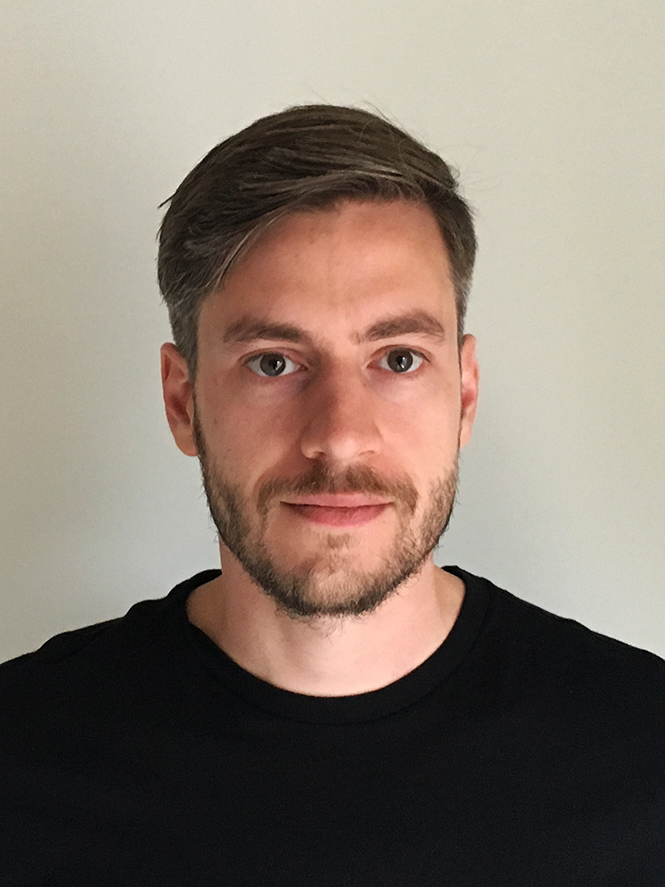
Dr. Olle Järv is an Academy Research Fellow at the University of Helsinki's Department of Geosciences and Geography. As Docent in Human Geography and holder of a joint PhD from University of Tartu and Ghent University, his research focuses on leveraging big data sources like mobile phone records and social media for analyzing human mobility patterns across European cross-border regions. Key research areas: Spatial segregation, urban diversity, transnationalism, and pandemic-induced mobility changes Current projects: BORDERSPACE (2020-2025) – Mapping transnational spaces through mobility data MOBI-TWIN (2023-2026) – Regional mobility patterns in twin transitions WinWin4WorkLife (2024-2027) – Sustainable cross-border remote work His methodological innovations include developing tools for analyzing social media data and mobile phone records to study urban dynamics. Recent recognitions include the 2024 Research Council of Finland Award and 2021 Best Paper Award from Journal of Location Based Services.
Haibin Ling is the SUNY Empire Innovation Professor in the Department of Computer Science at Stony Brook University, part of the College of Engineering and Applied Sciences. His research focuses on computer vision, medical image analysis, augmented reality, and AI applications in science. He holds a Ph.D. from the University of Maryland (2006) and prior degrees from Peking University. Previously, he worked at Temple University (2008–2019) and held roles at Siemens Corporate Research, UCLA, and Microsoft Research Asia. Professor Ling's work spans biomedical imaging, AI for science, and human-computer interaction. He leads the CV Lab and collaborates with the AI Institute at Stony Brook. Awards include the NSF CAREER Award (2014), Best Student Paper (ACM UIST 2003), and IEEE Fellow (2020). He serves on editorial boards for IEEE Trans. PAMI, Pattern Recognition, and CVIU, and chairs major conferences like CVPR. His research group includes over 50 students and alumni, with active projects in tracking benchmarks (LaSOT), Leafsnap, and medical imaging tools. Notable publications address OCTA flow estimation, backdoor attacks on vision models, and topology-guided medical learning. Collaborations involve institutions like Temple University and Stony Brook's Department of Applied Mathematics and Statistics.
Mayank R. Mehta is a Professor at the University of California, Los Angeles (UCLA), holding joint appointments in the Departments of Physics & Astronomy, Neurology, and Neurobiology. He is a member of the Brain Research Institute and the W. M. Keck Center for Neurophysics at UCLA. His research bridges experimental and theoretical neuroscience, focusing on how neuronal networks encode space-time, the role of brain rhythms in learning and memory, and the impact of sleep and virtual reality on neural dynamics. His recent publications highlight breakthroughs in understanding hippocampal spatiotemporal selectivity, dendritic activity during behavior, and the causal influence of visual cues on memory neurons. Notable findings include the discovery that dendrites generate ten times more spikes than neuronal cell bodies and the modulation of hippocampal theta rhythms in virtual reality. Research Themes: Neurophysics of spatial-temporal coding Dendritic contributions to learning Virtual reality and brain plasticity Neural oscillations in memory consolidation Key Collaborators: Bert Sakmann (Max Planck Florida Institute) Thomas Hahn (Bernstein Center Heidelberg/Mannheim) Maryam Ghorbani (UCLA) Mehta's lab at UCLA trains graduate and postdoctoral researchers in cutting-edge techniques combining hardware development, electrophysiological recordings, and biophysical modeling. His work has significant implications for treating learning and memory disorders like Alzheimer's disease.
Xiaowei Jia is an Assistant Professor in the Department of Computer Science at the University of Pittsburgh. He holds a Ph.D. from the University of Minnesota (supervised by Prof. Vipin Kumar) and B.S./M.S. degrees from the University of Science and Technology of China (USTC) and SUNY Buffalo. His research focuses on integrating scientific theory with machine learning to address societal and environmental challenges, such as climate modeling, hydrology, and fairness in AI. Education: Ph.D., University of Minnesota (2020) M.S., State University of New York at Buffalo B.S., University of Science and Technology of China (USTC) Research Interests: Knowledge-Guided Machine Learning Spatiotemporal Data Mining Fairness in AI for Social Good Applications in Environmental Science and Healthcare Publications showcase his work on physics-integrated neural networks, spatiotemporal modeling (e.g., water temperature prediction), and fairness-aware algorithms. His work has been recognized with Best Paper awards at SIAM SDM (2022, 2023). Awards include the Best Applied Data Science Paper Award at SIAM SDM in 2022 and 2023. He teaches advanced machine learning courses, emphasizing theory integration with real-world applications.
Albert Presto is a Research Professor in the Department of Mechanical Engineering at Carnegie Mellon University with a courtesy appointment in Civil and Environmental Engineering. He serves as Director of the Center for Atmospheric Particle Studies (CAPS) and is a Faculty Affiliate at the Steinbrenner Institute for Environmental Education and Research. His work spans multiple interdisciplinary collaborations across environmental science, engineering, and public health domains. Department of Mechanical Engineering, College of Engineering Center for Atmospheric Particle Studies (CAPS) Steinbrenner Institute for Environmental Education and Research Africa Clean Air Network Advisory Council Health Effect Institute's Energy Review Committee Presto's research focuses on pollutant emissions from energy extraction and consumption and their subsequent atmospheric transformations. His work examines how gas and oil wells emit methane, how vehicles emit carbon monoxide and particulate matter, and how these pollutants undergo oxidation in the atmosphere to create secondary pollutants like ozone and secondary particulate matter. His approach combines ambient measurements, laboratory experiments, source testing of pollution sources, and atmospheric models to provide a holistic view of pollutant emissions and transformations. His recent publications reveal a strong emphasis on air quality monitoring technologies, particularly low-cost sensor networks deployed internationally. There's a clear trend toward studying air pollution in African cities (especially Nairobi, Kampala, and Addis Ababa), examining spatial and temporal variability of particulate matter, and investigating the health impacts of air pollution exposure. His work increasingly integrates machine learning approaches for pollution forecasting and leverages international collaborations to address global air quality challenges. Member of Africa Clean Air Network Advisory Council Collaborator with US embassies worldwide on air quality data collection Quoted in The Guardian on inequality of air pollution exposure, specifically noting how people of color are more likely to be exposed to harmful air pollution Collaborated on research regarding chemicals released during the Ohio train derailment Presto actively collaborates with medical professionals to develop neighborhood-by-neighborhood studies of pollutant exposure and to understand relationships between emissions and health effects like childhood asthma. His work includes investigating racial-ethnic exposure disparities to airborne pollutants and examining how proximity to pollution sources like fast-food restaurants affects pediatric asthma outcomes. He has received seed funding from the Scott Institute for Energy Innovation for research in clean hydrogen production, AI hardware efficiency, and decarbonizing transportation. As Director of CAPS, Presto leads a research team focused on atmospheric particle studies with applications ranging from local Pittsburgh air quality to global monitoring initiatives. His lab develops and deploys advanced air quality monitoring technologies, including low-cost sensor networks that have been implemented in multiple cities across Africa. The CAPS research group works at the intersection of environmental engineering, atmospheric science, and public health to address critical air quality challenges worldwide.
Fahui Wang is the Cyril & Tutta Vetter Alumni Professor in the Department of Geography & Anthropology at Louisiana State University (LSU). He holds a B.S. in Geography from Peking University (1988), an M.A. in Economics (1993), and a Ph.D. in City & Regional Planning (1995), both from The Ohio State University. His research focuses on spatially-integrated social sciences, public policy, and GIS applications in healthcare, urban planning, and public safety. He has authored/co-authored multiple influential books and peer-reviewed articles, including works on computational methods in GIS and healthcare accessibility analysis. Professor Wang’s work has been supported by grants from the National Institutes of Health, National Science Foundation, and U.S. Departments of Housing and Urban Development and Justice. His accolades include LSU’s Distinguished Research Master Award (2023) and CPGIS Distinguished Scholar (2023). He teaches advanced courses in GIS, urban geography, and quantitative methods, and leads research initiatives in the LSU Geoscience department. His lab focuses on geospatial technologies for addressing societal challenges in healthcare access, urban planning, and crime analysis.
Goran Strbac is a Professor of Energy Systems at Imperial College London's Faculty of Engineering, holding the Chair in Electrical Energy Systems. He leads the Department of Electrical and Electronic Engineering and directs the joint Imperial-Tsinghua Research Centre on Intelligent Power and Energy Systems. His roles include IPCC WG 3 Leading Author, OFGEM RIIO-2 Challenging Group Member, and member of multiple EU energy platforms. Strbac's research focuses on multi-energy systems integration, energy market design, renewable integration, distributed energy resources, and grid resilience. Notable contributions include whole-energy system modeling across operation and investment scales, market mechanisms for flexibility services, and security assessments for low-carbon infrastructure. His work emphasizes resilience and decarbonization, with over 500 publications and 4 co-authored books. He advises governments and regulatory bodies on energy policy, including contributions to UK Smart System Forum and European Technology and Innovation Platforms. His recent articles explore AI-driven grid optimization, hydrogen integration, and transactive energy systems. Strbac leads major initiatives like the UK Centre for Grid Scale Energy Storage and chairs resilience-focused research clusters. His research bridges academia and industry, informing policy through rigorous systems analysis and innovative modeling frameworks.
Cyrill Stachniss is a Full Professor at the University of Bonn , where he heads the Lab for Photogrammetry and Robotics and is affiliated with the Lamarr Institute for Machine Learning and Artificial Intelligence . He was previously a Visiting Professor in Engineering at the University of Oxford until 2025. His academic journey includes positions at the University of Freiburg, University of Zaragoza, and the Swiss Federal Institute of Technology. University: University of Bonn School: Faculty of Engineering Department: Department of Photogrammetry Academic Rank: Professor His research spans robotics, photogrammetry, SLAM, autonomous navigation, perception systems, agricultural robotics, and unmanned aerial vehicles . He emphasizes probabilistic techniques for mobile robots and has made significant contributions to visual and LiDAR-based localization, scene understanding, and 3D reconstruction. The recent publications highlight a strong trend toward neural implicit representations, agricultural phenotyping, radar-based perception, and active learning . His team develops robust systems for real-world deployment in dynamic and unstructured environments, particularly in precision farming and autonomous vehicles. Scientific Awards: IEEE RAS Early Career Award (2013) Microsoft Research Faculty Fellow (2010) 7th EURON Georges Giralt Award (2008) Multiple Best Paper Awards at ICRA, IROS, RSS, and RAL Faculty Teaching Award, University of Freiburg He has advised numerous students and leads the DFG Cluster of Excellence PhenoRob and Research Unit FOR 1505 Mapping on Demand . His lab has co-founded three startups, reflecting strong industry and societal impact. He also runs the educational video series 5 Minutes with Cyrill , explaining key robotics concepts.
Professor Scott Sisson is Director of the UNSW Data Science Hub (uDASH) and Professor of Statistics and Data Science at the University of New South Wales, School of Mathematics and Statistics. His research focuses on computational statistics, particularly solving 'intractable' statistical problems through Bayesian methods, big data techniques, simulation algorithms, and extreme value theory with environmental applications. Education includes a PhD in Statistics from Bristol University (2002), MSc in Environmental Statistics from Lancaster University (1997), and BSc in Mathematics and Statistics from Lancaster University (1996). Research interests span: Bayesian statistics and uncertainty quantification Big data analytics and scalable algorithms Machine learning integration with statistical methods Extreme value modeling for climate/environment Computational techniques for intractable problems Recent publications (2022-2025) demonstrate strong emphasis on Bayesian computation, spatiotemporal modeling, and interdisciplinary applications in materials science, oncology, quantum computing, transportation policy, and ecology. Methodological innovations include likelihood-free inference, modular Bayesian analyses, and symbolic data modeling. Awards and honors: 2020 Service Award (Statistical Society of Australia) 2017 ARC Future Fellowship 2015 G. N. Alexander Medal (Engineers Australia) 2011 Moran Medal (Australian Academy of Science) 2010 J.G. Russell Award (Australian Academy of Science) 2010 Queen Elizabeth II Research Fellowship As Director of uDASH, he leads data science initiatives across UNSW. He maintains sustained ARC funding and supervises students in computational statistics, Bayesian methods, extreme value theory, and machine learning. Professional service includes editorial roles for Statistics and Computing and past presidency of Statistical Society of Australia.
David Lindlbauer is an Assistant Professor at the Human-Computer Interaction Institute (HCII) of Carnegie Mellon University, where he leads the Augmented Perception Lab and co-directs the CMU Extended Reality Technology Center. His research bridges human perception, extended reality (AR/VR), and computational interaction techniques, focusing on developing systems that dynamically adapt interface elements based on environmental context, user cognition, and task requirements. He completed his PhD at TU Berlin under Prof. Marc Alexa and held a postdoctoral position at ETH Zurich's Advanced Interactive Technologies lab. His work has been published extensively at top venues including ACM CHI, UIST, and IEEE VR, with research themes spanning gaze tracking, spatial audio optimization, haptic feedback, and multimodal notification systems. Media outlets like MIT Technology Review and Fast Company Design have featured his innovations. Dr. Lindlbauer has received prestigious grants from Meta, NSF, and ETH Zurich, and serves on program committees for CHI, UIST, and ISMAR. He has been recognized with Best Paper awards at ISS 2023 and CHI 2016, and his lab develops tools like MineXR for personalized XR interfaces and RealityReplay for temporal change visualization in mixed reality environments.
Ruth Mostern is Associate Professor of History at the University of Pittsburgh and Director of the Institute for Spatial History Innovation (ISHI). She is Vice-President and President-Elect (2025-2026) of the World History Association and leads the award-winning World Historical Gazetteer project. Education Ph.D. in History, University of California, Berkeley, 2003 Research Interests Mostern is an interdisciplinary historian specializing in world, Chinese, environmental, and spatial history. She investigates long-term human–environment interactions at continental and millennial scales, focusing on how societies organize space, resources, and risk. Her work integrates GIS, digital gazetteers, and environmental science to reconstruct historical geographies of empire, water management, and ecological change. Current projects include: Place: A Global History – a study of itineraries, gazetteers, and databases as technologies of spatial knowledge. The Medieval Climate Anomaly and the Global Medieval Era – cultural adaptations to climate change c. 950-1250 CE. Research Trends Her recent publications span digital environmental humanities, historical GIS, Song-dynasty political economy, and pre-industrial Asian political ecology. A dominant theme is the coupling of state power with environmental transformation, exemplified by her 2021 book The Yellow River: A Natural and Unnatural History (Yale), winner of the 2023 Joseph Levenson Prize. Awards & Honors Joseph Levenson Prize, Association for Asian Studies, 2023 NEH Digital Humanities Advancement Grant, 2023-2025 Digital Humanities Awards 2021 – Best DH Tool (World Historical Gazetteer) Fudan University Fellowship for Studies of Chinese Civilization, 2019 NEH Humanities Connections Implementation Grant, 2018-2020 Chiang Ching-kuo Foundation Summer Institute Grant, 2015-2016 NSF Collaborative Research Grant, 2013-2015 ACLS Digital Innovation Fellowship, 2011-2012 Advising & Grants Mostern welcomes graduate students interested in environmental, global, Asian, or digital history. She has directed multiple externally funded projects, including the NSF-funded Center for Historical Information and Analysis and NEH-supported initiatives on water in Central Asia and global historical gazetteers. Labs & Teams She directs the Institute for Spatial History Innovation (ISHI) at the University of Pittsburgh, a hub for interdisciplinary research integrating spatial technologies with historical inquiry. ISHI hosts the World Historical Gazetteer , providing open tools and datasets that link knowledge about historical places across world regions.
James Briscoe is a Senior Group Leader at The Francis Crick Institute in London, where he leads a research group focused on developmental biology and morphogen signaling. He previously held positions at the Medical Research Council's National Institute for Medical Research, which later became part of the Francis Crick Institute. Education: BSc in Microbiology and Virology from the University of Warwick, UK PhD from Imperial Cancer Research Fund/King's College London Postdoctoral training at Columbia University with Thomas Jessell Dr. Briscoe's research focuses on the molecular and cellular mechanisms of graded signaling by morphogens and the role of transcriptional networks in cell fate specification. His laboratory employs a range of experimental and computational techniques using model systems including mouse and chick embryos and embryonic stem cells. His work has significant implications for understanding developmental processes and their relationship to disease. His recent publications demonstrate a continued focus on morphogen gradients, neural tube development, and computational approaches to understanding cell fate decisions. His research increasingly integrates single-cell technologies and computational modeling to unravel the complexities of developmental patterning. Scientific Awards and Honors: EMBO Young Investigator (2001) EMBO Gold Medal (2008) Elected to EMBO (2009) Fellow of the Academy of Medical Sciences (2019) Fellow of the Royal Society (2019) As Editor-in-Chief of the journal Development since 2018, Dr. Briscoe plays a significant role in shaping the field of developmental biology. His leadership extends to mentoring researchers and contributing to scientific policy discussions, as evidenced by his recent publication 'Science under siege: protecting scientific progress in turbulent times.' Dr. Briscoe's laboratory at the Crick Institute is well-equipped with access to advanced facilities including light microscopy, flow cytometry, genomics, and computational resources, enabling a multidisciplinary approach to developmental biology questions.
Marie Sandberg is an Associate Professor in the Promotion Programme at the Saxo Institute, University of Copenhagen. She is affiliated with the Faculty of Humanities and participates in HUM:Global initiatives focused on interdisciplinary global studies. Her research emphasizes ethnological analyses of migration, borders, and refugee policies, particularly exploring temporal governance, state-civil society interactions, and the paradoxes of welfare-state frameworks. Her work examines the everyday practices of refugees and volunteers in contexts of temporary protection status, as well as the ethical challenges in digital migration studies. She contributes to debates on deterrence policies, repatriation agendas, and the precarity of academic labor. Sandberg’s research methodologies often combine ethnography with critical analysis of policy frameworks. Key Research Themes: Refugee temporariness, border studies, humanitarianism, and academic precarity Professional Roles: Member of the Professional Project Group (PPG) in HUM:Global, coordinating interdisciplinary projects Geographic Focus: Europe, with emphasis on Denmark, Poland, and Germany Recent publications highlight her focus on the interplay between state policies and grassroots efforts, as well as the temporal dimensions of displacement. She has co-edited special issues on migration and authored studies on volunteerism in refugee relief work.
Yuriy Rogovchenko is a Professor in the Department of Mathematical Sciences at the University of Agder. His research spans differential equations, mathematical modeling, and education innovation, with applications in biology, social sciences, and engineering. Rogovchenko has contributed extensively to mathematics education through projects like PLATINUM (Erasmus+ Strategic Partnership) and CPEA-ST-2019/10067 (Eurasia project). PhD in differential equations (Institute of Mathematics, Kyiv, 1987) Regular Associate at Abdus Salam ICTP, Trieste (2004-2011) Editor for 11 international journals Referee for over 70 journals Research Interests: Qualitative theory of differential equations, perturbation methods, mathematical modeling in interdisciplinary contexts. He focuses on enhancing conceptual understanding through inquiry-based learning and nonstandard problems. Publications: Recent works include advancements in linear system observability, parameter identification methods, and educational studies on exact differential equations. His collaborations with Svitlana Rogovchenko and Matthias Pätzold highlight applications in engineering and biology. Awards: Sørlandet kompetansefonds research award (2016).
Dr. Jonathan Bright is a Senior Research Fellow and Associate Professor at the Oxford Internet Institute, University of Oxford , specializing in computational approaches to the social and political sciences. His research explores how digital technologies reshape political participation and how new data sources enhance governmental decision-making. Research Interests: Focused on social media, political behavior, computational social science, and big data , Bright’s work addresses digital governance, algorithmic bureaucracy, and the dynamics of political fragmentation online. His empirical studies span open government data usage, crowdsourced geographical information, and the impact of neighborhood effects on data completeness. Scientific Contributions: Leading studies on algorithmic governance in UK local authorities (2020) Investigating geodemographic biases in crowdsourced platforms like OpenStreetMap (2018) Mapping political fragmentation in social media ecosystems (2018) Grants & Collaborations: Funded by UK taxpayers, ESRC, and Google, his work intersects with projects on vaccine misinformation, hate speech monitoring, and digital economies. Formerly held positions as Research Fellow and Research Associate at OII from 2013 to present.