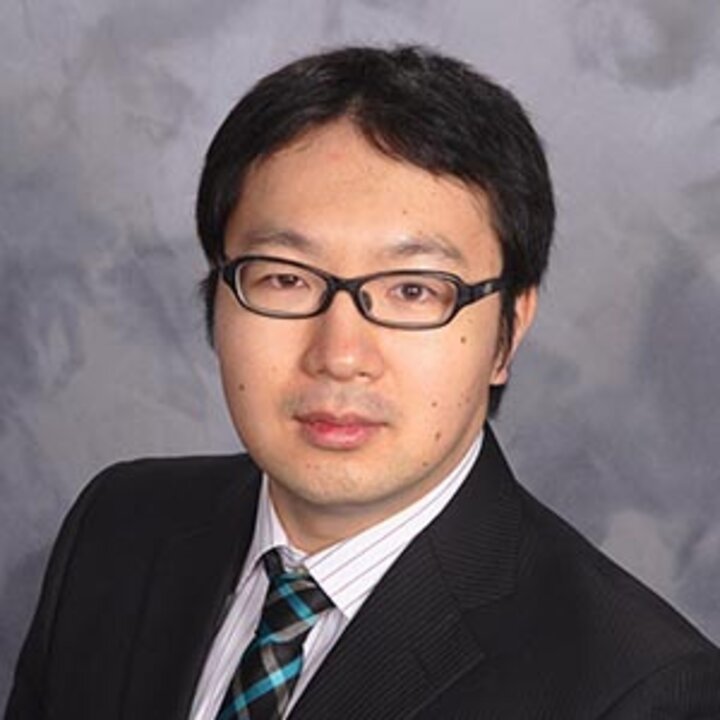
Johann Guilleminot is an Associate Professor in the Thomas Lord Department of Mechanical Engineering and Materials Science at Duke University. He joined Duke in 2017 after a Maître de Conférences position at Université Paris-Est. His research bridges computational mechanics, materials science, and uncertainty quantification, with applications in additive manufacturing, biomedical implants, and naval systems. Education: M.S. in Theoretical Mechanics, Lille University of Science and Technology (2005) Ph.D. in Theoretical Mechanics, Lille University of Science and Technology (2008) Habilitation in Mechanics, Université Paris-Est (2014) His work focuses on probabilistic methods for heterogeneous materials, stochastic solvers, and scientific machine learning. Recent projects include data-driven uncertainty quantification in molecular dynamics and additive manufacturing simulations, funded by the Army Research Office, NSF, and national laboratories. Scientific Awards: No specific awards listed in the provided text. Lab & Collaborations: Leads the Guilleminot Lab at Duke, collaborating with Sandia National Laboratories and the U.S. Naval Research Laboratory. Research spans atomistic-to-continuum coupling, inverse problems, and stochastic modeling for predictive simulations.
Ronald J. Glotzbach is an Associate Professor at Purdue University's West Lafayette campus within the School of Applied and Creative Computing . His work focuses on web programming and development , leading projects that integrate dynamic content, databases, and educational technologies . He has taught courses such as CGT 356 (Web Programming), CGT 353 (Interactive Media), and CGT 456 (Advanced Web Programming). B.S. in Computer Graphics Technology M.S. in Technology Ph.D. in Curriculum and Instruction (pursuing) His research explores leading-edge web technologies for delivering interactive content, emphasizing web-enabling software, dynamic media integration, and mobile programming . Key trends in his publications include RSS technologies in education , web-based evaluation systems , and geospatial data tools for environmental sciences. Scientific awards include: Outstanding Professor (2003, 2004) CGT Dwyer Award for Outstanding Undergraduate Teaching (2005) CGT Outstanding Un-Tenured Faculty Award (2008) Professor Glotzbach has led numerous student teams in CGT projects , served as SIGGRAPH Student Volunteer Chair (2003-2005) , and collaborated with industry partners like Boeing (F-15 Distributed Mission Trainer) and Microsoft (XML Documents Testing Team) . He also provided expert testimony in a copyright case (2006) for Wargo & French, LLP.
Anna Michálková is an Associate Professor at the Department of Tourism, Faculty of Commerce, Bratislava University of Economics and Business. Her expertise spans regional tourism, destination management, and tourism economics, with a focus on sustainable development and innovation. Education: Study stays at University of St. Gallen (Switzerland), University of Economics in Vienna (Austria), and University Lüneburg (Germany). Her research investigates institutional frameworks for destination management, tourism cluster dynamics, and economic impacts of tourism, particularly in crisis periods. She emphasizes stakeholder cooperation, societal value metrics, and sustainable growth strategies. Key trends in her publications include regional policy integration, gazelle enterprises in tourism, and cross-border collaboration. She has led projects like KEGA 034EU-4/2020 on innovative teaching methods and VEGA grants on competitiveness and innovation. Anna supervises bachelor and master programs in tourism management, teaches case studies in German, and collaborates with institutions across Europe. Her work bridges academia and practice through projects with local governments and tourism organizations.
Sara Dubowsky Adar is a Professor of Epidemiology and Global Public Health at the University of Michigan School of Public Health. Her research integrates epidemiology, environmental health, exposure science, and biostatistics to investigate environmental hazards' impacts on human health, with primary focus on air pollution and noise effects on healthy aging. Her educational background includes: ScD in Environmental Epidemiology from Harvard T.H. Chan School of Public Health (2005) MHS in Environmental Health from Johns Hopkins School of Public Health (1998) BS in Environmental Engineering from Massachusetts Institute of Technology (1996) Dr. Adar's research centers on environmental risk factors for aging, particularly examining how living environments influence healthy aging trajectories through cross-disciplinary collaborations with environmental epidemiologists, climatologists, exposure scientists, economists, and demographers. Her work spans air pollution, noise exposure, cardiovascular disease, and intervention strategies to improve health outcomes. Her extensive publication record reveals strong thematic patterns across environmental exposures and neurological/cognitive outcomes, with increasing focus on source-specific particulate matter, dementia pathways, and intervention effectiveness in recent years. The research demonstrates methodological sophistication through large cohort studies, randomized trials, and harmonized international assessments. Professional recognition includes: Sandra A. Daugherty Award for Excellence in Cardiovascular Epidemiology (American Heart Association) Excellence in Teaching Award (University of Michigan School of Public Health) Dr. Adar serves as Associate Editor at Environmental Health Perspectives and previously held leadership roles including Secretary/Treasurer of the International Society for Environmental Epidemiology. Her research group actively develops evidence-based interventions to reduce environmental health hazards while maintaining strong educational commitments to trainees. The Adar Research Group operates within the Department of Epidemiology at Michigan Public Health, focusing on interdisciplinary environmental health research with particular emphasis on vulnerable populations including children, older adults, and communities in low-resource settings globally.
Aaron A. King, Ph.D. , is the Nelson G. Hairston Collegiate Professor of Ecology and Evolutionary Biology, Complex Systems, and Mathematics at the University of Michigan and an External Professor at the Santa Fe Institute . He is a Fellow of the American Association for the Advancement of Science and a Biological Sciences Scholar at the University of Michigan. His research integrates mathematical modeling, statistical inference, and empirical data to study ecological and epidemiological systems. Education: Ph.D. in Applied Mathematics, University of Arizona, 1999 M.A. in Mathematics, University of Hawai'i, 1992 B.A. summa cum laude in Mathematics, Rice University, 1989 Research Interests: Dr. King's lab focuses on the dynamics of ecological, epidemiological, and evolutionary systems . His work includes: Modeling host-pathogen systems (COVID-19, influenza, dengue, pertussis, cholera, malaria) Antibiotic resistance in hospital settings Statistical inference for ecological and epidemiological data Integration of genomic and epidemiological data Mathematical frameworks for understanding parasite infections and immune responses Scientific Awards: Fellow of the American Association for the Advancement of Science Biological Sciences Scholar, University of Michigan Teaching and Mentorship: Dr. King teaches courses in Mathematical Ecology , Adaptive Systems , and Statistical Inference . He mentors graduate students and postdoctoral fellows, including Avinash Subramanian and Madeline Peters , and is affiliated with multiple interdisciplinary centers at the University of Michigan. Lab and Collaborations: He leads the King Laboratory of Theoretical Ecology & Evolution , which emphasizes reproducible research and rigorous theoretical approaches. The lab collaborates with institutions like the Santa Fe Institute and accepts students from programs such as Ecology & Evolutionary Biology , Applied & Interdisciplinary Mathematics , and Data Science .
Taro Mieno is an Associate Professor in the Department of Agricultural Economics at the University of Nebraska-Lincoln, specializing in precision agriculture and water resource economics. His work bridges agricultural policy, spatial econometrics, and environmental sustainability. University: University of Nebraska-Lincoln Department: Agricultural Economics Academic Rank: Associate Professor Research Interests: Precision agriculture and variable rate technologies Groundwater economics and drought resilience On-farm experimentation and data-driven decision making Agricultural policy and environmental externalities Machine learning applications in agronomic optimization Soil-water interactions and resource management Email: tmieno2@unl.edu
Dr. Sahani Pathiraja is a Lecturer (tenure track assistant professor) at UNSW Sydney , specializing in Data Science . Her research bridges mathematical and statistical foundations with practical applications in environmental and biomedical sciences. Research Focus : Sequential Bayesian inference, Monte Carlo methods, stochastic analysis of non-linear filtering, uncertainty quantification, and real-time parameter estimation. Current Projects : Co-investigator in the ARC Industrial Transformation Training Centre: Data Analytics for Resources and Environment (DARE) and the Next Generation Graduate Program (NGGP) in Sports Data Science and AI . Research Supervision : Dr. Pathiraja supervises PhD students in areas including: Bayesian inference Stochastic differential equations Data assimilation Non-linear filtering Scientific Collaborations : Her work intersects with environmental science, biomedical applications, and machine learning. Projects include stochastic hydrology, SDEs, and operator learning for environmental systems. Contact Information : Email: s.pathiraja@unsw.edu.au Phone: +61 2 8065 0836 Office: Room 2070, Level 2, The Red Centre, UNSW Sydney
Professor Stefan Siebert is Head of the Department of Crop Sciences at the Agricultural Faculty of the University of Göttingen, a position he has held since October 2017. His academic career spans multiple prestigious institutions including the University of Bonn, University of Frankfurt, and University of Kassel, where he completed his doctoral studies. University of Göttingen (2017-present): Professor and Head of Crop Science/Agronomy University of Bonn (2016-2017): Temporary Head of Chair Crop Science University of Bonn (2009-2015): Habilitation in Crop Science and Resource Conservation University of Frankfurt (2004-2009): Postdoctoral Scientist University of Kassel (2002-2005): Ph.D. Student and Scientist Professor Siebert's research focuses on sustainable resource use in crop production, climate change impacts on plant growth, plant growth modeling, and drought risk assessment. His work integrates large-scale data analysis with modeling approaches to understand the complex interactions between resource use, crop management, and productivity. He has developed comprehensive datasets on water, soil, and nutrient use in agriculture and pioneered methods for analyzing irrigation systems globally. His recent publication trends reveal a strong emphasis on irrigation systems, climate change impacts on agriculture, and advanced crop modeling techniques. The analysis of his 15 most recent articles shows consistent focus on water resource management, spatial analysis of agricultural systems, and the effects of climate variability on crop production. His work frequently combines remote sensing data with ground-based measurements to create high-resolution datasets for agricultural decision-making. Professor Siebert leads several significant research projects including ZERN (Future of Nutrition in Lower Saxony, 2024-2029), Collaborative Research Center 1502 on Regional Climate Change (2022-2025), and OUTLAST (Development of a global drought hazard forecasting system, 2022-2025). He has been continuously developing and maintaining a global dataset on irrigated areas since 1997, establishing himself as a leading authority in agricultural water management. His teaching portfolio is extensive, covering scientific writing, field production exercises, general crop production, methodical work, plant biology, crop production and breeding, sustainability of production systems, and applications of data analysis to agronomy. Professor Siebert's work bridges theoretical research with practical applications in sustainable agriculture, making significant contributions to our understanding of how to maintain food security in the face of climate change.
Harpa Birgisdottir is a Professor and Head of the Building Sustainability Section at Aalborg University's Department of Construction, Urban and Environmental Engineering. Her work focuses on Life Cycle Assessment (LCA), net-zero carbon buildings, and circular economy strategies in construction. Key Research Areas: Greenhouse Gas Emissions, Environmental Product Declarations (EPD), Urban Development, and Climate Mitigation Academic Recognition: 2022 Best Paper at Sustainable Built Environment, 2020 Applied Energy Highly Cited Award Research Trends Recent publications emphasize data-driven sustainability assessments, embodied carbon in buildings, and fire safety LCA tools. She leads EU-wide projects on greenhouse gas emissions and co-develops frameworks for net-zero carbon buildings through IEA EBC Annex 89. Scientific Awards Best Paper (Sustainable Built Environment Berlin 2022) Highly Cited Research Paper (Applied Energy 2020) Det Bæredygtige Element - Produktprisen (2019) ROCKWOOL Prisen (2017) Best Paper (2013) As a principal investigator and supervisor, she guides PhD projects on biobased fire safety and urban circularity. Her team collaborates with international researchers on climate impact metrics and sustainable construction standards.
Zeenat Kotval-Karamchandani, Ph.D., AICP is an Associate Professor of Urban & Regional Planning and Director of the M.U.R.P. Program at Michigan State University's School of Planning, Design and Construction. She joined the Urban & Regional Planning Program at SPDC in 2013 as an instructor and has established herself as a leading researcher in food systems, transportation planning, and aging population mobility. Education: PhD in Geography from Michigan State University Master in Urban & Regional Planning from Michigan State University Master in Hospitality Administration from University of Massachusetts, Amherst Bachelor of Commerce from Mithibai College of Arts, Science and Commerce Research Interests: Dr. Kotval-Karamchandani's research focuses on critical urban planning issues including food access systems in developing countries like Mumbai, India; mobility challenges for aging populations in Michigan; and travel behavior impacts in urban and suburban areas of Michigan, particularly Detroit. Her work integrates spatial analysis, survey research, and statistical tools to examine the intersection of transportation infrastructure, environmental burdens, and public health outcomes. She applies her expertise in GIS and SPSS to address complex planning challenges related to food deserts, aging in place, and sustainable mobility. Recent Publications: Dr. Kotval-Karamchandani's recent work demonstrates a strong focus on food systems during the pandemic, emotional aspects of urban design through the eMOTIONAL Cities project, and sociomobility research. Her publications reflect an interdisciplinary approach combining urban planning, public health, and transportation studies, with particular attention to vulnerable populations including older adults and residents of food deserts. Awards: MSU Outstanding Faculty Award (2016) Grants and Research Leadership: Dr. Kotval-Karamchandani has secured significant research funding including a $106K grant from the Urban Institute and Robert Wood Johnson Foundation to address factors influencing health of older adults in Michigan, and multiple MDOT grants totaling over $650K to study Michigan's public transit systems. She leads the Autonomous Futures and MSU Mobility initiatives, focusing on emerging transportation technologies and their impacts on community planning.
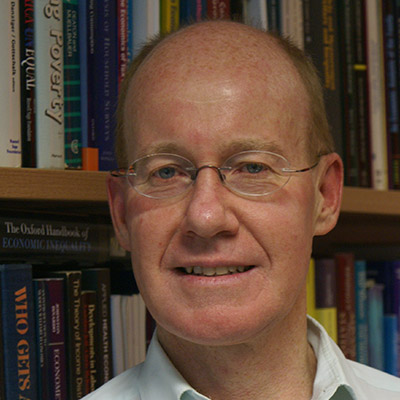
Professor Stephen Jenkins is a leading expert in Economic and Social Policy at the London School of Economics and Political Science (LSE) since 2011, with a focus on inequality , poverty dynamics , and applied econometrics . He has held leadership roles including Head of the Department of Social Policy (2016-2019, 2023-2024) and coordinates the Global Inequalities Observatory at LSE’s International Inequalities Institute. Education: BSc in Economics, University of Otago (1974-1977) PhD in Economics, University of York (1983) His research interests span: Analysis of income distribution, redistribution via taxation and social security Income mobility and poverty dynamics Measurement errors in survey and administrative data Survival analysis and limited dependent variable models Recent research trends emphasize: Top-income inequality using tax and survey data Labour market volatility and income risk Policy impacts on inequality and poverty Statistical methods for income distribution analysis Scientific awards and honors : Presidency of three major global associations: IARIW (2006-08), ECINEQ (2021-23), ESPE (1998) Distinguished Fellow of the New Zealand Association of Economists (2019) Research Fellow at IZA, Bonn (since 2000) Editorial leadership roles: Journal of Economic Inequality (2014-17), The Stata Journal (current) Advising and grants : Supervises doctoral research in inequality, poverty, and econometrics Contributed to high-impact policy reports for UK DWP, OECD, and New Zealand Treasury REF2021 Impact Case Study: Better measurement of income inequality Member of scientific advisory boards for IAB, WIFO, and Motu Labs and teams : Coordinator of the Global Inequalities Observatory at LSE Key member of LSE’s Department of Social Policy and International Inequalities Institute Collaborates with institutions including IZA, Motu, and IAB
Nikitas Karanikolas serves as Professor in the Department of Informatics and Computer Engineering at the University of West Attica since March 2018, following a distinguished career progression from Assistant Professor (2004) to Associate Professor (2010) and Professor (2014) at the Technological Educational Institute of Athens. His professional trajectory includes significant roles as Systems Head of TEI Athens Library (1996-1997) and Chief of Informatics at Aretaieio University Hospital (1997-2004), alongside leadership positions in the Greek Computer Society as Board Member (2004-2006) and Secretary General (2006-2008). His academic foundation includes: Bachelor's in Statistics and Informatics from Athens University of Economics and Business (1988) PhD in Applied Informatics from Athens University of Economics and Business (1994) with thesis "Technological and Linguistic approaches in Natural Language Understanding" Dr. Karanikolas maintains an exceptionally broad research portfolio spanning Natural Language Processing , Computational Linguistics , Medical Informatics , and Green Energy systems. His work consistently bridges theoretical computational frameworks with practical healthcare applications, particularly evident in recent dementia care technologies and Greek language processing systems. The interdisciplinary nature of his research connects computational phonology with medical diagnostics and e-government applications. Analysis of his 15 most recent publications reveals a pronounced shift toward AI-driven healthcare solutions (particularly dementia patient monitoring), multilingual NLP systems (Greek and Polish), and urban safety applications . His work demonstrates consistent methodology development in ontological representations and multimodal fusion techniques, with increasing emphasis on real-world clinical and governmental implementations since 2023. No scientific awards were documented in the source materials. With 16 journal papers, 68 conference publications, and six authoritative Greek university textbooks, Dr. Karanikolas maintains an active research trajectory. His advising capacity is evidenced through extensive publication mentorship, particularly in medical informatics and NLP projects. While specific grant details are unavailable, his hospital information system implementations and textbook authorship suggest successful research funding acquisition. Current research activities focus on multimodal aggression prediction systems for dementia care, Greek language ontological frameworks, and urban navigation safety applications, primarily conducted through the University of West Attica's informatics infrastructure.
Dr. Jing Zhang is an Assistant Professor in the Department of Computer Science at the University of California, Irvine (UCI), affiliated with the Donald Bren School of Information and Computer Sciences. She holds a Ph.D. in Electrical Engineering and Molecular/Computational Biology from the University of Southern California (2012) and completed postdoctoral training in Computational Biology at Yale University. Her research focuses on developing computational methods to unravel gene regulation mechanisms and link genetic variations to diseases, particularly in noncoding regions of the genome. She has contributed extensively to the ENCODE project, co-authoring pivotal studies in Nature and producing over 5,900 experimental datasets. Dr. Zhang’s work bridges engineering, mathematics, and biology, with applications in precision medicine for cancers and psychiatric disorders. She emphasizes the importance of noncoding DNA in disease causation and has pioneered tools like EN-TEx and scENCORE to analyze epigenomes and regulatory elements. Her lab actively seeks to recruit Ph.D. students, postdocs, and interns to advance genomic technologies. Key research areas include single-cell and spatial transcriptomics, gene regulatory networks, and computational methods for multi-omics data integration. Despite pandemic-related challenges, she maintains strong collaborations and teaches courses in bioinformatics. Her future goals include expanding lab interactions and applying computational models to predict disease susceptibility and treatment responses.
Prof. Sara Merino Aceituno is a Professor at the Faculty of Mathematics, University of Vienna, leading research in kinetic theory and its applications to biology, medicine, and social sciences. She holds roles as Vice-Dean of the Faculty and Head of the Institute of Mathematics. Her work bridges mathematical models with experimental data, focusing on emergent phenomena in collective dynamics, opinion formation, and cell behavior. She teaches advanced courses on kinetic theory, biomathematics, and mathematical strategies for learning. Her contributions include modeling cell delamination, nematic alignment, and swarm dynamics through PDEs and probabilistic methods. Collaborations with experimentalists drive her interdisciplinary research. She actively engages in education, advising, and public outreach, including a video series explaining mathematical patterns in nature. Her research emphasizes understanding macroscopic patterns arising from microscopic interactions in complex systems. Education: Holds a PhD in Mathematics, with expertise in kinetic theory and applied partial differential equations. Teaching and leadership roles reflect her commitment to academic excellence and student support. Her work integrates experimental and computational models to study clonal dynamics in tissues and mechanical constraints in epithelial layers. She has authored over 20 papers on topics ranging from active matter to opinion formation networks, contributing to both theoretical advancements and practical applications in biology and social sciences. Research focuses on deriving hydrodynamic and continuum models from particle systems, analyzing stability and bifurcations in collective behavior. Grants and collaborations include the Vienna Biocenter PhD Program and experimental groups in cell biology. Her lab explores how environmental factors influence particle swarms and how mechanical forces shape cell cycles in pseudostratified epithelia.
Ted Mouw is a Professor of Sociology at the University of North Carolina at Chapel Hill. He holds a B.A. in English Literature from Oberlin College, an M.A. in Economics, and a Ph.D. in Sociology from the University of Michigan. His research focuses on demography, social stratification, and economic sociology, with emphasis on labor markets, globalization’s impact, and immigration. Current projects include studies on social mobility in the U.S., economic effects of globalization in Indonesia and Mexico, and labor market dynamics for Hispanic immigrants in North Carolina. He has taught courses such as Social Stratification, Economy and Society, and Applied Regression Analysis, reflecting his expertise in quantitative methods and social theory. His work frequently intersects with the Carolina Population Center and addresses topics like occupational segregation, wage inequality, and transnational social networks. Mouw’s research also explores the interplay between spatial diffusion, migration patterns, and racial/ethnic integration in urban areas.