Bo Lu is a Professor of Biostatistics and Statistics at The Ohio State University. His research focuses on advancing early detection technologies for forest pathogens and pests using spectroscopy, machine learning, and metabolomics. He specializes in understanding plant defense mechanisms against invasive species and climate-driven disease dynamics. Key research areas include: Non-invasive disease diagnostics via FT-IR/Raman spectroscopy Machine learning applications in plant health monitoring Molecular basis of plant-pathogen interactions Environmental risk modeling for emerging forest diseases Notable projects include developing early detection systems for ash dieback, beech leaf disease, and soybean cyst nematode infestations. His work integrates statistical modeling with biochemical analysis to improve forest biosecurity strategies globally. He advocates for international collaboration in addressing the global forest health crisis through improved diagnostic frameworks and resistance breeding programs.
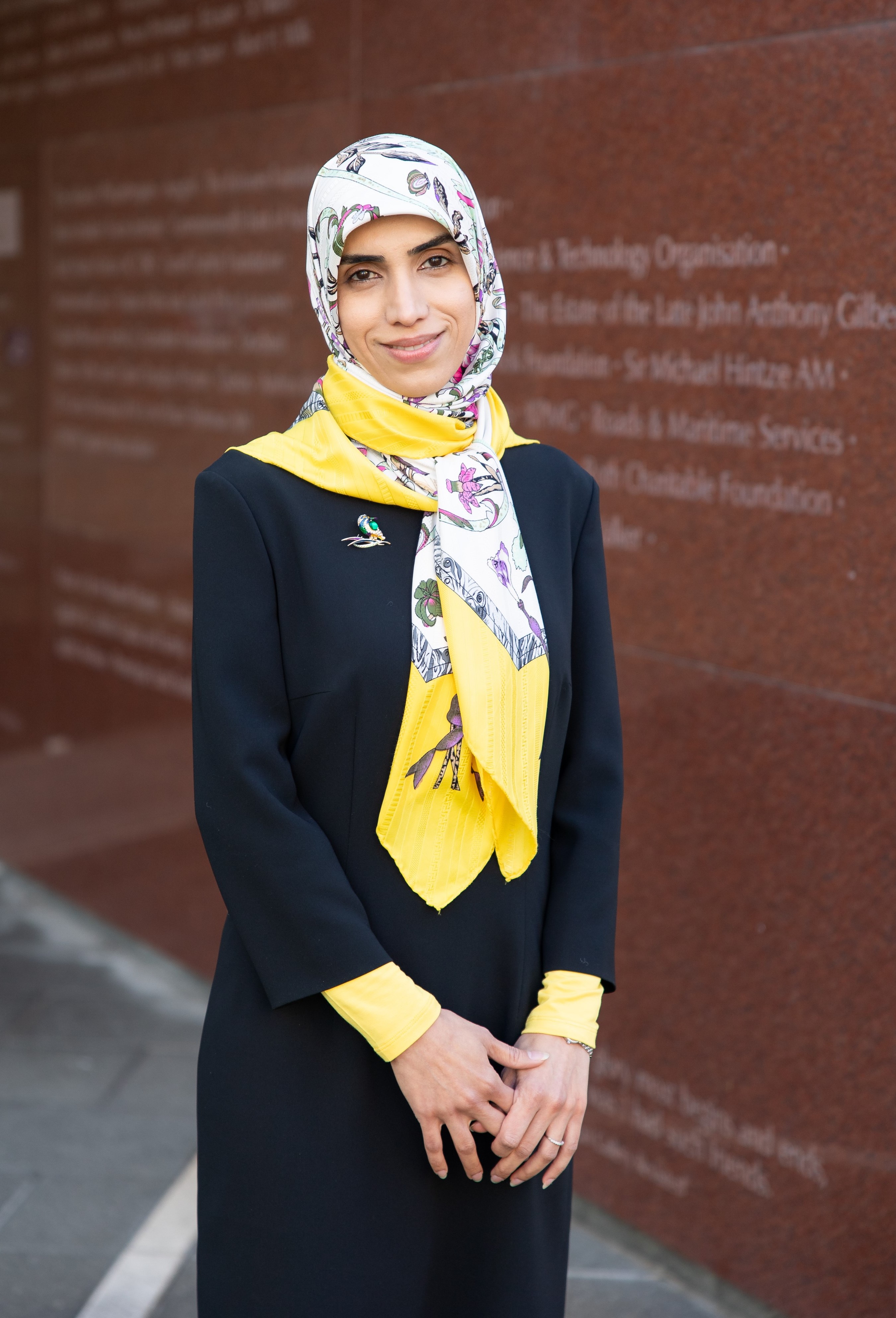
Associate Professor Fatemeh Vafaee is a leading researcher at the University of New South Wales (UNSW) , holding appointments as Associate Professor in the School of Biotechnology and Biomolecular Sciences (BABS) and Deputy Director (Science) of the UNSW AI Institute . She previously served as Deputy Director of the UNSW Data Science Hub (uDASH) and has held academic positions at the University of Toronto and the University of Sydney. PhD in Artificial Intelligence from University of Illinois at Chicago Postdoctoral Fellowships at University of Toronto and University of Sydney Founded the AI-Enhanced Biomedicine Laboratory in 2017 Her research focuses on deploying advanced AI techniques to address biomedical challenges through: Biomarker Discovery for cancer and neurodegenerative diseases Single-Cell Multi-Omics data integration and analysis Computational Drug Repositioning and network pharmacology Multi-Omics Data Fusion and temporal network modeling Recent publications demonstrate expertise in liquid biopsy development , single-cell imaging , and AI-driven cancer diagnostics . Her methodological contributions include novel deep learning architectures for omics data analysis and graph neural networks for drug synergy prediction. Scientific accolades include: Winner, Women in AI Asia-Pacific Health Award (2023) Runner-Up, WAI-APAC Innovator of the Year (2023) Top 10 Women in AI in Asia-Pacific (2023) Australian Bioinformatics and Computational Biology Society Research Excellence Award (2023) She supervises PhD candidates across computational biomedicine and AI in healthcare , with significant grant achievements exceeding $17M in competitive funding, including schemes from ARC Discovery , NHMRC , and Medical Research Future Fund .
Dr. Weidong Chen is an Adjunct Professor at Washington State University (WSU), affiliated with the College of Agricultural, Human, and Natural Resource Sciences (CAHNRS). His research focuses on plant pathology, specifically diseases of grain legumes such as chickpeas, lentils, and peas. Key areas include epidemiology, disease management using host resistance, and functional genomics of fungal pathogens. Dr. Chen’s research addresses critical issues like Ascochyta blight (Ascochyta rabiei), white mold (Sclerotinia sclerotiorum), and powdery mildew (Erysiphe pisi). He collaborates with geneticists to develop molecular markers for disease resistance. His work integrates applied research (e.g., chemical control, cultural practices) with basic studies on pathogen mechanisms. Professional Memberships: American Phytopathological Society, Mycological Society of America, Pisum Crop Germplasm Committee. Awards: Includes USDA-ARS Merit Certificates (2003–2005), C. C. Allison Scholarship (1987), and W. E. Krauss Director’s Award (1987). Publications span fungal pathology, molecular biology, and crop disease management. Recent work highlights Sclerotinia species interactions, biocontrol agents, and genetic markers for resistance breeding. His contributions advance sustainable agriculture and legume disease mitigation strategies.
Dr. Paula Moolhuijzen is an Adjunct Research Fellow at Curtin University's Centre for Crop Disease Management (CCDM), affiliated with the School of Molecular and Life Sciences within the Faculty of Science and Engineering. Her research focuses on plant-pathogen interactions, emphasizing genomic approaches to combat crop diseases. She specializes in fungal pathogens affecting wheat and barley, leveraging cutting-edge technologies like nanopore sequencing and transcriptomics to decipher virulence mechanisms. Her research interests span Plant Pathology , Fungal Genomics , and Molecular Plant-Microbe Interactions , with significant work in: Genome assembly of fungal pathogens like Pyrenophora tritici-repentis Effector protein characterization and pangenome analysis Disease resistance mechanisms in cereals Bioinformatics tool development for genomic studies Analysis of her 15 most recent publications (2020-2025) reveals dominant themes: 68% focus on fungal genomics of wheat/barley pathogens, 20% on bioinformatics tool development (e.g., CoreDetector), and 12% on tick immunology. Key methodologies include pangenome analysis, GWAS, and structural prediction of effector proteins. Dr. Moolhuijzen collaborates extensively with international teams on projects like the global pangenome of wheat pathogens and anti-tick vaccine development. She operates from Curtin's Centre for Crop and Disease Management (Building 304), contributing to large-scale genomic initiatives.
Berkley Gryder, PhD is an Assistant Professor in the Department of Genetics and Genome Sciences at Case Western Reserve University School of Medicine , with secondary appointments in the Case Comprehensive Cancer Center and the Angie Fowler Adolescent and Young Adult Cancer Research Initiative. His interdisciplinary work bridges chemistry, molecular biology, and computational science to investigate cancer epigenetics and transcriptional control. Research areas include: 3D genome organization in cancer Nuclear condensate formation Chemical strategies targeting transcription Single-cell epigenetic analysis Machine learning applications in genomics Novel wet-lab technologies Recent publications focus on nuclear phase separation, chromatin architecture in rhabdomyosarcoma, and chemical approaches to disrupt oncogenic transcriptional programs. Collaborations span medical oncology and medicinal chemistry teams across multiple institutions. Key article trends (2018-2025) reveal expertise in: Transcriptional condensates PAX3-FOXO1 fusion mechanisms Super-enhancer biology RNA Pol2 cluster dynamics Epigenetic plasticity in resistance 3D genomics technologies (AQuA-HiChIP)
James Hane is a Senior Research Fellow at Curtin University's School of Molecular and Life Sciences, affiliated with the Centre for Crop Disease Management (CCDM). His research focuses on fungal genomics, plant pathology, and bioinformatics, with an emphasis on understanding pathogen adaptation and developing tools for crop disease management. He leads CCDM's Bioinformatics program and has contributed to foundational genomic resources for fungal pathogens. Affiliations: Centre for Crop Disease Management (External Collaborative Research Centre), School of Molecular and Life Sciences (MLS), Faculty of Science and Engineering. Research Interests: Fungal genomics, effector biology, genome evolution, computational biology, and crop improvement. His work includes comparative genomics of pathogens like Parastagonospora nodorum, analyzing repeat-induced point mutations (RIP), and developing algorithms to study mesosynteny. He also explores lateral gene transfers and fungal pathogenomics. Recent projects involve predictive modeling of effector proteins and genomic tools for crop disease resistance. Publications highlight his contributions to understanding fungal pathogen genomics, including chromosome-level assemblies, molecular docking studies, and pan-genome analyses. His teaching involves guiding students in genomic prediction, effector discovery, and bioinformatics database development. James collaborates internationally, contributing to genomic resources for crops like lupin and chickpea. His work bridges computational methods with agricultural applications to enhance crop resilience against pathogens.
Mitch Elmore is a USDA-ARS Research Molecular Geneticist and Adjunct Assistant Professor affiliated with the USDA-ARS Cereal Disease Lab in St. Paul, MN. His research focuses on understanding molecular plant-microbe interactions, particularly Fusarium Head Blight in cereal crops and the mechanisms governing fungal pathogen virulence and host resistance in barley. His work integrates molecular profiling, functional genomics, and network biology approaches to combat agricultural losses from pathogens. Education: PhD in Plant Biology with a Biotechnology emphasis from University of California-Davis (2014); BS in Biology from St. Louis University (2005). Research emphasizes Fusarium graminearum-host interactions, including effector protein targets and signaling networks. Methodologies include yeast two-hybrid screening, super-resolution ribosome profiling, and multi-omics integration. Recent work explores ABC transporter roles in fungal virulence and trichothecene production. His articles highlight advancements in pathogen diagnostics (e.g., HRM assays for chemotype differentiation), protein interaction networks, and plant immune signaling mechanisms. Current efforts aim to develop novel strategies for crop disease management through molecular and systems biology approaches.
Professor Michael Furlong is a faculty member in the School of the Environment at The University of Queensland, specializing in biological control and integrated pest management. His research focuses on ecological interactions between insects and their natural enemies, with an emphasis on sustainable pest management strategies in developing countries. Key research areas include the biological control of diamondback moth (Plutella xylostella) and cabbage cluster caterpillar (Crocidolomia pavonana), as well as the development of insecticide resistance management plans in collaboration with UN-FAO. His work spans ecological and molecular approaches, including studies on fungal entomopathogens, predator-prey dynamics, and climate change impacts on host-parasitoid interactions. Externally funded projects include investigations into pest management in Indonesia, Samoa, and Fiji, addressing both agricultural and ecological challenges. Professor Furlong has authored over 150 peer-reviewed articles, with recent work focusing on viral communities in pest insects, spatial dynamics of organic crop pests, and the integration of molecular tools to assess biological control efficacy. His contributions to plant health clinics in the Pacific region highlight a commitment to applied research and community engagement, ensuring practical solutions for smallholder farmers. Despite no explicitly listed awards, his extensive publication record and collaborative projects reflect significant recognition in his field. Current research emphasizes leveraging natural enemies and landscape management to enhance pest control while minimizing chemical inputs.
Dr. Eric J. Schott is an Associate Research Professor at the Institute of Marine & Environmental Technology (IMET) within the University of Maryland Center for Environmental Science (UMCES). He has been in this position since 2010, following his earlier work at the University of Maryland Biotechnology Institute since 1997. His primary roles include research on marine pathogens, particularly in blue crabs, and science education outreach. Dr. Schott holds a B.A. in Biology from Reed College (1985) and a Ph.D. in Genetics from Harvard University Medical School (1993). His research focuses on molecular parasitology, aquatic health, and the discovery of marine pathogens. He has pioneered molecular tools to detect and monitor viruses like CsRV1 in blue crabs, contributing to understanding their epidemiology and impact on fisheries. His research interests also include science communication in urban and fishing communities and biodiversity in urban estuaries, such as Baltimore’s Inner Harbor. Dr. Schott has collaborated on studies assessing the health of urban waterways and their ecosystems, leveraging meta-DNA barcoding and water quality monitoring. Dr. Schott has mentored students, including high school and visiting PhD researchers, and served on the Maryland Oyster Advisory Commission since 2010. His recent work includes presentations on blue crab population dynamics and legislative advocacy for Bay health. He teaches courses on Chesapeake Bay fisheries diseases and marine biotechnology. His lab actively investigates viral and parasitic threats to marine species, with a focus on applying molecular techniques to ecological and public health challenges. Current projects include understanding the genetic diversity of CsRV1 across geographic regions and evaluating restoration strategies for urban estuaries. Dr. Schott’s contributions span interdisciplinary collaborations, NOAA-funded initiatives, and public engagement, bridging academic research with practical applications in conservation and education.
Diego Calderon is an Assistant Professor in the Department of Bioengineering and Therapeutic Sciences at the University of California San Francisco (UCSF). His research focuses on understanding how DNA sequences translate into biological function and disease using computational and experimental approaches, particularly through massively parallel reporter assays, single-cell technologies, and CRISPR-based screening. Education B.A. in Computer Science and Biology, Wesleyan University Ph.D. in Biomedical Informatics, Stanford University Postdoctoral Fellow, University of Washington Research interests span genomics, gene regulation, CRISPR technology, and single-cell assays to study: How DNA mutations cause disease Cellular control of gene expression Developmental regulatory elements Epigenetic manipulation of prime editing Computational analysis of single-cell data Recent publications highlight work on: CRISPRa screening for regulatory elements Chromatin-dependent prime editing Single-cell developmental continuum analysis Scientific awards include: CASI award, Burroughs Wellcome Fund (2022) F32 NRSA fellowship, NIH (2021-2022)
Scotland C. Leman is an Associate Professor and Director of Graduate Programs in the Department of Statistics at Virginia Tech's College of Science. He holds a Ph.D. in Statistics from Duke University (2007) and advanced degrees from Stanford University and UC Davis. His research focuses on Bayesian statistics, visual analytics, stochastic modeling, and applications in molecular evolution and epidemiology. Leman has developed innovative methods in statistical simulation and interaction-driven data analysis, bridging computational statistics with domain sciences like genetics and public health. Education: Ph.D., Statistics, Duke University (2007) M.S., Statistics, Duke University (2005) M.S., Scientific Computing & Computational Mathematics, Stanford University (2003) B.S., Mathematics (Cum Laude), UC Davis (2001) Research Interests: Leman's work integrates statistical theory with applied problems in genetics and epidemiology. He develops Bayesian methods for analyzing complex biological systems, including pathogen evolution, disease transmission dynamics, and chromosomal evolution in malaria mosquitoes. His visual analytics research emphasizes user-driven interaction with statistical models, enabling more intuitive data exploration in domains such as public health and environmental science. Awards: Mu Sigma Rho (National Statistics Honor Society) Phi Kappa Phi (National Honor Society) Pi Mu Epsilon (Mathematics Honor Society) Golden Key Teaching & Leadership: As Director of Graduate Programs, Leman oversees the department's graduate curriculum while teaching advanced courses in Bayesian statistics, stochastic modeling, and data analytics. His teaching emphasizes hands-on learning through interactive visualizations and real-world data applications. Labs/Teams: Collaborates with interdisciplinary teams in computational biology, epidemiology, and visual analytics. Active in malaria genomics research through projects on Anopheles mosquitoes and pathogen host adaptation.
Edward Walker is a University Distinguished Professor in the Department of Entomology at Michigan State University (MSU), affiliated with the College of Agriculture & Natural Resources. His research focuses on vector-borne diseases, particularly mosquito-borne pathogens like malaria, West Nile virus, and eastern equine encephalomyelitis. He leads the Walker Lab, which investigates microbial mediation in mosquito production, disease surveillance methodologies, and landscape ecology approaches to risk analysis. Key research areas include: (1) Microbial interactions influencing mosquito behavior and habitat suitability, (2) Emerging infectious disease dynamics, (3) Evaluation of vector control interventions, and (4) Molecular epidemiology of malaria parasites. His work integrates field studies, genomic analysis, and ecological modeling to address global health challenges. Notable recent contributions include a CDC-funded study on Eastern Equine Encephalitis control (2022) and collaborative research on spatial repellents for malaria vectors in Kenya. Walker has secured grants totaling over $5M for projects combining forensic science with disease ecology, such as analyzing bloodmeal sources in Anopheles mosquitoes to improve intervention targeting. Awards include participation in a CDC Center of Excellence for Vector-Borne Diseases and sustained recognition for innovative approaches to mosquito-borne disease management. His lab has pioneered techniques for bloodmeal host genotyping and developed multiplex assays for simultaneous Plasmodium spp./host species identification. Publications emphasize vector competence, insecticide resistance dynamics, and interdisciplinary solutions to disease persistence. Current projects explore irrigation scheme impacts on malaria transmission in Malawi and genomic characterization of mosquito-associated microbes (e.g., Elizabethkingia species).
Robert C. Kemerait, Jr. is a Professor in the Department of Plant Pathology at the University of Georgia, affiliated with the College of Agricultural and Environmental Sciences. He holds a PhD in Plant Pathology from the University of Florida (2000) and dual BS degrees in Chemistry (University of Florida, 1989) and Biology (Davidson College, 1987). His research focuses on plant diseases affecting major crops like peanuts, cotton, soybeans, and corn, with emphasis on fungal pathogens, nematode management, and integrated pest management strategies. Key areas of research include development of disease risk assessment tools like Peanut Rx for tomato spotted wilt and leaf spot management, participation in national sentinel plot programs for soybean and corn rusts, and international collaborations through USAID-funded initiatives in Haiti and Guyana. He has authored over 244 scholarly works and holds leadership roles in professional societies like the American Phytopathological Society. Recent work includes genome sequencing of pathogens such as Nothopassalora personata and Ramulariopsis pseudoglycines, studies on fungicide efficacy and spray technologies, and aflatoxin mitigation strategies. Awards include the 2022 APRES Bailey Award, G.O. Ocfemia Award, and recognition for international service. Current funding supports projects on precision disease management, nematicide efficacy, and crop rotation strategies. His lab collaborates across disciplines to address emerging threats like cotton leafroll dwarf virus and tar spot epidemics.
Dr. Brad S Coates holds an Affiliate Assistant Professor position at Iowa State University and serves as a Research Geneticist with the USDA-ARS Corn Insects & Crop Genetics Research Unit. His academic background includes a B.S. (1996), M.S. (2001), and Ph.D. (2005) in Genetics and Entomology from Iowa State University. His research focuses on pest insect genomics, resistance mechanisms to pesticides and transgenic crops, and ecological adaptations of agricultural pests. Key research areas include genome assembly of pest species (e.g., corn rootworm, soybean aphid), molecular basis of insecticide resistance, and population genomics of invasive species. He has contributed to understanding pest adaptation to Bt toxins, pyrethroid resistance, and symbiotic relationships in insects. His work emphasizes applied agricultural research with implications for sustainable pest management. Recent studies explore monarch butterfly migration patterns, endosymbiont contributions to pest biology, and genomic tools for monitoring resistance evolution in pest populations.
Thomas Bjarnsholt is a Professor at the Department of Immunology and Microbiology within the Faculty of Health and Medical Sciences at the University of Copenhagen. He leads research at the Costerton Biofilm Centre and serves as Editor-in-Chief of APMIS (Journal of Pathology, Microbiology and Immunology). His work involves close collaboration with clinicians across major Danish hospitals and extensive international partnerships. MSc in Chemistry (Civil engineer), DTU (2001) PhD: 'Experimental investigation of quorum sensing and biofilms of Pseudomonas aeruginosa in relation to lung infection in cystic fibrosis patients', DTU (2005) Doctor of Medicine 'The Role of Bacterial Biofilms in Chronic Infections', University of Copenhagen (2013) Bjarnsholt's research focuses on bacterial and fungal biofilms in chronic infections, investigating why biofilm-based infections exhibit extreme resistance to antibiotics and evade host defenses. His work spans from fundamental biofilm biology to clinical applications, with particular interest in diagnostic development and therapeutic approaches for chronic wound management, orthopedic infections, and cystic fibrosis-related infections. He has pioneered research on the role of biofilms in various clinical settings and developed novel methods for biofilm detection and treatment. His publication record shows a strong emphasis on translational research connecting basic biofilm science with clinical applications. The recent articles demonstrate growing focus on interdisciplinary approaches to bone and joint infections, advanced diagnostic limitations, tri-species infection models, and bridging environmental biofilm research with clinical solutions. His work increasingly incorporates advanced methodologies including transcriptomics, sophisticated animal models, and spatial microbiome analysis. 2015 Award and Honorary Lecture at Danish Society for Orthopedic Surgery annual meeting 2015 Journal of Wound Care 'Best Laboratory/Pre-Clinical Study' Award 2013 ESCMID Young Investigator Award 2013-2017 Lundbeck Foundation Junior Group Leader Fellowship (EUR 1,34 Mill) Bjarnsholt supervises an active research group including 7 Postdocs (4 current), 12 PhD students (9 current plus 5 co-supervised), and numerous Master's and Bachelor's students. His research is supported by significant funding totaling DKK 30,524,264 (4.1 million Euro) as Principal Investigator, with additional contract research funding of approximately 12 DKK million. Major funders include the Lundbeck Foundation, RegionHovedstadens Udviklingsfond, Faculty of Health Sciences, Gerda og Aage Haenschs Fond, and Human Frontier Science Project. He founded and serves on the advisory board of the Biofilm Test Facility, participates in the Copenhagen Microbiology Center, and is a member of the SUND-UCPH and UCPH Innovation Board. His international collaborations span institutions in the USA, UK, Sweden, and beyond, focusing on biofilm behavior, host defense mechanisms, and clinical applications.