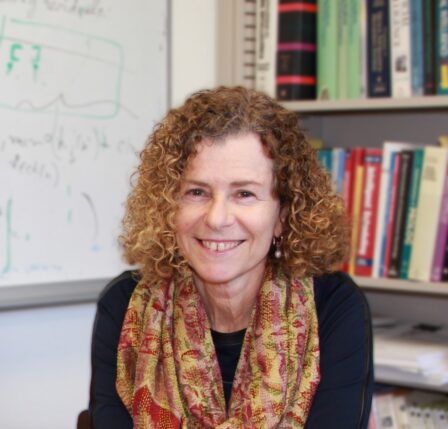
Rina Dechter is a Professor of Computer Science at the University of California, Irvine (UCI), affiliated with the Donald Bren School of Information and Computer Sciences (ICS). She specializes in automated reasoning, probabilistic and constraint-based graphical models, and causal inference. Dechter has held leadership roles, including Co-Editor-in-Chief of Artificial Intelligence since 2011 and editorial board memberships in journals such as the Constraint Journal and Journal of Machine Learning Research . Education : Ph.D., Computer Science, University of California, Los Angeles (UCLA) M.S., Applied Mathematics, Weizmann Institute B.S., Mathematics and Statistics, Hebrew University of Jerusalem Research Interests : Dechter’s work focuses on computational aspects of automated reasoning, constraint processing, probabilistic reasoning, and causal inference. She develops efficient algorithms for graphical models, emphasizing tractable reasoning tasks and anytime search strategies. Her recent projects include causal decision-making frameworks funded by a $5M NSF grant. Awards : Presidential Young Investigator Award (1991) AAAI Fellow (1994) ACP Research Excellence Award (2007) ACM Fellow (2013) Elected to the American Academy of Arts & Sciences (2025) Grants & Collaborations : She leads a multi-institutional NSF-funded project on causal foundations of AI decision-making. Her work emphasizes trustworthiness in AI through causal models, with applications in robotics and public health.
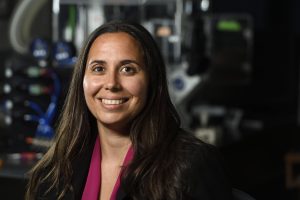
Rebecca Schulman is an Associate Professor in the Department of Chemical and Biomolecular Engineering at the Whiting School of Engineering, Johns Hopkins University. She holds secondary appointments in Chemistry and Computer Science and is affiliated with multiple interdisciplinary institutes, including the Institute for NanoBioTechnology, the Hopkins Extreme Materials Institute, the Chemistry-Biology Interface Program, the Center for Cell Dynamics, and the Laboratory for Computational Sensing and Robotics. She currently co-directs the Passport to Future Technology Leadership program for PhD students. Research Interests: Schulman's research lies at the intersection of DNA nanotechnology, synthetic biology, and smart materials. Her group develops intelligent, adaptive biomolecular materials and nanostructures by integrating concepts from materials science, biochemistry, circuit design, and soft matter physics. The team focuses on engineering dynamic self-assembly processes using DNA to create reconfigurable materials, molecular circuits, and autonomous soft micro-robots. Key themes include self-healing nanostructures, feedback-regulated crystallization, programmable hydrogels, and synthetic genetic networks for materials control. Publication Trends: Her recent publications demonstrate a consistent focus on using DNA-based chemical reaction networks to program spatial and temporal behavior in materials. The work spans from fundamental mechanisms like catalytic polymerization and crystal growth regulation to applications in soft robotics, self-wiring circuits, and synthetic pattern formation. The research is highly interdisciplinary, combining synthetic biology with materials engineering to achieve life-like functionalities in non-living systems. Scientific Awards: AIMBE Fellowship Award Vannevar Bush Faculty Fellowship Award Hartwell Individual Biomolecular Research Award President’s Early Career Award in Science and Engineering (PECASE) DARPA Young Faculty Award DARPA Directors Fellowship NSF CAREER Award Turing Scholar Award DOE Early Career Award Advising and Grants: Schulman mentors graduate students and leads a vibrant research group focused on next-generation biomolecular engineering. Her work is supported by major federal grants, including the NSF CAREER, DOE Early Career, DARPA, and the Vannevar Bush Fellowship—a prestigious Department of Defense award for basic research. She is actively involved in training future leaders through programs like the Passport to Future Technology Leadership. Labs and Teams: The Schulman Lab at Johns Hopkins is a multidisciplinary team working on DNA-powered materials and molecular programming. The lab is embedded within several collaborative centers, enabling strong cross-departmental and cross-institutional research. Their work combines experimental biochemistry with theoretical modeling to design and implement complex molecular systems.
Prof. Dr. Nina Gantert is a distinguished Professor of Probability Theory at the Technical University of Munich (TUM) , affiliated with the TUM School of Computation, Information and Technology . She has held faculty positions at Karlsruhe Institute of Technology and the University of Münster prior to joining TUM in 2011. Her research focuses on probability theory , particularly stochastic processes , large deviations , and random media . She investigates random walks in random environments as models for transport in disordered systems and explores applications in physics and biology . Recent publications highlight her work on branching random walks , mixing times , biased random walks , and large deviation principles for complex stochastic systems. She has co-authored studies on random walks in dynamical percolation , interacting edge-reinforced processes , and extremal point processes in branching models. Scientific Awards: Elected fellow of the IMS (2016) Her academic career spans institutions including ETH Zürich, University of Bonn, Technical University of Berlin, and TUM. She has supervised numerous Bachelor’s and Master’s theses on topics ranging from mixing time analysis to percolation theory , often collaborating with international co-authors.
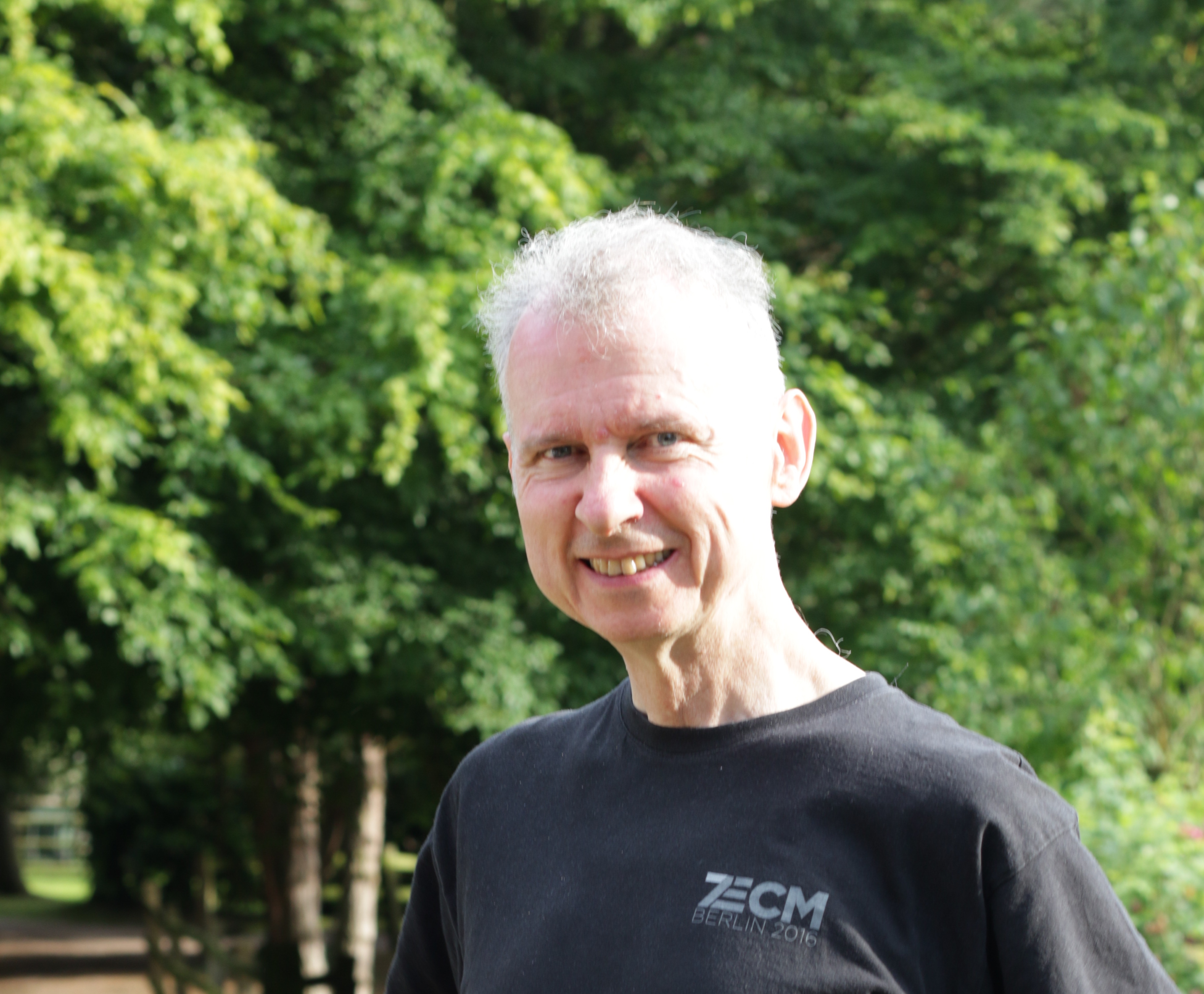
Jean-François Le Gall is a full Professor at Université Paris-Saclay and a member of the Orsay Mathematics Laboratory (LMO) since 2006. He has held prominent positions at Pierre and Marie Curie University (1988-2006) and École Normale Supérieure (1997-2007). A Senior Member of the University Institute of France (2007-2017) and an elected member of the Academy of Sciences since 2013, he served as Vice-President of Research for the Mathematics Department at Orsay (2020–present) and led the ERC Advanced Grant GeoBrown (2017–2023). Education: Ecole Normale Supérieure (1978–1982), PhD in stochastic differential equations (1982), State Doctorate on Brownian motion (1987) Research Interests focus on probability theory , particularly Brownian motion , superprocesses , random trees , planar maps , and their connections to PDEs and geometric models. His work bridges stochastic analysis , branching processes , and coalescence phenomena . Selected Publications include foundational studies on the Brownian map , random geometry , and spatial branching processes . His 2025 paper on The area of spheres in the Brownian plane explores fractal properties of random metric spaces, while the 2020 Growth-fragmentation processes work links Brownian trees to fragmentation models. Scientific Distinctions : 1986 Rollo Davidson Prize 1997 Loève Prize in Probability 2005 Sophie Germain and Fermat Prizes 2019 Wolf Prize in Mathematics 2022 BBVA Frontiers of Knowledge Award Academic Leadership includes directing the Probability and Statistics Team (2013–2019) and the Master 2 in Probability and Statistics (2007–2015). He chairs editorial roles in Grundlehren der mathematischen Wissenschaften (since 2020) and Probability Theory and Related Fields (2005–2010).
Anna Levina is an Assistant Professor for Computational Neuroscience at the University of Tübingen , affiliated with the Department of Computer Science under the Faculty of Science. Her research focuses on the self-organization of neuronal activity, critical dynamics in neural networks, and the excitation/inhibition balance in cortical circuits. Current positions: Assistant Professor (since 2018), Group Leader (2017-2018), Equality Officer (Computer Science) Previous roles: IST Fellow (2015-2017), Associated Researcher (2011-2015), Postdoc/PI (2011-2015), Postdoc (2008-2011) Her research integrates mathematical modeling , statistical physics , and computational neuroscience to study criticality phenomena, neural avalanches, and adaptive network dynamics. Key interests include: Self-organized criticality in neural systems Excitation/Inhibition balance mechanisms Network topology and dynamics Timescale analysis in neural processing Stochastic modeling of neural activity Recent publications reveal trends in understanding critical dynamics across biological and artificial networks, with applications to memory systems, sensorimotor integration, and disease modeling. She has received recognition as an IST Fellow .
Dr. Antal Jarai is a Senior Lecturer in the Department of Mathematical Sciences at the University of Bath, where he also contributes to the EPSRC Centre for Doctoral Training in Statistical Applied Mathematics (SAMBa) and the Probability Laboratory at Bath. His work bridges probability theory and statistical physics, focusing on random processes with spatial and/or temporal structure. PhD in Mathematics from Cornell University (2000) BSc from Eötvös Loránd University (1996) Dr. Jarai's research explores problems motivated by statistical physics, including percolation, random walks, branching random walks, uniform spanning trees, and Abelian sandpiles. His recent publications address interlacement limits, asymptotics of optimal policies, resistance scaling, and wireless network proximity. He actively collaborates on interdisciplinary projects in network mathematics and wireless technology. Key trends in his publications include asymptotic analysis (5/5 papers), random walk theory (4/5), and probabilistic methods in statistical physics (4/5). Subfields span interlacement theory, self-organized criticality, stochastic geometry, and disordered systems. Royal Society Grant for 'Zero Dissipation Limit in Abelian Sandpiles' London Mathematical Society Grant for 'Critical Exponents in Sandpiles via Exact Sampling' EPSRC Centre for Doctoral Training in Statistical Applied Mathematics (SAMBa) Dr. Jarai serves as Principal Investigator on multiple research grants and supervises students in probability and applied mathematics. He has contributed datasets on sandpile simulations and collaborates internationally on network mathematics projects.
Cécile Mailler is a Reader in Probability at the University of Bath, where she is a member of the probability group Prob-L@B. She has held significant research positions including an EPSRC postdoctoral fellowship (2018-2021) titled "Random trees: analysis and applications" and previously worked as a postdoc at Prob-L@B (2013-2016) as part of Peter Mörters' EPSRC project "Emergence of Condensation in Stochastic Networks". She earned her PhD under the supervision of Brigitte Chauvin and Danièle Gardy at the Laboratoire de Mathématiques de Versailles. Her research focuses on probability theory with emphasis on branching processes, random trees, reinforcement mechanisms, Pólya urns, stochastic approximation, random networks, and statistical physics. She has made significant contributions to understanding preferential attachment models, zero-range processes, and random Boolean trees. Her work bridges theoretical probability with applications in statistical physics and combinatorics. Analysis of her recent publications shows a strong focus on random tree structures, branching processes, and reinforcement learning algorithms, with applications spanning from network theory to statistical mechanics. Her research demonstrates sophisticated mathematical techniques applied to complex stochastic systems, particularly those with reinforcement mechanisms and memory effects. Associate Editor of the Applied Probability Trust (since October 2020) Associate Editor of Stochastic Processes and Their Applications (since March 2022) Author of a general introduction to Pólya urns for the LMS Newsletter (November 2020) Co-organizer of the "Random Walks: Applications and Interactions" conference at CIRM (January 2026) She actively supervises PhD students working on topics including the multi-city ants process, Pólya urns with growing initial composition, large deviations for the Monkey walk, and competing growth processes. She has secured research funding through EPSRC fellowships and has been involved in multiple collaborative projects with prominent researchers in probability theory. Mailler regularly teaches mini-courses on advanced probability topics at international summer schools and workshops, demonstrating her commitment to knowledge dissemination in the field.
Jason Schweinsberg is a Professor in the Department of Mathematics at the University of California, San Diego (UCSD), where he has been a faculty member since Fall 2004. His academic journey began with a Ph.D. in Statistics from the University of California, Berkeley in 2001, followed by a three-year NSF Postdoctoral Fellowship at Cornell University. His research focuses on probability theory with applications to evolutionary biology and population genetics. Schweinsberg's work centers on stochastic processes involving coalescence, branching Brownian motion, and their connections to biological phenomena. He has made significant contributions to understanding population models undergoing selection, cancer evolution, and spatial mutation processes. Recent publications reveal a strong emphasis on coalescent theory (particularly Λ-coalescents and nested coalescents), branching processes with absorption, and spatial evolutionary models. His work often bridges rigorous mathematical analysis with biological applications, especially in population genetics and cancer modeling. The 15 most recent articles demonstrate consistent focus on asymptotic analysis of stochastic processes, genealogical structures, and mutation dynamics in evolving populations. Scientific Awards: Fellow of the Institute of Mathematical Statistics NSF Postdoctoral Research Fellowship While specific student names aren't listed in the source material, Schweinsberg has delivered numerous lecture series at international institutions including the Indian Institute of Science (Bangalore), Centre de Recherches Mathématiques (Montreal), and the Isaac Newton Institute (Cambridge), indicating active mentorship and academic leadership. His collaborations span multiple institutions, with frequent co-authorship with researchers like Julien Berestycki, Nathanaël Berestycki, and Rick Durrett. Though no formal lab structure is mentioned, Schweinsberg participates in interdisciplinary research communities through workshops at institutions like BIRS (Banff International Research Station), where he presented on mutation patterns in spatially structured populations in May 2025. His work connects probability theory with biological applications through sustained collaborations across mathematics, statistics, and computational biology fields.
Daniel Kious is a Reader at the University of Bath, where he serves as Head of the Statistics and Probability Group and is affiliated with the Prob-L@B research center. His work focuses on advanced probability theory, including random walks, branching processes, and reinforcement models. Research Interests: Random walks with self-interaction Random walks in dynamic random environments Branching processes and tree structures Reinforcement learning applications in probability Article Trends: His recent publications emphasize trapping phenomena, reinforcement mechanisms, and phase transitions in random processes. Key themes include spatial non-local branching, once-reinforced walks, and connections to statistical physics. Advising: Co-supervised PhD students: Wilfred Armfield, Pawel Rudnicki, Carlo Scali Postdoc supervision: Guillaume Conchon-Kerjan (EPSRC-funded), Umberto De Ambroggio (co-supervised with Matt Roberts) Organizational Contributions: Co-organized conferences like CUWB IV: Frontiers in Statistics and Probability, CUWB II: Probability-on-sea, and the Random Walks in Bath conference. Active in the Prob-L@B research center. Personal Interests: Brazilian Jiu Jitsu practitioner (blue belt at Gracie Barra Frome); contributed to mathematics popularization through a 2016 article for the French Committee for the Popularization of Mathematics (CIJM).
Dr. Oluwabunmi (Bunmi) Olaloye is an Assistant Professor of Pediatrics in the Division of Neonatology at Yale School of Medicine. She holds appointments in Neonatal-Perinatal Medicine and is affiliated with the Janeway Society. Her academic background includes an MD from Rutgers New Jersey Medical School, pediatrics residency at University of Texas Medical Branch, and neonatology fellowship at University of Pittsburgh Medical Center. Dr. Olaloye's research focuses on immune dysfunction underlying neonatal intestinal diseases such as necrotizing enterocolitis (NEC) and spontaneous intestinal perforation (SIP). Using cutting-edge techniques like single-cell RNA sequencing and mass cytometry, her work identifies biomarkers and therapeutic targets to improve outcomes for premature infants. Key research areas include fetal immune system maturation, placental immune interactions, and gestational age-specific inflammatory responses. Her publication record spans 12 peer-reviewed articles between 2019-2025, emphasizing translational immunology and neonatal pathophysiology. Notable contributions include defining immune cell trajectories in preterm infants and developing gating guidelines for high-dimensional cytometry data. Current projects involve constructing immune cell atlases across human lifespans and investigating nutritional interventions for intestinal disorders. Laboratory affiliations include the Laboratory for Surgery, Obstetrics & Gynecology where she explores neonatal mucosal immunity. Her work integrates clinical observations with systems immunology approaches to address critical gaps in understanding prematurity-associated gastrointestinal pathologies.
Michele Salvi is an Associate Professor in Mathematics at Università degli Studi di Tor Vergata in Rome. He previously held a Marie Skłodowska-Curie fellowship, conducting research in Berlin, Munich, and Paris. His work focuses on Probability Theory, with emphasis on random processes in random media, random graphs, and statistical mechanics, bridging applications in Physics, Computer Science, and Biology. Random processes in random media Random graphs Mathematics of Neural Networks Stochastic homogenization Mixing times for Markov chains Statistical mechanics Salvi’s recent publications highlight interdisciplinary trends, particularly in the spectral analysis of deep neural networks, scale-free percolation dynamics, and spanning tree geometry in random environments. His collaborations span Europe, with projects involving probabilistic models in epidemiology, reinforcement learning, and stochastic homogenization. He has received the Marie Skłodowska-Curie fellowship, reflecting his international research experience. His work is aligned with the Department of Mathematics at Tor Vergata, which holds the "Department of Excellence" MatMod@TOV 2023-2027 grant.
Víctor Rivero is a Professor in the Department of Probability and Statistics at the Center of Research in Mathematics (CIMAT) in Guanajuato, Mexico. He previously served as Director of CIMAT from January 2017 to December 2022 and spent a sabbatical year (August 2023-July 2024) at the Probability Group of the Department of Statistics at the University of Warwick, UK. Starting in 2025, he will serve as Editor of ALEA - Revista Latinoamericana de Probabilidad y Estadistica and is part of the Scientific Committee for the 11th International Conference on Lévy Processes to be held in Sofia, Bulgaria in 2025. He also serves on the steering committee of the CIMAT-UNAM-Warwick-Bath research platform for UK-Latin America engagement in probability. Rivero's research focuses on probability theory and stochastic processes, with particular expertise in Lévy processes, Markov processes, and self-similar processes. His work spans fluctuation theory of real-valued Lévy processes and Markov additive processes, stable processes, excursion theory, local times as stochastic processes, branching processes, and regenerative sets. He has developed deep connections between these areas, often using the Lamperti transform to relate self-similar Markov processes to Lévy processes. An analysis of his recent publications reveals a continued focus on foundational aspects of probability theory with applications to various mathematical models, particularly examining how scaling properties and self-similarity manifest in complex systems with increased attention to multidimensional settings and connections to biological models. Rivero actively mentors graduate students at institutions including CIMAT, University of Warwick, and University of Bath, frequently collaborating with other researchers like Andreas Kyprianou on student supervision. He has been a frequent visitor to leading probability research centers worldwide, including institutions in France (Université Sorbonne Paris Nord, Angers) and the UK (Bath, Warwick, Manchester). His teaching includes courses on Lévy processes and self-similar Markov processes, with lecture notes available for students. He is also part of the Network of Creative Teaching in Mathematics, which aims to promote mathematics as an activity that stimulates creative, conceptual, and emotional development.
Professor Tim Rogers is affiliated with the University of Bath as a faculty member in the Department of Mathematical Sciences . He is actively involved in research spanning complex systems, network theory, and stochastic processes. PhD in Random Matrix Theory from King's College London (2010) His research focuses on emergent behavior in random systems , including: Collective Behavior : Crowd dynamics, lane formation, and noise-enhanced synchronization Epidemics & Networks : Spread prediction, node risk assessment, and misinformation impacts Ecology & Evolution : Trait emergence, species boundaries, and demographic noise effects Random Matrix Theory : Spectral analysis and applications to complex systems Publication trends reflect interdisciplinary work bridging Physics, Biology, and Mathematics , with a focus on network structures , stochastic modeling , and emergence phenomena . Scientific awards include: 2015 : Editor's Choice for Europhys. Lett. 109, 28005 2016 : Highlight of Journal of Physics A 2017 : Editor's Suggestion for Phys. Rev. E 92, 032708 He has supervised numerous PhD students and postdocs on projects related to stochastic dynamics , network modeling , and mathematical biology , with ongoing grants from agencies like EPSRC and The Leverhulme Trust .
Aaron Diefendorf is a Professor of Geosciences at the University of Cincinnati within the College of Arts and Sciences. His research focuses on the application of organic geochemical techniques to address questions in paleoclimatology, biogeochemistry, and environmental science. He directs the University of Cincinnati Stable Isotope Laboratory, where his team analyzes biomarkers from sedimentary archives to reconstruct past climate and environmental conditions. Dr. Diefendorf's research interests center on isotope geochemistry, biogeochemistry, organic geochemistry, biomarkers, and stable isotope geochemistry. His work particularly emphasizes plant-derived biomarkers such as leaf waxes (n-alkanes) and diatom-derived highly branched isoprenoids (HBIs) as proxies for reconstructing past hydrological conditions. He investigates how these biomarkers form in modern ecosystems, their preservation in sediments, and their application to paleoclimate reconstruction across various timescales from the Holocene to deep time. His research spans diverse environments including midcontinental North America, the Sierra Nevada, Falkland Islands, and Arctic regions. The analysis of his recent publications reveals a strong focus on methodological development for biomarker analysis, seasonal and spatial variability studies of biomarker production, and their application to specific paleoclimate questions. His work increasingly integrates multi-proxy approaches, combining plant wax and diatom biomarkers with other geochemical indicators to provide more robust paleoenvironmental reconstructions. Recent research shows growing interest in applying these techniques to understand hydrological changes during significant climate transitions including the Little Ice Age and Holocene. Extensive research on plant wax n-alkanes as paleohydrological proxies Pioneering work on diatom-derived HBIs for paleoclimate reconstruction Studies on biomarker production in modern ecosystems to improve paleo-interpretations Applications to major climate events including the Paleocene-Eocene Thermal Maximum Development of analytical methods for biomarker extraction and analysis Dr. Diefendorf has established productive collaborations across multiple institutions and disciplines, working with researchers in geology, biology, environmental science, and climate science. His research has been supported by multiple NSF grants, including collaborative projects focused on biomarker development and paleoclimate applications. He actively engages in public science communication, including outreach at local farmer's markets in the Cincinnati community. His laboratory work focuses on the Stable Isotope Laboratory at the University of Cincinnati, where his team processes sediment samples, extracts organic compounds, and analyzes isotopic compositions using state-of-the-art instrumentation. The lab serves as a hub for interdisciplinary research, training graduate and undergraduate students in geochemical techniques while advancing methodological approaches in biomarker paleoclimatology.
Professor Yahya Fathi specializes in optimization and operations research at North Carolina State University. His research includes mathematical programming, production systems, and quality engineering, with applications in manufacturing and data analytics. Awarded multiple teaching excellence honors.