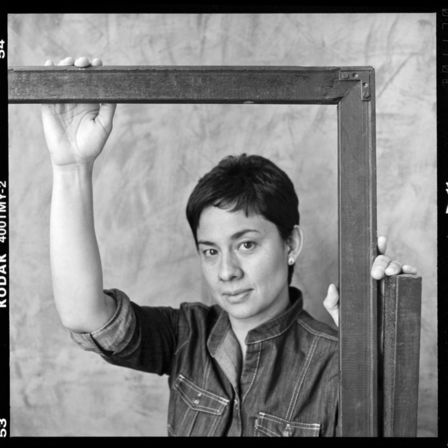
Marco Costa is a Full Professor at the Department of Psychology "Renzo Canestrari" within the University of Bologna. His research spans cognitive psychology, cross-modal perception, and environmental psychology, with a particular emphasis on the interplay between music, visual cognition, and behavioral responses. His recent publications highlight trends in auditory-visual integration , including studies on musical mode perception , spatial cognition , and environmental influences on behavior . His work bridges theoretical and applied domains, ranging from urban design to sensory neuroscience.
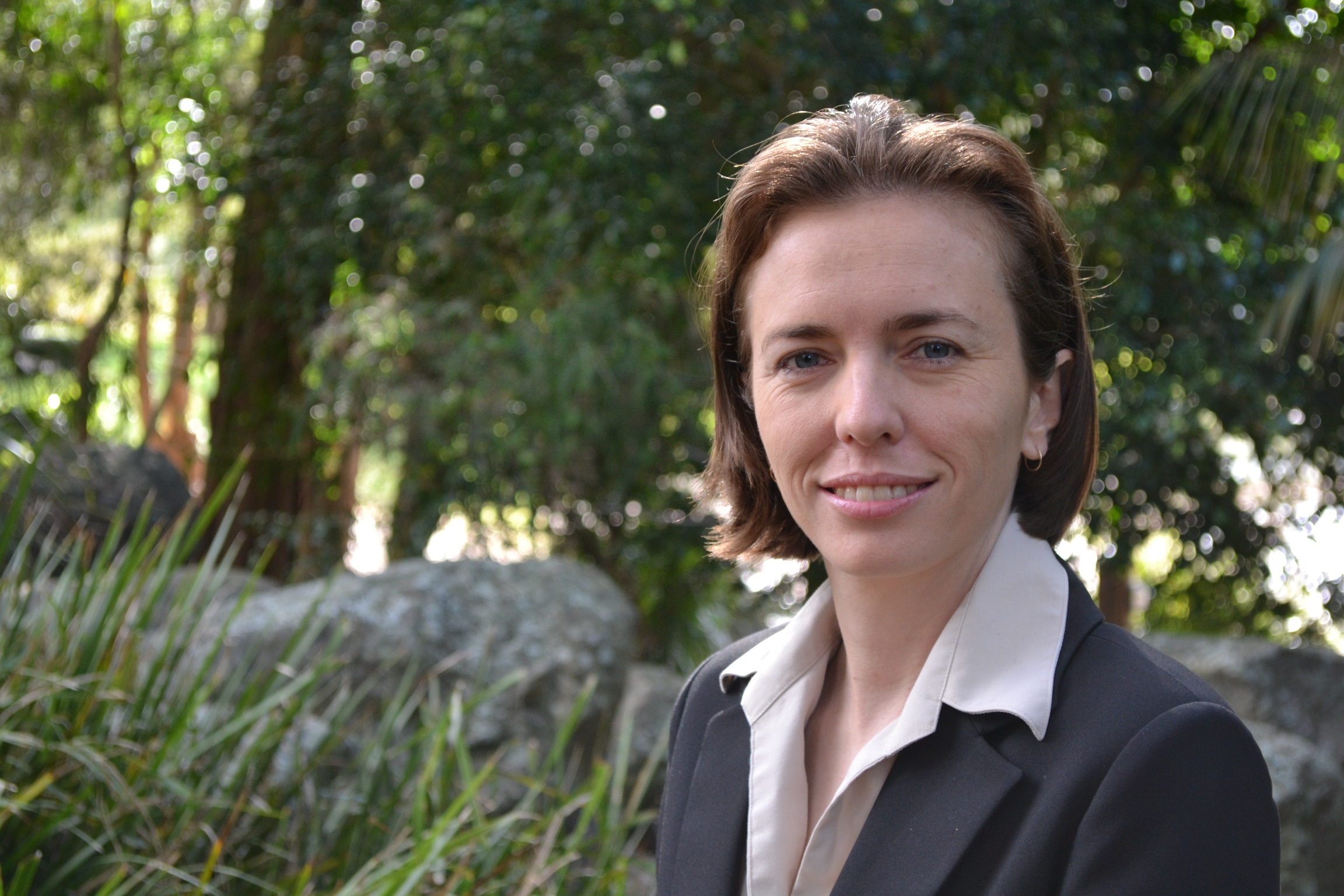
Montserrat Ros is an Associate Professor and Associate Dean (Education) at the School of Electrical, Computer and Telecommunications Engineering within the Faculty of Engineering and Information Sciences at the University of Wollongong, Australia. She has been with the university since 2006, initially joining as a Lecturer in Computer Engineering and progressing to her current senior academic and leadership roles. Her educational background includes: B.E.(Hons1)/B.Sc. double degree majoring in Computer Systems Engineering and Mathematics from the University of Queensland (2000) Ph.D. degree in Computer Engineering from the University of Queensland (2007) Professor Ros's research focuses on the intersection of embedded computing systems and practical engineering applications. Her work spans several key areas including embedded systems design, sensor network data fusion, cyber-physical systems development, and innovative approaches to engineering education. She has particular expertise in sensor-based localization techniques, computer architecture optimization, and code compression methodologies for resource-constrained environments. More recently, her research has expanded into machine learning applications for constrained systems and Internet of Things implementations. Analysis of her recent publication record reveals a strong emphasis on Internet of Things networks, UAV-based systems, and applications of artificial intelligence in both engineering education and manufacturing processes. Her work demonstrates a consistent pattern of bridging theoretical computer engineering concepts with practical real-world applications across diverse domains including healthcare, environmental monitoring, and industrial automation. Her significant contributions to academia have been recognized through numerous prestigious awards: 2019: AAUT Citation for Outstanding Contribution to Student Learning 2018: IEEE TALE 2018 Meritorious Service Award 2018: Featured in UOW Leadership in Education Booklet 2017: UOW Vice Chancellor's Award for Outstanding Contribution to Teaching and Learning 2016: UOW Women of Impact for inspiring young women in STEM 2015: UOW Vice Chancellor's Interdisciplinary Research Excellence Award 2012 & 2007: UOW Vice Chancellor's Awards for Teaching Excellence 2011: UOW Vice Chancellor's Award for Community Engagement Senior Fellow of WATTLE (Wollongong Academy for Tertiary Teaching & Learning Excellence) Professor Ros has secured substantial research funding across multiple projects spanning from 2006 to the present. Her grant portfolio demonstrates a consistent focus on engineering education innovation, sensor network development, and practical applications of embedded systems. Notable projects include "The AI Tutor: Enabling 24x7 student support across engineering" (2024), "AI/IoT-powered Airborne System for Monitoring Water Level and Tidal Floods" (2023), and "Smart Eye: Airborne and AI-Driven Assessment Solution of Sugarcane" (2022). She actively supervises HDR students and has completed multiple successful candidatures. Her leadership extends beyond research and teaching, as evidenced by her role as Associate Dean (Education) for the Faculty of Engineering and Information Sciences. She is also actively involved in community engagement through volunteering with the State Emergency Service (Wollongong SES) and Athletics Wollongong Club.
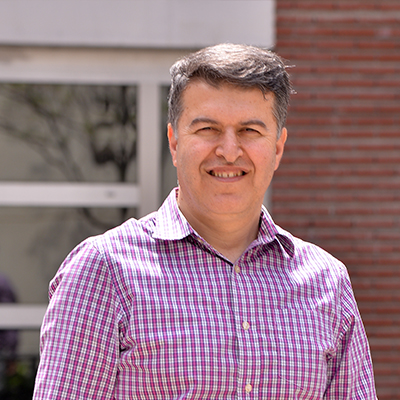
Ferit Öztürk is a Professor in the Mathematics Department at Bogazici University, specializing in singularity theory, contact topology, and symplectic topology. He leads the Geometry/Topology Seminar and supervises numerous graduate students in these fields. His research bridges topological methods with applications in robotics and dynamical systems. Recent work includes exotic manifold construction, real contact structures on 3-manifolds, and Morse-Bott theory on Lie groups. Dr. Öztürk holds a Ph.D. from Middle East Technical University (2001) and has developed course materials on Morse Theory and Projective Geometry. Student Supervision: 12+ M.S./Ph.D. students in topology and geometry Research Tools: Contact branched covers, real algebraic models, geometric surgery
Dr. Tafsir Matin Johansson is an Assistant Professor (Research/Ocean Sustainability, Governance & Management) at the WMU-Sasakawa Global Ocean Institute. He holds a PhD in Maritime Affairs from WMU, an MSc in International Maritime Law from Lund University, and an LL.B. (Honours) from the University of Chittagong. His interdisciplinary research focuses on ocean governance, techno-regulatory frameworks for robotics, Arctic policy, IUU fishing, marine debris, and gender equality in ocean science. Recent work examines climate adaptation in shipping, remote inspection technologies, and sustainable port management. Dr. Johansson has led projects funded by Transport Canada, the European Union, and Swedish/Danish agencies, addressing oil spill response, underwater noise, and autonomous systems. His publications frequently analyze regulatory innovation for emerging technologies and crisis management strategies in maritime operations.
Professor Zhifeng Bao is a faculty member at RMIT University's School of Computing Technologies. His research focuses on enhancing data usability across heterogeneous domains, including structured, unstructured, and spatial-temporal data. His work spans database management, keyword search optimization, social network analysis, and spatio-textual data processing. He coordinates the course COSC1169: Intranet and Internet Data Engineering and supervises PhD/Masters students in projects such as trajectory data processing, data asset valuation, and edge computing optimization. Research interests emphasize improving data accessibility and efficiency through methodologies like query relaxation, visual analytics, and provenance tracking. His recent projects include cost-effective edge node placement, traffic accident risk prediction, and differentially private federated learning. Teaching and supervision activities highlight a commitment to bridging theory and practical data engineering challenges.
Shari M. Huhndorf serves as the Class of 1938 Professor of Native American Studies within UC Berkeley's Department of Ethnic Studies. A Yup'ik scholar raised in Alaska, her work bridges academic research and Indigenous community engagement, focusing on Alaska Native sovereignty, cultural representation, and gendered land relations. She holds significant leadership roles including Chair of the Repatriation Committee at the National Museum of the American Indian. Her educational foundation includes: Ph.D. in Comparative Literature, New York University M.A. in Comparative Literature, New York University B.A. in English, University of Redlands Huhndorf's research interrogates the inseparability of Indigenous cultural systems from territorial sovereignty, with particular emphasis on Alaska Native communities. Her scholarship examines literary and visual representations through decolonial and feminist frameworks, analyzing how Indigenous peoples resist colonial erasure through cultural production. Current projects include a community-based history of the Alaska Native Claims Settlement Act developed with Roy Huhndorf. Analysis of her 15 most recent publications reveals consistent engagement with Indigenous land sovereignty, cultural resilience, and gendered spatial politics. Her work demonstrates evolving focus from foundational critiques of 'going native' tropes toward contemporary analyses of corporate tribalism and Indigenous health sovereignty, always centering Alaska Native epistemologies. Her honors include: Canadian Women's Studies Association Outstanding Scholarship Prize Alaska Federation of Natives President's Award UC Berkeley Distinguished Teaching and Mentor Awards Guggenheim, Ford, and Woodrow Wilson Fellowships As a dedicated mentor, Huhndorf has guided numerous graduate students while securing major research funding. Her current ANCSA project exemplifies community-engaged scholarship. Institutional affiliations span Berkeley's Center for Race and Gender, Joseph A. Myers Center for Research on Native American Issues, and the Designated Emphasis in Gender and Women's Studies. She actively shapes national discourse through service on the National Museum of the American Indian Board and previously chaired the MLA's Twentieth-Century American Literature Division. Her decade-long service with the CIRI Foundation demonstrates sustained commitment to Alaska Native educational advancement.
Dr. Maria Norkus is a Research Associate and Lecturer in the Department of Sociology at Technische Universität Berlin, affiliated with Faculty VI: Planning, Building, Environment. She specializes in Methodology and Mixed Methods in Social Research, with a focus on Social Inequality, Labor Markets, and the Sociological Analysis of Work and Welfare State dynamics. Her work critically examines projectification in academia, intersectonal inequalities, and temporary organizational structures' impacts on academic careers. She contributes to interdisciplinary research on gender equality, knowledge production, and organizational innovation in science. Research Interests: Her core areas include figurational sociology applied to spatial and organizational analysis, mixed-methods research design, and the socio-structural dimensions of inequality. She has co-authored influential works on projectification's effects on academic careers, feminist methodological critiques, and the interplay between temporary work conditions and social stratification. Labs/Teams: She serves as Scientific Coordinator at the Global Center of Spatial Methods for Urban Sustainability (SMUS), advancing interdisciplinary spatial analysis methodologies. Her publications frequently address methodological innovations and their applications to sociological questions, reflecting a commitment to bridging empirical rigor with theoretical depth.
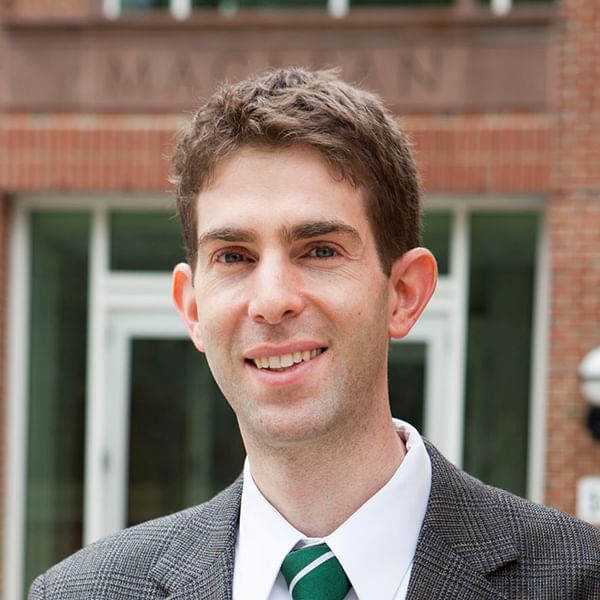
Ariel Genadt is a Lecturer in Architecture at the Stuart Weitzman School of Design, University of Pennsylvania. His work bridges research, teaching, and practice, focusing on modern and contemporary Japanese architecture, architectural resilience, and the intersection of technology, sustainability, and cultural expression. He holds a PhD in Architecture from the University of Pennsylvania (2016), with certificates in Ecological Architecture and University Teaching, alongside degrees from the Architectural Association (London) and Technion (Israel). Education: PhD in Architecture, University of Pennsylvania (2016) Master of Arts in Histories and Theories, Architectural Association, London (2004) Bachelor of Architecture, Technion, Israel (1997, cum laude) Research Interests: Japanese architectural history and practice Sustainable and resilient design Material innovation and tectonic expression Cultural preservation and reinterpretation Genadt's publications and exhibitions explore themes like architectural resilience in Japan, material assemblies, and cultural narratives in urban spaces. His curatorial work includes the Critical Abstractions: Modern Architecture in Japan exhibition (2018) and the 50 Years in Books by Penn Architecture PhDs database (2016). He has practiced globally, collaborating on projects in France, Israel, China, and beyond, and has taught at institutions including Swarthmore College and the Technion. His teaching spans courses on architectural theory, climate-responsive design, and Japanese modern architecture. Notable courses include ARCH 7120: Architectural Envelopes and ARCH 7110: Modern Architecture in Japan . He has advised the Master of Architecture thesis program and led design-build workshops at Tokyo University. Genadt’s professional affiliations include roles as a Fellow Researcher at the Japan Society for the Promotion of Science (Kengo Kuma Lab, 2012) and a visiting scholar at Fondazione Renzo Piano (2013). His work emphasizes cross-cultural dialogue and the role of architecture in addressing environmental and social challenges.
Jeremy Crampton is an Adjunct Professor focusing on the societal and political implications of geolocational technologies. He is a leading scholar in critical cartography, surveillance studies, and spatial big data governance. His work explores how technologies like AI, blockchain, and geoweb platforms shape everyday life and power dynamics. He is a Fellow of the Alan Turing Institute and Royal Geographical Society (UK), and a member of the American Association of Geographers. His research spans over three decades, including a seminal 2010 monograph on critical cartography and ongoing projects on counter-GeoAI. He is currently writing The Map and the Spyglass: The New Geographical Analytics of Everyday Life , to be published by Verso. Crampton teaches GEOG 3146 - Political Geography , addressing how spatial technologies influence political structures and governance. Key themes in his work include algorithmic decision-making, geospatial surveillance ethics, and the interplay between technology and sovereignty. His recent articles analyze smart cities, festival security, and the societal impacts of locational data. He critiques techno-utopian narratives, advocating for equitable and transparent geospatial systems. Scientific awards include recognition for his contributions to critical GIS theory and digital geography. His interdisciplinary approach bridges human geography, technology studies, and policy analysis, influencing debates on data governance and spatial justice.
Prof. Bahattin Koç is a Professor at Sabancı University's Faculty of Engineering and Natural Sciences, coordinating the Manufacturing Engineering Program. He holds a Ph.D. and has extensive experience in academia and industry, including roles at The State University of New York at Buffalo. His research focuses on 3D bioprinting, additive manufacturing, computational geometry, and nanotechnology-driven manufacturing processes. Research Interests: 3D bioprinting for tissue engineering, computational geometry for additive manufacturing, heterogeneous and multi-functional object modeling, nano-micro additive manufacturing, and hybrid manufacturing processes. His work integrates advanced design and manufacturing techniques to address challenges in biomedical and industrial applications. Grants and Funding: Secured significant grants including £815,625 from UK EPSRC (2018-2021), €1.4M from DiCoMI H2020 RISE (2018-2022), and $5M from the Turkish Ministry of Development. Projects include bone defect repair, bioprinting of patient-specific scaffolds, and advanced composite manufacturing. Students and Collaborations: Advised over 30 graduate students and researchers. Notable collaborations include work with Penn State University, University of Buffalo, and industry partners like TUSAS Engine Industries. He is a founding member of Sabancı University's Integrated Manufacturing Center and serves on TÜBİTAK advisory boards. Awards and Recognition: Co-inventor of patents such as the 'Method For Three Dimensional Printing Of Heterogeneous Structures' and 'Resorbable Laminated Repair Film'. Recognized for contributions to biofabrication and manufacturing innovation.
Adriana Fumi Chim-Miki is a permanent Professor in the Graduate Program in Management and an Adjunct Professor in the Undergraduate Program in Management at the Federal University of Campina Grande (UFCG), Brazil. She also holds a postdoctoral researcher position at the University of Aveiro, Portugal, and is a Collaborate Professor at the University of San Buenaventura de Cali, Colombia. She coordinates the Coopetition Network Lab (CNPq-registered) and is a Full Member of the GOVCOPP Research Unit at Aveiro University. Her work focuses on tourism, coopetition strategies, competitiveness, and social value creation, supported by grants from CNPq and CAPES. Education: PhD in Tourism, Economics, and Management – University of Las Palmas de Gran Canaria, Spain Master's in Geography (Regional Development) – Federal University of Rio Grande, Brazil Postgraduate in Environmental Management at Municipalities – Brazil Bachelor's in Management – Federal University of Rio Grande, Brazil Research Interests: Tourism management, coopetition strategies, competitiveness, destination image, social management, strategic management, interorganizational networks, and entrepreneurship. Her recent work emphasizes social value creation through tourism coopetition and sustainable practices. Awards: Researcher Productivity Grant from CNPq (Brazil) Grants & Funding: Supported by CAPES Foundation (Brazil), Ministry of Education (Brazil), and CNPq. Labs/Groups: Coordinator of Coopetition Network Lab (CNPq), Full Member of GOVCOPP (University of Aveiro).
Micah Lattanner is an Assistant Professor in the Public Health Department at Santa Clara University. His research focuses on structural stigma , LGBTQ+ health disparities, and mental health outcomes, with a particular emphasis on how systemic stigma impacts marginalized populations. He employs both quantitative and qualitative methods, including meta-analyses and longitudinal cohort studies, to explore mechanisms linking stigma to health outcomes. Dr. Lattanner’s work bridges social sciences , public health , and clinical psychology , addressing topics such as sexual orientation disparities, racialized stigma, and the efficacy of mental health interventions in high-stigma contexts. His recent studies highlight the neurobiological and psychological impacts of stigma, particularly among Black, Latinx, and LGBTQ+ youth. Notably, his research examines intersectional factors such as partner gender, cultural sexism, and anti-Black racism, advocating for evidence-based policies to reduce health inequities. He has contributed to high-impact journals like Lancet Public Health and pioneered interdisciplinary approaches to stigma research.
Solomon G. Diamond is an Associate Professor of Engineering at Dartmouth College's Thayer School of Engineering, serving as Co-Director of the Design Initiative at Dartmouth. He holds degrees from Dartmouth (AB 1997, BE 1998) and Harvard (SM 2001, PhD 2004). His research focuses on biomedical imaging, functional neuroimaging, and magnetic nanoparticle imaging, with emphasis on diagnostic technologies and medical device development. He has received awards including the 2023 Outstanding Service Award and the 2002 Derek Bok Teaching Award. Research projects include neurovascular coupling studies, clinical optical-electric probes, and magnetic nanoparticle imaging. He co-founded Lodestone Biomedical, a medtech company advancing nanoparticle-based biosensors. His work bridges engineering and medicine, with notable contributions to magnetic nanoparticle characterization and imaging array systems. He teaches courses like ENGS 90 (Engineering Design Methodology) and ENGS 29 (Computer-Aided Design & Kinematics). Recent work includes a 2024 study on salt concentration effects in magnetic nanoparticle biosensors with PhD candidate Gabby Moss. He holds patents for technologies like magnetic susceptibility tomography and in-bed exercise machines. His interdisciplinary collaborations span biomedical engineering, materials science, and clinical diagnostics.
Kieron Broadhurst is a Lecturer at Curtin University's School of Media, Creative Arts and Social Inquiry (part of the Faculty of Humanities), and serves in the Office of the Provost. His practice spans installation, collaborative projects, and speculative narratives. He holds a PhD in Art (2015–2020) and a First Class Honours in Art (2013), both from Curtin University. His research explores speculative fiction's role in contemporary art, often through interdisciplinary collaborations. Notable works include Border Chronicle (2025, Goolugatup Heathcote), The Rock Pool (2023, Old Customs House), and Earth Coincidence Control Office (2017, FELTspace). These projects blend site-specific installations, performance, and narrative-driven art. His exhibitions frequently engage with institutional critique, science fiction aesthetics, and collaborative authorship. Recent works like Excession (2019) and An Event (2016) highlight his focus on interconnected fictional universes and audience participation. Broadhurst has contributed catalogue essays for numerous exhibitions and completed residencies at Firstdraft (2015) and Fremantle Arts Centre (2013). His practice extends into artist books and curatorial projects, such as Portable Domains (2015).
Tania de León Yong is a Mexican visual artist and academic currently serving as Assistant Professor in Experimental Animation at the Academy of Media Arts Cologne (Kunsthochschule für Medien Köln) while also holding a tenured professorship at the Faculty of Arts and Design (FAD UNAM) in Mexico City. Her career spans institutions including Universitat Jaume I (Spain) and Tecnológico de Monterrey (ITESM). Bachelor's in Visual Arts (UNAM) Master's in Multimedia Internet Production (UPV Spain) PhD in Fine Arts (UPV Spain 2005) Master's in History of Art (UNAM) As a specialist in experimental animation theory and practice, her work explores time perception through installations and films using traditional techniques like engraving alongside emerging technologies like VR. She has exhibited in 11 solo shows and over 50 collectives across Canada, Germany, Mexico, and other countries. Key publications include 2020 research on VR drawing and 2017 analyses of Kentridge/Yamamura's work. Her 2018 award-winning Chronography series investigates temporal structures through animation loops and interactive installations. Grants include PAPIME UNAM for VR environments and PECDAT 2019 for artistic books. Scientific Awards: 2013 National Acknowledgment for Young Academic (UNAM) 2018 International Silent Film Festival Experimental Prize She has mentored over 25 animation students in postgraduate programs and developed educational media for Mexico's National University Open Learning platform. Her research bridges traditional media like etching with digital innovation, focusing on expanded animation formats and temporal storytelling.