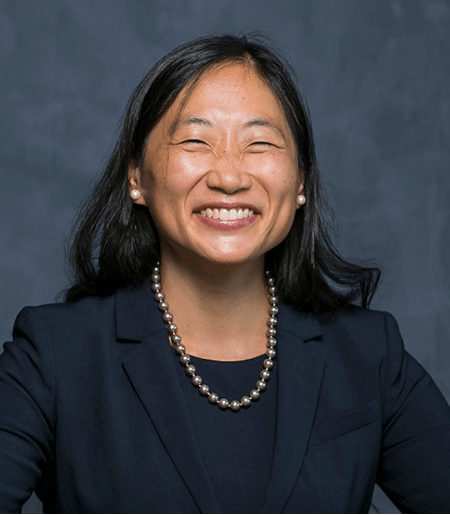
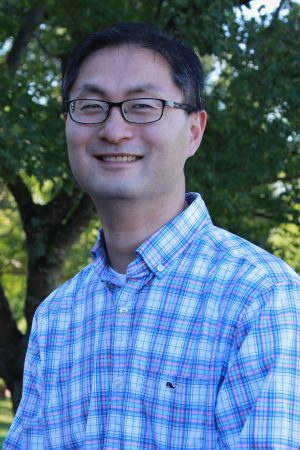
Dennis Tenen is an Associate Professor of English and Comparative Literature at Columbia University, affiliated with the English Department. He co-founded the Group for Experimental Methods in the Humanities and specializes in research at the intersection of people, texts, and technology. His work emphasizes computational approaches to literary analysis and the poetics of digital textuality, notably through his book *Plain Text: The Poetics of Computation* (2017). His research spans digital humanities, literary theory, and experimental methodologies in cultural studies. Education details are not explicitly provided in the text, though his academic role suggests a PhD in a relevant field. His recent publications explore themes like distributed agency in narratives, electronic book history, and computational archaeology of fictional space. Tenen actively engages with public discourse, as seen in his op-ed on vaccination resistance and contributions to podcasts and scholarly discussions. He leads initiatives in experimental humanities research and has been involved in advocating for digital humanities spaces at Columbia. His work bridges traditional literary studies with computational methods, fostering interdisciplinary dialogue in the humanities.
Cynthia Lin Lawell is an Associate Professor and holds the Robert Dyson Sesquicentennial Chair in Environmental, Energy and Resource Economics at Cornell University's Charles H. Dyson School of Applied Economics and Management. She is a prominent economist with expertise spanning environmental, energy, and resource economics, using advanced econometric methods to address critical policy questions. Dr. Lin Lawell earned her Ph.D., A.M., and A.B. from Harvard University, where she pursued a multidisciplinary major in Environmental Science and Public Policy. Her undergraduate thesis in atmospheric chemistry won the Thomas Temple Hoopes Prize and led to peer-reviewed publications. She has received numerous prestigious awards including the Harvard University Stone Fellow Award, the International Society for New Institutional Economics Award for the Best Ph.D. Dissertation, and the UC-Davis Hellman Fellowship. Her research focuses on environmental, energy, and resource economics, with particular expertise in structural econometric modeling of dynamic games, applied econometrics, and policy analysis. She has published in top journals including the Review of Economics and Statistics, Journal of Environmental Economics and Management, and Energy Journal. Her work examines strategic decision-making in resource extraction, effectiveness of environmental policies, energy efficiency, water management, and renewable energy development. Dr. Lin Lawell's research has been widely featured in major media outlets including the New York Times, Washington Post, and Guardian. Her analysis of Danish wind energy policy demonstrated that government policies, rather than technological advantages, drove Denmark's leadership in wind energy. Her work on Chinese energy policies revealed mixed effectiveness across different policy instruments. Harvard University Stone Fellow Award for Best Paper Written by a Doctoral Student in Environmental and Resource Policy International Society for New Institutional Economics Award for the Best Ph.D. Dissertation 2011 UC-Davis Hellman Fellowship for promising young faculty RePEc Top 3% Female Economists Based on Publications in Last 10 Years 2017 Cornell University Knowledge Matters Fellow Dr. Lin Lawell directs two major research initiatives at Cornell: the Dynamics, Economics, Econometrics, Policy, and Games: Rigorous Environmental, Energy, Natural Resource, Agriculture, and Development Analysis and Research (DEEP-GREEN-RADAR) and the Think-tank for Resources, Energy, and the Environment: Science and Policy-related Economic Analysis and Research (TREESPEAR). She also serves as President of the U.S. Association for Energy Economics Bay Area Chapter and has received multiple grants supporting her research on agricultural-to-energy land use conversions and sustainable resource management.
Ellen Muir is an Assistant Professor of Applied Economics at the MIT Sloan School of Management. Her research focuses on the behavior of firms with market power, employing mechanism design to analyze pricing, labor procurement, and regulatory interventions. She holds a PhD in Economics from Stanford University (2022) and a PhD in Mathematics and Statistics from the University of Melbourne, alongside MSc and BSc degrees from the same institution. Educational Background: PhD in Economics, Stanford University, 2022 PhD in Mathematics and Statistics, University of Melbourne MSc in Mathematics and Statistics, University of Melbourne BSc in Mathematics and Statistics, University of Melbourne Research Interests: Ellen’s work addresses classic economic questions through mechanism design, including optimal pricing strategies, labor market dynamics under monopsony power, and regulatory frameworks. Her studies shed light on phenomena such as involuntary unemployment, opaque pricing, and market rationing. Key areas include property rights, auction design, and market thickness optimization. Recent Publications: Her recent work includes studies on optimal Hotelling auctions, mechanism-design approaches to property rights, and labor procurement under minimum wage policies. These contributions appear in top journals like the Journal of Political Economy and the Journal of Economic Theory. Professional Background: Before MIT Sloan, Ellen was a Prize Fellow in Economics, History, and Politics at Harvard University. She has authored numerous working papers and maintains affiliations with the MIT Sloan School of Management.
Brandon Clifford is an Associate Professor of Architecture at MIT , specializing in integrating ancient construction techniques with contemporary architectural innovation. He is the director and co-founder of Matter Design, a studio known for speculative projects that bridge historical methods and futuristic visions. His research, termed 'projective archaeology,' merges ancient wisdom with imaginative futures, challenging conventional architectural practices through concepts like cyclopean masonry and megalithic sculpture. Clifford holds a Master of Architecture from Princeton University and a Bachelor of Science in Architecture from Georgia Tech . He has held distinguished visiting roles, including the John G. Williams Distinguished Visiting Professor at the University of Arkansas and the LeFevre Fellow at The Ohio State University . His work emphasizes cultural significance, sustainability, and material innovation , exemplified by projects like ' Walking Assembly ' and ' Cyclopean Cannibalism '. These projects explore craneless construction methods, cyclopean masonry revival, and the ethical reuse of materials. He has authored ' The Cannibal’s Cookbook ', which intertwines ancient myths with modern architectural practices. Clifford’s accolades include the American Academy in Rome Prize , TED Fellowship , and Architectural League Prize . His research frequently bridges theory and practice, advocating for architecture that transcends temporal boundaries to address contemporary challenges through ancient ingenuity.
Jay Shimshack is Professor of Public Policy and Economics at the University of Virginia's Frank Batten School of Leadership and Public Policy, holding a Ph.D. from U.C. Berkeley and B.S. from Cornell University. Prior to UVA, he held faculty positions at Tulane University, Tufts University, and was a visiting fellow at the University of Michigan. His educational background includes: Ph.D. in Economics from University of California, Berkeley B.S. from Cornell University Shimshack's research focuses on environmental regulation, environmental economics, corporate social behavior, and applied microeconomics for public policy. He extensively examines environmental inequality, regulatory compliance mechanisms, and pollution enforcement effectiveness. His work bridges academic research with policy applications through advisory roles with federal agencies, with particular emphasis on citizen complaint systems, environmental justice, and Clean Water Act policy analysis. His recent publications (2019-2024) demonstrate empirical analysis of environmental regulations across domestic and international contexts, revealing consistent themes in compliance assistance effectiveness, transboundary pollution challenges, and socioeconomic disparities in environmental quality. The research combines rigorous economic methodology with real-world policy evaluation, particularly in U.S. regulatory settings and international case studies including Mexico and China. Shimshack has been acknowledged by the University of Virginia for excellence in research contributions, receiving institutional recognition for impactful scholarship that informs environmental policy debates. He has provided advisory services to the EPA, FDA, USDA, and other federal agencies; consulted for private organizations; and testified before the U.S. House of Representatives. His policy engagement includes publishing numerous book chapters and reports, most notably the 2023 analysis finding the Trump administration's Clean Water Act rollback relied on dubious methodology. At UVA, he teaches economics for public policy and benefit-cost analysis.
Josie Clowney is an Associate Professor in the Department of Molecular, Cellular, and Developmental Biology at the University of Michigan, where she has held faculty position since 2017. Her research investigates the genomic algorithms that construct neural circuits during development, using Drosophila as a model to study how chemosensory systems drive both instinctual behaviors and learning. She teaches Bio 172 and an upper-level seminar on cellular diversity and scientific writing, and mentors graduate students through MCDB, CMB, NGP, and BIOINF PhD programs. Her educational background includes: Ph.D. in Biomedical Sciences (2012) from the University of California, San Francisco B.S. in Cellular and Molecular Biology (2005) from the University of Michigan, where she conducted research with Cunming Duan Clowney's research centers on understanding how definitive neuronal parameters are encoded in genomic information and translated into cellular architectures. Her lab hypothesizes that developmental algorithms for learning circuits versus instinctual circuits differ fundamentally in their genomic requirements, with chemosensory circuits serving as key models. Using fruit flies for their tractable brain organization, her work bridges computational principles and biological implementation to uncover universal brain organization rules. Analysis of her 15 most recent publications (2016-2025) reveals consistent focus on Drosophila mushroom body development, neural sexual differentiation, and spatial constraints in circuit formation. Key themes include non-deterministic mechanisms diversifying cell surface expression, chromatin dynamics in circadian regulation, and how input density tunes sensory responses. Her work integrates genomics, neuroanatomy, and behavior to model how compact genomic information generates complex neural architectures. No scientific awards were mentioned in the provided text. Dr. Clowney advises graduate students through multiple PhD programs at the University of Michigan, though specific student names and grant details are not provided in the source material. Her teaching includes foundational undergraduate coursework and advanced seminars emphasizing scientific writing. The active publication record spanning 2016-2025 indicates sustained research funding supporting her lab's investigations into neural circuit development. The Clowney Lab, housed in the Biological Sciences Building (4218 BSB), employs Drosophila genetics and neuroanatomical techniques to dissect developmental algorithms of brain wiring. Current projects explore how spatial constraints structure learning circuits, mechanisms of neural sexual differentiation, and the genomic encoding of circuit diversity. The lab collaborates within Michigan's neuroscience community through the Program in Biology and participates in interdisciplinary initiatives studying brain evolution and function.
Chris Quattro is an Assistant Professor in the Department of Geography and Planning, currently based in Boone. Previously, they held roles as a fellow at the University of Pennsylvania and an Associate Adjunct Professor at Temple University. Their work emphasizes urban planning, environmental policy, and social justice, focusing on zoning practices, climate resilience, and equitable urban development. Research interests include climate change adaptation in mountain cities, zoning laws' impact on low-income populations and communities of color, and innovative land use strategies like infill development. They have also explored the structure of urban planning frameworks and fostering diversity in planning governance. Chris has contributed to studies on zoning's spatial equity, housing disparities, and the role of setback regulations in urban design. While no awards are listed, their publications reflect a commitment to advancing inclusive urban policies and environmental sustainability. Prior professional experience includes directing family and children’s programs, including a Parent/Child mobility and gymnastics initiative and STEM recreational activities in Upstate NY. They are actively engaged in building faculty networks through the EFPN and promoting teaching excellence.
James Lindholm is a Professor in the Department of Marine Science at California State University Monterey Bay (CSUMB), holding the James W. Rote Distinguished Professorship in Marine Science & Policy. His research focuses on marine ecology, fisheries management, and the application of science to policy. He leads the Video & Image Analysis Lab and chairs the Marine Science Program and Scientific Diving Program. Dr. Lindholm earned his Ph.D. from Boston University and completed a postdoc at the National Undersea Research Center. His work spans global marine ecosystems, emphasizing benthic habitats, bottom trawling impacts, and MPA design. He has authored 42 peer-reviewed articles and a textbook, Dynamic Modeling for Marine Conservation (Springer, 2002). He advises policymakers on marine conservation, including contributions to a Presidential Executive Order and congressional briefings. Lindholm teaches courses like Marine Fish Ecology and Scientific Diving Techniques. His research integrates technologies such as ROVs, AUVs, and acoustic telemetry for ecological insights.
Min Shin is a Professor and Chair of the Computer Science Department at the University of North Carolina at Charlotte (UNC Charlotte), where he also serves as Assistant Dean for Research in the College of Computing and Informatics. He earned his Ph.D. in Computer Science & Engineering from the University of South Florida in 2001. His research focuses on Computer Vision, particularly multiple object tracking and automated visual inspection of nuclear power plants. He leads the Video and Image Analysis Lab, developing user-friendly tracking software funded by NSF, NIH, DARPA, and industry grants. Notable projects include the ABCTracker.org platform, which deploys algorithms refined over 10+ years of research. Dr. Shin’s work spans tracking applications in diverse domains such as ants, bees, cells, termites, robots, and vehicles. He has mentored Ph.D. and undergraduate students extensively, emphasizing computational methods in biology and engineering. His service includes roles as Associate Editor for IEEE Transactions on Systems, Man, and Cybernetics-B, and program committees for top conferences (ICCV, CVPR, ECCV). His grants and collaborations reflect interdisciplinary strengths in vision algorithms, usability, and real-world deployment.
Bhoomija Ranjan is a Senior Lecturer in the Department of Marketing at Monash University, affiliated with Impact Labs. She holds a PhD and MS in Business Administration from the University of Rochester (2017), an MA in Economics from the same institution, and a B.Sc-M.Sc in Mathematics and Scientific Computing from IIT Kanpur. Previously, she served as Assistant Professor at Brandeis University (2017-2018). Her research focuses on quantitative modeling of firm and consumer decision-making, including retail layout optimization, consumer attention patterns, pricing strategies, and new product launches. She employs structural modeling, Bayesian methods, and applied data science techniques. Notable contributions include studies on retail advertising effectiveness and emoji usage in digital marketing. Recipient of prestigious awards including the Center of Excellence in Data Science Fellowship and Monash's Outstanding Teaching Performance accolade Peer-reviewed for journals like Journal of the Academy of Marketing Science and Journal of Marketing Management Active in academic service roles such as program committee member for the Consortium on Digital Economy
Sao Mai Nguyen is an Enseignante-Chercheuse (Lecturer-Researcher) at ENSTA Paris, affiliated with the Unité d'Informatique et d'Ingénierie des Systèmes (U2IS). Her research bridges robotics, artificial intelligence, and cognitive science, focusing on cognitive developmental robotics, intrinsic motivation in learning, and human-robot interaction. She explores how robots can adapt to social and physical environments, particularly in physical rehabilitation and smart home applications. Research Interests: Nguyen’s work integrates machine learning, robotic embodiment, child psychology, and neuroscience. Key areas include human-robot interaction, assistive robotics for chronic low back pain rehabilitation, activity recognition in smart homes using IoT sensors, and intrinsic motivation-driven learning frameworks. Recent Contributions: Her 2024 HDR thesis on reinforcement and imitation learning for sequential tasks underscores her expertise in strategic learning systems. Recent publications address bio-inspired robotics models, hierarchical reinforcement learning, and benchmark environments like 'Open the Chests' for activity recognition. Collaborations include projects like the R-COOL randomized trial for robot-coached physical exercises. Labs & Teams: She contributes to the U2IS lab, advancing interdisciplinary research in AI and robotics. Her work spans experimental platforms for sensorimotor learning and healthcare robotics applications.
Sofia Santos is a Researcher at Iscte Business School , part of ISCTE - Lisbon University Institute. Her work focuses on urban mobility, sociospatial inequality, and cultural diversity. Research Interests: Urban mobility patterns and their sociodemographic determinants Transportation justice and equitable spatial planning Intersection of mobility, gender inequality, and environmental conditions Role of cultural diversity in metropolitan development Social capital dynamics in urbanizing regions Policy implementation challenges in fragmented governance systems Article Trends (2007–2020): Over 13 years, her research spans urban mobility (18/25 articles), sociospatial inequality (12/25), Lisbon metropolitan dynamics (10/25), and cultural diversity (6/25). Key methodologies include qualitative analysis, socioeconomic differentiation, and geospatial studies, with recent emphasis on policy consequences and transportation equity. Contact: Email execed@iscte-iul.pt for inquiries.
Dr Ambrose Seddon is a Principal Academic in Music and Audio Technology at Bournemouth University, specializing in electroacoustic and electronic music. He holds a BMus (Hons) from Goldsmiths College, University of London, an MA in Electroacoustic Composition, and a PhD in Music (electroacoustic composition), both from City, University of London. His research focuses on electroacoustic composition, multichannel and ambisonic techniques, form in electroacoustic music, and music analysis. Notable awards include the 1st Prize at the Klang! and Visiones Sonoras competitions, and the European Region Composition Prize at ICMC 2007. He has residences at Elektronmusikstudion (EMS) and Visby International Centre for Composers (VICC). Dr Seddon teaches composition, studio recording, and creative music technology, supervising PhD students in related fields. His work spans sound installations, live electronics with the ensemble NonRecursive, and performances at venues worldwide. Academic roles include external examiner for BSc Music and Sound Technology at the University of Portsmouth and leadership in the Creative Sonic Practice Research Group.
Daniel Gethmann is an Associate Professor at the Institute for Architectural Theory, Art and Cultural Studies at Graz University of Technology (TU Graz). His research focuses on architectural theory, cultural studies, and media studies, particularly exploring the Graz School of Architecture, infraordinary spaces, and historical architectural practices. Recent publications analyze topics such as colonial typologies at the Vienna World's Fair 1873, computational architecture, and the intersection of design theory with sustainability. His work spans interdisciplinary studies connecting architecture with media history, political resistance, and cultural memory. Key research themes include: Architectural theory and the Graz School Media and communication in architectural design Historical and political dimensions of architecture Infraordinary and peripheral spaces Institutional critique in design practices Technological integration in architecture
Karl Schmid is a W3 Professor of Crop Plant Biodiversity and Breeding Informatics at the University of Hohenheim's Institute of Plant Breeding, Seed Science and Population Genetics within the College of Agricultural Sciences. His research integrates evolutionary genetics, population genomics, and machine learning to address agricultural challenges. Ph.D. in Biology, University of Munich (1996) Postdoctoral Research, Cornell University (1997-1999) Emmy-Noether Research Group, Max Planck Institute of Chemical Ecology (2000-2006) Group Leader, Leibniz Institute of Plant Genetics (2006-2008) Professor of Genetics, Swedish Agricultural University (2008) His research focuses on crop biodiversity conservation, evolutionary genetics of plant pathogens, and breeding informatics applications. Current work leverages deep learning for phenotyping (quinoa panicles, barley genomics) and analyzes pathogen evolution (Exserohilum turcicum in maize). His team actively develops computational tools like GGoutlieR for geo-genetic pattern detection. Recent publications demonstrate strong trends in applying AI to agricultural genomics, particularly in quinoa improvement and pathogen surveillance. His group leads the EU H2020 INVITE project on molecular markers in plant variety protection and organizes international symposia like the 2024 Quinoa Symposium at Hohenheim. Head of Crop Biodiversity and Breeding Informatics Group Principal Investigator, EU H2020 INVITE project Organizer, International Quinoa Symposium 2024