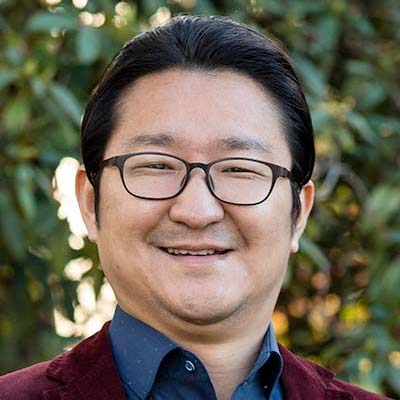
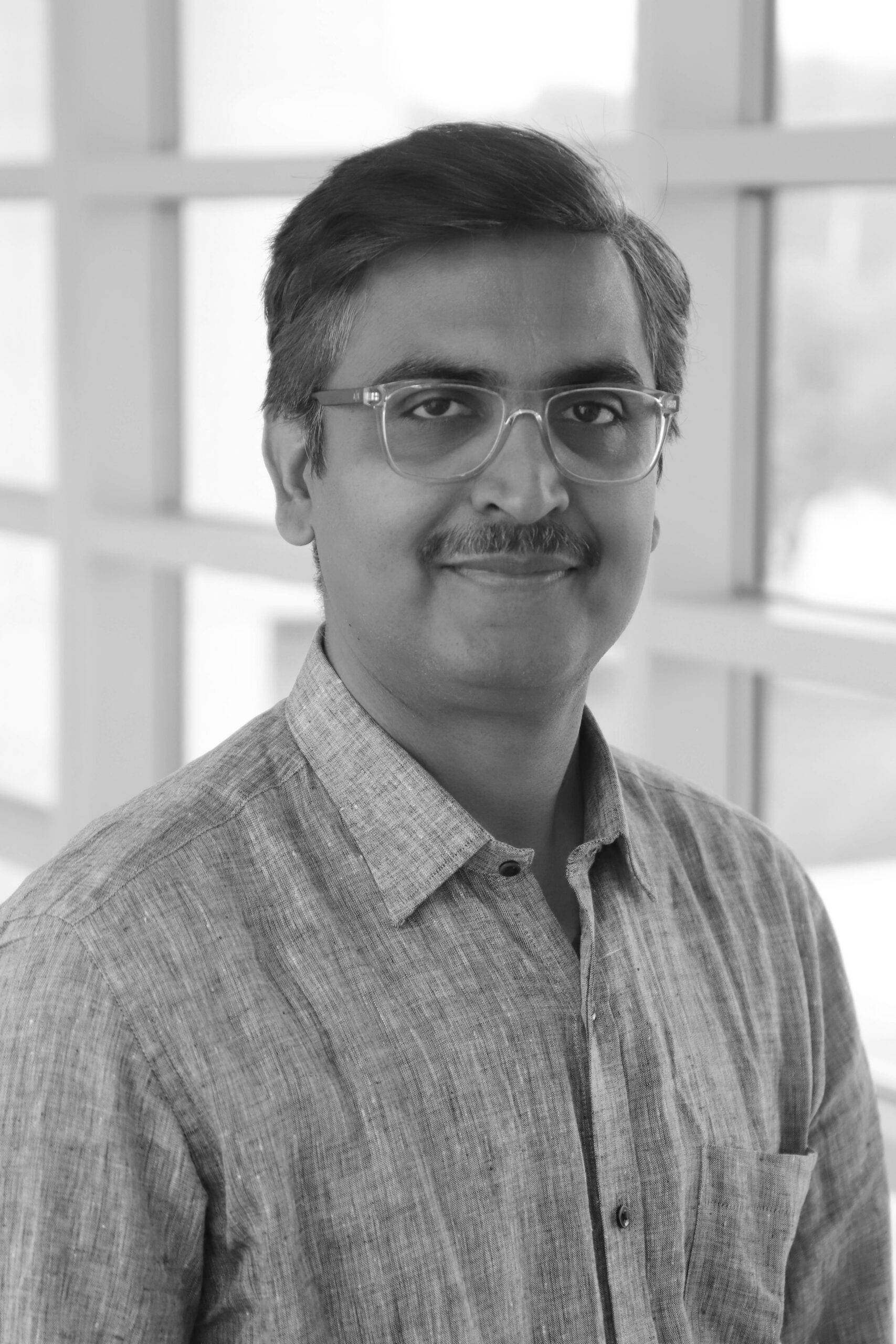
Dr. Thomas Emanuel Balke is a Researcher at the University of Heidelberg's Department of Languages and Cultures of the Near East, specializing in Assyriology. His work focuses on Sumerian language, cuneiform texts, prosopography, and ancient numeral systems. He has been affiliated with the Collaborative Research Center 933 'Material Text Cultures' since 2011. PhD in Ancient Near Eastern Philology (Münster, 2005) Magister Artium in Ancient Near Eastern Studies (Münster, 1996) Dr. Balke's research explores Sumerian grammar, onomastics, and the intersection of writing systems with early mathematical development. His publications examine topics like dimensional case systems, verb valency, and administrative documents from Mesopotamia. His recent work engages with the typological classification of Sumerian numeral systems and the analysis of economic texts. He contributes to the understanding of material text cultures through philological and archaeological lenses. Dr. Balke has participated in projects related to Mesopotamian creation myths and prosopography, with affiliations to institutions in Germany and the UK. He has published extensively on Sumerian language and administrative practices in journals like Zeitschrift für Assyriologie and Journal of Cuneiform Studies .
Sunggu Yang serves as Associate Professor of Theology and Christian Ministries at George Fox University's College of Christian Studies, holding dual leadership roles as Chair of Cornerstone Core and Director of the Margaret Fell Scholars Program since joining the institution in 2017 after a post-doctoral fellowship at Wake Forest University School of Divinity. His academic credentials include: PhD from Vanderbilt University STM from Yale Divinity School MDiv from Emory University BA from Yonsei University Research centers on Homiletics, Theological aesthetics, Multicultural worship, Christian formation, and Asian American Christianity, with innovative integration of digital media and arts exemplified by courses like "Film & Preaching: The Gospel According to Hollywood". His scholarly trajectory reveals growing emphasis on digital homiletics, cross-cultural preaching frameworks, and artistic-sermonic synthesis. His publication analysis shows consistent exploration of preaching's evolution through technological, multicultural, and aesthetic lenses, with recent work prioritizing online sermon delivery, diaspora identity, and visual arts integration in homiletical practice. Professional recognition includes: Louisville Institute Post-Doctoral Teaching Fellowship Through the Margaret Fell Scholars Program and editorial leadership of The Journal of Asian American Theological Forum (which he founded), Dr. Yang actively mentors emerging scholars while advancing research in homiletics and Asian American theological discourse through sustained editorial contributions to The Journal of Homiletic.
James Kwang Ho Chung is an architect and educator affiliated with the Royal College of Art's School of Architecture. He also holds positions as a Unit Master at the Architectural Association and a Design Fellow at the University of Cambridge. His research focuses on understanding contemporary Korean typologies as spatial apparatus and exploring architectural typologies of healing within a paradigmatic framework. His work bridges the fields of architecture, cultural studies, and therapeutic design, with particular attention to how built environments can serve healing purposes and how Korean architectural traditions inform contemporary design approaches. Chung's recent research projects include "(Un)Faithful Seouls" exhibited at the Seoul Architecture Biennale 2021 and "Medicinal Architecture" showcased at the Hyundai ZER01NE exhibition in 2022. These projects demonstrate his focus on Korean architectural typologies and healing spaces, reflecting a growing interest in how architecture can contribute to human wellbeing. He has professional experience working at prominent architectural firms including Foster + Partners, Grimshaw Architects and Hopkins Architects, where he realized many built projects. This practical experience informs his academic work and teaching approach. Additionally, Chung serves as an external examiner at the Korea National University of Arts and is the programme head for the AA Visiting School Seoul. He has given lectures at various academic institutions in Korea and the UK, contributing to architectural discourse across international boundaries.
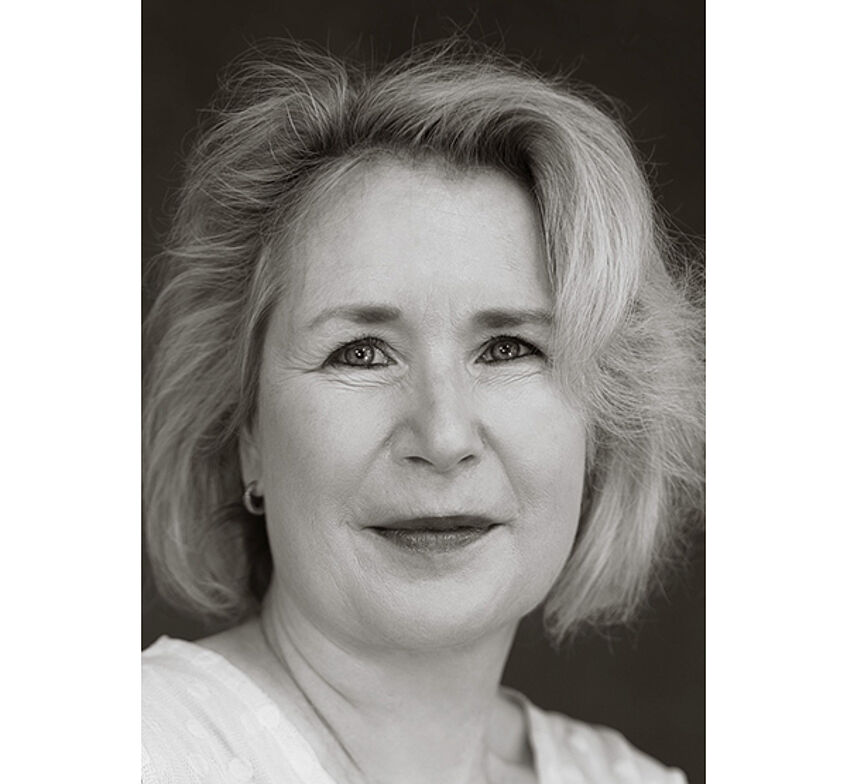
Cecilia Bione is a Professor at the Academy of Fine Arts of Bologna, where she teaches across Product Design and Decoration – Art and Environment programs. Her current curriculum includes Interior Architecture, Exhibition Design, Ecodesign, and Spatial Representation Techniques for third-year students, alongside foundational courses in spatial representation for second-year cohorts. Her academic trajectory began as a teaching assistant in Architectural Design at the Faculty of Architecture of Alghero, University of Sassari. Since 2008, she has held a permanent faculty position at the Academy of Fine Arts of Bologna while concurrently serving as Editor-in-Chief (2000-2004) and Deputy Director (2004-2008) of the international Architecture and Urban Planning magazine 'Parametro'. Professor Bione's research interrogates the political dimensions of design practice, with signature expertise in Exhibition Design as a cognitive tool for reimagining spatial potentials, and Sustainable Design that moves beyond superficial 'eco-friendly' terminology to analyze lifecycle economics and socio-ethical responsibility. Her pedagogy emphasizes domestic architecture as experimental terrain for contemporary living scenarios, drawing from modernist 'machines à vivre' concepts while deconstructing traditional interior/exterior dichotomies. Her 2011 monograph 'Centri culturali. Architetture 1999-2011' (Federico Motta Editore), translated into English and French, established her authority in cultural infrastructure design. The French edition published by Actes Sud Editions received critical acclaim culminating in the Thorlet Prize. Her scholarly recognition is anchored by the Thorlet Prize , validating her contribution to architectural discourse through rigorous analysis of cultural centers as transformative spatial typologies. Professor Bione cultivates student development through project-based learning that bridges theoretical frameworks with tangible design exercises, particularly in exhibition curation and sustainable material innovation. Her editorial leadership at 'Parametro' demonstrates sustained engagement with architectural theory, though specific research grants or laboratory affiliations remain undocumented in available sources.
Barbara Schedl serves as an Associate Professor at the Institute of Art History within the Faculty of History and Cultural Studies at the University of Vienna. She maintains her office in Room 3F.EG.05 at Garnisongasse 13, University Campus Hof 9, 1090 Vienna. With a distinguished academic career spanning over two decades, Dr. Schedl has established herself as a leading expert in medieval architectural history, particularly focusing on religious buildings and their liturgical contexts. Her research interests center on Architecture and liturgy in the Middle Ages with a focus on religious communities, Written sources on medieval construction, and New media & computer animations in art history. Dr. Schedl's work demonstrates a consistent focus on the intersection of architectural form, religious practice, and social organization in medieval Europe, with particular emphasis on Austrian ecclesiastical structures. She has pioneered the application of digital reconstructions and virtual modeling to understand historical architectural spaces. Analysis of her recent publications reveals a strong thematic concentration on St. Stephen's Cathedral in Vienna, examining its construction history, architectural evolution, and liturgical function from multiple perspectives. Her work increasingly explores the relationship between urban development and sacred architecture, donor networks, and the social dynamics that shaped medieval building projects. She frequently employs interdisciplinary approaches, combining architectural analysis with historical, liturgical, and social perspectives. Dr. Schedl has secured significant research funding, most notably from the Austrian Science Fund (FWF) for multiple projects including the current "Donor Networks: The Viennese Major Construction Projects of St. Stephen's and St. Michael's in the 15th Century" (2021-2025). She has also collaborated on international projects including the "North Alpine Building Culture of the Late Middle Ages" network and previously managed the UCLA Center for Medieval & Renaissance Studies project on "The Plan of St. Gall." Her academic leadership includes project management for several major research initiatives and collaboration with institutions including the Cathedral Chapter of St. Stephen's Church in Vienna. Dr. Schedl maintains active scholarly engagement through conference organization and participation, as evidenced by her co-edited volume "St. Stephen's Cathedral in Vienna. The Duke's Workshop" from a 2017 international conference.
Sébastien Caillault is a Research Lecturer in Geography (Maître de Conférences) at Institut Agro, affiliated with the Social Sciences Department and UMR CNRS 'Spaces and Societies' in Angers. His academic work bridges environmental geography, landscape studies, and political ecology, with a dual geographical focus on West Africa and western France. His research interests center on landscape dynamics and environmental changes , particularly examining access to land and resources, and management methods related to fire, water, and other environmental elements. Caillault employs a methodological approach combining fieldwork (interviews and surveys) with spatial analysis to explore environmental issues and debates. His work on fire management in West African savannas has been particularly influential, resulting in the EcoSoFI interdisciplinary project (2022-2024). Analysis of his publication record reveals consistent engagement with landscape transformations, spatial analysis techniques, and socio-environmental transitions. His work shows increasing interdisciplinary collaboration, particularly evident in recent publications addressing fire management, environmental assets in agricultural cooperatives, and digital landscape practices. A notable geographic pattern emerges with substantial research conducted in Burkina Faso and western France, particularly in Angers. Co-facilitator of research axis 1: 'Production and hierarchization of social worlds: towards a transcendence of paradigms?' (2022-2027) Lead on ECOPOL 'Political Ecologies' Project Member of editorial boards for 'Carnets de géographes' and 'Natures-Sciences-Sociétés' Caillault actively supervises doctoral research, currently guiding Nathan Gauthier's work on 'Typology of fire practices and landscapes produced' (2023) and Soline Butin's research on 'The landscape for understanding socio-environmental transitions in West Africa' (2022). His research projects include 'To Burn or Not to Burn' (2020), 'Mapping of Anthropization Pressures and Naturalist Data' (2020-2021), and 'Bushes in crisis?' (2013-2019), demonstrating sustained engagement with environmental management questions across multiple decades.
Luboš Františák serves as an Assistant Professor at the Department of Urban Design within the Faculty of Architecture at Brno University of Technology. His academic position includes teaching specialized studios in urban and landscape design, urban planning, and urban design history courses in both Czech and English. He maintains an active research profile focused on sustainable urban development and spatial planning. His research interests center on urban design methodologies, sustainable development of urban spaces, and historical urban structures. Františák investigates how urban morphology influences sustainable development, with particular attention to public spaces, city centers, and regional planning frameworks. His work bridges theoretical urban studies with practical design applications through numerous competition entries and urban studies. Analysis of his publications reveals consistent focus on sustainable urban development patterns, with recurring themes in spatial structure analysis, public space functionality, and historical urban fabric preservation. His work spans both theoretical frameworks (as seen in journal publications) and practical applications (through competition projects and urban studies). Františák has secured research funding through projects including GA17-26104S (2017-2019) on urban structure impact on sustainable territorial development, the URBANITY conference (2016), and earlier projects on urban design foundations (2001). His professional activities include substantial involvement in architectural competitions and urban studies, with over 30 documented projects between 2012-2022. These include city center revitalizations (Český Těšín, Bystřice), urban studies (Brno-Ponávka, Blansko), and exhibition projects showcasing urban design concepts. His work demonstrates strong integration of academic research with practical urban design solutions.
Dr. Ismael Aguilar-Barajas is Professor in the Department of Economics at Tecnologico de Monterrey's School of Social Sciences and Government, and a research associate to the Water Center for Latin America and the Caribbean. He represents the President of Tecnológico to the National Advisory Water Council and the Interinstitutional Programme's studies on the North America Region (PIERAN), based at El Colegio de Mexico. His educational background includes: Civil Engineer from Universidad Michoacana de San Nicolás de Hidalgo Master of Science in Regional and Urban Planning Studies from The London School of Economics PhD in Economic Development from The London School of Economics Dr. Aguilar-Barajas has established himself as a leading expert in water resources management, regional economic development, and sustainable urban planning, with particular focus on Mexico and the US-Mexico border region. His research bridges engineering principles with economic analysis to address complex water challenges in rapidly urbanizing contexts. He has coordinated Tecnologico de Monterrey's research chair on northern border economics for over two decades (1993-2014) and served as Co-Principal Investigator for a major US EPA-funded project on binational water management. Analyzing his recent publications (2019-2025), Dr. Aguilar-Barajas has progressively shifted toward more integrated analyses of urban water systems, emphasizing governance frameworks, stakeholder engagement, and the social dimensions of water management alongside technical solutions. His work increasingly features comparative analyses between cities in Mexico and Europe, reflecting recognition of global urban water challenges while maintaining focus on Latin American contexts. His significant recognition includes: Three-time recipient of the Tecnológico de Monterrey award for excellence in teaching and research Mexican Researcher Certification - Level 3 Invitations to present at seminars by Mexico's National Water Commission and the OECD Consultation role for Mexico's Water Agenda 2030 by the OECD Dr. Aguilar-Barajas has secured substantial research funding throughout his career, including his EPA/NSF-funded binational water project. His professional experience extends beyond academia into federal government service and public sector consultancy, which informs his practical approach to research. He has approximately 70 publications and has participated in over 160 academic events, with his work gaining attention from news outlets, policy documents, and academic platforms. His research aligns with multiple UN Sustainable Development Goals, particularly those related to clean water, sustainable cities, climate action, and responsible consumption. Through the Water Center for Latin America and the Caribbean, he contributes to regional water policy development with an interdisciplinary approach that connects academic research with practical water management solutions.
Dr. Kevin Bryant serves as Professor and Chair of the Department of Sociology and Criminology at Benedictine College, holding a Ph.D. in sociology with criminology emphasis from the University of Tennessee (1997). His academic leadership spans research, teaching, and professional engagement within criminal justice systems. Education: Ph.D. in Sociology, University of Tennessee M.A. in Sociology, Kansas State University B.S. in Sociology, Kansas State University His research centers on policing methodologies, spatial crime risk assessment, and theoretical criminology frameworks. Bryant integrates labor market stratification theories with routine activity models to analyze crime patterns, while critically examining subcultural theories' evolution in explaining delinquency. His work bridges academic theory with practical crime prevention strategies through data-driven policing initiatives. Publications from 1993-2014 reveal consistent contributions to criminological theory, crime analysis techniques, and specific crime typologies. Key trends include foundational encyclopedia entries on the Chicago School and crime typologies (prisons, homicide), alongside empirical studies on police behavior, corporate crime, and gender representation in criminology scholarship. His work demonstrates longitudinal engagement with theoretical evolution in the field. Scientific Awards and Recognitions: Certified in Advanced Crime Mapping by the National Institute of Justice Bryant secured Department of Justice funding for the 2015 Smart Policing Initiative analyzing Shawnee Police Department's DDACTS implementation, and co-directed a Bureau of Justice Assistance project evaluating Missouri's drug/co-occurring disorders courts. His community partnerships include the Victims of Crime Act Advisory Committee, Envision EscaRosa Benchmarks Task Force, and HUD's Community Outreach Partner Center for crime prevention initiatives.
Professor Peter Walker serves as Professor of Construction Science & Management and Director of the Sustainable Built & Natural Environment Directorate at the University of Salford's School of Science, Engineering & Environment. Previously, he held professorships at Ulster University (where he was Head of Belfast School of Architecture) and part-time teaching positions at Newcastle University, alongside directorship roles at Devereux Architects (now Ryder Architects). His research focuses on cultural risk in megaprojects , architectural history , and construction management , with notable contributions including joint authorship of the QAA Benchmark for Architecture (2020). Recent publications (2021-2024) predominantly examine GCC megaproject challenges, though curiously include developmental psychology studies on infant cognition that appear outside his primary field. His scholarly output spans 19 items including books, journal articles, and conference presentations. Key professional activities include: Chair of Business Ethics in Architecture Working Group External Examiner at nine UK universities over 20 years RIBA Part 3 Professional Examiner at Newcastle University Member of SCHOSA Council since 1998 Independent Advisor to Architects Registration Board Education Committee He supervises PhD research on design/risk management in architecture and construction, with recent theses including "Cultural dissonance as a risk factor in GCC megaprojects" (2021). His leadership extends to directing the Built and Human Environments research centre.
Professor Sandra Schramke serves as Professor for Scenography and Curatorial Practice/Spatialization of Knowledge at the Muthesius Academy of Art and Design Kiel since April 2017. She brings extensive expertise in architectural theory, exhibition design, and knowledge spatialization, with particular specialization in the work of Charles and Ray Eames. Her academic journey includes significant research positions at the Bauhaus University in Weimar and Humboldt University of Berlin, establishing her as a leading scholar in cybernetic scenography. Her academic foundation was built through studies in architecture and urban planning at the Technical University of Dortmund (1989-1995), followed by professional architectural practice in Germany and Spain (1995-2002). She then transitioned to academia as a research assistant at the Faculty of Architecture at the Bauhaus University in Weimar (2002-2008), where she completed her doctorate on 'Cybernetic Scenography: The Exhibition Architecture of Charles and Ray Eames from 1959 to 1964/65' in 2009. She further expanded her research at the Chair of the History of Knowledge and Culture at Humboldt University of Berlin (2009-2016) and as a postdoctoral researcher in the Cluster of Excellence 'Image Knowledge Design' (2016/17). Professor Schramke's research focuses on how spatial arrangements communicate knowledge and shape experiences, examining scenographic principles across historical and contemporary contexts. Her work bridges architectural theory with practical applications in museums, exhibitions, and public spaces, exploring how physical environments influence perception and understanding. She investigates the theoretical frameworks that connect spatial design with knowledge transmission, with particular attention to seriality, folding in architecture, and the transformation of biological forms into spatial concepts. Analysis of her publications reveals consistent thematic development across her career, with increasing interdisciplinary reach. Her work demonstrates sophisticated integration of architectural history, theoretical frameworks, and contemporary design challenges. Key patterns include exploration of how architectural elements convey meaning, examination of historical precedents in modern contexts, and investigation of the relationship between physical form and conceptual content in exhibition design. Humboldt University of Berlin: Taught courses including Drawing in Art and Technology, Atmospheres, Cultures of Remembrance, Bodies and Images, Spatial Figures of Thought, Architectures of Representation, Genealogies, Typologies, Forms, Attention Economies, Project City Space Design, Material Meanings, Objects, Berlin's Technical Infrastructures 1800-2020, Synchronous Orders of Knowledge, Symmetries, Spaces and Things, Models, and Multimedia Architectures Weißensee Academy of Art Berlin: Taught Project City Space Design and Seminar Spaces and Things Bauhaus University Weimar: Supervised seminars, design projects, and diploma theses at both the Chair of Architectural Theory and the Chair of Urban Planning II, while overseeing the interdisciplinary Media Architecture program Muthesius Academy of Fine Arts Kiel: Teaches Project Experience Spaces, Museology, and Exhibition Architecture Professor Schramke has contributed to significant research initiatives including Movement Research at Anhalt University of Applied Sciences Dessau-Roßlau, Paper Folding in Teaching at the Bauhaus with MPI Potsdam, and the Project City Space Design with the Berlin Foundation Week. Her practical architectural experience includes participation in the renovation of the former Reichstag President's Palace in Berlin, renovation of Hannes Meyer's teachers' houses in Bernau, and numerous architectural competitions and projects across Germany and Spain. This dual engagement with theoretical research and practical application defines her distinctive scholarly approach.
Lioba Theis is a University Professor of Byzantine Art History at the Institute of Art History within the Faculty of History and Cultural Studies at the University of Vienna, a position she has held since 2005. Her academic career includes previous appointments as Acting Professor at the Universities of Bonn, Mainz, Munich and Hamburg (1998-2003), Visiting Professorships at Karl-Franzens-University in Graz (2002) and Johannes-Gutenberg-University Mainz (2003), and a Research Fellowship at Dumbarton Oaks, Washington DC (2003-2004). Her research focuses span Architectural history and building research , Late Antique, Byzantine and Post-Byzantine Art , Light in space and image , and the History of the study of Byzantine art . She has conducted significant research on the Digital Image Archive Byzantium, Light and lighting in Byzantine cult buildings, and the construction of virtual knowledge spaces in Byzantium as part of the Historical and Cultural Research Centre (HFKZ) Mainz-Trier. Analysis of her publications from 1988-2005 reveals a consistent scholarly trajectory centered on Byzantine architectural elements, particularly church interiors, lighting systems, and spatial organization. Her work demonstrates exceptional expertise in Middle Byzantine church architecture, with special attention to vanished architectural forms like flank rooms in Constantinople. She has made significant contributions to understanding Byzantine-Ottoman architectural transitions, particularly regarding the influence of Hagia Sophia on Sinan's designs. Professor Theis maintains an active academic presence at the University of Vienna, with her office located at Garnisongasse 13, University Campus Hof 9, 1090 Vienna. She can be contacted at lioba.theis@univie.ac.at or through the Institute of Art History at +43-1-4277-41401.
Margareta Sollenberg is a Researcher at the Department of Peace and Conflict Research, Uppsala University, specializing in quantitative analysis of armed conflict and violence patterns. Her work forms a cornerstone of the Uppsala Conflict Data Program (UCDP), producing globally recognized datasets on organized violence and civilian victimization. Her research concentrates on peace and conflict dynamics, particularly armed conflict measurement, spatial patterns of civilian targeting, and methodological challenges in conflict data collection. She has pioneered approaches for identifying one-sided violence and ethnic conflict, with extensive contributions to understanding civil war trends and post-Cold War conflict evolution. Her expertise spans international security frameworks and civilian protection mechanisms in war zones. Analysis of her 2015-2025 publications reveals a consistent trajectory in conflict data science, increasingly focusing on civilian harm quantification and geographic dimensions of violence. Her work demonstrates strong international collaboration patterns and methodological innovation in transforming raw conflict reports into structured datasets used by policymakers and researchers worldwide. No scientific awards are documented in the provided materials. The available information contains no details regarding graduate student supervision or specific grant funding beyond institutional UCDP support. Margareta Sollenberg's research operates within Uppsala University's Department of Peace and Conflict Research framework, contributing to the Uppsala Conflict Data Program's global leadership in conflict dataset production without indication of separate laboratory structures.
Dr. Anirban Adhya is an Associate Professor of Architecture and Urban Design at Lawrence Technological University's College of Architecture and Urban Design. He is a founding member of the SYNCH Research Group (synchRG), a systems-based critical research think tank, and an active proponent of the Detroit Studio. As a Fulbright Specialist (2019-2024), he has shared his knowledge globally in Costa Rica, India, and Italy, working with communities in Buffalo NY, Warren MI, and Seattle WA. His research connects urban ecology, spatial typology, and everyday urbanism, using critical positions on human-nature interaction, ecological well-being, and social ethics. His interests span Architecture, Space Syntax, History of urban form, Landscape Architecture, and Sustainable Urbanism. His work often explores the philosophical roots of urban development, the relationship between private property and urban wilderness, and the application of Jane Jacobs' theories to contemporary sustainable urbanism challenges. Dr. Adhya's publications reveal a consistent focus on sustainable urban design approaches that prioritize health, place specificity, and social ethics. His work examines urban environments as systems of organized complexity, analyzing how different agencies and processes influence urban morphology and transformation. His research frequently addresses issues of shrinking cities, first suburbs, and the relationship between campus environments and their surrounding urban contexts. Fulbright Specialist (2019-2024) Dr. Adhya has advised numerous graduate students and collaborated with institutions globally through the Fulbright program. His SYNCH Research Group serves as a collaborative intellectual space focused on design methodology and philosophical structure rather than specific client projects or sites. His work with the Detroit Studio demonstrates his commitment to practical urban design applications that address real-world challenges in the Detroit metropolitan area. He has conducted extensive research on terrain vague (interstitial urban spaces) in Detroit and Paris, exploring how these spaces become narratives of urban transformation. His work on Durga Puja in Kolkata examines how temporary cultural expressions reveal underlying social, political, and economic thinking in urban contexts. Through his book Urban Design Made by Humans , he presents fundamental concepts for designing human-centered urban environments.
Dieter Geissbühler serves as a Lecturer at the Institute of Architecture (IAR) within the School of Engineering and Architecture at Lucerne University of Applied Sciences and Arts (HSLU). His academic focus integrates architectural practice with research on sustainable development in Central Switzerland, particularly addressing rural settlements and building culture through collaborative institutional projects. Geissbühler's research spans building culture preservation, sustainable renovation strategies, and innovative construction systems like textile structures. His work critically examines traditional Alpine building techniques, scattered settlement development, and spatial planning challenges outside designated building zones. Key themes include the role of kitchens/bathrooms as renovation triggers, high-rise facade sustainability, and community-driven development frameworks for hamlets and rural landscapes. Analysis of his 15 most recent publications reveals consistent emphasis on regional building typologies, practical guidelines for settlement development, and material innovation. His projects frequently bridge academic research with tangible community applications, demonstrating strong interdisciplinary collaboration across architecture, landscape planning, and sustainability fields. Scientific recognition includes: Nomination for Swiss Design Prize in Research category (2015) for CTI subproject TexPavillon Geissbühler actively leads and contributes to HSLU's research ecosystem, notably through the Platform Sacred Landscape Central Switzerland and projects like Grossteiler Ebene scattered settlement development. His work involves extensive student engagement in field studies and design proposals, while securing institutional funding for initiatives such as SaNuInvest (sanitation strategies for institutional investors) and TexSpace (textile architectural systems). He operates within HSLU's Institute of Architecture alongside collaborators including Stefan Kunz and Timo J. Walker, driving projects that address Switzerland's unique challenges in balancing heritage preservation with sustainable development.