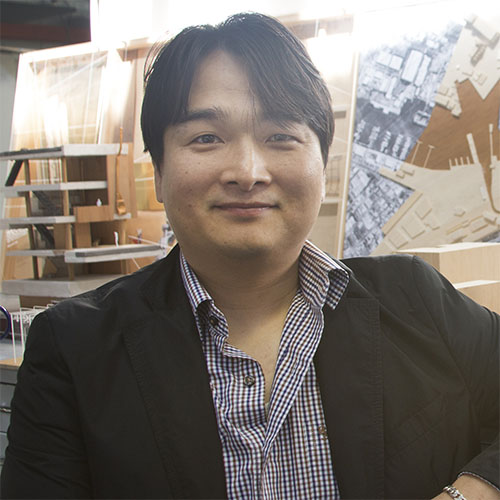
Tunye Qiu is a recent PhD graduate in Economics from the Crawford School of Public Policy at the Australian National University (ANU) . He is currently on the job market and holds roles as a Senior Tutor and Associate Lecturer in the Research School of Economics (RSE) at ANU, where he has taught courses in microeconomics, macroeconomics, game theory, and policy impact evaluation since 2021. He also serves as the Program Manager of the China Economy Program and an Assistant Editor for the Journal of Chinese Economic and Foreign Trade Studies. Education : PhD in Economics (2024) at Crawford School, ANU; BEcon (ANU); MEcon (ANU). Research Interests : His work focuses on labor economics, urban economics, demographic economics, and development economics. He explores causal impacts of government policies on China’s housing market, fertility rates, land supply behavior, and housing demand, alongside international trade, labor markets in South Pacific countries, and educational outcomes in Australia. Teaching & Roles : Senior Tutor, Microeconomics 1 (2021-2024), Macroeconomics 1 (2024), Business Economics (2024), Strategic Thinking (2021-2023) at RSE, ANU. Teaching Quantitative Policy Impact Evaluation (2022-2024), Issues in Development Policy (2023-2024), and The Economic Way of Thinking (2023) at the Crawford School. Research Trends : His publications address housing affordability (2024), marriage delay (2024), policy impacts on housing prices (2024), land supply dynamics (2024), trade dynamics with China (2022), and migration patterns in China (2020). These works integrate causal inference methods and policy evaluation frameworks. Email : tunye.qiu@anu.edu.au
Ben Amor is a Full Professor in the Department of Civil Engineering at the Faculty of Engineering, Université de Sherbrooke, where he serves as Director and Founder of the CIRMIB (Integrated Research Center on Sustainable Materials, Infrastructure and Buildings) and Director of Sustainable Development for the Faculty of Engineering. Previously, he held associate professor positions at Université Laval and Université de Sherbrooke. His research focuses on Life Cycle Assessment (LCA) methodologies applied to sustainable construction, circular economy implementation in building sectors, and building decarbonization strategies. He has pioneered regionalized LCA approaches for Arctic regions and developed frameworks for carbon budgeting in building sectors. His work bridges environmental science with practical engineering solutions for sustainable infrastructure. His recent publications reveal strong trends in building decarbonization pathways, material circularity in construction, and the integration of biogenic carbon accounting. He emphasizes both technological solutions and behavioral change strategies for achieving net-zero emissions in the built environment. ACLCA 2018 Life Cycle Assessment Leadership Award Life Cycle Academy Awards 2019 (two awards) Quebec Public Administration Excellence Prize 2023 for Scientific Collaboration Multiple university teaching awards including the Jacques-Bazinet Merit Award Professor Amor leads significant research grants totaling over $20 million, including NSERC Alliance grants for sustainable building materials and a $2 million Research Chair on Net Zero Strategies and Life Cycle Assessment. He directs the CIRMIB research center and the LIRIDE (Interdisciplinary Research Laboratory in Sustainable Engineering and Eco-design), supervising multiple doctoral candidates. His work includes developing LCA tools for Quebec's construction industry and advising government bodies on sustainable procurement policies.
Sandra Ajaps is a Lecturer in Education at the Manchester Institute of Education (MIE), University of Manchester, with a strong research focus on sustainability education, critical pedagogy, and decolonising education. She actively contributes to the academic community through teaching, research, and leadership in specialized research groups. Her educational background includes: PhD in Environmental Conservation Education from New York University (awarded 2021) MPhil in Psychology and Education from the University of Cambridge (2014) BSc(Ed) in Geography Education from the University of Nigeria (2010) Ajaps' research interests center on transforming educational approaches to address environmental challenges through decolonial frameworks. Her work explores how indigenous knowledge systems can inform sustainability education, particularly in Nigerian contexts, while examining the intersections of civic engagement, environmental conservation, and critical pedagogy. She investigates how educational institutions can better integrate place-based knowledge and decolonial methodologies to address climate change and sustainability challenges. Her research output reveals a strong trajectory in examining sustainable development through decolonial lenses, with particular emphasis on indigenous knowledge systems, environmental education, and civic engagement in Nigeria. Her publications demonstrate an interdisciplinary approach that bridges education, environmental science, and social justice. Her notable awards include: New York University Steinhardt PhD Fellowship (2015-2019) New York University Doctoral Research Grant (2018) Simms Prize for best results in Education, University of Cambridge (2014) Cambridge Assessment and Santander Award for Master's Program (2013-2014) University of Nigeria's Prizes for top graduating student in both the Faculty of Education and Department of Social Science Education (2010) Ajaps supervises graduate students, including ten MA students and two PhD students as co-supervisor during the 2021/2022 academic year. She teaches across multiple programs including International Education, Education for a Sustainable Environment, and Sustainability Education on the BSc Education programme. Her research is closely tied to the UN Sustainable Development Goals, particularly those related to quality education and sustainable communities. Within the Manchester Institute of Education, she is an active member of both the Green Research in Education Group (GRiEG) and the Power, Inequality, and Activism research group, contributing to collaborative research initiatives focused on environmental sustainability and social justice in educational contexts.
Professor Patrick Diamond is a leading academic in Public Policy at Queen Mary University of London's School of Politics and International Relations. He holds a BA, MPhil from Cambridge, and a PhD from Sheffield. His work focuses on UK productivity, regional inequality, governance structures, and social democratic ideologies. He has held senior roles in UK government, including Head of Policy Planning in Downing Street, and has been a Local Councillor in Southwark. Currently, he chairs Policy Network, advises international organizations, and serves on boards of think-tanks and trusts. His research explores policy advisory systems, Brexit impacts, and Labour Party evolution. He has authored over 20 books and numerous articles, including seminal works on British political history and governance reform. He has secured significant research funding from ESRC, Research England, and others. Educational Background: BA, MPhil (Cambridge); PhD (Sheffield). Research Interests: UK productivity, regional inequality, comparative governance, policy advisory systems, Northern Ireland governance, social democracy, and British Labour Party dynamics. He has led projects on English governance post-Brexit, well-being mapping in London, and economic change in East London. Awards and Grants: ESRC Productivity Institute grant (2022-25), Research England Impact Fund (2023-24), multiple ESRC Impact Acceleration Awards. Fellowships include Visiting Fellow at Kellogg College (Oxford), Policy Fellow at the Ministry of Justice Strategy Unit, and Academy of Social Sciences membership. Students and Supervision: Supervised PhD candidates including Matthew Lloyd, Fathima Sulaiman, and Karl Pike, focusing on British politics, governance, and policy analysis. Active in mentoring doctoral research on political leadership and spatial policy. Public Engagement: Advises international bodies like the Latin American Development Bank and Humana International. Serves on boards of Dartington Service Design Lab and Prisoners’ Education Trust. Regularly contributes to media outlets including BBC Radio 4, Guardian, and Financial Times.
Dongwook Yoon is an Associate Professor at the Department of Computer Science , University of British Columbia , and serves as Director of the SOCIUS Lab . He actively contributes to research in Human-Computer Interaction, Human-AI Interaction, and Virtual/Augmented Reality as a member of the Designing for People (DFP) and CAIDA research clusters. Education : PhD in Computer Science from Cornell University (2017), MS (2009) and BS (2007) in Computer Science from Seoul National University Research Focus : Designing socio-technical systems that bridge the gap between technology and human social processes, with innovations in AR/VR, multimodal interaction, and inclusive design Article Trends show his work spans: Temporal and bichronous learning environments AI self-clones and ethical implications Income inequality in virtual platforms Enhanced multimodal collaboration in VR Eyes-reduced interfaces for situational impairments Speculative participatory design for gig economy challenges Scientific Awards include: Google Academic Research Award (2024) Best Paper Award at CHI 2024 High Impact Award in Educational Technology (2024) CHCCS/SCDHM Graphics Interface Early Career Award (2023) Multiple Honorable Mentions at CHI, DIS, and CSCW Students & Collaborators range from active PhD candidates (Anika Sayara, Yuri Kim) to notable alumni (Thitaree Tanprasert, Ashish Chopra) across his SOCIUS Lab projects. His research receives funding from NSERC , KIST , Adobe , Microsoft , and Google grants.
Dr. Saman Razavi is an Associate Professor at the University of Saskatchewan, holding dual appointments in the School of Environment and Sustainability (SENS) and the Department of Civil, Geological and Environmental Engineering in the College of Engineering. He is a member of the Global Institute for Water Security and leads the Razavi EnviroFutures Lab. His research focuses on hydrological modeling, water resources management, climate change impacts, and the integration of machine learning with environmental science. Dr. Razavi has earned a PhD in Civil and Environmental Engineering from the University of Waterloo. Education: PhD in Civil and Environmental Engineering, University of Waterloo MS in Civil and Environmental Engineering, Amirkabir University, Iran BS in Civil Engineering, Iran University of Science and Technology Research interests include hydrologic model development, optimization, uncertainty quantification, climate change analysis, and socio-hydrological modeling. He emphasizes interdisciplinary approaches to address water challenges through integrated frameworks that bridge natural science, engineering, and socio-economic factors. Award: Walter L. Huber Civil Engineering Research Prize from ASCE (2024) Advising & Grants: Dr. Razavi leads the Integrated Modelling Program for Canada under Global Water Futures, focusing on transboundary water systems. His work involves developing decision-support tools for flood/drought management and climate adaptation. Labs/Teams: The Razavi EnviroFutures Lab advances research on water-human systems, leveraging AI and big data to enhance resilience against water-related hazards. Current projects include flood-prone area mapping, drought prediction, and socio-hydrological modeling in transboundary basins.
Maria Monica Wihardja serves as a Visiting Fellow and Co-coordinator of the Media, Technology and Society Programme at ISEAS–Yusof Ishak Institute while holding an Adjunct Assistant Professor position at the National University of Singapore. Her career bridges academic research and high-impact policy engagement, including former roles as World Bank Economist in the Poverty and Equity Global Practice and senior advisor to Indonesia's Presidential Executive Office on strategic economic reforms. Her educational background features: PhD in Regional Science, Cornell University MPhil in Economics, Cambridge University BA in Applied Mathematics-Economics, Brown University Wihardja's research integrates economic analysis with sociotechnical systems, focusing on digital transformation's impact on labor markets, food security, and democratic processes. She examines how technological disruption creates both opportunities for inclusion and risks of inequality, particularly through studies of platform economies, electoral disinformation, and sustainable agro-food systems. Her methodology combines quantitative econometrics with policy-oriented field research, often leveraging large-scale datasets from government and private sector partnerships. Analysis of her recent publications reveals three dominant research trajectories: (1) Digital economy effects on labor market polarization and inclusion, (2) Food system resilience through agricultural modernization, and (3) Geopolitical dimensions of supply chain reconfiguration. These intersect with her policy engagement in ASEAN economic integration frameworks and Indonesia's G20 presidency initiatives. Her scientific recognition includes: Nikkei Asian Scholar 2023 award Wihardja actively shapes regional discourse through editorial roles at East Asia Forum and Center for Indonesian Policy Studies. Her grant-funded work frequently involves World Bank partnerships and Indonesian government collaborations, particularly on stunting prevention and food policy reforms. Current projects examine deepfake impacts on electoral integrity and sustainable financing mechanisms for green transitions. She leads the Media, Technology and Society Programme at ISEAS, coordinating interdisciplinary research on digital governance and Southeast Asian technology policy. The programme partners with regional think tanks, government agencies, and private sector stakeholders to develop evidence-based policy responses to technological disruption.
Kristin Sziarto is an Associate Professor of Geography at the University of Wisconsin-Milwaukee (UWM), holding affiliations in Urban Studies and serving as Faculty Director of the L&S Curriculum and Governance. Her work bridges social movements, urban spatial politics, and biopolitical analysis. She holds a PhD in Geography from the University of Minnesota (2007), MA from the University of Georgia (2000), and BA in Theater from Williams College (1988). Education: PhD, Geography, University of Minnesota, 2007 MA, Geography, University of Georgia, 2000 BA, Theater, Williams College, 1988 Her research focuses on spatial dimensions of social movements, including health equity campaigns in Milwaukee, religion-labor alliances, and geographies of resistance. Current projects include the Muslim Milwaukee Project examining Islamic community dynamics. She also investigates pedagogical methods in geography education to foster critical spatial thinking. Her publications address infectious disease governance, anti-corporatization movements, stealth feminism in academia, and the intersection of race and biopolitics in public health initiatives. She teaches courses on world regions, cartography, and critical geographies of power.
Keller Easterling is a Professor at the Yale School of Architecture and director of its Master of Environmental Design program. An architect, writer, and theorist, her work interrogates infrastructure space as a medium of political and social innovation. Key themes include global development , spatial justice , and climate resilience , with projects like ATTTNT (2023–2024), a reparations-focused land trust network, and Switch (2015), a mobility framework addressing urban sprawl. Books : Extrastatecraft (2014), Subtraction (2014), Medium Design (2021). Exhibitions : Featured in the Venice Biennale (2014), Architectural League (New York), and the Rotterdam Biennale . Research : Explores spatial products of capitalism , decolonial landholding , and non-extractive design . Engages with HBCUs and land activists to operationalize community economies and mutualist infrastructures . Select Articles : Contributions to Harvard Design Magazine , Domus , and e-flux , analyzing infrastructure as design and spatial counter-logics . Teaching & Collaborations : Leads design studios on medium design and infrastructural reprogramming . Collaborated with institutions like MIT , Guggenheim , and Prada , with recent talks at the European Graduate School (2025) and MoMA (2025).
James Dodd is a Professor of Philosophy at The New School for Social Research, specializing in phenomenology, existential philosophy, and political thought. He holds a PhD from Boston University (1996). His research focuses on Husserl, Heidegger, and Jan Patočka, exploring themes like violence, sacrifice, and the interplay between history and philosophy. Dodd has authored major works including *The Heresies of Jan Patocka* (2023), *Phenomenological Reflections on Violence* (2017), and co-edited *The New Yearbook for Phenomenology and Phenomenological Philosophy* (2015). Education: PhD Philosophy, Boston University (1996) His work bridges philosophical inquiry with interdisciplinary questions, examining how fundamental questions like 'What is truth?' and 'What is the world?' unify diverse academic disciplines. Recent scholarship emphasizes phenomenological approaches to architecture, violence, and political resistance, particularly through Patočka’s lens. He critiques modernity’s ethical and political crises while advocating for philosophy’s role in holistic education. Publications span over 30 years, with notable contributions to Husserl studies, war philosophy, and phenomenological ethics. His 2023 book reinterprets Patočka’s hermeneutics, while 2021 articles analyze war’s philosophical dimensions. Dodd also engages with historical violence, memory, and the lifeworld’s role in scientific understanding. Awards: None explicitly listed Teaching includes courses on phenomenology, early Chinese philosophy, and Nietzsche. He mentors students through independent studies and senior projects, emphasizing critical thinking across disciplines. Dodd’s editorial work amplifies underrepresented voices in phenomenology and political philosophy. Labs/Teams: Collaborates with international scholars on Patočka’s legacy and phenomenological ethics, contributing to Routledge, Springer, and Brill publications. His research group explores interdisciplinary applications of phenomenology in architecture, violence studies, and historical consciousness.
JuHyun Lee is an Associate Professor of Architecture and Computational Design in the School of Built Environment at the Faculty of Arts, Design and Architecture (ADA), University of New South Wales (UNSW) Sydney, where they also hold the prestigious title of Scientia Academic. With a professional background in architecture and construction (1998-2002), they have held academic positions across Australia including a five-year post-doctoral fellowship at the University of Newcastle (2012-2017) and a senior research fellowship at the University of South Australia (2018), following earlier research and teaching roles in South Korea (2003-2011). Lee specializes in architectural design computing, design cognition, and urban complexity, integrating computational methods, cognitive science, and architectural theory to advance architectural intelligence and human-centered design. Their research spans architectural visualization, analysis and design methods, algorithm/protocol design, and data visualization with computational approaches. They have established a strong research program examining the intersection of language, culture, and design cognition, particularly focusing on cross-cultural design communication between Australia and Korea. Lee's recent publications demonstrate a clear trajectory toward increasingly sophisticated integration of computational methods with architectural design theory, particularly in the areas of shape grammar, space syntax, and machine learning applications. Their work shows consistent focus on practical applications of computational design methods to real-world architectural problems, with growing emphasis on cross-cultural collaboration and intelligent design systems. The research portfolio reveals a deepening engagement with AI and machine learning techniques applied to architectural design assessment and generation. Scientia Academic at UNSW Sydney Associate Fellow of the Higher Education Academy (AFHEA, 2020) As an educator, Lee develops cutting-edge courses in computational design and Building Information Modeling (BIM), integrating experiential learning and industry engagement. They have secured over $11 million in research funding, including multiple ARC Discovery Projects and an Australia-Korea Foundation grant. Lee co-directs the Advanced Architectural Analytics Laboratory (A 3 LAB), leading interdisciplinary research on design automation, spatial analysis, and machine learning applications in architecture, while also leading cross-cultural initiatives like the Australia-Korea Architects' Network (AKAN). Lee supervises multiple HDR students working on culturally sustainable urban design, socio-spatial patterns in public housing, and computational layout generation. Their research has significant implications for improving design communication across cultural boundaries and developing more coherent, clear, and accessible built environments through computational design approaches.
Ana Paulina Lee is an Assistant Professor of Writing and Digital Humanities in the Comparative Literature, English, and Creative Writing Department at the American University of Paris. She joined AUP in 2025 after teaching Latin American literature and culture at Columbia University for eight years and serving as a Mellon Postdoctoral Fellow at Tulane University. Her interdisciplinary scholarship bridges literature, history, law, and urban studies with particular focus on marginalized narratives in the Americas. Ph.D. from University of Southern California M.A. from New York University B.A. from Binghamton University Professor Lee's research examines how stories—archival, fictional, oral—shape legal imagination, social life, and urban experience in the Americas. She specializes in the intersections of magic, law, and literature in Latin America, with particular focus on Asian and African diasporas in Brazil. Her work traces how narrative functions as both historical record and catalyst for social transformation, exploring themes of slavery, emancipation, colonial legacies, and urban memory. She approaches these topics through interdisciplinary lenses combining literary analysis with histories of labor, migration, and performance. Lee's recent publications reveal a consistent focus on marginalized narratives and their impact on social structures. Her scholarship connects legal history with cultural production, showing how magical thinking and narrative practices shape urban spaces and social relations. Works like 'Urban Sorcery, Segregation, and Spectacle in Twentieth-Century Rio de Janeiro' and 'Black Magic City' demonstrate her innovative approach to understanding the relationship between occult logics and legal frameworks in Brazilian contexts. Her research on diasporic communities, particularly Chinese and Japanese experiences in Latin America, contributes significantly to transnational and comparative race studies. David B. Larson Fellowship in Health and Spirituality, Kluge Center, United States Library of Congress (2025-2026) National Endowment for the Humanities Fellowship (2025) Social Sciences Research Council, Inaugural Recipient of Interdisciplinary Projects in the Social Sciences (2020-2023) Institute for Ideas and Imagination Fellowship, Columbia University in Paris, France (2021-2022) Provost's Tsunoda Senior Fellowship, Visiting Scholar, Waseda University, Tokyo, Japan (2019) Heyman Center Fellow, The Heyman Center for the Humanities, Columbia University (2017-2018) Fulbright, Lisbon, Portugal (2013-2014) Professor Lee's scholarly activities have been generously supported by major research grants from the National Endowment for the Humanities, the Social Sciences Research Council, and the Library of Congress. Her work demonstrates a commitment to interdisciplinary approaches that bridge humanities and social sciences, particularly through projects examining intersections of race, migration, and cultural production in the Americas. Her publication 'Socially Engaged Oral History Pedagogy Amid the COVID-19 Pandemic' indicates a strong commitment to innovative teaching methods and community-based research. While specific details about current advisees aren't provided, her research program suggests engagement with graduate students interested in diaspora studies, urban history, and literary-cultural analysis. Though not explicitly mentioned in the available information, Professor Lee's research on urban spaces, magic, and law in Brazil likely involves collaborative work with scholars across disciplines. Her participation in centers like the Institute for Ideas and Imagination at Columbia University suggests engagement with interdisciplinary research communities focused on global cultural production and social transformation. Her work contributes to ongoing conversations about how narrative practices shape legal frameworks and social structures in the Americas, particularly regarding racial formation and diasporic experiences.
Ronny Scherer is Center Director and Professor at CEMO (Center for Educational Measurement) and Deputy Director at CREATE (Center for Research on Equality in Education) at the University of Oslo's Faculty of Educational Sciences. His work bridges educational measurement, assessment, and evaluation with a focus on research syntheses and complex sampling surveys. Dr. Scherer's research spans two interconnected domains: substantive areas including digital divides, equity and equality in education, and measurement of complex cognitive skills (such as complex problem solving, adaptability, computational thinking, and executive functioning); and methodological areas focusing on advanced meta-analytic techniques, multilevel structural equation modeling, and spatial analysis of complex survey data. His work frequently utilizes international large-scale assessment data from PISA, ICILS, TIMSS, PIRLS, PIAAC, and TALIS. His publication record demonstrates a clear trajectory toward increasingly sophisticated meta-analytic approaches, with recent work focusing on second-order meta-analyses, AI-assisted screening methods, and advanced techniques for handling complex survey data. His research consistently addresses critical educational challenges related to equity, digital literacy, and measurement of 21st century skills. Dr. Scherer has secured significant research funding for projects including ARISE (Academic resilience in mathematics and science among vulnerable students), DiDiRes (Digital inequalities in education), and ADAPT21 (Educational assessments of the 21st century: Measuring and understanding students' adaptability in complex problem solving situations). Co-director of CREATE (Centre for Research on Equality in Education) since 2023 Professor of Educational Assessment and Measurement at CEMO since 2019 Extensive experience with international large-scale assessments including ICILS, TALIS, and PIAAC As an educator, Dr. Scherer teaches advanced courses in measurement models, multilevel models, meta-analysis, and equity in education. He actively supervises graduate students interested in his research areas and has developed numerous workshops on structural equation modeling and meta-analytic methods for international audiences.
Maithilee Kunda is an Associate Professor in the Department of Computer Science and Computer Engineering at Vanderbilt University's School of Engineering. She leads the Laboratory for Artificial Intelligence and Visual Analogical Systems and co-leads the Vanderbilt Initiative for Autism, Innovation, and the Workforce. Her research focuses on AI-driven cognitive systems, particularly visual reasoning and technology applications for neurodiverse populations, including autism spectrum disorder. Dr. Kunda holds a B.S. in Mathematics with Computer Science from MIT (2007) and a Ph.D. in Computer Science from Georgia Tech (2013). She was honored as an MIT Technology Review Innovator Under 35 in 2016 for her groundbreaking work. Her research bridges computational models of visual thinking and real-world impact, emphasizing neurodiverse cognition. Notable projects include developing AI systems for autism-related social skills interventions, designing visual analogy problem-solving frameworks, and advancing nonverbal communication understanding in AI. Her work addresses challenges in abstract reasoning tasks (e.g., Raven's Matrices), visual imagery-based learning, and ethical AI integration. She advocates for inclusive technology design, leveraging both generative AI and cognitive principles to create human-centered solutions. Key awards: MIT Technology Review Innovator Under 35 (2016) Her labs focus on practical AI applications for education, healthcare, and workforce development, emphasizing interdisciplinary collaboration between engineering, psychology, and neuroscience.
Bing Zhou serves as an Assistant Teaching Professor in the Department of Geography and the John A. Dutton Institute for Teaching and Learning Excellence within the College of Earth & Mineral Sciences at The Pennsylvania State University, focusing on advancing geospatial education and research. His educational background includes: Ph.D. in Geography from Texas A&M University Dr. Zhou pioneers research in geospatial data science and GeoAI, developing advanced algorithms to extract insights from big geospatial data (crowd-sourced data, mobility data, social media) for climate resilience and disaster response. He founded the revolutionary field of Responsible GIScience, which integrates ethical principles, human values, and societal interests into geospatial research and education. His work specifically targets identifying location-based help information from social media to support disaster response in high-risk communities, aiming to build resilient, equitable, and healthy societies through responsible spatial thinking. He teaches core courses including GEOG 589: Emerging Trends in Remote Sensing and GEOG 480: Exploring Imagery and Elevation Data in GIS Applications. Information regarding scientific awards, student advising, grant funding, and laboratory teams is not documented in the provided materials.