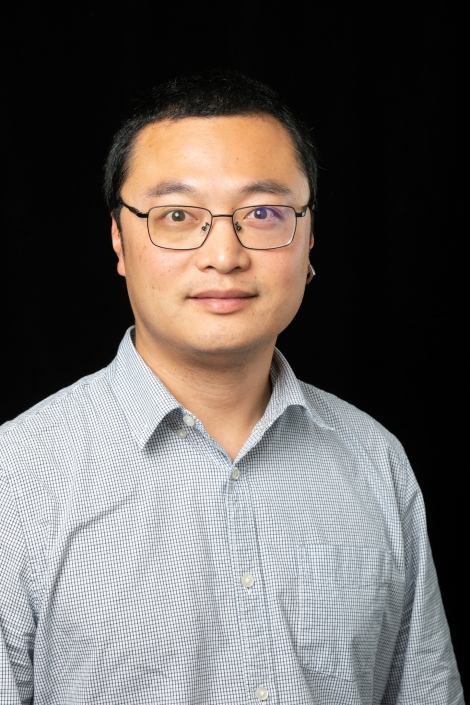
Nitin Tandon, MD, is a Professor in the Department of Neurosurgery at UTHealth Houston Medical School. He holds multiple leadership roles, including Vice President for Strategy and Development of UTHealth Houston Neurosciences, Director of the Epilepsy Surgery Program at Memorial Hermann–Texas Medical Center, and Co-Director of both the Texas Comprehensive Epilepsy Program and the Texas Institute for Restorative Neurotechnologies. His clinical interests encompass epilepsy surgery, brain tumor resection, awake craniotomies, and microvascular decompression. Research focuses on brain mapping (fMRI, diffusion tractography), intracranial electrophysiology, and neuro-oncology outcomes. He leads the Tandon Research Laboratory, investigating neural mechanisms of language, memory, and epilepsy. Recent publications (2021-2022) demonstrate trends in intracranial EEG for cognitive processes, minimally invasive epilepsy treatments, glioblastoma genomics, and neuroethics. Key areas include neural dynamics of speech, memory networks, and surgical innovation. Scientific awards: AANS/CNS Joint Section on Stereotactic and Functional Neurosurgery Resident Award CNS Resident Award for best paper
Gabriel Fuentes serves as Assistant Professor at Kean University's School of Public Architecture within Michael Graves College, where he leads the development of the new Master of Architecture program. His academic foundation includes an M.S. in Architecture + Urban Design from Columbia University GSAPP (2010) and an M.Arch from Florida International University (2005). His educational background: M.S. Architecture + Urban Design, Columbia University GSAPP, 2010 M.Arch, Florida International University, 2005 Professor Fuentes' research explores architecture's role in world-making projects through the lens of aesthetics and politics, examining how spatial practices reconfigure power, identity, and cultural territories. His scholarship investigates heritage-architecture-urbanism relationships in UNESCO Havana and environmental aesthetics in the Anthropocene, drawing from political philosophy, cultural theory, and science and technology studies. Teaching encompasses graduate design studios, theory seminars, and professional practice courses that integrate historical analysis with contemporary design challenges. His scholarly contributions appear in leading architecture journals including Thresholds, Future Anterior, Log, The Journal of Space Syntax, and e-flux Architecture, focusing on critical preservation, political aesthetics, and architectural theory. Current academic leadership centers on establishing Kean University's Master of Architecture program with emphasis on public interest design practices and theoretical rigor.
Professor Yoshiyuki Muroi is a distinguished faculty member at Waseda University's School of Political Science and Economics, where he has served as Professor since 1999. He also holds affiliations with the School of Humanities and Social Sciences and the Graduate School of Letters, Arts and Sciences, along with the Global Education Center. His academic career spans over three decades, having previously served as Associate Professor at both Waseda University (1997-1999) and Hokkaido University (1991-1997). Professor Muroi earned his Master of Arts from Waseda University's Graduate School, Division of Letters. His educational background includes undergraduate studies in the Faculty of Literature at Waseda University, completed in 1981. Muroi's research focuses on German Linguistics with specialization in Cognitive Semantics and German-Japanese contrastive analysis. His work particularly examines psychological adjectives, semantic construction, and syntactic structures across German and Japanese languages. He has made significant contributions to understanding how emotional expressions and state descriptions function differently across these linguistic systems, with particular attention to thetic-categorical distinctions and subject salience. His publication record reveals consistent scholarly output with a clear trajectory toward increasingly sophisticated contrastive analysis between German and Japanese linguistic structures. The most recent works demonstrate a mature research program examining psychological adjectives through multiple theoretical frameworks including semantic construction, syntactic roles, and cross-linguistic comparison. His research shows particular strength in connecting theoretical linguistic concepts with practical language education applications. Professor Muroi has secured multiple competitive research grants from the Japan Society for the Promotion of Science, including projects on German-Japanese contrastive investigation of psychadjectives (2015-2018) and building grammatical theory on relativized subjecthood (2018-2022). His collaborative research projects often involve interdisciplinary teams, demonstrating his ability to work across institutional boundaries. He has also supervised research on language learning settings and the development of learner language by Japanese students of German. As an active academic citizen, Muroi has served in leadership roles including President of the Japanische Gesellschaft für Germanistik (2011-2013) and board member for multiple German studies organizations in Japan. His current teaching responsibilities for 2025 include German Linguistics seminars, interdisciplinary courses, and graduation thesis supervision across multiple schools within Waseda University.
Tinghao Feng serves as an Assistant Professor at Appalachian State University, specializing in time-oriented data analysis and visualization systems. His research develops comprehensive tools for exploring temporal patterns across environmental science, healthcare, and finance domains through innovative data mining algorithms and user-friendly software applications. His primary research interests focus on Time Series Analysis and Data Visualization, with significant contributions to Machine Learning applications. He investigates methods for visualizing complex temporal data, developing pattern recognition algorithms, and creating interactive analysis frameworks applicable to environmental monitoring, clinical informatics, and financial forecasting systems. Recent publications reveal a strong emphasis on visual analytics for temporal data, spanning environmental applications (honey bee monitoring, landslide prediction), healthcare informatics (patient messaging systems, pandemic modeling), and remote sensing. Key developments include the TimePool system for univariate time series querying and EVis for environmentally driven event analysis, demonstrating cross-disciplinary impact. Dr. Feng maintains active demonstration systems including TimePool for temporal query visualization and Polynomial Similarity Dependency Trees for linguistic structure analysis, reflecting his commitment to translating research into practical analytical tools for complex data exploration.
Dr. Samia Kirchner is a tenured Associate Professor of Architecture and Urban Design at Morgan State University's Department of Architecture. She teaches across multiple programs including the Bachelor of Science in Architecture and Environmental Design (AREN), Master of Architecture (M.Arch), and PhD in Architecture, Urbanism and Built Environments (AUBE). Previously, she has taught at the American University of Sharjah in the UAE, the University of Hawaii at Manoa, and Georgia Institute of Technology. Her professional affiliations include the American Institute of Architects-International Affiliate (AIA-IA), Congress of New Urbanism (CNU), Association of Collegiate Schools of Architecture (ACSA), National Organization of Minority Architects (NOMA), and Pakistan Council of Architects and Town Planners (PCATP). She currently serves as a Board of Trustee Member of the Governance Committee of the Interfaith Partnership for the Chesapeake Bay and as Associate Director on the Board of the Baltimore Chapter of the American Institute of Architects (AIA). Dr. Kirchner's research focuses on the (trans)formative role of water in City Design, Urban Regeneration, and Redevelopment. Her scholarly work spans architectural and urban history & theory, Islamic architecture & urbanism, port city regeneration, and urban regenerative design. The Aga Khan Award for Architecture selected her as Area Coordinator for the Arabian Peninsula, and she has chaired two cycles of the Kenneth F. Brown Culture and Architecture Design Award. Her recent publications demonstrate expertise in Middle Eastern urban spaces, sustainable urban public places, maritime heritage, and the intersection of cultural identity with urban development. She has received numerous grants and awards, including multiple Mellon Foundation grants, Department of Energy funding, and the Campus Compact Mid-Atlantic Penczek Faculty Service-Learning Award. 2024: PI on Mellon Foundation Humanities in Place Grant ($50,000) 2024: Co-PI on Maryland Sea Grant funded Baltimore BLUE-CORE project ($600,000) 2023: Co-PI on Department of Education Title VI Grant ($300,000) 2020: Winner of Campus Compact Mid-Atlantic Penczek Faculty Service-Learning Award 2019: Co-Designed Project Entry Transect 7 selected for the AIA-Baltimore Edge Competition Dr. Kirchner has led significant initiatives including the Morgan Internationalization of Education Task Force and serves as Middle East Area Editor for the forthcoming Bloomsbury Global Encyclopedia of Women in Architecture, Editorial Member of the Journal of Arabian Studies, and Desk Reviewer for ICOMOS on the UNESCO World Heritage List. Her community engagement includes urban design consultancy for the City of Cambridge, MD, and participation in numerous community-focused projects addressing urban regeneration and environmental sustainability.
Renata Kamenická, Ph.D. , born January 5, 1970 in Brno, is an active Assistant Professor at the Department of English and American Studies, Faculty of Arts, Masaryk University. She has held this position continuously since November 2005, following an earlier appointment from 1996-1999 (with maternity leave from 1999-2005). Her academic home is firmly established at Masaryk University where she contributes to both teaching and research missions. Dr. Kamenická earned her Ph.D. in translation studies from Charles University in Prague (2007), an M.A. in English Language and Literature from Masaryk University (1996), and an Mgr. in teaching mathematics and physics from Masaryk University's Faculty of Science (1993). Her academic journey reflects a strong foundation in both linguistic studies and pedagogical training. Her research centers on translation theory with particular focus on explicitation and implicitation phenomena in literary translation, translator style, and cultural conceptualizations across languages. She has developed significant expertise in contrastive English-Czech analysis, investigating how linguistic structures and cultural concepts transfer between these languages. Her work bridges theoretical translation studies with practical applications in translation pedagogy, examining how translation universals manifest in both professional and student work. Recent research extends into digital translation environments, exploring the implications of machine translation and post-editing in contemporary translation practice. Analysis of her 15 most recent publications (2014-2024) reveals a consistent trajectory from traditional literary translation studies toward more technologically engaged research. While maintaining her core interest in translator behavior and stylistic choices, she has increasingly addressed machine translation outputs, post-editing practices, and the cognitive dimensions of translation in digital environments. Her work demonstrates sophisticated methodology combining corpus analysis, contrastive linguistics, and cognitive approaches to examine both intralingual and interlingual translation phenomena. Dr. Kamenická has served on editorial boards for Brno Studies in English (since 2008) and Philologica Pragensia (since 2008), and has provided peer reviews for the Ostrava Journal of English Philology . Her university activities include leading student subtitling workshops in collaboration with Cinema Mundi festival and supervising student translations for anthologies. Her teaching portfolio is extensive, including a two-semester Translation Theory course, Text and Discourse Analysis for Master's students in Translation Studies, literary translation courses focusing on style, and specialized workshops on poetry translation, subtitling, and translation universals. She has also presented internationally, including at the University of Eastern Finland (2010) and provided training for translators at the European Commission's Translation Directorate-General in Luxembourg (2010, 2011).
Rindy Anderson is an Associate Professor in the Department of Biological Sciences at Florida Atlantic University's College of Science, Davie campus. Her research focuses on behavioral ecology and animal communication in avian and marine systems, with primary study organisms including Bachman's Sparrow, zebra finches, and bottlenose dolphins. Dr. Anderson's work investigates environmental influences on vocal behavior, song development, and communication networks. Key research areas include temperature effects on avian personality, evolution of complex song syntax, acoustic transmission in natural habitats, and microbiome-behavior interactions. Her integrative approach combines field ecology, bioacoustics, and physiological measurements to understand climate resilience in wild populations. Recent publications demonstrate her leadership in syntax analysis across taxa and microbiome-behavior linkages. Her work reveals how habitat structure shapes song transmission, how ornamentation correlates with microbial diversity, and evolutionary patterns in vocal communication systems. Dr. Anderson has received several prestigious awards: 2023-2024 Faculty Member of the Year for the FAU Davie campus 2022 FAU College of Science Scholar of the Year FAU College of Science Research Fellows Award (2023) She currently mentors seven graduate students across PhD and MS programs, with notable grant successes including American Ornithological Society and Animal Behavior Society funding. Student achievements feature: Ray Pressman: Jacobson Jewish Community Foundation Graduate Scholarship, Dr. G. Alex and Carla Marsh FAU Biological Sciences Graduate Scholarship Lauren Dawson-Scully: Cruickshank Research Award, American Ornithological Society Grant, Animal Behavior Society Grant, John Nambu Scholarship The BABEL Lab (active on Instagram @babel_fau and X @AndersonLabFAU) operates from FAU's Davie campus with field collaborations at Jonathan Dickinson State Park. Current projects examine temperature-behavior relationships in finches, song quality indicators in sparrows, and dolphin vocalization patterns.
Richard W. Medina serves as a Lecturer of Hebrew and Jewish Studies in the Department of Religious Studies at the University of California, Santa Barbara (UCSB), College of Letters and Science. His academic office is located in HSSB 3074. Dr. Medina earned both his Master of Arts and Doctor of Philosophy degrees from the Hebrew University of Jerusalem, Israel, specializing in Hebrew Bible and Hebrew language studies. His doctoral dissertation, written in Hebrew, examined word order systems in Qumran Hebrew verbal clauses. His research focuses on: Wisdom Literature, particularly ritual of mourning and life-death representations Historical linguistics tracing semantic and syntactic changes from Classical Biblical Hebrew to Late Biblical Hebrew to Dead Sea Scrolls Hebrew Syntactic analysis of adverbial constructions and dependent clauses in Qumran manuscripts Dr. Medina's publications (2008-2019) demonstrate sustained scholarly engagement with the linguistic features of Second Temple period Hebrew, particularly in the Dead Sea Scrolls corpus. His work bridges linguistic precision with theological interpretation, revealing how syntactic evolution reflects broader cultural transformations in ancient Jewish communities. His notable contributions include analyses of 'together' adverbs in Dead Sea Scrolls Hebrew, comparative syntax in the War Scroll, and innovative spatial interpretations of life-death concepts in Proverbs and Job.