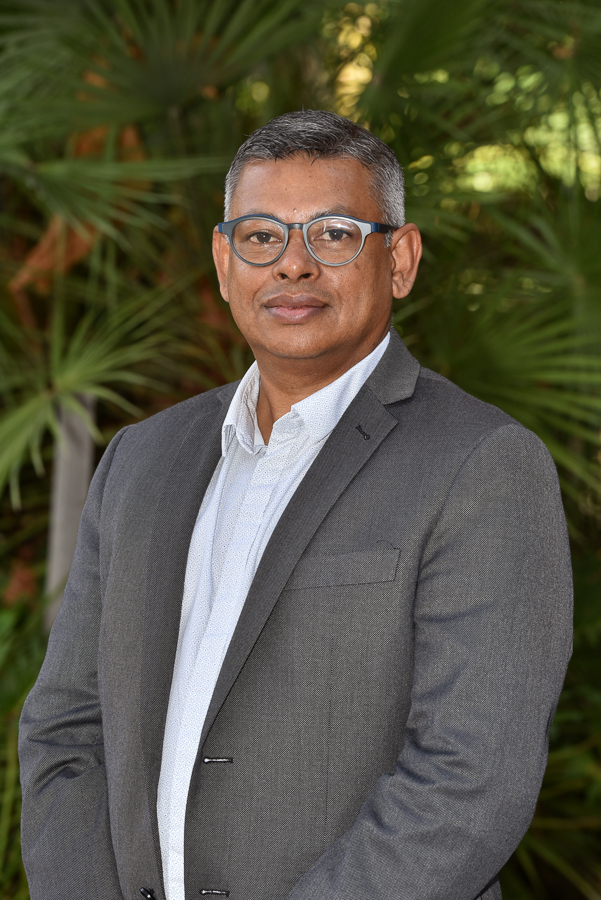
Nicholas Evans is Distinguished Professor of Linguistics and Director of the ARC Centre of Excellence for the Dynamics of Language (CoEDL) at the Australian National University’s School of Culture, History & Language. His work bridges fieldwork-based language documentation with theoretical questions in typology, cultural evolution, and social cognition. Focus on endangered Australian and Papuan languages Director of ARC Laureate Project on 'The Wellsprings of Linguistic Diversity' Co-leader of SCOPIC (Social Cognition Parallax Corpus) study Collaborator in global linguistic diversity initiatives His research explores how micro-level community multilingualism shapes macro-level linguistic diversity, with fieldwork spanning seven years in remote Indigenous communities. Recent projects include PARABANK (paradigm syncretism analysis) and Southern New Guinea language studies, particularly Nen and Yam family languages. Scientific recognition includes the Ken Hale Award (Linguistic Society of America), Anneliese Maier Forschungspreis, and fellowships in the Australian Academy of Humanities, Australian Social Sciences Academy, and the British Academy.
Mark Post is a Senior Lecturer and Honours Coordinator in the Discipline of Linguistics at the Faculty of Arts and Social Sciences, The University of Sydney. He also serves as Deputy Head of School (Humanities) and is affiliated with the China Studies Centre, Sydney Southeast Asia Centre, and The Vere Gordon Childe Centre. His educational background includes a BA Hons from Wesleyan University, an MA from the University of Oregon, and a PhD from La Trobe University. Dr. Post's research focuses on describing and explaining the typologies and relationships among Greater Mainland Southeast Asian and Himalayan languages. His descriptive work relies exclusively on primary field data, with interests in improving fieldwork methodologies. He approaches linguistic explanation from a functional-diachronic perspective, viewing language as a dynamic process whose structures emerge from patterns of discourse and interaction. His extensive publication record reveals a strong focus on Eastern Himalayan languages, particularly Tani languages, with research spanning linguistic typology, historical linguistics, and language documentation. Key themes include classifiers, deixis, applicatives, and the ethnolinguistic prehistory of the Eastern Himalaya across more than 50 publications since 2004. His notable recognition includes: 2011 Recipient of the Association for Linguistic Typology's Pāṇini Award Dr. Post has supervised research students including Chintan SHETH on ethno-linguistic prehistory in the Eastern Himalaya. His grant history includes significant projects such as 'Pseudo grains and adaptiveness in the Eastern Himalayas' (ARC, 2023), 'Center for Cultural Linguistic Diversity - Eastern Himalayas' (Firebird Foundation, 2022), and 'A Documentation of the Upper Belt variety of Minyong (Adi)' (Endangered Languages Documentation Programme). He is a life member of the Galo Language Development Committee (Arunachal Pradesh, India) and actively participates in the Association for Linguistic Typology, Australian Linguistic Society, and North East Indian Linguistics Society.
JuHyun Lee is an Associate Professor of Architecture and Computational Design in the School of Built Environment at the Faculty of Arts, Design and Architecture (ADA), University of New South Wales (UNSW) Sydney, where they also hold the prestigious title of Scientia Academic. With a professional background in architecture and construction (1998-2002), they have held academic positions across Australia including a five-year post-doctoral fellowship at the University of Newcastle (2012-2017) and a senior research fellowship at the University of South Australia (2018), following earlier research and teaching roles in South Korea (2003-2011). Lee specializes in architectural design computing, design cognition, and urban complexity, integrating computational methods, cognitive science, and architectural theory to advance architectural intelligence and human-centered design. Their research spans architectural visualization, analysis and design methods, algorithm/protocol design, and data visualization with computational approaches. They have established a strong research program examining the intersection of language, culture, and design cognition, particularly focusing on cross-cultural design communication between Australia and Korea. Lee's recent publications demonstrate a clear trajectory toward increasingly sophisticated integration of computational methods with architectural design theory, particularly in the areas of shape grammar, space syntax, and machine learning applications. Their work shows consistent focus on practical applications of computational design methods to real-world architectural problems, with growing emphasis on cross-cultural collaboration and intelligent design systems. The research portfolio reveals a deepening engagement with AI and machine learning techniques applied to architectural design assessment and generation. Scientia Academic at UNSW Sydney Associate Fellow of the Higher Education Academy (AFHEA, 2020) As an educator, Lee develops cutting-edge courses in computational design and Building Information Modeling (BIM), integrating experiential learning and industry engagement. They have secured over $11 million in research funding, including multiple ARC Discovery Projects and an Australia-Korea Foundation grant. Lee co-directs the Advanced Architectural Analytics Laboratory (A 3 LAB), leading interdisciplinary research on design automation, spatial analysis, and machine learning applications in architecture, while also leading cross-cultural initiatives like the Australia-Korea Architects' Network (AKAN). Lee supervises multiple HDR students working on culturally sustainable urban design, socio-spatial patterns in public housing, and computational layout generation. Their research has significant implications for improving design communication across cultural boundaries and developing more coherent, clear, and accessible built environments through computational design approaches.
Dr. Elisa Palazzo is a Senior Lecturer at the University of New South Wales (UNSW) within the Faculty of Arts, Design & Architecture. With a PhD in urban design, regional and environmental planning, she has extensive international teaching experience at universities in Italy, China, and Australia. Her professional background includes over 20 years as a registered landscape architect, architect, and urbanist, with significant project experience across Europe, the Middle East, China, and Australia. Her research focuses on adaptive and regenerative urban design, particularly water-sensitive cities and flood adaptation strategies in urban and rural systems. She explores biocultural diversity, landscape ecology, and transdisciplinary approaches to address environmental change. Her work bridges landscape architecture with urban design to create more resilient and environmentally sound cities. Analysis of her recent publications reveals a strong emphasis on practical applications of urban resilience, with particular attention to flood adaptation strategies, biocultural landscape assessment, and the implementation of water-sensitive urban design principles globally. Her research shows an increasing focus on transdisciplinary approaches that integrate community engagement with technical solutions. Banksia Sustainability Award 2020 (Academia and Research category) Place Leadership Award 2019 Learning & Teaching Award 2020 Executive Dean's award for excellence in teaching 2017 Peter Joseph Lenné Preis (1999) Multiple EUROPAN first prizes (1996, 1999) Dr. Palazzo has successfully supervised three PhD students and one Post-Doc to completion since 2015/2016 and currently supervises research in adaptive urban design, water resilience, and post-mining site regeneration. She has secured significant research funding including a $0.94 million MYER Foundation grant (2018-2020) and multiple Category 2 and 3 grants totaling $196,000 (2015-2024). She actively contributes to cultural landscape heritage work, serving as co-convenor of the Australia ICOMOS National Scientific Committee on Cultural Landscapes and Cultural Routes, and as co-author of the Burra Charter Practice Note on Cultural Landscapes. Her professional practice includes 38 built projects that have received 29 awards, including 11 first prizes.
Alice Gaby is an Associate Professor (Research) in the Department of Linguistics at Monash University. Her work focuses on semantic and structural typology, the interplay between language, culture, and cognition, and the documentation of endangered Australian Aboriginal languages. She collaborates extensively with Indigenous communities, particularly speakers of Paman languages like Kuuk Thaayorre, emphasizing ethical research practices. Her research explores how environmental and cultural factors shape spatial language and cognition, including studies on geo-centric directional systems and time-space mappings. Notable projects include 'Unlocking the Archive' (2024–2029) and a descriptive grammar of Warriyangga/Thiinma. Gaby has presented keynote lectures at international conferences such as the Linguistic Association of Canada and the International Cognitive Linguistics Conference. Her contributions span over 49 publications, with recent work addressing gender-based dialect variation and reflexive constructions in Australian languages. She advocates for linguistic justice in revitalization efforts and emphasizes the importance of collaborative, community-driven documentation.
Blake Johnson is an Associate Professor and Honorary Professor at the School of Psychological Sciences, Macquarie University, affiliated with the Hearing CRC. His research focuses on brain mechanisms underlying perception, cognition, motor control, and mental imagery, utilizing advanced neuroimaging techniques like MEG and EEG. He leads projects investigating speech motor control in children with developmental disorders, such as Childhood Apraxia of Speech (CAS), and has pioneered methodologies combining MEG with speech tracking systems. Research Interests: Johnson's work spans cognitive neuroscience, neuroimaging, and developmental psychology. Key areas include speech production mechanisms, neural correlates of motor control, auditory processing abnormalities in disorders like stuttering and autism, and the application of MEG/EEG for understanding brain dynamics. His studies often integrate multimodal data to explore how neural activity coordinates with behavioral outcomes. Recent Projects: Active projects include investigating the neural origins of motor disorders in CAS (2022–2023) and developing MEG-articulography techniques for speech research (2016–2020). He collaborates internationally, focusing on brain mechanisms in speech motor control and developmental neuroplasticity. Articles Trends: His publications emphasize MEG/EEG applications in speech and motor systems, with recent work on beta-band rhythms in speech production, emotional distractor suppression, and lateralized linguistic processing. These studies highlight innovative methods for linking neural activity to behavioral and developmental outcomes. Grants & Collaborations: Leads 29 projects since 2008, including the Bio-semi EEG system (ongoing) and collaborations on childhood apraxia. His lab is part of the Hearing CRC, fostering translational research in auditory and speech neuroscience. Labs/Teams: Based at Macquarie’s School of Psychological Sciences, his team specializes in neuroimaging and developmental neuroscience, contributing to both fundamental and applied research in hearing and speech disorders.
Dr. Alice Vialard is a Senior Lecturer in Urban Design at the School of Architecture, Design and Planning, University of Sydney. Her research focuses on urban morphology, space syntax, and cognitive mechanisms in urban environments. She holds a PhD in Urban Design from Georgia Tech (2013) with a thesis on 'A typology of block-face.' Her work bridges quantitative analysis of urban interfaces and the cognitive aspects of urban intelligibility. Prior to joining Sydney, she taught and studied in France, USA, UAE, and the UK, bringing a multicultural lens to her academic pursuits. Research Interests: Urban design theory, building-urban scale relationships, cognitive mechanisms in spatial navigation, and quantitative urban analysis. Notable contributions include studies on post-war urban reconstruction and cognitive mapping in city exploration. Publications highlight her work across urban history, spatial analysis, and cognitive science. Recent trends focus on integrating informal settlements, post-war urban form, and 19th-century urban interventions. No scientific awards are listed, though her extensive international collaborations and teaching experience underscore her academic impact. Advising and grants: No specific advisees or grants are detailed. Her research has been disseminated through journals like Urban Planning and conferences such as the International Symposium on Space Syntax. She contributes to urban design pedagogy, blending theoretical and applied perspectives. Labs/Teams: Not explicitly mentioned, but her work aligns with interdisciplinary urban design and planning initiatives at the School of Architecture, Design and Planning.
Dr. Sahar Soltani is a Research Fellow at the Department of Architecture, Monash University, affiliated with the Future Building Initiative lab and the Australian Research Centre for Interactive and Virtual Environments (IVE). She holds a PhD in Architecture from the University of South Australia (2021), complemented by a Bachelor and Master of Architectural Engineering from Iran. Her research focuses on computational sustainability, industrialised construction, and Industry 4.0 technologies, with emphasis on bridging academic and industry needs through collaborative projects. Her expertise spans spatial analysis for social sustainability, digital transformation in construction (e.g., BIM, Mixed Reality), and education innovation. Key projects include: Leading Building 4.0 CRC initiatives for construction productivity and skills training Evaluating regional construction hubs and modern methods of construction (MMC) Developing frameworks for AI integration in technical education Dr. Soltani collaborates with institutions like RMIT, University of Adelaide, and Technical University of Denmark, and actively engages with industry partners to ensure practical outcomes. Her work addresses challenges in sustainable built environments, digital collaboration, and workforce upskilling. Research outputs include over 18 peer-reviewed articles and conference papers, focusing on topics like mixed reality in education, Industry 4.0 applications in transportation, and spatial configuration for social equity. She supervises graduate research students and reviews for journals such as Buildings , Architectural Science Review , and Smart and Sustainable Built Environment . Future work continues to explore AI-driven construction solutions, digital twin technologies, and the socio-technical dimensions of industrialised building systems.
Mark Tutton is a Senior Lecturer in French and Francophone Studies at the School of International Studies and Education, University of Technology Sydney. With dual Australian and French citizenship, he coordinates the French language and culture program and has extensive experience in linguistics education across Australia and France since 2004. PhD in Linguistics (University of New South Wales, 2010) Graduate Diploma of Teaching and Learning (University of Southern Queensland, 2018) MA in Linguistics (University of Lille, 2005) MèsL (BA equivalent) in Linguistics (Sorbonne Nouvelle, 2004) BA in Communication and International Studies (UTS, 2001) His research focuses on spatial language and multimodal communication, particularly comparing English and French locative expressions through gestural and cognitive frameworks. Recent work explores foreign language anxiety in online learning environments and the impact of AI on language pedagogy. Articles span topics in spatial semantics, English-French contrastive linguistics, and technology-enhanced language learning. Key themes include metaphorical resource conceptualization, prospective location in motion verbs, and static/motion-framed locative expressions. Mark teaches French language and culture at all levels (A1-C1 ECFR) while advocating for concrete, relatable explanations of abstract linguistic concepts to enhance student learning experiences.
Nobu Akagi is an Associate Lecturer at The University of Sydney, affiliated with the Faculty of Arts and Social Sciences. He holds a PhD in Cognitive Science from Macquarie University, specializing in language acquisition. His research focuses on Japanese linguistics, technology-enhanced language education, and positive psychology's role in language learning. Prior roles include Japanese language teaching at UNSW and Macquarie University. Education: PhD in Cognitive Science (Macquarie University) MA (Macquarie University) MAPPCC (East London University) Graduate Diploma in Learning and Teaching (Griffith University) BCogSci (University of Western Australia) Research Interests: Dr. Akagi’s work bridges formal linguistics and pedagogy. He investigates syntactic-semantic interfaces in Japanese, first/second language acquisition mechanisms, and innovative uses of technology in language classrooms. Recent projects explore how optimism influences language learning outcomes and the ethical implications of machine translation in language education. Recent Research Trends: His conference presentations highlight a dual focus on technology integration (machine translation’s impact on learners) and foundational linguistic inquiry (child language acquisition patterns). Work on Yakuwari-go in film translation showcases his interest in applied linguistics. Grants & Awards: No scientific awards listed. Teaching & Supervision: Teaches Japanese language courses at all levels. Supervises research in technology-enhanced language teaching, positive psychology applications, and syntactic-semantic interfaces. Labs/Teams: No dedicated lab mentioned, but collaborates with education technology initiatives within the Faculty.
Dr. Andrew Allan is a Senior Lecturer at the School of Art, Architecture and Design, University of South Australia. His work focuses on urban planning, transportation systems, and smart city development, with a particular emphasis on GIS applications, emergency management, and sustainability. He has contributed to research addressing urban sprawl, road safety disparities, and the impact of climate change on public transport. Key research areas include spatial analysis of urban systems, modal shift policies, and the integration of technology into urban planning. His recent studies explore topics such as wind farm community impacts, heatwave effects on bus ridership, and the preservation of urban skylines. He frequently collaborates with institutions such as Flinders University and the University of Queensland, contributing to interdisciplinary projects. Publications emphasize data-driven approaches to urban challenges, including evacuation planning, bikesharing adoption, and walkability indices. While no specific awards are noted, his extensive peer-reviewed contributions highlight his academic and practical influence in urban studies. His advisory role includes supervision of research students and involvement in grants targeting sustainable urban development. He is affiliated with UniSA Creative, contributing to innovative projects in urban design and policy.
Jorge Ochoa Paniagua is a Senior Lecturer at UniSA STEM , University of South Australia, with a focus on sustainable construction practices and urban development. His work spans institutions like the Sustainable Infrastructure and Resource Management (SIRM) group and Australian Research Centre for Interactive and Virtual Environments (IVE) . Research Interests : Sustainable Urban Development, Offsite Construction (OSC), Construction Waste Management, Building Information Modeling (BIM), Circular Economy in Construction Awards : No specific awards mentioned in provided data Recent publications analyze information sharing barriers in OSC, design decision optimization for waste minimization, and quality assurance systems for demolition waste. His work emphasizes stakeholder integration, technical frameworks like ISM/MICMAC, and computational tools for sustainable outcomes.
Adjunct Associate Professor Nick Reid is an emeritus academic at the University of New England (UNE), specializing in Australian Aboriginal linguistics and language revitalization. He retired in 2019 but continues research on Daly River languages (NT), including Ngan'gikurunggurr and Ngan'giwumirri. His work bridges descriptive linguistics, ethnomusicology, and environmental science, notably linking Indigenous oral traditions to sea-level chronologies. A pioneer of online education, he co-developed UNE's Master of Applied Linguistics and created multimedia resources like the Phonetics: An Interactive Introduction CD-ROM. Reid holds a BA (Hons) and PhD from ANU, with research interests spanning morphosyntax, nominal classification systems, and Indigenous language maintenance. He collaborates with institutions like the Northern Institute (CDU) and the University of Melbourne on projects blending linguistics with environmental science. Awards include the Carrick Citation (2006) for student learning innovations and UNE's Vice-Chancellor's Award (2000) for teaching excellence. His publications emphasize language documentation, including grammars and curriculum resources for Aboriginal communities. Recent work focuses on collaborative projects with the Ngan’gi Schools Network and coastal inundation studies with Patrick Nunn. He has supervised numerous higher-degree students and remains active in eResearch initiatives, such as digitizing the Ngan’gi language collection.
Dr. Ha Thai is a Lecturer in Landscape Architecture at RMIT University's School of Architecture and Urban Design. He holds professional degrees in architecture (Vietnam) and urban design (England) and completed his PhD in Architecture and Urban Design at RMIT in 2020. His research integrates mathematical space syntax, urban morphology, and ethnography to explore how urban physical forms influence social and economic activities. He bridges landscape architecture, urban design, and migration studies, publishing in Q1-ranked journals and books. He has 15+ years of industry experience in Vietnam, China, England, and Australia. Teaching focuses include Urban morphology, Space syntax, Urban design, and Migration-driven placemaking. He coordinates industry-linked projects with partners like Disney, ACMI, and Vic Police. Research interests emphasize inclusive urban design, cultural intersections, and the socio-economic impacts of urban spatial structures. No specific awards or recent articles are explicitly listed in the provided text for Dr. Ha Thai. His peer review work spans top-tier journals in architecture, urban design, and sustainability.
Sambit Datta is the Dean, International of the Faculty of Science and Engineering at Curtin University. He holds a Professorship in Computational Urban Science within the School of Electrical Engineering, Computing and Mathematical Sciences. His academic roles include adjunct positions at IIT Kharagpur, India, and NYUST Taiwan. He is a registered architect in India and a member of the Australian Institute of Architects. Prof. Datta's education includes a Dipl. Arch from CEPT University, M.Arch from the National University of Singapore, and a PhD in Computational Design from the University of Adelaide. He has received the Michael Ventris Memorial Award and served as a scholar at the Architectural Association, London. His research focuses on computational design, urban science, and AI-driven architectural innovation. He leads the Computational Design Research Laboratory (Codelab) and contributes to the Curtin Institute for Computation. His work spans generative grammars, sensor networks in healthcare, and digital heritage preservation. Key publications include studies on sensor-fusion environments, DFA (Design-Fabrication-Assembly) systems, and virtual reconstructions of historical temples. He has authored books on computational urban science and early temple architecture. Professional engagements include roles as Corresponding Editor for the Nexus Network Journal and Secretary of the CAADRIA (Computer-Aided Architectural Design Research in Asia).