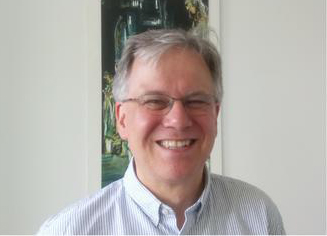
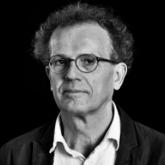
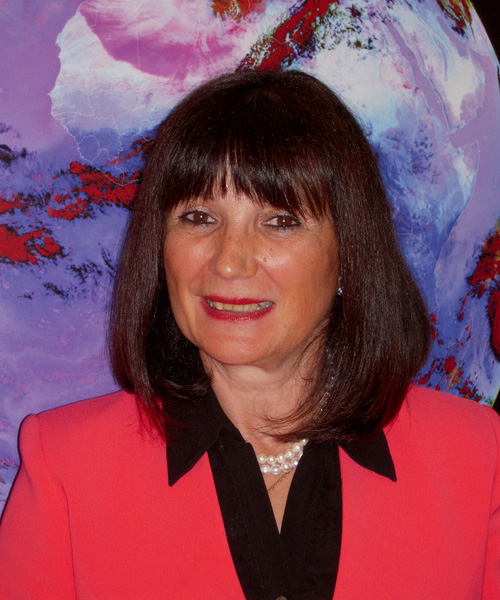
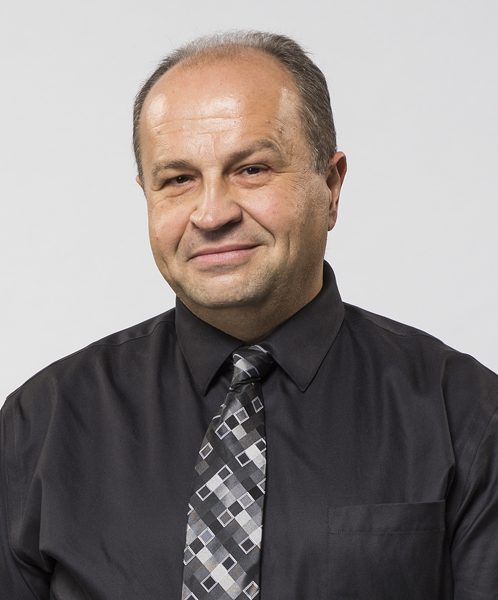
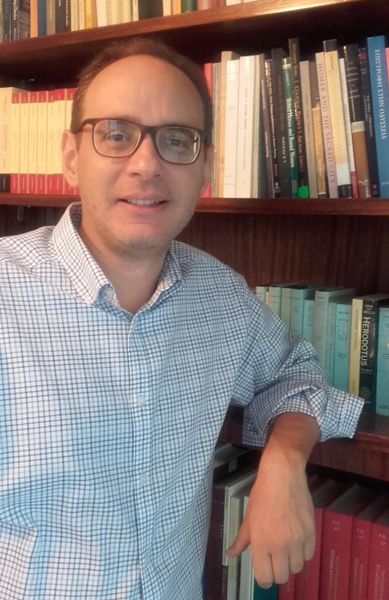
Stefano Quaglia is an Assistant Professor at the Institute of Romance Studies , University of Graz. His research focuses on syntax and its interfaces with morphology and semantics , using Italian as a comparative framework within and beyond Romance languages. Email: stefano.quaglia@uni-graz.at Office: Room 003303056, Merangasse 70/III, Graz, Austria Consultation Hours: Wednesday, 3:30-4:30 p.m. Research interests include: Spatial expressions and functional sentence structure Long-distance dependencies Language contact phenomena Particle verbs and clausal organization Wh-movement and information structure Cross-linguistic syntactic analysis Recent publications highlight empirical and theoretical work on verbal theme vowels , Slavic prefix ordering , and L3 transfer dynamics . His studies integrate synchronic analysis with diachronic and contact linguistics frameworks. Articles demonstrate trends in: Syntax-morphology interfaces : Allomorphy, prefix stacking, particle systems Comparative Romance-Slavic analysis : Extraction patterns, convergence phenomena Language acquisition : CLI effects in bilingual/multilingual contexts Prosodic constraints : Stress and phrasing in particle verbs Information structure : Wh-questions in Romance
Kerstin von Lingen is a Professor at the Department of Contemporary History, University of Vienna, specializing in military history, war crimes trials, and post-war justice. Her research spans WWII, Cold War politics, decolonization, and environmental history intersections. Key research areas: Military justice systems, forced migration, and transcultural legal developments Active teaching roles: Contemporary History lectures and seminars on liberation from Mauthausen, post-war justice, and migration studies Email: kerstin.von.lingen@univie.ac.at Her recent publications focus on: Refugee politics in imperial collapse (2025) Citizenship and property restitution for Holocaust victims (2025) Deserter networks in Nazi Germany (2024) Eastern Front environmental impacts (2024) UN War Crimes Commission's legal legacy (2022)
Torsten Hoefler is a Full Professor of Computer Science at ETH Zurich, Switzerland, with an adjunct appointment in Electrical Engineering. He previously held roles at the National Center for Supercomputing Applications (University of Illinois at Urbana-Champaign) and Indiana University. Full Professor of Computer Science, ETH Zurich (2020–present) Adjunct Professor of Electrical Engineering, ETH Zurich (2020–present) Member at Large, ACM SIGHPC Executive Committee (2013–present) Leadership roles in the MPI Forum and Blue Waters project His research focuses on performance-centric system design , with emphasis on scalable networking, parallel programming models, and performance modeling. Key contributions include the Slim Fly network topology, Data-Centric Python framework, and innovations in parallel graph computations and RDMA-based systems. Recent publications span topics like LLM training networks , quantization geometry , chiplet interconnects , and AI-driven climate modeling , reflecting his interdisciplinary approach combining HPC, AI, and hardware-software co-design. ACM Gordon Bell Prize (2019) ERC Consolidator Grant (2020) IEEE TCSC Award for Excellence (2019) SIAM SIAG/SC Junior Scientist Prize (2012) Latsis Prize of ETH Zurich (2015) He has received multiple best paper awards at top conferences (SC10, SC13, SC14, SC19, IPDPS'15, HPDC'15, OOPSLA'16) and contributed to MPI-3 standardization.
Leonhard Summerer is an Associate Professor at the Faculty of Mathematics, Department of Mathematics . His research primarily focuses on Diophantine Approximation , Geometry of Numbers , and Parametric Approximation . His work explores the Approximation Property in parametric settings, Lattice Theory , and Linear Dependence in number theory. Recent publications include studies on Jarník’s identity, simultaneous approximation to multiple reals, and geometric interpretations of number-theoretic problems. He has authored numerous peer-reviewed articles and contributed chapters to educational books such as 77-mal Mathematik für Zwischendurch , emphasizing mathematical outreach and pedagogical innovation . Active in academic discourse, he has delivered talks on topics like Packings and Tilings in Z and Simultane Approximation m reeller Zahlen since 2006.
Priv.-Doz. Dr. Ingeborg Jandl-Konrad is an Assistant Professor for South Slavic Literatures and Cultures at the Department of Slavonic Studies, University of Vienna, where she holds the Venia Docendi (Habilitation) in Slavic Literatures and Cultures. She completed her habilitation on photographic and narrative discourses on war trauma in post-Yugoslav literatures, focusing on theoretical categories like 'photo-text' and 'speaking.' Her doctoral thesis on Gajto Gazdanov's works earned the DOC fellowship and the Ingeborg Ohnheiser Dissertation Award. Education: Russian and French Philology, Psychology, and Philosophy from Graz, Odesa, Moscow, and Sarajevo. Research interests include intermediality, narratology, verse theory, and literature/ethics intersections. She has edited volumes on trauma, body concepts, and transculturality, and authored monographs on Tsvetaeva’s verse dramas and post-Yugoslav trauma narratives. Awards include the DOC fellowship and ÖGSl award. Her work spans Slavic literatures with a focus on interdisciplinary approaches. She co-organizes academic events, such as a guest lecture series on Yugoslav war memory and masculinity. Active in academic networks, her research bridges literature, psychology, and cultural studies, addressing themes like trauma, identity, and ethical representation.
Günter Klambauer is a Professor at the Institute for Machine Learning , Johannes Kepler University Linz, and leads the LIT Artificial Intelligence Lab in Austria. His research bridges artificial intelligence with life sciences , focusing on deep learning applications in retinal imaging , drug discovery , and hydrological modeling . Affiliation: JKU Institute for Machine Learning & LIT Artificial Intelligence Lab Key Research Areas: Medical Imaging AI, Biological Sequence Modeling, Generative Models for Molecules, Time-Series Forecasting His recent publications highlight extended LSTM architectures (xLSTM) for biological sequence modeling, contrastive learning in retinal imaging, and in-context learning for low-data drug discovery. He has pioneered frameworks like TiRex for zero-shot forecasting and LaM-SLidE for spatial dynamical systems. Scientific Awards: Austrian Life Science Award (2012) Award of Excellence (2014) ELLIS Society Scholar (2020) Director, ELLIS Machine Learning for Molecules Discovery Program (2023) Professor Klambauer collaborates extensively on AI-driven biomedical projects , including retinal image analysis and antibody design, while advancing foundational neural network architectures for diverse domains from healthcare to climate modeling.
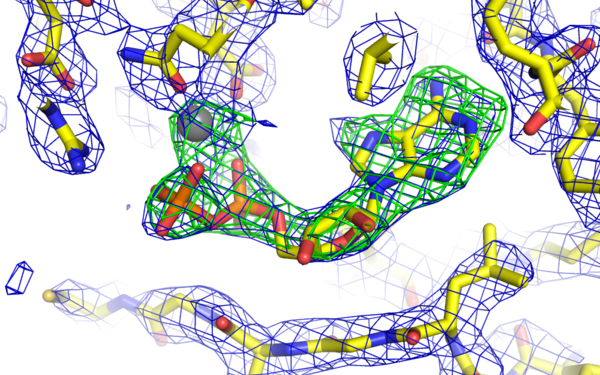
Thomas Leonard is a tenured Professor at the Max Perutz Labs (University of Vienna), where he leads a research group focused on lipid-mediated signal transduction and structural mechanisms of kinase regulation . His lab combines structural biology , biochemistry , and cell biology to dissect how cells integrate spatial and temporal signals. PhD in Structural Biology (MRC Laboratory of Molecular Biology, Cambridge) Postdoctoral work at NIH, Bethesda His research explores how lipid second messengers like PIP3 and PI3P control kinases such as Akt, PDK1, and Sgk3, with implications for cancer , neurodevelopmental disorders , and metabolic diseases . Recent work redefined PHLPP1/2 as pseudophosphatases and revealed novel activation mechanisms in Protein Kinase D (PKD) and DMPK kinases. The lab's publication trends highlight structural phylogenomics , membrane scaffolding , and allosteric regulation . Collaborations with institutions like LMU Munich and FWF-funded projects underscore their interdisciplinary approach. Lab Manager: Ronja Reinhardt PhD Students: Sumire Antonioli, Magdalena Otto, Lucas Piech, Eva Krotenheerdt, Felix Wolkenstein Master Students: Gabriela Ariza, Emese Galgóczi, Stefan Lenz The lab actively recruits at Master, PhD, and Postdoc levels for molecular signaling research.
Dr. Josef Schlacher serves as a Senior Scientist and PostDoc at the University of Leoben's Chair of Structural and Functional Ceramics, specializing in mechanical characterization of 2D/3D ceramic architectures. His research bridges fundamental materials science with industrial applications in advanced ceramics engineering. His academic foundation includes: BSc in Materials Science (2011-2017) Dipl.-Ing. in Materials Science (2017-2019) PhD in Materials Science (2019-2024) Schlacher's research centers on additive manufacturing of ceramics, particularly alumina-based systems. He pioneers techniques for spatially tailored porosity and multi-material approaches to enhance thermal shock resistance and damage tolerance. His work investigates fracture mechanics across scales—from micro-scale toughness measurements to high-temperature failure analysis—enabling next-generation ceramic components for extreme environments. Key innovations include 3D-printed architectures with engineered microstructures that resist thermal cracking and contact damage. His publication trajectory (2020-2025) reveals a strategic focus on translating additive manufacturing capabilities into functional ceramic systems. Early work established mechanical baselines for printed alumina, while recent studies demonstrate sophisticated multi-material designs achieving unprecedented thermal shock resistance through microstructural control. This evolution highlights a deliberate progression from fundamental characterization to application-driven engineering solutions. Recognition includes: JECS Trust Young Researcher Award (2nd place, 2022) CIEC17 Poster Competition (1st prize, 2021) Fractography of Advanced Ceramics Conference (2nd place poster, 2019) As an integral member of the Ceramics Chair research team, Schlacher contributes to ERC projects and contract research initiatives while developing novel testing methodologies for ceramic architectures. His collaborative work with industry partners focuses on standardizing mechanical characterization protocols for additively manufactured ceramics.
Stefan Esders is Professor of Late Antique and Early Medieval History at Freie Universität Berlin's Friedrich Meinecke Institute, where he has held a full professorship since 2006. Previously, he served as University Lecturer in Ancient and Medieval History at the University of Bochum (2000-2006) and Assistant Professor of Medieval History there (1995-2000). His academic journey began with studies in History and Classics at Heidelberg, Freiburg, and Oxford, culminating in a state exam in 1990 and a doctoral dissertation in 1993 with summa cum laude. His educational background includes: 1982-1990: History and Classics (Latin) at Heidelberg, Freiburg, and Oxford 1990: State exam 1991-1993: Doctoral Fellow in Ancient History, University of Freiburg 1993: Dissertation 'Römische Rechtstradition und merowingisches Königtum' (summa cum laude) 1993-1994: Postdoctoral Fellow, Max-Planck-Institute for History, Göttingen 1994-1995: Postdoctoral Fellow, University of Münster 2004: Habilitation in Medieval History and Auxiliary Sciences, University of Bochum Esders' research focuses on the transformations of late Roman culture across Visigothic Spain, Lombard Italy, and Merovingian Gaul, with particular emphasis on legal history, Mediterranean communication (400-900 CE), and the history of oaths in antiquity and the Middle Ages. His work bridges institutional, social, and cultural history, examining how legal texts and practices shaped political legitimacy and social structures during the transition from antiquity to the early Middle Ages. He has made significant contributions to understanding the reception of Roman law in post-Roman kingdoms and the development of early medieval legal pluralism. His recent publications reveal a consistent focus on legal texts, oath practices, and political legitimacy across the early medieval Mediterranean world. Esders demonstrates how legal traditions were adapted and transformed as Roman imperial structures gave way to regional kingdoms, with particular attention to the interplay between ethnic identity, religious affiliation, and legal practice. His work increasingly employs comparative approaches, examining parallel developments across different regions of the former Roman Empire to reveal broader patterns of continuity and change. His scholarly recognition includes: Corresponding Member, Monumenta Germaniae Historica (2019-present) Fellow, Humanities Council and Program in Medieval Studies, Princeton University (2019) Member, Institute for Advanced Study, Princeton (2013) Ordentliches Mitglied der Academia Europaea (since 2021) Distinguished Fellow of the Hebrew University of Jerusalem (2025/26) Corresponding Fellow of the Medieval Academy of America (since 2025) As an active scholar, Esders serves on editorial boards including Speculum. A Journal of Medieval Studies and has edited numerous volumes on early medieval legal history. He has been instrumental in collaborative research projects examining Mediterranean connectivity in the early Middle Ages and has supervised numerous doctoral students. Currently, he serves as speaker of the doctoral program 'Ancient Histories, Languages and Texts' within the Berlin Graduate School of Ancient Studies. His work is characterized by meticulous textual analysis combined with broader theoretical frameworks examining political legitimacy, legal pluralism, and the transformation of social structures during the crucial period between the 5th and 10th centuries CE. Esders maintains active international collaborations, particularly with scholars in Mediterranean countries, reflecting his focus on cross-regional connections during the early medieval period.
Peter Wagner is Research Professor of Social Sciences at the Catalan Institute for Research and Advanced Studies (ICREA) and the Department of Sociology, University of Barcelona. Previously, he held positions as Research Fellow at the Wissenschaftszentrum Berlin für Sozialforschung (1983-1995), Professor of Sociology at the University of Warwick (1996-2006), Professor of Social and Political Theory at the European University Institute in Florence (1999-2006), and Professor of Sociology at the University of Trento (2006-2010). His research explores: Political sociology examining power structures and social movements Social and political theory focusing on modernity and democracy European studies analyzing integration and identity Comparative-historical sociology across civilizations Sociology of sciences investigating knowledge production systems His 15 most recent publications demonstrate sustained focus on modernity, social transformations, and European identity. The works collectively explore themes of progress, globalization, and the structural changes shaping 21st-century societies through interdisciplinary approaches combining sociology, philosophy, and political science. Honors include: ICREA professorship in Catalonia's excellence program ERC Advanced Grant for frontier research Vice-Chair of Horizon 2020 evaluation panel Member of German Science Council's Excellence Strategy commission HERA research grant among multiple international awards Memberships at Institute for Advanced Study (Princeton) and SCAS Uppsala Editorial leadership includes serving as Editor-in-Chief of Social Science Information and board membership for numerous journals such as European Journal of Social Theory .
Mioara Mandea is a distinguished geophysicist currently serving as Solid Earth Programmes Manager at the French Space Center (CNES) in Paris since 2011. She maintains strong academic affiliations with Sorbonne University through her long-standing association with the Institut de Physique du Globe de Paris (IPGP), where she held multiple research positions from 1991-2011 including Head of the National Magnetic Observatory (1994-2004). Her career also includes leadership roles at the European Center for the Arctic at Versailles University and the Helmholtz Center in Potsdam. Her educational background includes dual PhDs in Geophysics (1993 from Bucharest University and 1996 from IPGP) followed by an HDR (Habilitation à diriger les recherches) in Physics of the Earth from Université Paris VII in 2001. This highest French academic qualification authorizes her to supervise doctoral candidates and apply for professorial positions. Mandea's research spans Earth observation from space, geopotential fields analysis, and geomagnetic field studies using historical archives, modern observatories, and satellite data. She specializes in adapting advanced mathematical tools to analyze magnetic and gravity data, with particular focus on Earth's deep interior, planetary magnetism (Moon, Mars, Mercury), and Arctic region geophysical changes. Her work bridges theoretical geophysics with practical space-based observation techniques. Analysis of her recent publications reveals a consistent focus on integrating satellite-derived gravity and magnetic data to understand Earth's interior dynamics. Her research shows increasing sophistication in mathematical modeling techniques, particularly wavelet analysis and multi-sensor data integration. The publications demonstrate strong international collaboration patterns, with frequent co-authorship across European institutions and the United States. Membre associé de l'Académie Royale de Belgique (2018) Medal 'Petrus Peregrinus' of European Geosciences Union (2018) Chevalier - Ordre National du Mérite (2016) Member of Academia Europaea (2015) Member of the Bureau des Longitudes (2014) International Award of American Geophysical Union (2014) Mandea has held significant leadership roles in the international geoscience community, including Secretary General of the International Association of Geomagnetism and Aeronomy since 2009, Chair of the Science Committee at the International Space Science Institute since 2016, and former Secretary General of the European Geosciences Union (2012-2016). She serves on multiple advisory boards for major research projects including EPOS and MED-SUV, and has chaired numerous award committees for the AGU and EGU. Her editorial work includes associate editor roles for Surveys in Geophysics and special issues for Physics of the Earth and Planetary Interior. Her research has been supported through leadership roles in major international space-based Earth observation initiatives, particularly through her position at CNES where she manages solid Earth science programs. She has contributed to numerous collaborative projects involving satellite missions for geomagnetic and gravity field measurements.
Zoran Obradovic holds the prestigious L.H. Carnell Professorship of Data Analytics at Temple University where he serves as Professor in the Computer and Information Sciences Department and the Statistics Department. He also directs the Center for Data Analytics and Biomedical Informatics and maintains secondary appointments at Temple's Fox School of Business. Internationally, he serves as Research Professor at The Mathematical Institute of the Serbian Academy of Sciences and Arts, and as Visiting Professor at both the School of Medicine and School of Management at the University of Belgrade. His research spans multiple cutting-edge domains of data science: Bioinformatics and protein disorder prediction Healthcare informatics and clinical decision support systems Machine learning for complex networks and big data Spatial and temporal data analytics Applications in healthcare management, social networks, and earth science Dr. Obradovic pioneered research on intrinsically disordered proteins, earning multiple CASP awards. His work addresses challenges related to heterogeneous, spatial, and temporal data analytics with applications across healthcare, power systems, earth science, and social sciences. His research has been funded by prestigious organizations including NIH, NSF, DARPA, DOE, and industry partners. With approximately 450 publications and an H-index of 68 (over 33,000 citations), his scholarly impact is substantial. He serves as editor-in-chief of the Big Data journal and chairs the SIAM Data Mining conference steering committee, reflecting his leadership in the field. Scientific Recognition Elected Member of Academia Europaea (2015) Foreign Member of Serbian Academy of Sciences and Arts (2015) Asia-Pacific Artificial Intelligence Association Fellow (2021) Multiple best paper awards at international conferences Temple University's President's Outstanding Faculty Research Award (2009) Three consecutive CASP awards for protein structure prediction (2002-2006) Dr. Obradovic has mentored approximately 50 postdoctoral fellows and Ph.D. students, many of whom now hold positions at leading academic institutions and tech companies including Amazon, Facebook, IBM, Microsoft, and Uber. He has served on editorial boards for 13 journals and organized numerous international conferences in data mining and bioinformatics. His Center for Data Analytics and Biomedical Informatics develops advanced data science methods addressing real-world challenges in healthcare, science, engineering, and business applications, with active recruitment for Ph.D. students and postdoctoral researchers.
Christos Tsagalis is a current Professor of Ancient Greek Literature at the Aristotle University of Thessaloniki , where he has held various academic roles since 2013. Previously, he served as Associate Professor (2009–2013) and Lecturer (2001–2006) at the same university, as well as Assistant Professor (2006–2008) and Lecturer (2001–2006) at the University of Athens, and Instructor at the University of Crete (2000–2001). Current role: Professor at Aristotle University of Thessaloniki Past roles: Associate Professor, Assistant Professor, Lecturer His research interests focus on Homeric epics, Hesiodic poetry, intertextuality, oral tradition, and Greek epigrams. He has contributed extensively to studies on the reception and structural analysis of ancient texts. Selected publications include works on Homeric performance contexts, oral palimpsests, and ancient epigrams, reflecting his expertise in Greek epic traditions and their historical reception. His editorial roles include co-editing the Yearbook of Ancient Greek Epic and Key Perspectives on Classical Research . Notable books: The Oral Palimpsest , Early Greek Epic Fragments , Τέχνη ραψωδική Co-edited volumes: 12 collections on Homer, Hesiod, and Greek tragedy He has received numerous scientific awards , including the National Research Award (2019) , Excellence Award in Classics (2007) , and multiple fellowships at Harvard University’s Center for Hellenic Studies (2002, 2014).
Sophie Kratschmer is a researcher at the Institute of Zoology of the University of Natural Resources and Life Sciences Vienna (BOKU). Her work focuses on wild bee biodiversity, agroecology, landscape ecology, and pollination dynamics in both urban and agricultural contexts. Research Interests : Kratschmer investigates anthropogenic impacts on wild bee communities, including management intensities in agroecosystems, habitat quality, and nesting resource availability. Her studies integrate spatial ecology, telemetry for tracking bee behavior, and biodiversity monitoring of meadow orchards. She explores interactions between honeybees and wild bees, emphasizing sustainable urban and agricultural planning. Scientific Awards : BOKU Teaching Award 2023 BOKU Talent Awards 2021 BOKU Best Paper Awards 2018 Prize of the Austrian Entomological Society (ÖEG) 2018 Best Poster Award at the 12th Hymenoptera Conference 2016 MA22 Scientific Support Award 2015 Advising : She has supervised master theses on topics such as wild bee-hotspot identification, telemetry studies on rare bee species, soil parameters for bee nesting, and analysis of plant-pollinator interactions.
Dr. Oliver Roider is a researcher at the Institute of Transport Studies , part of the University of Natural Resources and Life Sciences, Vienna (BOKU) . With a career spanning over two decades, he specializes in transport modeling, mobility behavior analysis, and sustainable transport policy development. Education : PhD from BOKU (2012), Civil Engineering degree from BOKU (1987-1994) Key Affiliations : Institute of Transport Studies (BOKU), University of Applied Sciences Technikum Wien (2005-2021) His research focuses on transport models , mobility behavior , and public transport optimization , with particular emphasis on transport economics and rural mobility solutions . He has led numerous projects analyzing the impact of mobility hubs , sustainable transport policies , and autonomous vehicle integration in rural areas. Recent publications examine shared micromobility adoption , mobility hub deployment , and stakeholder governance in transport initiatives . His work has been supported by diverse funders including the European Commission , FFG , and City of Vienna . Scientific Awards : 2012 Anerkennungspreis für Dissertationen from Austrian Road & Rail Research Society As an active member of academic committees, he has served in Austrian Society for Transport Science and contributed to QUALIVERMO quality guidelines . He has organized international conferences like IATBR 2024 and presented at key events in Edinburgh, Brussels, and Washington DC.