Søren Bech is a Professor at the Department of Electronic Systems within The Technical Faculty of IT and Design at Aalborg University. His academic qualifications include a PhD from the Technical University of Denmark (1988) and an MSc in Electrical Engineering (1982). His primary research focuses on audio quality, acoustics, and sound zone technologies, with emphasis on perceptual audio evaluation, spatial audio systems, and cortical auditory attention decoding. He leads projects such as ISOBEL (Interactive Sound Zones) and SOUNDS (Service-Oriented, Ubiquitous, Network-Driven Sound), addressing challenges in dynamic audio environments and networked audio systems. Key research areas include automotive audio systems, headphone technology, and the integration of EEG-based attention decoding for personalized sound experiences. He has received recognition, including the Best Student Paper award in 2024. Collaborations span academia and industry, with involvement in organizations like the Danish Sound Cluster and Danmarks Forsknings- og Innovationspolitiske Råd. His work bridges theoretical acoustics with practical applications in consumer electronics and immersive media.
Prof. Dr. Anne Clara von Philipsborn is a Full Professor in the Department of Medicine at the University of Fribourg's Faculty of Mathematics, Natural Sciences and Medicine. Her research focuses on the neuroethology of insect behavior, particularly Drosophila reproductive behaviors, acoustic communication, and neuronal control mechanisms. She leads studies on courtship behavior, sexual communication, and the genetic/neurobiological basis of decision-making processes in fruit flies. Her work integrates behavioral assays with cutting-edge neurobiological techniques like optogenetics to investigate how neural circuits govern mating behaviors. Key areas include postcopulatory mate choice dynamics, GABAergic signaling's role in motor control, and the modulation of female copulation songs by seminal fluid components. She also explores foraging strategies and navigational decision-making in Drosophila. Prof. von Philipsborn has published extensively in journals such as Neuron, Current Biology, and Nature Communications. Her research bridges developmental biology (e.g., axon guidance studies in early career) with contemporary neuroethological inquiries. She holds an ORCID identifier (0000-0002-7921-8744) and is affiliated with the Endokrinologie, Metabolismus und Kardiovaskuläres System (EMC) department. No former staff status or retirement is indicated in the records.
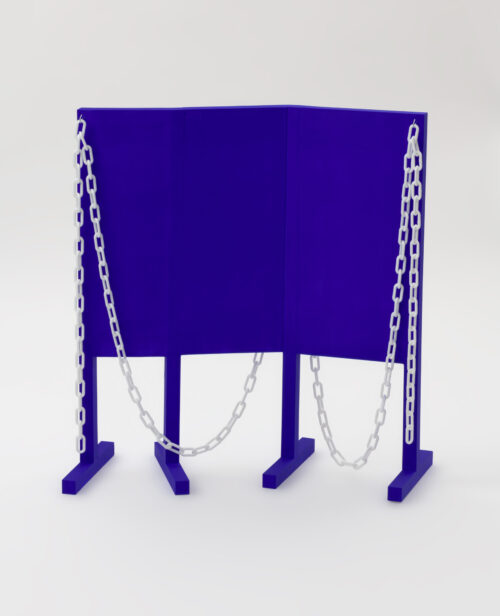
David Schafer is an Adjunct Professor in the Department of Fine Art at Art Center College of Design, where he has taught since 1998 and founded the Sound Lab in 2015. He has also previously taught at Otis College of Design, CalArts, USC, Rutgers, Parsons, SVA, Cooper Union, and Cornell University, reflecting a broad academic engagement across major art institutions. His research and artistic practice span sculpture, sound, digital media, and conceptual art , with a focus on the ideological structures of the built environment, collective memory, and the impact of data and AI on identity. He investigates how capitalism, patriarchy, and consumerism shape cultural amnesia and social behavior through installations that merge industrial materials with sonic and digital elements. Recent works like Displayer and Binary Complex critically examine AI-generated identity, surveillance, and data commodification, often using fabricated steel structures, signage, and algorithmic content. His sound works, such as Tonal Duet and Four Letters to Mahler , translate historical and textual material into immersive audio experiences, performed in galleries and curated events internationally. David Schafer has received significant recognition including the NEA Award in Sculpture and the Pollock-Krasner Foundation Award . His work has been featured in major publications such as ArtForum, Art in America, NY Times, and The New Yorker. He has advised numerous students through studio courses and lab development, though no specific advisees are listed. He has secured public art commissions such as the One Percent for the Arts project at Huntington Hospital, and his work has been exhibited nationally and internationally, including performances at Human Resources, Roulette, and Studio10. The Sound Lab he founded serves as a hub for experimental sound research, workshops, and collaborative events. His work has been included in curated radio programs in Lisbon, Paris, and Berlin, and he continues to produce new works up to 2025, such as DEI Training Series and Reflected Terrain , indicating active and ongoing creative and academic engagement.
Eva Cheng is an Associate Professor at the University of Technology Sydney, currently serving as Head of the School of Professional Practice and Leadership. Her work spans technical research in Multimedia Signal Processing and Computer Vision , alongside transformative efforts in Engineering Education , Humanitarian Engineering , and Gender Equity in STEM . She actively collaborates with organizations like the IEEE and Engineers Without Borders Australia. Key research trends include innovations in Light Field Imaging , Acoustic Systems , and Inclusive Pedagogy . Her funded projects address topics such as Trustworthy Digital Societies , Edge Computing for Industrial Acoustics , and Equitable Work Integrated Learning . Recently, she has focused on technologies for Aquatic Eco-Neurotoxicology and Primary School STEM Outreach . As a Senior Tutor in the Centre for Audio, Acoustics and Vibration and member of the Perceptual Imaging Lab (PiLab), Eva bridges technical and educational domains. She mentors through Engineers Without Borders, advocates for disability inclusion in work placements, and integrates Aboriginal design epistemologies into engineering curricula.
Louena Shtrepi is an Associate Professor at the Polytechnic University of Turin, Italy, affiliated with the Department of Energy 'Galileo Ferraris' and the Future Urban Legacy Lab (FULL). She holds architecture degrees from Politecnico di Torino and Politecnico di Milano, an Alta Scuola Politecnica diploma (2010), and a PhD in Metrology (2015). Research Focus: Applied acoustics, particularly room and building acoustics, acoustic materials, simulation techniques, and measurement uncertainties. Her work emphasizes human-centric methodologies, sustainable design, and immersive audio-visual systems for perceptual testing. Teaching: Instructs graduate courses on Engineering of Sound Systems (Cinema & Media Engineering) and Exhibit Design: Light, Sound, Climate (Design & Visual Communication), with a focus on integrating acoustic solutions into early architectural design. Publications: Over 120 co-authored works, including studies on metamaterials, BIM-integrated acoustic analysis, virtual reality validation for speech intelligibility, and sustainable building envelope systems. Awards: Newman Medal (Acoustical Society of America), EEA Best Paper Award (2012), Premio Amedeo Giacomini (2012), Young Scientist Grant (Inter-Noise 2012), Premio Barducci (2013), ISRA Best Papers Award (2013). Collaborations: Member of AIA, EAA Technical Committee, and ASA; involved in EU-funded and national research projects like SILENCE (acoustic metamaterials for MRI noise cancellation) and SUPERIMPOSITION.
Mark Bee is a Professor at the University of Minnesota , affiliated with the College of Biological Sciences , Department of Ecology, Evolution, and Behavior , and graduate programs in Ecology, Evolution, and Behavior and Neuroscience . He leads the Animal Communication Laboratory and contributes to the Center for Applied and Translational Sensory Science . Research Interests : Acoustic communication, auditory neuroscience, behavioral ecology, bioacoustics, comparative psychology, neuroethology, and sensory ecology. His work focuses on auditory scene analysis in frogs, examining how they process acoustic signals in noisy environments. Recent publications highlight neural mechanisms , hormonal influences on mating behavior , and evolutionary adaptations to chorus noise. Awards include the Distinguished McKnight University Professor title. Notable former students include Robin Suyesh (Assistant Professor, Sri Venkateswara College), Jessie Tanner (NSF Postdoctoral Fellow), and Alejandro Vélez (Assistant Professor, San Francisco State University). Current lab members work on topics like hormone-driven calling behavior and auditory grouping in treefrogs. Selected Scientific Awards : Distinguished McKnight University Professor, University of Minnesota.
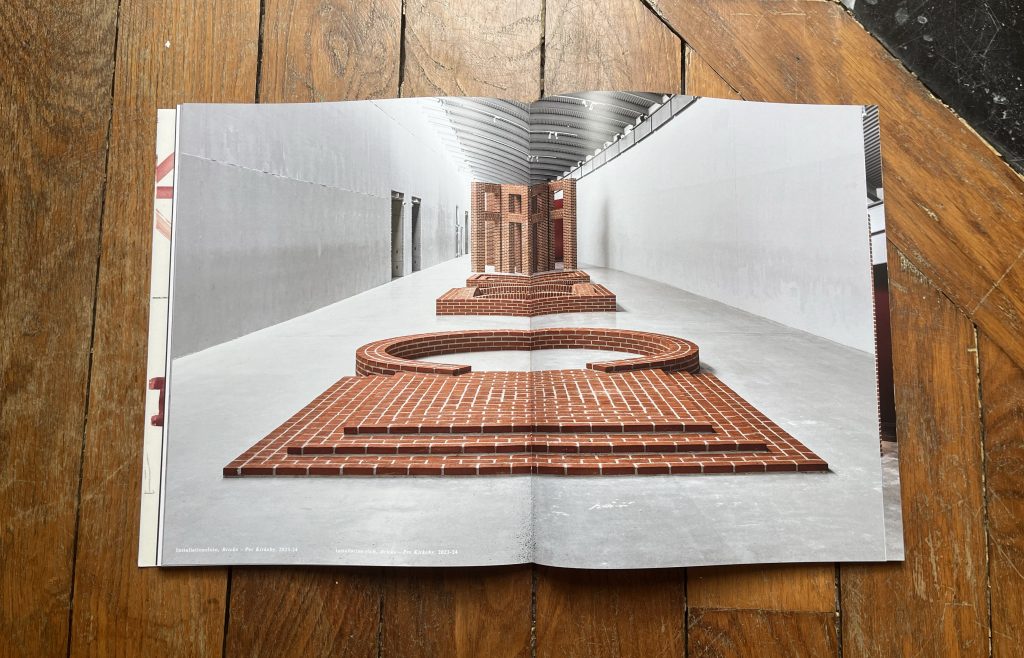
Line-Gry Hørup is a Danish graphic designer, editor, writer, and Professor at Karlsruhe University of Art and Design, specializing in intersections between graphic design, poetry, and archival practices. She co-runs the project space, imprint, and studio stanza and co-founded the interdisciplinary association ORBI , which hosts seasonal programs in alchemy, architecture, agriculture, and graphic design. Current Work: Developing publications, including a 2026 project on poet H.D. Research Focus: Image-making, semantic translation, and teaching autonomous creative practices. Her publications like BLOOD (2020) combine rigorous design with archival exploration, earning recognition such as The Best Dutch Book Designs and nominations for Schadeprisen . Hørup has guest lectured at institutions including Royal Academy of Fine Arts Antwerp and Parsons School of Design. Selected Awards & Nominations: The Best Dutch Book Designs (2020) Schadeprisen nomination (2020) Best artist/literary books by Information (2020) In collaborations, she co-created visual identities for Western Front and contributed to Bricks (ARKEN Museum, 2023), positive encounters (2023), and Sengetid/Bettzeit (2023). Her work often integrates tactile materials, radical typography, and archival documentation.
Matthieu Kuntz is a research assistant at the Chair of Audio Signal Processing at the Technical University of Munich since 2018. His work focuses on virtual acoustics , sound field synthesis , and psychoacoustic research , particularly for applications in hearing aids and cochlear implants. Education : Diploma in Vibration and Acoustics (2015-2018) from the National Engineering School of Le Mans (ENSIM) Research : Specializes in spatial sound reproduction, dynamic loudspeaker equalization, and analysis of auditory perception for moving sound sources His publications (2019-2024) demonstrate expertise in ambisonics , interaural features , auralization , and noise transmission applications. He contributes to the Professorship for Audio Signal Processing led by Prof. Dr.-Ing. B. Seeber.
Franco Pellerey is a Full Professor at the Department of Mathematical Sciences (DISMA) of the Polytechnic University of Turin. He serves as Coordinator of the College of Mathematical Engineering and is actively involved in teaching and research coordination activities. Co-organizer of the International School on Stochastic Comparisons (2004) Program Chair for the 14th International Conference on Ordered Statistical Data (2022) Scientific Coordinator for multiple national research projects (BRIC-2024, PRIN) Research Interests : Stochastic orders and their applications in risk theory Dependence notions and positive dependence concepts Reliability theory and actuarial sciences Stochastic processes in engineering contexts Applied statistics for technical systems Scientific Leadership : BRIC-2024 Acoustics Research (2025-2027) Supermodularity in Economic Theory (2002-2004) Continuous Financial Market Models (2001-2003) International Engagements : Full Professor at Turin Polytechnic University in Tashkent (2018-2021) Full Professor at ESCP Europe (2016-2018)
Hanspeter Pfister serves as the An Wang Professor of Computer Science within Harvard University's School of Engineering and Applied Sciences (SEAS), specifically in the Department of Computer Science. His research bridges theoretical and technological domains through interdisciplinary applications. His primary research interests include: Connectomics and neural circuit mapping Biomedical and scientific visualization techniques Computer vision for medical imaging 3D/4D reconstruction and Gaussian splatting Sports analytics through XR technologies Analysis of his 2023-2025 publications reveals a pronounced focus on machine learning integration with visualization, particularly diffusion models for histological analysis, language-guided 3D reconstruction, and connectome annotation systems. His work demonstrates consistent interdisciplinary collaboration between computer science and neuroscience. No scientific awards are documented in the provided materials. Details regarding student advising and grant funding remain unspecified in the source text. The Pfister group maintains active research streams in Connectomics, Information Visualization, Biomedical Imaging, Computer Vision, and SportsXR, with recent projects including CAVE (Connectome Annotation Versioning Engine) and SmartEM (machine-learning guided electron microscopy).
Marina Rosenfeld is an Adjunct Professor of Sonic Arts at the Milton Avery School of the Arts, Bard College, where she has been faculty since 2005 and has co-chaired the Music/Sound department since 2007. Based in New York, she is a composer and artist whose interdisciplinary work spans sound art, performance, and visual art, with presentations at major institutions including the Park Avenue Armory, Museum of Modern Art, Guggenheim Museum, Tate Modern, and Stedelijk Museum. Adjunct Professor, Sonic Arts, Conservatory of Music, School of Visual, Media and Performing Arts Faculty member, Milton Avery School of the Arts at Bard College since 2005 Co-chair, Department of Music/Sound since 2007 2024 Alpert Award in Visual Art recipient Rosenfeld's research interests center on the social and perceptual dimensions of sound, exploring how sonic experiences transform through bodily engagement and spatial contexts. Her work interrogates the shape and sociality of perception, examining how sensual experiences become hearing, sight, and touch. She creates installations that embrace traces, after-sound, distortion, and the body as an amalgam of social, libidinal, and inherited possibilities. Her practice spans performance, installation, electronic media, experimental musical notation, sculpture, photography, and improvisation, with a focus on inventing new forms that challenge existing categories and engage critically with power structures. Her recent publications and critical reception reveal a strong focus on the material conditions of sound, with particular attention to the Deathstar series, Teenage Lontano, and The Sheer Frost Orchestra. Critics examine her work through lenses of object-oriented ontology, neoliberal critique, and the politics of sound in institutional spaces. Her approach to sound as both material and social practice has generated significant scholarly interest in how sonic experiences shape and are shaped by cultural contexts. Alpert Award in Visual Art (2024) Foundation for Contemporary Arts Grants to Artists Award (2011) New York Foundation for the Arts Composer Fellowship (2004) Watermill Foundation Inga Maren Otto Fellowship (2019) Harvestworks Van Lier Fellowship (2002) EMPAC Artist Residency and Commission (2024) Rosenfeld has advised numerous artists through her teaching at Bard College and has received multiple grants supporting her artistic research, including commissions from Ensemble MusikFabrik (2017) and Ensemble Contrechamps (2022). Her collaborative practice spans decades, working with choreographers like Merce Cunningham (2004-08), Ralph Lemon (2014-15), and Maria Hassabi (2016-17), as well as musicians including Christian Marclay and Warrior Queen. She has also been commissioned by major festivals including Donaueschingen Musiktage and documenta 14. Rosenfeld's most enduring project is The Sheer Frost Orchestra, a temporary all-female amateur ensemble she founded in 1993 that continues to be performed today. This project explores power dynamics through unconventional instrumentation, with performers using nail polish bottles to tap electric guitars lying on the ground. Her Deathstar series represents another significant body of work, with installations and performances evolving since 2017, including a 48-hour performance in Switzerland in 2023 where audience members slept, woke, ate, and listened together over an extended period.
Ville Pulkki serves as a Professor in the Department of Information and Communications Engineering at Aalto University, Finland, maintaining active research output evidenced by publications extending into 2025. His professional contact details include email (ville.pulkki@aalto.fi) and phone (+358505208392), confirming current institutional affiliation. His research expertise spans: Acoustics (particularly underwater and room acoustics) Signal processing for spatial audio systems Audio codec development and compression Spatial sound perception and localization Analysis of his 15 most recent publications reveals dominant research trajectories: underwater bioacoustics applications using spatial audio and 360° video for marine ecosystem monitoring; advanced spatial post-filtering techniques addressing noise reduction and source separation in complex acoustic environments; perceptually-optimized codecs for higher-order ambisonics compression; and fundamental investigations into sound localization challenges including median plane perception and standing wave interference. His work consistently bridges theoretical signal processing with practical applications in virtual reality, marine biology, and auditory perception. No scientific awards, fellowships, or major prizes are documented in the provided materials. While the source text confirms Professor Pulkki's active research status through ongoing publications, it lacks specific details regarding graduate student supervision, research grants, or laboratory leadership. His extensive publication record across diverse spatial audio domains suggests significant collaborative research activity and potential involvement in funded projects, though concrete evidence of advising relationships or grant management is absent from the available information. Similarly, no dedicated research laboratories, departmental teams, or institutional research groups under his direct leadership are mentioned in the source material, despite the technical depth of his work requiring substantial experimental infrastructure.
Achilles Kappis is a Marie Sklodowska-Curie Research Fellow at the University of Southampton, affiliated with the Signal Processing Audio and Hearing Group. His research focuses on advancing spatial audio technologies through innovative microphone array configurations and virtual sensing methodologies. His core research investigates sound field analysis and reproduction using optimized microphone arrays, with particular expertise in virtual sensing techniques for diffuse sound environments. Dr. Kappis develops novel array topologies that enable remote sensing applications while minimizing hardware requirements, bridging theoretical acoustic modeling with practical implementation for active noise control systems and spatial audio reproduction. Recent publications (2024-2025) reveal a concentrated research trajectory in microphone array optimization, with increasing sophistication in handling diffuse sound fields and multi-microphone configurations. His work demonstrates consistent progression from fundamental array design to specialized applications in active noise control, showing strong interdisciplinary connections between acoustics, signal processing, and audio engineering. Dr. Kappis has been awarded the prestigious Marie Sklodowska-Curie Fellowship, recognizing his research excellence and potential for scientific leadership. This competitive EU-funded fellowship supports his current research at Southampton. Supported by the Marie Sklodowska-Curie Actions grant, Dr. Kappis conducts independent research while collaborating with Southampton's audio research community. His work involves both theoretical development and experimental validation, with potential applications spanning consumer audio, transportation noise control, and assistive hearing technologies. Within the Signal Processing Audio and Hearing Group, Dr. Kappis leads research on advanced microphone array systems for virtual sensing applications. His current projects focus on optimizing array configurations for specific acoustic challenges, particularly in environments with complex sound field characteristics where conventional approaches fail.
Nina Ann-Charlott Björkendal is an Assistant Professor at the Department of Visual Arts and Drama , University of Agder. Her work focuses on contemporary visual arts, printmaking, and public art projects with an emphasis on sustainability and cultural engagement. Research Interests : She explores themes such as ecological art, sustainable materials in art, public art installations, and the intersection of art with social and environmental issues. Her projects often involve collaborative exhibitions, workshops, and curatorial initiatives that bridge Nordic and international art communities. Recent Projects : Coordinated the KoK Sustainability Seminar 2024 , examining art’s role in environmental discourse. Organized the Generation Why – Nordic Arts and Crafts workshop focusing on student-led research in Nordic cultural heritage. Curated exhibitions like NBK Agder Anniversary Exhibition and On the Trail of Wild Horses , emphasizing community and ecological narratives. Publications : Over 15 publications since 2014, including articles on experimental processes in art, sustainable materials, and cross-cultural collaborations (e.g., the University of Art Tirana workshop). Grants/Awards : No specific grants or awards listed in the provided texts, but her work is supported by institutional and collaborative projects. Labs/Teams : Active in research groups like Modernism(s) and Common Sense , focusing on interdisciplinary artistic practices.
Associate Professor Rebecca Dunlop holds a dual appointment in Physiology within the School of the Environment at The University of Queensland. She migrated to Australia in 2004 to pursue postdoctoral research on humpback whale communication, establishing herself as a global leader in cetacean acoustic behavior and physiology. Her roles include lecturing in animal physiology and behavior, with a focus on marine mammals. Dunlop earned her BSc (Honours) and PhD in Environmental Biology and Fish Neuroethology from Queen’s University Belfast, and has held academic positions in the School of Veterinary Science (2010–2021) before transitioning to the School of Biological Sciences. Her research integrates physiology, behavior, and communication in large whales, emphasizing humpback whales' social dynamics, acoustic communication, and responses to anthropogenic noise. Key projects include the BRAHSS initiative assessing seismic noise impacts and studies on endocrine physiology at Moreton Bay Research Station. Dunlop collaborates widely, particularly with veterinary science researchers on whale health and disease. Publications span over 76 journal articles, 9 book chapters, and 39 conference papers, focusing on noise impacts, vocal behavior, and physiological stress markers. Her work informs international policy on marine mammal conservation, with funding from defense and industry sectors. Dunlop advises PhD and honors students on topics within her core research areas of cetacean communication, noise effects, and endocrinology. Grants and collaborations address critical issues like offshore windfarm noise impacts and vessel collision risks. Her endocrinology lab at Moreton Bay underscores interdisciplinary approaches to understanding whale physiology in changing environments.