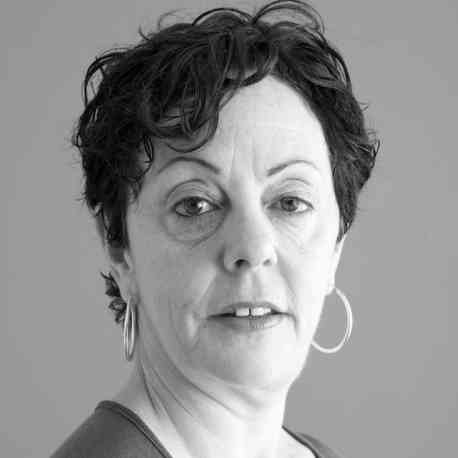
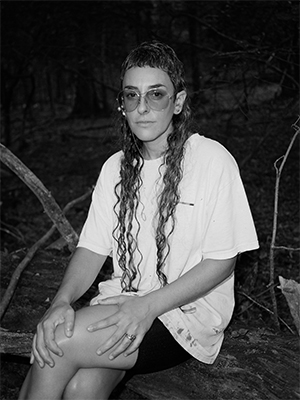
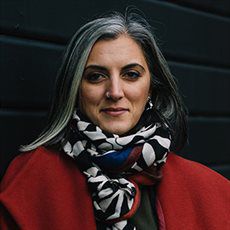
David Lindlbauer is an Assistant Professor at Carnegie Mellon University's Human-Computer Interaction Institute (HCII), where he leads the Augmented Perception Lab and co-directs the CMU Extended Reality Technology Center. His research focuses on advancing Mixed Reality (MR) and Extended Reality (XR) interfaces through computational interaction methods that optimize spatial, temporal, and multimodal feedback.
Miguel Nacenta is a Professor in the Department of Computer Science at the University of Victoria (UVic), Canada, and a founding member of the Victoria Interactive eXperiences with Information (VIXI) research group. Previously affiliated with the University of St Andrews (UK), his work bridges Human-Computer Interaction (HCI), Information Visualization, and Cognitive Science. He specializes in designing interactive systems that enhance human cognition, with a focus on Infotypography (using typography to encode data), collaborative problem-solving tools, and perceptual input/output devices. Research Interests: His key areas include cognitive augmentation, visualization techniques for complex tasks, multi-display environments, and tools for constraint problem-solving. Notable projects include the WriteReason tool for essay writing, InfoTypography studies on perceptual typographic parameters, and Solvi for visual constraint modeling. Grants & Collaborations: He collaborates internationally, including with the University of St Andrews on PhD scholarship programs. His work is supported by grants focusing on HCI innovations and accessibility. He actively mentors students (e.g., Adam Binks, Johannes Lang) and supervises postdoctoral researchers. Affiliations: Member of the VIXI group,他曾是St Andrews计算机科学学院的教授, 并参与多个学术服务活动, including conference program committees and journal reviews. Labs & Teams: Leads the VIXI lab at UVic, focusing on interactive technologies for cognitive tasks. Collaborates with industry partners on projects like TypoCartographer for infoTypographic maps and HaptiQ for accessible graph exploration.
Catherine Guastavino is a Professor at McGill University's School of Information Studies (within the Faculty of Arts) and an Associate Member at the Schulich School of Music. She also contributes to the Centre for Interdisciplinary Research in Music Media and Technology (CIRMMT). Her roles include leading research projects and supervising graduate students in music technology and related fields. She holds a PhD in Psychoacoustics from Université Pierre et Marie Curie (Paris VI), an MSc from IRCAM (France), and a BSc in Mathematics from McGill University. Her research focuses on auditory perception, soundscape analysis, human-computer interaction, and urban acoustics. Notable projects include the 'Sounds in the City' partnership addressing urban noise policy and the development of immersive soundscape simulation tools. She leads or co-leads grants from SSHRC, NSERC, and MITACS, emphasizing interdisciplinary approaches to sound in urban environments. Guastavino's work bridges academic research with practical applications, such as designing sound installations for public spaces and improving acoustic environments in transportation and performance venues. She collaborates with city planners, musicians, and engineers, reflecting her commitment to making cities sound better through evidence-based strategies. Key Projects: SSHRC Partnership Grant for urban soundscape management (2018-2023) NSERC Discovery Grant on auditory localization (2019-2024) MITACS projects on Montreal festival soundscapes and noise policy Labs & Partnerships: Multimodal Interaction Laboratory (MIL) Collaborations with Ville de Montréal and Quartier des Spectacles Education: PhD: Psychoacoustics (Paris VI) MSc: Computer Science & Music Technology (IRCAM) BSc: Mathematics (McGill) Her teaching includes courses like Music Information Retrieval, integrating computational methods with artistic and scientific applications.
Dominic Thibault is an Assistant Professor at the Faculty of Music, Université de Montréal . His research-creation explores human-machine interaction in musical contexts, focusing on embodied cognition through electroacoustic compositions, audiovisual performances, and musical software development. Co-director, Laboratoire Formes·Ondes Active member, CIRMMT (Centre for Interdisciplinary Research in Music Media and Technology) Research axis leader, Expanded Musical Practice (CIRMMT) Member, Québecor Millénium entrepreneurship committee Scientific committee member, ACFAS
Dr. Jules Rawlinson is a Senior Lecturer in Digital Design at the Reid School of Music , University of Edinburgh. He serves as Programme Director for the MSc Sound Design and contributes to MSc Design and Digital Media, ESALA undergraduate courses, and the Reid School's MSc Digital Composition and Performance. PhD in Composition (University of Edinburgh, 2011) MSc Sound Design (University of Edinburgh, 2006) BA Combined Arts (Sunderland University) Jules investigates audiovisual composition , live electronics , and interactive performance systems , blending machine learning , virtual environments , and corpus-based sound synthesis . His work explores non-linear narrative structures , graphical scores , and political sound-art through collaborations like Raw Green Rust and projects such as Lie Still My Sleepy Fortunes and w[i]nd . His 15 most recent outputs span audiovisual installations , generative sound systems , and collaborative performances , focusing on virtual reality , spectral transformation , and digital improvisation . Jules co-founded the LLEAPP network and has secured grants from EPSRC and New Media Scotland's Alt-w Fund . He supervises PhD students Tim Bentley, Hal Xu, Benjamin Cantil, and Liam Peacock, with works showcased at festivals including Sonorities , Edinburgh International Film Festival , and Edinburgh Festival Fringe . His Requiem for Edward Snowden was featured in BBC Radio 3's Hear and Now and selected for Creative Scotland's Made In Scotland Showcase.
Professor Anna Marie Munster is a distinguished academic and artist at UNSW Art and Design (College of Fine Arts), where she has held a full-time tenured position since 2001. Her work bridges theoretical scholarship with creative practice, establishing her as a leading figure in digital media art and critical theory. University: University of New South Wales School: College of Fine Arts (UNSW Art and Design) Position: Professor Qualifications: PhD from UNSW (2002), BA (Class 1 Hons with University Medal) from University of Sydney (1984) Professor Munster's research explores the intersections of art, technology, and philosophy, with particular focus on statistical visuality, radical empiricism, the politics and aesthetics of machine learning, and more-than-human perception. Her work integrates process philosophy with contemporary media practices, examining how time, movement, and sonicity shape our experience of digital environments. She approaches these topics through both theoretical scholarship and creative practice, often collaborating with artist Michele Barker on multi-channel audiovisual installations. Her publications reveal a consistent trajectory exploring the relationship between embodiment and digital media, with recent work focusing on AI and machine learning in cultural contexts. Munster's creative output demonstrates sophisticated integration of technical innovation with philosophical inquiry, particularly in how her installations challenge conventional perceptions of time and space. ARC, UNSW Student Council Award for Excellence in Postgraduate Supervision (2017) Dean's Award for Excellence in Postgraduate Supervision (2015) Highly commended for Materializing New Media at Prix Ars Electronica (2008) Winner of National Digital Art Awards 'The Harries' (2006) University Press of New England Publishing Award (2005) Professor Munster has completed over 20 PhD and Masters supervisions at UNSW and been involved in another 10 secondary supervisions. She currently supervises five PhD candidates working on diverse topics including coding materialities, critical bio-textiles, schizophrenia and XR technologies, sound and resonance, and affective drawing. Her ARC-funded research projects demonstrate sustained commitment to interdisciplinary work, particularly at the intersection of art, science, and technology. Her creative practice with Michele Barker has resulted in numerous commissioned installations exploring perception, embodiment, and the relationship between humans and technology.
Nicolas Davidenko is an Associate Professor in the Department of Psychology at the University of California, Santa Cruz (UCSC). He leads the High Level Perception Lab, focusing on behavioral and computational studies of human perception, particularly face recognition, spatial orientation, and visual ambiguity. His work emphasizes 'top-down' processes like attention and expectations. Davidenko holds a Ph.D. in Psychology from Stanford University (2006), an M.S. in Statistics from Stanford (2004), and an A.B. in Mathematics from Harvard (1998). His research explores how humans perceive and interpret complex visual information, including studies on illusions, virtual reality, and misophonia. He has developed parametric models of faces to study memory encoding and drawing accuracy. Notable achievements include a Top-10 Finalist placement in the 2015 Best Illusion of the Year Contest for his 'Mind-controlled motion' research. He teaches courses such as PSYC 121 (Perception), PSYC 139K (Face Recognition), and advanced cognitive research seminars. Davidenko also runs the CSASS Matlab Workshops, training researchers in statistical tools. His lab includes graduate students and postdocs, with alumni like Jennifer Day (Ph.D. ’19) and Pat Samermit (Ph.D. ’18). Recent projects include investigations into vection in VR environments, cross-sensory modulation of aversive sounds, and time perception in virtual reality. His work bridges cognitive psychology, neuroscience, and computational modeling, contributing to understanding how perception shapes human interaction with the environment.
Katherine Hubbard is an Associate Professor of Art and Director of the MFA Program at Carnegie Mellon University School of Art. Her practice integrates photography, writing, and performance to explore the intersection of social politics, history, and narrative through a lens of bodily engagement. Hubbard's work emphasizes analog photography as a medium that mimics and interrogates the body's relationship to visual processes, often staging performances where participants' physical positioning becomes integral to the artwork's temporal experience. Education: MFA from the Milton Avery Graduate School of the Arts at Bard College (2010). Research focuses on the politics of looking, the malleability of vision, and bridging the imaginary with the familiar through interdisciplinary projects. Notable collaborations include the Poetry Parade series (2012–ongoing), a migratory feminist reading action performed in institutions like the Whitney Museum, and cyclops & slashes (2015), a participatory performance addressing social dynamics through photography and text. Awards: 2020 Guggenheim Fellowship in Photography. Hubbard has exhibited widely, including solo shows at Higher Pictures (New York) and Company Gallery (NY), with works featured in Frieze Magazine . Her projects often involve site-specific installations, such as Four shoulders and thirty five percent everything else (2014), which interrogates landscape and perception in Utah's desert.
Jesper Rindom Jensen is an Associate Professor in the Department of Electronic Systems at Aalborg University, Denmark, under the Technical Faculty of IT and Design. He is the Head of the Audio Analysis Lab, a leading research group in audio signal processing, since 2023. His work bridges theoretical signal processing and practical applications in artificial intelligence and audio systems. Full Name: Jesper Rindom Jensen Institution: Aalborg University School: The Technical Faculty of IT and Design Department: Department of Electronic Systems Research Lab: Audio Analysis Lab Email: jrj@es.aau.dk Office: Fredrik Bajers Vej 7B, B5-206, 9220 Aalborg Øst, Denmark Education: M.Sc. in Electronic Systems, Aalborg University (cum laude, 2009) Ph.D. in Signal Processing, Aalborg University (2012) Research Interests: Jesper Rindom Jensen's research centers on audio signal processing, with a strong emphasis on artificial intelligence, speech enhancement, noise reduction, beamforming, and multichannel systems. His work applies to diverse domains including robot and drone audition, spatial audio, and active noise control. He develops novel filtering techniques, including variable span linear filters and harmonic beamformers, to improve speech quality and intelligibility in noisy and reverberant environments. Publication Trends: His recent publications (2023–2025) show a strong trend toward integrating deep learning with classical signal processing, particularly in direction-of-arrival estimation, underwater acoustics, and robust multichannel systems. There is a clear focus on real-world applications, including sound zone control, active noise control, and limited-data scenarios using knowledge distillation. His work consistently emphasizes robustness, efficiency, and practical deployment. Scientific Awards and Recognition: AAU Talent for emerging research leaders Recipient of a competitive postdoc grant from the Danish Independent Research Council Advising and Grants: Jesper has supervised multiple PhD and master’s students, including Nørholm, Karimian-Azari, Zhang, and Wang. He has led significant research projects such as 'Sound Processing for Robots and Drones' (2018–2020) and participated in others related to joint audio-visual tracking and speech enhancement. His research has been supported by national funding bodies, reflecting its innovation and impact. Labs and Teams: He is a founding and core member of the Audio Analysis Lab at Aalborg University, which focuses on cutting-edge audio signal processing and AI-driven solutions. The lab fosters interdisciplinary collaboration and has produced numerous publications, datasets, and real-world applications. Jensen’s leadership since 2023 underscores his pivotal role in shaping the lab’s research direction.
Rebecca Williams is an Associate Professor in Media Audiences and Participatory Cultures at the Faculty of Business and Creative Industries , University of South Wales. She co-leads the Creative Industries Research & Innovation Group and chairs the Faculty Ethics Committee. PhD in Media & Cultural Studies (2008), Cardiff University Postgraduate Certificate in Learning and Teaching (2011), University of Glamorgan MA in Critical and Cultural Theory (2004), Cardiff University BA (First Class) in Journalism, Film, and Broadcasting (2003), Cardiff University Her research focuses on media audiences , fan engagement , transmedia storytelling , and the experience economy , particularly in media tourism and themed entertainment . Current projects explore Disney's evolving role in global culture and the commodification of fan practices. Rebecca's publications span fandom theory , transmedia analysis , and immersive media , including monographs on theme park fandom and post-object fan identity. She actively supervises PhD students in areas like celebrity studies , media tourism , and digital fan communities . She welcomes PhD applications in media audiences, fan studies, and immersive experiences, with a commitment to mentoring emerging scholars in these fields.
Dr. rer. nat. Thomas Hermann is a faculty member at Bielefeld University's Faculty of Engineering, leading the Ambient Intelligence Group and coordinating the Computer Science program. He specializes in sonification, auditory data science, and smart environments. Head of Ambient Intelligence Working Group Computer Science Program Coordinator Member of multiple academic advisory boards His research focuses on interactive sonification for biomedical applications, quantum systems, and smart environments. Key projects include ECG sonification for cardiac diagnosis, real-time auditory feedback in swimming, and sonic interfaces for AR cooperation. Recent publications span 2025 with Python-based sonification tools ( pya AGen ), quantum system sonification, and ST-elevation myocardial infarction monitoring. He contributes to open-access supplementary materials and interdisciplinary workshops. As a researcher , Hermann develops practical sonification frameworks like Panson for facial behavior analysis, CardioScope for portable ECG monitoring, and Base Cube One for smart environments. His work bridges academic research with industry applications.
Daniel Klein is a Professor in the Computer Science Division at the University of California at Berkeley , affiliated with the Berkeley Artificial Intelligence Research Lab (BAIR) and the Berkeley Natural Language Processing Group . His research focuses on statistical natural language processing, including unsupervised learning, syntactic parsing, information extraction, and machine translation, with applications in historical linguistics and AI.
Prof. Bernhard U. Seeber is an Extraordinary Professor at the Technical University of Munich (TUM), leading the Chair of Audio Signal Processing within the TUM School of Computation, Information and Technology. His work bridges auditory neuroscience and engineering, focusing on improving hearing aids, cochlear implants, and virtual acoustic systems. He holds affiliations with the Bernstein Center for Computational Neuroscience, Munich Institute of Biomedical Engineering, and others. Education: Studied and earned his PhD (2003) in Electrical Engineering and Information Technology at TUM. Postdoctoral research included time at UC Berkeley and the MRC Institute of Hearing Research (UK), where he pioneered studies on binaural hearing and cochlear implant optimization. Research Interests: Combines experimental and theoretical approaches to explore auditory scene analysis, binaural unmasking, and spatial hearing. Key areas include signal coding for cochlear implants, virtual acoustics, and non-destructive acoustic monitoring. His work emphasizes interdisciplinary collaboration with industry and academia. Awards: Lothar Cremer Award (2010), Emmy Noether Fellowship (2007), and recognition from the German Acoustical Society. Teaching: Offers courses on audio communication, computational neuroscience, and technical acoustics. Projects: Leads initiatives like HAPPAA and Auralization, advancing sound field synthesis and hearing aid algorithms. Current Roles: Head of Chair of Audio Signal Processing, Board Member of DEGA, and spokesperson for the ITG Technical Committee on Hearing Acoustics.
Professor Annie Mahtani is a Professor of Electroacoustic Composition and Practice at the University of Birmingham's Department of Music. She holds a BMus (Hons), MA, MPhil, and PhD from the University of Birmingham and Birmingham City University. Her work focuses on electroacoustic music, acousmatic composition, multichannel audio, spatialisation, and field recordings, with significant contributions to site-specific installations and cross-disciplinary collaborations. She co-directs the SOUNDkitchen collective and serves on key boards such as the British ElectroAcoustic Network (BEAN) and the British Section of ISCM. Her research explores the sonic identity of environmental sounds, large-scale multichannel composition, and ambisonic audio techniques. As a performer with BEAST (Birmingham Electroacoustic Sound Theatre), she develops live acousmatic performances and soundwalks. Recent projects include Becoming Tree (an immersive audio retelling of a literary work) and Minimum Monument , performed at Birmingham Hippodrome. She actively collaborates with dance and theatre companies like Rosie Kay Dance Company. Professor Mahtani teaches undergraduate and postgraduate modules in electroacoustic composition and is involved in admissions and curriculum leadership. Her works have been performed globally in festivals like Klang! Électroacoustique and Sound + Environment, showcasing her innovative contributions to contemporary music and sound art.
Professor Karen E Lury is a distinguished academic at the University of Glasgow , serving as Head of School for the School of Culture & Creative Arts and as a Professor of Film & Television Studies within the Theatre, Film & Television Studies department. She is also the Editor of Screen journal and served as Dean of Research for the College of Arts from 2014 to 2017. Her research interests center on Children's film and media , Screen Performance , and Amateur film and media . These areas are reflected in her editorial projects and publications, which explore the intersection of childhood, authenticity, and media representation. The 10 most recent articles in her bibliography highlight trends in television and film studies, focusing on themes like the role of care in media consumption , postcolonial narratives in British television , amateur film practices , and children's subjectivity in reality TV . Her work bridges theoretical analysis with empirical studies , often incorporating interdisciplinary methodologies. Professor Lury has secured significant grants including a Leverhulme Trust grant (2015, £1.05M) and AHRC research funding (2010, £584k). She has supervised over 10 PhD students to completion, including Anderson, Jack (Bodies of Water and Geographies of Childhood in British Cinema) and Lu, Junwei (Taiwan Childhood Cinema). Her academic service includes membership on the AHRC advisory board since 2015 and editorial roles for journals and book series. She offers office hours by appointment and maintains an ORCID profile for her research outputs.