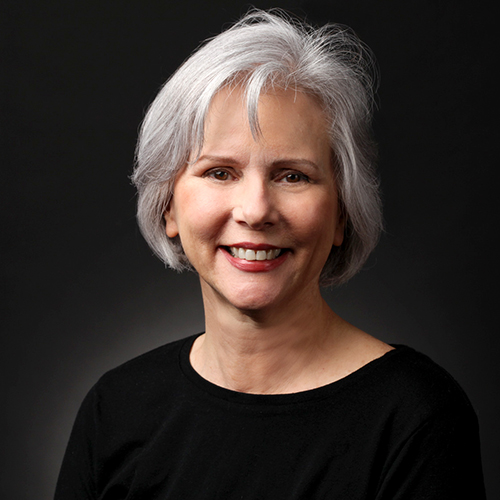
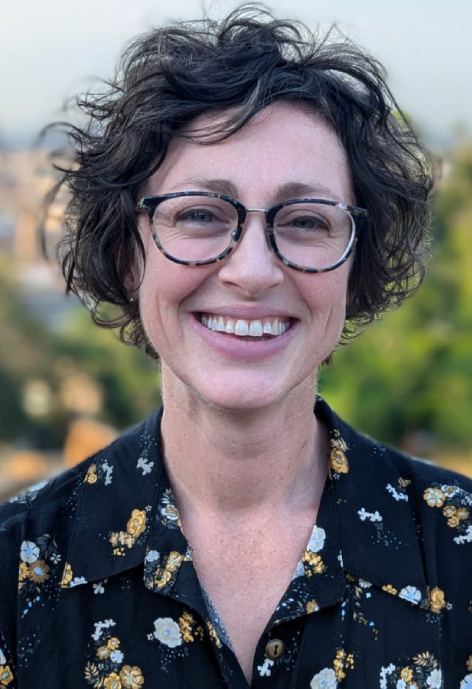
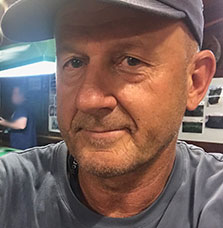
Sally Radell is a Professor of Dance and Director of the Dance Program and Undergraduate Studies at Emory University. She has been at Emory since 1987, founding the dance degree program which has since grown significantly under her leadership. Her academic roles include teaching modern and ballet technique, improvisation, composition, Labanotation, and somatics. Radell holds an MA in choreography/Labanotation from The Ohio State University and an MFA in dance from Arizona State University. Her research focuses on female body image, particularly in dance education, and she has conducted empirical studies on mirror use in dance classrooms. Her work has been presented internationally and published in journals like International Journal of Dance Medicine & Science and Research in Dance Education . Her teaching philosophy emphasizes a mind-body approach to kinesthetic learning, aiming to foster self-expression and reduce body image inhibitions. She is a member of the International Association of Dance Medicine & Science and the National Dance Education Organization. Over her career, she has mentored numerous students, maintaining long-term mentoring relationships post-graduation. Radell’s research explores how mirrors in dance classrooms impact body image and performance, with studies showing nuanced effects on beginner and advanced dancers. Her work bridges somatic practices, pedagogy, and empirical research to promote healthy body image in dance education.
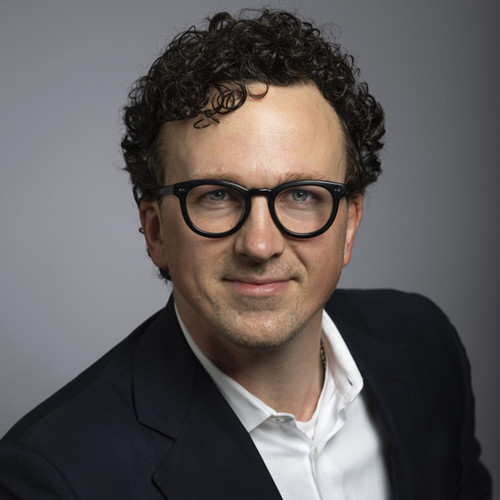
Stephen D. O'Connell is an Associate Professor of Economics at Emory University and an invited researcher at JPAL/IPA's Displaced Livelihoods Initiative. He holds affiliations with the Households in Conflict Network (HiCN) and the IZA Institute of Labor Economics. His research focuses on labor markets, development economics, and social policy design, particularly on topics like forced displacement, gender disparities, and policy effectiveness. He teaches courses in econometrics, labor economics, and development economics while actively advising graduate students. Education: Postdoctoral Fellow, MIT Department of Economics (2016-2018) PhD in Economics, City University of New York (2016) MPhil in Economics, City University of New York (2013) BA in Economics, Boston College (2007) His research explores how policies impact economic participation, particularly for marginalized groups. Notable projects include evaluating poverty-targeted programs, analyzing gender differences in political career progression, and studying the effects of unconditional cash transfers on refugees. Recent work emphasizes geographic targeting in social protection and employer-informed job training programs. Awards & Recognition: None explicitly mentioned in provided text. Grants & Advising: O'Connell frequently collaborates with students on research projects, as noted in his student advisement page. His work has been supported by institutions like the World Bank and JPAL, though specific grant details are not provided here. Labs & Teams: Engaged with interdisciplinary initiatives such as the Becker-Friedman Institute at the University of Chicago (visiting scholar 2025) and the HiCN, focusing on conflict-affected households.
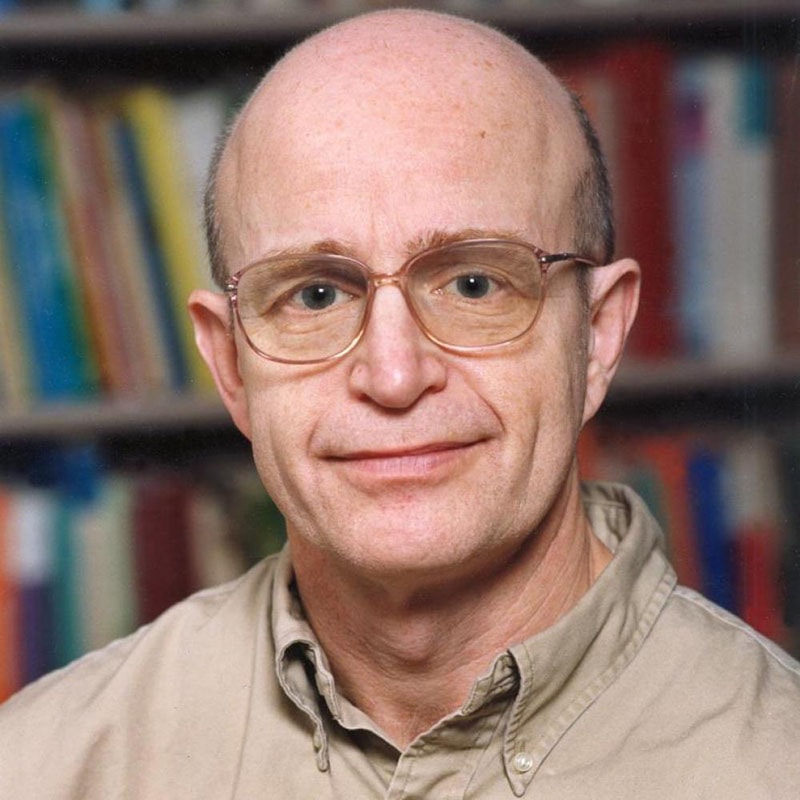
John Anderson is R.K. Mellon University Professor of Psychology and Computer Science at Carnegie Mellon University, jointly appointed in the Department of Psychology and School of Computer Science. He directs the Anderson Lab focused on cognitive architectures and unified theories of cognition through the ACT-R framework. His research integrates computational modeling with neuroimaging to understand knowledge organization, problem-solving, and skill acquisition. Anderson's research examines how humans organize knowledge to produce intelligent behavior, with emphasis on mathematical learning, memory systems, and cognitive skill development. His work combines behavioral experiments, computational modeling (ACT-R), and neural imaging techniques (fMRI, EEG, MEG) to identify cognitive processes and their neural correlates. Recent investigations focus on discovering hidden cognitive stages through brain activation patterns and developing methods to map cognitive models to neural data. His publication trends show consistent focus on: 1) Developing methodologies to link cognitive models with neuroimaging data, 2) Analyzing stages of skill acquisition and problem solving, 3) Investigating the neural basis of mathematical cognition, and 4) Refining the ACT-R cognitive architecture. Recent work emphasizes temporal dynamics of cognition and educational applications of cognitive modeling. Scientific Awards: Heineken Prize for Cognitive Science Franklin Award in Computer and Cognitive Science Anderson advises graduate students including Qiong Zhang (PhD candidate), and leads a research team comprising postdoctoral fellows and research scientists. The lab has secured funding from NSF and other agencies for projects on mathematical learning, cognitive architectures, and neuroimaging methodologies. The Anderson Lab collaborates with researchers in psychology, computer science, and neuroscience to develop cognitive models that simulate human performance across diverse domains. Current projects include modeling inventive mathematical thinking and integrating deep learning with cognitive architectures for explainable AI systems.
Dr. Zoë Lindo is a Professor in the Department of Biology at The University of Western Ontario, leading the Lindo Lab focused on soil biodiversity and ecosystem function relationships. Her research integrates community ecology, ecosystem ecology, and taxonomy to study boreal forests and peatlands under climate change. She supervises graduate and undergraduate students, emphasizing field experience and independent research skills. Education details are not explicitly provided, but her academic profile indicates advanced research qualifications in ecological sciences. Current lab activities include the BRACE experiment near White River, Ontario, collaborating with federal and provincial partners. Research interests span soil fauna (mites, springtails), microbial activity, decomposition processes, and climate change impacts. Notable projects include global soil biodiversity observatory initiatives and contributions to the Global Soil Biodiversity Conference 2026 in Victoria, Canada. Lab members include PhD/MSc candidates like Emily and Emelie, and undergraduates like Jay Ing. Recent collaborations involve researchers from Radboud University (Netherlands) under Western-Radboud grants. Publications focus on peatland dynamics, soil food webs, and climate-driven biodiversity shifts.
Kathryn Rico is a Researcher in the School of Earth and Space Exploration at Arizona State University. Her work focuses on biogeochemical cycling of trace metals and macronutrients in aquatic environments, particularly in the context of early Earth evolution and anthropogenic impacts. She holds a B.S. in Environmental Science from DePaul University (2013) and a Ph.D. in Earth and Environmental Sciences from the University of Michigan (2019). Her research integrates geochemistry, microbiology, and limnology to explore mechanisms of metal burial in ancient and modern systems. Key areas include trace metal redox chemistry, microbial interactions, and the co-evolution of life and Earth's geochemical environment. Recent work examines climate-driven shifts in metal burial in lakes and the role of microbial processes in sediment formation. Rico has published extensively on topics such as molybdenum proxies in ferruginous waters, iron cycling in banded iron formation precursors, and pyrite sulfur isotopes in low-oxygen environments. Her interdisciplinary approach spans geochemical analysis, experimental microbiology, and paleoenvironmental reconstruction. Awards: Wares Postdoctoral Fellowship (2019), NSF Graduate Research Fellowship (2015), and multiple conference awards for research excellence. Teaching: Focuses on equity-driven pedagogy, active learning, and real-world research integration in courses like REAL Chemistry and Wolverine Pathways. Service: Leads DEI initiatives at ASU’s School of Earth and Space Exploration, including Co-President of the Postdoc Council and co-chair of the Inclusive Community Committee. Active in SACNAS and departmental outreach. Rico mentors undergraduate and graduate students, emphasizing personalized support and skill development aligned with professional goals. She contributes to collaborative projects on photochemical iron oxidation and BIF formation mechanisms.
Dr. Sahar Bokosmaty is a Senior Lecturer in the School of Education at the University of Wollongong, Australia, where she has been affiliated since 2021. Her research focuses on cognitive load theory, educational assessment, and child development, particularly examining how interventions and learning environments impact self-regulation and academic integrity. She has contributed to studies on parent-child interactions, the effectiveness of educational technologies, and cross-cultural comparisons in academic ethics. Her research interests span several key areas, including cognitive load theory, educational assessment methodologies, child self-regulation development, and the impact of technology on learning. She is particularly interested in how instructional design and parental guidance influence educational outcomes, as well as issues related to academic integrity in higher education. Her work also explores the intersection of motor movements and cognitive processes in learning contexts. In terms of grants, she has received funding for a project titled Handing control over to the learner to manage split-attention in digital instructional materials: does movement aid learning? (2013). She currently supervises PhD candidates researching topics like self-regulation in cognitive load-compliant learning environments and parent-guiding behaviors for child self-regulation development. Dr. Bokosmaty is actively involved in academic service, including membership in organizations such as the Mathematics Education Research Group of Australia (MERGA), Special Learning Disability (SPELD), and the American Educational Research Association (AERA). She has also served on the board of European Collaborative for International Schools (ECIS) and Mathematical Association of NSW (MANSW).
Dr. Martin Doherty is an Associate Professor in the School of Psychology at the University of East Anglia. He holds a PhD in Developmental Psychology from the University of Sussex and has conducted postdoctoral research in Japan and Stirling. His academic roles include serving as Psychology Masters Director and coordinating multiple courses including PSY-5016A: Developmental Psychology. His research focuses on: Theory of mind development, particularly false belief understanding in children Metalinguistic and metapictorial awareness Children's understanding of gaze direction and its implications for theory of mind Cross-cultural differences in perception and cognition Analysis of his 15 most recent publications reveals consistent themes in developmental psychology, with a strong focus on metacognition, visual perception, and cross-cultural cognitive development. His work demonstrates increasing methodological sophistication in longitudinal designs and cross-cultural comparisons, particularly between Scottish and Japanese populations. Dr. Doherty leads the Centre for Japanese Studies collaboration and directs multiple research projects including 'The development of gaze understanding' funded by the Leverhulme Trust. He coordinates university outreach through initiatives like 'Child Scientist Morning at UEA' supported by ESRC funding.
Associate Professor Mark Sayers is an academic and researcher in Sports Biomechanics at the University of the Sunshine Coast (UniSC), affiliated with the School of Health. He holds a PhD from RMIT University (2001) and has been with UniSC since 2005. His expertise includes biomechanics of team sports, injury prevention, and high-performance coaching. He served as the biomechanist for the New Zealand All Blacks (2000–2001, 2004–2008) and currently directs UniSC’s High Performance Sport programme. Awards include a national Office of Learning and Teaching Citation (2012) and recognition as one of Australia’s top ten lecturers (2010). His research focuses on technique analysis in sports like rugby union, agility training, spinal biomechanics, and the biomechanics of injury prevention. He has secured nearly AUD$900,000 in grants and supervised over 50 HDR students. Current projects include investigating concussion in rugby league and developing computer vision tools for sports coaching. Teaching responsibilities include courses like Biomechanics 2 and Performance Enhancement. He is also involved in community projects promoting healthy aging through sport for First Nation Australians.
Lauren Hayes serves as Assistant Professor of Cultural Anthropology in the Department of Anthropology at the University of Wyoming, where she conducts ethnographic research on labor systems, workplace discourse, and rural identity formation. Her work bridges cultural, linguistic, and economic anthropology through fieldwork in Appalachia, Wyoming, and Honduras. Dr. Hayes investigates how flexible labor systems reproduce workplace inequalities while examining human adaptation to economic transformations. Her current research explores manufacturing, tech-based workforce development, ranching, agricultural labor, and care work across American rural communities, with special attention to gender dynamics and language practices. Previous work analyzed microloan borrowers' livelihood strategies in Honduras, establishing her focus on economic anthropology and women's labor experiences. Her publication record (2012-2023) reveals consistent engagement with workplace ethnography across diverse settings including auto factories, Appalachian tech initiatives, and Honduran microfinance. Key thematic trajectories include labor precarity, contamination discourses, rural technological adoption, and intersectional feminist perspectives on work. Recent scholarship increasingly emphasizes applied anthropological methods for workforce development and workplace communication analysis. Dr. Hayes actively mentors graduate students in rural work studies, women's labor, workplace communication, and economic anthropology while teaching core courses including Introduction to Cultural Anthropology, Ethnographic Methods, and seminars in Economic and Applied Anthropology. Her research program demonstrates sustained commitment to understanding labor transformations in marginalized communities through rigorous ethnographic practice.
Adjunct Associate Professor Nick Reid is an emeritus academic at the University of New England (UNE), specializing in Australian Aboriginal linguistics and language revitalization. He retired in 2019 but continues research on Daly River languages (NT), including Ngan'gikurunggurr and Ngan'giwumirri. His work bridges descriptive linguistics, ethnomusicology, and environmental science, notably linking Indigenous oral traditions to sea-level chronologies. A pioneer of online education, he co-developed UNE's Master of Applied Linguistics and created multimedia resources like the Phonetics: An Interactive Introduction CD-ROM. Reid holds a BA (Hons) and PhD from ANU, with research interests spanning morphosyntax, nominal classification systems, and Indigenous language maintenance. He collaborates with institutions like the Northern Institute (CDU) and the University of Melbourne on projects blending linguistics with environmental science. Awards include the Carrick Citation (2006) for student learning innovations and UNE's Vice-Chancellor's Award (2000) for teaching excellence. His publications emphasize language documentation, including grammars and curriculum resources for Aboriginal communities. Recent work focuses on collaborative projects with the Ngan’gi Schools Network and coastal inundation studies with Patrick Nunn. He has supervised numerous higher-degree students and remains active in eResearch initiatives, such as digitizing the Ngan’gi language collection.
Chelsea Nestel is a Postdoctoral Research Associate in the Department of Geography at the University of Wisconsin-Milwaukee (UWM), affiliated with the College of Letters & Science. She contributes to the Mapping Racism and Resistance project, focusing on Black resistance to racially restrictive covenants in Milwaukee through cartography, dataset curation, and spatial representation. Her research bridges cartographic theory, aesthetic philosophy, and experimental mapping, with interests in geospatial education and the intersection of cartography with experiential graphic design. PhD in Geography, UW-Madison (2024) MS in Geography, UW-Madison (2016) BS in Geography (GIS), BA in Anthropology (Archaeology), and BA in Classics and Ancient Mediterranean Studies, Penn State (2013) Her work retheorizes cartography through aesthetic philosophy and explores transformative geospatial education. Recent publications address challenges for emerging cartographers, tangible map design, and archaeological site interpretation. She emphasizes interdisciplinary approaches in cartography, combining technical GIS skills with artistic and philosophical frameworks. Nestel’s current projects include mapping racialized urban histories and advancing cartographic methodologies in public engagement. She collaborates on global-scale mapping pedagogy and experimental visualizations for heritage sites. No formal advising roles or grants are listed, but her research aligns with social justice and spatial equity initiatives.
Lisa Bonfert is a postdoctoral researcher at the University of Luxembourg's Faculty of Humanities, Education and Social Sciences, affiliated with the Institute for Social Research and Social Interventions (ISI). She holds a position in the Department of Education and Social Work. Her work focuses on migration dynamics, social inequalities, and transnational family structures, with a particular emphasis on subjective social positioning and emotional dimensions of mobility. Education: Bachelor's in Southeast Asian Studies and Management from HTWG Konstanz, Prince of Songkla University (Phuket), and Universiti Sains Malaysia (Penang), 2015. Master's in Sustainable Development from SOAS, University of London, 2018. Research interests include transnational families, social mobility, and the role of migrant organizations in social protection. She has contributed to collaborative projects such as the 'Migrant organizations and the co-production of social protection' at TU Dortmund (2021–2023). Her recent publications explore themes like transnational social positioning, affective dimensions of social protection, and midwifery care in cross-border contexts. She actively engages with qualitative research methodologies and care ethics in migration studies. Advising and grants: While no formal student advising is listed, Lisa has collaborated on projects involving migrant communities and policy analysis. Her work bridges academic research with practical social interventions. Labs/Teams: Core member of the ISI and Department of Education and Social Work, contributing to interdisciplinary migration research initiatives.
Dr. Verity Longley is a Senior Lecturer and Department Disability Coordinator at the School of Psychology, Manchester Metropolitan University. She holds a PhD in Psychology (2018) from the University of Manchester, alongside BSc degrees in Occupational Therapy (2012) and Psychology (2006). Her expertise spans stroke rehabilitation, health inequalities, and dementia research, with a focus on inclusive education and healthcare access equity. She leads the school’s disability and neurodiversity peer support group and participates in committees such as the Psychology Equality and Diversity Committee. Dr. Longley has been recognized with multiple teaching awards, including nominations for Outstanding Commitment to Inclusive Teaching and Equality Champion honors. She serves as an honorary research associate at the University of Manchester and reviews for journals like Clinical Rehabilitation and the Stroke Association. Her research integrates qualitative and quantitative methods, addressing gaps in stroke rehabilitation for patients with pre-existing cognitive impairments and advancing health equity. She currently supervises one PhD student and has supported two successful completions. Education: PhD Psychology, University of Manchester (2018) BSc Occupational Therapy, University of the West of England (2012) BSc Psychology, University of Birmingham (2006) Research Interests: Dr. Longley’s work focuses on optimizing stroke rehabilitation, reducing healthcare disparities, and enhancing dementia care. She investigates interventions for spatial neglect post-stroke, health inequalities in stroke outcomes, and the use of digital tools for cognitive assessment. Her interdisciplinary approach combines clinical trials, qualitative interviews, and data analysis to improve patient outcomes. Awards and Recognition: 2025: Nominated for Outstanding Commitment to Inclusive Teaching 2023: Four-time Equality Champion nominee 2018: British Stroke Research Group Oral Prize and Verna Wright Prize Advising and Grants: Dr. Longley has supervised two successful PhD candidates and currently mentors one student. She secured an NIHR Development and Skills Enhancement Award (2020–2022) focused on clinical trials for complex interventions. Her research has been funded by the Stroke Association and NIHR CLAHRC Greater Manchester. Labs and Teams: She collaborates with the Stroke Association, the Society for Research in Rehabilitation (SRR), and the Organisation for Psychological Research in Stroke (OPSYRIS). She co-leads neurodiversity seminars and chairs the Disability and Neurodiversity peer support group.
Dr. Sandra El Gemayel is a Research Associate in the Department of Health and Education at Manchester Metropolitan University, where she has contributed to the UKRI-funded 'Toddlers, Tech and Talk' project since July 2022. Her work investigates how children aged 0-3 from diverse UK families use digital technologies at home to develop early language and literacy skills, with particular attention to family support mechanisms and wellbeing. Previously, she held research positions with Amna, Refugee Healing Network, and served as a Research Consultant on the DeCID project focused on displaced children. Her educational background includes: PhD in Education from University College London, Institute of Education (2020), with doctoral research examining the play of Iraqi and Syrian child refugees in Lebanon following armed conflict and forced displacement MA in Early Years Education from University College London, Institute of Education (2015) Dr. El Gemayel's research spans the intersection of early childhood development, digital technology integration, and refugee studies. She specializes in innovative qualitative methodologies that center children's voices, particularly through participatory approaches with vulnerable populations. Her work on refugee children's play examines how displacement transforms childhood experiences and learning opportunities, while her current research investigates digital literacy acquisition in infancy within diverse family contexts. She maintains a strong focus on cross-cultural perspectives and ethical research practices when working with young children. Analysis of her recent publications reveals a clear trajectory from refugee childhood studies toward contemporary investigations of digital media in early development. The 2023-2024 Toddlers, Tech and Talk outputs demonstrate concentrated research on parental mediation strategies, home learning environments, and socioeconomic factors in technology access for infants. Earlier works (2019-2021) established her expertise in refugee play contexts, with methodological innovations for researching displaced children. Common threads include attention to power dynamics in research relationships and the application of theoretical frameworks to real-world challenges. Dr. El Gamayel has not received publicly documented scientific awards according to available sources. While no formal PhD or Master's students are listed in her profile, her research leadership on major projects demonstrates significant mentorship capacity. She has secured funding through UKRI for the Toddlers, Tech and Talk project and contributed to the Global Challenges Research Fund-supported DeCID project. Her grant work emphasizes community-engaged research with practical policy implications for early childhood education and refugee support systems. She is an active member of the interdisciplinary Toddlers, Tech and Talk research team at Manchester Metropolitan University, collaborating with experts across health, education, and technology fields to investigate contemporary challenges in early childhood development within post-digital family environments.
Dr John Kennedy is a Senior Lecturer at UniSA Education Futures , University of South Australia. His research focuses on STEM education , student engagement , and educational technology , particularly through makerspace learning and career self-efficacy frameworks. He collaborates with institutions like the Andy Thomas Space Foundation and Makers Empire , emphasizing equity and inclusion in education. Research Interests : Student attitudes toward science, mathematics, and technology Spatial reasoning development via virtual environments Equity in educational initiatives for disadvantaged populations Learning analytics for lifelong career development Recent Contributions : 2025 editorial on Actionable Learning Analytics in Frontiers in Education 2024 Illuminating Principal Practice report analyzing school leadership 2023 book Designing Maker Initiatives for inclusion