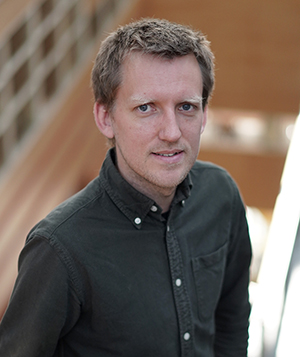
Nicolai Topstad Borgen is an Associate Professor at the Department of Special Needs Education, University of Oslo, and a member of the Center for Research on Equality in Education (CREATE). His research focuses on social inequality, causal inference, and educational outcomes, emphasizing neighborhood, school, and peer effects. Current projects include the ERC-StG-funded 'Segregation of Opportunities' and collaboration on the ERC-CoG EQOP study. Key research areas: Gene-environment interactions, poverty consequences, quantile regression models, and educational policy evaluation. Recent publications analyze maternal education impacts, ethnic minority disparities, and reproducibility challenges in social science. Articles highlight heterogeneous neighborhood effects and methodological innovations in statistical visualization. He holds a Ph.D. in Sociology from the University of Oslo and has worked at institutions like Oslo Metropolitan University and the Ragnar Frisch Centre for Economic Research.
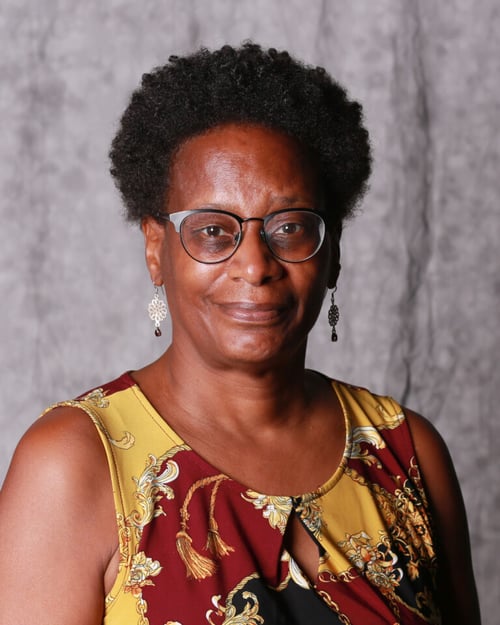
Dr. Cynthia M. Hewitt serves as the Avalon Professor of Sociology and Director of the International Comparative Labor Studies Program at Morehouse College within the Division of Africa, Humanities, Social Sciences, Media, and Arts. She holds concurrent faculty appointments in the African American Studies Program and sustainability minor, and founded the Morehouse Pan-African Global Experience (MPAGE) study abroad initiative. Her academic credentials include: Bachelor of Arts in History from Brown University (1978) Master of Arts in Sociology from Howard University (1982) Doctor of Philosophy in Sociology from Emory University (1997) Dr. Hewitt's research centers on political economy of the world-system , race/class/gender inequality , and environmental sociology , with groundbreaking work on Pan-African unification as solutions to systemic marginalization of African heritage people. Her scholarship uniquely integrates brain circulation theory and reparations frameworks for slavery. Current projects examine matriarchal/patriarchal authority structures, worker organizing for collective bargaining, employee ownership models, and digital education strategies for secondary education access in Africa. Her 15 most recent publications (2000-2022) reveal evolving focus from Atlanta's demographic trends and job segregation analyses toward contemporary labor justice in Georgia's public sector and Pan-African digital education initiatives under the U.N. Decade for People of African Descent. As an educator, Dr. Hewitt teaches HSOC 105: Organizing for Social Justice, HSOC 406: Sustainability and Development, and HSOC 360: Pan-Africanism as Cross-Cultural Dialogue. Her leadership in the International Comparative Labor Studies Program and MPAGE demonstrates commitment to student development through international civic engagement and transnational solidarity projects. Dr. Hewitt directs collaborative teams with Africana unionists and global institutions focused on labor justice, digital education infrastructure, and Pan-African solutions to systemic inequality, particularly through the U.N. Decade for People of African Descent framework.
Dorota Czeszczewik is a Professor at the Institute of Biology , Faculty of Natural Sciences, University of Siedlce. Her work focuses on the ecology and behavior of birds in primeval forest ecosystems, particularly the Białowieża Forest. Research spans 45+ years of bird community dynamics Key areas: woodpecker foraging, flycatcher interactions, and biodiversity conservation Specializes in niche segregation and habitat utilization by avian species Research Trends : Analyzes long-term impacts of forest management, climate change, and dead wood resources on bird populations. Her recent publications (2023–2025) emphasize functional diversity, tree usage patterns, and resilience of primeval forests. Projects : Leads team (151/23/B) studying forest biodiversity and bird ecology in the Białowieża Forest.
Michael Ryckewaert is a researcher at Vrije Universiteit Brussel's Faculty of Social Sciences, Department of Geography, and core member of the Cosmopolis Centre for Urban Research. His work focuses on housing policy, urban social exclusion, and spatial development within metropolitan contexts, with particular emphasis on collaborative housing models and right-to-housing frameworks across international case studies. His research interests span urban geography , housing policy innovation , and socio-spatial inequality . Key themes include community land trusts, housing cooperatives, and the interplay between infrastructure development and urbanization patterns. His work bridges fundamental research with applied policy analysis, particularly through contract research for local authorities. Ryckewaert's scholarly contributions demonstrate consistent output since 1997 with 156 research publications and 33 active projects. His recent work shows increasing focus on collaborative housing frameworks, spatial inequality mapping, and transformative urban renewal methodologies. The research trajectory reveals deepening engagement with community-led housing alternatives and their role in advancing housing rights. Junior Planner Award (1999) Science & Technology Award (2008) As an academic supervisor, Ryckewaert has guided PhD candidates including Frederik Vandyck on construction workplace architecture. His project portfolio includes major initiatives like EUREG5's Upcycling Trust for affordable housing conversion and IRP24's Compassionate Communities research. Media engagement demonstrates policy relevance, with contributions to debates on anti-squatting solutions, spatial inequality, and post-COVID housing recovery strategies. Based at Cosmopolis Centre for Urban Research, Ryckewaert participates in foundational economy colloquia and urban living lab experiments. His work connects with European research networks through joint doctoral projects and international comparative studies, particularly on housing vulnerability and urban enterprise zones.
Brian D. Goldstein is an urban and architectural historian and assistant professor at Swarthmore College. His work bridges architectural history with urban studies, focusing on themes of race, social justice, and the built environment. Specializes in African American architectural contributions Examines urban renewal and gentrification Investigates intersections of race, policy, and design His recent publications explore postmodern urbanism, housing rehabilitation failures, and the legacy of Black architects. Articles like "Modernism as Liberation" and "The Roots of Urban Renaissance" highlight his focus on marginalized communities and institutional histories. These works span disciplines including architectural history, urban sociology, and political economy, reflecting his interdisciplinary approach to understanding spatial inequality and cultural preservation.
Michal Lehečka is a social anthropologist affiliated with the Faculty of Humanities at Charles University , where he earned his PhD in 2021. His work bridges academic and applied research, focusing on urban anthropology, spatial theory, and housing policies in Central and Eastern Europe. PhD in Anthropology (2021), Charles University MA in General Anthropology (2013), Charles University BA in Liberal Arts (2010), Charles University Research interests include urban segregation, gentrification, migration, modernist housing estates, and participatory development. He established the Laboratory of Sustainable Urbanism (2018-2022) under AutoMat NGO and serves as vice-president of the Czech Association for Social Anthropology since 2021. Recent publications analyze privatization regimes in post-Soviet nuclear towns, housing policies in Prague, and ethnographic approaches to urban spaces. His work combines theoretical inquiry with applied projects addressing community development and social hierarchies. Professional roles span from lecturer at University of New York in Prague (2022) to external lecturer at Charles University (2021-2022) and applied researcher in NGOs like Anthropictures and AutoMat.
Dr Samuel Burgum is a Senior Lecturer in Sociology at Birmingham City University . Prior to joining BCU, he held teaching roles at the Universities of York, Warwick, and Newcastle, and a research position at the Higher Education Academy (HEA). His work focuses on urban marginalization, property politics, and critical theory. Research Interests : Criminalization of trespass, squatting, neoliberal housing policies, socio-spatial inequalities, and urban resistance movements. Funding : ESRC-funded 'Narrow Margins' project (current); previously Leverhulme Trust-funded squatting research (Sheffield) and ESRC-funded Occupy London study (Warwick). Notable Publications : Monograph Occupying London: Post-Crash Resistance and the Limits of Possibility (Routledge, 2018). His 15 most recent publications span critical geographies of squatting, neoliberal urbanism, and intersections of race, property, and criminalization. Education : PhD in Sociology (University of Warwick, 2016) funded by the ESRC.
Manuel Fernández García is a Permanent Labor Professor (Associate Professor) in the Department of Public Law at Pablo de Olavide University. His research focuses on political sociology, urban regeneration, and European Union policy, particularly within the SPL-UPO (Political Sociology and Local Policies) research group. PhD: Universidad Pablo de Olavide, 2021 His research explores EU-integrated urban development strategies, historical city center transformations, and collaborative economy frameworks in Andalusia. He analyzes socioeconomic inequality, participatory governance, and digital activism's role in urban policy. Recent publications highlight URBAN Initiative impacts, comparative urban regeneration models, and grassroots challenges to EU policies. His work spans Social and Legal Sciences, with a focus on Andalusian and Spanish urban contexts. Manuel contributes to debates on hacker ethics in collaborative economies and the political implications of participatory budgeting globalization, though no specific scientific awards are mentioned.
Erica L. Williams is a Professor of Anthropology and Sociology Chair at Spelman College, where she has been a faculty member since 2009. She earned her PhD and MA in Cultural Anthropology from Stanford University (2010 and 2005 respectively), and her BA in Anthropology and Africana Studies from New York University (2002). As a leading scholar in Black feminist anthropology, Williams contributes significantly to academic discourse through her research, teaching, and editorial work. PhD in Cultural and Social Anthropology, Stanford University, 2010 MA in Cultural and Social Anthropology, Stanford University, 2005 BA in Anthropology and Africana Studies, New York University, 2002 Williams' research centers on race, gender, sexuality, tourism, Brazil, African Diaspora, Afro-Latin America, ethnographic methods, globalization, transnationalism, and Black feminist anthropology. Her work critically examines Black feminist activism in Bahia, Brazil, exploring the intersections of race, gender, and sexuality within tourism economies and social movements. Through ethnographic methods, she documents how Black women navigate exclusionary spaces while building community and resistance. Her scholarly publications reveal consistent engagement with Black feminist epistemologies, challenging mainstream anthropology from the margins of HBCUs. Williams' work demonstrates how race, gender, and sexuality intersect in transnational contexts, particularly in Brazil and the African diaspora. Her articles frequently address citation practices, knowledge production, and the importance of centering Black women's experiences in academic discourse. Vulcan Teaching Excellence Award Williams actively mentors students through courses like Introduction to Anthropology, Cross-Cultural Perspectives on Gender & Sexuality, Feminist Ethnography, and Race and Identity in Latin America. As Book and Film Review Editor for Transforming Anthropology (journal of the Association of Black Anthropologists) and Secretary of the National Women's Studies Association, she shapes scholarly conversations and supports emerging researchers. Her involvement with the Cite Black Women Collective and as Advisory Board Member for VidaAfroLatina demonstrates commitment to institutional change and resource mobilization for Afro-descendant women. Williams leads research teams focusing on Black feminist activism in Salvador, Bahia, and collaborates with organizations addressing sexual violence against Afro-descendant women in Latin America. Her current projects include an ethnography of Black feminist activism in Salvador, Bahia, and an autoethnographic travel memoir that bridges personal experience with scholarly analysis.
Dr. Irene Curulli serves as Associate Professor of Practice in Landscape Architecture at Virginia Tech's School of Design, leveraging over twenty years of professional experience in architecture and landscape architecture. Her research centers on the transformation of dismissed industrial landscapes, particularly through the lens of post-industrial 'Water Wise Landscapes' (WWL) where heritage, water, and climate change intersect. Her educational foundation includes: Ph.D. in Architecture, University of Naples Federico II (Italy) Postgraduate studies, The Berlage Institute Amsterdam (Netherlands) Master of Landscape Architecture, Wageningen University & Research (Netherlands) Master of Architecture, Mediterranea University of Reggio Calabria (Italy) Curulli's scholarly work emphasizes industrial waterscapes , climate-resilient design , and heritage conservation in post-industrial contexts. She champions interdisciplinary exchange through ERASMUS+ projects funded by the European Commission, exploring synergies between research, design, and professional practice. Her teaching integrates community engagement with climate adaptation strategies. Analysis of her 15 most recent publications reveals a consistent trajectory from foundational studies on industrial canal zones (e.g., Brabant B5) to contemporary investigations of climate justice and trans-boundary river systems. Key thematic threads include water-sensitive urban design, ecological restoration of industrial sites, and social dimensions of environmental disasters. Her scientific recognition includes: Lawrence Halprin Fellowship (Cornell University) Best Master Docent award (Eindhoven University of Technology) Multiple international competition prizes including Festival International des Jardins (France) Best Paper Award (German University in Cairo) As an educator, Curulli coordinates international workshops and ERASMUS+ collaborations while teaching core courses like Landscape Architecture Theory (LAR 4254/5253) and Site Program & Community Design Studio (LAR 3016). Her research is supported by European Commission grants and manifests through the Industrial Waterways initiative documenting global case studies. Her Industrial Waterways research platform showcases ongoing projects including Brabant B5 Canal Zones, Climate Adaptive Architecture studios, and international workshops like ELIR 2011, demonstrating applied research bridging academic theory and professional practice.
Liliana Castilho is an Assistant Professor at the Polytechnic Institute of Viseu, with a PhD in Art History (2013) from the University of Porto, Faculty of Arts. Her work bridges Humanities, Urban History, and Cultural Heritage, focusing on historical architecture, educational methodologies, and heritage preservation in Portuguese cities. PhD in Art History (2013), University of Porto Master's in Art History (2007), University of Porto Bachelor's in Art History (2003), University of Porto Her research explores the intersection of Urban History, Heritage Studies, and History Education. Key themes include early modern Portuguese urbanism, domestic architecture, public space dynamics, and pedagogical applications of historical awareness. She has co-authored projects on digital heritage platforms and urban food systems in Viseu. Recent publications examine housing inequalities, spatial mapping of ego-cities, and symbolic urban boundaries like medieval walls. She supervises Master's theses on history education and urban morphology, while serving on scientific committees for conferences on architecture and heritage. Collaborations with institutions like CITCEM (Porto) and the National Grão Vasco Museum highlight her interdisciplinary approach.
Associate Professor Pablo Mendez is affiliated with the Department of Geography and Environmental Studies at the University of Ottawa. His research focuses on housing affordability, urban economies, sustainable transportation, and the intersection of formal-informal housing markets in Canadian cities, particularly Vancouver. Education: B.A. Honours, Simon Fraser University (SFU) M.A., University of British Columbia (UBC) Ph.D., University of British Columbia (UBC) Professor Mendez employs mixed-methods research, emphasizing GIS and data analysis, to explore low-carbon urban transitions and housing-market dynamics. His recent publications analyze secondary suites, basement rentals, and their role in shaping metropolitan environments. His work spans themes such as urban policy , informal housing , economic restructuring , and sustainable urbanization , with a focus on Canadian cities. While no awards are listed, he actively supervises graduate students, prioritizing those with quantitative or qualitative research skills.
Dr. Sebastian Kurtenbach is a researcher at the Institute for Interdisciplinary Conflict and Violence Research (IKG) at Bielefeld University. With a doctorate in Sociology from the University of Cologne, he has held visiting scholar roles at institutions like Wayne State University and actively contributes to research on urban sociology, migration, and social inequality. Education: PhD in Sociology (University of Cologne, 2016); MA in Social Sciences (Ruhr University Bochum, 2013); BA in Social Work (University of Applied Sciences Düsseldorf, 2010). Current Roles: Coordinator of the IKG research line on Migration, Marginalisation, and Social Space; Associate Editor of the International Journal of Conflict and Violence (IJCV) . His research focuses on context effects in residential areas , deviant behavior and youth violence , and spatial aspects of right-wing extremism , often employing qualitative methods and cross-cultural comparisons. His work explores neighborhoods like Cologne-Chorweiler, Dortmund Nordstadt, and Plovdiv-Stolipinovo, analyzing poverty, transnational family dynamics, and integration challenges. Key trends in his publications (2014-2018) include: Neighborhood effects and social disorder Transnationalism and family life under poverty Ethnic segregation and social work strategies Migration patterns from Eastern Europe to Germany His methodological emphasis spans qualitative data, mixed-method studies, and ethnographic case analyses. He contributes to academic discourse through conference participation (e.g., European Sociological Association, Eastern Sociological Society) and serves on the board of the ESA Research Network 37 - Urban Sociology . His affiliations include the Center for Interdisciplinary Regional Research (ZEFIR) and the Rat für Migration .
Francesco Lo Piccolo is a Full Professor in the Department of Architecture at the University of Palermo's School of Engineering, specializing in urban and territorial planning with a focus on migration, housing policies, and landscape transformation. His academic activities include teaching Planning Theory and supervising numerous theses on urban planning topics. Institution: University of Palermo Department: Department of Architecture Teaching: Planning Theory, Migrations and Un-Just City Research Focus: Urban planning, migration studies, housing policy, spatial justice Professor Lo Piccolo's research interests center on the complex interplay between migration, urban spaces, and planning ethics. His work investigates how informal settlements emerge in Mediterranean contexts, particularly Sicily, and examines the tension between formal planning frameworks and the right to housing. He explores ethical dilemmas in urban planning, particularly regarding power imbalances in landscape transformation processes and the concept of 'landscape of exception' where high-quality agricultural areas intersect with migrant labor exploitation. His research extends to post-metropolitan transitions, analyzing how traditional urban models are evolving in Southern European contexts like Sicily, with particular attention to Palermo as a case study of urban multiculturalism and spatial inequalities. His publication trends reveal a consistent focus on migration and urban space, with increasing attention to ethical dimensions of planning. Over the past decade, his work has evolved from analyzing physical urban transformations to examining deeper social and political dimensions of planning in contexts of migration and social exclusion. Recent publications emphasize the 'right to the city' framework applied to migrant communities, ethical challenges in planning practice, and the governance of informal settlements. His research maintains a strong geographical focus on Sicily and Palermo while engaging with broader European migration phenomena and theoretical frameworks in urban studies. Professor Lo Piccolo has supervised numerous master's theses at the University of Palermo, primarily in the field of Territorial, Urban, Landscape and Environmental Planning Sciences. His students have explored topics including housing emergencies in Palermo's districts, landscape planning in Sicily, smart cities, and the redevelopment of historic urban areas. His academic guidance has contributed to research on pressing urban issues in the Sicilian context, particularly concerning housing policies, spatial inequalities, and the challenges of urban regeneration in marginalized neighborhoods. His academic leadership extends to coordinating research on urban regionalization processes in Sicily and contributing to European planning education initiatives. Professor Lo Piccolo maintains an active research agenda examining the intersection of migration, urban space, and planning ethics, with particular attention to the Mediterranean context as a critical zone for understanding contemporary urban challenges in Europe.
Daniel Scheller serves as Associate Professor of Public Administration and Director of the Master of Public Administration (MPA) program within the Department of Political Science at Texas Tech University. Holding a Ph.D. in Political Science from Florida State University, he maintains active scholarly contributions across urban governance, neighborhood development, and public administration pedagogy, with publications spanning Urban Affairs Review and Journal of Urban Affairs. His research program critically examines neighborhood governance structures including homeowners associations (HOAs) and their impacts on civic participation, racial dynamics, housing markets, and public goods provision. Scheller investigates how local institutions shape community development while advancing statistical methodologies for public affairs education, particularly through innovative applications of R programming in hybrid and asynchronous learning environments. Scholarly output from 2014-2024 reveals consistent engagement with urban policy challenges, including pandemic-era impacts on urban design and voter behavior, fire department operational efficiency, and walkability economics. His work bridges theoretical frameworks with practical governance solutions, emphasizing neighborhood-level democracy and data-driven decision-making in public administration. No scientific awards were documented in available materials. As MPA Director, Scheller oversees graduate program administration and student advising, though specific mentorship details and grant funding mechanisms remain unspecified in current documentation. His leadership role underscores commitment to developing public service professionals through curriculum innovation in statistical analysis and policy implementation.