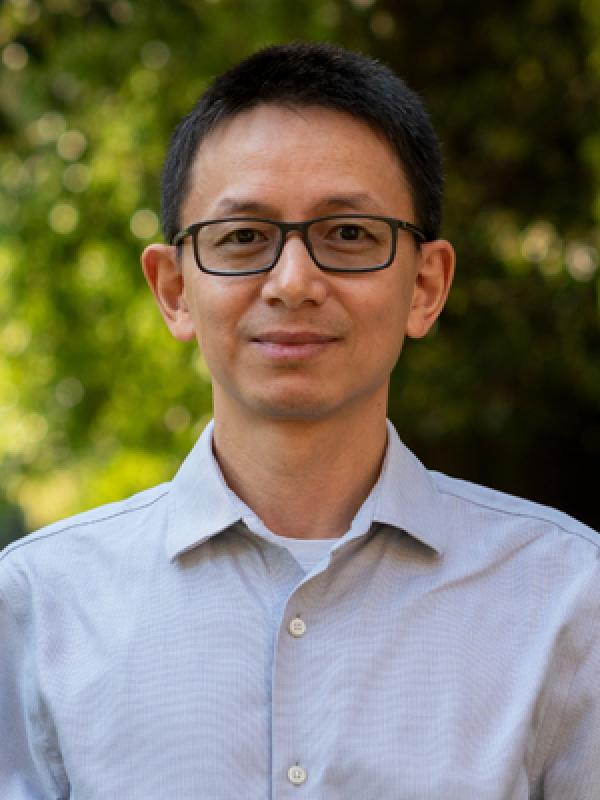
Prof. Dr. Yanjun Ren is a Professor at the College of Economics and Management, Northwest A&F University (NWAFU), China, and has been an IAMO Visiting Research Fellow since May 2024. Prior to his IAMO role, he conducted research at Christian-Albrechts-Universität in Kiel, Germany, from 2012 to 2019. PhD in Agricultural Economics focusing on Food Consumption, Income Inequality, and Health-related Issues in China Former Research Assistant/Associate at Kiel University’s Chair of Agricultural Market Analysis (2012–2019) Dr. Ren’s research spans food chains, consumer behavior, and applied econometrics. His work explores how socioeconomic factors, digital transformation, and policy interventions shape food consumption, nutritional outcomes, and environmental sustainability in China and Central Asia. Key themes include food waste reduction, carbon labeling, internet use in rural economies, and intergenerational health behaviors. His 15 most recent articles (2023–2025) emphasize digital agriculture, sustainable consumption, and health economics. Topics include carbon-labeled products, television/media’s role in nutrition, contract farming sustainability, and the socioeconomic determinants of dietary choices. His methodology integrates econometric modeling, eye-tracking experiments, and spatiotemporal analysis. Email: ren@iamo.de
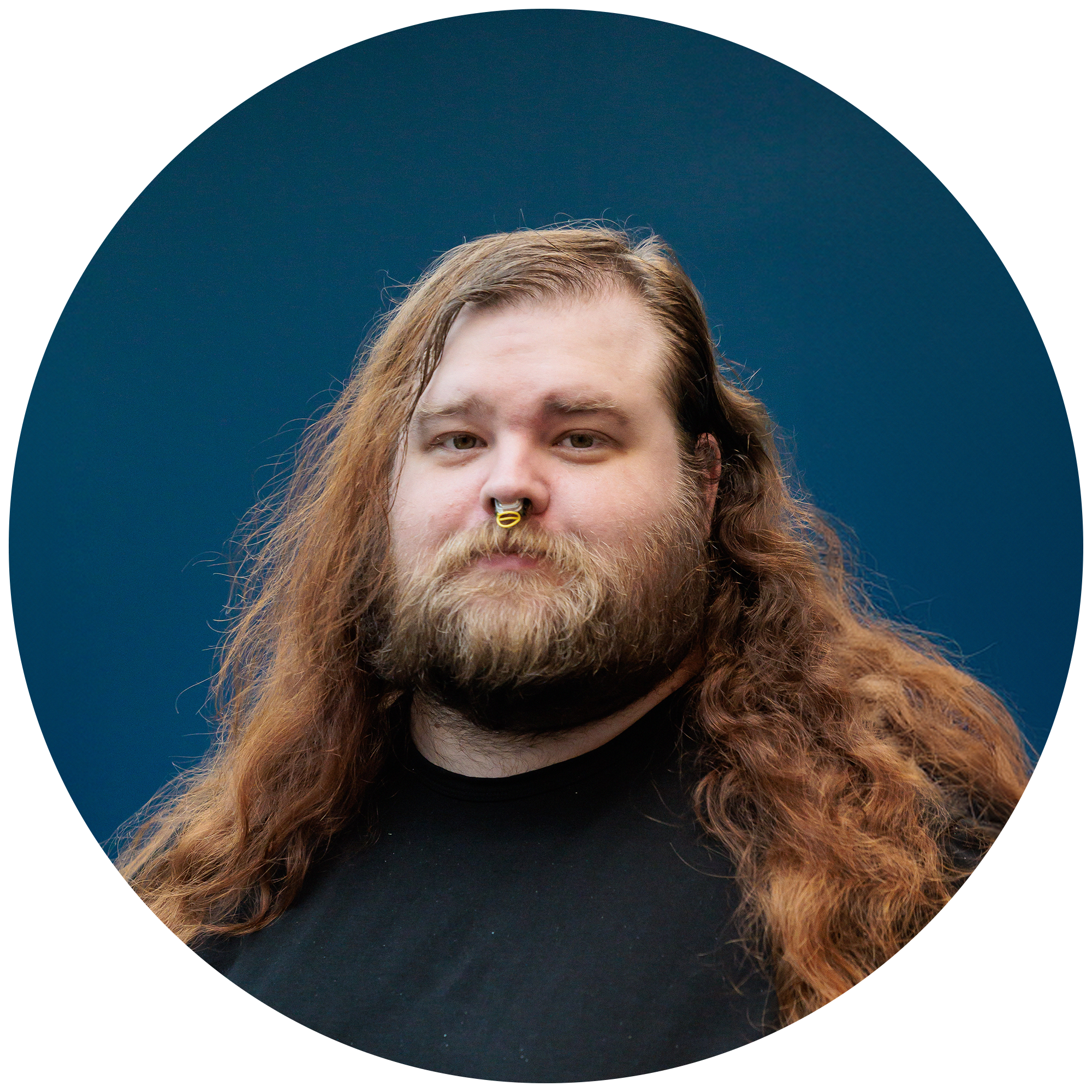
Jas Brooks is an incoming Assistant Professor at MIT's Department of Electrical Engineering and Computer Science (EECS) and the Computer Science and Artificial Intelligence Laboratory (CSAIL), starting Fall 2026. They completed a PhD in Computer Science at the University of Chicago under Prof. Pedro Lopes, focusing on perceptual engineering—designing interfaces to modulate human sensory perception. Their work addresses challenges in power efficiency and miniaturization for senses like taste, touch, and smell, enabling applications in health, safety, and immersive experiences. Research interests span HCI, olfactory interfaces, thermal feedback systems, and wearable technology. Notable publications include Best Paper Awards at CHI 2020 and CHI 2021, and Honorable Mentions at UIST 2023 and UIST 2021. Awards include the NSF Graduate Research Fellowship, Siebel Scholar, and Rising Star in EECS. Brooks has presented at MIT, UCSD, and international symposia, including a keynote at the 'New Metabolism' event. They co-organized workshops on smell/taste interfaces (STT21, STT23) and led projects like the Timeless Smell Archive and Smell & Paste prototyping toolkit. Teaching includes a graduate VR course at SAIC and contributions to sensory education via the CBORG initiative. Labs/teams include Pedro Lopes' research group at UChicago and collaborations with institutions like the Media Archaeology Lab. Current projects explore adaptive EMS systems, thermal feedback wearables, and historical scent technologies.
Manuel DeLanda is a New York-based cross-disciplinary theorist and artist. He holds the rank of Professor at The European Graduate School / EGS and serves as a lecturer at Princeton University's School of Architecture and Pratt Institute's Graduate Architecture and Urban Design program. His academic career includes past roles as a Fellow at Princeton's Institute for Advanced Study (2000/01) and teaching positions at the University of Pennsylvania and Columbia University. Education: BFA from the School of Visual Arts (New York), PhD from the European Graduate School (2010). Research interests span philosophy, complexity theory, materialism, science studies, and Deleuzean thought. His work integrates interdisciplinary approaches to topics like assemblage theory, urban capitalism, morphogenesis, and the philosophy of science. Key themes include the application of mathematical concepts (topology, chaos theory) to social and historical analysis, and rethinking materialist frameworks across disciplines. Notable contributions include books such as War in the Age of Intelligent Machines , A Thousand Years of Nonlinear History , and Assemblage Theory . His lectures (e.g., on economic agglomeration, urban capitalism, and Deleuzean philosophy) reflect his commitment to bridging abstract theory with empirical analysis. Labs/Teams: No specific lab affiliations mentioned, but his work is collaborative through academic networks and interdisciplinary projects in architecture, urbanism, and philosophy.
Trey Porto is an Adjunct Professor at the University of Maryland, affiliated with the Joint Quantum Institute (JQI) and NIST. His research focuses on ultra-cold atoms, quantum optics, and quantum information science. He leads projects on Rydberg atoms, optical lattices, and quantum networking, leveraging cold atom systems to explore novel quantum phenomena and control strategies. Research areas include ultra-cold Rb/Yb mixtures for studying Bose-Einstein condensates and engineered dissipation, as well as photon-photon interactions using Rydberg-dressed polaritons. His work bridges quantum simulation, quantum computing, and precision measurement, with applications in quantum networking and many-body physics. Key achievements include the 2023 UMD Quantum Invention of the Year Award for developing photon-counting methods that preserve quantum states. Porto collaborates with groups such as RQS and JQI, contributing to advancements in subwavelength optical potentials and Floquet-engineered systems. He mentors graduate students in experimental and theoretical aspects of cold atoms and quantum technologies. Publications highlight breakthroughs in Rydberg blockade enhancement, prethermal Bose-Einstein condensation, and compact auto-alignment systems for experimental setups. His lab is based in the Physical Sciences Complex on the UMD campus, with ongoing projects exploring quantum dissipation and photon-atom hybrid systems.
Harvey NEO is a Professorial Research Fellow at Singapore University of Technology and Design (SUTD), leading the Cities and Urban Science programme at the Lee Kuan Yew Centre for Innovative Cities (LKYCIC). He holds a PhD in Geography from Clark University, USA, and previously served as an Associate Professor at the National University of Singapore (NUS). His research focuses on urban sustainability, citizen-centric urban science, and nature-society interactions. He is the Southeast Asian editor for Human Geography and Frontiers in Sustainable Cities , and sits on multiple international advisory boards. Key roles include Director of SUTD's Master in Urban Science, Policy and Planning programme, and co-leader of the Tote Board's Future Ready Society initiative. Education: PhD, Graduate School of Geography, Clark University (2007); MSc, Geography, NUS (2002); BA (Hons), NUS. Research interests emphasize urban futures, participatory governance, and environmental policy, with a focus on Southeast Asian cities like Ho Chi Minh City, Jakarta, Manila, and Phnom Penh. His work bridges academia and practice through projects on electric vehicle policies, urban heat adaptation, and 3P+ (People, Public, Private + Academia) partnerships. Publications span urban mobility, pandemic responses, and eco-city development, reflecting a commitment to interdisciplinary solutions for sustainable urbanization. He has secured grants from Singapore’s Social Sciences Research Council and Housing Development Board, fostering collaborations across sectors to address societal challenges. Labs/Teams: LKYCIC's Urban Environmental Sustainability Programme and the Future Ready Society Initiative, which integrate research with policy and community action.
Sam Parkinson is a Research Fellow at Aston University's College of Engineering and Physical Sciences. He holds a PhD in Polymer Chemistry from the University of Leeds (2016–2020). His research focuses on advanced polymer materials, particularly in the areas of self-assembly, nanoparticle synthesis, and continuous flow processes. Key contributions include developing methods for 2D platelet formation via accelerated seed mechanisms and enhancing scalability of crystallization-driven self-assembly using flow reactors. Research interests span polymer synthesis, nanomaterials, and their applications in fields like biomaterials and agriculture. Recent work emphasizes tunable nanoparticle behavior and chemosensor design for biofluid analysis. Parkinson collaborates internationally and actively supervises PhD students in these areas. Publications highlight innovations in polymerization-induced self-assembly, flow chemistry, and material characterization. No scientific awards are explicitly listed, but his work has been cited in high-impact journals like Nature Synthesis and Macromolecules .
Philippe Christe is an Associate Professor in the Department of Ecology and Evolution at the University of Lausanne (UNIL), Faculty of Biology and Medicine. His research centers on host-parasite interactions, with a focus on bats, birds, and their ectoparasites, integrating behavioral, physiological, and genetic approaches. He leads the Christe Group, which investigates evolutionary and ecological dynamics in host-parasite systems, particularly avian malaria and bat-mite relationships. He is actively involved in conservation initiatives, including the Jorat Peri-Urban Nature Park, and collaborates with KORA on human-wildlife interactions. Bachelor's degree in biology, UNIL (1989) PhD in Zoology and Animal Ecology, UNIL (1994) Philippe Christe’s research interests lie at the intersection of parasitology, evolutionary ecology, and conservation biology. He investigates how host defenses evolve in response to parasitic pressures, examining trade-offs between immunity and life history traits such as reproduction and survival. His work often integrates field studies with experimental and molecular techniques. Key model systems include Parus major (great tit) and Culex pipiens in avian malaria, and bat species with their ectoparasitic mites. He also explores broader ecological interactions, including predator-prey dynamics and wildlife conservation in human-modified landscapes. His recent publications reflect a strong emphasis on disease ecology, wildlife conservation, and molecular methods. Articles span topics such as avian malaria transmission, lynx population dynamics, snow leopard behavior, and habitat fragmentation effects on insects. These works employ advanced techniques like DNA metabarcoding, spatial modeling, and long-term monitoring, demonstrating a trend toward interdisciplinary, data-driven ecological research with direct conservation applications. Dubois Foundation Prize for an educational CD-Rom on bats (2004) Communication Award from the Faculty of Biology and Medicine of UNIL (2017) Philippe Christe has supervised numerous PhD and Master’s students, contributing significantly to training the next generation of ecologists and evolutionary biologists. His group collaborates widely with institutions such as the Museum of Zoology in Lausanne and KORA, and participates in large-scale conservation projects involving snow leopards, lynx, and bats. He has been involved in research grants related to host-parasite coevolution, wildlife monitoring, and conservation strategies. His leadership in establishing the Jorat Peri-Urban Nature Park and involvement in the UNIL Interdisciplinary Center for Mountain Research highlight his commitment to applied science and environmental stewardship. He leads the Christe Group, which conducts research on host-parasite coevolution, with a focus on bats and their ectoparasites, and birds affected by avian malaria. The group combines fieldwork, laboratory experiments, and molecular analyses, and includes post-docs, PhD students, and technical staff. Collaborations extend to researchers in Bern, Paris, and Spain, fostering an international and interdisciplinary research environment.
Professor Desheng Liu is affiliated with the Department of Geography at The Ohio State University , within the College of Arts and Sciences . His research focuses on developing spatial and statistical methodologies for environmental monitoring and ecological processes. He holds a Ph.D. in Environmental Science from UC Berkeley (2006) and additional degrees in Statistics, Environmental Science, and GIS. Education: Ph.D., 2006: Environmental Science, University of California, Berkeley M.A., 2004: Statistics, University of California, Berkeley M.S., 2003: Environmental Science, University of California, Berkeley B.E., 2001: GIS, Wuhan University, China Research interests include Remote Sensing , Spatial Statistics , GIScience , and Land Cover Change . His work emphasizes statistical modeling of spatial-temporal dynamics in environmental systems. Recent publications (2008–2012) explore topics like land-cover trajectory reconstruction, thermal infrared downscaling, and object-based classification techniques. No scientific awards are explicitly listed in the provided text. Advising and grants information is not detailed here, though his CV may contain additional details. He is involved in teaching advanced courses such as Quantitative Geographical Methods and Spatial Statistics.
Andrew Francis-Tan serves as Assistant Dean (Student Affairs) and Senior Lecturer at the LKY School of Public Policy, National University of Singapore. Previously, he was associate professor of economics at Emory University. His academic journey spans prestigious institutions including the University of Chicago where he earned his Ph.D. in economics, establishing his foundation in quantitative research methods. Francis-Tan's research program focuses on education, labor economics, and demography, with particular emphasis on patterns of inequality and public policies designed to empower vulnerable populations. His work explores how factors such as race, gender, and religion influence social identities and outcomes across diverse contexts, especially in Asia and Latin America. His interdisciplinary approach bridges economics, sociology, and public policy to address complex social challenges. His extensive publication record shows a clear research trajectory examining ethnic identity formation, religious dynamics under restrictive regulation, gender empowerment effects, and affirmative action policies. The publications span multiple high-impact journals across disciplines including Political Science, Sociology, Public Health, and Economics, demonstrating the cross-cutting relevance of his work. As an educator, Francis-Tan teaches advanced quantitative methods courses for PhD students (PP6706), education economics and policy (PP5196), and principles of economics for policy (PP5001). His teaching portfolio reflects his expertise in applying economic frameworks to policy analysis and his commitment to training the next generation of policy professionals with rigorous analytical skills.
David Hsu is Provost's Chair Professor in the Department of Computer Science at the National University of Singapore (NUS) School of Computing, where he founded and directs the NUS Artificial Intelligence Laboratory (NUSAIL) and leads the Smart Systems Institute. His academic leadership includes chairing major conferences such as Robotics: Science & Systems (2015) and IEEE ICRA (2016), alongside editorial roles in IEEE Transactions on Robotics and the Journal of Artificial Intelligence Research. He earned a B.Sc. in Computer Science & Mathematics from the University of British Columbia and a Ph.D. in Computer Science from Stanford University. His research spans robotics, AI, and computational biology, with recent focus on robot planning under uncertainty and human-robot collaboration. Current work integrates machine learning with decision-theoretic planning to enable robust human-robot co-existence in unstructured environments. Analysis of his 2023-2025 publications reveals dominant trends in deformable object manipulation (e.g., clothes handling via semantic keypoints), open-world navigation using scene graphs, and LLM-driven multi-agent reasoning for complex tasks. Key innovations include perspective-aware visual grounding for human-centric interaction and functional object arrangement through compositional generative models, reflecting a strong emphasis on real-world applicability. His scientific contributions have earned prestigious recognition: IJCAI-JAIR Best Paper Prize (2022) for foundational AI research Robotics: Science & Systems Test of Time Award (2021) IEEE Fellowship (2018) for contributions to robotic planning RSS Best Systems Paper Award (2017) RoboCup Best Paper Award at IROS (2015) Humanitarian Robotics Award at ICRA (2015) As director of the Adaptive Computing Laboratory, Hsu drives research on fundamental computational frameworks for human-robot interaction. The lab's work on uncertainty-aware decision-making has secured significant research funding through grants from Singapore's National Research Foundation and industry partnerships with robotics firms. While specific student names aren't publicized, his leadership in the NUSAIL indicates extensive mentorship of doctoral candidates in AI and robotics.
Michela Bertolotto is a Professor in the School of Computer Science at University College Dublin (UCD). Her research focuses on spatio-temporal data modeling, GIScience, and applications of geospatial technologies in fields like urban planning and health informatics. She leads a research group and has supervised 19 PhD and 8 MSc students. Her work includes innovations in LiDAR-based flood risk visualization, semantic web quality assurance, and open-source spatial data analysis. Bertolotto has held roles including College Lecturer at UCD (2000–2006) and postdoctoral research positions at the University of Maine and University of Genoa. Education: BSc and PhD in Computer Science from the University of Genoa (1993, 1998). Professional achievements include over 100 publications, 24 grants (e.g., Science Foundation Ireland-funded Urban ARK project), and editorial roles at journals like the International Journal of Geographical Information Science. Awards include the UCD President's Research Award (2001) and NATO Postdoc Fellowship (1998–1999). Research interests span map personalization, volunteered geographic information (VGI), and geospatial data quality. Her lab develops tools like the LAMSkyCam (low-cost sky imaging system) and dynamic flood risk viewers. She chairs international conferences and serves on program committees for GIScience events.
Roberto Tamassia is the James A. and Julie N. Brown Professor of Computer Science and Chair of the Computer Science Department at Brown University. He is also Director of Brown's Center for Geometric Computing. His research focuses on information security, cryptography, algorithms, graph drawing, and computational geometry. He has authored six textbooks and over 250 publications, and his work has been funded by ARO, DARPA, NATO, NSF, and industry sponsors. Education: PhD in Electrical and Computer Engineering from the University of Illinois at Urbana-Champaign. Research Interests: Cryptography and Secure Systems Algorithm Design and Optimization Graph Drawing and Geometric Computing Encrypted Database Security Awards and Honors: IEEE Fellow Technical Achievement Award from IEEE Computer Society Listed among the 360 most cited computer science authors by ISI Grants and Funding: His research has been supported by major agencies and organizations including ARO, DARPA, and NSF, as well as industry partnerships. Labs and Affiliations: Directs Brown's Center for Geometric Computing, a hub for interdisciplinary research in computational geometry and graph algorithms.
Prof. Nikos Mamoulis is a Professor at the Department of Computer Science & Engineering, University of Ioannina, and a Lead Researcher at Archimedes Research Unit, ATHENA RC. He holds a PhD from Hong Kong University of Science and Technology (HKUST) and a Diploma from the University of Patras. His research focuses on spatial data management, big data analytics, data privacy, and uncertain data systems. Education : Ph.D., Computer Science, Hong Kong University of Science and Technology (2000) 5-year Diploma, Computer Engineering and Informatics, University of Patras (1995) Research Interests : Complex data management (spatial, spatio-temporal, time-series, text, graphs), big data analysis, privacy preservation, and uncertain data systems. He develops scalable algorithms and systems for modern data management challenges, with applications in transportation, social networks, and geospatial analytics. Projects & Grants : MESA: In-memory Spatial Analytics Made Scalable (HFRI-funded, PI) MORE: Real-time Energy Data Management (H2020, Senior Researcher) Smart City Bus Platform (ERDF-funded, PI/Coordinator) Awards : Outstanding Young Researcher Award (2008-2009, HKU) Best Paper Award at SSTD 2015 Test of Time Award at MDM 2022 Labs & Collaborations : Leads the Archimedes Research Unit at ATHENA RC, collaborating with institutions like HKUST and Uppsala University on spatial and big data systems. Active in organizing top-tier conferences like SIGMOD, EDBT, and ICDE.
Miguel Nacenta is a Professor in the Department of Computer Science at the University of Victoria (UVic), Canada, and a founding member of the Victoria Interactive eXperiences with Information (VIXI) research group. Previously affiliated with the University of St Andrews (UK), his work bridges Human-Computer Interaction (HCI), Information Visualization, and Cognitive Science. He specializes in designing interactive systems that enhance human cognition, with a focus on Infotypography (using typography to encode data), collaborative problem-solving tools, and perceptual input/output devices. Research Interests: His key areas include cognitive augmentation, visualization techniques for complex tasks, multi-display environments, and tools for constraint problem-solving. Notable projects include the WriteReason tool for essay writing, InfoTypography studies on perceptual typographic parameters, and Solvi for visual constraint modeling. Grants & Collaborations: He collaborates internationally, including with the University of St Andrews on PhD scholarship programs. His work is supported by grants focusing on HCI innovations and accessibility. He actively mentors students (e.g., Adam Binks, Johannes Lang) and supervises postdoctoral researchers. Affiliations: Member of the VIXI group,他曾是St Andrews计算机科学学院的教授, 并参与多个学术服务活动, including conference program committees and journal reviews. Labs & Teams: Leads the VIXI lab at UVic, focusing on interactive technologies for cognitive tasks. Collaborates with industry partners on projects like TypoCartographer for infoTypographic maps and HaptiQ for accessible graph exploration.
Suining He is an Assistant Professor at the University of Connecticut (UConn)'s School of Computing, leading the Ubiquitous and Urban Computing Lab since 2019. Previously, he was a postdoctoral research fellow at the University of Michigan's Real-Time Computing Lab (2016–2019). He holds a Ph.D. in Computer Science from the Hong Kong University of Science and Technology (2016) and a B.Eng. in Mechanical Design from Huazhong University of Science and Technology (2012). His research focuses on Cyber-Physical Systems (CPS), Smart & Connected Communities, Human-Centered Computing, and Urban Computing Cyberinfrastructure, with emphasis on mobility, equity, and AI-driven solutions. He has received prestigious awards including the NSF CAREER Award (2023), Google Research Scholar Program Award (2021), and recognition as a Stanford Top 2% Scientist (2020–2024). His work spans interdisciplinary grants from NSF, USDA, Google, NVIDIA, and industry partners. Recent publications explore autonomous driving simulation, equity-aware mobility prediction, and urban crowd activity modeling. Teaching excellence is reflected in his 2020 UConn Provost Award. He advises on reinforcement learning, CPS, and mobile computing, with openings for 2025/2026 PhD students. His lab collaborates on socially-conscious AI, privacy-preserving learning, and location-based services with industrial impact.