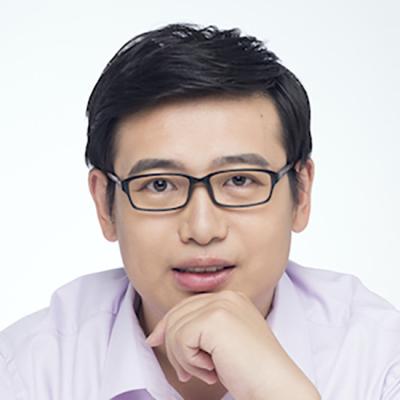
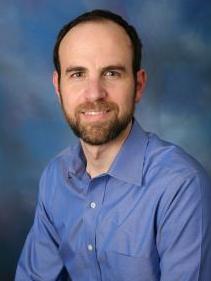
Nicholas Kortessis is an Assistant Professor in the Department of Biology at Wake Forest University, within The Undergraduate College. His research lies at the intersection of ecology, evolution, and theoretical modeling, focusing on how environmental variability shapes biological diversity. Research Interests: His primary areas include statistical and theoretical ecology, adaptation in variable environments, population and community dynamics, and ecosystem modeling. He uses mathematical frameworks to simulate ecological processes across large spatial and temporal scales, bridging experimental data with predictive theory. Publication Trends: His recent work spans topics such as habitat fragmentation, disease in invasive species, character displacement, seed dormancy evolution, and pandemic transmission dynamics. These reflect a strong emphasis on theoretical and synthetic approaches to ecological problems, often involving collaboration across institutions. Scientific Awards: No awards are mentioned in the provided text. Advising and Grants: While no specific students or grants are listed, Dr. Kortessis leads an active research lab and collaborates widely, indicating ongoing mentorship and likely grant-supported research. His lab engages in theoretical and data-driven ecological studies, suggesting funding from agencies supporting environmental and theoretical biology. Labs and Teams: He runs the Kortessis Lab at Wake Forest University, which focuses on modeling ecological and evolutionary processes. The lab emphasizes mathematical and conceptual tools to explore biodiversity, coexistence, and ecosystem responses to environmental change.
Tuuli Toivonen is a Professor of Geoinformatics at the Department of Geosciences and Geography, University of Helsinki. She leads the transdisciplinary Digital Geography Lab , which addresses human-scale spatial analytics for sustainable societies. She serves as Vice-Director of Geography Degree Programs (post-2022) and previously held the Director role (2020-2022). After receiving the ERC Consolidator Grant in 2022, she continues advancing open science through active memberships in HELSUS and URBARIA . PhD in Geography (University of Turku, 2006) Specialist Vocational Qualification in Leadership (2023) Life Member, Clare Hall, University of Cambridge (since 2021) Her research focuses on Human-Place Interactions through accessibility/mobility lenses, combining Open Data , Machine Learning , and Spatial Analytics . Key application areas include Urban Geography , Conservation Science , and Governance Policy . Recent publications address Dynamic Cities (2018), Social Media for Conservation (2019), and Environmental Exposure During Travel (2021). Her lab produces datasets like the Helsinki Region Travel Time Matrix series (2014-2023). Scientific Awards: European Open Data Champion (2017) Open Science Price (2017) University of Helsinki Geography Award (2018) She supervises Master's thesis work and serves as Opponent for doctoral defenses across Europe. Her teaching portfolio includes Advanced Geoinformatics and Digital Geographies courses.
Prof. Tilo Hartmann is a Full Professor at the Department of Communication Science, Vrije Universiteit Amsterdam (VU), affiliated with the Network Institute and Communication Choices, Content and Consequences (CCCC). He holds a PhD from Hanover University of Music, Drama and Media (2005) and has held positions at institutions including the University of Southern California, University of Erfurt, and University of Zurich. His research focuses on immersive technologies like Virtual Reality (VR), examining presence, media awareness, and their psychological impacts. He explores how immersive experiences affect beliefs, wellbeing, and social behaviors, with applications in education (e.g., reducing plastic waste via VR interventions). Key research areas include: presence theory, media psychology, effects of XR technologies, and entertainment’s role in wellbeing. He co-founded the Immersive High Tech Group at VU's Network Institute and contributes to UN Sustainable Development Goals related to sustainable behavior and education. Prof. Hartmann has served on editorial boards of top journals (e.g., Journal of Communication) and professional roles such as secretary of ICA's Game Studies Interest Group. His teaching spans over 12 courses across universities globally, emphasizing curriculum development and student supervision. He holds advanced teaching qualifications (SKO).
Associate Professor Lasantha Meegahapola is a Deputy Head of Department (Teaching & Learning) at RMIT University's School of Engineering in Melbourne, Australia. He holds an IEEE Senior Membership and serves as an Associate Editor for several prestigious journals, including IEEE Transactions on Power Systems and IET Renewable Power Generation. His research focuses on Power System Stability with Renewable Integration, Microgrid Control, and Smart Grid Technologies, addressing challenges like voltage stability, inverter-based grid dynamics, and renewable energy penetration. He has supervised 16 PhD students to completion and published over 200 articles. Key contributions include identifying stability issues in microgrids and advancing grid-forming inverter control strategies. His work aligns with UN Sustainable Development Goals 7 (Clean Energy), 9 (Infrastructure), and 13 (Climate Action). He is actively involved in IEEE committees, including the PSDP Task Force on Microgrid Stability. Teaching roles include Programme Manager for the Bachelor of Electrical Engineering (HK) and Subject Coordinator for Power System Analysis and Control courses. Collaborations span industry and international research institutions, emphasizing real-world applications of his research in power systems and renewable energy integration.
Anil Madhavapeddy serves as Professor of Planetary Computing at the University of Cambridge's Department of Computer Science and Technology and directs the Cambridge Centre for Carbon Credits (4C). A Fellow of Pembroke College, he integrates systems research with environmental conservation through the Computer Laboratory's Environment and Energy Group. His career spans industry leadership (NetApp, Citrix, Intel), academic appointments (Cambridge, Imperial, UCLA), and entrepreneurial ventures (XenSource, Unikernel Systems, Docker). Madhavapeddy earned his PhD at Cambridge's Computer Laboratory in 2006. His research bridges computational systems and planetary-scale environmental challenges, with deep expertise in open-source development (OCaml, Xen, Docker, OpenBSD) and technology strategy advising for organizations including Zededa, Tezos Foundation, and Tarides. His work centers on environmental computing and climate informatics, leveraging distributed systems and functional programming to develop sensing infrastructure for conservation. Recent projects focus on carbon credit systems, AI-driven biodiversity monitoring, and sustainable computing architectures that minimize ecological footprints while maximizing analytical capability. Analysis of his 2025 publications reveals a concentrated effort on AI-integrated conservation tools, privacy-preserving carbon accounting, and energy-efficient computing. Key themes include spatial networking for ecological data, LLM-enhanced evidence retrieval in conservation science, and novel metrics for extinction risk assessment—demonstrating computational innovation applied to urgent planetary boundaries. No scientific awards were documented in the source material. Madhavapeddy advises multiple technology firms on strategic development while leading the Cambridge Centre for Carbon Credits, though specific grant funding details remain unreported. He actively contributes to the Environment and Energy Group at Cambridge's Computer Laboratory and directs the interdisciplinary Cambridge Centre for Carbon Credits (4C). His open-source leadership spans critical infrastructure projects including OCaml, Xen, and Docker, fostering collaborative development communities that underpin modern cloud and container technologies.
Robert Dick is a Professor in the Department of Electrical Engineering and Computer Science at the University of Michigan, part of the College of Engineering. He previously held roles as Associate Professor at Northwestern University and Visiting Professor at Tsinghua University. He earned his Ph.D. from Princeton University and a Bachelor's degree from Clarkson University. His research focuses on Embedded Systems, Learning Dynamics, Efficient Machine Learning, Privacy, and Censorship Resistance. Key themes include defining problems with correct costs/constraints, broadening access to information technology, mitigating negative tech impacts, and solving inference problems with limited resources. He leads the Embedded Systems Graduate Program and is a member of the Michigan Integrated Circuits Laboratory (MICL). His work spans thermal management, energy-efficient computing, and low-power wireless networks. Notable contributions include innovations in embedded system design, machine vision frameworks, and sensor networks. Courses taught include EECS 507 (Embedded Systems Research), EECS 373 (Embedded System Design), and ENGR 100 (Autonomous Systems). His recent publications emphasize AI model analysis, energy-efficient networks, and environmental sensing. Projects include MemX (attention-aware wearable tech) and LoRa-based LPWAN protocols. Dick co-founded Stryd, a company commercializing embedded systems innovations.
Dr. Iro Armeni is Assistant Professor of Civil and Environmental Engineering at Stanford University, leading the Gradient Spaces research group. Her interdisciplinary research bridges architecture, civil engineering, and computer vision to develop data-driven methods for sustainable and adaptive built environments. Professor Armeni's work focuses on creating gradient environments that blend physical and digital realities through mixed reality technologies. She develops computational methods for 3D scene understanding, generative design, and adaptive spaces that respond to human needs. Her research integrates AI with architectural design to improve sustainability, inclusivity, and reusability of built spaces. Current projects include 3D scene graph representations, automated BIM modeling from visual data, and neuro-symbolic approaches for design optimization. She has developed tools like HoloLabel (AR semantic labeling) and SemSpray (VR annotation) for construction information management. Professor Armeni holds a PhD from Stanford University, supported by a Google PhD Fellowship, and completed postdoctoral research at ETH Zurich with an ETH Fellowship. She teaches courses on Computer Vision for the Built Environment and Mixed Reality applications.
Dr. Michael Baym is an Associate Professor of Biomedical Informatics at Harvard Medical School with affiliate appointments in Microbiology and the Laboratory of Systems Pharmacology, and as an Associate Member of the Broad Institute. He leads the Baym Lab, which studies microbial evolutionary genomics and antibiotic resistance through a hybrid of experimental, computational, and theoretical approaches. His research focuses on: Antibiotic Resistance Evolution and practical interventions Mobile Genetic Elements (plasmids, phages, transposons) Computational Genomic Algorithms for big data analysis Synthetic Biology tools and technologies Key recent publications explore phage discovery systems , phylogenetic compression of microbial genomes, and RNA-guided gene drives in plasmids. His work is supported by multiple NIH/NIGMS and NSF grants including a MIRA award. Scientific honors include: Packard Fellowship (2018) Pew Biomedical Scholarship (2020) Sloan Research Fellowship (2020) A. Clifford Barger Excellence in Mentoring Award (2021) SSQBio Mentorship Award (2022) The lab actively trains PhD students and postdoctoral fellows with alumni occupying academic and industry positions globally. Current team members include researchers from interdisciplinary backgrounds working at the intersection of experiment, computation, and theory .
Aura Istrate is a Lecturer/Assistant Professor in Urban Planning & Sustainable Urbanism at the School of Architecture, Planning and Environmental Policy at University College Dublin (UCD). With an international background spanning multiple continents, she conducts interdisciplinary research on sustainable urban development, focusing on active mobility, nature-based solutions, and climate-neutral cities. She teaches GIS and urban planning modules while coordinating several significant research projects across European and Asian contexts. University College Dublin, School of Architecture, Planning and Environmental Policy Primary Coordinator of C-NEWTRAL (Horizon MSCA-DN 2024-2028) Co-Leader of REALLOCATE (Horizon Europe project 2023-2027) Principal Investigator for BIODIVERSA+ projects (NatureScape and NBS4AQUAMISSION) Educated at the University of Architecture and Urban Planning 'Ion Mincu' in Bucharest (BA and MA) and the University of Liverpool (PhD), Dr. Istrate further enhanced her teaching credentials with a Professional Certificate in University Teaching & Learning from UCD. Her academic journey reflects a strong foundation in architectural and urban planning principles combined with specialized expertise in sustainable urbanism. Dr. Istrate's research focuses on smart and sustainable urbanism, particularly examining active mobility, livable streets, green public spaces, and nature-based solutions in urban planning. Her work employs participatory, geospatial, and mixed methods to inform smart communities and the transition to climate-neutral cities. She has practical international experience in urban design and planning, with ongoing collaborations spanning European and Asian countries, currently teaching and researching across cultures in UCD and UCD's International Colleges (CDIC). Her recent publications reveal a strong focus on street vitality, urban heat adaptation, and nature-based solutions. The research demonstrates methodological diversity combining quantitative spatial analysis with qualitative community engagement approaches. Her work spans multiple geographic contexts, with particular expertise in Chinese urban environments and European cities, showing how urban planning concepts need to be contextualized for different cultural settings. The articles consistently address climate adaptation challenges through innovative approaches like urban nature games and fine-grained street classification systems. Dr. Istrate serves as a PhD thesis supervisor and is actively involved in major research initiatives including C-NEWTRAL (as Primary Coordinator), REALLOCATE (as Co-Leader), and BIODIVERSA+ projects (as PI for NatureScape and NBS4AQUAMISSION). Her grant portfolio includes Horizon Europe projects and other significant funding that supports interdisciplinary research on climate-neutral urban development. She has coordinated multiple teaching modules including Planning Design & Development, GIS & Planning, Intro to Spatial Planning, and Local Planning Studio. She leads international research collaborations and maintains active partnerships across various European and Asian countries. Her work bridges academic research with practical urban planning applications, particularly through her focus on research-by-design approaches and participatory methods that engage communities in the planning process. She has served as a lecturer, tutor, or teaching assistant across departments of Architecture, Planning, Environmental Studies, Global Studies, and Human Geography in Ireland, the UK, Czechia, Sweden, China, and Romania since 2010.
Austin Zeiderman is an Associate Professor in the Department of Geography and Environment at the London School of Economics (LSE), with interdisciplinary expertise in urbanization, environmental governance, and political dynamics in Latin America and the Caribbean. His research integrates anthropology, geography, sociology, and history, focusing on Colombia, particularly the Magdalena River and Bogotá’s urban periphery. Zeiderman holds a PhD in Anthropology from Stanford University, an MA in Environmental Science from Yale, and a BA in Economics from Colgate University. He has led projects like LSE’s Urban Uncertainty initiative and remains a Research Associate at LSE Cities. His work explores how security, risk, and environmental challenges shape marginalized communities, with notable monographs including *Endangered City* (2016) and *Artery* (2025). Research interests include racial ecologies, colonial capitalism, urban futures, and the interplay of race, environment, and security. He has been recognized with fellowships from the Fulbright Program, Wenner-Gren Foundation, and others. His recent scholarship critiques infrastructure projects like Colombia’s Magdalena River logistics corridor, linking environmental crises to systemic racial inequalities. Publications span journals like *Antipode* and *Public Culture*, and he engages public discourse through media like the Guardian and podcasts. His work bridges academic rigor with societal impact, addressing urgent global issues such as climate adaptation and post-conflict urban resilience.
Chuang Gan is an Assistant Professor at the University of Massachusetts Amherst, affiliated with the College of Information and Computer Sciences and the Department of Computer Science. His work focuses on advancing artificial intelligence, robotics, computer vision, and embodied agents through interdisciplinary research combining neural networks, physical simulations, and multimodal learning. Research interests include generative models, reinforcement learning, vision-language integration, and scalable autonomous systems. He explores topics like world modeling for robots, adaptive policy learning, and physics-driven AI. His projects often involve creating systems that learn from visual, auditory, and tactile inputs to perform complex tasks such as object manipulation, navigation, and decision-making in dynamic environments. Recent research trends emphasize embodied AI systems capable of long-horizon planning, compositional reasoning, and efficient learning from limited data. His work bridges theory and practice, with applications in robotics, simulation platforms, and multimodal generation. Key contributions include frameworks for 3D scene understanding, adaptive world models, and novel training paradigms for large language models. His research has been applied to robotics platforms like RoboDreamer and UBSoft, focusing on unbounded soft environments. Collaborations involve designing benchmarks for physical scene understanding (e.g., Physion++), and creating tools like DiffTactile for tactile simulation. His work often integrates principles from differential geometry, PDE dynamics, and game theory. Chuang Gan’s research group develops open-source tools and benchmarks, such as the SoftZoo robot co-design platform and the SOK-Bench situated reasoning benchmark. His team emphasizes scalable alignment methods beyond human supervision and explores ethical AI through principles like symmetry-enhanced training.
Dr Duncan Smith is an Associate Professor in GIS and Visualisation at the Centre for Advanced Spatial Analysis (CASA) at University College London (UCL). He serves as Programme Co-Director for the MSc Urban Spatial Science, focusing on digital visualisation and Geographical Information Systems (GIS) education. His research emphasizes urban sustainability, transport accessibility, and interactive urban visualisation, with a particular interest in global mega-cities like London, Singapore, and São Paulo. Dr Smith holds a PhD from UCL (2011), an MSc from the University of Edinburgh (2005), and a BA (2003). His recent projects include leading the ESRC-funded Driving Urban Transitions project (2024) exploring sustainable travel in small cities and outer metropolitan areas. Previously, he was Co-Investigator on the SIMETRI project (NSFC JPI Urban Europe) analyzing urban sustainability in London, the Randstad, and China's Greater Bay Area. His research interests span urban visualisation techniques, transport equity analysis, and polycentric urban development. Key areas include GIS-driven urban modelling, accessibility metrics, and the intersection of housing policy with sustainable urban form. His interactive visualisations, available on citygeographics.org , showcase innovative approaches to spatial data presentation. Dr Smith's work consistently addresses global sustainability challenges through geospatial methodologies. Recent studies highlight inequalities in transport accessibility and the spatial implications of urban policies. Upcoming projects will further investigate small-city mobility dynamics using multi-national collaborations with Amsterdam and Lisbon researchers.
Brian Hie is an Assistant Professor of Chemical Engineering at Stanford University , a Dieter Schwarz Foundation Stanford Data Science Faculty Fellow , and an Innovation Investigator at Arc Institute . He leads the Laboratory of Evolutionary Design , focusing on the intersection of biology and machine learning . His prior roles include a Stanford Science Fellow in the Stanford University School of Medicine and a Visiting Researcher at Meta AI . Education: Ph.D. , Electrical Engineering and Computer Science , Massachusetts Institute of Technology (2021) Bachelor’s Degree , Stanford University Research Interests: Brian’s work bridges machine learning and computational biology , with a focus on protein engineering , single-cell RNA sequencing , and viral evolution . His Evolutionary velocity framework predicts protein evolutionary dynamics across timescales, while his Scanorama algorithm enables efficient integration of heterogeneous single-cell datasets. He also develops structure-informed language models for antibody optimization and uncertainty-aware ML for biological discovery. Publication Trends: His recent work (2023) emphasizes structure-based inverse folding for antibody evolution, evolutionary scale modeling , and unsupervised optimization . Earlier studies (2022-2021) cover evolutionary velocity , multi-modal single-cell analysis , and viral escape prediction using natural language analogies. Scientific Awards: Stanford Science Fellow (2021) National Defense Science and Engineering Graduate Fellowship (2019) Advising: He mentors doctoral students including Brandon Ameglio , Garyk Brixi , and Chang M. Yun , with a focus on biological design and computational methods . Labs & Collaborations: His lab collaborates with Bio-X and the Institute for Human-Centered Artificial Intelligence (HAI) , and he maintains affiliations with Sarafan ChEM-H and Stanford Data Science .
Nicholas J. Marantz is an Associate Professor in the Department of Urban Planning and Public Policy at the University of California, Irvine . His work bridges legal theory, urban planning, and empirical analysis to address housing affordability, land use regulation, and metropolitan governance. Education: Ph.D. from Massachusetts Institute of Technology , J.D. from Harvard Law School . Research Interests focus on the intersection of law, politics, and planning, with emphasis on land-use regulation, environmental law, housing equity, and the socioeconomic impacts of zoning policies. His studies often employ spatial and quantitative methods to analyze disparities and governance frameworks. Selected Publications highlight trends in land-use regulation, housing affordability, climate policy, and metropolitan governance. His recent work examines state-level oversight of local planning, accessory dwelling units in California, and the role of legal materials in urban development.
Anna Levina is an Assistant Professor for Computational Neuroscience at the University of Tübingen , affiliated with the Department of Computer Science under the Faculty of Science. Her research focuses on the self-organization of neuronal activity, critical dynamics in neural networks, and the excitation/inhibition balance in cortical circuits. Current positions: Assistant Professor (since 2018), Group Leader (2017-2018), Equality Officer (Computer Science) Previous roles: IST Fellow (2015-2017), Associated Researcher (2011-2015), Postdoc/PI (2011-2015), Postdoc (2008-2011) Her research integrates mathematical modeling , statistical physics , and computational neuroscience to study criticality phenomena, neural avalanches, and adaptive network dynamics. Key interests include: Self-organized criticality in neural systems Excitation/Inhibition balance mechanisms Network topology and dynamics Timescale analysis in neural processing Stochastic modeling of neural activity Recent publications reveal trends in understanding critical dynamics across biological and artificial networks, with applications to memory systems, sensorimotor integration, and disease modeling. She has received recognition as an IST Fellow .