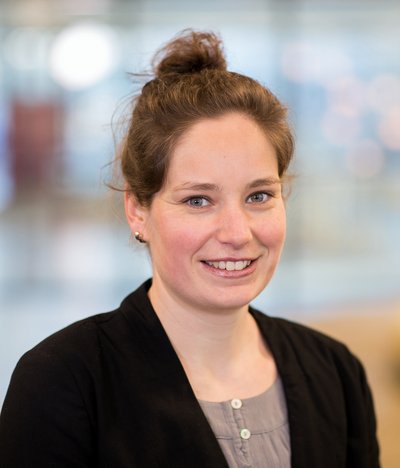
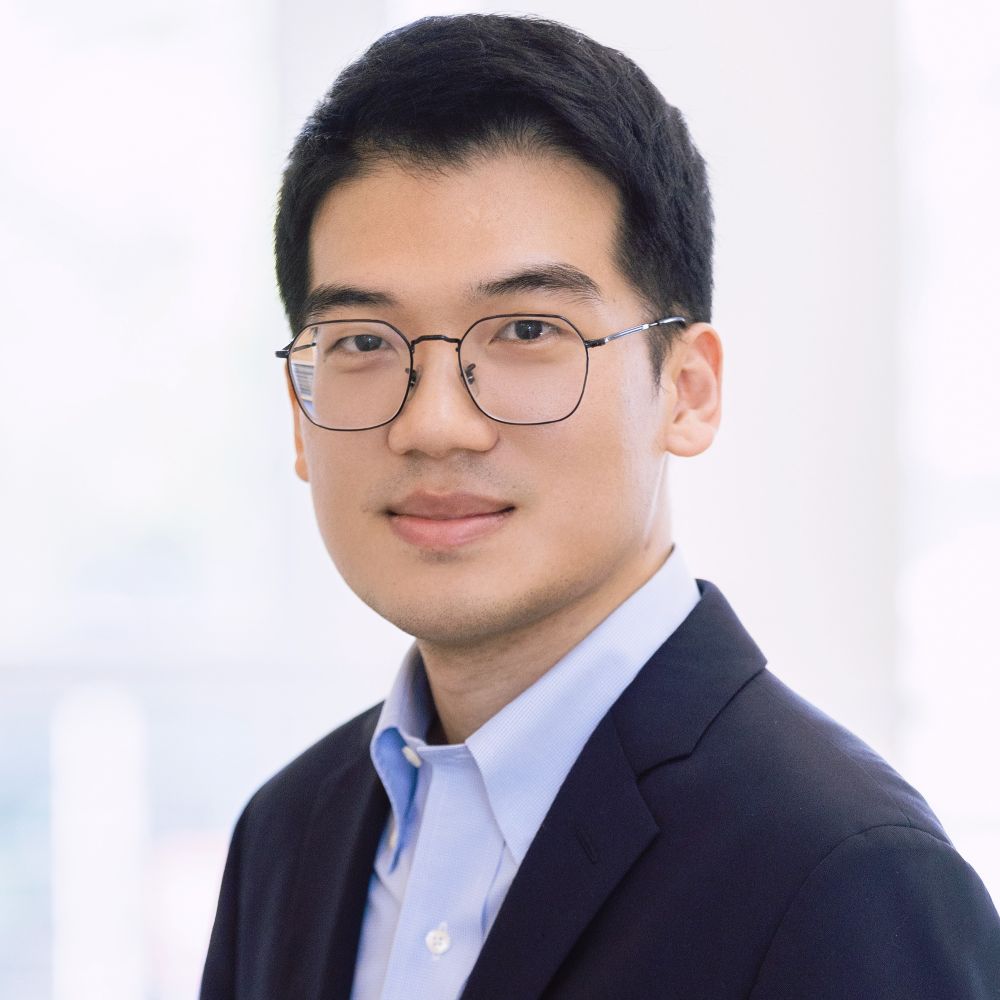
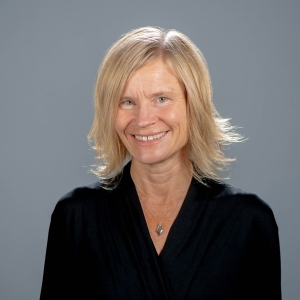
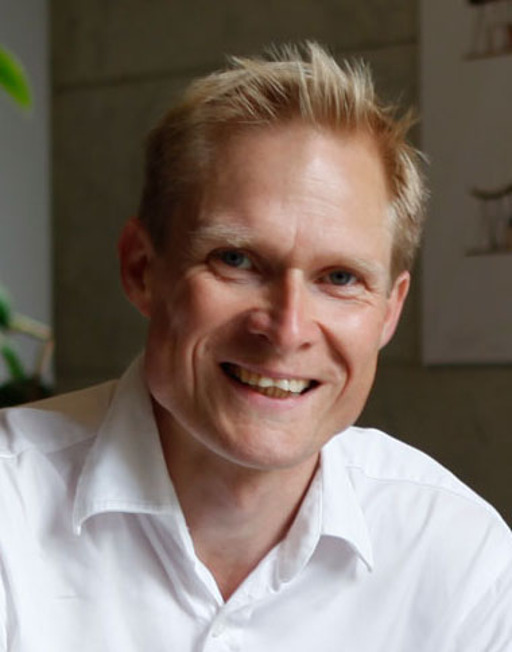
Tess Homan is an Assistant Professor at the Power & Flow group within the Department of Mechanical Engineering at Eindhoven University of Technology (TU/e). Her research focuses on fundamental fluid dynamics , with an emphasis on data analysis and experimental techniques to study fluid-particle flows , bubbly flows , and biological systems . She is also involved in the Complex Multiphase Flows theme at TU/e. Research Trends: Articles span microfluidic mixing , metal particle combustion , and deep learning applications in fluid dynamics. Key subfields include artificial cilia dynamics , hyperspectral thermometry , and hydrogen-based metal regeneration . Scientific Contributions: Developed low-cost deep learning segmentation for bubble detection in industrial processes Advanced high-speed imaging techniques to analyze metal dust flames Investigated metachronal wave programming for fluid control in artificial cilia systems Education & Outreach: Teaches Experimentation for Mechanical Engineering and MATLAB Homologatie at TU/e.
Ya Mo serves as an Associate Professor in the Department of Educational Foundations, Leadership, and Technology at Auburn University's College of Education, with her office located in room 4036 of the Haley Center. Her primary contact email is yzm0043@auburn.edu, confirming her active institutional affiliation. Her research program critically examines additive manufacturing processes, with a dominant focus on defect formation, fatigue mechanisms, and process optimization in metal 3D printing. Key investigation areas include: Location-dependent defect equivalency in volumetric analysis Fatigue performance relationships for Ti-6Al-4V and Ti-5Al-5V-5Mo-3Cr alloys Impact of powder characteristics (particle size, reuse) on mechanical properties Process parameter optimization for laser powder bed fusion Computational modeling of lattice structures and defect propagation ASTM standardization efforts for additive manufacturing testing Analysis of her 15 most recent publications (2021-2025) reveals consistent emphasis on titanium alloy performance, where defect features—particularly porosity and location dependency—directly govern fatigue life. Her work bridges experimental testing with computational simulation, notably developing efficient finite element models for lattice structures and contributing to ASTM interlaboratory studies for tensile testing protocols. A significant portion addresses process window estimation through hardness measurements and Bayesian optimization techniques. Scientific Awards: No awards documented in available sources There is no publicly available information regarding doctoral advisees, research grants, laboratory facilities, or collaborative research teams. Her publication record suggests independent and collaborative engineering research despite her College of Education departmental affiliation, indicating potential cross-college partnerships within Auburn's engineering programs.
Hao Zheng is a tenure-track Assistant Professor in the Department of Electrical and Computer Engineering at the University of Central Florida , specializing in computer architecture and AI/ML systems . He received his Ph.D. from The George Washington University in 2021, advised by Prof. Ahmed Louri. Research Focus: Domain-specific accelerators, wafer-scale integration, hardware-software co-design, and AI-assisted chip design. Teaching: EEL6938 (Computer Architecture for AI/ML) since Fall 2025. His recent work explores graph neural networks , vision transformer acceleration , and secure on-chip communication , with publications at top venues like ISCA, MICRO, and DAC. He serves as an Associate Editor for IEEE Transactions on Computers and IEEE Transactions on Sustainable Computing. Notable honors include the NSF CAREER Award (2025) , GWU ECE Best Dissertation (2022) , and multiple AMD Fellowships for his students. His iCAT Lab focuses on cutting-edge research in computer architecture, supported by grants from L3Harris and NVIDIA .
Kara L. Nelson is the Blum Chancellor's Chair in Development Engineering and a Professor of Civil and Environmental Engineering at the University of California, Berkeley, within the College of Engineering. She serves as Associate Director of Development Engineering at the Blum Center for Developing Economies and is President-Elect of the Association of Environmental Engineering and Science Professors (AEESP). Her work focuses on sustainable water infrastructure solutions with global impact, particularly in low-resource settings. Dr. Nelson earned her educational degrees from prestigious institutions: Ph.D. in Environmental Engineering, University of California, Davis (2001) M.S.E. in Environmental Engineering, University of Washington (1996) B.A. in Biophysics, University of California, Berkeley (1992) Professor Nelson's research spans multiple critical areas in water engineering and public health. Her primary focus is on developing sustainable water infrastructure solutions that are both environmentally sound and socially equitable. Specific research interests include pathogen detection and removal in water systems, water reuse technologies, nutrient recovery from waste streams, drinking water and sanitation in low-resource regions, and wastewater-based surveillance for disease monitoring. Her work addresses challenges from fundamental science (mechanisms of pathogen inactivation) to practical applications (low-cost treatment technologies). Analysis of Professor Nelson's recent publications reveals a strong emphasis on microbial water quality, particularly in the context of emerging challenges like pandemic response and climate change adaptation. Her work on wastewater-based epidemiology has been especially prominent since 2020, contributing significantly to public health surveillance during the COVID-19 pandemic. There's also a consistent focus on intermittent water supply systems, potable reuse, and nutrient recovery technologies, reflecting her commitment to sustainable water management solutions globally. Professor Nelson has received numerous prestigious awards recognizing her contributions to the field: Faculty Award for Outstanding Mentorship of Graduate Student Instructors Chancellor's Public Service Award for Campus-Community Partnership (2021, for the COVID-WEB project) Fulbright Fellowship National Science Foundation PECASE Award ES&T 2021 Best Paper Award (for 'Challenges in Measuring the Recovery of SARS-CoV-2 from Wastewater') As an educator and mentor, Professor Nelson has demonstrated exceptional commitment to her students, earning recognition for her mentorship of Graduate Student Instructors. She previously served as Associate Dean for Equity and Inclusion in the College of Engineering, reflecting her dedication to creating inclusive academic environments. Her research has been supported through various grants, including her leadership role from 2011-2022 in the NSF Engineering Research Center for Re-inventing our Nation's Urban Water Infrastructure (ReNUWIt). The Nelson Research Group at UC Berkeley operates as a dynamic team focused on advancing sustainable water infrastructure solutions globally. The group embraces a multidisciplinary approach, working at multiple levels from fundamental science to systems analysis. They maintain strong collaborations with academic and non-academic partners worldwide and emphasize cultivating an inclusive climate within the research group. Their work often involves field studies in diverse settings, from California to Mexico, Ghana, and Kenya, ensuring their solutions are contextually appropriate and effective.
Antti Ahlava is a full professor in Emergent Design Methodologies and leader of Group X at Aalto University's Department of Architecture. He previously served as Head of the Architecture Department and holds visiting professorships at institutions in Århus, Copenhagen, Vienna, Cambridge University (Clare Hall College), and Harvard GSD. His research integrates campus design, adaptive reuse, and urban regeneration with artistic interdisciplinarity, focusing on qualitative evolutionary design methodologies for climate-resilient cities. Ahlava pioneers the application of digital media as tools for sustainable architectural practice and social innovation in the public realm, emphasizing community engagement and relationship-oriented development frameworks. Recent publications (2024-2025) reveal a concentrated exploration of social innovation in architecture , with recurring themes in urban renewal (Aviapolis, Espoo, Finnoo), digital design tools, and service-dominant business models. His work consistently bridges theoretical frameworks with practical applications across Finnish, European, and Asian contexts. Awards and Honors First Prize in Andermatt station area regeneration competition (2011) 3rd Prize in Katara Hills housing area, Qatar (2013) Espoo Medal for city advancement contributions (2018) Shortlisted for Padova University campus competition against Foster & Partners (2018) Second Prize in Helsinki Housing Reform competition (2019) First Prize in Espoo City Hospital competition with K2S Architects Honorable mention in Helsinki Guggenheim competition No specific grant information or student advising details were provided in the source material, though Ahlava's leadership of Group X indicates active research supervision. His architecture office helsinkizürich (Helsinki/Zürich) executes projects spanning urban design in Finland, Central Europe, and China, with current focus on Aviapolis Centre and Espoo/Finnoo renewal.
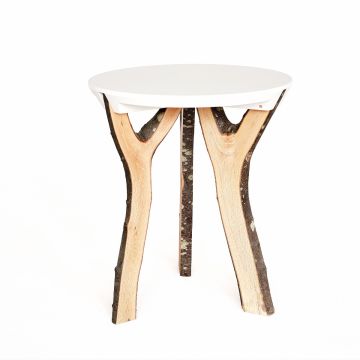
Christoph Schindler is a Swiss Professor at the Lucerne School of Design, Film and Art (HSLU), where he heads the Bachelor's Programme in Object Design since 2014. He holds a doctorate in architecture from ETH Zurich and combines academic work with his role as partner in the Zurich-based furniture design firm schindlersalmerón GmbH , which he co-founded in 2005. Research Interests: His work spans digital fabrication , sustainable product design , and woodworking innovation , focusing on merging computational technologies with natural material properties. Key areas include parametric modeling , moldless manufacturing , and material lifecycle systems . He explores the intersection of Swiss craft traditions with algorithmic design through projects like the ZipShape method and Serial Branches series. Scientific Contributions: He has published over 40 works, with recent 2025-2023 articles examining social object design , climate-responsive furniture , and sustainable Swiss wood systems . His research appears in outlets like International Journal of Architectural Computing and Werkspuren , while his ETH dissertation on fabrication-based architectural periodization remains influential. Awards: iF Design Award (2019), Lista Office Design Award GOLD (2012), iF Material Design Award (2008) Teaching: Lecturer at ZHAW (2010-2014), Royal Danish Academy external examiner (2014-2026), and workshop leader at institutions including ETH Zurich, NTNU Trondheim, and Virginia Tech Industry Roles: Founding member of schindlersalmerón (2005-present) and Swiss Design Board representative (2022)
Deniz Kürşad is an Associate Professor and current Head of Department in the Department of Graphic Design at Canakkale Onsekiz Mart University's Faculty of Fine Arts, where she has served since 2010. Promoted from Research Assistant (2010-2017) to Assistant Professor (2017-2021) and finally Associate Professor in 2021, she also holds multiple leadership roles including Faculty Management Board Member and Ethics Committee Member. Her educational background includes: PhD in Competence in Art, Hacettepe University, Faculty of Fine Arts, Department of Graphics (2016) MA in Postgraduate Studies, Suleyman Demirel University, Faculty of Fine Arts, Department of Graphics (2008) Bachelor's Degree, Mersin University, Faculty of Fine Arts, Department of Graphics (2003) Kürşad's research spans Graphic Design, Art and Design, Accessibility, and Branding with focus on visual identity systems and interdisciplinary applications. Her work bridges architectural visualization, typography in public spaces, and universal design principles, emphasizing practical implementation in educational and professional contexts. Analysis of her 14 recent publications (2014-2024) reveals consistent focus on three-dimensional visual communication, accessibility in branding, and environmental graphic design. Her work demonstrates strong integration of theoretical frameworks with practical applications, particularly in public space branding, responsive web design, and cross-disciplinary design methodologies. She has secured significant research funding including the 2022-2024 project 'Symbolization of Çanakkale's Historical and Cultural Values for Application on Textile Surfaces' as Principal Investigator, alongside editorial roles for the International Journal of Troy Art and Design since 2020. Her academic supervision extends through curriculum development in courses like Packaging Design and Web Design. Kürşad maintains active artistic engagement through international exhibitions including the 9th Çanakkale Biennial and interdisciplinary projects addressing cultural heritage and social issues like violence against women, demonstrating the practical application of her theoretical research.
Jean-Marc Lambotte is a researcher at the University of Liège , affiliated with the Lepur (Research Center on the City, the Territory and the Rural Environment). His work focuses on territorial development , cross-border cooperation , and sustainable land use , particularly in the Greater Region (Luxembourg-Wallonia). Key research interests include: Reconciling No Net Land Take policies with housing affordability Reducing automobile dependency through strategic spatial planning Analyzing demographic and housing market dynamics in cross-border territories Implementing Transit-Oriented Development in metropolitan peripheries His recent publications examine territorial inequalities and policy harmonization challenges between Belgium and Luxembourg, with a focus on land use efficiency , transport infrastructure , and economic development . Active in policy advisory roles , Lambotte contributes to the Standing Conference on Territorial Development and the Center for Border Studies of the University of the Greater Region, providing scientific expertise for cross-border governance frameworks.
Youngkun Chung is a Postdoctoral Research Associate in the Department of Chemical and Biomolecular Engineering at Rice University, working under Professor Michael Wong in the Wong Group and the US NSF-funded NEWT Center. His research focuses on developing photocatalysts and integrating them with catalytic-ceramic membranes to advance green and sustainable chemistry, with applications in pollutant degradation (e.g., PFAS, PPCPs) and resource efficiency. Education: B.S. in Spatial Environment System Engineering (Handong Global University, South Korea, Magna cum Laude), M.S. and Ph.D. in Civil and Environmental Engineering (KAIST, South Korea). He received the Best Ph.D. Dissertation Prize and was a Korea NRF Graduate Research Fellow. Research interests include nanomaterials synthesis, membrane technologies, and environmental remediation. His work spans laboratory to pilot-scale water treatment systems, addressing challenges in micropollutant analysis (via LC/MS) and fouling mitigation. Key contributions include novel ceramic membrane designs, radionuclide adsorption methods, and case studies on wastewater reuse in industries like textiles. He collaborates on projects such as gamma-irradiation impact studies and flow-through electrochemical systems for heavy metal removal.
Overview Prof. Iris Belle is a Professor and Vice Dean of Faculty A/Dean of Studies for Smart City Solutions (SCS) at the Stuttgart University of Applied Sciences. Her career includes roles as Founding Dean of the German-International University Cairo's Faculty of Architecture (2019–2022), Leading Consultant at Drees & Sommer (2016–2019), and Assistant Professor at Tongji University's College of Architecture and Urban Planning in Shanghai (2011–2015). She holds a PhD in Geography from Heidelberg University and completed postdoctoral research at ETH Zurich's Institute of Historic Buildings and Preservation (2007–2013). Education PhD in Geography, Ruprecht-Karls-University Heidelberg (2009) Postdoc at ETH Zurich's Institute of Historic Buildings and Preservation (2007–2013) Diploma in Architecture, Technical University of Karlsruhe (now KIT) Research Interests Belle's work focuses on Smart Urbanism , Sustainable Urban Development , and Smart City Solutions . She explores how digital technologies (e.g., BIM, blockchain) can transform construction practices and urban governance. Recent projects include analyzing Singapore's building stock sustainability, Tianjin's eco-city transition, and labor-intensive construction scenarios. Her research bridges architecture, urban planning, and environmental science to address global urban challenges. Grants & Collaborations Recipient of the Incubator Grant from Stadtmacher cn-d Platform (Robert Bosch Stiftung) for the Future of Living project (2017). Collaborations include the Future Cities Laboratory (Singapore-ETH Centre) and Tongji University's College of Architecture and Urban Planning. Affiliations Chamber of Architects Baden-Württemberg German University Association Friends of the HFT Stuttgart eV
About Nesip Ömer Erem Assoc. Prof. Dr. Nesip Ömer Erem is a faculty member at the Department of Architecture, Istanbul Technical University, specializing in Architectural Design, Environmental Psychology in Architecture, and Information Technologies in Architectural Design. He holds a Doctorate (1994-2003) and Master's (1992-1994) from İstanbul Teknik Üniversitesi. His academic career includes roles such as Department Chair, Project Course Leader, and Visiting Scholar at Carnegie Mellon University (2009-2010). He has supervised over 13 theses, including studies on healthcare design, cultural heritage preservation, and sustainable urban planning. Research & Projects Lead researcher in projects like Balikesir Rural Architecture Study (2010) and Hospital Polyclinic Design (2016) Co-organized international workshops on urban interventions, digital design, and Mediterranean tourism (2005–2021) Published extensively on topics like vernacular architecture, spatial cognition, and architectural education Awards & Recognition Recipient of the EMİN ONAT ÖĞRENCİ 3. LÜK ÖDÜLÜ (1991) from Istanbul Technical University. Teaching & Service Teaches courses such as Architectural Design VI, VII, and Theory of Architectural Design Served on academic committees including Thesis Boards, Curriculum Committees, and Study Abroad Programs Key Contributions His work integrates cultural heritage preservation with modern design techniques, emphasizing sustainable solutions for rural and urban contexts. Notable projects include adaptive reuse of traditional housing typologies and studies on hospital spatial planning.
Dario Pedrabissi is a Senior Lecturer at the University of Portsmouth, affiliated with the School of Architecture, Art and Design within the Faculty of Creative and Cultural Industries. His expertise spans architectural design, urban theory, and public space innovation. Before joining Portsmouth, he served as Assistant Professor at Korea Tech and founded PEDRABISSI STUDIO, a design practice exploring architecture’s intersection with visual arts and material research. Education: BSc in Architecture from Florence University (Italy), MSc in Architecture and Urbanism from Delft University of Technology (Netherlands). Research focuses on contemporary architectural design, domestic space, public architecture in high-density urban areas, and urban morphology. He leads courses in design studios and technology, emphasizing sustainable and innovative approaches. Teaching & Leadership: Coordinates design studios and technology modules for Interior Architecture & Design programs. Oversees the BA Top-Up Degree Programme in Hong Kong and serves as Year Coordinator. Active in research groups like the Architectural and Urban History and Theory Research Group, Cluster for Sustainable Cities, and Media Hub. His work bridges academic research with practice, exploring topics like Seoul’s urban transformation, public art integration, and housing typologies. Notable projects include the Venice Biennale’s Giardino delle Vergini section, examining resilient public spaces.
Professor Hafiz Alaka is an academic leader and researcher at the University of Hertfordshire, serving as Associate Dean and Director of the Big Data Technologies and Innovation Lab. He leads the 'Prediction of Climate and its Impacts (PCI)' group within the Centre for Climate Change Research (C3R). His expertise lies in applying contemporary technologies like AI, big data, and machine learning to construction, infrastructure, energy, and sustainability challenges. Research interests include offsite construction adoption, pollution prediction using IoT and big data, building energy optimization, and circular economy practices. His work emphasizes interdisciplinary collaboration with industry partners such as Balfour Beatty and Reusefully Ltd, and international collaborations in Malaysia, Nigeria, and Indonesia. He has secured over £10M in research funding and oversees strategic research initiatives at Hertfordshire Business School. Recent publications focus on AI-driven solutions for construction challenges, energy efficiency modeling, and environmental monitoring. Notable projects include developing prediction models for cement quality and mitigating digital transformation risks in Malaysia. He actively contributes to academic governance as an Innovate UK assessor and editorial board member of international journals. His leadership spans research policy development, grant administration, and fostering innovation ecosystems. He mentors PhD students and early-career researchers, emphasizing inclusive, dynamic environments for academic growth.
Petros Lapithis is a faculty member at the University of Cyprus, School of Architecture, focusing on sustainable and bioclimatic design principles. His work bridges historical architectural practices with futuristic habitats, emphasizing environmental and social sustainability. University of Cyprus, School of Architecture His research interests include: Sustainable Architecture Bioclimatic Design Social Sustainability Passive Solar Systems Urban Building Envelopes Key trends in his publications highlight: Mediterranean architectural heritage Space colonization design Climate adaptation strategies Student-driven sustainable projects Historical and futuristic design synergies Students he has collaborated with include: Anna Papadopoulou Melissa Hekkers Antonia Lemonari Sophocleous
Jenni Poutanen is a University Lecturer at the Department of Architecture within the Faculty of Built Environment at Tampere University. Her work integrates architectural design with innovative learning and knowledge workspaces, emphasizing adaptability, collaborative processes, and the interplay between physical and social environments. She holds significant academic governance roles, including membership in the BEN Faculty Council and the former Degree Programs’ Planning Committee in Architecture. Her research focuses on spaces for learning/knowledge work, shared/activity-based environments, and architectural transformations. Key projects include the ArtGoesTSP (2019-2020) and Pop Up – Knowledge Work Productivity (2015-2017), funded by municipal and national research programs. She has co-designed retrofitted learning spaces at Tampere University, collaborating with institutions like the Knowledge Management laboratory. Her publications explore hybrid architecture, pandemic-era academic spaces, and co-creation methodologies. Selected works include "(Hybrid) Architecture in and over time" (2020) and "Library as a Partner in Co-Designing Learning Spaces" (2015). Awards are not explicitly listed, but her work is recognized in interdisciplinary architectural and educational circles. Advising and grants highlight her leadership in educational infrastructure innovation. She contributes to lab initiatives such as the Retrofitting Learning Spaces project (2018) and co-created spaces within the TUT Library (2014). Her research underscores resilience in built environments and post-pandemic spatial adaptations, reflecting a commitment to adaptive, human-centered design.