Kenny Lynch is a Lecturer in International Relations and Human Geography at the University of Gloucestershire's School of Natural and Social Sciences. He holds a PhD in Geography from the University of Glasgow (1992) and specializes in the relationship between cities and countryside in developing countries, particularly sub-Saharan Africa. His work examines how rapidly growing cities interrupt and mix identities, livelihoods, practices and attitudes. His research interests include: Rural-urban interactions in developing countries Urban and peri-urban agriculture Zoonotic disease transmission in rapidly growing cities Sanitation systems Post-colonial studies Lynch's recent publications demonstrate a strong focus on data skills for development professionals, peacebuilding in post-conflict societies, and conservation capacity building. His work shows a consistent interdisciplinary approach, collaborating with sociologists, criminologists, agricultural economists, and clinicians. His research often connects theoretical frameworks with practical applications in developing world contexts. His scientific awards include: Higher Education Academy National Teaching Fellowship (2004) University of Gloucestershire Staff Excellence Award co-winner (2012) Australasian Society for Computers in Learning in Tertiary Education (ASCILITE) 2006 Outstanding Poster Award Journal of Geography in Higher Education Award for Promotion of Excellence co-winner (2001) Lynch serves as an external examiner for multiple universities including University of Sussex, Kingston University, University of Melbourne, Deakin University, and the University of New South Wales. He was previously Editor of Geography, the international scholarly journal of the Geographical Association (2001-2007) and currently serves on the editorial board for GEOVerse, an undergraduate Geography journal. His teaching responsibilities include courses on Living in a globalised world, Threats to civilisation, Conflict and development, Global futures, and The postcolonial world.
Niels Taatgen is a Professor of Cognitive Modeling at the University of Groningen , affiliated with the Faculty of Science and Engineering and the Bernoulli Institute . His research focuses on human multitasking , cognitive architectures , mental fatigue , and skill acquisition . He has received significant recognition, including the Teacher of the Year award at the University of Groningen in 2016 and an ERC grant in 2011 for multitasking research. His recent publications span neuroscience , artificial intelligence , and educational technology , with a focus on visuo-motor learning , language modeling , and adaptive working memory . His work often integrates fMRI , cognitive modeling , and spiking neural networks to explain human behavior and improve AI systems. Scientific Awards: Teacher of the Year, University of Groningen (2016) His research group explores multitasking strategies , attentional control , and brain-inspired computing , with applications in medical education , human-computer interaction , and cognitive training .
Anna Jensen is a Professor of Geodesy at KTH Royal Institute of Technology, specializing in atmospheric effects on Global Navigation Satellite Systems (GNSS). Her research focuses on modeling ionospheric and tropospheric influences on GPS signals, particularly how weather parameters and electric currents impact signal transmission. Applications of her work include precision surveying, aviation navigation, and construction site monitoring. She has contributed to projects such as the Fehmarnbelt Fixed Link positioning system and Arctic navigation challenges. Her research interests span geodesy, satellite navigation, and remote sensing, with a strong emphasis on improving GNSS accuracy in challenging environments like urban areas and polar regions. Jensen’s studies address issues like ionospheric scintillation, RFI geolocation with smartphones, and robust positioning in jamming conditions. Jensen has published extensively on topics including network RTK data screening, GNSS network optimization, and ionospheric modeling. Her work often integrates statistical methods and geostatistical techniques to enhance positioning reliability. No scientific awards or grants are explicitly mentioned in the provided texts. She has advised no formal students, though her involvement in the Fehmarnbelt project and other large-scale infrastructure initiatives highlights her role in applied geodetic engineering. No specific labs or teams are detailed, but her collaborations likely involve KTH’s geomatics and geophysics groups.
Dr. Thomas Schierl is the Head of the Video Communication and Applications Department at Fraunhofer Heinrich Hertz Institute (HHI) in Berlin. Since 2010, he has led research groups in multimedia communications and video coding, co-developing key video coding standards such as H.264 SVC and HEVC. He currently heads the Video Coding & Analytics department since 2015, focusing on video compression, wireless transmission, and standardization. Education: Diplom-Ingenieur (Computer Engineering) from Berlin University of Technology, 2003 Dr.-Ing. in Electrical Engineering and Computer Science, Berlin University of Technology, 2010 Research interests span video over wireless networks, system integration of video codecs, and cellular network protocols. He contributed to MPEG-2 Transport Stream standards and co-authored IETF RFCs for video payload formats. In 2014, he received the Emmy Award for MPEG-2 Transport Stream development. Active in standardization bodies: JCT-VC, MPEG, IETF, 3GPP, and DVB. His work includes high-level syntax for HEVC parallelism and V2X resource pooling for 5G NR. Labs/Teams: Leads the Video Coding & Analytics team at HHI, specializing in cutting-edge video compression and communication technologies.
Christoffer Heckman is an Associate Professor in the Department of Computer Science at the University of Colorado at Boulder and holds the Jacques I. Pankove Faculty Fellow position in the College of Engineering & Applied Science. He earned his BS in Mechanical Engineering from UC Berkeley (2008) and PhD in Theoretical and Applied Mechanics from Cornell University (2012), where he was an NSF Graduate Research Fellow. His career includes postdoctoral roles at the Naval Research Laboratory and CU Boulder before joining the faculty in 2016. He also worked at Amazon as a Visiting Academic (2021–2023) and is currently a Senior Staff Software Engineer at Zoox. His research focuses on autonomy, perception, field robotics, machine learning, and artificial intelligence. He directs the Autonomous Robotics and Perception Group, aiming to develop explainable techniques in probabilistic AI. His work spans applications in intelligence, defense, environmental monitoring, and autonomous systems like vehicles and agricultural platforms. Notable projects include radar-based navigation and the Scout program for sidewalk delivery robots. Key achievements include the NSF CAREER Award and leadership in subterranean robotics challenges. His research integrates computer vision, sensor fusion, and neural dynamics to advance practical robotic solutions for medicine, search & rescue, and automation. Awards: NSF CAREER Award, Jacques I. Pankove Faculty Fellow Labs/Teams: Autonomous Robotics and Perception Group Grants: CAREER: Radar-based Perception and Navigation in Visually Degraded Environments (2024)
Srbinovska Mare is an Associate Professor at the Faculty of Electrical Engineering and Information Technologies (FEIT), Ss. Cyril and Methodius University of Skopje. She leads research in the Institute of Electrical Measurements and Electrotechnical Materials, focusing on environmental monitoring, energy efficiency, and smart sensor systems. Her work integrates meteorological data, machine learning, and green infrastructure to address air quality challenges in urban environments. Research Interests: Her primary areas of expertise include air pollution prediction using statistical models like LASSO regression, optimization of wireless sensor networks for energy efficiency, and the application of green infrastructure (e.g., green walls) to mitigate particulate matter (PM). She also explores the impact of meteorological factors on pollution dispersion and the effects of pandemic-related restrictions on urban air quality. Articles Trends: Recent publications (2020–2025) highlight advancements in low-cost air quality monitoring systems, virtual power plant analytics, and interdisciplinary approaches combining environmental science with electrical engineering. A key focus is translating sensor data into actionable strategies for sustainable urban development. Collaborations: Her team collaborates with FEIT laboratories on inter-laboratory comparisons for measurement accuracy and participates in international calibration standards. Research outputs emphasize practical applications, such as improving energy consumption in sensor networks and optimizing green infrastructure placement.
Megan Irwin is an Assistant Professor and Area Coordinator of the Book Studio at the Sam Fox School of Design & Visual Arts at Washington University. She also holds an Assistant Professor position at East Carolina University's Graphic Design department. Her roles include teaching graphic design, typography, and studio practices while maintaining a creative studio practice focused on narrative design through books and artifacts. Education: Megan earned an MFA in Graphic Design from the Maryland Institute College of Art (2022) and a BFA in Visual Communications from Truman State University. She has held professional roles including Associate Creative Director at Cheree Berry Paper (2016-2020) and Art Director at ALIVE Magazine (2006-2008). Her research interests emphasize the interplay between analog and digital methodologies in graphic design, exploring typographic experimentation, materiality of artifacts, and object-based storytelling. She uses archival research and custom lettering to create narratives that challenge digital uniformity and highlight human elements in design. Notable awards include the STA 100: Typographic Excellence (2023 and 2022) and Communication Arts Typography Competition Winner (2023). Her exhibitions and projects like Climate for Change Exhibition Design (2024) and The Don’t Give a Dames (in Museum für Kunst & Gewerbe Hamburg’s collection) showcase her innovative approach to design. Advising and Grants: She has led multiple mentorship initiatives in design education, including internships at MICA (2020-2022). Her projects often involve collaborative zine-making and typeface design, funded through institutional grants and exhibitions. She has advised on projects like Typographic Tourism and Nome: Speculative Design , exploring themes of cultural heritage and future societal implications. Labs/Teams: While not explicitly mentioned, her work involves interdisciplinary collaborations with mentors and institutions, such as projects with Jennifer Cole Phillips (BAM Next Wave Festival design) and Ellen Lupton (The Takeout Manifesto). These partnerships reflect her engagement with cutting-edge design methodologies and pedagogical innovation.
Adrian J. T. Alsmith is a Senior Lecturer in the Department of Philosophy at King's College London, Faculty of Arts & Humanities. His academic journey began with undergraduate studies in Philosophy & Psychology at the University of Warwick, followed by postgraduate degrees from the University of Edinburgh and Johannes Gutenberg University Mainz as part of European Science Foundation and FP7-funded research networks. Prior to joining King's, he held research and teaching positions at the University of Copenhagen (2012–2018), École Normale Supérieure, Paris (2018–2019), and the University of Barcelona (2019–2020). Adrian's research centers on the philosophy of cognitive science, perception, and self-consciousness. He investigates how bodily and mental activity structure our experience of the world and ourselves, with applications in virtual reality and body-based user interfaces. His work bridges philosophy with psychology, neuroscience, and computer science, reflecting a commitment to interdisciplinary collaboration. His current research includes narrative explanation in artificial systems, bodily awareness as self-consciousness, and distinctions between imaginative perception and illusion. The trends in his scholarly output align with themes of egocentric spatial representation , virtual reality , body schema , self-localization , and bodily awareness . These works often intersect philosophy of mind with neuroscientific inquiry , revealing the evolving nature of human self-conception through technological and theoretical lenses. Adrian actively supervises and mentors prospective research students in areas related to his expertise. He serves as Associate Editor for Analysis and Philosophy and the Mind Sciences , and as Section Editor for the Open Encyclopedia of Cognitive Science from MIT Press. He recently completed his tenure as Philosophy Programme Chair at the European Society of Philosophy and Psychology. His contributions extend to collaborative research groups, including the Research Centre for Data Futures at King's College London, where he works with interdisciplinary experts on participatory infrastructure for data-reliant tools. Previously, he was affiliated with the LOGOS research group at the University of Barcelona and Frédérique de Vignemont’s team at École Normale Supérieure.
Prof. Alexander Werth is a Professor of German Linguistics and Chair holder (W3) at the University of Passau since 2021. He previously held acting professorships at the Universities of Augsburg, Bonn, and Erlangen-Nuremberg (2017–2021). His academic career includes a Dr. phil. (2009) and extensive research roles at the German Language Atlas Research Center (2007–2021) and the Institute for the German Language in Mannheim (2006). His research focuses on German dialectology, historical linguistics (especially the Early Modern period), syntax-morphology interactions, phonology, and psycholinguistics. Key projects include the Fränkisches Wörterbuch , the PhonD2 database, and the DFG-funded Freie und gebundene Variation in der Grammatik (2023–2026). He also leads the DFG-funded Graduiertenkolleg Dynamik und Stabilität sprachlicher Repräsentationen (2022–2025) and collaborates on international double-degree programs in German Studies, such as with the University of South Bohemia and the Turkish-German University Istanbul. Werth serves as Founding Dean of Studies in the Faculty of Humanities and Cultural Studies (since 2023), chairs and holds deputy roles in multiple examination committees, and is Managing Director of the Department of Linguistic Research at the Institute for Cultural Research of Eastern Bavaria and Neighbouring Regions (since 2024). He contributes to editorial roles for journals like Journal of Language Variation and Sociolinguistics and has authored/co-authored monographs on topics like intra-individual variation and phonological word structure. His academic involvement extends to professional associations, including the Society for the History of Germanic Language (Board member), the Franconian Dictionary Project Committee, and the Association for University German Studies in Bavaria (Deputy Chairman since 2024).
R. Shayna Rosenbaum is an Associate Professor at the Department of Psychology, York University , where she has been a faculty member since 2011. She is also a Principal Investigator at the Rosenbaum Memory Lab and holds cross-appointments in the Graduate Program in Biology and the Cognitive Science Program at York. Her research focuses on the role of the hippocampus and medial temporal lobes in remote spatial memory, episodic memory, and autobiographical memory, using a combination of fMRI , patient studies, and behavioral experiments. Ph.D. in Psychology (University of Toronto, 2003) Postdoctoral Fellow, Cognitive Neuroscience (Baycrest, 2003-2005) Research Interests include: Neural mechanisms of spatial and episodic memory Impact of hippocampal damage on future thinking Memory rehabilitation strategies in amnesia Interactions between emotion and memory systems Recent articles (2015-2016) explore topics such as pattern separation , relational memory deficits , self-reference effects , moral decision-making in amnesia , and neural responses to emotional cues . Her work frequently employs fMRI and case studies of amnesic patients to dissect memory processes. Scientific Awards include: 2017 INS Award for Early Career Research 2014-2021 Royal Society of Canada Member 2010-2014 Sloan Research Fellowship ($50,000) 2008-2013 CIHR New Investigator Award ($300,000) Grants & Collaborations span $124 million in federal funding (2016-2023) and include partnerships with institutions like Baycrest and the Rotman Research Institute . Her lab trains students in clinical psychology and cognitive neuroscience .
Hervé Bourhy is a distinguished Professor at Institut Pasteur in Paris, where he serves as Head of the Global Health Department since 2019. He also leads the Research Unit "Lyssavirus Epidemiology and Neuropathology" and serves as Head of the National Reference Centre for Rabies, which is also designated as a WHO Collaborating Centre for Reference and Research on Rabies. With a career spanning over three decades at Institut Pasteur since 1987, Dr. Bourhy has established himself as a leading expert in rabies and other neurotropic viral diseases. Dr. Bourhy's educational background includes: Doctor of Veterinary Medicine (1986) from the Faculty of Medicine, Nantes PhD in Microbiology (1992) from the University of Paris VI, Paris, France Certification to supervise PhD students (HDR) (2000) from the University of Paris VI Dr. Bourhy's research focuses on the complex interactions between neurotropic viruses and their hosts, with particular emphasis on rabies virus and SARS-CoV-2 . His work spans multiple dimensions of viral pathogenesis, including the mechanisms of nervous system invasion , viral evolution and adaptation , and the innate immune response to viral infections . A significant portion of his research operates under the One Health framework, recognizing the interconnectedness of human, animal, and environmental health in addressing zoonotic diseases. His laboratory has made groundbreaking contributions to the development of prophylactic and therapeutic approaches against rabies, including innovative post-exposure prophylaxis regimens and human monoclonal antibody therapies. Analysis of Dr. Bourhy's extensive publication record (200+ PubMed entries) reveals a consistent focus on rabies virus epidemiology, evolution, and pathogenesis, with a recent expansion into SARS-CoV-2 neurotropism. His work demonstrates a progression from fundamental virology to translational research with direct public health applications, particularly in resource-limited settings. The keywords that frequently appear across his publications include rabies, lyssavirus, zoonoses, viral evolution, neuropathology, and One Health. His research has increasingly incorporated advanced genomic and phylogenetic methods to understand viral transmission dynamics at micro and macro scales. Dr. Bourhy's significant contributions to the field have been recognized through numerous honors: Corresponding member of the Danish Academy of Clinical Microbiology (DSKM) since 2013 Corresponding member of the French Veterinary Academy (AVF) since 2006 Deschiens Prize from the Academy of Medicine, Paris (2003) Award from the University of Medicine, Nantes (1986) With an impressive h-index of 46 and over 6,620 citations (Web of Science), Dr. Bourhy's research has had substantial impact in the field of virology and public health. His work has led to 4 patents and has been influential in shaping WHO recommendations for rabies post-exposure prophylaxis. Dr. Bourhy has also been invited to present his research at more than 75 international symposiums and conferences, demonstrating the global recognition of his expertise. While specific details about his students are not provided in the available documentation, his leadership position as Head of the National Reference Centre for Rabies and WHO Collaborating Centre suggests substantial mentorship responsibilities. Dr. Bourhy leads the Lyssavirus Epidemiology and Neuropathology research unit at Institut Pasteur, which functions as both the National Reference Centre for Rabies in France and a WHO Collaborating Centre for Reference and Research on Rabies. His team conducts research across multiple dimensions of rabies and other neurotropic viral diseases, from basic molecular virology to field epidemiology in endemic regions. The unit maintains strong international collaborations, particularly in Africa where they have conducted extensive studies on rabies transmission dynamics in urban settings like Bangui, Central African Republic. Their work integrates laboratory research with field studies to develop practical solutions for rabies control and prevention in resource-limited settings.
Sarah Bankston is an Assistant Professor at Texas A&M University, affiliated with the Libraries. Her research focuses on information literacy, forensic science education, and library service optimization. She holds an office in LAAH 483 and can be reached at sbankston@tamu.edu. Her work emphasizes improving student and researcher interactions with scientific literature through collaborative instructional design. Key research themes include forensic science information seeking behaviors, academic library service desk effectiveness, and tailored library instruction for specialized disciplines like agriculture and forensic science. Recent publications (2016–2022) explore topics ranging from data repository usability to interdisciplinary course development. While no awards or grants are explicitly listed, her work demonstrates significant contributions to educational practices in STEM fields. Bankston’s research often involves partnerships between librarians and faculty, particularly in designing curricula that integrate information literacy into core scientific training. This approach aims to enhance lifelong learning skills critical for modern scientific careers.
Prof. Martijn Nawijn is a Professor in the Faculty of Medical Sciences at the University of Groningen, leading research in respiratory diseases at the Department of Pathology and Medical Biology. His work focuses on molecular mechanisms of asthma, COPD, and cystic fibrosis using single-cell omics and computational methods. He coordinates the Lung Bionetwork (Human Cell Atlas) and leads EU-funded consortia like discovAIR and RESPIRE-EXCEL. Nawijn has secured over €10M in grants, published >150 papers, and supervised 12 PhD students. He also chairs the Young Investigators Committee of the Dutch Society of Immunology and teaches immunology courses at BSc/MSc levels. Research Interests: Mechanisms of chronic respiratory diseases Single-cell and spatial -omics technologies Endotype identification via computational biology Translational strategies for precision medicine Notable Achievements: ERS mid-career Gold Medal (2023) Coordinator of Human Lung Cell Atlas (Nature Medicine 2023) €4.9M EU discovAIR grant (2018-2023) Grants & Teams: Supervises 10 current PhD students Multidisciplinary collaborations with clinicians, bioinformaticians, and industry partners Member of UMCG's Research Portfolio Management Team Labs/Teams: Leads the Groningen Research Institute on Asthma and COPD (GRIAC) and participates in international consortia advancing lung cell mapping and precision medicine.
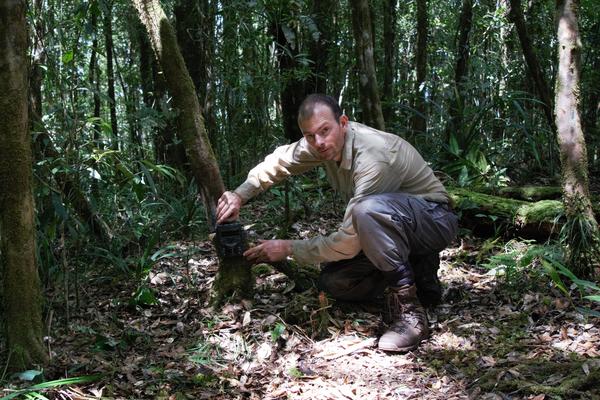
Dr James Kempton is a Visiting Researcher at the University of Oxford's Department of Biology and an Associate Member of Merton College. Concurrently, he serves as a Research and Development Fellow at the UK Government's DEFRA, stationed at the Royal Botanic Gardens, Kew, where he leads the 'Innovative Data Science for the Exploration of Biodiversity Darkspots' project. His research spans biomechanics of avian flight, influenza surface protein evolution, and Indo-Pacific biogeography. Current work focuses on biodiversity discovery in New Guinea through the Cyclops Mountains Ecology Project—a multinational collaboration that rediscovered Attenborough's long-beaked echidna after 62 years. This integrates specimen collection with computational approaches for automated species identification from 38,000 camera-trap images. Recent publications (2021-2025) reveal interdisciplinary trends: applying missile guidance theory to avian pursuit dynamics, optimizing seabird flight energetics, and pioneering biodiversity informatics in underexplored regions. Key disciplines include biomechanics, conservation biology, and ecological data science, with consistent emphasis on engineering principles applied to biological systems. Kempton's collaborative projects include the Cyclops Mountains Ecology Project (with Oxford, Yappenda, Indonesian institutions) and DEFRA-funded research at Kew. These initiatives secure substantial grant support for exploring biodiversity darkspots and developing novel ecological monitoring technologies through international partnerships. He directs Cyclops Mountains field operations, managing extensive specimen collections and image datasets. This work establishes foundations for biogeographical studies of New Guinea's montane ecosystems and automated wildlife monitoring systems, with future applications in conservation of least-explored terrestrial regions.
Dr. Dawid Szymanowski is a Lecturer at the Department of Earth and Planetary Sciences (D-EAPS) at ETH Zurich. His research focuses on geochronology, petrology, and magmatic processes, particularly in large igneous provinces and lunar systems. He specializes in high-precision U-Pb dating techniques, including ID-TIMS and LA-ICP-MS analyses of zircon, cassiterite, and calcite. His work addresses fundamental questions about magma evolution, crustal formation, and volcanic-plutonic connections. Recent projects include studies on Antarctic paleoenvironments, lunar crustal solidification, and silicic volcanism in Europe and South America. Dr. Szymanowski has developed new reference materials for geochronological studies and contributed to methodological advancements in zircon dating. His research integrates experimental petrology, isotopic analysis, and field-based investigations to understand magmatic systems across planetary scales. Notable contributions include refining the chronology of the Deccan Traps, Yellowstone-Snake River Plain ignimbrites, and the Moon’s early history. His publications emphasize interdisciplinary approaches, combining geochronology with geochemical and petrological data to unravel Earth’s and planetary processes. He actively participates in interlaboratory reproducibility studies and advocates for standardized reporting practices in geochronology. While no specific awards or grants are listed, his extensive publication record and methodological innovations highlight his significant contributions to the field. His research group collaborates internationally on projects ranging from terrestrial volcanic systems to extraterrestrial samples.