Professor Hendrik Vollmer is a faculty member in the Accounting Group at Warwick Business School , University of Warwick, since 2020. He previously served as Head of the Accounting Division at the University of Leicester (2015–2020) and worked at Bielefeld University in Germany for 16 years. His research bridges accounting, sociology, and environmental studies, focusing on accounting as a social practice and its role in addressing ecological challenges. Senior Fellow of the Higher Education Academy Associate Editor of European Accounting Review Member of editorial boards for Zeitschrift für Soziologie, Accounting, Organizations and Society, and Social and Environmental Accountability Journal Active in sustainability accounting research and education Contributor to interdisciplinary accounting literature Recent publications explore accounting's role in climate change mitigation, public value creation, and the spatialization of worth. His teaching modules include Accounting for Sustainability, People, Planet and Financial Accounting: Theory and Context .
Massimo Piccardi is a Professor of Natural Language Processing (NLP), Computer Vision, and Machine Learning at the University of Technology Sydney (UTS) , where he has been since 2002. He currently serves as the Head of the School of Electrical and Data Engineering and leads the Big Data Analytics program at the Global Big Data Technologies Centre. His research focuses on advancing NLP, machine learning applications in healthcare, and cybersecurity in IoT systems. He has authored over 200 journal papers and conference proceedings, secured significant ARC and CRC grants, and holds the IEEE Computer Society Distinguished Contributor Award (2022). Education & Professional Roles: Joined UTS in 2002, progressing from Associate Professor (2002–2007) to Professor (2008–present). Serves as Associate Editor for IEEE Transactions on Big Data and Editor for Artificial Intelligence in Medicine. Active in professional societies including IEEE, ACL, and ALTA (President, 2023–2024). Research Interests: Core areas include NLP (translation, summarization, adversarial attacks), healthcare informatics (clinical NLP, health service analysis), and cybersecurity (IoT security, privacy-preserving systems). Cross-cutting themes include generative models, cross-lingual systems, and ethical AI. Grants & Projects: Principal Investigator on ARC Discovery/Linkage projects and CRC grants. Recent projects include controllable machine translation (Amazon), privacy-preserving digital agriculture, and STEM innovation (ASTRID project with NBN Co). Labs & Collaborations: Leads the UTS Global Big Data Technologies Centre, collaborating on projects like adversarial NLP attacks, medical machine translation, and secure IoT frameworks.
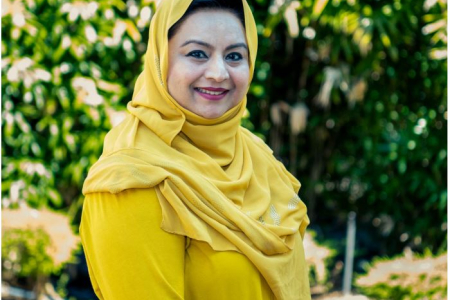
Dr. Farha Sattar is a Lecturer in Education (Mathematics) at the Faculty of Arts and Society, Charles Darwin University. With over thirty years of teaching experience in Mathematics, Science education, GIS, Remote Sensing, and e-Learning technologies at undergraduate and postgraduate levels, Dr. Sattar brings extensive expertise to her academic role. She holds a PhD in Geospatial Science from Charles Darwin University, focusing on Spatial Mathematical Modelling for 3D Gully Mapping and Erosion Quantification. Her educational background includes: PhD in Geospatial Science (Three Dimensional Gully Mapping and Erosion Quantification within a Geoinformatics Framework), Charles Darwin University (2012) Prior academic experience at several Asian and European universities Dr. Sattar's research spans multiple interdisciplinary fields with a strong focus on the intersection of education and technology. Her primary research interests include Mathematics Education, STEM Education, Geoscience Education, Spatial Mathematical Modelling, Drone Technology, Remote Sensing, Geographic Information Systems, and Innovative Pedagogies such as experiential learning and inquiry-based approaches. She has developed expertise in cognitive development, particularly in fostering critical and creative thinking skills through iSTEM approaches. An analysis of Dr. Sattar's recent publications reveals a consistent trajectory toward integrating emerging technologies like drones, augmented reality, and geospatial artificial intelligence into educational contexts. Her work demonstrates a progression from foundational geospatial research on erosion mapping to innovative applications in STEM education. Recent publications increasingly focus on drone technology for educational purposes, spatial data infrastructure for policy development, and computational thinking development through technology-enhanced learning. Dr. Sattar has received numerous accolades for her contributions to education and research: NT Science Week Awards – Inspired NT STEM Hero of the Year award (2021) Long Service Recognition Award (2023) Finalist, CDU Alumni Award (2023) Multiple Best Presentation Awards (2008, 2010, 2017) Australian College of Educators - 2021 College Medal Nominee As a supervisor, Dr. Sattar mentors postgraduate research students including Ayesha Farhan, who is working on "A Framework for Cognitive Development: Fostering Critical and Creative Thinking Skills, Using iSTEM Approach." She actively secures research funding through various projects such as "DBELaSTEM: Drone-Based Experiential Learning and STEM Education," "STEM_D & VR: Youth STEM Learning and Empowerment with Drones and VR," and "CodProg Drone Lab." Her research is supported by grants from NT Government projects and other external funding sources. Dr. Sattar leads the CodProg Drone Lab, an innovative research space exploring drone technology applications in education. She is a certified drone pilot and aeronautical radio operator, which enables her to bridge theoretical knowledge with practical applications. Her work with the "Flying Forward: Drones, STEM Equity, and Indigenous Empowerment" initiative demonstrates her commitment to community engagement and addressing educational disparities through technology.
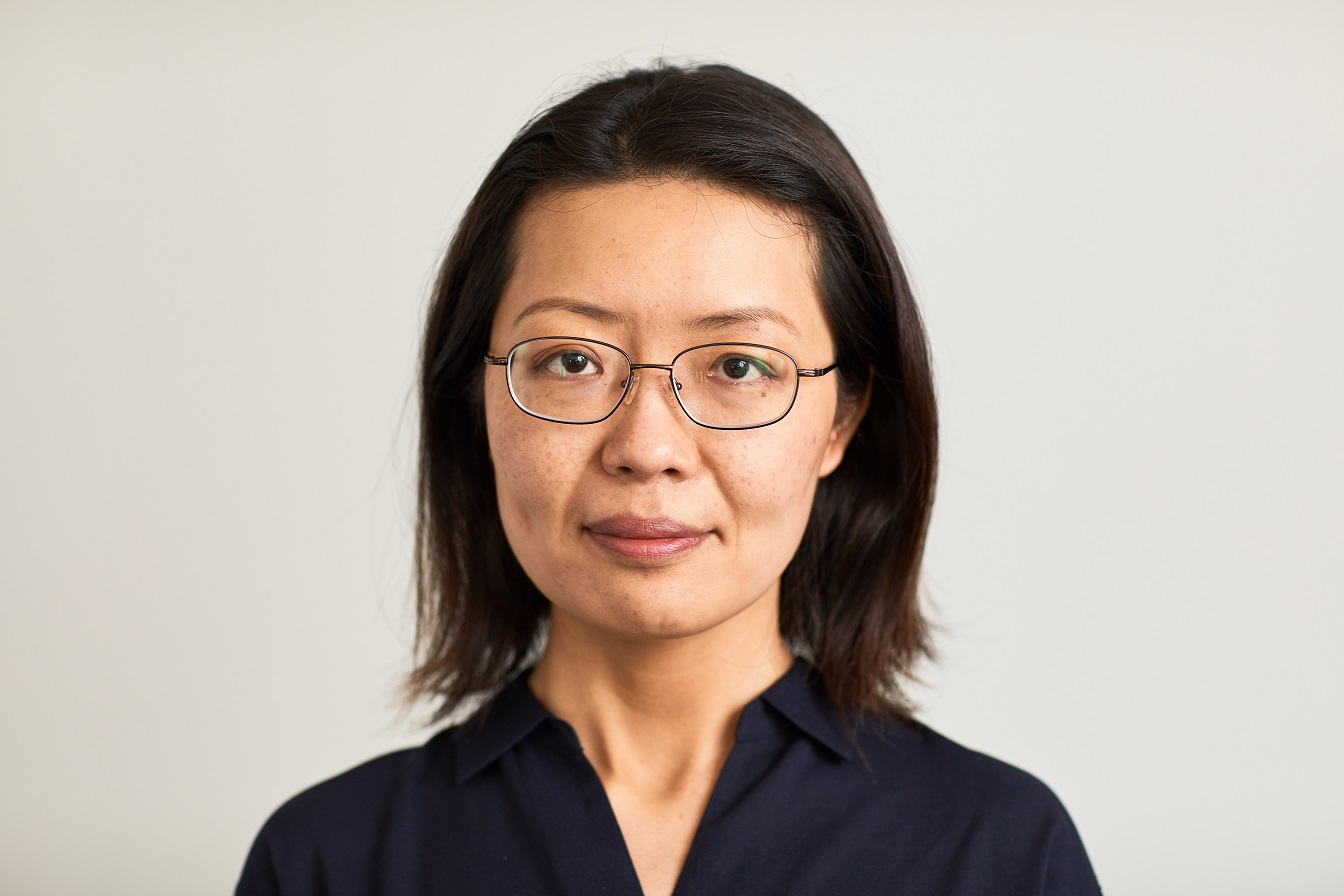
Yang Song is an ARC Future Fellow and Scientia Associate Professor at the School of Computer Science and Engineering , University of New South Wales (UNSW) . She serves as Associate Head of School (Research) and Co-Director of iCinema , focusing on AI and Computer Vision applications for social good. Education: BEng in Computer Engineering (Nanyang Technological University, Singapore), PhD in Computer Science (UNSW, 2013) Research Areas: Biomedical image analysis, human-centred AI, graph data modeling, neuro-symbolic learning, and AI trustworthiness. Her work develops domain-specific deep learning models for radiological segmentation, histopathology cancer analysis, and 3D reconstruction. Recent projects address explainability in LLMs, fairness in AI, and human-robot interaction frameworks. With over 200 peer-reviewed publications in top venues like CVPR , MICCAI , and NeurIPS , her research spans biomedical imaging, robotics, and general multimodal AI. Scientific Awards include: 2024: ARC Industrial Transformation Research Hub for Human-Robot Teaming 2023: Google Inclusion Research Award 2022: NHMRC Ideas Grant for computational brain imaging 2021: UNSW Engineering Research Excellence Award 2020: Scientia Fellowship (UNSW) 2019: ARC Future Fellowship She supervises 24 current PhD/MPhil students and has graduated 15 advisees, including placements at Harvard University and Siemens Healthineers. Her grants include collaborations with Surf Life Saving Australia and industry partnerships for AI-driven solutions.
Dr. Feras Dayoub is a Senior Lecturer at the School of Computer and Mathematical Sciences (Faculty of Sciences, Engineering and Technology) at the University of Adelaide , specializing in Embodied AI and Robotic Vision within the Australian Institute for Machine Learning (AIML) . He co-directs the CROSSING French-Australian laboratory for human-autonomous agent teaming and holds an Adjunct position at the Queensland University of Technology (QUT) , serving as an Associate Investigator at its Centre for Robotics . Previously, he was a Chief Investigator at the ARC Centre of Excellence for Robotic Vision . His research focuses on advancing reliable deployment of computer vision and machine learning on mobile robots in real-world environments. Applied projects include agricultural automation , environmental conservation , and autonomous infrastructure monitoring . He has published extensively on topics like object detection , domain adaptation , 3D representation learning , and vision-language navigation , with a particular emphasis on robustness in dynamic and partially observed environments. Dr. Dayoub is also an educator specializing in programming , computer vision , and robotic perception . He contributes to open-source robotics research through tools like AARK (Autonomous Racing Toolkit) and has led teams developing solutions for precision agriculture (e.g., Deepfruits fruit detection system) and environmental monitoring (e.g., Crown-Of-Thorns starfish detection ). Key Collaborations : CROSSING Lab, QUT Centre for Robotics Research Themes : Embodied AI, Robust Perception, Domain Adaptation
Dr. Teresa Wang is a Senior Lecturer in Data Science at Monash University's Faculty of Information Technology, specializing in entity/user modeling, relational/structural machine learning, and graph/network analysis. She holds a Ph.D. from the University of Queensland and degrees from Nanjing University. Currently, she directs the Master of Data Science Program and teaches courses like FIT5201 Machine Learning. Her research focuses on social, e-commerce, and health data modeling, with notable projects including the Knowledge Enriched Approach for Effective Personalization (2025–2027) and collaborations on AI in Mental Health and Site Safety. Dr. Wang has co-authored over 59 publications, emphasizing areas like ontology matching and multimodal data analysis. She actively supervises PhD students and contributes to initiatives like the CSIRO Next Generation Graduates Program for clean energy and sustainability. Education: Ph.D. in Computer Science (2017), University of Queensland Master of Computer Science (2013), Nanjing University Bachelor of Software Engineering (2010), Nanjing University Research Interests: Entity modeling, spatio-temporal data analysis, graph mining, recommender systems, and health/medical records mining. She explores applications in social media, e-commerce, and healthcare sectors. Projects: "Knowledge Enriched Approach for Effective Personalization" (2025–2027) "AI for Clean Energy and Sustainability" (2023–2027) "CSIRO Next Generation Graduates Program: AI in Mental Health" (2023–2027) "Large-scale multimodal knowledge management" (2022–2025) Grants & Collaborations: Engaged with CSIRO, Crank Group, and Pola Practice Pty Ltd. Her work aligns with UN SDGs in education and sustainable energy systems. Labs/Teams: Part of the Monash Energy Institute and Monash Data Futures Institute, contributing to interdisciplinary AI and energy research.
Vince Wright is a Sessional Academic in the School of Education at the Faculty of Education and Arts. His research focuses on mathematics education, pedagogical content knowledge, and the application of global perspectives in educational policy and curriculum design. He has contributed to understanding how teachers develop effective instructional strategies and how students engage with mathematical concepts such as ratios, geometry, and percentages. His work spans journal articles and book chapters, examining topics like metaphor-based problem-solving frameworks, diagnostic tools for geometric reasoning, and the role of demonstration lessons in teacher professional development. Wright's research emphasizes practical applications for improving mathematics teaching methods and aligning pedagogy with international evidence-based practices. While no formal academic awards are listed, his contributions to mathematics education research reflect a commitment to bridging theoretical frameworks with classroom realities. His collaborative projects include co-authored studies with educators like Ken Smith and Rose Knight, exploring diagnostic assessments and pre-service teacher training.
Dr. Maxime Cordeil is a Senior Lecturer in Human Centred Computing at the School of Electrical Engineering and Computer Science, The University of Queensland. His research focuses on Virtual and Augmented Reality technologies for data interaction, interactive visualization systems, and AR interfaces for industry applications. He has authored over 60 publications in top-tier venues such as ACM CHI and IEEE VR, and was nominated as Australia's Field Leader in Computer Graphics in 2021 and 2022. Research Interests: Data visualization, immersive analytics, medical imaging, collaborative systems, and human-computer interaction. Current Projects: Includes embedded visualizations for sports performance, interactive machine learning in 3D environments, and mixed-reality applications in forensic science. PhD Supervision: Actively guiding students in topics like immersive gesture exploration, AR for digital health, and collaborative VR systems. His work bridges theory and practice, with tools like IATK (Immersive Analytics Toolkit) and the MADE-Axes hardware system. He collaborates with industry partners like Raytracer and CSIRO, focusing on applications in space exploration, underwater training, and remote operations. Awards: Multiple best paper recognitions at ISS and CHI, plus industry-driven research grants. Labs: Leads the Immersive Analytics research group at UQ, specializing in embodied interaction and spatial computing.
Dr. Ben Swift is a Senior Lecturer at the School of Cybernetics, ANU, specializing in AI, computational art, and cybernetics. He leads the Cybernetic Studio, an interdisciplinary collective exploring cybernetic systems through hardware/software/people collaborations. As a livecoding artist, he performs globally and co-founded the ANU Laptop Ensemble. His research spans generative AI, open-source tools like Extempore, and UX design. Education: PhD in Computer Science (ANU) Projects: Australia's Digital Economy (2022), The Augmented Web (2019) Research focuses on AI creativity, biofeedback interfaces, and computational music. His work bridges technical innovation with artistic expression, evident in projects like TSPNet and adversarial camera systems. Key contributions include Extempore’s development and studies in live coding disruption. Awards unspecified but recognized internationally for interdisciplinary impact.
Alex Holcombe is a Professor in the School of Psychology at the University of Sydney . His research spans two major domains: perception and attention (investigating visual information bottlenecks and temporal processing) and meta-science (advancing open science and reproducibility through tools like tenzing.club and editorial roles in open-access journals). Education: PhD in Psychology (Harvard), BA in Psychology and Cognitive Science (University of Virginia) Editorial Roles: Associate editor for WikiJournal of Science , Collabra: Psychology , and Meta-psychology His experimental psychology work uses behavioral studies to reveal limits in visual processing speed, feature binding, and attentional resource allocation. Key findings include the role of naps in learning, parietal lobe function in rapid letter processing, and temporal binding dynamics in perception. Recent publications focus on peer review reform (2025 PNAS ), contributorship attribution (2024 Accountability in Research ), and visual cognition (2024 Journal of Vision ). These works reflect his dual commitment to understanding perceptual mechanisms and improving scientific practices. Advising: Mentors PhD students including De-wei DAI, Jye MARCHANT, and Rasmus PEDERSEN Labs: Leads research on visual perception and attentional bottlenecks Grants: 2024 Core Funding Grant for object tracking research
Kirsty Kitto is an Associate Professor at the University of Technology Sydney in the Learning Design and Technology Unit. With a background in theoretical physics and computer science, her research focuses on developing quantum-inspired models of contextuality to understand complex human behavior in educational systems. She explores the intersection of Artificial Intelligence (AI) , Learning Analytics , and Educational Theory , seeking to bridge the divide between big data and pedagogical frameworks. Current Appointments : Associate Professor (2020-present), Senior Lecturer (2017-2020) Past Academic Roles : Senior Research Fellow (QUT), Senior Lecturer (QUT), Associate Lecturer (Flinders University) Her funded research includes projects on: Quantum models in cognitive systems (ARC Fellowship DP1094974) AI literacy in digital workplaces (IEEE Transactions study) Contextual learning analytics (DVC Education and Students Division) Skills passports for lifelong learning (UMAP 2024 paper) Kitto's recent work examines human-AI interaction in writing assessment, data storytelling for teacher-centered analytics, and causal modeling to strengthen educational theory-data connections. She actively supervises Masters and PhD students and contributes to policy debates through government submissions on generative AI in education. Her methodology combines mathematical formalism with sociotechnical analysis to address educational complexity.
Professor Lyn English is a leading academic in STEM and mathematics education at Queensland University of Technology's College of Education, Department of Curriculum. Her research focuses on interdisciplinary approaches, particularly integrating engineering and data science into early years education. She has authored or co-edited numerous books and journal articles, emphasizing the role of design-based problem solving and mathematical modeling in fostering critical thinking. English has contributed extensively to curriculum frameworks, including the 'Pattern and Structure Mathematics Awareness Program' (PASMAP), and has explored gender dynamics in mathematics achievement. She collaborates with institutions globally, such as Routledge, Springer, and the Australian Council for Educational Research, to advance educational methodologies. Her work highlights the importance of bridging theory and practice in STEM education. English’s research spans cognitive development in statistical and probabilistic reasoning, foundational mathematical concepts in primary education, and teacher professional development. She advocates for accelerating students' learning through innovative curricula like the RAMR framework and has conducted studies on pedagogical practices in diverse educational settings. Her edited volumes, including Handbook of International Research in Mathematics Education and Ways of Thinking in STEM-based Problem Solving , consolidate cutting-edge perspectives in the field. English’s contributions to conferences and symposia underscore her commitment to advancing STEM integration and addressing challenges in mathematics education research.
Xiaoyang Wang is a Senior Lecturer in the School of Computer Science and Engineering (CSE) at the University of New South Wales (UNSW). He holds a Bachelor's and Master's degree in Computer Science from Northeastern University, China, and earned his PhD from CSE UNSW. Dr. Wang's research focuses on database systems with a special emphasis on query processing and data mining on large-scale graph, spatial, and streaming data. His expertise extends to data-driven machine learning, smart contract analysis on blockchain, and FinTech with financial network analysis. His work spans Graph Processing, Graph Neural Networks, Spatial Data Processing, AI for Databases (AI4DB), Database for AI (DB4AI), and FinTech applications. His publication record shows significant contributions to the field with 7 book chapters, 56 journal articles, 61 conference papers, 7 edited conference proceedings, and 4 conference abstracts. Recent publications (2022-2025) demonstrate his strong research trajectory in advanced graph processing techniques, neural network applications, and innovative database approaches. Key themes include hierarchical contrastive learning, robust attack frameworks, temporal graph processing, influence maximization, knowledge graph-enhanced reasoning, and rumor mitigation. Dr. Wang actively recruits PhD students interested in pursuing research in related fields and encourages current undergraduate and master's students at UNSW to contact him about research opportunities. He maintains an active research agenda with practical implications for industries dealing with large-scale network data, financial technology applications, and data-intensive systems. He can be reached at xiaoyang.wang1@unsw.edu.au and is located in Engineering building K17-501D at UNSW.
Joanne Mulligan is a Professor at the Macquarie School of Education, Macquarie University, specializing in mathematics and STEM education across early childhood to secondary levels. Her research focuses on early mathematical development, pedagogy, assessment, and curricula, with expertise in educational psychology and teacher education. She has led major projects like the $2.3m Opening Real Science (ORS) Project and currently oversees ARC-funded initiatives exploring spatial reasoning and interdisciplinary learning. Research Interests: Mathematics Education, STEM Education, Cognitive Development, Early Childhood Learning, Teacher Professional Development. Key Projects: Connecting Mathematics Learning with Spatial Reasoning (2017–2020), Enriching Mathematics and Science Learning (2018–2020), and the ORS Project (2013–2017). Contributions: Developed programs like PASA and PASMAP, impacting national and international curricula. Active in global organizations such as ICME and ICMI. Research Trends Mulligan’s recent work emphasizes interdisciplinary approaches, spatial reasoning, and data modeling in early education. Her articles highlight pedagogical frameworks for integrating mathematics and science, enhancing teacher training, and fostering student engagement through collaborative and inquiry-based methods. Grants & Collaborations ARC Discovery Projects: Focus on spatial reasoning (2017–2020) and interdisciplinary learning (2018–2020). Collaborations: International Spatial Reasoning Study Group (IOSTEM), Deakin University, and CSIRO. Labs & Teams Associated with the Centre for Research in Mathematics and Science Education (CRiMSE) and the MQ Learning Sciences Laboratory (MQSL). Her work bridges research and practice, influencing curriculum design and teacher education nationally and globally.
Dr. Leigh Disney is a Senior Lecturer in the School of Educational Psychology & Counselling at Monash University, specializing in early years education with a focus on mathematics learning, digital technologies, and play-based pedagogy. He holds an adjunct position at the Coordinated Innovation Centre for Basic Education Reform and Development since 2015. His research explores young children’s mathematical development, particularly during the transition to primary school, and the role of dynamic leadership in enhancing educational outcomes. Disney has conducted cross-cultural studies in China on play-based learning and teacher practices, contributing to global early childhood education discourse. Expertise: Early Childhood Education, Digital Technologies, Play Pedagogy, Mathematics Learning, Teacher Education Collaborations: Projects in China, Victorian Curriculum development, and leadership in early years education Publications: Over 40 articles, books, and reports on topics ranging from digital play to pandemic impacts on educators Disney’s research emphasizes the integration of play and technology to improve learning outcomes. He has led or co-investigated six projects since 2018, including initiatives funded by the Victorian Curriculum Authority and the Department of Education. His work aligns with UN Sustainable Development Goals related to quality education and reducing inequalities. His contributions extend to policy advocacy, such as submissions to parliamentary committees on classroom disruption and teacher well-being. Disney’s interdisciplinary approach bridges early childhood education with developmental psychology and technology integration, shaping both academic and practical frameworks in the field.