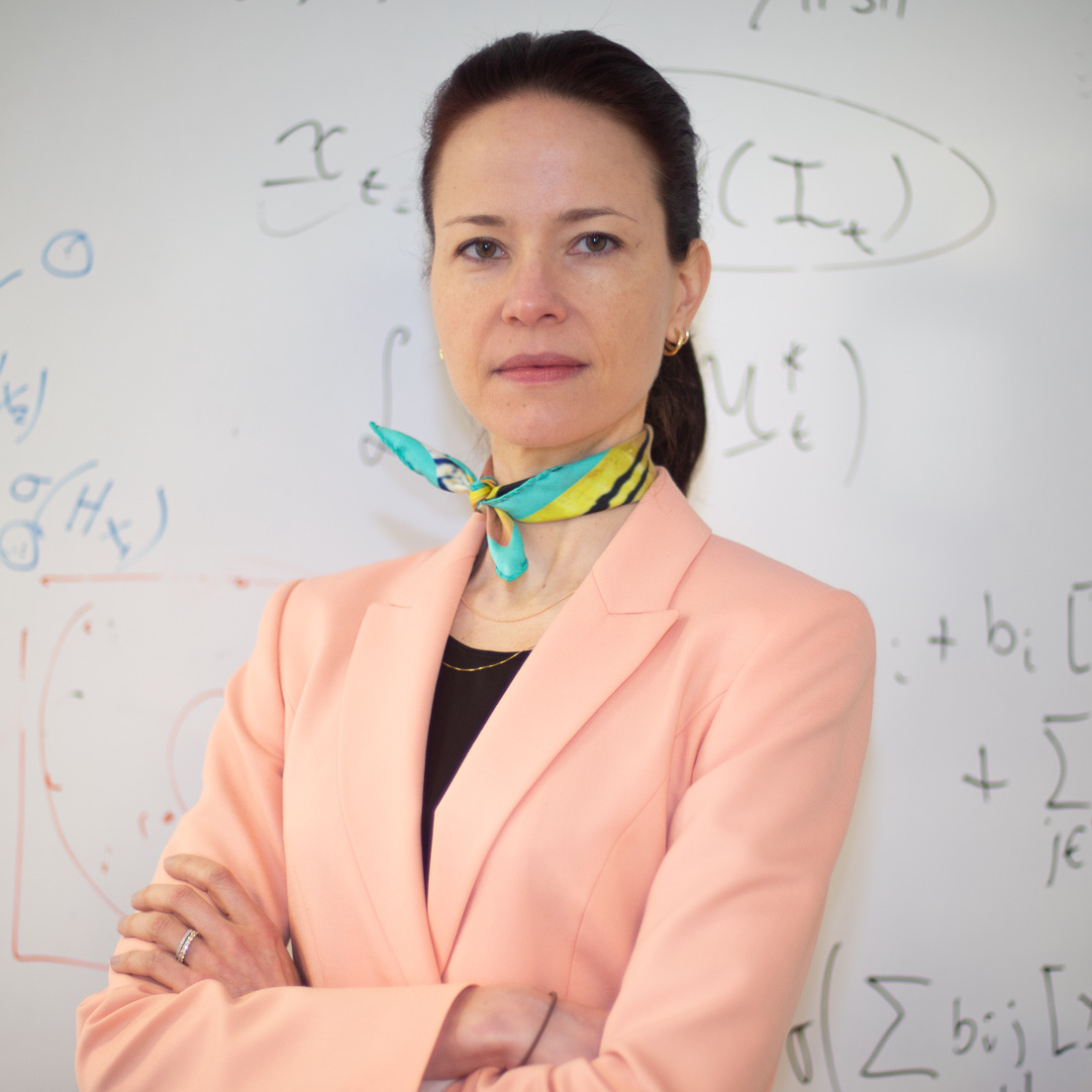
Yushu Zhu is an Associate Professor at the School of Public Policy at Simon Fraser University. Her research focuses on housing stratification , urbanization , and social equity , with a particular emphasis on immigrant communities , low-income populations , and ethnic minorities . She teaches courses on housing policy, urban transformation, and research methods. PhD in Architecture from University of Illinois at Urbana-Champaign M.Sc. and B.Sc. (Hons) in Geography from Sun Yat-sen University, China Former roles at Asia Pacific Foundation of Canada, UBC, and Brown University Research Interests include urban sociology , community housing , and public policy . Recent work analyzes housing inequality in Canada (1981–2016), state-embedded gentrification in China, and neighborhood participation dynamics. Her publications appear in top journals like Urban Studies and Environment and Behavior . Scientific Awards include multiple SSHRC grants (Partnership, Insight, Partnership Engage) and a Lincoln Institute of Land Policy fellowship. She has contributed to policy reports and participated in expert panels on urban housing, pandemic impacts, and social integration.
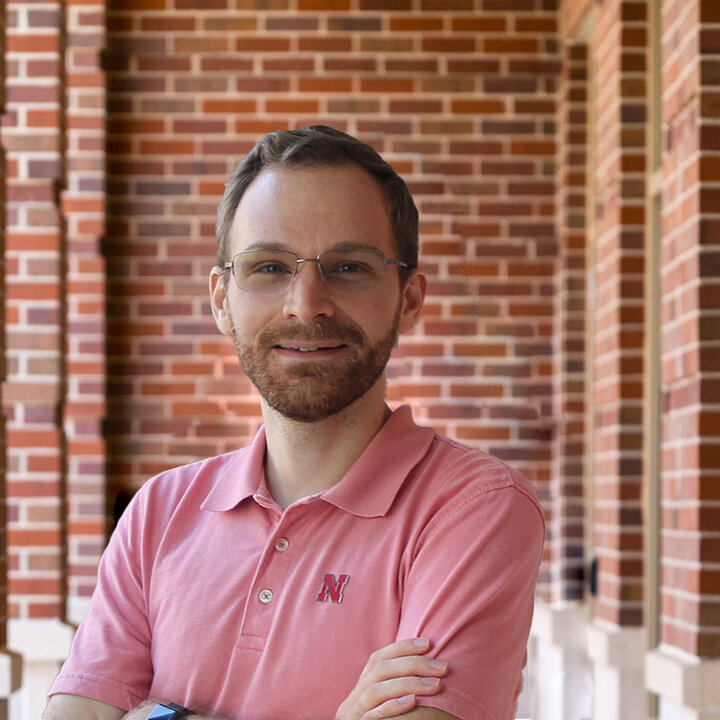
Seth Polsley is an Assistant Professor in the Jeffrey S. Raikes School of Computer Science and Management at the University of Nebraska-Lincoln. His academic home resides in the School of Computing, where he bridges intelligent systems design with human-computer interaction to enhance educational and universal computing experiences. BS in Computer Engineering (2014) - University of Kansas MS (2017) & PhD (2023) in Computer Engineering - Texas A&M University His research explores: Intelligent tutoring systems Brain-computer interfaces Accessible educational technologies Machine learning for child development assessment Sketch recognition in STEM learning Recent publications demonstrate expertise in tactile learning interfaces, sketch-based developmental assessment, and equitable AI systems. Key disciplines span Human-Computer Interaction, Machine Learning, and Educational Technology. Scientific recognition includes: James Blackiston Memorial Graduate Fellowship Sigma Xi Research Award With professional experience at Lexmark International and MIT Lincoln Lab, Polsley combines practical engineering with educational innovation. His work on sketch-based tools and wearable systems addresses both technical and societal challenges in computing.
Professor Guy Brown is Chair of Computer Science at the University of Sheffield's School of Computer Science. He holds a BSc in Applied Science (1984), PhD in Computer Science (1992), and MEd in Teaching and Learning (1997). His research focuses on Computational Auditory Scene Analysis (CASA), noise-robust speech recognition, auditory modeling, and binaural processing. Research interests include: Machine hearing systems for sound source separation Reverberation-robust speech processing Auditory scene analysis models for normal/impaired hearing Applications in robotics and healthcare technologies Publication trends show recent focus on deep learning approaches for biomedical applications including sleep apnea detection, respiratory sound analysis, and multimodal health monitoring systems using neural networks. Honors include: University Senate Award for Excellence in Teaching (2014) Microsoft Software Engineering Innovation Award (2013) He leads doctoral supervision for 15+ students and has secured research funding from EPSRC, Innovate UK, EU FP7, and AHRC. Manages the Speech and Hearing research group and has held visiting positions at international institutions including LIMSI-CNRS and ATR Japan.
Associate Professor Diana Young is an academic, curator, educator, and designer at The University of Queensland (UQ), affiliated with the School of Social Science. Her research bridges cultural anthropology, material and visual culture, and museum studies, with a focus on Indigenous Australian art, museum practices, and the role of color in social life. She holds a Master's and PhD from University College London. Her work includes curating exhibitions such as the 50th anniversary of Ernabella Arts and leading the UQ Anthropology Museum’s transformation into a public institution. She directed the Master of Museum Studies program and raised over AUS$1.1 million for museum initiatives. Her research explores color as material and cultural substance, Australian Indigenous art markets, and digital heritage. Recent articles highlight her focus on Indigenous land management (e.g., Water as Country), museum curation practices, and material culture studies. She collaborates with institutions like QAGOMA on learning-focused courses and has authored/co-authored numerous books and chapters, including Solomon Islands: Re-Enchantment and the Colonial Shadow (2017).
David Miles is a Professor of Financial Economics at Imperial College Business School, affiliated with the Department of Finance. He serves on the Budget Responsibility Committee of the Office for Budget Responsibility and the Commission of the Irish Central Bank. Previously, he was a member of the Bank of England's Monetary Policy Committee (2009–2015). His research focuses on fiscal sustainability, financial stability, monetary policy, and demographic change. He has also contributed to analyses of housing markets, mortgage dynamics, and the impact of remote work on urban economies. Education & Professional Background: Academic roles at Birkbeck College, London and Oxford University Industry experience with Morgan Stanley and Merrill Lynch Research Interests: Fiscal policy challenges and long-term sustainability Monetary policy design and implementation Demographic shifts and their macroeconomic implications Pension system reform and risk management Housing market dynamics and mortgage market innovation Key Publications Trends (2021–2024): Recent work emphasizes pension fund sustainability (e.g., USS pension scheme analysis), post-pandemic economic recovery strategies, and the macroeconomic impacts of demographic changes. He explores policy trade-offs between health safety and economic activity during the pandemic, as well as long-term structural issues in financial systems. Awards: CBE (2016 Queen's New Year’s Honours) Advisory & Grants: Active in policy advisory roles across UK and EU institutions. His work often bridges academic research with practical policymaking, particularly in fiscal and monetary domains. Labs/Teams: Collaborates with cross-disciplinary teams at Imperial College and external institutions on topics like pension systems, macroeconomic modeling, and public health policy.
Professor Amanda Prorok leads the Prorok Lab at the University of Cambridge's Department of Computer Science and Technology, focusing on multi-agent and multi-robot systems. Her work integrates machine learning, planning, and control to coordinate intelligent agents in shared environments, with applications in transport, environmental monitoring, and search-and-rescue. She is a Fellow of Pembroke College and holds editorial roles at IEEE Robotics and Automation Letters and Autonomous Robots. Education: Ph.D., EPFL (Switzerland); Postdoctoral Research, University of Pennsylvania (USA). Research Interests: The lab pioneers methods like differentiable communication between learning agents and develops decentralized algorithms for navigation, coverage, and coordination. Key themes include neural diversity in collective learning, resilient swarm systems, and environment-aware control. Notable Achievements: ERC Starting Grant, Amazon Research Award, EPSRC New Investigator Award ABB Prize for Best Thesis in Computer Science (EPFL) Teaching: Leads Computing for Collective Intelligence (MPhil/Part III) modules. Lab & Infrastructure: The Prorok Lab operates the Cambridge RoboMaster platform and develops testbeds for connected vehicles and robot swarms. Recent work emphasizes scalable reinforcement learning and graph neural networks for decentralized decision-making.
Dr Sam Halliday is a Professor of American Literature and Director of Graduate Studies (Students and Training) at Queen Mary University of London's School of English and Drama. He holds a BA from the University of Sussex, an MA from the University of Nottingham, and a PhD from Royal Holloway, University of London. His research focuses on American literature, African American literature, modernism, science and technology in culture, and literature's engagement with sound, media, and the arts. Recent projects explore Ralph Ellison's work and the intersections of literature with cinema, music, and technological discourse. His academic career at Queen Mary since 2000 has included teaching courses on topics like 'The Invention of America' and 'Modernism and After.' He has supervised doctoral projects on topics ranging from 19th-century medicine to German tragic radio. His publications include key works like Sonic Modernity (2013) and Science and Technology in the Age of Hawthorne (2007), alongside numerous articles analyzing sound, technology, and cultural representation. Dr Halliday’s research bridges literary studies with interdisciplinary approaches, addressing themes such as sensory perception, media history, and African American intellectual traditions. He actively contributes to graduate training and academic leadership within the School of English and Drama.
Professor Martin Welton holds the position of Professor of Theatre and Performance and Deputy Head of the School of English and Drama at Queen Mary University of London. He joined the university in 2002 following his PhD from the University of Surrey and prior work as a performer in experimental dance and theatre. Education: BA (Hons), MPhil (Birmingham) PhD (Surrey) Research Interests: Welton’s work focuses on contemporary theatre and dance, theories of atmosphere, sensory cultures, and intersections between performance and tourism. He collaborates with artists and institutions like Rosemary Lee, Sound&Fury, and Battersea Arts Centre. Notable projects include the ArtsCross network and the £250K Digital Studio for immersive technologies. Articles and Trends: His publications explore atmospheric aesthetics, choreography, and immersive technologies. Recent work engages with climate in performance and cross-cultural collaborations. Grants and Awards: Welton secured £59,369 from the AHRC for immersive theatre projects and £250K for the Digital Studio. He has held roles such as Deputy Dean for Research (2020–2023) and Head of Drama (2023–2024). Supervision and Mentorship: He mentors through the Kings/QMUL/UCL BMentor programme and has examined over 20 PhDs across institutions. His supervision includes projects on affective collectives and phenomenology of sound. Labs and Collaborations: Leads ArtsCross , a transnational choreographic network, and co-edits the Routledge Handbook of Atmospheres . His Digital Studio supports artists like Alexander Whitley and Seth Kriebel.
Dr. Chao Tian is an Associate Professor in the Department of Electrical and Computer Engineering at Texas A&M University, part of the College of Engineering. He holds a Ph.D. from Cornell University (2005) and a B.E. from Tsinghua University (2000). His research focuses on information theory, distributed storage systems, coding theory, and machine learning applications, including large language models (LLMs) and privacy-preserving techniques like steganography and private information retrieval (PIR). He has received notable awards, including the 2017 IEEE Jack Wolf ISIT Best Student Paper Award and the 2014 IEEE ComSoc DSTC Best Paper Award. Dr. Tian’s work bridges theoretical foundations and practical applications, such as optimizing storage codes for distributed systems, developing secure PIR protocols, and exploring LLMs in energy and steganographic contexts. His group has pioneered methods for variable-order Markov chain modeling with transformers and designed quantization techniques for perceptual quality. Recent activities include a faculty development leave at MIT/Harvard and delivering distinguished lectures globally on AI and information theory. He advises students on cutting-edge topics like LLM-based steganography and diffusion models. His publications span journals like IEEE Transactions on Information Theory and conferences such as NeurIPS and ISIT, with a focus on coding theory, privacy, and machine learning. He has also contributed to open-source tools like the CAI toolbox for investigating information-theoretic limits. Current projects include optimizing cryptocurrency mining in energy markets and advancing federated learning with adversarial robustness.
Kelli Larson is a Professor at Arizona State University (ASU), holding dual appointments in the School of Geographical Sciences and Urban Planning and the School of Sustainability. She is affiliated with multiple research centers, including the Central Arizona-Phoenix Long-Term Ecological Research (CAP LTER) project, where she serves as Lead Social Scientist. Her research focuses on human-environment interactions, urban sustainability, and the social dimensions of ecological conservation. Dr. Larson earned a Ph.D. in Resource Geography from Oregon State University (2005) and has been at ASU since that time. Her work integrates mixed-methods approaches to study residential landscape management, urban biodiversity, and public perceptions of ecosystem services. She directs the Phoenix Area Social Survey, a key initiative for CAP LTER's long-term data collection. Her research interests include urban ecology, environmental governance, and the social drivers of landscape choices. Notable contributions examine how residents’ attitudes toward wildlife, vegetation, and water governance influence urban sustainability outcomes. She has led NSF-funded projects and published extensively on topics like yard ordinances, biodiversity in urban areas, and climate adaptation. Larson mentors undergraduates, graduate students, and postdocs, emphasizing undergraduate research through programs like the Sustainability Undergraduate Research Experience (SURE). She has received awards for mentoring and service, including the Outstanding Service Award (2019) and Distinguished Alumni Award (2018). Her work bridges academia and public engagement, addressing challenges such as urban heat mitigation, green infrastructure planning, and equitable access to urban ecosystems. She serves on editorial boards and professional associations, advocating for interdisciplinary approaches to environmental challenges.
Stephanie Newell is George M. Bodman Professor of English at Yale University, specializing in West African print cultures and colonial media history. Her research examines African-owned newspapers, local publishing practices, and literary creativity in colonial contexts. Newell's work has been recognized with the 2024 Gustav Ranis International Prize for her book on West African newsprint literature. Research explores: African newspaper cultures and readerships Anonymous publishing practices Urban representations in colonial media Postcolonial literary histories Publications include award-winning analyses of West African print ecosystems and cultural histories of urban life in Lagos. She teaches courses on postcolonial world literatures and African urban cultures. Current project 'Mapping Literary Lagos' investigates creative writing about metropolitan Lagos in collaboration with University of Lagos scholars.
Agnieszka Roginska is a Professor of Music Technology at the Steinhardt School, New York University, specializing in immersive audio, spatial sound, and auditory displays. Her work integrates acoustic science with virtual reality and medical applications, including postural stability studies for vestibular rehabilitation. She holds leadership roles as AES President-Elect and co-edited the authoritative book 'Immersive Sound'. Education: B.A. in Piano Performance and Computer Applications in Music (McGill University, 1996); M.M. in Music Technology (NYU, 1998); Ph.D. in Music Technology (Northwestern University, 2004). Research focuses on 3D audio technologies, auditory displays for virtual environments, and sensory integration studies. She leads NYU's Music and Audio Research Lab (MARL) and advises the Society for Women in TeCHnology (SWiTCH) at NYU. Awards include AES Fellowship and leadership in international audio engineering societies. Recent publications emphasize audio's role in postural control, distributed music performance frameworks (Holodeck), and VR sound design. Her work bridges technical innovation with artistic applications, including collaborative music systems in mixed reality.
Norbert Schwarz is a **Provost Professor of Psychology and Marketing** at the University of Southern California (USC), affiliated with the **Dornsife College of Letters, Arts and Sciences** and the **USC Dornsife Mind & Society Center**. His research focuses on embodied cognition, judgment processes, and the impact of contextual influences on decision-making. He explores how bodily experiences (e.g., physical sensations) shape abstract thinking, particularly through metaphorical links between physical and conceptual domains. Key research themes include the role of sensory experiences in shaping judgments of importance, the psychological effects of physical cleansing, and the influence of spatial metaphors on decision difficulty. His work bridges social psychology, consumer behavior, and health communication, emphasizing the socially situated nature of cognition. Recent publications highlight his contributions to understanding metaphorical embodiment, such as how physical weight influences perceptions of importance and how cleansing actions create a 'clean slate' effect. His interdisciplinary lab collaborates with doctoral students, post-docs, and visiting scholars to advance theories of embodied cognition and metacognitive experiences. He serves as an advisor to graduate students and regularly updates his CV and resume. His work is accessible via Google Scholar and reflects a commitment to empirical research in psychological and societal contexts.
Brian M Deal serves as a Professor of Landscape Architecture within the School of Architecture at the University of Illinois at Urbana-Champaign, holding additional appointments in Urban and Regional Planning, the European Union Center, the Center for Latin American and Caribbean Studies, and the National Center for Supercomputing Applications (NCSA). His expertise bridges sustainable planning theory, energy systems, and spatial modeling to develop practical decision-support tools for community development and climate resilience. His educational foundation includes a PhD in Regional Planning (2002), Master of Architecture (1997), and BS in Architectural Studies (1983), all earned at the University of Illinois at Urbana-Champaign. Prior academic experience encompasses a decade of professional architecture practice and senior research at the Army Construction Engineering Research Laboratory (CERL), where he specialized in sustainable military facility design using spatial simulation. Deal's research centers on sustainable planning systems and climate adaptation, with current projects examining urbanization impacts on Korean rural amenities, advancing the University of Illinois' climate action plan (iCAP), and developing next-generation 'sentient' planning support systems. His work integrates land-use modeling, energy systems analysis, and decision-support technologies to address complex urban environmental challenges through interdisciplinary collaboration. Recent publications reveal a pronounced shift toward data-driven sustainability solutions, featuring AI applications for carbon-neutral planning, multi-scaled green infrastructure optimization, and socio-ecological modeling. Key themes include urban carbon sequestration, post-pandemic park dynamics, and climate-resilient coastal design, demonstrating consistent innovation in translating theoretical frameworks into actionable planning tools for real-world implementation. Professor Deal's scientific awards and honors were not detailed in the provided text. As faculty mentor to the Student Sustainability Committee and chair of campus sustainability planning efforts, Deal actively guides student development and institutional policy. His leadership of the LEAM Laboratory and SEDAC involves managing research grants focused on urban resilience, energy systems, and climate adaptation, fostering partnerships with government agencies and community organizations to deploy planning tools that directly impact community decision-making processes. Deal directs the Land Use Evolution and Impact Assessment Modeling (LEAM) Laboratory and Smart Energy Design Assistance Center (SEDAC), leading interdisciplinary teams in developing spatial simulation models and decision-support systems. His operational leadership extends to authoring the university's climate action plan and chairing campus sustainability committees, positioning him at the nexus of academic research, institutional policy, and community engagement for sustainable urban futures.
Professor Stuart Lister holds the position of Pro-Dean for Research and Innovation at the University of Leeds' Faculty of Social Sciences. He is also a Professor of Policing and Criminal Justice in the School of Law. His career includes roles as Research Fellow at Keele University and Durham University before joining Leeds in 2001. He became Head of the Graduate School (2016–2020) and was promoted to Professor in 2019. His research focuses on policing arrangements, private sector involvement in criminal justice, and governance frameworks. Notable works include Criminal Justice and the Private Sector (2017) and Accountability of Policing (2015). He currently serves on editorial boards for International Journal of Police Science and Management and Policing and Society . Research interests encompass plural policing networks, police accountability, and the night-time economy’s governance. Key projects include studies on body-worn cameras (funded by N8 Policing Partnership) and ESRC-funded police-community engagement initiatives. He collaborates with West Yorkshire Police on applied research. Recent projects address asset confiscation, police governance reforms, and local alcohol policy integration. His work critiques privatization trends and explores democratic oversight mechanisms in policing. Key Roles: Pro-Dean Research & Innovation, Editor of Criminology and Criminal Justice (2012–2015) Current Projects: 'Dirty Assets', 'Markets in Policing' seminar series, 2011 riots analysis Teaching: Supervises postgraduate researchers including Eleanor Abbott and Rebecca Fox Grants: ESRC White Rose Doctoral Training Partnership leadership His interdisciplinary approach bridges criminology, governance, and public policy, with outputs addressing both academic and practitioner audiences.