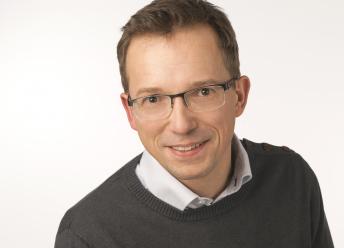
Prof. Dr. Bernd Möller is a faculty member at Europa-Universität Flensburg, specializing in sustainable energy systems management for developing countries. His research focuses on renewable energy integration, spatial analysis, and environmental planning, leveraging GIS tools for energy system transformation. Current position: Professor at Department Energy and Environmental Management Alumni of Flensburg University of Applied Sciences and Aalborg University (PhD in Energy Planning) Research interests encompass wind/solar/biomass systems, energy atlas development, and climate-resilient infrastructure. His work bridges technology, economics, and spatial planning in renewable transitions. Publications highlight trends in offshore wind modeling, biomass logistics, district heating expansion, and GIS-driven energy solutions. Key themes include decarbonization, resource constraints, and regional energy equity. Teaching involves applied GIS science, energy planning frameworks, and development cooperation. He leads the PhD program in Energy and Environmental Management for Developing Countries.
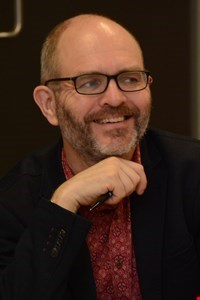
Professor Michael Clarke is a distinguished academic at the University of Huddersfield , serving as Director of IRiMaS (Interactive Research in Music as Sound) and holding leadership roles including former Dean of the School of Music, Humanities and Media and Dean of the Graduate School . His career spans over three decades at Huddersfield, where he has pioneered innovative software for music composition, pedagogy, and analysis. Education: PhD in Music (Durham University), MTC in Teaching (UCL Institute of Education) Clarke's research focuses on composition , particularly in live interactive works , and the development of software like Max/MSP for musicological analysis and sound synthesis. His work intersects with UN Sustainable Development Goals , emphasizing technological innovation in education and cultural preservation. Recent publications highlight his contributions to interactive aural analysis and fluid corpus manipulation tools. Clarke has secured major funding, including a €2.5m ERC Advanced Grant for IRiMaS and AHRC grants for collaborative projects. Awards include the National Teaching Fellowship (2011) and multiple European Academic Software Awards . Scientific Awards: National Teaching Fellowship (2011) European Academic Software Awards (record 3 wins) As a Principal Investigator , he has led projects with Prof Peter Manning and Dr Frédéric Dufeu, while actively supervising PhD students and contributing to REF assessments.
Professor James Staples is a prominent social anthropologist at Brunel University London, affiliated with the Department of Anthropology within the College of Business, Arts and Social Sciences. His research focuses on medical anthropology, disability, food, and identity in South Asia, particularly India. He is actively engaged in fieldwork, teaching, and academic leadership, including roles as Divisional Senior Tutor and Director of the South Asia Studies Research Group. PhD in Social Anthropology, SOAS, University of London (2003) BA (Hons) in Social Anthropology, SOAS, University of London (1990) PG Cert, Brunel University (2008) James Staples' research explores the social and cultural dimensions of bodily difference, leprosy, disability, suicide, and food practices in South India. His work combines ethnography with deep engagement on identity, stigma, and personhood. He has conducted long-term fieldwork in a South Indian leprosy colony since 1984, producing rich biographical and ethnographic insights. His recent publications reflect a strong trajectory in food anthropology and identity politics, especially regarding beef consumption and caste. Articles and books such as 'Sacred Cows and Chicken Manchurian' and 'Blurring Bovine Boundaries' analyze how food becomes a site of political and social contestation. His earlier work on leprosy, disability, and suicide continues to inform contemporary debates in medical anthropology. He frequently collaborates with scholars like Rebecca Marsland and Michele Friedner, and his interdisciplinary approach spans health, ethics, and social change. James Staples has received research funding from the ESRC and British Academy for projects on suicide, beef politics, and food mobility. He has served as External Examiner at prestigious institutions including the University of Cambridge, Oxford, and SOAS, reflecting his academic standing. Co-editor, Medical Anthropology: Cross-cultural Studies in Health and Illness (2021–2025) Vice-President, Royal Anthropological Institute (2015–2018) Chair, Publications Committee, Royal Anthropological Institute (2013–) Editorial board member, Ethnographica: Journal of Culture and Disability He supervises PhD students on topics ranging from obesity and policing to maternal health and sterilization in India. His leadership in research groups like CRIMA and his editorial roles demonstrate his commitment to shaping the field. James Staples combines rigorous ethnography with public engagement, contributing to debates on climate change and health, communal tensions, and the future of medical anthropology.
Prof. Dr. Birgit Krawietz is a distinguished Professor at the Institute for Islamic Studies within the Department of History and Cultural Studies at the Free University of Berlin. Her academic work spans multiple disciplines within Islamic Studies, with particular focus on Islamic law, cultural history, and the intersection of religion with contemporary social practices. She actively supervises doctoral students and serves on important academic committees including as Chair of the Doctoral Committee of the Department of History and Cultural Studies and as a member of the Advisory Board of the Orient-Institut-Beirut (OIB). Her research interests encompass a diverse range of topics including Islamic normativity, Salafism, body and sport studies, and regional studies of the Arabian Gulf and Türkiye. Krawietz has established herself as a leading scholar examining how Islamic legal traditions interact with modern practices, particularly in areas like sports, medical ethics, and consumer culture. Her work often explores the tension between traditional Islamic jurisprudence and contemporary social transformations. Analysis of her recent publications reveals a consistent scholarly trajectory examining Islamic legal traditions through cultural and anthropological lenses. Her work demonstrates particular strength in analyzing bodily practices within Islamic contexts, from oil wrestling traditions in Turkey to medical ethics and sports regulations. She has made significant contributions to understanding how Islamic legal traditions adapt to modern contexts, particularly in the Gulf region where traditional practices intersect with rapid urbanization and globalization. Prof. Krawietz has supervised numerous doctoral projects covering diverse topics including Islamic jurisprudence regarding non-Muslims, theology in the Shafi'i school, and the recited Qur'an. Her academic leadership extends to organizing conferences and workshops, including upcoming events like the "South-South Comparativism" conference scheduled for June 2025. She has also served as co-editor for multiple significant publications that have shaped contemporary discourse in Islamic Studies. Her teaching portfolio demonstrates engagement with both foundational Islamic legal concepts and contemporary applications, including courses on human body modifications in Islamic jurisprudence, food regulations, and space construction in Islamic contexts. Her academic influence extends beyond Berlin through her membership in the Deutsche Arbeitsgemeinschaft Vorderer Orient (DAVO) and her participation in international scholarly networks.
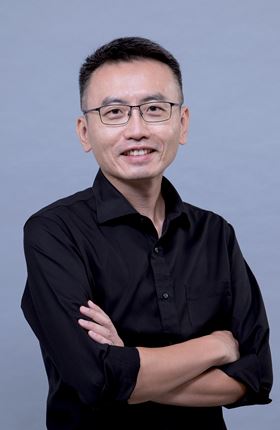
Jeffrey C. F. Ho is an Associate Professor at the School of Design, The Hong Kong Polytechnic University. He serves as Deputy Specialism Leader of Interaction Design and Chairman of the School Learning & Teaching Committee. His research centers on virtual reality (VR) and interaction design, applying social science principles to influence attitudes and behaviors through immersive technologies. He leads projects in VR applications for safety training, virtual museums, and healthcare, and collaborates with the Asian Lifestyle Design Lab and the Technology and Social Behavior Lab at the University of Illinois at Urbana-Champaign. PhD in Communication, City University of Hong Kong MSc in Human-Computer Interaction with Ergonomics, University College London MPhil in Computer Science, The University of Hong Kong BEng in Software Engineering, The University of Hong Kong Ho’s research explores VR’s role in perspective-taking experiences, focusing on empathy, prosocial behavior, and spatial cognition. His work bridges VR with public health, education, and cultural preservation, such as designing VR environments for elderly care and dietary reflection. His recent publications highlight trends in generative AI ethics, beginner-friendly design software, and spatio-social impacts in VR applications. His articles span virtual reality games, VR safety training, and interactive museum design, with keywords like Virtual Reality, Human-Computer Interaction, and Cultural Preservation. Key subfields include immersive technology, social behavior analysis, and ethical design frameworks. UGC Teaching Award - Nominee (2024) Best Paper Award, EAI ArtsIT 2020 (2020) Exemplary Teaching and Learning Award - Merit (2024) QS Reimagine Education Awards 2024 - Global Education Award (2024) QS Reimagine Education Awards 2024 - Gold Award in Smart Omnichannel Campus (2024) Ho has secured grants from Hong Kong’s Research Grant Council, including HK$678,607 for immersive VR construction safety training (2024–2026) and HK$741,961 for VR safety education focusing on accident victims (2021–2023). He contributes as a reviewer for journals like Universal Access in the Information Society and Frontiers in Psychology , and leads teaching initiatives in information architecture and interactive media design.
Vania Ceccato is a Professor at the Academy of Police Work, University of Borås, specializing in environmental criminology and situational crime prevention. She leads the international Nätverket Säkraplatser network, fostering collaboration between academia and practice for sustainable safety. Her research bridges urban design, rural criminology, and transit security, with a focus on inclusive safety measures. Her recent publications include studies on transit worker safety in Stockholm’s metro resilient urban design for climate and crime prevention LGBTQI+ safety in transportation rural-urban shooting patterns innovative survey methodologies Her work aligns with United Nations SDGs 9, 11, and 13, emphasizing how environmental criminology can drive sustainable, equitable urban development.
Prof. Thomas H. Kolbe serves as Chair of Geoinformatics at the Technical University of Munich (TUM), where he leads research in spatial, temporal, and semantic modeling of urban environments. His work focuses on developing foundational frameworks for 3D/4D city models, digital twins, and smart city applications through international standardization efforts including CityGML and IndoorGML. His research spans virtual city modeling, urban system simulation, and GIS integration with emerging technologies. Current projects emphasize AI-driven urban scenario generation, semantic streetspace modeling, and IoT integration in digital twin ecosystems. Recent publications demonstrate strong interdisciplinary connections between computer vision, urban planning, and geospatial data science, with particular emphasis on practical implementations of 3D city models for sustainability challenges. Prof. Kolbe actively contributes to professional organizations including the Round Table GIS eV (as Chairman since 2013) and the Munich Data Science Institute (as core member since 2021). His leadership extends to the Leonhard Obermeyer Center for digital methods in the built environment and the Hans Eisenmann Forum for agricultural sciences. His work bridges theoretical geoinformatics with practical urban applications through numerous collaborative projects with municipal governments and industry partners.
Dr. Jesus Barreal Pernas serves as Assistant Professor in the Department of Quantitative Economics at the Faculty of Economic and Business Sciences, University of Santiago de Compostela. His research bridges environmental policy, tourism economics, and educational innovation with significant regional impact in Galicia and broader European relevance. His academic foundation includes a 2015 PhD from the University of Santiago de Compostela with thesis "Wildfires in Galicia: causality, forest policy and risk in forest management" supervised by Dra. Maria L. Loureiro. This environmental economics work established his expertise in spatial analysis of forest systems. Barreal Pernas' research program demonstrates three converging trajectories: First, environmental economics focusing on wildfire patterns and forest policy in Galicia using spatial econometrics. Second, tourism economics examining sustainable financing mechanisms (particularly green tax willingness), international tourist segmentation, and PDO region development. Third, educational innovation through gamification techniques for teaching statistics in economics and tourism degrees. His recent publications reveal increasing emphasis on gender perspectives in financial inclusion and pandemic-related economic impacts. Analysis of his 2023-2025 publications shows methodological sophistication in spatial modeling and survey-based behavioral research, with strong policy relevance for Galician regional authorities and European tourism sectors. Key thematic clusters include sustainable tourism financing (12% of recent output), educational technology applications (18%), wildfire management (8%), and gender economics (7%). No scientific awards are documented in the provided materials, though his collaborative network spans multiple European institutions as evidenced by co-authorship patterns. His advisory role appears focused on thesis supervision within USC's economics programs, with research projects frequently addressing practical challenges in Galician tourism and environmental management. Current initiatives suggest expansion into post-pandemic tourism recovery and advanced gamification frameworks for quantitative education.
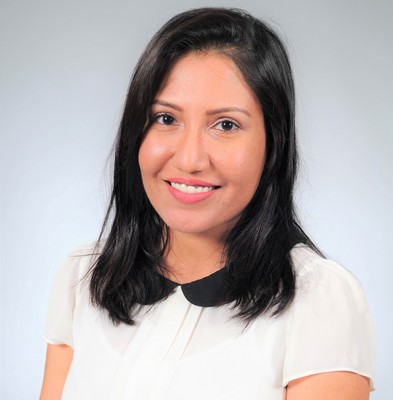
Modhurima Dey Amin is an Assistant Professor at Texas Tech University's Department of Agricultural and Applied Economics within the College of Agricultural Sciences & Natural Resources. Her work bridges econometric methodologies with contemporary issues in food and agricultural markets, emphasizing precision agriculture, energy economics, and industrial organization. PhD in Economics (Econometrics & Quantitative Economics) – Washington State University MSc in Statistics – Washington State University MSc in Applied Financial Economics – Illinois State University BSc in Economics – University of Dhaka, Bangladesh Dr. Amin's research explores: Food safety in retail environments and equitable access to nutritious food Market structures of specialty crops, particularly apple varieties Structural change detection in high-dimensional datasets using statistical methods Machine learning applications in agricultural and environmental economics Key trends in her publications include: Machine learning for causal inference and predictive modeling in agricultural economics Food retail dynamics, including store closures and consumer behavior Environmental economics and sustainable agricultural practices Precision agriculture and technology-driven farm management Her teaching focuses on: Econometrics Agribusiness Finance Corporate Finance Economic theory and policy analysis Contact: modhurima.amin@ttu.edu | Personal Website
Robert Hamilton is a Professor in the Department of Communication Studies & Media Arts at McMaster University's Faculty of Humanities in Hamilton, Canada. With an extensive career as both an academic and practicing artist, he has established himself as a significant figure in contemporary media arts education and creation since joining McMaster University. Hamilton holds dual MFA degrees from the Art Institute of Chicago and the Jan van Eyck Academie in Maastricht, Netherlands, complemented by a Diploma from the Alberta College of Art + Design. His academic journey spans from 1981-1985 at the Alberta College, followed by advanced studies from 1991-1993 at the Jan van Eyck Academie. His research and creative practice centers on visual media with particular focus on video art, photography, and animation. Hamilton's work consistently explores themes of identity, community, and the evolving urban environment, often reflecting on societal events and contemporary issues. His artistic approach combines technical mastery with conceptual depth, resulting in works that challenge viewers' perceptions of everyday spaces and social structures. He has developed a distinctive methodology that blends documentary techniques with artistic interpretation, creating works that are simultaneously observational and transformative. Hamilton's recent body of work demonstrates a clear trajectory toward examining human relationships with urban spaces, particularly during times of societal transformation like the pandemic. His projects increasingly incorporate digital technologies and AI elements while maintaining a strong foundation in traditional media arts. The thematic continuity across his work reveals a persistent concern with how individuals navigate and make meaning within constructed environments. German Video Art Prize Silver Hugo Award at the Chicago Film Festival Work featured in National Gallery of Canada collection As an educator, Hamilton has mentored numerous students through senior thesis projects and specialized courses in media production. His teaching portfolio spans animation, video art, digital cinema, photographic techniques, and emerging media. While specific grant information isn't detailed in the available materials, his sustained creative output suggests successful acquisition of research funding to support his artistic practice. His work has been exhibited internationally at venues including Maison des Arts de Laval, Museum of Contemporary Art in Castello, Spain, and Transmediale in Berlin. Hamilton maintains an active studio practice that directly informs his teaching approach. His creative process involves both digital and traditional techniques, often experimenting with the intersection of physical and virtual spaces. He has developed specialized approaches to documenting urban environments that reveal hidden patterns and structures within everyday landscapes, creating what might be described as visual commentaries on contemporary life.
Prof. Dr.-Ing. Jochen Steffens is a faculty member at the University of Applied Sciences Düsseldorf , affiliated with the Faculty of Media . His research spans interdisciplinary domains at the intersection of music, soundscapes, and cognitive-affective processes. Research Focus : Music listening behavior, soundscapes, noise perception, music recommendation systems, film music, and the psychological effects of sounds. Teaching : Supervises final theses and offers modules aligned with examination regulations of 2018, including topics in media informatics and mixed reality applications. Technical Contributions : Develops tools for soundscape exploration (e.g., Advanced Soundscape Search) and music information retrieval (MIR) systems for live performance visualization. Methodological Expertise : Utilizes computational music analysis, experience sampling, statistical learning, and multilevel modeling to investigate situational and demographic influences on auditory perception. Applied Research : Explores the impact of room acoustics on customer satisfaction in restaurants, motivational music in sports, and semantic expression in audio branding.
Dilek Keleş is an Assistant Professor in the Department of Sociology at Ahi Evran University , Faculty of Arts and Sciences, Turkey. She has held this position since 2017, following a tenure as a Specialist at Ahi Evran University's Rectorate from 2009 to 2017. Her academic journey began with a BA (2004), MA (2016), and PhD (2009) in Communication from Ankara University . Education: BA in Public Relations and Publicity, Ankara University, Faculty of Communication (2004) MA in Communication, Ankara University, Faculty of Communication (2016) PhD in Communication, Ankara University, Faculty of Communication (2009) Research Interests: Gender Studies Political Communication Sociology of Institutions Media Discourse Analysis Publications & Collaborations: Her work spans gender equality in unions , labor rights , and policy analysis , often intersecting with feminist theory and institutional critique. Collaborated with scholars like Duygu Onay Çöker (Ted University) and Gulnur Tarhan (Adiyaman University). Artistic Activities: Participated in the international documentary film screening "Then..." (2024).
Michele Gattullo serves as an Assistant Professor within the Department of Mechanics, Mathematics & Management at the Polytechnic University of Bari, Italy, specializing in design methods for industrial engineering (ING-IND/15). His research bridges cutting-edge extended reality technologies with practical industrial applications, focusing on human-centered solutions for manufacturing, maintenance, and workplace design. Dr. Gattullo's research portfolio centers on Augmented Reality, Virtual Reality, and Biophilic Design, with significant contributions to Human-Computer Interaction in industrial contexts. He investigates how nature-inspired elements in virtual workspaces enhance employee well-being and productivity, while simultaneously developing practical AR tools for assembly guidance, technical documentation, and maintenance support. His work uniquely integrates ergonomics, cognitive psychology, and industrial engineering to optimize human-technology interaction in complex production environments. Analysis of his 15 most recent publications reveals two dominant research trajectories: biophilic design frameworks for virtual/metaverse workspaces (2023-2025) and industrial AR authoring methodologies. The biophilic stream establishes evidence-based guidelines for digital nature integration, while the AR stream delivers validated tools like ADAM and minimal AR approaches that streamline technical documentation creation. Both trajectories emphasize user experience validation through rigorous industrial studies, demonstrating strong interdisciplinary impact across computer science, industrial engineering, and environmental psychology. Scientific Awards: No awards or honors were documented in the available sources. Advising and Grants: The provided materials contain no information regarding graduate student supervision, research grants, or funding sources. His academic profile emphasizes publication output over mentoring activities or project financing details. Laboratories and Teams: While Dr. Gattullo's research involves advanced XR technologies, the source text does not specify laboratory facilities, research groups, or collaborative teams associated with his work at Politecnico di Bari.
Dr. Daniel Allemann is a Senior Teaching and Research Fellow at the Department of History, University of Lucerne, specializing in late medieval and early modern periods within global contexts. He studied History and Anglophone Literature & Linguistics at the University of Basel, earned an MPhil in Political Thought and Intellectual History at the University of Cambridge, and completed his PhD there. His dissertation (2020) was awarded the best in the Faculty of History at Cambridge. Current projects include a 2024 monograph on slavery, power, and rights in the early modern Iberian world. Ongoing habilitation project on human diversity and alterity in Europe north of the Alps (13th–15th centuries). Research on Andean indigenous political ideas and their Enlightenment Europe reception. His research intersects legal history, colonial history, and intellectual history, with a focus on natural law, empire ideologies, and intercultural exchanges. Recent publications analyze the School of Salamanca's influence on colonial legal thought and the historiography of indigenous Andean societies. Scientific awards include the Cambridge Faculty of History's Best Dissertation Prize (2020). He co-founded the Interventions: The Intellectual History Podcast and writes a monthly column for SonntagsBlick , connecting historical insights to contemporary issues. He also served on the editorial board of traverse: Zeitschrift für Geschichte – Revue d’histoire , fostering academic dialogue between German- and French-speaking Switzerland.
Harvey Miller is a Professor and Reusche Chair in Geographic Information Science at The Ohio State University's Department of Geography, College of Arts and Sciences. He serves as Director of the Center for Urban and Regional Analysis (CURA). His research focuses on GIScience, mobility science, and sustainable transportation, particularly integrating geospatial techniques with transportation equity, time geography, and urban sustainability. He teaches courses in geospatial databases, spatial modeling, and sustainable transportation. Education: Ph.D. (Geography), The Ohio State University, 1991 M.A. (Geography), Kent State University, 1987 B.A. (Geography), Kent State University, 1985 Research Interests: His work explores geospatial analysis of urban mobility, accessibility equity, and smart city technologies. Notable projects include the Ghost Neighborhoods initiative (3D modeling of historic Black neighborhoods), analysis of public transit reliability, and environmental justice tool development. He co-authored a National Academies report on geospatial tools for environmental justice. Achievements: Co-chair of National Academies consensus study on environmental justice tools Lead on Columbus Smart City Operating System project Recipient of U.S. Department of Transportation funding Labs/Teams: Director of CURA, collaborating with institutions like the Ohio History Connection on urban heritage projects. Affiliated with the Sustainability Institute and Translational Data Analytics Institute at OSU.