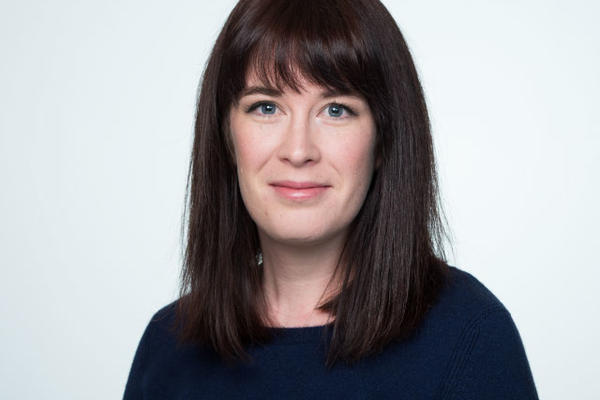
Laura Arpiainen is a Professor in the Department of Architecture at Aalto University , affiliated with the School of Arts, Design and Architecture . Her work focuses on healthcare architecture, universal design, and inclusive urban environments. She leads projects addressing integrated living solutions for persons with memory decline and advocates for human-scale, sensory-oriented design in healthcare facilities. Laura's research aligns with UN Sustainable Development Goals (SDGs), particularly those addressing health and well-being (SDG 3) and sustainable cities (SDG 11). She has organized major international conferences like ARCH24 (2024), emphasizing best practices in design for health. Her academic contributions span books, anthologies, and peer-reviewed articles on topics ranging from accessibility standards to climate-resilient urban planning. She has secured grants as Principal Investigator for projects such as the MonIA consortium (2021–2022) and Esteettömyys: YK:n vammaissopimus ja rakennetun ympäristön esteettömyys (2021). Her work bridges academia and practice, with media engagements in outlets like YLE Areena and Psykiatriset osastot ovat edelleen koppeja käytävillä . Laura’s keynote lectures, including at the University of British Columbia (2024), explore how urban design can promote health equity and sustainability. Her research highlights the interplay between built environments and human well-being, emphasizing accessibility and sensory design for diverse populations.
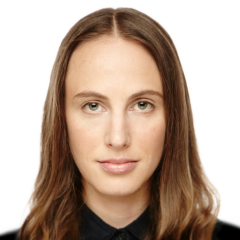
Dr. Cait Newport is a Researcher in the Department of Zoology at the University of Oxford, focusing on the visual ecology and cognitive behavior of fish. Her work explores how fish perceive and interact with their environments, particularly in navigating and recognizing objects under varying conditions. She is a Schmidt AI in Science Fellow, emphasizing computational approaches in her research. Her research investigates challenges fish face in object recognition during motion and navigation, including adaptations to vertical movement and environmental factors like turbidity. She has developed tools such as the Detect+ Track software for analyzing fish behavior. Her studies span coral reef fish, archerfish, and goldfish, addressing topics like decision-making under uncertainty, abstract concept learning, and the impact of visual pollution. Dr. Newport's work bridges zoology, computational biology, and cognitive science, contributing to understanding animal cognition and sensory adaptations. Her findings have implications for both basic science and applied contexts, such as conservation and technology.
Professor Jason Edwards of the University of York's Department of History of Art specializes in British sculpture and art between 1760-1914, with a focus on imperial contexts, Anglo-Indian encounters, and Victorian photography. His interdisciplinary work intersects with queer theory, critical animal studies, and world systems theory. His research includes the s culptural pantheon at St Paul's Cathedral , British Orientalism, and fiber art. Funded by the AHRC , Leverhulme Trust , and Paul Mellon Center , he leads projects like Pantheons: Sculpture at St Paul’s Cathedral, c.1795-1914 (2019-2023). He has curated major exhibitions at Tate Britain , Yale Center for British Art , and Hull Maritime Museum . Queer theory applications to sculpture Victorian globalization through art Critical animal studies in visual culture Anglo-Indian artistic dialogues Scientific awards include grants from the Samuel H. Kress Foundation and Paul Mellon Center . He supervises PhD topics spanning Victorian war painting , Anglo-French aesthetics , and Victorian print novelties . Contact: jason.edwards@york.ac.uk .
Jennifer Jacobs is an Assistant Professor at the University of California, Santa Barbara (UCSB), affiliated with both the Media Arts and Technology (by primary appointment) and Computer Science (courtesy) departments. She directs the Expressive Computation Lab and is part of the Center for Visual and Interactive Computing. Her research focuses on integrating computational tools with traditional art, design, and craft practices to enhance manual-digital fabrication workflows. Jacobs holds a PhD from MIT's Media Lab and has postdoctoral experience at Stanford University. Education: PhD in Media Arts & Sciences (MIT), MFA (Hunter College), BA (University of Oregon). Research interests span computational art/design, human-computer interaction, and systems engineering. Notable projects include developing systems like Millipath for surface texture fabrication, Knotation for macramé design, and CoilCAM for clay 3D printing. She also investigates ethical AI frameworks rooted in cultural heritage and Black community archives. Her work has been showcased at venues like SIGGRAPH, CHI, and DIS, earning awards such as the NSF Early CAREER Award and Best Paper distinctions. Jacobs teaches courses on computational fabrication and expressive technologies, emphasizing hands-on learning. Her lab collaborates with craft professionals and educational institutions to bridge creative practices with computational methods.
Dr Kyung Wook Seo is an Associate Professor and Head of Education at the Department of Architecture and Built Environment at Northumbria University, UK. His expertise spans residential building design, urban morphology, and environmental behavior. He has led international projects such as the National Research Foundation-funded 'Social Housing Design in the Post-Pandemic Era' (2022–25) and contributed to sustainable housing initiatives in Malaysia and Korea. Seo holds editorial roles at the Journal of Housing and Built Environment and Frontiers in Psychology , and was a JSPS Invitational Fellow (2023). His academic journey includes a PhD from UCL Bartlett, and prior roles as Head of Department at Kyonggi University and architect at Daewoo Construction and Wendel-Duchscherer Architects. Education: PhD in Architectural Theory, University College London (2014) Master of Architecture, Georgia Institute of Technology Bachelor of Architectural Engineering, Korea University Research Interests: Focuses on housing form and culture, morphological analysis of buildings/cities, and post-pandemic urban resilience. His work bridges architectural theory with practical design solutions, particularly in modular housing and cultural adaptation. Recent studies investigate spatial perception, urban regeneration stakeholder dynamics, and cognitive dimensions of domestic spaces. Grants & Projects: £148,731: Social Housing Design in the Post-Pandemic Era (NRF Korea) £454,871: Future Dwelling Models for Korean New Towns (KLHC) £133,787: Structure-Infill Housing for Malaysia's Low-Income Populations (British Council) His research outputs span 50+ peer-reviewed articles, with key contributions in Archnet-IJAR and Nexus Network Journal . Awards include the 2021 Academic Excellence Award and 2009 Best Teaching Award.
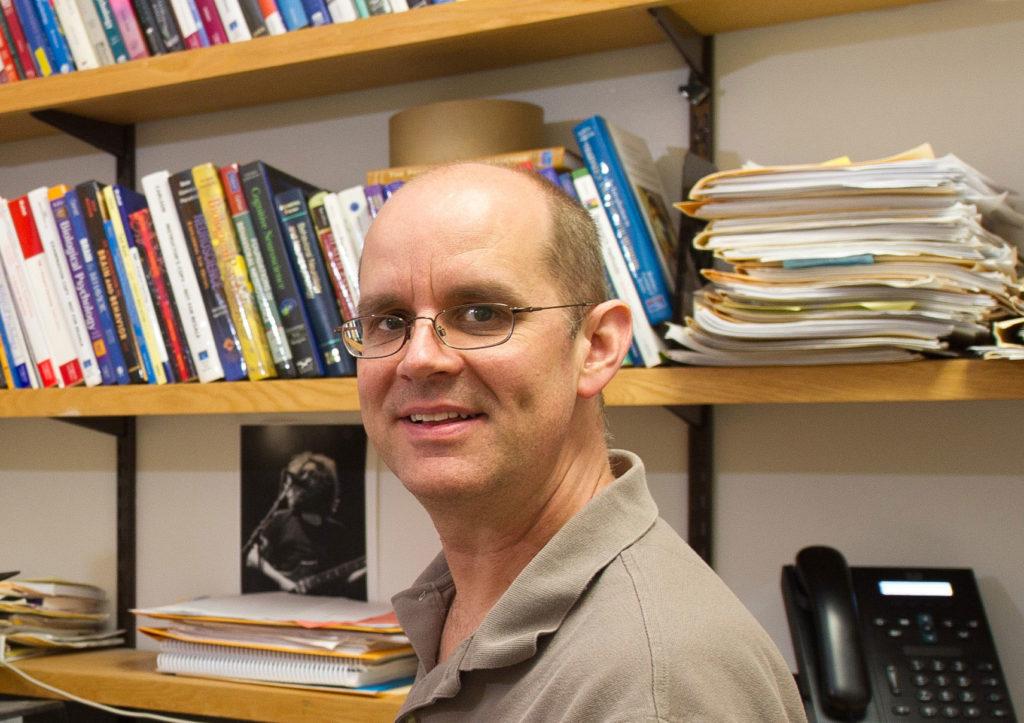
Anthony Richardson is an Associate Professor of Psychology at Saint Michael’s College, specializing in spatial cognition and human navigation. He holds a B.A. from the University of California, San Diego, and an M.A. and Ph.D. from the University of California, Santa Barbara. His work leverages immersive virtual reality (VR) technology to study navigation and spatial memory, with a focus on stress effects and individual differences. He co-authored a 2022 study on stress-induced HPA activation in virtual environments, funded by NASA. Dr. Richardson teaches courses in Cognitive Psychology, Perception, and Spatial Perception and Cognition. His research emphasizes collaborative student projects, such as a NASA-funded investigation into testosterone’s role in navigation. He directs a state-of-the-art VR lab enabling 3D environmental simulations with head and body tracking, typically found only in large research institutions. His research explores how humans learn and remember spatial environments, with applications in understanding navigation challenges and cognitive adaptations. Recent work examines stress’s impact on spatial attention and virtual navigation performance. He collaborates with colleagues like Melissa VanderKaay Tomasulo, bridging psychology and neuroscience disciplines.
Karen Engle is a Professor in the School of Creative Arts at the University of Windsor. Her work spans media arts, cultural studies, and visual culture, with a focus on narrative, memory, and interdisciplinary methodologies. She is the author of the memoir Chronic Conditions (2023) and co-editor of Feelings of Structure (2018), exploring affect theory and social anticipation. Engle's research engages themes such as indigenous development, border studies, and the intersection of art with political and historical contexts. Her academic contributions include critical analyses of visual culture, spatial politics, and embodied experiences. Her work has addressed topics ranging from the cultural implications of chronic illness to the philosophical underpinnings of anticipation. Engle’s publications frequently bridge theory and practice, exemplified by her exploration of archives, public art interventions, and the sensory dimensions of borders. She has organized academic symposia on anticipation as a social phenomenon and contributed to discussions on decolonial frameworks in development studies. Engle’s academic trajectory includes roles such as editor of interdisciplinary volumes and collaborator on projects linking artistic practice to sociopolitical inquiry. Her memoir Chronic Conditions reflects her interest in personal narrative as a site for exploring broader cultural and ethical questions.
Emer O'Beirne is an Associate Professor in the School of Languages, Cultures and Linguistics at University College Dublin (UCD), where she specializes in contemporary French and Francophone literature. Her academic journey began with a BA (Mod.) in German and French from Trinity College Dublin, followed by postgraduate studies at the University of California (Irvine) and a DPhil from the University of Oxford. She held teaching positions at the University of Exeter before joining UCD in 1999, where she has since advanced to Associate Professor. BA (Mod.), Trinity College Dublin DPhil, University of Oxford Her research centers on contemporary fictional narrative forms, particularly the representation of urban space, the interplay between music and narrative, and the dialogue between visual arts and literature. She has published extensively on authors such as Jean Echenoz, Georges Perec, Marc Augé, and Assia Djebar, exploring themes of alienation, non-places (non-lieux), and the formal innovations in modern French fiction. Her work often bridges literary analysis with cultural theory, anthropology, and art criticism. The 15 most recent publications reflect a sustained focus on 20th and 21st-century French authors, with recurring interests in narrative structure, temporality, and intermediality. She frequently examines how literary works respond to urban modernity, consumerism, and the fragmentation of identity, drawing connections between literature, visual art, and music, particularly in the context of postmodern and contemporary aesthetics. Scientific Awards and Honors: French Embassy bursary (2018) Module innovation support grant (2009) UCD Seed Funding - Comparative Literature (2007) UCD Seed Funding - Marc Augé (2006) IRCHSS Government of Ireland Research Fellowship (2004–05) Université Paris-Sorbonne & Oxford University study bursary (1992–93) Hutchinson-Stewart Postgraduate Literary Scholarship (1989–1992) Oxford University postgraduate research scholarship (1989–1992) TCD University Gold Medal (1988) University of California postgraduate scholarship (1988–89) O'Beirne has been actively involved in academic advising and grant-funded research. She received IRCHSS and UCD seed funding for projects on contemporary French fiction and Marc Augé. She has coordinated key modules such as 'French Fictions', 'Narratives of Place', and 'Proust', indicating her central role in curriculum development. Her professional service includes editorial work for the Irish Journal of French Studies , committee memberships in the Society of French Studies, and leadership roles in ADEFFI. She has also organized academic events, such as a conference on Georges Perec, demonstrating her commitment to fostering scholarly exchange. O'Beirne has contributed to academic communities through her involvement with ADEFFI (Association des études françaises et francophones d'Irlande), where she served as Secretary from 2007 to 2010, and the Society for French Studies in the UK and Ireland, where she was Publicity Officer and Executive Committee member from 1998 to 2002. She has also served on numerous interview panels and review committees at UCD, contributing to institutional governance and academic leadership.
Dr Thomas Prowse is a Grant-Funded Researcher (B) in the School of Biological Sciences at the University of Adelaide, under the Faculty of Sciences, Engineering and Technology. His work focuses on quantitative ecology and modeling, particularly the population biology of native and invasive wildlife. He applies field studies (e.g., GPS tracking, eDNA analysis) and models to address conservation and wildlife management challenges. Current projects include migratory bird tracking, invasive species control via gene drives, and spatial optimization of feral cat strategies. Research Interests: - Survival, reproduction, and dispersal dynamics of wild populations - Climate change impacts on biodiversity - Disease and environmental drivers affecting wildlife - Genetic tools for invasive species management - Conservation strategies for endangered species Advising & Grants: Supervises Masters/PhD students. Current funding includes projects on gene drives and wildlife tracking. Labs/Teams: Collaborates on interdisciplinary teams focused on ecological modeling and conservation technology.
Prof. Dr. Anne Mareike Altgassen is a Full Professor of Developmental Psychology at Johannes Gutenberg University Mainz. Her research focuses on cognitive and motivational factors influencing goal implementation, prospective memory, and procrastination across the lifespan. She employs experimental and neuroscientific methods (EEG, fMRI) to study clinical populations (e.g., ADHD, Parkinson's) and healthy individuals. Altgassen leads the Cognitive Lifespan Development lab, investigating intervention strategies like planning and future thinking. She has held academic roles at Radboud University (Nijmegen), Technical University of Dresden, and the University of Zurich. Her work spans developmental, clinical, and cognitive psychology, with publications in top journals such as Journal of Experimental Child Psychology and Neuropsychologia . She has expertise in lifespan cognitive development, neuroscientific techniques, and translational research targeting cognitive challenges in clinical groups. Altgassen’s career includes tenure at Radboud University, leadership of interdisciplinary labs, and contributions to collaborative research projects such as the SFB 940. Her research bridges basic science and clinical applications, emphasizing practical interventions for memory and volitional control deficits.
Dr. Christian Winklhöfer is a Senior Lecturer at the Institute for History Didactics at the University of Münster. He holds a PhD in Modern/Contemporary History and Education from the Philosophical Faculty of the University of Münster. His research focuses on historical judgment formation in education, museum-based historical learning, and the role of digital media in history teaching. He has led projects on interdisciplinary teaching, historical media literacy, and visitor perceptions of historical exhibitions, collaborating with institutions like the Deutsches Panzermuseum. His publications include monographs and journal articles addressing historical didactics, museum pedagogy, and digital media in education. Education: PhD in Modern/Contemporary History and Education (2016), Studies in History, German, and Media Education (until 2008). Current roles include coordinating interdisciplinary teaching initiatives and advising on museum-based educational programs. Research Interests: Historical Judgment Formation in Classroom Settings Educational Strategies for Museum-Based Learning Impact of Digital Media (e.g., Retro-Gaming) on Historical Literacy Interdisciplinary Approaches to Social Studies Education Ethics of Representing Historical Violence in Museums Teaching Contributions: Designs courses on historical didactics, including seminars on ancient history and contemporary German history Develops practical teaching modules for pre-service teachers Supervises interdisciplinary projects combining history, geography, and sociology Labs/Teams: Active collaborations with the Institute for Geography Didactics and Sociology Didactics on interdisciplinary teaching projects. Lead researcher in the Drastische Gewaltbilder in Museen project with the Deutsches Panzermuseum.
Christoph Hölscher is a Full Professor and Chair of Cognitive Science at ETH Zurich, Department of Humanities, Social and Political Sciences. He is also an Honorary Senior Research Fellow at University College London’s Bartlett School of Architecture / Space Syntax group and has held visiting positions at UC Santa Barbara. His work bridges cognitive science, architectural design, and human-computer interaction. PhD in Psychology, University of Freiburg (2000) Habilitation in Psychology, University of Freiburg (2009) Project Manager, IT Industry (2000–2003) His research centers on spatial cognition , wayfinding in built environments , and usability in architectural design . He employs methods such as virtual reality, eye-tracking, and behavioral experiments to study how people navigate and interact with complex spaces. His work integrates cognitive psychology with urban planning and architecture to improve building legibility and user experience. The most recent publications reflect a strong interdisciplinary trend, combining cognitive science , urban systems , and virtual environments . Key themes include crowd simulation in emergencies, spatial reference frames in navigation, multi-level wayfinding challenges, and gaze behavior during spatial decisions. These studies often use immersive technologies and space syntax analysis to evaluate architectural configurations. Governing Board, Cognitive Science Society (since 2012) Board of Directors, SFB/TR8 Spatial Cognition (2007–2012) Co-chair, 33rd Annual Conference of the Cognitive Science Society (2011) Co-chair, Spatial Cognition International Conference (2010) Hölscher leads significant research initiatives connecting cognitive science with architectural practice. He has advised on evidence-based design, developed tools for recording spatial behavior (e.g., iPad apps), and promoted the use of personas in architectural design. His lab collaborates across disciplines, involving computer scientists, architects, and psychologists in projects focused on navigation support, spatial learning, and building usability. Future work appears to emphasize real-time spatial behavior analysis, integration of mobile technologies, and cross-modal perception in complex environments.
Dr. Tomasz Besta is a Professor at the University of Gdańsk , affiliated with the Faculty of Social Sciences and the Institute of Psychology. He leads the Laboratory of Environmental Psychology and Intergroup Relations, focusing on social identity, collective action, and intergroup dynamics. Key research themes include identity fusion, group continuity, gender studies, and cultural sensitivity. Active in cross-cultural collaborations, with publications analyzing Polish-Norwegian differences in gender roles and global studies on anomie, social deprivation, and precarious manhood beliefs. His recent publications address: Radicalization and personality traits (2021) Collective nostalgia and group anxiety (2021) Housework division in migrant families (2020) Psychology of music festivals (2020) Cross-cultural gender equality predictors (2020) He has extensively studied: Self-expansion mechanisms in collective action (2019) Perceptions of low-status outgroups (2019) Political extremism and personality (2015) Social psychology of shale gas drilling (2016) Psychological correlates of public transport usage (2014)
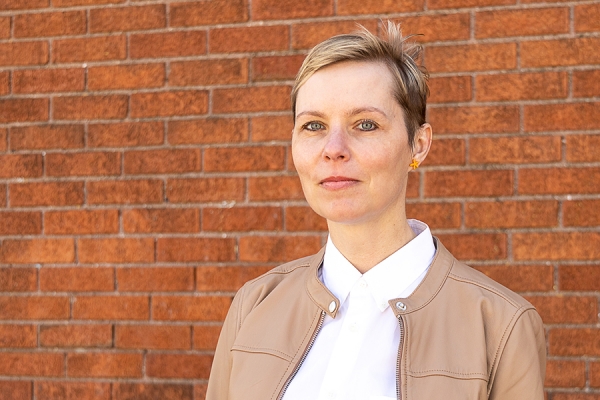
Professor Ewa Twarowska-Sioda is a faculty member at the University of Arts in Poznań (Faculty of Sculpture). She coordinates the Ceramics in Architecture Workshop (Room A, p. 09) and has been actively involved in major institutional exhibitions. Her artistic practice bridges sculpture, architectural integration, and urban identity creation. Education : Ph.D. at University of Arts in Poznań Her works explore themes of: Materiality in sculptural forms Interaction between physical objects and conceptual texts Polish historical narratives through art Transformation of urban spaces Selected exhibitions include: Art of Freedom (Cologne, 2019) - responding to Polish independence centenary 100 Sculpture (Poznań, 2019) - celebrating Faculty of Sculpture's centennial Contact: ewa.twarowska-sioda@uap.edu.pl
Krzysztof Kopeć is a Lecturer at the Department of Regional Development, Institute of Socio-Economic Geography and Spatial Management, Faculty of Social Sciences, University of Gdańsk. His work focuses on public administration, regional development, and transportation planning. University: University of Gdańsk School: Faculty of Social Sciences Department: Department of Regional Development Academic Rank: Lecturer Research interests include quality assessment of public services, urban mobility innovations, and spatial management strategies. His studies often intersect with social cohesion, sustainable development, and policy implementation in local governance. Recent publications emphasize monitoring systems for public service quality, transformation of urban transportation networks, and regional development challenges in Polish municipalities. Keywords span public administration, transportation planning, and quality of life metrics. No scientific awards or student advisement details are publicly listed. He is associated with the Pomeranian Centre for Cultural Research and the Student Scientific Circle of Spatial Economy.