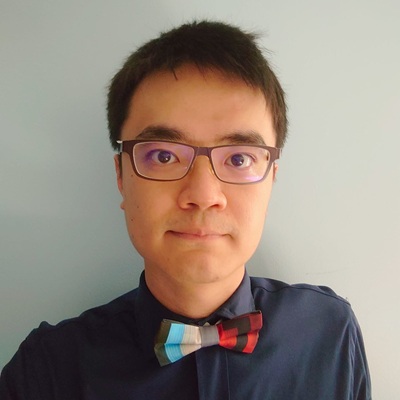
Dr. Yen-Ting (Allen) Yeh is an Assistant Professor in the Department of Computer Science at the University of Saskatchewan, where he leads research in Human-Computer Interaction focusing on mobile interaction techniques, collaborative tools, and creative technologies. PhD, Cheriton School of Computer Science, University of Waterloo MS, Graduate Institute of Networking and Multimedia, National Taiwan University His research explores physical and cognitive human capabilities through: Innovative phone interaction methods (folding, dexterous gestures, side-touch expansion) Collaborative writing environments with privacy controls Creativity augmentation systems for 3D modeling Augmented reality and interactive fabrication tools Recent publications demonstrate strong focus on: Acoustic input techniques using finger snapping Motion-based creative reflection tools Dynamic gesture recognition systems Collaborative editing comfort optimization Scientific recognition includes: ACM Creativity and Cognition 2021 Honorable Mention The research group at the University of Saskatchewan's HCI Lab actively seeks students interested in phone interactions, human factors, AR/VR, collaborative tools, and creative arts applications.
David R. Raleigh, MD, PhD, is an Assistant Professor in the Departments of Radiation Oncology and Neurological Surgery at the University of California San Francisco (UCSF). He serves as a Principal Investigator at the Brain Tumor Center and Director of the Preclinical Therapeutics Core. Education: BA in Molecular and Cell Biology and Cognitive Science (UC Berkeley, 2004), MD and PhD in Pathology (University of Chicago, 2012), Residency in Radiation Oncology (UCSF, 2017) His research focuses on the molecular mechanisms of brain tumor growth, particularly meningiomas, integrating developmental biology with oncology to identify novel treatments. Methodologies include biochemistry, mouse genetics, genomics, and pharmacology. Dr. Raleigh's recent publications highlight molecular classification of meningiomas, genomics, and targeted therapies. Awards include Phi Beta Kappa, multiple travel grants, and the Robert and Ruth Halperin Endowed Chair in Meningioma Research.
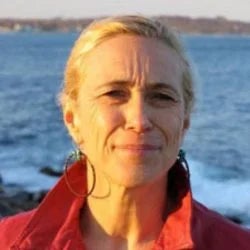
Annette R. Grilli is a Research Professor in the Department of Ocean Engineering at the University of Rhode Island , focusing on ocean renewable energy and coastal hazard assessment. Her work integrates numerical modeling and statistical analysis to study extreme events like tsunamis and storms. Ph.D. in Climatology, University of Delaware (2000) M.S. in Oceanography, University of Liege (1984) B.S. in Geography & Education, University of Liege (1983) Her research spans offshore wind farm siting optimization , tsunami propagation modeling , and coastal erosion dynamics . Recent publications highlight applications of phase-resolving wave models and machine learning to coastal resilience and marine renewable energy systems. Grants include collaborations with NOAA , Department of Energy , and NSF , focusing on coastal hazard visualization , tsunami detection algorithms , and design elevation mapping under climate change scenarios. She contributes to digitalCommons@URI with over 100 publications in Ocean Engineering and Civil Engineering domains.
David B. Dunson is the Arts and Sciences Distinguished Professor of Statistical Science at Duke University, with a joint appointment in the Department of Mathematics. He is also a Faculty Network Member of the Duke Institute for Brain Sciences. His research bridges theoretical statistics with practical applications across multiple scientific domains, focusing on developing new tools for probabilistic learning from complex data. Dr. Dunson earned his Ph.D. from Emory University in 1997 and his B.S. from Pennsylvania State University in 1994. Dr. Dunson's research focuses on developing statistical methods directly motivated by challenging applications in ecology/biodiversity, neuroscience, environmental health, and criminal justice/fairness. His methodological work spans models for low-dimensional structure in data (latent factors, clustering, geometric and manifold learning), flexible/nonparametric models (neural networks, Gaussian/spatial processes), Bayesian inference frameworks, and models for "object data" (trees, networks, images, spatial processes). His approach emphasizes creating practical tools that scientists and decision makers can use routinely. Dunson's recent publications demonstrate a strong focus on advancing Bayesian methodology for complex data structures across applications in biodiversity mapping, brain connectomics, environmental health, and infectious disease modeling. His work shows consistent innovation in nonparametric Bayesian methods, computational efficiency, and the handling of high-dimensional and structured data, always with an eye toward solving real-world scientific challenges. Dr. Dunson has received numerous prestigious awards including: IMS Medallion Lecturer (2019) Mitchell Prize from the International Society of Bayesian Analysis (2018) Carnegie Centenary Professorship (2018) DeGroot Prize (2017) COPSS Award: President's Award (2010) Fellow of the Institute of Mathematical Statistics (2010) His extensive publication record with numerous co-authors suggests an active research group mentoring graduate students and postdocs. His research on projects like biodiversity mapping (funded by a European Research Council Grant) and brain connectomics indicates well-funded research programs addressing significant scientific challenges across multiple domains. Dr. Dunson's work involves collaborations across multiple labs and teams, particularly through his affiliation with the Duke Institute for Brain Sciences. His research on biodiversity mapping, brain connectomics, and environmental health suggests involvement in large, interdisciplinary teams addressing complex scientific questions that require sophisticated statistical approaches.
Dr. Steffen Wittig is a research assistant in General Educational Science at the University of Kassel since 2017, affiliated with the College of Humanities (Fachbereich 01 Humanwissenschaften). He also serves as a lecturer at the University of Freiburg (Switzerland), Goethe University Frankfurt/Main, and FernUni Hagen. PhD in Educational Science (summa cum laude, 2016) Diploma in Educational Science (2011) with minors in sociology and psychology His research focuses on: Critique of educational theories and concepts Philosophy of education and democracy Game theory applications in pedagogy Discourse analysis of inclusion/exclusion dynamics Bildungsregime transformations (SARS-CoV-2 pandemic impact) Subjectivation processes in educational spaces Key publication themes from 2014-2023 include: Intersections between play theory and educational systems Democratic principles in pedagogical frameworks Deconstructive approaches to inclusion Psychoanalytic perspectives on learning spaces Hegemony and power structures in education Paradoxes of performance culture Professional engagements: Organized international conferences on educational theory Co-editor at Erziehungswissenschaftliche Revue Active member of DGfE (German Educational Research Association) Participant in global research networks (ITRA, GLOCER)
Dr. Chiara Bertelli is a Lecturer in Biosciences at Swansea University within the Faculty of Science and Engineering, School of Biosciences, Geography and Physics. With over 15 years of experience in coastal and marine ecological surveys, she specializes in seagrass ecology and restoration, marine conservation, and habitat suitability modeling. Dr. Bertelli has extensive field experience including boat-based surveys, SCUBA diving, and snorkeling in both temperate and tropical environments. She is currently completing her PhD part-time focusing on environmental drivers of change in seagrass meadows in the UK and Brazil. Her educational background includes advanced training in marine biology with specialization in ecological survey techniques and data analysis using R and Primer. Her primary research focuses on seagrass ecology as nature-based solutions for climate change. She develops habitat suitability models to inform optimal locations for seagrass restoration, with applications in carbon sequestration (blue carbon) and marine biodiversity enhancement. Her work aligns with UN Sustainable Development Goals 13 (Climate Action) and 14 (Life Below Water). Analysis of Dr. Bertelli's recent publications (2020-2025) reveals a strong emphasis on practical applications of seagrass research to inform restoration efforts. Her work spans habitat suitability modeling, environmental stress responses, nutrient dynamics, and decision-support tool development. A significant portion addresses seed-based restoration techniques, ecosystem services, and the socio-ecological dimensions of marine conservation. Dr. Bertelli actively collaborates with external organizations including Project Seagrass, Sky Ocean Rescue, WWF, Natural England, and the National Oceanographic Centre. Her current ReSOW project aims to develop the CEEDS (Coastal Ecosystem Enhancement Decision Support) tool, an open-source platform to guide seagrass restoration practitioners. As an educator, Dr. Bertelli teaches several field-based marine biology courses including BIO260 Marine Biology Field Course, BIO327 Tropical Marine Ecology Field Course, and BIO346 Professional Skills in Marine Biology. Her teaching emphasizes practical, field-based learning and professional skill development for marine biologists, with a focus on survey techniques, data analysis, and environmental impact assessment. Dr. Bertelli is actively involved in research teams focused on marine ecosystem restoration and coastal management. Her work bridges academic research with practical conservation applications, working closely with government agencies, NGOs, and international research partners to translate scientific findings into actionable conservation strategies.
Peter X. K. Song is a Professor in the Department of Biostatistics at the University of Michigan School of Public Health. With expertise spanning statistical methodology development and interdisciplinary applications, Dr. Song maintains active collaborations across Nutritional Sciences, Environmental Health Sciences, Chronic Disease research, and Nephrology. His work bridges theoretical statistics with practical healthcare solutions, focusing on innovative approaches to complex data challenges in public health and medicine. Based at the M4140 SPH II building in Ann Arbor, he leads the Song Lab and contributes significantly to the academic community through teaching, research mentorship, and scholarly publications. PhD, University of British Columbia, Vancouver, 1996 BS, Jilin University, Changchun, 1985 Dr. Song's research focuses on the statistical foundation of big data analytics, with particular emphasis on data integration, distributed inference, high-dimensional data analysis, longitudinal data analysis, mediation analysis, and spatiotemporal modeling. His methodological innovations address critical challenges in smart health applications, including organ exchange programs, children's health, chronic disease management, environmental health assessment, and nutritional sciences. His approach combines statistical theory, integer optimization, and algorithm development to create practical tools that help researchers understand complex relationships between environmental exposures and health outcomes. Dr. Song's publication record demonstrates a consistent trajectory of methodological innovation applied to pressing health challenges. His recent work shows increasing focus on sleep classification using AI techniques, personalized treatment effect analysis, distributed statistical methods for high-dimensional data, and epigenetic applications in adolescent health. The interdisciplinary nature of his research is evident in publications spanning biostatistics journals, computer science venues, and domain-specific medical publications. His work increasingly addresses the challenges of integrating diverse data sources while maintaining statistical rigor in the era of big data. IMS Fellow ASA Fellow Elected Member of the International Statistical Institute 2017 ENAR John Van Ryzin Award Dr. Song has mentored an impressive 22 PhD students and 6 postdoctoral trainees throughout his career, with many now holding faculty positions at prestigious institutions or working as data scientists in leading technology companies. His lab, the Song Lab, currently supports two postdoctoral research fellows and eight doctoral students working on cutting-edge statistical methodology development. His collaborative research extends across numerous grants that support interdisciplinary projects in kidney paired donation programs, environmental health studies, nutritional sciences, and chronic disease research, demonstrating his commitment to translating statistical innovation into practical health solutions. The Song Lab serves as a hub for interdisciplinary statistical research at the University of Michigan, bringing together experts from statistics, operations research, and machine learning to address complex challenges in medical and public health sciences. Current lab members include eight doctoral students and three postdoctoral fellows working on projects related to optimal organ matching strategies, causal mediation pathways of omics biomarkers, and statistical methods for big data integration. The lab maintains strong connections with clinical researchers across nephrology, pediatrics, environmental health sciences, and nutritional sciences, ensuring that methodological developments remain grounded in real-world applications.
Professor Trina Myers serves as the Head of School for the School of Information Technology at Deakin University's Faculty of Science Engineering and Built Environment. With extensive experience in academia and research leadership, she plays a pivotal role in shaping IT education and research directions at Deakin. She is also an active member of the Australian Council of Deans of ICT (ACDICT), having served as its immediate past President. Her educational background includes: Doctor of Philosophy in Computer Science from James Cook University Master of Business Administration from James Cook University Master of Information Technology from James Cook University Professor Myers' research focuses on semantic technologies, ontology engineering, Internet of Things, knowledge management, natural language processing, and human-computer interaction . Her work emphasizes interdisciplinary collaboration, bridging technology with fields such as healthcare, marine science, environmental conservation, and business. She has pioneered approaches in academagogy (academic gamification) to enhance online learning engagement, particularly for adult learners. Her IoT research has significant applications in healthcare space optimization, environmental monitoring, and resource management. Her recent publications demonstrate a strong trajectory in applying AI and IoT technologies to solve real-world problems, particularly in healthcare, education, and resource optimization. There's a clear pattern of interdisciplinary work connecting computer science with healthcare, education, and environmental science. Her research increasingly focuses on human-centered technology design, especially for vulnerable populations like adolescents with autism spectrum disorder. Her notable achievements include: Fellow of the Australian Computer Society (2023) Australian Awards for University Teaching (AAUT) Teaching Award (2020) Women in IT Professional Leadership Award Finalist (2020) Asia-Pacific International Triple E Entrepreneurial Educator of the Year Award (1st runner-up, 2020) Australian Computer Society, National Digital Disruptor ICT Educator of the Year (2019) Professor Myers actively supervises doctoral students across diverse research areas including gamification in language learning, brain tumor analysis using deep learning, AI in higher education, AI for refugee resilience, data integrity in edge environments, and quantum-driven satellite networking. She has secured significant research funding, including a recent grant for "Indiginizing ICT Curriculum: A Starter Framework for the Community of Practice" through the Australian Council of Deans of ICT. Her teaching philosophy emphasizes active learning methodologies, Process Oriented Guided Inquiry Learning (POGIL), blended learning, and collective intelligence approaches.
Kristian Sevdari is a Postdoctoral Researcher at the Department of Wind and Energy Systems, Technical University of Denmark (DTU). He was born in Kucove, Albania, in 1995, and holds a B.Sc in electrical engineering from the Polytechnic University of Tirana (2016), an M.Sc from UiT Norges arktiske universitet, Norway (2020), and a Ph.D. from DTU (February 2024). Since 2020, he has been working at DTU on multiple projects including Solar-Move, AHEAD, FLOW, EV4EU, ACDC, and FUSE. His research focuses on renewable energy integration and electric vehicle grid integration, with specific expertise in vehicle-to-grid systems, power system dynamics and stability, prosumers and flexible demand, wind power integration, and smart grid technologies. His work contributes to UN Sustainable Development Goals related to sustainable energy and climate action. Dr. Sevdari's recent publications demonstrate a strong trend toward solving practical challenges in EV-grid integration, with emphasis on bidirectional charging technologies, harmonics analysis, battery second-life applications, and smart charging strategies for residential and urban environments. His research bridges theoretical control approaches with experimental validation across multiple European contexts. Best paper award at 2024 IEEE Transportation Electrification Conference & Expo Best paper award of the IEEE PES ISGT-Europe 2021 conference As a supervisor, he has guided multiple Master's theses on topics including telematics integration for EV cost reduction, open charge point protocol implementation, vehicle-to-grid testing, and compatibility testing for EV ecosystems. He is actively involved in the IEEE PES Task Force on electric vehicle grid integration and IEA Task 53, and is the founder of IEEE REST conferences, Qendra SUSALB, and EkoVolt.
Ozgur S. Oguz is an Assistant Professor at Bilkent University , Faculty of Computer Engineering, and the lead of the Learning for Intelligent Robotic Agents (LiRA) Lab . His research focuses on enhancing autonomous agents' capabilities in learning, reasoning, and planning, particularly for robotics applications. Education : PhD in Computer Science from TU Munich , studies at University of British Columbia (UBC) and Koç University , postdoctoral work at University of Stuttgart and Max Planck Institute for Intelligent Systems . His research explores algorithms for autonomous decision-making, with emphasis on deep learning , reinforcement learning , and robotics . Recent work includes diffusion-based reinforcement learning , hindsight experience prioritization , and hybrid manipulation planning , often addressing challenges in sequential task execution and tactile-based control. Key trends in his publications revolve around robotic manipulation , motion planning , and human-robot interaction . He has contributed to conferences like NeurIPS , ICRA , IROS , and journals such as IEEE TRO and Scientific Reports .
Tyler Simko is an Assistant Professor of Political Science at the University of Michigan, specializing in US state and local politics, political geography, and computational social science. His research focuses on understanding and addressing inequality in American public policy through innovative methodological approaches. Education: Ph.D. in Government, Harvard University (2024) A.B. in Politics, Princeton University Simko's research examines state and local politics in the United States with particular focus on political geography and subnational policymaking. His active research agendas include legislative redistricting ("gerrymandering"), local public meetings, school segregation, affordable housing, and data privacy. Methodologically, he develops new techniques in computational social science and machine learning to evaluate subnational inequality and how it can be reduced. His work regularly involves partnerships with federal, state, and local officials to improve the design of public policy. His recent publications demonstrate a strong focus on applying computational methods to address real-world policy challenges, particularly in school desegregation, redistricting, and local government transparency. His research often leverages large-scale data collection efforts, such as LocalView (the largest database of local government meetings in the US), to analyze patterns of political behavior and policy outcomes across different jurisdictions. Awards and Recognition: APSA 2024-25 Best Paper in Education Politics and Policy Award APSA 2024-25 Best Paper in Urban and Local Politics, Honorable Mention MPSA 2024 Robert H. Durr Award for "the best paper applying quantitative methods to a substantive problem" Derek C. Bok Award for Excellence in Graduate Student Teaching of Undergraduates (2023) Simko teaches graduate and undergraduate courses in American Politics and Political Methodology at the University of Michigan. His teaching experience spans multiple institutions, including Harvard University and Princeton University. He has designed innovative courses on US Local Policymaking, data science, and computational social science. As a Data Scientist at the Office of Evaluation Sciences, he partners with federal, state, and local officials to improve program design and reduce administrative burdens. He is a co-PI of the Algorithm-Assisted Redistricting Methodology (ALARM) Project and co-creator of LocalView, the largest audio, video, and text database of local government meetings in the United States. These projects represent significant contributions to the field of computational social science and provide valuable resources for researchers studying local governance and policy-making.
Noa Pinter-Wollman is a Professor in the Department of Ecology and Evolutionary Biology at the University of California, Los Angeles, within the College of Life Sciences . Her work integrates field experiments, laboratory assays, computational modeling, and social network analysis to understand how individual variation among animals translates into emergent collective behavior, and how these dynamics intersect with conservation challenges. Research Focus: Mechanisms underlying collective decision-making in social insects (especially Argentine ants and harvester ants) Social network structure and its ecological consequences in endangered griffon vultures Interface between spatial ecology and social behavior, including impacts on disease transmission and conservation management Biomimetic insights from social animals to inform resilient human-designed systems Across 2023–2025, her team has produced a steady stream of high-impact articles that collectively advance four thematic pillars: (1) microbiome–behavior feedbacks in ants, (2) conservation technology for scavengers, (3) network-analytic methods for disentangling spatial versus social drivers of interaction, and (4) cooperative strategies that underlie invasion success in ants. The work is notable for integrating high-resolution tracking technologies with rigorous statistical modeling. Funding & Collaborations: Current NSF awards include the collaborative grant “ The causes and consequences of Higher Order Interactions (HOI) ” and prior support for “ Uncovering how links between social and spatial interactions affect ecological processes .” These grants foster interdisciplinary partnerships spanning ecology, computer science, and conservation practice. Laboratory & Team: The Pinter-Wollman Lab at UCLA houses graduate researchers, post-docs, and undergraduates who conduct integrative studies on ants, paper wasps, spiders, and vultures. The lab website ( https://pinter-wollmanlab.weebly.com ) provides protocols, data resources, and outreach materials that translate basic findings into actionable conservation guidance for wildlife managers.
Minh Hoai Nguyen is an Assistant Professor in the Department of Computer Science at Stony Brook University. He received his PhD in Robotics from Carnegie Mellon University and a Bachelor of Engineering from the University of New South Wales. Prior to Stony Brook, he was a post-doctoral research fellow at Oxford University and a Kurti Junior Research Fellow at Brasenose College. Education: PhD in Robotics, Carnegie Mellon University Bachelor of Engineering, University of New South Wales His research focuses on computer vision , machine learning , and time series analysis , particularly in developing algorithms for human action recognition , gesture detection , and expression analysis in video data. Applications include video surveillance , human-computer interaction , and medical diagnosis of behavioral disorders . His work integrates computer vision for video processing, time series analysis for modeling human behavior, and machine learning for training complex algorithms. Notable awards include: CVPR 2012 best student paper award Winner of PASCAL VOC 2012 Challenge for Human Action Recognition He teaches courses such as Video Analysis (CSE 594) and Introduction to Robotics (CSE 525) .
Sergey Anatolyevich Merzlyakov is an Associate Professor at the Department of Theoretical Economics , Faculty of Economic Sciences , National Research University Higher School of Economics (HSE) . He has been affiliated with HSE since 2006 and holds leadership roles as First Deputy Dean and Deputy Head of the International Laboratory of Macroeconomic Analysis . PhD in Economics (2010, HSE) Master's in Economics (2007, HSE) Bachelor's in Economics (2005, HSE) His research focuses on fiscal and monetary policy interaction in export-oriented economies , including central bank-government dynamics , optimal macroeconomic policy , and liquidity trap solutions . He has published extensively on monetary policy communication , cross-border policy transmission , and regional debt interdependencies . Recent studies emphasize anchored inflation expectations , hybrid inflation targeting , and verbal interventions by central banks. His work appears in journals like Panoeconomicus , Russian Journal of Economics , and Journal of Central Banking Theory and Practice . Awarded HSE Honorary Diplomas (2022), Medal 'Recognition - 10 Years of Successful Work' (2024), and Best Teacher (2017–2018). Supervised K. Anikeev 's dissertation on banking system heterogeneity. He coordinates network educational programs and inter-university research collaborations , including joint double-degree programs with Far Eastern Federal University and other regional institutions. His roles include faculty development, organizational restructuring, and academic partnership management.
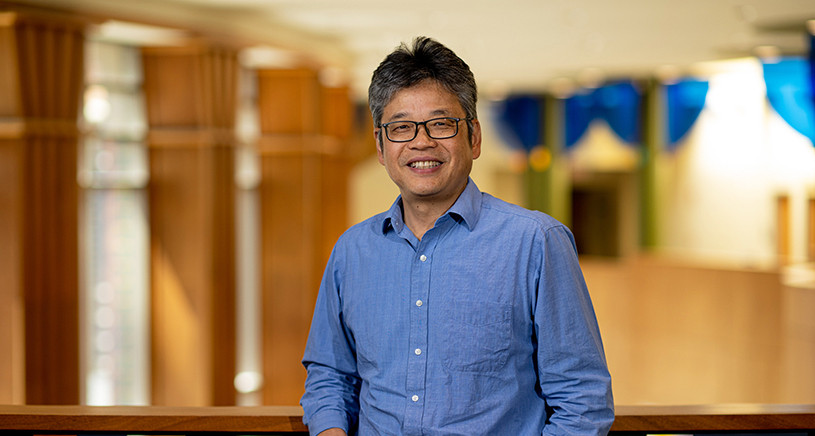
NAKAJIMA, Tatsuo serves as a Professor at Waseda University's School of Fundamental Science and Engineering, Department of Computer Network Engineering. Holding a Doctor of Engineering from Keio University, he has been affiliated with Waseda since 1999 after positions at Japan Advanced Institute of Science and Technology (1993-1999), Cambridge University, and Carnegie Mellon University. His academic profile shows substantial research output with 433 papers and 3,338 citations on Scopus, and 7,604 citations with an h-index of 42 on Google Scholar. Dr. Nakajima's research focuses on Distributed Systems, Embedded Systems, and Ubiquitous Computing, with particular emphasis on virtualization architectures for embedded environments. His work bridges theoretical computer science with practical applications in information appliances, operating systems, and persuasive computing technologies. He has developed innovative systems including SPUMONE (a composition kernel for multi-OS environments), SIGMA System, and SPLiT (a performance optimization library for multicore processors). Analysis of his 15 most recent publications reveals a consistent research trajectory centered on enhancing reliability, security, and performance of embedded and pervasive computing systems. His work shows increasing integration of human factors, particularly in sustainable behavior applications through persuasive technology. The research spans from low-level system architecture to user-centered applications, demonstrating both technical depth and practical relevance. Nokia Research Center, Visiting Research Fellow (2005.04) Dr. Nakajima's research has produced numerous practical frameworks including SPUMONE for multi-OS environments, SPLiT for performance optimization, and persuasive applications like EcoIsland for sustainable behavior. His work on kernel monitoring, anomaly detection, and self-healing systems demonstrates strong focus on system dependability. Current research appears directed toward integrating human factors with embedded systems, particularly in environmental sustainability applications. His laboratory work centers around the SPUMONE project, a virtualization layer for multi-core embedded systems that enables multiple operating systems to coexist with minimal engineering cost. This research environment supports exploration of resource management, security monitoring, and performance optimization in embedded contexts. The work has practical applications in information appliances, smart homes, and pervasive computing environments.