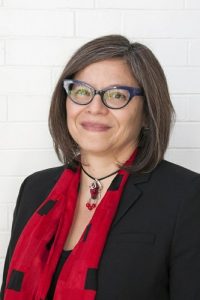
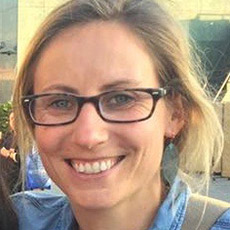
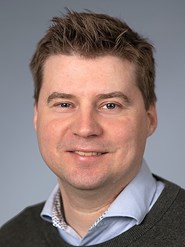
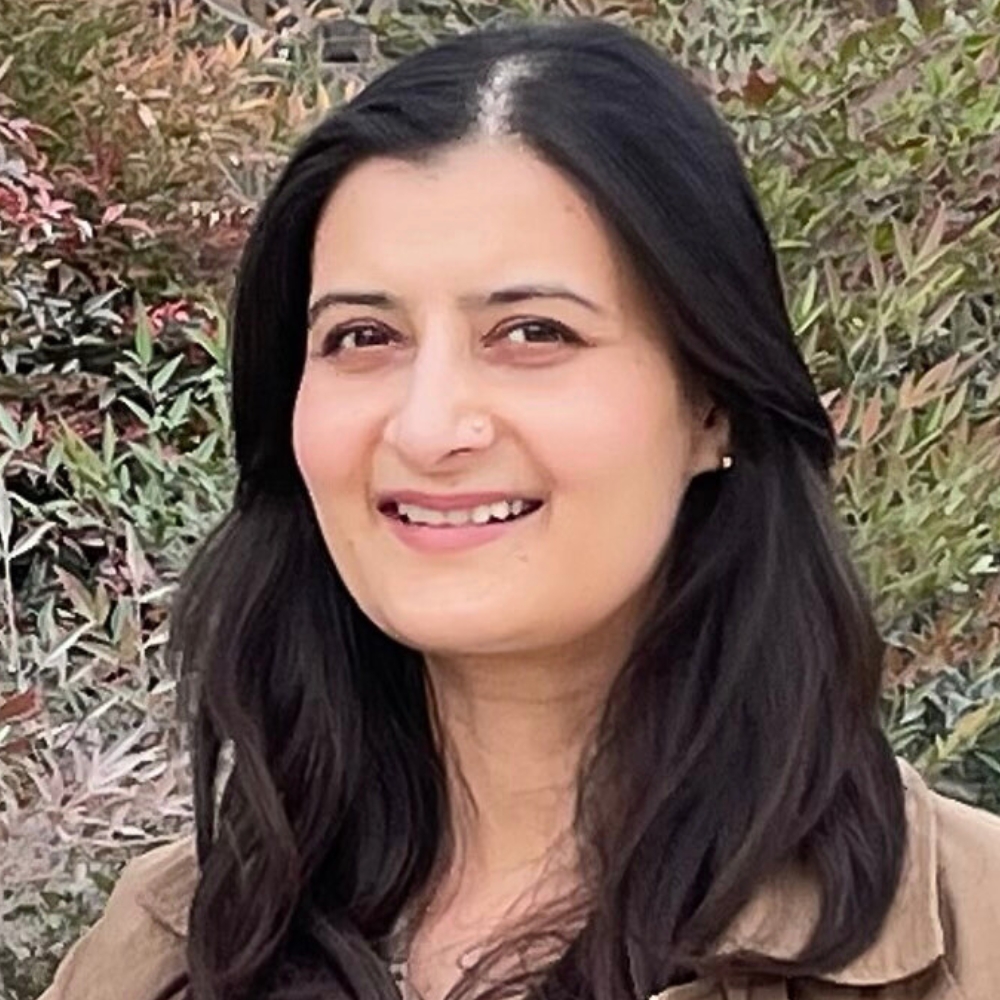
Mariana Ortega is an Associate Professor of Philosophy and Women’s, Gender, and Sexuality Studies at Pennsylvania State University. Her work bridges continental philosophy with intersectional feminist frameworks, focusing on questions of identity, sociality, and embodied experience in marginalized communities. She is particularly known for her contributions to Latina feminist phenomenology and critical race theory. Her research explores the intersection of aesthetics, memory, and racialized experiences, often engaging with thinkers like Heidegger while centering the lived realities of women of color. Ortega co-edited Constructing the Nation: A Race and Nationalism Reader and authored In-Between: Latina Feminist Phenomenology, Multiplicity, and the Self , which examines the multiplicitous selves of Latinas navigating borderland identities. She founded and directs the Roundtable on Latina Feminism, a key platform for discussions on Latin American and Latina feminisms. Ortega’s current research investigates aesthetics, epistemologies of ignorance, and Latinidad through practices like photography and performance art. Her work critiques colonial and patriarchal frameworks while proposing transformative methodologies rooted in embodied knowledge and decolonial praxis.
Prof. Christopher Habel is a Professor in the Department of Computer Science at the University of Hamburg, leading the WSV work area. His research focuses on spatial and temporal cognition, multimodal interaction, and accessibility technologies. He holds the formal title of Head of Department WSV and is affiliated with the Faculty of Mathematics, Computer Science and Natural Sciences. Habel's work bridges cognitive science, artificial intelligence, and human-computer interaction with an emphasis on assistive technologies for visually impaired individuals. Key research projects include the CINACS International Research Training Group, exploring auditory-haptic access to spatial graphics, and the development of multimodal comprehension systems integrating text, graphics, and tactile feedback. His contributions span theoretical frameworks in cognitive linguistics and practical implementations of verbal assistance systems for tactile maps and haptic graph exploration. Over 30 years of academic activity is reflected in his extensive publication record (1984–2015), with recent work emphasizing cross-linguistic studies, event recognition in virtual environments, and the design of multimodal interfaces for cognitive robotics. His research integrates computational models with empirical studies on human perception and language processing.
Dr. Ian Church is an Associate Professor in the Department of Geodesy and Geomatics Engineering within the Faculty of Engineering at the University of New Brunswick. He specializes in ocean mapping using acoustics, with primary research interests in integrating hydrodynamic numerical modeling with ocean mapping, marine habitat mapping, acoustic water column interpretation, and evaluating autonomous mapping platforms. His research aims to better understand the marine environment using acoustics and minimize uncertainty in ocean mapping products. Dr. Church received all his degrees (B.Sc.Eng, M.Sc.Eng, Ph.D.) from UNB while working with the Ocean Mapping Group. His professional experience includes operating and managing multibeam sonar systems onboard the coast guard ship Amundsen in the Canadian Arctic (2005-2013), and positions at the University of Southern Mississippi before returning to UNB in 2016. His publications demonstrate consistent focus on hydrographic surveying, ocean mapping technologies, and marine data processing. Recent trends show increased emphasis on AI applications in seabed mapping, advanced sensor technologies, collaborative training programs, and hydrodynamic modeling for coastal management. Dr. Church also contributes to educational initiatives like the COMREN International School on Hydrographic Surveying.
Tamara El-Hoss is an Associate Professor in the Department of Modern Languages, Literatures and Cultures at Brock University. Her research focuses on displacement, graphic novels ( bande dessinée ), and post-colonial Francophone literatures, particularly addressing immigrant/refugee narratives, (de)colonial histories, and cultural hybridity. She holds a Ph.D. and M.A. in French Literature from the University of Toronto and a B.A. in French Studies from York University. Her research interests include beur artistic outputs (literature/film), Maghrebian diaspora identities, and queer perspectives in Francophone contexts. She co-edited Im/migrant Passages: Crossing Visual, Spatial and Textual Boundaries (2020) and has published widely on graphic novels like Black Blanc Beur and films like Mathieu Kassovitz’s La Haine . El-Hoss teaches courses on Francophone cultures, postcolonial literatures, and critical theory. Her graduate supervision emphasizes comparative methodologies and cultural narratives, with notable supervisees examining topics like Maghrebian women’s identity and postcolonial exoticism. Her scholarly work bridges textual analysis with visual and spatial studies, exploring how marginalized voices navigate cultural, linguistic, and political boundaries. Current projects likely expand her focus on transnational cultural dynamics and artistic representations of displacement.
Dr. Ellen O. Aikens is an Assistant Professor with a joint appointment at the University of Wyoming's School of Computing and Haub School of Environment and Natural Resources. She holds a PhD in Ecology (University of Wyoming) and a BS in Biology and Environmental Studies (Ursinus College). Her research focuses on quantitative wildlife ecology, integrating animal tracking, remote sensing, and field studies to understand wildlife habitat needs and responses to environmental changes. A key emphasis is on migratory species like ungulates and birds, addressing conservation and management challenges through data-driven approaches. Her research highlights include studying migratory behavior development, social dynamics in animal migrations, and the impact of human activities on migration patterns. Notable projects analyze how ungulates track vegetation phenology ('green waves') and how drought or energy development disrupts these patterns. These studies contribute to large-scale conservation planning and ecological understanding. Publications span topics like migration ecology, climate change impacts, and animal movement tactics. Her work appears in journals such as *Nature Ecology and Evolution*, *Current Biology*, and *Ecology Letters*, emphasizing interdisciplinary methods to bridge ecological theory and applied conservation. Dr. Aikens collaborates across institutions to advance migration science, advocating for experimental approaches and habitat connectivity solutions. Her contributions emphasize applying ecological insights to real-world conservation challenges, particularly for migratory species facing environmental and anthropogenic pressures.
Holly Taylor is Moses Hunt Professor of Psychology and Professor of Mechanical Engineering at Tufts University. She directs the Spatial Cognition Lab and co-directs the Center for Applied Brain and Cognitive Sciences, focusing on human performance optimization. Her research examines mental representations of spatial information, investigating how navigation strategies are shaped by maps, multimedia sources, and environmental factors. Additional work explores nutritional impacts on cognition and stress effects on spatial decision-making. Recent publications demonstrate innovations in augmented reality navigation systems, spatial visualization for STEM education, and cognitive aspects of wayfinding under time pressure. Articles frequently appear in high-impact journals including Journal of Experimental Psychology and PLOS ONE . Sustained grant funding includes the Applied Brain and Cognitive Science Collaborative Effort with the U.S. Army (2019-2029). She teaches courses on spatial cognition, games psychology, and cognitive psychology.
Dr. Liza Weinstein is Associate Professor of Sociology and Department Chair at Northeastern University, researching cities, globalization, and urban political economy with focus on India. Her work analyzes housing insecurity, eviction politics, and informality through books like The Durable Slum and ongoing NSF-funded studies on legal exclusion in Mumbai. She holds a Ph.D. in Sociology from the University of Chicago. Research examines how urban transformations produce spatial stigma and how communities mobilize against displacement. Current projects investigate non-notified settlements in Mumbai, integrating legal anthropology with embodied experiences of territorial marginalization. Teaching includes courses on Global Markets, Indian Culture/Politics, and Urban Sociology. Professional service involves editorial roles for urban studies journals.
Woodam Chung serves as Professor and Stewart Professor of Forest Operations in the College of Forestry at Oregon State University. He leads research in forest operations planning and management, specializing in harvesting systems, biomass utilization, and wildland fire management. His work integrates engineering solutions with sustainable forestry practices. Research interests include forest management planning, steep slope harvesting, tethered equipment applications, biomass logistics, and fuel treatment optimization. Current projects focus on reducing wildfire risks through strategic fuel break networks and enhancing operational efficiency in challenging terrains. Publications demonstrate consistent focus on operational efficiency, environmental impacts, and technological innovation in forestry. Recent work emphasizes tethered harvesting systems, soil disturbance mitigation, computer vision applications, and wildfire risk management strategies. Currently advises seven graduate students on topics spanning forest operations, biomass utilization, and wildfire management. Maintains active collaborations with industry partners and land management agencies.
Lazaros Filippidis is a Senior Lecturer in Evacuation Modelling at the University of Greenwich's School of Computing and Mathematical Sciences , part of the Faculty of Engineering and Science . He joined the institution in 1996 and is a core member of the Fire Safety Engineering Group . His work focuses on advancing EXODUS evacuation models and understanding human behavior during emergencies. Education: Holds a BSc (Hons) and MSc, though specific institutions are not detailed in the provided text. Research Interests: Specializes in human behavior in emergencies , adaptive decision-making , and large-scale evacuation trials . His projects include EU-funded initiatives such as SAFEGUARD , IN-PREP , and GETAWAY , addressing aviation, maritime, and urban evacuation challenges. He has pioneered methodologies for collecting human performance data and validating evacuation models. Publications & Awards: Authored/co-authored over 100 publications, including influential works on signage effectiveness, ship evacuation, and wildfire response. Recognized with the Jack Bono Engineering Communications Award (2008) and two Hodgson Prizes (1998, 2002) for exceptional contributions to fire safety engineering. Advising & Grants: Led major EU projects involving collaboration with industrial partners, managing tight schedules and delivering impactful outputs. Advised on the Horizon 2020 FIRE-IN project. Organized annual Principles and Practice of Evacuation Modelling courses and developed e-learning platforms for international audiences. Labs & Teams: Integral to the Fire Safety Engineering Group, contributing to software development (e.g., airEXODUS , urbanEXODUS ) and live trial protocols for evacuation scenarios. His work bridges academic research with real-world crisis management strategies.
Gino Dardanelli is an Associate Professor in Geomatics at the Department of Engineering, University of Palermo, where he graduated in Civil Engineering and Transport in 2000 and earned his PhD in Geodetic and Topographic Sciences in 2006. His research focuses on advanced geospatial technologies including GNSS networks, laser scanning, satellite imagery analysis, and structural monitoring. Education: PhD in Geodetic and Topographic Sciences, University of Naples Parthenope, 2006 Degree in Civil Engineering and Transport, University of Palermo, 2000 Research Interests: Dardanelli's research addresses the integration of geomatic technologies for environmental and structural analysis. Key areas include multi-GNSS system integration, WebGIS development, laser scanning applications in cultural heritage documentation, high-resolution satellite image processing, and cadastral mapping innovations. Publication Focus: Recent publications demonstrate strong emphasis on coastal monitoring techniques using isoradiometric methods, cultural heritage documentation through 3D modeling, and geodetic network development. The research consistently integrates field measurements with computational analysis for environmental and infrastructural applications. Teaching: Regularly instructs courses including Topography (Civil Engineering), Topography/Cartography (Agricultural Engineering), and Applied Topography Laboratory (Environmental Engineering). Student Supervision: Advises graduate theses on topics including GNSS applications, geological monitoring, and surveying techniques.
Shannon D. Blunt is the Roy A. Roberts Distinguished Professor of Electrical Engineering & Computer Science (EECS) at the University of Kansas (KU), where he also serves as Director of the KU Radar Systems Lab (RSL) and Director of the Kansas Applied Research Lab (KARL). With a distinguished career spanning over two decades, Prof. Blunt has established himself as a leading expert in radar signal processing and waveform design. Dr. Blunt earned his B.S., M.S., and Ph.D. degrees in Electrical Engineering from the University of Missouri, completing his doctorate in 2002 under the supervision of K.C. Ho. After working at the U.S. Naval Research Laboratory from 2002-2005, he joined the University of Kansas faculty, where he has remained ever since, advancing to his current distinguished professorship. Prof. Blunt's research focuses on sensor signal processing and system design with particular emphasis on waveform diversity and spectrum sharing techniques. His work has made significant contributions to radar and sonar systems that have been deployed operationally. His research spans radar waveform design, spectrum coexistence, cognitive radar, and the integration of radar and communication systems. The 15 most recent publications demonstrate his continued leadership in random FM radar waveforms, spectrum sharing techniques, and experimental validation of novel radar concepts, with numerous papers appearing in top journals like IEEE Transactions on Radar Systems and presented at major radar conferences. His scientific achievements have been recognized with numerous prestigious awards including the IEEE/AESS Nathanson Memorial Radar Award (2012), IEEE Fellowship (2016), IET Radar, Sonar & Navigation Premium Award (2020), and the IEEE/AESS Warren D. White Award (2025). In 2019, he was appointed to the U.S. President's Council of Advisors on Science & Technology (PCAST), and in 2024 he was named Fellow of the MSS. Prof. Blunt has successfully mentored numerous graduate students, with many of his former PhD students now holding positions at prestigious institutions including MIT Lincoln Laboratory, Johns Hopkins University Applied Physics Lab, Naval Research Laboratory, and academic positions at the University of Kansas. His research has been supported by over $30M in funding from organizations including NRL, DARPA, AFRL, ARL, ARO, DoE, NAVSEA, and ONR. He has served in significant editorial roles including Founding Editor-in-Chief of IEEE Transactions on Radar Systems and editorial board member for IET Radar, Sonar & Navigation. As Director of both the KU Radar Systems Lab and the Kansas Applied Research Lab, Prof. Blunt leads research teams focused on advancing radar technology and applying it to real-world problems. His labs have developed numerous innovative radar techniques that address spectrum congestion challenges while maintaining radar performance.
Kristina Rand is an Associate Professor in the Department of Psychology at the University of Utah, specializing in spatial cognition and visual perception. She directs the Visual Perception and Spatial Cognition Lab , focusing on how perceptual limitations affect navigation and spatial learning. Education: Ph.D. in Psychology (2014), University of Utah; M.S. in Psychology (2009), Montana State University; B.S. in Psychology (2006), University of Oregon. Her research examines spatial memory, environmental complexity, and cognitive adaptations for individuals with visual impairments. Key themes include the interplay between attention, mobility monitoring, and perceptual cues in navigation tasks. Her publications since 2009 highlight applications in accessibility design, human-computer interaction, and aging cognition. Articles analyze spatial learning impairments, distance perception biases, and assistive technologies like physical guidance and low-vision simulations. Contact details include office 630 BEHS and phone 801-581-8081 .
Jonas Westin is an Associate Professor at the Department of Mathematics and Mathematical Statistics and a Research Fellow at the Centre for Regional Science (CERUM) at Umeå University. His research focuses on applying mathematical methods and models to address social science challenges, particularly in transportation, regional development, and environmental policy. He teaches courses in mathematical modeling and project courses for civil engineering students, and is recognized as a university teacher. His research interests include transportation economics, input-output analysis, and operations research, with a focus on optimizing freight networks, evaluating infrastructure policies, and modeling regional accessibility. He has contributed to projects analyzing sustainable aviation, maritime safety, and cross-border infrastructure planning in Northern Europe. Westin collaborates with institutions like Trafikverket (Swedish Transport Administration) and the Nordic countries’ transport networks. His work bridges theoretical mathematical modeling with practical policy analysis, emphasizing the implications of transport policies on regional competitiveness and environmental sustainability. Notable projects include the Botnia-Atlantica corridor analysis and studies on fossil-free regional aviation. Affiliations: Associate Professor, Department of Mathematics and Mathematical Statistics Research Fellow, CERUM (Centre for Regional Science) Key Research Themes: Transportation Network Optimization Regional Economic Impact Analysis Environmental Policy Modeling His recent publications highlight innovative approaches to freight modeling, maritime safety metrics, and cross-border infrastructure coordination. Westin’s interdisciplinary work reflects a commitment to addressing complex societal challenges through rigorous quantitative methods.
Sobia Ahmad Kaker is Lecturer in Sociology and Criminology at the University of Essex, specializing in urban insecurity governance in contexts marked by extreme inequality and political fragmentation. Education PhD - Newcastle University (2015) Kaker's interdisciplinary research examines policing, private security, and governance of everyday insecurity in divided cities of the Global South. Her current projects analyze how marginalized communities navigate uncertainty and resist displacement in urban environments. Publications explore information networks in insecure environments, flood crisis management in unequal cities, and enclavization processes. Recent work investigates the role of infrastructure in producing and mediating urban uncertainty. Action Research REC-GCRF project: Uncertainty & Insecurity of Tenure (£34,172) Developing infrastructures of care in Islamabad settlements Research Supervision Supervising 4 PhD students on urban inequality topics
Jo Bruton is a Senior Lecturer in Fine Art at Chelsea College of Art, part of the University of the Arts London. She holds affiliations with Camberwell, Chelsea, and Wimbledon Colleges of Arts. Her research explores the intersection of femininity, abstract painting, and feminist critique, focusing on decorative elements and material practices to interrogate cultural constructs of the female experience. Bruton has taught at prestigious institutions including the Slade School of Art and Royal Academy of Arts, and collaborates widely across artistic and academic communities. Research & Exhibitions: Bruton’s work interrogates themes of subjectivity, place, and the decorative through layered patterns from theatrical and domestic contexts. Key exhibitions include solo shows at Matt’s Gallery (London), Panorama Gallery (Barcelona), and site-specific installations at Charing Cross Hospital and Springfield Hospital. Her practice is supported by AHRC funding and the Lorne Trust Scholarship Award. Member of Subjectivity and Feminisms research group at Chelsea Residencies: HKBU (Hong Kong), Raid Projects (Los Angeles) Awards & Recognition: Lorne Trust Scholarship Award Stanley Picker Fellow (Kingston University) Fellow in Painting (Winchester School of Art) Collaborations: Partnered with Michèle Roberts for artist book Chorus , collaborated with Matt’s Gallery’s Amber Room (2023), and contributed to Undoing, Redoing, Revolting exhibition (2024).