Ludwig Huber is a faculty member at the University of Vienna's Faculty of Life Sciences, Department of Behavioral and Cognitive Biology, since 1996. He holds the academic rank of Researcher with a focus on behavioral and cognitive biology across species. Key Research Areas: Behavioral Neuroscience, Social Learning, Animal Behavior, Neuroimaging, Comparative Psychology, and Conservation Biology Huber's publication record spans over 116 works, with recent emphasis on social cognition in canines (2023), nonverbal child psychology (2024), and cross-species neural engagement (2024). His projects include evolutionary psychology research for "Like me" (2012-2016) and physics understanding studies (2009-2012). While no explicit awards are documented here, his 107 conference activities and 7 media engagements (including 2016 coverage of amphibian kin recognition) demonstrate significant academic outreach. Current work continues through 2024 with neuro-cognitive studies in animal behavior.
Gerd Bruder is an Associate Professor in the Department of Computer Science at the University of Central Florida and a Research Associate Professor at the Institute for Simulation and Training. His work bridges computer science, human factors, and immersive technologies, with a focus on Extended Reality (XR) systems. Education: Habilitation, Computer Science, University of Hamburg, Germany (2017) Ph.D., Computer Science, University of Münster, Germany (2011) M.Sc., Computer Science with minor in Mathematics, University of Münster, Germany (2009) Dr. Bruder’s research centers on human-computer interaction in virtual and augmented environments. His interests include perception, 3D user interfaces, display technologies, and digital twins, with applications in healthcare, military training, architecture, and smart environments. He investigates how users perceive and interact with immersive systems, leveraging illusions and redirection techniques to enhance experience and usability. His recent publications reveal a strong trend in trust, cognitive load, and social interaction in XR. Themes include user transitions between realities, robot reliability perception, multisensory feedback, and AI integration. His work often explores how visual and spatial cues affect user behavior and decision-making in complex environments. Scientific Awards: Best Paper Award, ACM VRST 2023 2021 Innovation Award, TechConnect World Multiple Best Paper, Demo, and Poster Awards from ACM and IEEE conferences (2008–2021) Dr. Bruder leads an active research group, mentoring students and collaborating on grants and patents related to AR/VR systems. His work is supported by interdisciplinary teams and institutions, including UCF’s Institute for Simulation and Training. He has co-authored numerous patents in AR magnification, audiovisual detection, and virtual human simulation. His lab focuses on immersive environments, digital twins, and human factors in XR. Projects involve collaborative mixed reality, perceptual illusions, and real-world applications in training and healthcare.
Professor Bridget Bennett is Professor of American Literature and Culture at the School of English, University of Leeds, where she serves as Director of Research and Innovation. An active member of the British Association for American Studies (BAAS), British Association for Nineteenth-Century Americanists (BrANCA), and Society for Nineteenth-Century Americanists (C19), she previously held leadership roles including BAAS Vice Chair and REF 2021 Sub-Panel 27 membership. Her educational background includes a BA (Hons) and DPhil. Professor Bennett's research centers on transatlantic antislavery networks (particularly Quaker activism between Yorkshire and Pennsylvania), representations of home in crisis, and spiritualism's cultural impact . Her work bridges literary analysis with public history, examining how dissenting religious movements shaped abolitionist discourse and how domestic spaces reflect broader social conflicts. She employs archival methodologies to recover marginalized narratives, connecting early American literature to transnational cultural exchanges. Recent publications reveal a cohesive trajectory: monographs like Antislavery in the Dissenting Atlantic (2025) and journal articles analyze intersections of print culture, spiritualism, and spatial politics in 19th-century America. This scholarship consistently demonstrates how marginalized voices—enslaved people, indigenous communities, and dissenting religious groups—navigated power structures through cultural production. Her scientific recognition includes: 2019 Arthur Miller Prize for seminal work on slavery representation Leverhulme Major Fellowship (2020) supporting her groundbreaking monograph Professor Bennett supervises PhD candidates like Yishi and has mentored researchers through projects such as 'Transatlantic Abolition: Nineteenth-Century Yorkshire.' She secures major funding including AHRC grants for 'Imagining the Place of Home' and Leverhulme fellowships. Her public engagement spans BBC Radio 4's 'In Our Time,' community exhibitions at Leeds' Stanley and Audrey Burton Gallery, and Being Human Festival events exploring 'US Slavery and Yorkshire Anti-Slavery.' She leads collaborative initiatives including the 'Shh! Encounters in the Unquiet Library' seminar series (2017-2018) and co-developed educational resources like the 'Transatlantic Abolition' public website with school-focused content.
Björn Johansson is a Professor at Chalmers University of Technology, specializing in Production Systems. His research focuses on sustainability aspects of manufacturing through virtual tools, aiming to minimize environmental, social, and economic impacts. Key methodologies include flow simulation, dynamic environmental assessments, 3D visualization, and layout optimization. Primary research areas: Sustainable Manufacturing, Digital Twins, Environmental Impact Assessment Collaborations: Mélanie Despeisse, Henrik Söderlund, and others in automotive, battery production, and maritime industries His work emphasizes integrating digital technologies (e.g., VR, IoT) with sustainable practices, addressing challenges in supply chain resilience, human-robot collaboration, and circular economy models. Recent studies explore VR training environments, 5G-enabled manufacturing, and extended reality (XR) frameworks. Current projects involve 44 initiatives across battery systems, servitization, and digitalization for sustainability. Publications span 179 articles, including topics like digital twin implementation, ergonomic VR assessments, and hybrid simulation models for environmental analysis.
Dr. Julian Frommel is a tenured Assistant Professor in the Interaction/Multimedia group at Utrecht University's Faculty of Science. His research in human-computer interaction and human-centered AI investigates the benefits and harms of interactive systems with a focus on creating healthy, meaningful, and enjoyable digital experiences for users. He is actively involved in several research themes including AI Labs, Dynamics of Youth, Game Research, Governing the Digital Society, and Human-centered Artificial Intelligence. Frommel earned his doctorate degree (Dr. Rer.-Nat.) in computer science from Ulm University in Germany. Prior to that, he completed both his Bachelor's and Master's degrees at Augsburg University in Germany. Before joining Utrecht University, he was a postdoctoral fellow at the University of Saskatchewan in Saskatoon, Canada, working with Dr. Regan Mandryk. His research focuses on assessing and modeling user states to predict when experiences go awry, leveraging games user and player experience research as a foundation for understanding digital experiences, implementing novel interaction concepts for solving problems inherent to new technologies, and studying social interactions between users to address human factors of negative experiences such as toxicity. He employs mixed methods with a strong emphasis on quantitative research and data-driven approaches. Frommel's recent publications demonstrate a clear focus on toxicity in gaming environments, player experience, and adaptive systems. His work spans virtual reality, esports, and traditional gaming contexts, with particular attention to how interactive systems can mitigate negative outcomes like harassment and toxicity. He has published extensively in top-tier venues including CHI, CHI PLAY, and IEEE Transactions on Games. Professionally, Frommel serves as Technical Program Chair for ACM CHI PLAY 2022 & 2023 and is a Review Editor for Frontiers in Virtual Reality: Technologies for VR. He is actively involved in building the academic community around game research and human-computer interaction. His approach to research integrates theoretical understanding with practical implementation of interactive systems. He has supervised numerous students through Master's projects and collaborates extensively with researchers in North America and Europe. His work on toxicity intervention systems, player state assessment, and game-based digital biomarkers represents significant contributions to the field. Frommel is affiliated with multiple research initiatives including Dynamics of Youth (DoY), Game Research, and Institutions for Open Societies (IOS). His 'Healthy play, better coping' research theme reflects his commitment to understanding how gaming experiences can positively impact mental health and well-being.
Alica Repenning is a Postdoctoral Researcher in Human Geography at the University of Greifswald. She holds a PhD in Geography from Humboldt University Berlin and has held research roles at institutions like the Leibniz-Institute for Research on Society and Space (IRS). Her work bridges digital platforms, urban economies, and feminist geographies. Education : M.Sc. in Geography and Geoinformatics from Copenhagen University, B.Sc. in Geography from Heidelberg University, and an Erasmus exchange at Loughborough University. Research Interests focus on the platform economy’s impact on sustainability, time-space dynamics in digital mediation, feminist approaches to geography, and the spatial transformations of the Baltic Sea region. Her recent work explores how digital platforms reshape creative industries and urban-economic challenges. Publications span journals like Journal of Economic Geography and Environment and Planning A , with a monograph addressing time-space friction in platform mediation. Collaborative works include policy papers on regional digital platforms. Professional Roles include membership in the DFG-funded network on disruptive innovation processes, representation of doctoral and postdoctoral researchers in geography, and spokespersonship for the Labour Geography Working Group.
Li Jiannan is a Full-time Assistant Professor of Computer Science at the School of Computing and Information Systems, Singapore Management University (SMU). He is part of the SMU HCI community and holds a PhD from the University of Toronto (2024). His research focuses on human-machine collaborative systems, pervasive sensing, and human-computer interaction applications in health, wellbeing, and future work paradigms. Research interests include: Language-driven robotic telepresence systems Large language models for visualization and design studies Mixed reality collaboration tools Immersive environments for skill teaching Recent publications demonstrate expertise in: Robot-assisted physical task guidance Generative AI for VR scene creation Camera control through subtle human cues 360° video navigation techniques Scientific recognition includes: Best Paper Award at ACM/IEEE HRI 2025 Best Paper Honorable Mention at CHI 2025 Best Paper Honorable Mention at CHI 2021 Best Paper Honorable Mention at CHI 2018
Annick Germain is a Professor at the National Institute of Scientific Research (INRS) and Director of the Urban Studies Program at the Urbanization Culture Society Research Centre in Montréal, Québec. She holds a PhD in Sociology from the Université de Montréal (1981) and has established herself as a leading expert in urban sociology with a focus on immigration, intercultural cohabitation, and municipal diversity management. PhD in Sociology, Université de Montréal, 1981 MSc in Sociology, Université de Montréal, 1974 Licence in Sociology, Université catholique de Louvain (Belgium), 1971 Professor Germain's research focuses on the sociological understanding of urban phenomena, particularly examining public spaces and sociability, social mix, neighborhood life and lifestyles, housing and social ties, and urban heritage and planning. Her work specifically investigates the interface between cities and immigration, exploring interethnic cohabitation in neighborhoods, controversies surrounding the planning of places of worship, municipal management of diversity, and cultural communities in urban life (including participation, housing, racism, and more). She has directed the Metropolis Centre of Quebec – Immigration and Metropolises, one of five Canadian centers of excellence that contributed to the Metropolis project on integration, diversity and urban dynamics. Her recent publications demonstrate a consistent focus on urban diversity, particularly examining the role of immigrant communities in reshaping suburban landscapes, religious diversity in Montréal, and interethnic cohabitation in middle-class neighborhoods. Her work employs both qualitative and quantitative approaches to understand how diverse populations navigate urban spaces, with particular attention to the everyday practices of cohabitation and the municipal policies that shape diversity management. Prix Planète INRS, Carrière d'excellence en recherche National Metropolis Award in immigration, university researcher category, 2017 Professor Germain has supervised numerous graduate students and postdoctoral fellows throughout her career, including over 30 master's and doctoral students. Her research has been supported by various funding agencies including SSHRC, FQRSC, and municipal partnerships. She is actively involved in multiple research networks, including the Quebec Interuniversity Centre for Ethnic Studies and serves as a Fellow at the Institute for Research on Public Policy. Her collaborative work extends internationally, with partnerships in Europe and North America examining comparative urban diversity. She is a member of the research team for FRQ (dir. M. Paquet, Concordia), the Quebec Immigration Research Team, a Fellow at the Institute for Research on Public Policy (IRPP), and a member of the steering committee of the Interdisciplinary Research Centre in Montreal Studies (CRIEM) at McGill University. Her work has significantly influenced municipal approaches to diversity management in Montréal and beyond.
David Black-Schaffer is a Professor at Uppsala University's Department of Information Technology, specializing in computer systems research. As of 2023, he serves as Dean of Research for the Faculty of Science and Technology. His work bridges software and hardware innovations to enhance data movement efficiency in computer systems, with applications commercialized through a startup and integrated into industry standards like OpenCL. Black-Schaffer earned his PhD in Electrical Engineering from Stanford University in 2008, focusing on many-core processor programming. His career spans roles at Apple Inc. (contributing to OpenCL standards), postdoctoral research at Uppsala University, and academic progression from assistant to full professor (2010–2017). He has held leadership roles including Head of the Division of Computer Systems (2022) and department representative on the faculty Advisory Committee for Research (2021). His research spans computer architecture, memory systems, parallel programming, and simulation techniques. Recent publications (2024–2020) explore garbage collection, cache optimization, memory contention, NUMA systems, and instruction scheduling. Key trends include software-hardware co-design for power efficiency, reuse-aware data placement, and machine learning for performance modeling. Knut & Alice Wallenberg Foundation: Wallenberg Academy Fellowship Prolongation (2020–2025), Wallenberg Academy Fellow (2016–2021) Swedish Research Council (VR): Project Grant (2019–2024), Young Researcher Grant (2015–2018), Framework Grant (2012–2017) European Research Council: ERC Starting Grant (2017–2022) Teaching Awards: Uppsala Engineering and Science Student Union Pedagogical Prize (2012), Uppsala University Pedagogical Prize (2016), Uppsala Technical Physics Students' Teaching Award (2019) Other Grants: ScalableLearning flipped classroom project (2012–2020), Arm Ltd. collaborations on memory system designs He pioneered flipped-classroom teaching through the ScalableLearning project, impacting over 80,000 students. His research is conducted in collaboration with institutions like Arm Ltd., with past contributions to Apple's OpenCL implementation and UPMARC research center.
Arminda Guerra Lopes is a Professor at the Polytechnic Institute of Castelo Branco, Portugal, with 25 years of academic service. She holds a PhD in Human-Computer Interaction from Leeds Metropolitan University (UK) and maintains a research fellowship at the Interactive Technologies Institute (ITI/LARSyS) in Portugal. Her institutional leadership includes roles as School Vice Director and President of scientific/pedagogical boards. Her research focuses on human-centered technology design, with expertise in: Social informatics and collaborative systems Human-Work Interaction Design (HWID) Creativity support tools Quality-of-life technologies AI-human interaction paradigms She maintains active international collaborations across Europe and Asia. Recent publications (2017-2023) demonstrate strong focus on AI interactions, workplace systems, and accessibility solutions, with recurring themes of pilot implementation studies, artistic interfaces, and wellbeing technologies. Her work frequently employs mixed-methods approaches bridging technical development with human behavioral analysis. Dr. Guerra leads research teams exploring affective computing, augmented reality navigation, and game-based learning, with projects involving multisensory installations, gesture recognition systems, and community information platforms.
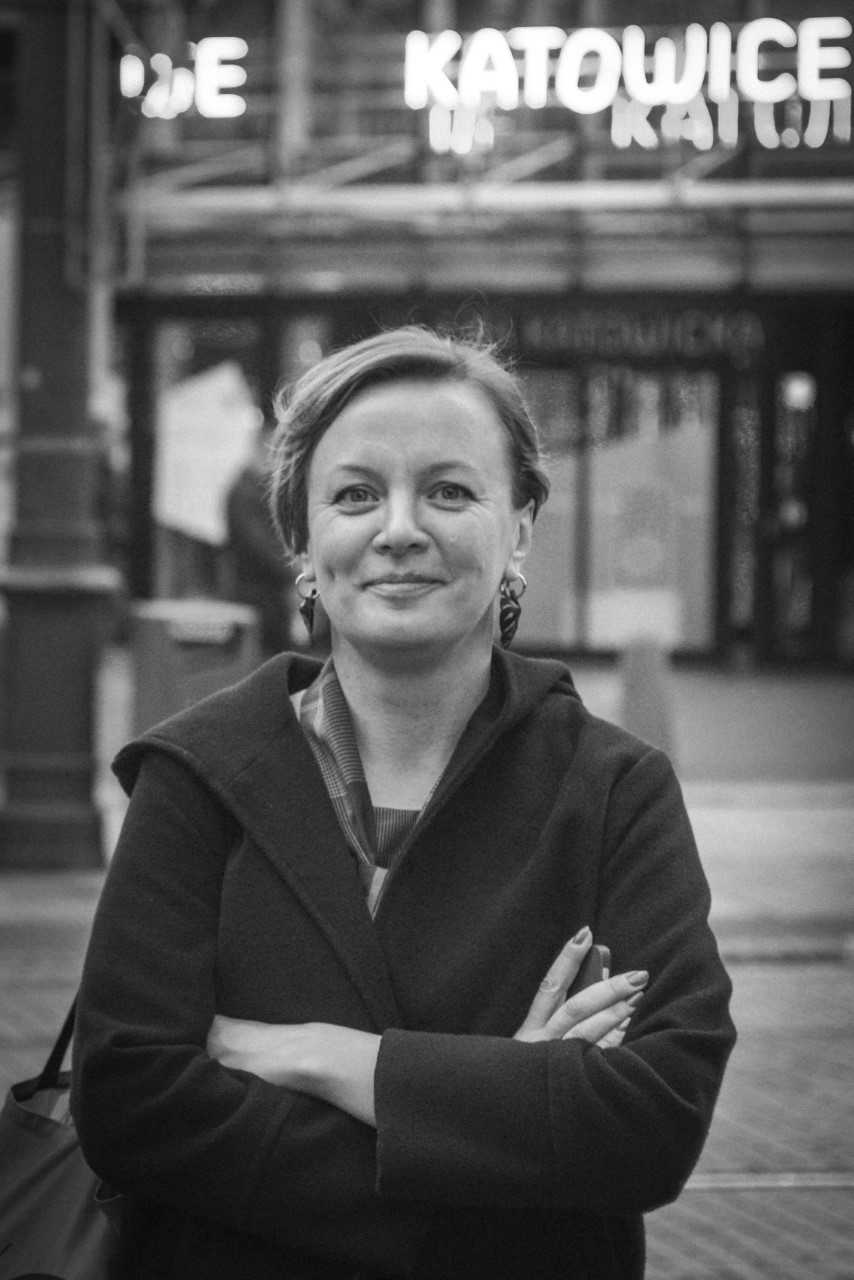
Dr. hab. Anna Kmita is a Professor at the Academy of Fine Arts in Katowice , where she teaches Color Design and co-runs the Design Foundations Studio . As a co-founder of the Polish Color Association , her work bridges information design , comprehensive branding , and color parameterization with a focus on Silesian cultural heritage and applied arts . Research interests center on the clarity of visual messages , heritage preservation , and reviving regional design traditions . Her projects often involve interdisciplinary collaboration , such as the "Ckliwie na szkliwie" ceramic initiative funded by Ministry of Culture scholarships (2020), which combines personal memory documentation , historic commemorative plate traditions , and educational campaigns . Scientific awards include the 2016 Śląska Rzecz Special Award for Silesian Park visual identity and the 2021 Honorable Mention at International Ceramics Festival Mino . She has presented at conferences like the 14th AIC Congress (2021) and Color Impact Conference (2023). Her design projects span urban information systems (Katowice, Zawiercia), industrial collaborations (BHH Mikromed, Valbruna), and cultural preservation initiatives such as the O!pole Color Palette Project (2014) for Opole folk embroidery.
Dr. Timothy Cribbin is a Senior Lecturer in the Department of Computer Science within the College of Engineering, Design and Physical Sciences at Brunel University London. He has been with the university since 2001, initially joining as a lecturer and advancing to his current position. His academic home is firmly rooted in the intersection of information science, human-computer interaction, and data analytics. His educational background includes: PGCert Learning and Teaching in Higher Education, Brunel University (2007) PhD Information Science, Brunel University (2005) for research exploring spatial-semantic interfaces for exploratory document search MSc Industrial Psychology, University of Hull (1996), where he was awarded the Tom Hoyes Memorial Prize BSc (Hons) Psychology, University of Portsmouth (1994) Dr. Cribbin's research focuses on information visualization, interactive search interfaces, and text analytics, with particular expertise in processing and modeling large text collections to uncover meaningful insights. His work spans the design and evaluation of algorithms, interaction models, and end-user tools that support search, navigation, exploration, and sense-making within connected information spaces like scholarly publications and social media platforms. Early in his career, he pioneered work on interactive visualization using distance-similarity and spatial-semantic metaphors, making key contributions through the application of geodesic distance and second-order similarity transformations. More recently, his research has centered on citation-enhanced information retrieval and social media analytics, including the development of the Chorus Twitter analytics project. His scholarly output reveals a consistent trajectory from foundational work in information visualization to increasingly applied research in social media analytics and text mining. Throughout his career, Dr. Cribbin has maintained a strong focus on human-centered approaches to information processing, with particular attention to how users interact with and make sense of complex information spaces. His recent work demonstrates growing interest in psychological aspects of information processing, author classification, and the analysis of linguistic patterns in online radicalization. Dr. Cribbin has received notable recognition including: Tom Hoyes Memorial Prize for his MSc in Industrial Psychology Fellowship of the Higher Education Academy (FHEA) He has secured research funding for projects including "Predicting online radicalisation" and "Facilitating social media research in social sciences." Dr. Cribbin serves as a Deputy Senior Tutor (Academic Misconduct) and provides supervisory duties for final year undergraduate and Masters dissertation projects. He regularly acts as a reviewer for conferences and journals in information science, social media analytics, and information visualization. Dr. Cribbin is a key contributor to the User Centred Design research group and is the founder and lead programmer of the Chorus Twitter analytics project. His work bridges theoretical research with practical applications, particularly in the areas of social media analytics and text mining.
Marine Beaudoin is a Maître de conférences HDR (Associate Professor) at the University of Savoie Mont Blanc, specializing in cognitive psychology with a focus on aging populations. Her research spans motivation, self-perception, and cognitive performance across the lifespan, with particular emphasis on elderly populations. Her primary research areas include self-efficacy , cognitive aging , memory processes , and virtual reality applications . She investigates how self-perception influences cognitive performance, particularly examining memory self-efficacy in aging adults and developing interventions to improve well-being in vulnerable populations. Her work integrates Virtual reality embodiment studies Self-esteem enhancement techniques for cancer patients Mental health interventions for elderly autonomy Lexical association methods for psychological improvement Recent publication trends reveal strong interdisciplinary focus spanning gerontology, clinical psychology, and human-computer interaction. Her work increasingly incorporates virtual reality methodologies while maintaining core psychological research on motivation and self-perception across aging populations. Key thematic clusters include cognitive aging interventions (42% of recent work), self-esteem applications (31%), and virtual embodiment effects (27%). Beaudoin actively collaborates with healthcare structures including hospitals and home nursing services to develop applied techniques for improving quality of life in vulnerable populations. Her research program includes randomized controlled trials and systematic reviews focused on mental health promotion for elderly individuals with physical limitations.
Román Corfas is an Assistant Professor of Instruction and Neuroscience Education Fellow at the University of Texas at Austin’s Department of Neuroscience. He transitioned to full-time neuroscience pedagogy in 2021, focusing on undergraduate curriculum development and teaching. Previously, his research explored insect behavior and sensory systems, including mosquito thermotaxis and fly navigation. Education: Bachelor’s in Neuroscience, Oberlin College Ph.D. in Neuroscience, Rockefeller University (2010) Postdoctoral Research, Caltech (2015–2021) Research Interests: Neuroscience education innovation, neuroethology of insect behavior, and sensory integration mechanisms in mosquitoes and fruit flies. His work bridges basic research on animal behavior with educational strategies to enhance STEM accessibility and engagement. Publications: Recent work emphasizes behavioral neuroscience (e.g., Drosophila navigation) and mosquito host-seeking mechanisms, reflecting his dual focus on research and pedagogy. Teaching & Curriculum: Leads introductory neuroscience courses and collaborates with the Neuroscience Department to modernize undergraduate curricula.
Caleb Kemere is an Associate Professor in the Departments of Electrical and Computer Engineering and Bioengineering at Rice University. His work bridges neuroscience, engineering, and computer science, focusing on neuroengineering, neural decoding, and real-time brain-computer interfaces. He holds a B.S. in Electrical Engineering (with Honors) and a B.A. in Economics from the University of Maryland, College Park, and a Ph.D. in Electrical Engineering from Stanford University. Before joining Rice in 2011, he was a postdoctoral fellow at the Keck Center for Integrative Neurosciences at UCSF. His research explores hippocampal function in spatial navigation and memory, signal processing for neural interfaces, and developing technologies like miniature microscopes and low-power sensors. He has pioneered frameworks such as Spyglass for reproducible neuroscience research and RealtimeDecoder for online neural decoding. Kemere has received prestigious awards including the NSF CAREER Award (2013), HFSP Young Investigator Award (2014), and BRAIN: EAGER Award (2015). His grants include a five-year NSF grant to study Deep Brain Stimulation (DBS) and a neural engineering IGERT grant. His lab, the Realtime Neural Engineering Lab (RNEL), develops tools for understanding and modulating neural activity. Ongoing work addresses closed-loop brain stimulation, environmental uncertainty modeling in foraging behavior, and sleep-based memory consolidation.