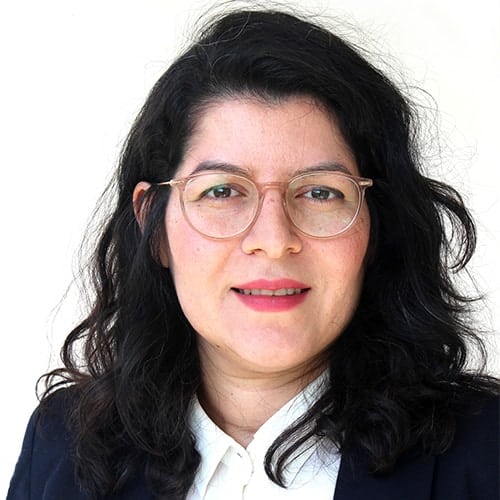
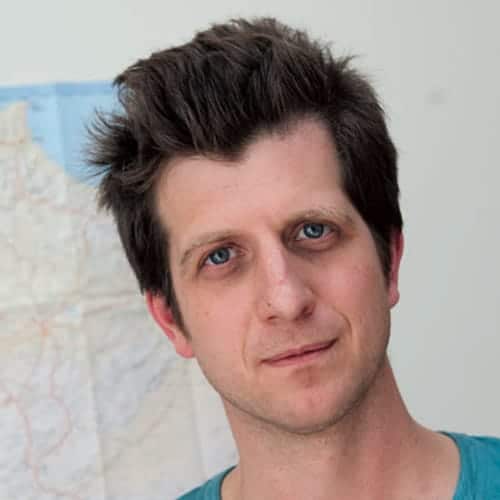
Thomas Bjørner is an Associate Professor at Aalborg University's Department of Architecture, Design and Media Technology within The Technical Faculty of IT and Design. He serves as Head of the Media Innovation & Game Research (Me-Ga) unit and co-founded the research network for qualitative methods (since 2007) with 40+ company collaborations. Specializes in qualitative/mixed methods for technology evaluation Teaches PhD courses in advanced qualitative methods EU expert evaluator for research grants His research focuses on gamified learning , VR for social communication , and technology acceptance studies , often addressing UN Sustainable Development Goals. Recent projects include: Audio-only VR for blind gamers Generative AI integration in education Plastic crisis awareness games Smart city implementation barriers Scientific Awards: Serious Game Competition Award (2022) International conference prizes (2020, 2018) With over 121 publications including two textbooks, his work emphasizes applied qualitative methods with improved validity in technology contexts, particularly for youth education and media research.
Mogens Fosgerau is a Professor at the Department of Economics, University of Copenhagen, with a research focus on discrete choice theory, rational inattention, transportation and urban economics, congestion modeling, and entropy-based frameworks. He has held an ERC Advanced Grant (2017-2023) and completed a Grand Solutions project for the Innovation Fund Denmark (2016-20). Education: Mathematical Economics (Aarhus University, 1990), PhD in Mathematics (University College London, 1992). Current affiliations: Department of Economics (University of Copenhagen), Faculty of Social Sciences. Former roles: Guest Professor at DTU (2022-2023), member of the Commission for Green Transition of Passenger Cars (2019-2021). His research explores the intersection of information theory and discrete choice models, addressing complex substitution patterns and endogeneity issues through generalized entropy frameworks. He applies these models to transportation planning, urban economics, and climate policy analysis. Recent publications focus on perturbed utility models, inverse product differentiation logit, and rational inattention in spatial choice contexts. His work bridges theoretical econometrics with practical transport and environmental policy challenges. Awards: Recipient of the 2021 Transportation Science Meritorious Service Award. Former Editor-in-Chief of Economics of Transportation (2012-2020). Advising and Grants: Leads research projects funded by the European Research Council and Innovation Fund Denmark. Has participated in policy committees including the Danish Environmental Economic Council (2019-2025) and the Committee on Public Transport Mobility (2023-24).
Harpa Birgisdottir is a Professor and Head of the Building Sustainability Section at Aalborg University's Department of Construction, Urban and Environmental Engineering. Her work focuses on Life Cycle Assessment (LCA), net-zero carbon buildings, and circular economy strategies in construction. Key Research Areas: Greenhouse Gas Emissions, Environmental Product Declarations (EPD), Urban Development, and Climate Mitigation Academic Recognition: 2022 Best Paper at Sustainable Built Environment, 2020 Applied Energy Highly Cited Award Research Trends Recent publications emphasize data-driven sustainability assessments, embodied carbon in buildings, and fire safety LCA tools. She leads EU-wide projects on greenhouse gas emissions and co-develops frameworks for net-zero carbon buildings through IEA EBC Annex 89. Scientific Awards Best Paper (Sustainable Built Environment Berlin 2022) Highly Cited Research Paper (Applied Energy 2020) Det Bæredygtige Element - Produktprisen (2019) ROCKWOOL Prisen (2017) Best Paper (2013) As a principal investigator and supervisor, she guides PhD projects on biobased fire safety and urban circularity. Her team collaborates with international researchers on climate impact metrics and sustainable construction standards.
Professor Poul Alberg Østergaard is affiliated with Aalborg University's Department of Sustainability and Planning, focusing on sustainable energy planning and smart energy systems. His work aligns with UN Sustainable Development Goals, emphasizing energy transition, renewable integration, and decarbonization strategies. Professor in Energy Planning Expertise: Energy Systems Analysis, District Heating, Renewable Energy Transition Key Projects: Sustainable Heating Roadmaps, Municipal Energy Planning (e.g., Aalborg 2020-2050 Strategy) Research interests include 100% renewable energy systems, smart grids, energy storage, and policy frameworks. He has contributed to over 287 publications and 25 projects since 1996, with notable work on island energy transitions, hydrogen pathways, and district heating optimization. Media engagements highlight his role as an advisor on energy pricing, district heating dynamics, and nuclear energy debates. He organizes international conferences like the Smart Energy Systems series and collaborates globally on energy policy and modeling tools like EnergyPLAN. Labs/Teams: Member of the Sustainable Energy Planning Research Group and contributor to initiatives like the Smart Island Energy Systems (SMILE) project.
Tove Hels is an Associate Professor in the Department of the Built Environment at the Faculty of Engineering and Science, Aalborg University, Denmark. She is a key member of the Traffic Research Group, focusing on transportation safety, road user behavior, and traffic policy. Her work bridges engineering, public health, and social science to improve road safety outcomes. Research Interests: Her research spans traffic safety, cyclist-motorist interactions, speed enforcement, accident risk modeling, and the impact of vehicle technologies. She investigates both infrastructure design and behavioral factors influencing road safety, with a strong emphasis on data-driven analysis and policy evaluation. The recent publications reveal a consistent focus on improving cyclist safety through infrastructure (e.g., advanced stop boxes, roundabout design), addressing under-reporting of traffic injuries, and evaluating behavioral interventions for speeding. Her work integrates epidemiological methods, statistical modeling, and real-world policy applications. Scientific Contributions: Principal Investigator in the Danmarks Trafikulykker cohort study (2025–2029) Project participant in EASE: Intervention against speed offenders (2019–2025) Author of over 29 research outputs including journal articles, reports, and policy briefs Frequent contributor to national media and advisory bodies like Dansk Vejforening Advising and Grants: While no formal students are listed, her leadership in major funded research projects indicates a supervisory role in training junior researchers. She has secured and contributed to significant research grants related to traffic safety monitoring and intervention evaluation. Labs and Teams: She is part of the Traffic Research Group at Aalborg University, collaborating closely with researchers such as H. Lahrmann, T.K.O. Madsen, and A.V. Olesen. The group conducts field studies, data linkage projects, and policy evaluations with national impact.
Fariba Karimi is a Professor of Social Data Science at Graz University of Technology and leads the Algorithmic Fairness research group at the Complexity Science Hub (CSH) in Vienna. Her work sits at the intersection of computational social science, network science, and AI ethics, with a strong focus on fairness, inequality, and bias in algorithmic systems. She holds a PhD in Physics and Computational Science from Umeå University, Sweden (2015), and was a Postdoctoral Researcher at GESIS – Leibniz Institute for Social Sciences, Germany. Her research combines large-scale data analysis, agent-based modeling, and network science to study how social structures and algorithms interact to shape disparities, particularly for underrepresented groups. Computational Social Science Algorithmic Fairness and Bias Network Science and Homophily Digital Humanism Urban Inequality and Implicit Bias Gender and Age Equity in Academia Her recent publications reveal a consistent focus on understanding and mitigating algorithmic and structural inequities. Themes include the visibility of minorities in networks, the impact of segregation on health and cognition, gender citation gaps in physics, and the development of fair ranking and recommendation systems. She employs interdisciplinary methods to analyze both digital and real-world social systems. Fariba Karimi has received several prestigious recognitions, including: Young Scientist Award from the German Physical Society (2023) ERC Starting Grant (2024) Nomination for the Hedy Lamarr Award (2021) She leads the 'Humanized Algorithms' project at CSH, funded by the ERC, and co-leads an EU Horizon project (MAMMOth) on multi-criteria fairness in AI. She advises PhD researchers such as Lisette Espín-Noboa and collaborates with institutions like the University of Mannheim and the Centre for Social Sciences. Her work contributes to both academic knowledge and practical solutions for fairer AI systems and more equitable societies.
Renaud Lambiotte is Professor of Networks and Nonlinear Systems at the Mathematical Institute, University of Oxford. He holds a PhD in Physics from Université libre de Bruxelles and has held research and faculty positions at ENS Lyon, Université de Liège, UCLouvain, Imperial College London, and the University of Namur. He is currently an active academic in applied mathematics and network science. His research focuses on complex systems, particularly dynamics on networks, temporal networks, and stochastic processes. He applies these to social and brain networks, data mining, and urban systems. His work bridges theoretical modeling and real-world data, emphasizing the structure and evolution of complex systems. His recent publications demonstrate strong trends in network theory, including hypergraphs, community detection, multidimensional dynamics, and data quality in network interventions. He also explores applications in urban air quality and gentrification, showing a commitment to socially relevant complex systems research. Scientific Awards: Prix Wernaers 2013 Prix Wernaers 2016 Prix Wernaers 2020 Verdickt-Rijdams 2016 de l'Académie royale de langue et de littérature françaises He is the co-founder of L’Arbre de Diane, a publishing initiative at the science-literature interface, which received multiple awards. He teaches advanced courses such as Differential Equations II and Networks. He is affiliated with the Machine Learning and Data Science and the Oxford Centre for Industrial and Applied Mathematics research groups. He has authored or co-edited key texts in the field, including A Guide to Temporal Networks and Modularity and Dynamics on Complex Networks , and has published around 130 peer-reviewed articles. His research is supported by ongoing collaborations and active publication output, indicating sustained academic leadership.
Anders Rønn-Nielsen is an Associate Professor at the Department of Finance and Center Coordinator at the Center for Statistics at Copenhagen Business School (CBS). He holds a M.Sc. in Statistics from University of Copenhagen and a PhD in Statistics and Probability Theory from Aarhus University. His research focuses on applied probability theory, particularly Lévy-based spatial models, and statistical efficiency analysis. His academic credentials include: M.Sc. in Statistics, University of Copenhagen PhD in Statistics and Probability Theory, Aarhus University Research interests span: Lévy processes and spatial stochastic modeling Extreme value theory applications in finance and natural sciences Nonparametric production frontier analysis Efficiency measurement methodologies His publications (18+ articles) emphasize theoretical probability and statistical applications in efficiency analysis. He has served as external examiner at Aarhus University and Copenhagen University for master’s and PhD examinations (2017–2019). His teaching responsibilities include advanced probability theory courses and statistical methods training for economics students.
Thomas Ebel is Professor and Head of the Centre for Industrial Electronics at the University of Southern Denmark (SDU) , Institute of Mechanical and Electrical Engineering. A leading expert in power electronics, high-voltage engineering and capacitor technology, he directs large, multi-partner research projects and teaches/supervises at both graduate and PhD levels. Education & Career Path Prof. Ebel holds the academic title Dr. rer. nat. and has been appointed full Professor at SDU. He concurrently serves as Head of Section at the Centre for Industrial Electronics, orchestrating cross-disciplinary research teams and infrastructure. Research Interests Power Electronics & Power Conversion: advanced converter topologies, WBG devices (GaN, SiC), high-frequency magnetics, grid-forming control. Dielectric Materials & Capacitors: polymer and hybrid nanocomposite dielectrics, self-healing metallized film capacitors, aluminium electrolytic capacitors, lifetime modelling and reliability. High-Voltage Engineering & Breakdown Physics: breakdown mechanisms in nanocomposites, corona and partial discharge, insulation coordination. IoT & Data-Driven Monitoring: real-time condition monitoring, digital twins, data-driven RUL estimation for power components. Publication Trends Across 133 research outputs (2018-2025) the dominant themes are (i) construction and reliability of 700 V-class aluminium polymer electrolytic capacitors, (ii) GaN-based power converter optimisation, (iii) hybrid AC/DC microgrid control and harmonic mitigation, and (iv) nanocomposite dielectrics for next-generation capacitors. The 15 most recent articles (2025) reinforce these directions while adding socio-technical energy analytics and green-vehicle powertrains. Scientific Awards Tek Innovation Prize 2023 – awarded for outstanding contributions to power electronics research and industrial innovation. Advising & Funding Prof. Ebel currently supervises ~10 PhD candidates and post-docs including L. Tavares, M. A. Khan, R. Maheshwari, S. Mateen, A. N. Pinky and others. He is Principal Investigator or Head Coordinator of six active projects (2024-2027) valued at >€8 M, spanning ultra-high-efficiency drives, hydrogen-PtX converters, self-healing capacitors and hybrid power-plant concepts. Laboratory & Teams He heads the High-Voltage Power Electronics Laboratory at SDU, equipped with 700 V/200 A capacitor test rigs, GaN/SiC converter prototyping benches, and environmental chambers for accelerated ageing studies. The centre collaborates with 20+ industrial partners and coordinates the international IEA Wind Task 50 on hybrid power plants.
Poul Ægidius Norby is a Professor in the Department of Energy Conversion and Storage at the Technical University of Denmark (DTU), where he leads research in structural analysis and modelling of energy materials. His work spans battery technology, electrocatalysis, and advanced diffraction techniques for in situ characterization. Position: Professor Institution: Technical University of Denmark (DTU) Department: Department of Energy Conversion and Storage Research Group: Structural Analysis and Modelling Location: Fysikvej 310, 422, 2800 Kgs. Lyngby, Denmark His research focuses on the fundamental understanding of materials for sustainable energy technologies, particularly using X-ray and neutron diffraction to study battery operation in real time. He contributes to UN Sustainable Development Goals related to clean and affordable energy. Recent publications highlight his work on solid-state batteries, sodium-ion anodes from biomass, high-entropy alloy electrocatalysts, and spatial inhomogeneity in lithium diffusion. These studies reflect a strong trend toward operando characterization, sustainable materials synthesis, and next-generation energy storage solutions. His research bridges fundamental materials science with practical energy applications. He actively supervises PhD students and leads multiple funded projects, including those on solid-state electrolytes and in situ battery studies. His work involves collaboration across disciplines and institutions, emphasizing neutron and synchrotron-based techniques. Dr. Norby regularly contributes to academic discourse through guest lectures and conference presentations on topics such as in situ diffraction and lithium battery technology.
Kjell Tryggestad is a Visiting Associate Professor at the Department of Accounting , Copenhagen Business School . His research focuses on organizational processes , materialization of ideas , and project management across diverse industries like automotive, construction, and medical devices. He emphasizes the active role of objects and technology in shaping strategy and outcomes. Research Areas : Management Accounting, Economic Performativity, Circular Economy, Public Sector Reforms Teaching : Courses on Project Management , Public Sector Accounting , and Organizing Technologies Tryggestad’s work explores how accounting practices and economic theories influence organizational spaces and public sector reforms. His recent publications highlight trials of strength between competing designs and the performative role of accounting in institutional change. He collaborates extensively with scholars like Peter Skærbæk and Mark Christensen.
Jane Bjørn Vedel is an Associate Professor at the Department of Organization, Copenhagen Business School, and a member of the Center for Organizational Research on Impact (CORI). Her research explores the organizational and societal effects of large-scale donations to research, dynamic capabilities in interorganizational relationships, and the role of time and temporality in innovation management. Her recent work investigates how transformative innovation policy reshapes universities’ organizational structures and how spatial scale influences institutional processes. She has secured significant funding (1.72M EUR) as a Principal Investigator and collaborates with institutions like Stanford University. Key Research Themes: Organizational adaptation to financial shifts Temporal tensions in dynamic capabilities Interorganizational collaboration in mission-oriented research Isomorphic differences in science policy Micro-foundations of resource integration Her publications appear in top journals like Research Policy and Journal of Management Studies , with recent articles focusing on resilience in goal-complex environments and ethical disruptions in organizations. She has mentored PhD candidates and postdocs, including Vera Simoneit and Søren Lund Frandsen.
Arne Feddersen is a Professor at the Department of Business and Sustainability within the University of Southern Denmark . His academic work spans Sports Economics , Applied Regional and Urban Economics , and Media Economics , with a focus on empirical analyses of sports events, betting markets, and regional development. He holds a Dr. rer. pol. degree (Doctor of Economics) and maintains an ORCID profile (0000-0001-8935-4021). Research highlights include: Economic impacts of Formula One, Tour de France, and Olympic Games Competitive balance dynamics in professional sports Sentiment bias in betting markets (NBA, NFL, European football) Agglomeration effects from transport infrastructure Media demand analysis for sports broadcasts Recent work analyzes event hosting valuation , gambling market anomalies , and sports regulation frameworks . He serves on editorial boards and departmental councils while supervising courses in sports economics and management.
Stefan Oehmcke is an Assistant Professor at the Machine Learning Section of the Department of Computer Science , University of Copenhagen. His research focuses on applying machine learning techniques to environmental and geospatial analysis, particularly in forest ecology, tree monitoring, and climate impact studies. Research Trends: His recent publications emphasize deep learning for LiDAR data processing, multi-modal geospatial representation, and sustainable AI practices. Key Collaborations: Frequently collaborates with researchers in environmental science, remote sensing, and climate change (e.g., Martin Brandt, Christian Igel). Applications: Develops tools for forest biomass estimation, tree mortality mapping, and urban safety analysis using satellite imagery. While no specific educational background or scientific awards are mentioned in the provided texts, Oehmcke's work demonstrates technical innovation in AI explainability and environmental monitoring, with significant contributions to journals like Remote Sensing of Environment and Nature Communications .
Kasper Green Larsen is a Professor in the Department of Computer Science at Aarhus University. His research focuses on theoretical computer science, machine learning, algorithms, and data structures. He has made significant contributions to boosting algorithms, PAC learning theory, and computational geometry. His work often bridges algorithm design with complexity theory, addressing challenges in optimization, memory efficiency, and lower bounds analysis. Key research areas include: Algorithmic Learning Theory (e.g., boosting, bagging, and PAC learners) Data Structure Design (e.g., invertible Bloom tables, succinct representations) Computational Complexity (e.g., lower bounds for dynamic and oblivious algorithms) Geometric Algorithms (e.g., hierarchical searching, range queries) Recent publications emphasize foundational advancements in learning theory (e.g., optimal weak-to-strong learning) and data efficiency (e.g., memory-reduced Bloom filters). His work frequently appears in top conferences like IJCAI, ICALP, and SODA, reflecting rigorous theoretical contributions with practical implications.