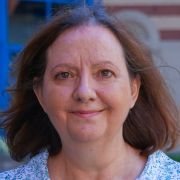
Prof. Dr. Helen Engemann is a Junior Professor at the Department of English, School of Humanities, University of Mannheim. Her research focuses on multilingualism, language acquisition, and cognitive aspects of bilingualism. She is affiliated with the Research Team JP Multilingualism and is a member of the Deutsche Gesellschaft für Sprachwissenschaft (DGfS), European Second Language Association (EUROSLA), and International Association for the Study of Child Language (IASCL). Her work investigates how language structures influence cognitive processes, particularly in bilingual children and heritage speakers. Key topics include motion event constructions, crosslinguistic influence, and syntactic packaging in multilingual environments. Recent studies explore language change mechanisms in Italian heritage speakers and the impact of typological factors on memory and event encoding. Publications span prestigious journals like Linguistic Approaches to Bilingualism , Journal of Child Language , and Bilingualism: Language and Cognition . Her research bridges linguistics, psychology, and education, addressing both theoretical and applied questions in multilingual development.
Gita Reese Sukthankar is a Professor in the Department of Computer Science at the University of Central Florida (UCF) , where she directs the Intelligent Agents Lab . Her research focuses on activity and plan recognition , with applications in multi-agent systems, robotics, and human-robot interaction. She earned her Ph.D. from the Robotics Institute at Carnegie Mellon University and joined UCF in fall 2007. Research Interests: Her work spans activity recognition , intent inference , multi-agent coordination , and human-robot teams . She has applied these techniques to domains such as adversarial games (e.g., military simulations, Unreal Tournament), assistive technologies, and cooperative robotics. Her research integrates AI, machine learning, and probabilistic models to understand and predict complex team behaviors. Publication Trends: Her publications emphasize spatio-temporal modeling , probabilistic graphical models (e.g., HMMs, CRFs) , and multi-agent plan recognition . She frequently publishes in top venues like AAMAS, AAAI, and ICRA, with a focus on robust recognition of team behaviors, transfer learning, and real-world AI applications. Scientific Awards: NSF CAREER Award (2009) AFOSR Young Investigator (2009) ONR Summer Faculty Fellow (2008) UCF Faculty Excellence for Doctoral Mentoring (2012) CECS Dean's Research Professorship (2013) AAAI Senior Member (2021) ACM and IEEE Senior Member Advising and Grants: She mentors graduate students in AI and robotics and has led research funded by DARPA, AFOSR, and ONR. Her lab develops systems for intelligent agents that can understand and collaborate with humans. She has served on numerous program committees and editorial boards, including ACM Transactions on Autonomous and Adaptive Systems . She teaches courses such as Intelligent Systems , Robotics , and Machine Learning , and has been recognized for both research and teaching excellence. Labs and Teams: She leads the Intelligent Agents Lab at UCF, which focuses on data-driven social informatics and AI for human-agent teams. Her group collaborates with researchers in robotics, computer vision, and cognitive science to build adaptive, intelligent systems.
H-Dirksen Bauman is a Professor of Deaf Studies at Gallaudet University, affiliated with the Arts and Humanities School. His work centers on Deaf cultural studies, audism, and the intersection of disability studies with broader sociocultural frameworks. He has contributed significantly to redefining academic discourse through concepts like 'Deaf Gain,' emphasizing the value of deafness as a mode of human diversity rather than a deficit. Bauman’s research spans sign language literature, sensory politics, and architectural design for Deaf communities (DeafSpace). He has taught courses such as Language, Culture, and Power and Enforcing Normalcy: Deaf and Disability Studies , reflecting his commitment to critical pedagogy. His scholarly contributions include foundational texts on audism and co-editing Deaf Gain: Raising the Stakes for Human Diversity . He has held leadership roles including Director of ASL Connect and advisor to the Deaf Studies Digital Journal. Awards include the Maryland State Arts Council’s Independent Artist Award and recognition for bilingual literary works. His work bridges academia, artistry, and activism to challenge ableist norms and advocate for deaf-centered frameworks in education, architecture, and policy.
Dr. Zhao Na is a tenure-track Assistant Professor at the Singapore University of Technology and Design (SUTD), affiliated with the Institute of Sustainable Technology and Design (ISTD). She holds a Ph.D. in Computer Science from the National University of Singapore (NUS), where her thesis on 3D point cloud semantics earned the IMDA Excellence Prize. Her research bridges computer vision and machine learning, focusing on scene understanding, data-efficient learning, and domain generalization. Education: Ph.D. in Computer Science (NUS, 2021); Prior roles include Research Fellow at NUS. Research interests emphasize 3D scene analysis, object detection, semantic segmentation, and robust learning under noisy or limited data. Her work addresses challenges in multi-modal learning, continual learning, and open-world scenarios. Recent projects include geometry-semantics synergy in neural fields and cross-modal augmentation for visual grounding. Publications span top-tier venues like CVPR, ECCV, and ICCV, with a focus on 3D vision and AI. Key contributions include the PCTeacher framework for semi-supervised segmentation and Static-Dynamic Co-Teaching for incremental learning. Scientific Awards: IMDA Excellence Prize (2021). Active grants include a DSO Research Grant (2023–2026) and A*STAR MTC Grant (2023–2026). She leads the SUTD-ZJU Thematic Grant on 3D scene understanding (2022–2024). Laboratory/Team: Research group at ISTD/SUTD focuses on advancing AI-driven 3D perception and scene understanding systems.
Jeff Mitscherling is a Professor of Philosophy at the University of Guelph, specializing in phenomenology, hermeneutics, ancient philosophy, and aesthetics. His research explores the intersection of realist phenomenology with cognitive science, particularly through the works of Aristotle and early phenomenologists like Ingarden and Reinach. He holds degrees from the University of California, Santa Barbara (B.A.), McMaster University (M.A.), and the University of Guelph (Ph.D.). His research interests include the ontological foundations of Aristotle's philosophy, intentional being, and the historical development of cognitive concepts. He has published extensively on topics such as the nature of art, literary criticism, and Platonic dialogues. Notable works include Aesthetic Genesis (2010) and The Image of a Second Sun (2009), which critically engage with classical and modern philosophical frameworks. His scholarly contributions span hermeneutic theory, ancient philosophy, and the philosophy of art. Though no awards are explicitly listed, his prolific publication record reflects significant academic impact. His teaching and research emphasize interdisciplinary dialogue between historical philosophy and contemporary cognitive inquiry.
Prof. Dr. Reyhan Çelik is a full professor at Akdeniz University, Faculty of Letters, Russian Language and Literature Department since 2023, with prior associate professor (2015–present) and assistant professor (2007–2015) positions at Erciyes University. She holds a doctorate in Russian Language and Literature from Ankara University (2007) and has authored/co-authored over 64 publications. Education: PhD (2007), Ankara University MA (2001), Ankara University BA (1995), Ankara University Research Focus: 20th-century Russian literature War narratives Siberian and village themes Gender studies Migration and cultural identity Comparative Turkish-Russian literary analysis Academic Leadership: Head of Russian Language and Literature Department (Akdeniz University, since 2018) Scientific Projects Committee Member (Akdeniz University, since 2019) Key Publications (2014–2021): World War II memory in Soviet works Gender representation in Ulitskaya and Yevtushenko Ecological themes in Astafyev and Aitmatov Analysis of Gumilyov’s orientalist perspectives Conference Participation: Chair/speaker at 20+ international conferences Peer reviewer for journals: RumeliDE, Karadeniz, Sosyal Bilimler Enstitü Dergisi
Dr. Anna Bendrat is an Assistant Professor at the Department of English and American Studies, Maria Curie-Skłodowska University, Poland. A scholar in Rhetoric, American Drama, and Cognitive Poetics, she is actively involved in interdisciplinary research, particularly through the Cognitive Studies Team and the International Federation for Theatre Research (IFTR). Her research interests span Rhetoric, Social Communication, Identity Studies, New Media, and Affect Studies. She has led the EU Erasmus+ project MigraMedia (2023–2026) and co-founded the journal New Horizons in English Studies . Her work bridges academic rigor with public engagement, including organizing the Media in America, America in Media conference series. Anna’s recent publications interrogate urban trauma in Pulitzer-winning drama, AI’s role in reconstructing memory, and cognitive texture in multi-perspective narratives. Her scholarly activities are enriched by editorial roles in Res Rhetorica and New Horizons in English Studies , alongside grants for research in New York and Poland. She mentors the UMCS Philology Student Circle, promoting anglophone cultures, and maintains a focus on Polish-American academic collaborations. Her research team explores digital rhetoric, migration narratives, and the intersection of literature with cognitive theory.
Mohamed Sarwat is an Associate Professor at Arizona State University specializing in databases , spatial data management , and recommender systems . His research focuses on GeoSpark —a cluster computing framework for spatial data—and its extensions like GeoSparkViz for visualization and GeoSparkSim for traffic simulation. Key Contributions: LARS* (Location-Aware Recommender System), Horton* (Graph Reachability), Sindbad (GeoSocial Platform), and Riso-Tree (Graph Database Indexing) Research Themes: Integration of spatial/temporal data with machine learning, efficient indexing for big geospatial datasets, and scalable frameworks for mobility data science His work spans collaborations with 23+ co-authors across institutions like University of Minnesota, University of Melbourne, and University of Salzburg. Current projects emphasize GeoTorchAI —a spatiotemporal deep learning system—and mobility data science infrastructure.
Łukasz Remisiewicz is a Lecturer at the Department of Sociological Theory and Social Research Methodology , Institute of Sociology , Faculty of Social Sciences , University of Gdańsk . He serves as the Editorial Secretary of the journal Miscellanea Anthropologica et Sociologica . His research spans multiple interdisciplinary domains , including sociology of science, philosophy of science, sociology of education, neurosociology, and sociology of examination. He explores the social contexts of academic assessment, cognitive development, and biological dimensions in sociological theory. His 15 most recent publications (2025-2017) focus on evaluative cultures, academic metrics, habilitation processes, family rituals, climate change discourse, disability marginalization, and biology-sociology interfaces. These works reflect his commitment to merging sociological theory with empirical and interdisciplinary analysis. Scientific Awards & Grants : Florian Znaniecki Award, 1st degree (2014) Honorable Mention, Polish Academy of Sciences (2016) Rector's Awards (1st, 2nd, 4th degrees, 2016/17–2024/25) Ministry of Science and Higher Education Scholarship (2017/18) Fulbright Junior Research Award (2018–2019) Mayor of Gdańsk & Gdańsk Scientific Society Award (2024) Florian Awards for 'Discovery of the Year' (2023) and 'Captain of Sociology' (2024) He is an active participant in international conferences, including ESA , Neurodidactics Symposium , and CHER Annual Conferences , presenting on topics ranging from emotional stratification to neurosociological models.
Professor Andy Tolmie is Chair of Psychology and Human Development at University College London's Institute of Education (IOE). He leads the Centre for Educational Neuroscience, a tri-institutional partnership with Birkbeck and UCL's Institute of Cognitive Neuroscience. His roles include Deputy Director of this Centre and Programme Leader for the Educational Neuroscience MSc. He also oversees the Bloomsbury and UCL ESRC Doctoral Training Centres, instrumental in social science doctoral training across multiple universities. His research focuses on cognitive development, particularly in science learning, executive function, and child pedestrian safety. Key projects include the EEF/Wellcome Trust initiative on executive function in STEM education and interventions to improve group work efficacy in primary classrooms. He has developed behavioral training programs for child pedestrians adopted nationwide. Dr. Tolmie's academic leadership spans editorship of the British Journal of Educational Psychology and roles in the British Psychological Society. His work bridges developmental psychology with educational practice, emphasizing evidence-based strategies for teaching science and fostering critical thinking skills.
Jure Leskovec is a Professor of Computer Science at Stanford University, affiliated with the Stanford AI Lab, Machine Learning Group, and the Center for Research on Foundation Models. He holds academic appointments in the Department of Computer Science and is a member of Bio-X, the Institute for Human-Centered Artificial Intelligence (HAI), and the Wu Tsai Neurosciences Institute. Leskovec earned his BSc from the University of Ljubljana (2004), PhD from Carnegie Mellon University (2008), and postdoctoral training at Cornell University. His research focuses on social networks, data mining, machine learning, and computational biomedicine, with contributions to graph neural networks, drug discovery, and AI applications in healthcare. His work has been applied to combat the COVID-19 pandemic and integrated into products at major tech companies. Leskovec’s publications reflect his expertise in network analysis, medical AI, and biological systems. His recent work includes foundational contributions to graph neural networks (e.g., PyG) and medical AI frameworks. His research has garnered numerous awards, including the Microsoft Research Faculty Fellowship and ICDM Research Contributions Award. Leskovec advises numerous doctoral and postdoctoral researchers, contributing to over 200 publications. His interdisciplinary collaborations span computational biology, healthcare analytics, and social systems, with a focus on leveraging AI to address real-world challenges.
Dr Ana Cristina Vasconcelos is a Senior Lecturer in Corporate Information Management at the School of Information, Journalism and Communication, University of Sheffield. She holds a PhD from Sheffield Hallam University and has held academic roles at multiple institutions, including Leeds Metropolitan University and Sheffield Hallam University. Her research focuses on the intersection of knowledge management, information systems, and organizational adaptation. Education: BA in History, PGDip in Information Science (University of Lisbon), PhD in Information Systems (Sheffield Hallam University) Her research explores organizational learning, absorptive capacity, knowledge sharing, and boundary spanning practices, often applying theoretical frameworks like Arenas/Social Worlds Theory and Practice Theory. Funded by the European Community and AHRC, her work addresses challenges in information systems implementation and knowledge integration across sectors. Recent publications highlight trends in smart city datafication, interdisciplinary knowledge management, and virtual community dynamics. She supervises PhD students in areas spanning economic resilience to knowledge transfer in FinTech ecosystems. Teaching interests include qualitative research methods, organizational culture, and knowledge management systems. She has external examiner roles at multiple universities and serves on editorial boards for journals like Libri and the International Journal of Knowledge-Based Organizations.
Luisa A. Igloria is a Professor of English and Creative Writing at Old Dominion University (ODU), holding the Louis I. Jaffe Professorship and serving as a core faculty member in the MFA Creative Writing Program, which she directed from 2009-2015. She was the 20th Poet Laureate of the Commonwealth of Virginia (2020-22), receiving the 2021 Academy of American Poets Fellowship during her term. With over 35 years of teaching experience, she leads workshops at Norfolk's Muse Writers Center and sits on its Board, cementing her role as a literary ambassador and educator. Her education includes: Ph.D. in English/Creative Writing, University of Illinois at Chicago (1995) M.A. in Literature, Ateneo de Manila University (1988) B.A. in Humanities (Comparative Literature, English, and Philosophy), University of the Philippines Baguio (1980) Igloria's research centers on Poetry, Creative Writing, and the intersection of Filipino American and Asian American literary traditions within postcolonial and diasporic frameworks. She explores themes of migration, cultural memory, and women's narratives through innovative verse, as seen in her ecopoetry (2015 Resurgence Prize) and works addressing Philippine history. Her expertise spans nonfiction and contemporary American poetry, often examining identity through the lens of the Filipino diaspora. Recent publications reveal a sustained focus on diasporic identity and postcolonial critique through daily poetic practice. Her work frequently engages with Philippine folklore, migration trauma, and cultural hybridity, blending formal experimentation with urgent socio-political commentary. Journals like Crab Orchard Review and Orion showcase her signature fusion of personal and collective histories. Key literary awards include the Gawad Pambansang Alagad ni Balagtas lifetime achievement award (2021), Crab Orchard Poetry Prize (2019), Resurgence Prize for ecopoetry (2015), May Swenson Prize (2014), and multiple Palanca Awards. ODU-specific honors comprise the Burgess Award for Research (2015) and Broderick Diversity Champion Award (2015). Igloria mentors emerging writers through ODU's MFA program and The Muse Writers Center, where she serves on the Board. Her grants include the Virginia Commission for the Arts Fiction Fellowship (2001) and Academy of American Poets Laureate Fellowship (2021) for statewide public poetry initiatives. She has also received institutional support for diaspora-focused projects like the Poetry Postcard Project. She collaborates with literary collectives including the Writers Union of the Philippines (UMPIL) and participates in international seminars such as the Summer Literary Seminars in St. Petersburg. Her daily poem-writing project since 2009 and community workshops demonstrate ongoing creative leadership beyond formal academic structures.
Sidonie Christophe is a Senior Researcher (Directrice de Recherche, DR1) at UMR LASTIG, a joint research unit of Université Gustave Eiffel, IGN-ENSG, and EIVP. She serves as co-director of the LASTIG laboratory and leads research in geovisualization, map design, and interactive spatial data exploration. She also holds a part-time advisory role (60%) at the French Ministry of Higher Education and Research in the domain of digital technology, environment, climate, and sustainable urban development. PhD in Geographic Information Sciences Senior Researcher, DR1, MTECT Co-Director, LASTIG Laboratory (since 2021) Former Team Leader, GEOVIS (Geovisualization, Interaction, and Immersion) Advisor, Environment and Urban Climate, French Ministry of Higher Education & Research Her research centers on innovative methods for 2D/3D and nD geospatial data visualization, with a focus on enabling spatio-temporal understanding through visual and non-visual spatial thinking. Her work integrates principles from geographic information science, human-computer interaction, and computer graphics. Key areas include urban climate visualization, tactile and augmented reality for accessibility, expressive cartographic rendering, and cognitive aspects of map design. She investigates how aesthetic and semiotic choices impact map comprehension and utility. The 15 most recent publications reflect a strong trend in interactive and accessible geovisualization, particularly for urban and environmental applications. Topics include neural map style transfer, 3D urban climate analysis, tactile maps for the visually impaired, augmented reality in geography, and visual analytics for crisis and climate data. There is a consistent emphasis on user-centered design, interdisciplinary integration, and the development of tools for decision-making under uncertainty. Scientific Recognition and Service: Invited speaker at major conferences (IEEEVIS, AGILE, ICC, CPGIS) Co-organizer of international workshops (e.g., GeoVIS, ISPRS AR/VR sessions) Leader of national research projects (ANR ORACLES, ANR ACTIVmap, ANR ECOCIM) Recipient of international mobility grants (AMICI I-SITE FUTURE) Contributor to national glossaries and research strategy (e.g., French photogrammetry glossary) Advising and Grants: Sidonie Christophe actively supervises PhD students and postdoctoral researchers, including Markie Jiang, Maria-Jesus Lobo, and Alexandre Mielniczek. She leads or participates in multiple funded research projects such as ANR ORACLES (marine flooding visualization), ANR ACTIVmap (tactile 3D maps), and ANR ECOCIM (eco-design of city information models). Her advisory role at the MESR involves shaping national research strategy in digital and environmental sciences. Labs and Research Teams: She is a core member of the GEOVIS team (Geovisualization, Interaction, and Immersion) at LASTIG and previously served as its leader. As co-director of LASTIG, she plays a central role in the leadership and strategic direction of the entire laboratory, which comprises over 100 researchers across four teams: ACTE, GEOVIS, MEIG, and STRUDEL.
Teresa Marat-Mendes is a Full Professor in the Department of Architecture and Urban Planning at ISCTE - University Institute of Lisbon, where she is also an Integrated Researcher at DINÂMIA'CET-Iscte - Center for Studies on Socioeconomic Change and Territory. Her work bridges academia and policy, focusing on sustainable urban transitions, urban metabolism, and spatial planning reform. Full Professor, Department of Architecture and Urban Planning, ISCTE-IUL Integrated Researcher, DINÂMIA'CET-Iscte Coordinator of major research projects: MEMO, SPLACH, HAT Member of ISUF and former President of the Portuguese-language Network on Urban Morphology (PNUM) Teresa's research centers on urban sustainability, with a strong emphasis on urban form, ecological urbanism, food systems, and the 15-minute city concept. She investigates how urban morphology influences material flows, energy use, and social equity, advocating for evidence-based, transformative planning policies that respond to climate change and urban sprawl. Her recent publications and projects reflect a clear trajectory toward integrating urban agriculture, transit-oriented development, and proximity-based urban models. The HAT project (2025–2028) exemplifies this trend, aiming to reduce automobile dependence and food imports through green Proximity-Oriented Development (PODs). Earlier work like the MEMO project analyzed historical urban metabolism in Lisbon, providing sustainable lessons from the past. Scientific recognition includes: Women in Science 2019 Award in Architecture (Ciência Viva) Author of Atlas of the Food System. Challenges for a Sustainable transition of the Lisbon Region (Springer) Strong citation metrics: H-index 14 (Google Scholar), 7 (Scopus) Teresa has supervised numerous research initiatives and collaborated with institutions across Europe. She has served as ERASMUS Coordinator (2002–2016) and Vice Director of her department (2013–2016), contributing to academic governance at ISCTE. Her work connects academic research with business and policy sectors to catalyze urban transitions. She has been involved in key research centers and networks: DINÂMIA'CET-Iscte (research leadership) CITTA and GOVCOPP collaborations Portuguese-language Network on Urban Morphology (PNUM), which she co-founded and led (2015–2018)