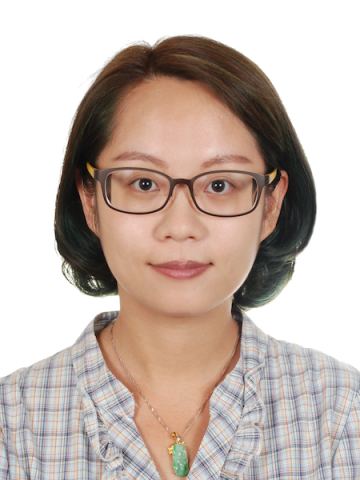
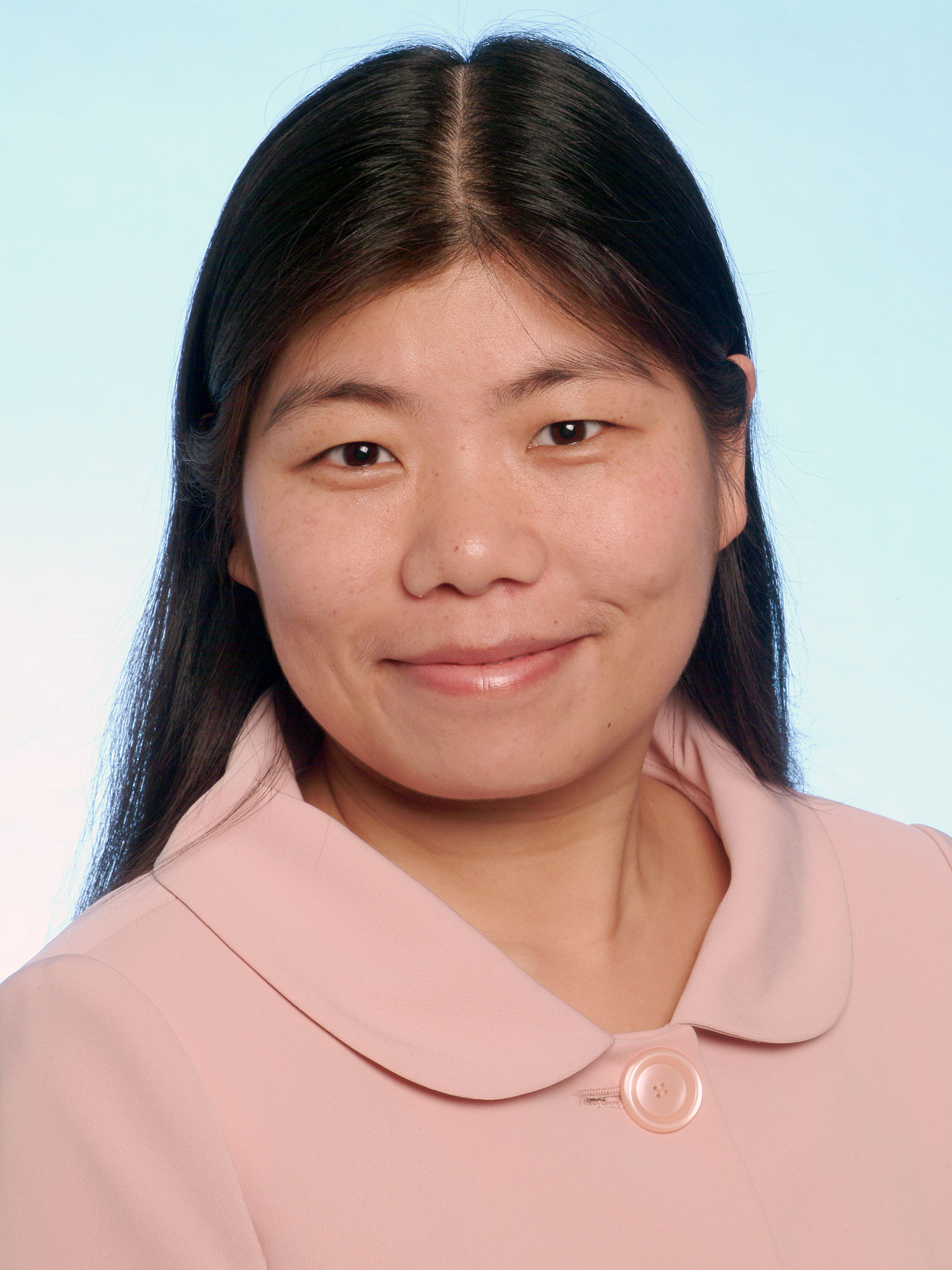
Hsiang-Yun Wu is a Research Fellow at the Computer Graphics department of Vienna University of Technology (TU Wien), actively contributing to information visualization and visual analytics. Her work spans biological network visualization, graph drawing, schematic network maps, and data physicalization, with a focus on interactive techniques and human-centric design. Projects: ArtVis (2022–2027) , SANE (2024–2027) , SMGV-Esprit (2024–2027) , and HumAlgo (2018–2023) . Affiliations: Member of the Visualization Group at TU Wien. Her recent publications emphasize uncertainty visualization, network physicalization, and dynamic graph representations. Notably, she received the EuroVis 2019 Honorable Mention Award for optimizing stepwise animations. Wu supervises diploma theses in areas like metabolic pathway visualization and semantic-aware character animation. Key research trends include integrating biological data with urban-style schematic maps ( Metabopolis ), physicalization workflows for anatomical education ( Slice and Dice ), and mixed labeling strategies in 3D environments.
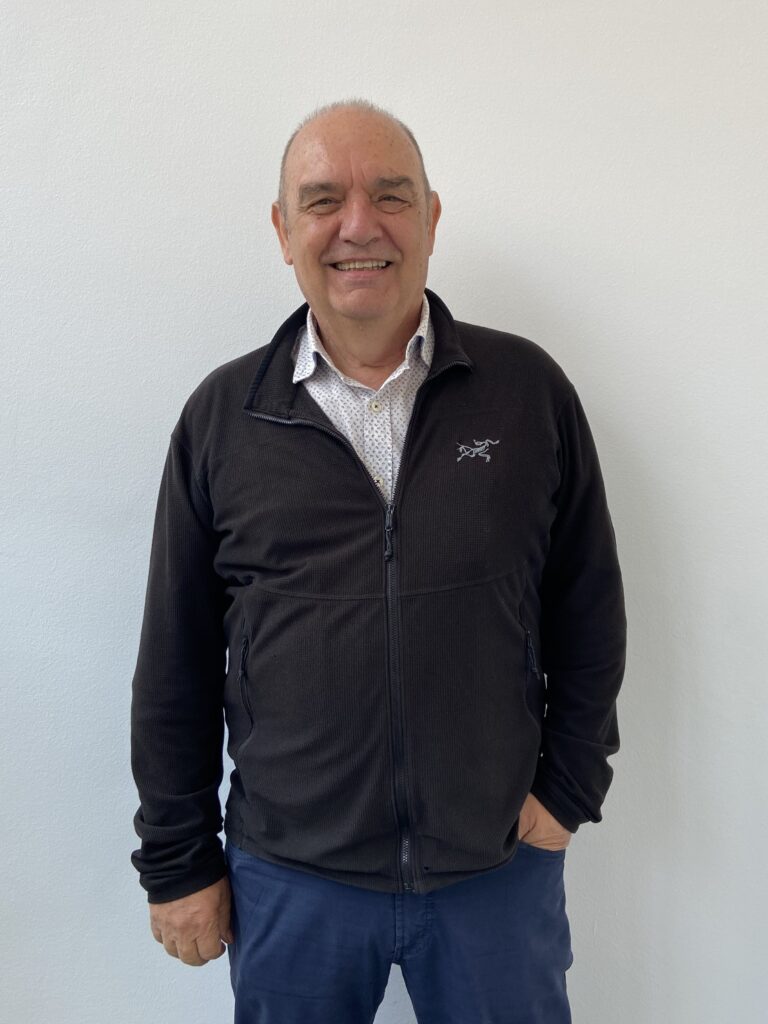
Helwig Hauser is a Professor in the Department of Computer Graphics within the Faculty of Informatics at Vienna University of Technology (TU Wien). His research focuses on advancing visualization techniques across multiple scientific domains. With a career spanning over two decades, he has established himself as a leading expert in visualization research. His primary research interests encompass Computer Graphics, Visualization, Data Visualization, Visual Analytics, Scientific Visualization, Information Visualization, Set Visualization, and Molecular Visualization. Dr. Hauser's work bridges theoretical foundations with practical applications, developing innovative techniques for visual data exploration and analysis across diverse fields from medical imaging to molecular biology. Analysis of his publication record reveals a consistent research trajectory focused on developing novel visualization methodologies. His work demonstrates strong emphasis on interactive visual analytics, set visualization techniques, and domain-specific applications in medical and molecular visualization. Notably, he has made significant contributions to set visualization (Radial Sets), molecular visualization (Watergate), and medical visualization (Aortic Dissection Maps). Best paper award (one out of three) at EuroVis 2007 Heinz Zemanek Preis (2006) Best paper award at SimVis 2005 Dr. Hauser has supervised numerous doctoral and master's students, with a particular focus on visual analytics of complex data types. His research has been supported by various projects including the Punkt-basierte Volumen-Graphik project (2006-2009). He has contributed significantly to the visualization community through his editorial work and service as a journal reviewer, though specific details on current grants were not provided in the source text.
Josep Casanovas is a Full Professor at the Statistics and Operations Research Department of the Technical University of Catalonia (UPC), affiliated with the Barcelona School of Informatics. He previously served as head of inLab FIB (2012-2020) and as dean (1998-2004) and vice-rector (2006-2011) of UPC, leading strategic initiatives in university governance and ICT policies. His research focuses on Modelling and Simulation , Internet and Information Systems , and Urban Mobility . He has led projects for the European Union, including C-ROADS Spain, REMEDiAL, and ECHORD++, addressing intelligent transport, software automation, and robotic innovation. Recent publications highlight his work on agent-based simulation for urban health, deep learning applications in traffic and energy savings, and wildfire management tools . He co-directs LogiSim and coordinates the Severo Ochoa Research Excellence Program at the Barcelona Supercomputing Center (BSC-CNS).
Michael A. Rasheed is a leading marine ecologist at James Cook University , specializing in seagrass ecosystem monitoring and conservation. His work focuses on seagrass resilience , herbivory impacts , and coastal environmental management across Queensland's Great Barrier Reef and Torres Strait regions. Key research themes include: Seagrass monitoring in industrial ports (Gladstone, Townsville, Weipa) Deep-water seagrass light thresholds for dredging management Herbivore exclusion experiments to study ecosystem structuring Blue carbon stock assessments and climate vulnerability analyses His publications (2016–2025) demonstrate consistent ecosystem monitoring using long-term datasets and spatial analysis to inform marine conservation policies . Collaborations span multi-institutional teams including TropWATER, Reef and Rainforest Research Centre, and Australian Marine Science Association.
Forrest W. Crawford is an Associate Professor Adjunct in Biostatistics at the Yale School of Public Health (YSPH). He holds affiliations with the Computational Biology and Bioinformatics Program, the Center for Biomedical Data Science, and the Public Health Modeling initiative. His research focuses on mathematical and statistical methods for discrete structures and stochastic processes, with applications in epidemiology, public health, biomedicine, and evolutionary science. Dr. Crawford earned his PhD and MS in Biostatistics from the University of California, Los Angeles (2012 and 2009). His work bridges statistical theory and applied public health challenges, emphasizing network analysis, infectious disease modeling, and computational methods. He leads the Crawford Lab, which develops tools for understanding complex systems like opioid epidemics, HIV transmission dynamics, and pandemic response strategies. Key research interests include: - Network-based epidemiological modeling - Causal inference under contagion - Public health data science - Statistical methods for hidden populations - Stochastic processes in biological systems Recent work includes studies on fentanyl-related mortality trends in Connecticut, SARS-CoV-2 transmission dynamics, and vaccine efficacy analyses. His interdisciplinary collaborations span public health, computer science, and mathematics. Dr. Crawford has advised numerous research initiatives and contributed to pandemic response efforts through real-time modeling. His lab's projects include software development for public health surveillance (e.g., the covidestim tool) and methodological advancements in respondent-driven sampling for hidden populations. Professional affiliations include the American Statistical Association, Society for Mathematical Biology, and editorial roles in statistical and epidemiological journals.
Charmaine Dean is the Vice-President, Research and Professor in the Department of Statistics and Actuarial Science at the University of Waterloo. She holds leadership roles in research administration and academic governance, including previous service as Dean of Science at Western University and Associate Dean at Simon Fraser University. Dr. Dean earned her Ph.D. in Statistics from the University of Waterloo in 1988. Her research focuses on biostatistics, environmental science, and spatio-temporal analysis, with applications to public health, wildfire management, and ecological modeling. Notable contributions include disease mapping, clinical trial design, and statistical methods for analyzing wildfire risk and forest ecology. She has received prestigious awards such as the CRM-SSC Prize, Fellowships from leading statistical societies, and the L’Ordre des Palmes Académiques from France. Her service includes roles on advisory boards for institutions like the Pacific Institute for the Mathematical Sciences and the Banff International Research Station. Dr. Dean’s work bridges academic research and policy, with impactful contributions to environmental and public health policy through interdisciplinary collaborations. Her research group’s activities include developing statistical tools for environmental risk assessment and pandemic response.
Dr. Yingzi Lin is a Professor and Chair of Mechanical and Industrial Engineering at Northeastern University, Boston, MA. She directs the Intelligent Human-Machine Systems (IHMS) Laboratory and specializes in human-machine systems, biosensing, and human factors in healthcare and transportation safety. Her research is funded by NSF, NIH, NIST, and industry partners like GM and Bose. Education: PhD (2004), Mechanical Engineering from the University of Saskatchewan. Research Interests: Includes human-robot interaction, driver-vehicle systems, patient safety, and multimodal pain assessment. She develops technologies like the COMPASS system for objective pain measurement and cognition-driven navigation tools for firefighters. Key Grants: Principal Investigator for NSF-funded projects on pain assessment and Co-PI for NIH-funded VR-based stroke recovery studies. Collaborates on NIST initiatives for firefighter spatial systems. Awards: NSF CAREER Award (2010), NSERC UFA (2004), IEEE Computational Intelligence Society Outstanding Paper Award (2013), and 2023 Excellence in Mentoring Award. Labs & Teams: Leads the IHMS Lab, focuses on human-technology integration and robotics. Engages in interdisciplinary collaborations through Northeastern's Institute for Experiential AI and Experiential Engineering Education.
John Quarles is a Professor at the University of Texas at San Antonio, specializing in Virtual Reality (VR) and Human-Computer Interaction. His research focuses on accessibility in immersive technologies, cybersickness mitigation, and inclusive design. He has contributed over 100 publications across top venues like IEEE VR, ISMAR, and IEEE Transactions on Visualization and Computer Graphics. His work addresses challenges faced by users with disabilities, such as balance impairments and mobility limitations, through innovative feedback systems and adaptive algorithms. Quarles has co-authored influential papers on cybersickness prediction, VR accessibility for persons with Multiple Sclerosis, and disability simulations to reduce societal bias. He has held leadership roles including Program Chair for IEEE VR 2023, demonstrating his influence in academic and industrial VR communities. His research spans interdisciplinary applications in healthcare, education, and rehabilitation, with notable collaborations on datasets like 'Mazed and Confused' and frameworks like SmoothRide. Key themes include multimodal feedback methods, user-centric design principles, and leveraging AI for personalized VR experiences.
Kees van Gool is Professor of Health Policy and Systems at the Menzies Centre for Health Policy and Economics, University of Sydney, with a joint appointment as Executive Director of the Pricing and Analytics Branch at the Independent Health and Aged Care Pricing Authority (IHACPA). He previously held positions at the University of Technology Sydney and the OECD. His work bridges academic research and national health policy implementation. His research focuses on: Health policy evaluation and system performance measurement Economic modeling of healthcare payment systems Analysis of out-of-pocket costs and insurance design impacts Geographic and socioeconomic disparities in healthcare access His publications (2013-2025) demonstrate consistent focus on health economics, cancer care financing, primary care models, and policy evaluation methodologies. Recent work emphasizes Medicare reforms, radiation oncology costs, and activity-based hospital funding. Current Projects: NHMRC Centre on Research Excellence Value Based Payments in Cancer Care The International Collaboration on Costs, Outcomes and Needs in Care (ICCONIC) NHMRC Centre on Research Excellence on Medicines Intelligence Recent Grants: 2024: Empowering patients to self-manage blood pressure (NSW Health) 2023: FMH Start-up scheme (University of Sydney) He leads health economics research at the Menzies Centre while directing national pricing analytics at IHACPA, influencing Australian health policy through data-driven approaches.
Dr. J. Richard Landis is a Professor of Biostatistics and Statistics at the University of Pennsylvania's Perelman School of Medicine and Wharton School, respectively. As Senior Vice Chair (SVC) of the DBEI Department, he oversees strategic initiatives and serves as a liaison between academic and clinical units. His roles include Director of the Biostatistics Unit at the Center for Clinical Epidemiology and Biostatistics (CCEB), and Director of the Clinical Research Computing Unit (CRCU), supporting translational research infrastructure. He holds advanced degrees from Millersville University (B.S.Ed., 1969), and the University of North Carolina at Chapel Hill (M.S. 1973, Ph.D. 1975). Prior to Penn, he was Professor of Biostatistics at the University of Michigan (1975–1988) and founded Penn State's Center for Biostatistics and Epidemiology (1988–1997). Dr. Landis' research focuses on statistical methodologies for longitudinal and categorical data, with applications to urological, renal, and chronic pain syndromes. He leads NIH-funded Data Coordinating Centers for networks like the MAPP Research Network (2008–2022) and the Chronic Renal Insufficiency Cohort (CRIC) study (2001–2023). His work emphasizes precision medicine, clinical trial design, and translational epidemiology. He has authored over 180 peer-reviewed articles and received prestigious awards, including the Mortimer Spiegelman Gold Medal and the Marvin Zelen Leadership Award. His current projects include the RURAL study (NHLBI) and the HOPE Consortium (NIDDK). Grants & Leadership : NIH-funded DCCs for MAPP, CRIC, and RURAL studies Collaborations : Co-investigator roles in CTSA-Hub cores and multidisciplinary teams Labs/Teams : CRCU, CCEB, and SDCC/SDRC centers
Hang Li is a Researcher in the Department of Molecular Biophysics and Biochemistry at Yale University’s Yale School of Medicine. Their work focuses on advancing neural network architectures, quantization techniques, and spiking neural networks (SNNs). They are affiliated with the Molecular Biophysics and Biochemistry department and contribute to interdisciplinary research in artificial intelligence and computational neuroscience. Research interests include optimizing neural networks for efficiency through quantization, exploring spiking neural networks for low-power computing, and developing methods like hybrid SNN designs, post-training calibration, and neuromorphic architectures. Their recent work addresses challenges in extreme low-bit quantization, data augmentation for object detection, and temporal coding in SNNs. Publications highlight innovations in quantization methods (e.g., TesseraQ, GenQ), spiking transformer architectures, and workload-balanced pruning strategies. While no awards are explicitly listed, their contributions to model efficiency and neuromorphic computing are notable in the field. Hang Li collaborates on projects involving neuromorphic hardware, system inconsistency benchmarking (SysNoise), and data-driven spatio-temporal analysis. Their research bridges theoretical advancements and practical applications in AI and biomedical informatics.
Professor Doreen Boyd is the Professor of Earth Observation and Associate Director of the Rights Lab's Measurement and Geographies Programme at the University of Nottingham. She holds an academic position within the School of Geography, Faculty of Social Sciences. Her career includes roles at Manchester, Kingston, and Bournemouth Universities, as well as Senior Research Leader at Ordnance Survey. She has worked part-time for over half her career. Boyd has a BSc (Hons) in Geography from the University of Wales, Swansea (1992), a PhD from the University of Southampton (1996), and a PGCert in Teaching and Learning in Higher Education (2002). Her research focuses on cutting-edge geospatial data science, particularly remote sensing systems (terrestrial, aerial, and satellite-based), applied to UN Sustainable Development Goals. Notable contributions include £15M in research funding (£4M as PI), over 35 completed PhD/MSc students, and discoveries like the world's tallest tropical tree. She serves on editorial boards for journals such as Remote Sensing for Ecology and Conservation and Ecological Informatics . Key Awards: Group on Earth Observations (GEO) EO4SD Award Discovery of the World's Tallest Tropical Tree Her work spans environmental monitoring, conservation, and geospatial innovation. Current initiatives include leading the Rights Lab's measurement program and advancing UAV applications for plant conservation.
Dr. Tomislav Hengl is a leading researcher and Technical Director at OpenGeoHub Foundation and Envirometrix BV, specializing in spatial statistics, machine learning, and environmental data science. With over 20 years of experience in predictive soil mapping and geostatistics, he has pioneered open source frameworks for automated global environmental mapping. Co-founder of OpenGeoHub Foundation Initiator of OpenGeoHub Summer Schools (running since 2007) Project leader of OpenLandMap system Recipient of Clarivate Highly Cited Researcher (2021) His research focuses on: Machine learning for spatial/spatiotemporal data Environmental data cube systems Global soil and vegetation mapping Open source geospatial software development Spatio-temporal predictive modeling Cloud computing for Earth observation data Recent research trends include: Development of high-resolution global terrain models Analysis of vegetation productivity using satellite time-series Ensemble machine learning for environmental mapping Integration of multi-source geospatial datasets Applications in climate change impact assessment Advancing open data infrastructures Scientific contributions include: Clarivate Highly Cited Researcher (2021) Over 60 journal publications Founding Vice-Chair of the International Society for Geomorphometry (2011-2015) Development of open source R packages for geospatial analysis
Ingolf Kühn is a Professor of Macroecology at Martin-Luther University Halle-Wittenberg and Head of the Department of Community Ecology at the Helmholtz Centre for Environmental Research (UFZ) in Halle, Germany. He is also a member of the German Centre for Integrative Biodiversity Research (iDiv) and holds a fellowship at the Swiss Federal Institute for Forest, Snow and Landscape Research (WSL). His research is centered on plant invasions, functional traits, and biodiversity responses to global change, with a strong methodological focus on spatial and phylogenetic modeling. His research interests span macroecology , plant invasion dynamics , urban and alpine flora , and data-driven ecological modeling . He has led major projects such as Biodiversity Meets Data (BMD) , eLTER PLUS , and AlienScenarios , and contributed to EU frameworks like EuropaBON and DAISIE . He is deeply involved in developing and managing large databases, including BiolFlor and the TRY Plant Trait Database . His recent publications focus on functional traits of invasive plants, biodiversity digital twins, and climate-driven shifts in species distributions. They reflect a strong trend toward integrating big data, machine learning, and macroecological theory to predict ecological change. Scientific Awards: Highly Cited Researcher (2014–2022) Fellow of the Swiss Federal Institute for Forest, Snow and Landscape Research (WSL) He serves as Editor-in-Chief of NeoBiota and Associate Editor of Journal of Vegetation Science . His advising spans PhD students and postdocs in the GLIMPSE cohort and iDiv projects. He leads multiple long-term monitoring initiatives, including alpine glacier forefield studies in the Dachstein and Berchtesgaden regions. He is affiliated with key research teams and platforms such as: Macroecology & Vegetation Science Working Group iDiv Science Strategy Board Task Forces: sTWIST, sUMMITDiv, sCoMuCra, sREGPOOL eLTER Research Infrastructure Biodiversity Digital Twin initiative
Kok-Leong Ong is a Professor of Business Analytics at RMIT University's College of Business & Law, where he serves as Director of the CoBL Technology Initiative, Director of the Enterprise AI and Data Analytics Hub, and Head of the Department of Information Systems and Business Analytics. With over $1.4 million in research grants, he specializes in translating analytics and machine learning into practical business applications across multiple verticals including e-Commerce, public health, sports, urban studies, marketing, and learning. His research has consistently ranked in the top 25% and 5% of works in their domains according to Altmetric. Professor Ong's research spans Business Analytics, Artificial Intelligence, Machine Learning, and Information Systems, with a focus on making data actionable through analytics-2-business translation, automation, and applications. His work addresses critical challenges in cybersecurity for wearable health devices, ECG-based authentication systems, federated learning privacy, carbon accounting for maritime transport, and AI-driven solutions for vehicle damage detection. He has developed frameworks for operationalizing analytics in business contexts and has made significant contributions to mHealth applications for infant care and breastfeeding support. Among his notable scientific achievements, Professor Ong has received two VC's Teaching Awards and was named one of Australia's Leading Data Academics by CDO Magazine in 2021. He has secured over $1.4 million in research funding and serves on prestigious conferences including KDD and PAKDD. His research has been recognized for its high impact, with many works ranking in the top percentiles of their respective fields. Professor Ong actively supervises numerous research students across diverse topics including human-aligned AI, securing LLMs for financial applications, cyber risks in enterprise AI systems, ECG authentication security, and AI transformation for SMEs. He previously played a key role in establishing Australia's first Business Analytics degree and led La Trobe Business School's analytics program from 2015 to 2019 before joining RMIT in September 2021. Through the Enterprise AI and Data Analytics Hub and his role with RMIT University's Digital3 board, Professor Ong leads initiatives focused on bridging the gap between advanced analytics capabilities and business value creation. His work emphasizes practical implementation of AI and analytics solutions that address real-world challenges across multiple industry sectors.