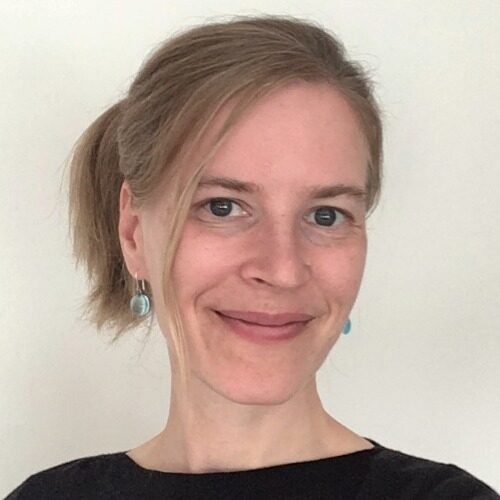
Luisa Farah Schwartzman serves as an Associate Professor at the University of Toronto with dual appointments across the Mississauga (UTM) and St. George (UTSG) campuses. Her offices are located at DV3238 on the UTM campus and 17125-27, 700 University Ave, 17th floor at UTSG. She actively supervises graduate students and maintains professional correspondence via luisa.fs@utoronto.ca. Her research centers on colonialism, racialization, and indigeneity theory, with specialized focus on race and racism, transnational sociology, social inequality, state formation, classification systems, and historical sociology. Professor Schwartzman critically examines how race intersects with nationhood and culture in Brazil and the Americas, challenging narratives of racial democracy through historical and comparative frameworks that reveal persistent structural inequalities. Analysis of her 15 most recent publications (2012-2024) demonstrates consistent engagement with racial classification systems, affirmative action policies, and marginalized group experiences. Her work spans hemispheric migration studies, pandemic health disparities, and postcolonial media analysis, revealing how racial hierarchies are constructed through state policies, media narratives, and everyday social practices across Brazilian, Canadian, German, and Haitian contexts. As a dedicated graduate supervisor, Professor Schwartzman mentors emerging scholars in critical race studies and transnational sociology. While specific grant details remain unreported in available sources, her prolific publication record across sociology, race studies, and migration research indicates sustained research activity and external funding support for her investigations into racial justice and social inequality.
Prof. Dr. Stefan Brönnimann serves as a Professor and Unit Leader of Climatology at the Institute of Geography, University of Bern. His extensive research portfolio spans historical climatology, climate dynamics, and atmospheric circulation reconstruction, with particular focus on the past 400 years. He plays a leadership role in major international climate initiatives including the IPCC assessment reports and various climate reanalysis projects. Brönnimann's research centers on reconstructing historical weather and climate patterns through the innovative combination of early instrumental data, proxy records, and climate models. His work examines large-scale climate variability, interannual-to-decadal atmospheric circulation patterns, volcanic eruption effects on climate, and climate-society interactions. His methodologies often involve transforming historical documents into usable climate datasets and applying advanced machine learning techniques to weather reconstruction challenges. Recent publications reveal a strong emphasis on European climate patterns, hydroclimate extremes, and the development of novel datasets and tools for climate research across high-impact journals in climate science, paleoclimatology, and climate informatics. Notable scientific achievements include: Lead author for Chapter 2 of the IPCC Working Group I 5th Assessment Report President of the Commission 'Atmospheric Chemistry and Physics' (ACP) of sc.nat Editorial leadership for multiple prestigious journals including Meteorologische Zeitschrift, Climate of the Past, and Geographica Bernensia Leadership roles at the Oeschger Centre for Climate Change Research Active participation in international initiatives like the Twentieth Century Reanalysis Project and Atmospheric Circulation Reconstructions over the Earth (ACRE) Brönnimann has secured substantial funding through numerous national and international projects including SNF, NCCR Climate, EU FP-7, HORIZON2020, COST, and ERAnet.RUS. He has organized multiple international workshops on weather and climate extremes, atmospheric circulation variability, and historical climate events like the Tambora eruption. His work connects closely with the Oeschger Centre for Climate Change Research at the University of Bern, where he leads Work Package 2 and serves on the Steering Group, demonstrating his significant institutional leadership within Bern's climate research community.
Andrea Vinci is an accomplished researcher with 66 publications and 1,261 citations, specializing in the intersection of quantum computing, edge-cloud architectures, and Internet of Things (IoT) systems. His work demonstrates significant contributions to solving complex computational problems through innovative approaches that bridge theoretical quantum algorithms with practical distributed computing applications. His research interests span quantum computing applications for resource management, multi-density clustering techniques for urban analytics, and platform-independent IoT application development. Vinci has pioneered work in variational quantum algorithms for cloud/edge resource allocation, quantum kernels for IoT data classification, and distributed AI for cognitive building systems. His research demonstrates a consistent focus on addressing NP-hard problems through quantum-classical hybrid approaches. Analysis of Vinci's publication trends reveals a strategic research trajectory moving from foundational work in smart city analytics and crime prediction toward cutting-edge quantum computing applications for IoT and edge-cloud systems. His recent publications (2023-2025) show increasing focus on quantum machine learning techniques specifically tailored for IoT data processing, with significant attention to practical implementation challenges. Vinci maintains an extensive collaborative network, frequently publishing with researchers including Fabrizio Marozzo, C. Mastroianni, J. Settino, and Antonio Guerrieri across multiple high-impact venues including IEEE Transactions, ACM conferences, and specialized journals in quantum computing and distributed systems. His technical contributions include the development of the COGITO platform for cognitive buildings, novel approaches to multi-density crime prediction, and significant advancements in quantum kernel methods for IoT data analysis. Vinci's tutorial publications indicate his role in educating the broader research community about emerging quantum computing applications for distributed systems.
Dr. Amandine Schaeffer is a Senior Lecturer at UNSW Sydney's School of Mathematics & Statistics, specializing in physical oceanography, marine heatwaves, and jellyfish trajectory modeling. Her research integrates mathematical tools with observational data to study coastal dynamics, boundary currents, and climate extremes. PhD in Physical Oceanography (2010), Mediterranean Institute of Oceanography MSc in Physical Oceanography (2006), University of Toulon Masters in Marine Engineering (2006), SeaTech, Toulon Her research focuses on the East Australian Current's influence on marine heatwaves, submesoscale eddies, and bluebottle drift dynamics. By analyzing HF radar data, Lagrangian drifters, and glider observations, she explores how ocean stratification, wind forcing, and boundary current variability shape coastal climate extremes and ecological processes. The 15 most recent publications reveal trends in marine heatwave drivers, biophysical interactions in boundary currents, and jellyfish transport mechanisms. Key keywords span physical oceanography, climate science, and marine ecology, with sub-fields like eddy dynamics, coastal upwelling, and ocean observing systems. She supervises PhD students Youstina Elzahaby (marine heatwaves), Daniel Lee (bluebottle drift), and Natacha Bourg (boundary current dispersion). Her teaching includes mathematics and statistics courses for life sciences, as well as specialized marine science topics. As leader of the BluebottleWatch project, she bridges academic research with public safety initiatives, leveraging UNSW's oceanographic expertise to address coastal hazards through interdisciplinary collaboration.
Dana E. Hunt is an Associate Professor of Microbial Ecology at Duke University's Department of Civil and Environmental Engineering within the Marine Science and Conservation school. Her research focuses on microbial interactions with the environment, including temperature effects and responses to pollutants. Academic Rank: Associate Professor University: Duke University Department: Civil and Environmental Engineering Research Interests: Marine microbial ecology, bacterial interactions, environmental stressors Email: dana.hunt@duke.edu The Hunt lab investigates bacterial dynamics in marine systems, emphasizing temporal and spatial scales. Recent publications highlight studies on nutrient cycling, pollutant adaptation, and microbial community responses to environmental changes. Key topics include marine microbiomes, niche partitioning, and climate stressors. Her teaching portfolio includes courses like Ecological Perspectives: Evolution to Ecosystems and Coastal Watershed Management and Restoration . Collaborations span oceanographic phenomena like Gulf Stream eddies and biogeochemical processes in coastal environments.
Beth Carroll is a Lecturer at the University of Southampton, affiliated with the Centre for International Film Research. Her research examines audiovisual culture, particularly sound-space interactions and mediated environments. She explores video games, virtual reality, musicals, and phenomenology, focusing on immersion and engagement. Carroll actively supervises PhD students and teaches in film and media studies. Carroll earned her PhD from the University of Southampton, where she investigated spatial dynamics in musical theatre. This work established her interest in audiovisual experience, which continues to drive her current projects. Her primary research areas include Sound Studies, Music, Space, Phenomenology, and Genre. Recent projects analyze the sound environments of early Southampton cinemas, using technology to reconstruct lost architectural acoustics. She also studies meta-diegesis in musical films and transmedia storytelling patterns in games, emphasizing how sensory experiences shape audience engagement. Carroll's publications (2016-2025) show a trajectory from musical film analysis ("Contemporary musical film", 2017) to interactive media. Recent work (2020-2025) addresses transmedia storytelling, alternate reality games, and vocal performance in musicals. Her scholarship consistently links spatial theory with sensory experience, revealing how architecture and technology mediate cultural narratives. No major scientific awards or fellowships are currently listed in Dr. Carroll's public profile. Carroll supervises five PhD students in Film: Sihui Li, Nan Zhou, Weiyi He, Wenxin Cai, and Geyu Wu. Her mentorship focuses on audiovisual culture and spatial dynamics. While specific grants are not detailed, her ongoing cinema reconstruction project indicates active research support. As a member of the Centre for International Film Research, Carroll contributes to a collaborative environment that fosters innovative film scholarship through interdisciplinary methods and global perspectives.
Fabio Boschetti is an Adjunct Research Fellow at the University of Western Australia's Oceans Institute, focusing on marine ecology, computational modeling, and environmental policy. His research bridges complex decision-making in natural resource management with social-ecological systems. Research interests include sustainable offshore Blue Economy, ecological connectivity, climate change impacts, and stakeholder engagement in marine environments. He employs computational models and data-driven frameworks to address environmental challenges. His 15 most recent articles (2022–2017) emphasize marine conservation, policy-driven resource management, social license dynamics, and innovative modeling techniques. Key themes include biodiversity assessment, sustainability certification, and adaptive strategies for coastal ecosystems. As a computational modeler, he explores mental models of climate change, urban resilience, and scenario planning for future environmental governance. His work integrates qualitative and quantitative methods to enhance decision-making processes.
Suzanne Mettler serves as the John L. Senior Professor of American Institutions in the Government Department at Cornell University's College of Arts and Sciences. She holds affiliations with the American Studies Program and the Center for the Study of Inequality, reflecting her interdisciplinary approach to American political development. Her research focuses on critical intersections of democracy, inequality, and public policy, with recent work examining the rural-urban political divide. Her scholarship centers on policy feedback effects and democratic vulnerability. Key contributions include analyzing how invisible government programs (the "submerged state") shape citizen perceptions, and documenting how higher education policy exacerbates inequality. Current research investigates geographic polarization through books like Rural Versus Urban: The Growing Divide that Threatens Democracy (2025) and Four Threats: The Recurring Crises of American Democracy (2020). Her 15 most recent articles reveal a consistent focus on democratic resilience, with increasing emphasis on spatial political divides since 2021. Keywords cluster around American politics, public policy, and democracy studies, while sub-fields highlight geographic polarization, policy feedback mechanisms, and institutional vulnerability assessment. Award highlights include: Election to the American Academy of Arts and Sciences Guggenheim and Radcliffe Fellowships Kluge Chair at the Library of Congress Multiple book awards including the Kammerer Prize (twice) Mettler directs the Scholars Strategy Network and co-founded the American Democracy Collaborative. Her public engagement includes frequent New York Times and Washington Post contributions, NPR interviews, and PBS appearances. She has held leadership roles in the American Political Science Association and serves as Academic Director for major scholarly initiatives addressing democratic challenges.
Professor Michael Schnegg is a Full Professor (W3) at the Institute of Social & Cultural Anthropology at the University of Hamburg, where he has been teaching and conducting research since 2010. His work bridges anthropology and philosophy, with a focus on understanding rural life in an increasingly urbanized and warming world. Schnegg leads the research group on Phenomenological Anthropology and collaborates extensively on climate change research, particularly in Namibia and other parts of Southern Africa. Michael Schnegg's academic journey began at the University of Cologne, where he studied Anthropology, Economics, Sociology and History from 1992-1997. He earned his Magister Artium in 1997 with a thesis titled "Soziale Struktur und Alltagsleben in virtuellen Gemeinschaften" (Social structure and daily life in virtual communities). He completed his doctoral studies in 2003 with a dissertation "Das Fiesta Netzwerk: Soziale Organisation einer mexikanischen Gemeinde, 1679-2001" (The Fiesta Network: Social organization of a Mexican community, 1679-2001). Before joining the University of Hamburg as a full professor, Schnegg served as an assistant professor at both the University of Hamburg (2007) and the University of Cologne (2009). Professor Schnegg's research centers on phenomenological anthropology, exploring how people experience climate change, emotions, and temporalities in their everyday lives. His groundbreaking work combines anthropological fieldwork with philosophical inquiry, particularly through collaborations with philosophers to develop the field of phenomenological anthropology. This has resulted in the establishment of the 'Hamburg Symposium on Philosophy and Anthropology' with Thiemo Breyer from Cologne, where they have discussed critical phenomenology (2023), experience (2024), and atmospheres (2025). Schnegg's ethnographic work primarily focuses on rural communities in Namibia, examining how people perceive and respond to climate change through multiple knowledge systems. His recent publications reveal a strong focus on the phenomenological dimensions of climate change, particularly how rural communities in Namibia experience and interpret environmental changes. Schnegg's work innovatively combines traditional anthropological methods with philosophical frameworks to explore concepts like atmospheres, boredom, and temporal experience in relation to climate change. His research demonstrates how emotional experiences like "rural boredom" are not merely individual feelings but collective atmospheres that reflect blocked promises and socio-economic conditions. His interdisciplinary approach bridges anthropology, philosophy, and climate science to develop new theoretical frameworks for understanding human-environment relationships in the Anthropocene. Paul-Lazarsfeld-Visiting-Professor at the Department of Methods in the Social Sciences, University of Vienna (2015) Professor Schnegg has secured significant research funding for multiple projects including the DFG-funded "Different ways of knowing the weather in Namibia" (2019-2023) and "Social Constructions of Climate Futures" (2019-2026), which he leads with Michael Brüggemann and Simone Rödder. His NORFACE/BMBF project "Artisanal Gold Mining, Mobility and Ideas of Sustainable Futures in Ghana" (2018-2022) and the long-term DFG project "Local institutions in globalized societies" (2010-2019) demonstrate his commitment to understanding how local communities navigate global challenges. Schnegg has also collaborated on the NSF project "The effect of social networks on inequality" and has organized numerous workshops and conferences, including the "Hamburg Symposium on Philosophy and Anthropology" series. While the available information doesn't detail specific labs or research teams led by Professor Schnegg, his extensive collaborative work suggests he maintains strong research networks both within the University of Hamburg and internationally, particularly with colleagues in Namibia, Germany, and other parts of Africa and Europe. His work with the 'Hamburg Symposium on Philosophy and Anthropology' indicates an active interdisciplinary research community focused on developing phenomenological approaches to anthropological questions.
Simon Hutchinson, Ph.D. is an Associate Professor and Chair of the Department of Music, Theater, and Dance at the University of New Haven's College of Arts and Sciences. He also serves as Coordinator for the Game Design and Interactive Media program. His academic home is firmly situated within the Department of Music, Theater, and Dance where he leads both departmental administration and specialized program coordination. Hutchinson's research interests span multiple domains of contemporary music creation and technology. He specializes in Synthesis and Sound Design, Interactive and Electronic Audio, and Composition, with particular emphasis on the synthesis of disparate musical traditions. His work bridges European concert traditions with creative electronics, acoustic instruments with digital video games, and East Asian folk with American jazz, rock and funk. This interdisciplinary approach yields novel musical experiences that critically engage with relationships between society, technology, and human experience. His international scholarly output demonstrates consistent engagement with cutting-edge conferences in electronic music, sound design, and interactive media. The performance venues reflect a strong focus on experimental music technology, electroacoustic composition, and the intersection of music with digital gaming and interactive media. His work has been presented across North America, Europe, and Asia, indicating a significant global scholarly presence. Outstanding Graduate Scholar in Music (University of Oregon) Sasakawa Young Leader's Fellowship Fund (SYLFF) Hutchinson's academic journey includes significant research support and recognition. His cross-cultural composition studies were supported by the prestigious Sasakawa Young Leader's Fellowship Fund, demonstrating the international significance of his scholarly work. While specific grant information isn't detailed in the provided text, his extensive international performance record suggests successful acquisition of research and creative activity funding to support these global presentations.
Professor P. J. Clarkson serves as Professor of Healthcare Systems in the Faculty of Industrial Design Engineering at Delft University of Technology. He also maintains a Research Associate position at the University of Cambridge (2022-2026). Previously, he was Director of the Engineering Design Center at Cambridge since 1997 and became a Full Professor there in 2004 after returning from a seven-year tenure at PA Consulting Group's Technology Division. Clarkson's research focuses on engineering design methodologies addressing specific design challenges including healthcare design, inclusive design, process management, change management, and automotive design. His work bridges engineering principles with human-centered approaches, emphasizing accessibility and system-level thinking in design processes. His Human-Centered Design and Human Factors expertise informs his approach to creating systems that accommodate diverse user needs. His recent publications reveal a strong trend toward healthcare systems design and inclusive design applications, with significant emphasis on practical implementation of design tools like the Inclusive Design Wheel. His work increasingly integrates systems thinking with healthcare improvement, as evidenced by his leadership in developing 'Engineering Better Care' - a systems approach to health and care redesign. Scientific Awards: 2024: Commander of the British Empire (For services to Engineering and Design) 2024: Reviewer's favorite award for the paper 'Exploring indicators of system-of-systems resilience' 2023: President's Medal (for significant contributions to the Academy's goals) 2018: Sir Misha Black Medal (for distinguished services to design education worldwide) 2013: Fellow of the Royal Swedish Academy of Engineering Sciences Clarkson leads a major initiative with the Royal Academy of Engineering, the Royal College of Physicians, the Royal College of Anaesthetists, and the Academy of Medical Sciences to develop 'Engineering Better Care' and an accompanying toolkit for 'Improving Improvement.' His work bridges academic research with practical healthcare system improvements, demonstrating significant impact beyond traditional academic boundaries. His laboratory and team work focuses on design methodology development, particularly for healthcare applications and inclusive design. The Engineering Design Centre at Cambridge and his current work at TU Delft represent hubs for transdisciplinary research connecting engineering design with healthcare systems improvement.
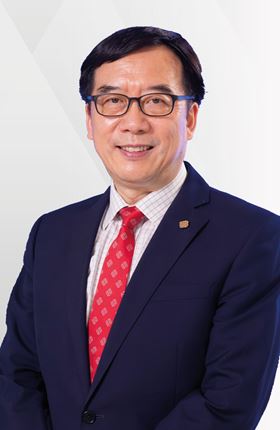
Professor John Shi Wen-zhong is Chair Professor of Geographical Information Science and Remote Sensing at The Hong Kong Polytechnic University, where he serves as Head of the Department of Land Surveying and Geo-Informatics. He also holds leadership positions as Director of the Otto Poon Charitable Foundation Smart Cities Research Institute and Director of the PolyU-Shenzhen Technology and Innovation Research Institute (Futian). Professor Shi is recognized as an international leader in uncertainty modeling and quality control for spatial data and spatial analyses, with contributions dating back to the 1990s. He currently serves as President of the International Society for Urban Informatics and Editor-in-Chief of the international journal Urban Informatics. Professor Shi's research focuses on urban informatics for smart cities, geographical information science and remote sensing, artificial intelligence-based object extraction and change detection from satellite imagery, intelligent analytics and quality control for spatial big data, and mobile mapping and 3-D modelling based on LiDAR and remote sensing imagery. His work has solved fundamental uncertainty issues in spatial data and spatial analyses, making significant contributions to geographical information science. He has authored over 300 research articles in Web of Science-indexed journals and 20 books, and has been granted 44 patents as of July 2023. Professor Shi has received numerous prestigious awards for his groundbreaking work: ESRI Award for Best Scientific Paper by the American Society for Photogrammetry and Remote Sensing (2006) State Natural Science Award (Second Award), China's highest award for fundamental research (2007) Wang Zhizhuo Award by the International Society for Photogrammetry and Remote Sensing (2012) Founder's Award by the International Spatial Accuracy Research Association (2020) CPGIS Distinguished Scholar Award (2021) Gold Medals at both the 2021 and 2023 Geneva Invention Expos Smart 50 Awards (2021) Gold Medal in Asia International Innovative Invention Exhibition (2023) He is also listed among the world's top 2% most cited researchers according to Elsevier BV's standardized citation indicators. Professor Shi has been elected as an Academician of the International Eurasian Academy of Sciences and is a Fellow of the Academy of Social Sciences (UK), the Royal Institution of Chartered Surveyors, and the Hong Kong Institute of Surveyors.
Sonja Kivinen is a University Lecturer in Geoinformatics at the Department of Geographical and Historical Studies, Faculty of Social Sciences and Business Studies, University of Eastern Finland. Her research focuses on the intersection of climate change impacts, remote sensing applications, and sustainable resource management in Arctic environments. University Lecturer in Geoinformatics Department of Geographical and Historical Studies Faculty of Social Sciences and Business Studies University of Eastern Finland Research Interests Climate change effects on Arctic ecosystems Remote sensing for biodiversity mapping Environmental justice in natural resource management Post-mining land use strategies Integration of practitioner knowledge with scientific data Geospatial analysis of environmental patterns Key Publication Trends Her recent publications (2017-2024) demonstrate expertise in combining remote sensing with ecological monitoring to address issues like biodiversity conservation in boreal forests, reindeer husbandry adaptation to changing climatic conditions, and mining conflict resolution . She frequently collaborates with multidisciplinary teams across Finland and Europe. Projects Kivinen contributes to research groups including CEMMS (Research Center for Mining, Minerals and Society) and Digital Geosciences , both active since 2020. Her work often addresses policy implications through reports for the University of Eastern Finland and Finnish Environment Institute.
Dr. Emily Howells is a Senior Research Fellow at the Faculty of Science and Engineering, Southern Cross University, based at the National Marine Science Centre in Coffs Harbour. Her research focuses on coral reef ecology and evolution, particularly the impacts of climate warming on reef-building corals. Climate change adaptation Coral thermal tolerance Population genetics and genomics Coral symbiosis and reproduction Her work integrates field ecology , experimental biology , coral husbandry , and genomic analysis to assess coral evolutionary potential. Recent publications highlight thermal tolerance variation , adaptive genetic markers , and environmental drivers in symbiont dynamics. She holds a PhD and BSc (Honours) from James Cook University. Contact: emily.howells@scu.edu.au
Gunnar Elgered is a Professor at Chalmers University of Technology, specializing in space geodesy and atmospheric research. His work is centered at the Onsala Space Observatory, where he utilizes radio telescopes and Global Navigation Satellite Systems (GNSS) for geodetic and atmospheric studies. Previously serving as department head from 2000 to May 2017, he continues active research and teaching in engineering measurements with innovative examination methods. His research focuses on: Space geodesy using GNSS and VLBI techniques Atmospheric water vapor monitoring via microwave radiometers Climate research through long-term GNSS data analysis Tropospheric delay modeling for weather forecasting improvement Development of error correction models for geodetic applications Recent publications (2023–2025) demonstrate sustained leadership in atmospheric parameter assessment using co-located instrumentation at Onsala. His work shows increasing emphasis on climate model evaluation, with key contributions to GNSS interferometric reflectometry for sea level monitoring and tropospheric error modeling. The research integrates multiple geodetic techniques to address atmospheric variability and climate change impacts. Professor Elgered actively contributes to international geodetic infrastructure through the International VLBI Service (IVS), particularly via Onsala Space Observatory's Analysis Center activities. His projects focus on enhancing geodetic observing systems for climate monitoring, including the VGOS (VLBI Global Observing System) and co-location of geodetic techniques.