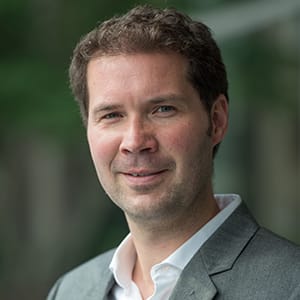
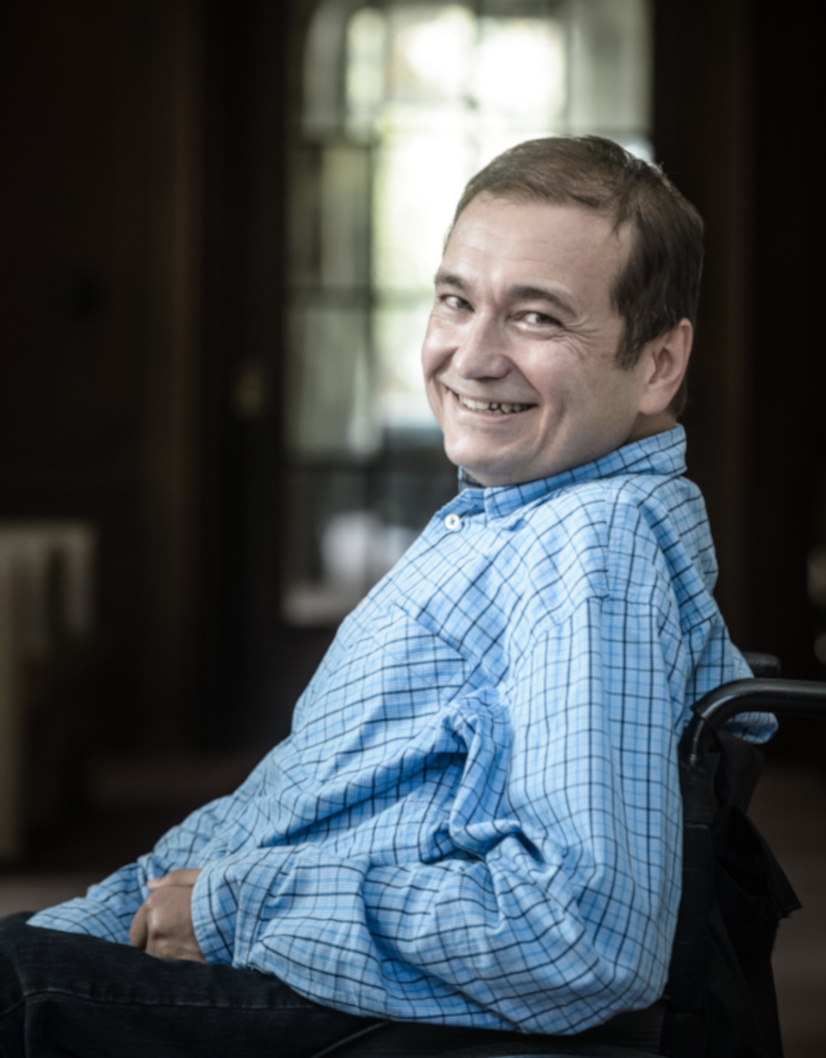
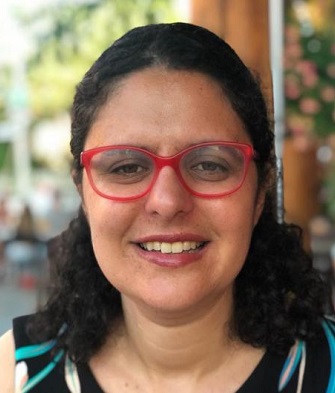
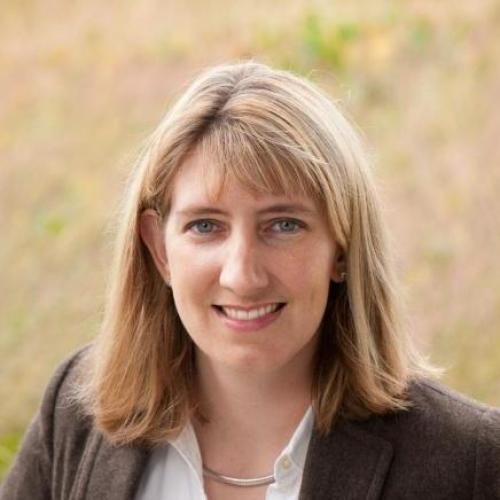
William Peterman is an Associate Professor in Wildlife Ecology and Management at The Ohio State University. His research integrates field observation, molecular lab work, and quantitative modeling to study biodiversity responses to climate change, habitat alteration, and urbanization. He focuses on animal population connectivity, habitat restoration, and conservation strategies across spatial-temporal scales. Landscape ecology and conservation biology Population genetics and metapopulation dynamics Climate change impact on amphibians and reptiles Recent publications highlight advancements in landscape resistance modeling, hybridization effects on conservation, and climate-agroecosystem interactions. His lab emphasizes interdisciplinary methods including biophysical models and camera trap technology for biodiversity monitoring. Current students in his lab include Grant Ravary, Olivia Ruppert, Marissa Roseman, Aidan McCarthy, Jess Dong, Ryan Wagner, and Allison Williams. He has developed specialized software (ResistanceGA) and teaches courses like ENR 5370: Management of Wildlife Habitat .
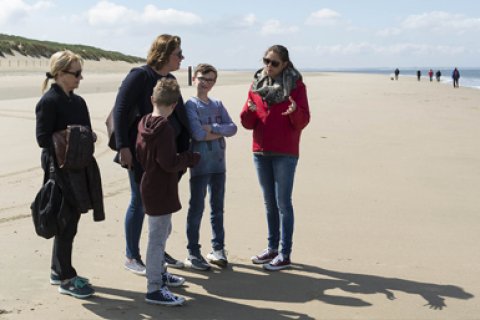
Dr. Lonneke IJsseldijk is an Assistant Professor in Pathology at Utrecht University's Faculty of Veterinary Medicine, specializing in marine mammal health and stranding research. She serves as a project manager for the national marine mammal stranding program commissioned by the Ministry of Agriculture, Nature and Food Quality, focusing on causes of death and anthropogenic impacts on cetacean populations. PhD in Harbor Porpoise Health (Utrecht University, 2021) MS in Environmental Biology (Utrecht, 2017) BS in Integrated Coastal Zone Management (Van Hall Larenstein, 2013) Minor in Marine Living Resources (Wageningen, 2012-2013) Her research program combines pathology, ecology, and conservation biology with a strong emphasis on public science communication. Key areas include marine mammal health assessment, cause-of-death analysis, and investigating anthropogenic stressors like underwater noise and plastic pollution. She utilizes advanced techniques such as synchrotron tomography and stable isotope analysis. Recent publications focus on nanoplastic effects on gene expression, whale teeth biomarkers, and cross-border monitoring of Wadden Sea porpoises. She contributes to policy development through memberships in IUCN Cetacean Specialist Group, ASCOBANS working groups, and ICES marine mammal ecology teams. Stairway to Impact Award 2022 (€50,000 grant) Dr. IJsseldijk actively engages the public through social media, educational media production, and citizen science initiatives that mobilize volunteers for specimen collection. Her work bridges veterinary science with marine conservation policy, supporting sustainable ocean management through interdisciplinary research.
Dr. Joanna Kantyka serves as Assistant Professor at the Department of Management and Innovation in Healthcare and concurrently holds the position of Head of Department at the Department of Health Promotion and Tourism Organization within the School of Physical Education at Jerzy Kukuczka Academy of Physical Education in Katowice. Her academic career spans over a decade of teaching and research in specialized areas connecting sports, tourism, and healthcare management. Her research interests center on sports marketing , tourism management , and recreational services , with particular focus on physical activity behaviors during extraordinary circumstances like pandemic lockdowns, obesity diagnostics in aging populations, and urban recreational infrastructure quality assessment. Through extensive publication in both English and Polish journals, she examines the intersection of business management with physical activity promotion and healthcare services. Analysis of her 15 most recent publications reveals a consistent trajectory investigating behavioral responses to environmental changes (particularly pandemic-related), methodological approaches to anthropometric measurement, and strategic marketing within recreational organizations. Her work demonstrates strong regional focus on Polish cities while contributing to broader international discourse in sports science and public health. Dr. Kantyka actively supervises master's and diploma seminars across multiple academic programs, with teaching responsibilities including Market Research in Sports Organizations, Marketing Management, Risk Management, and specialized courses in recreational services management. Her consultation schedule indicates regular student engagement with designated office hours on Tuesdays and Thursdays.
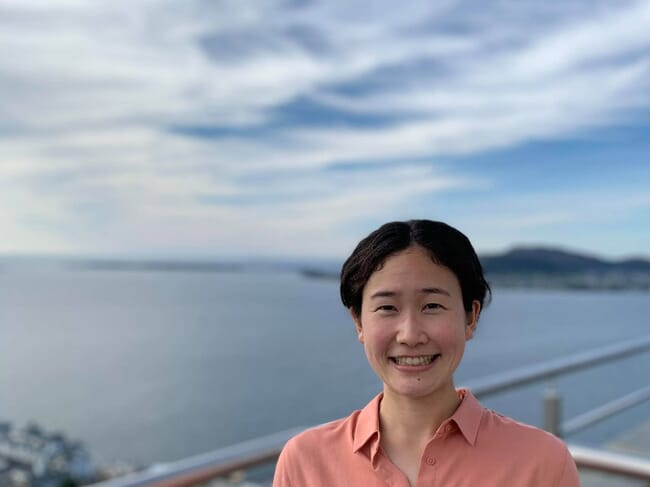
Kana Banno is a PhD Research Fellow at the Department of Biological Sciences Ålesund, Faculty of Natural Sciences at the Norwegian University of Science and Technology (NTNU). Her research focuses on salmon aquaculture, with particular emphasis on fish behavior and welfare in commercial sea cages. She utilizes advanced technologies including underwater cameras, ROVs, echosounders, and sonars for aquaculture monitoring. Banno earned her PhD in Biology from NTNU in 2025, following an MSc in Biology with a focus on aquaculture and genetics from UiT The Arctic University of Norway in 2019. Her educational background includes: PhD in Biology, NTNU (2025) MSc in Biology (Aquaculture & Genetics), UiT The Arctic University of Norway (2019) Banno's research interests center around understanding fish behavior as an indicator of welfare and health in aquaculture settings. She investigates how environmental factors affect the distribution and behavior of Atlantic salmon in commercial sea cages. Her work bridges biology and engineering through the integration of technology for monitoring purposes. She has particular expertise in using computer vision and artificial intelligence to identify growth-stunted salmon and monitor wild fish interactions around aquaculture sites. Her research contributes to developing more sustainable and welfare-conscious aquaculture practices. Analysis of her publication record reveals a strong focus on technological applications in aquaculture monitoring, with particular emphasis on computer vision, sonar technology, and multi-sensor integration. Her work spans both practical applications for the aquaculture industry and fundamental research on fish behavior. The publications show a progression from molecular genetics (her master's work on salmon lice) to more applied technological solutions for monitoring fish welfare in commercial settings. Her notable achievements include: Featured in 'Women in aquaculture' series by The Fish Site (2021) Research on AI for wild fish monitoring highlighted by Norwegian SciTech News (2021) Banno teaches BIA3003 Introduction to scientific method (2024 Autumn) and has been actively involved in the InnoSEA project (Innovations for Sustainable sEabased Aquaculture). Her fieldwork involves regular visits to salmon farms approximately 1.5 hours from her base, where she monitors salmon behavior using underwater cameras and remotely operated vehicles. She collaborates extensively with researchers from multiple countries including Argentina, China, Germany, Japan, and Norway. She maintains strong connections with the aquaculture industry, having previously worked at FRD Japan, a land-based RAS facility producing rainbow trout, where she gained practical experience in fish farming operations before transitioning to research.
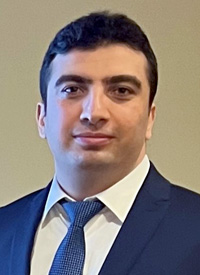
Najmaddin Akhundov is an Assistant Professor in the Decision Sciences and Marketing Department at the Robert B. Willumstad School of Business, Adelphi University. His expertise lies in operations research, with a focus on integer programming, stochastic optimization, and simulation-based methods applied to scheduling, logistics, energy systems, and risk management. Education: Ph.D., Industrial and Systems Engineering, University of Tennessee (2022) M.S., Systems Design Engineering, University of Waterloo (2015) B.S., Industrial Engineering, Baku Engineering University (2011) Research Interests: Dr. Akhundov’s research spans both methodological and applied domains. Methodologically, he advances integer programming , algorithmic development , simulation-based optimization , and stochastic programming . Application-wise, he tackles complex scheduling problems (staff, maintenance, power generators, production), reverse and last-mile logistics, evacuation planning, sustainable port management, and risk-informed maintenance planning. Recent publications (2019-2024) reveal a consistent trajectory toward integrating advanced optimization techniques with real-world operational challenges. Studies range from exploiting symmetry in job sequencing to configuring last-mile distribution networks, pricing risk in energy markets, and optimizing surveillance strategies against invasive species. Collectively, these works highlight a commitment to bridging theory and practice in operations research. Awards & Honors: INFORMS ENRE Best Publication Award in Natural Resources (2022) Harvey J. Greenberg Research Award – Honorable Mention, INFORMS Computing Society (2022) Graduate Fellowship Award, University of Tennessee (2018-2022) Best Graduate Presentation, Dana Knox Student Research Showcase (2018) Study Abroad Fellowship, Ministry of Education of Azerbaijan (2013-2015) Merit-Based Scholarships from Azercell Telecom and Baku Engineering University Teaching & Mentoring: At Adelphi, Dr. Akhundov teaches courses such as Management of Production/Operations and Statistical Methods, having previously taught Applied Operations Research, Optimization Techniques, and Mathematical Programming with MATLAB. While no specific advisees are listed in the provided text, his active research program and course offerings indicate ongoing engagement with both undergraduate and graduate students. Laboratories & Teams: While no dedicated laboratory is explicitly mentioned, his collaborative work with researchers from the University of Tennessee, University of Waterloo, and multiple international partners suggests participation in interdisciplinary research teams focused on optimization and logistics.
Dr. Jonas De Vos is an Associate Professor of Transport Planning at The Bartlett School of Planning , University College London. He holds degrees in Geography , Urbanism and Spatial Planning , and a PhD in Geography from Ghent University (Belgium). His research focuses on travel behaviour, particularly the links between travel and well-being, and travel and land use. Current role: Associate Professor at UCL (2021-present) Previous roles: Assistant Professor at UCL (2019-2021), Postdoctoral Fellow at Ghent University (2015-2019) Teaching: Coordinates BPLN0104 Transport and Well-Being , BPLN0061 International Case Studies in Transport and City Planning , and contributes to other sustainable urban development modules. Research Interests include: Travel Behaviour Transport and Well-being Transport Geography Residential Self-Selection Perceived Accessibility Sustainable Mobility Intelligent Mobility Recent Publications (2024-2025): Transport Accessibility Equity - 2024 (London EV Charging) Academic Air Travel - 2024 (Behavior-Attitude Consistency) Walkability & Aging - 2024 (London Study) Travel Satisfaction Metrics - 2025 (Ease vs. Tolerance) Intercity Travel - 2025 (Place Irreplaceability) Professional Activities : Co-editor-in-chief of Transport Reviews (2021-present) Vice-chair of World Society for Transport and Land Use Research (2021-present)
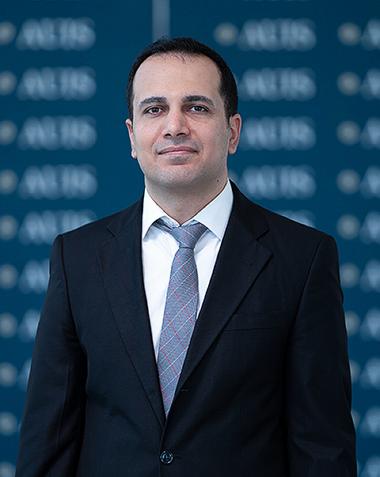
Mustafa Alattar serves as an Assistant Professor in the Department of Engineering at the American University of Iraq, Sulaimani (AUIS), where he has been employed since 2021. He holds a Ph.D. in Civil Engineering from Lehigh University (USA) and an M.A. from the University of Babylon. His academic qualifications include: Ph.D. in Civil Engineering, Lehigh University, USA M.A., University of Babylon, Iraq Dr. Alattar's research centers on hydrology with specialized focus on surface water-groundwater interactions, employing advanced modeling frameworks like MODFLOW-OWHM to analyze water budgets across the United States and Iraq. His work addresses critical water resource challenges including baseflow recession dynamics, groundwater mapping through multi-source data integration, and climate variable impacts on regional hydrology. Recent publications demonstrate increasing emphasis on Iraq's water systems, particularly groundwater dynamics in the Euphrates basin and climate analysis of precipitation-temperature patterns. His 11 publications from 2013-2024 reveal a clear research trajectory: early work focused on flood routing in Iraqi rivers using Saint Venant equations, evolving into large-scale US water budget modeling, and culminating in recent composite modeling approaches for baseflow analysis and Iraq-specific groundwater dynamics. The consistent thread is integrated hydrological modeling addressing both theoretical advancements (e.g., composite Boussinesq equations) and practical water management applications in data-scarce regions. No scientific awards are documented in the available information. The provided materials do not indicate any student advisees or research grant funding. Professional activities include membership in the American Geophysical Union where he presents research annually. Prior to AUIS, he served as research/teaching assistant at Lehigh University and the Institute of Technology in Baghdad, plus industry experience as a CAD Engineer for Nippon Koei Co., Ltd. on Iraqi infrastructure projects.
Frederik Noack serves as Associate Professor in the Food and Resource Economics group at the University of British Columbia's Faculty of Land and Food Systems, holding a prestigious Canada Research Chair (Tier 2) in Environmental Economics. His work bridges economic theory with environmental science to address critical challenges in natural resource management and sustainability across global contexts. His academic foundation includes a PhD in Economics from the University of Kiel (2014) and a Diplom in Landscape Ecology from the University of Greifswald (2008), creating a unique interdisciplinary perspective. This dual expertise enables rigorous analysis of complex socio-ecological systems. Dr. Noack's research program centers on the intricate relationship between economic development and environmental sustainability, with particular focus on how market access and property rights structures influence rural welfare and natural resource conservation. His methodology integrates advanced mathematical modeling with empirical analysis, frequently collaborating with environmental scientists to quantify ecological changes. Key investigation areas include: Biodiversity conservation economics under agricultural intensification Property rights dynamics in common-pool resource management Climate change adaptation through crop diversification Human-wildlife conflict cost-benefit analysis Spatial spillovers from organic farming practices Analysis of his 15 most recent publications reveals a pronounced interdisciplinary trajectory, with 60% combining economic modeling with ecological data collection. A significant cluster examines agricultural technology impacts (GM crops, organic farming) on biodiversity metrics, while another substantial body investigates migration-environment linkages using spatial econometrics. His work increasingly incorporates remote sensing data and large-scale field experiments. His scientific recognition is anchored by the Canada Research Chair appointment, which provides critical funding for his innovative research program investigating market-based conservation mechanisms. Canada Research Chair (Tier 2) in Environmental Economics Dr. Noack actively mentors doctoral candidates including Raahil Madhok (migration-land use dynamics), Julia Brewer (rural-urban migration impacts), and Dennis Engist (GM crop biodiversity effects), with several advising relationships emerging from his Wildlife and Conservation Economics Laboratory. His research attracts substantial grant funding for projects examining property rights reforms in forest-dependent communities and economic incentives for biodiversity conservation. Current initiatives include longitudinal studies on post-migration agricultural reorganization and cross-border ecological legacies. The Wildlife and Conservation Economics Laboratory, co-led by Dr. Noack, functions as an interdisciplinary hub connecting economists, ecologists, and policy specialists. The lab maintains field sites across three continents and has developed novel methodologies for quantifying non-market environmental values, with particular emphasis on translating research into actionable conservation policies through stakeholder engagement with Indigenous communities and government agencies.
Dr. Karthik Akkiraju serves as Assistant Professor in the Department of Materials Engineering within UBC's Faculty of Applied Science, maintaining an active research program at the intersection of materials science and socio-environmental systems. His office (FF 011) and contact email (karthik.akkiraju@ubc.ca) reflect his current institutional affiliation. His research pioneers a techno-social paradigm for planetary health through three synergistic foci: (1) Establishing material poverty benchmarks using household survey data to identify resource-deprived communities; (2) Quantifying socio-environmental impacts across material supply chains; (3) Integrating well-being metrics into heterogeneous catalyst design frameworks. This work fundamentally reimagines materials engineering by centering human well-being within ecological boundaries, developing design methodologies that balance material requirements with equitable environmental constraints. Analysis of his publication trajectory reveals consistent interdisciplinary innovation spanning computational catalysis, environmental policy, and social metrics. His recent work demonstrates particular strength in perovskite catalyst engineering for sustainable chemistry and novel methodologies for spatial well-being assessment, reflecting a unique fusion of traditional materials science with computational social science. Dr. Akkiraju directs the Sustainable Materials Lab (SMAL), where his team develops frameworks connecting material consumption patterns to human development outcomes, creating pathways for resource allocation that simultaneously address poverty alleviation and environmental sustainability.
Onur Güntürkün serves as Professor for Psychology at Ruhr University Bochum and holds a Permanent Fellowship at the Wissenschaftskolleg zu Berlin (Institute for Advanced Study). His academic career spans decades of pioneering research in comparative cognition, with a focus on evolutionary parallels between avian and mammalian cognitive systems. As a Permanent Fellow, he leads the "One Cognition" project investigating convergent evolution of cognitive abilities across species with vastly different neuroanatomies. Academic Background: Diploma in Psychology, Ruhr University Bochum Dr. phil. in Psychology, Ruhr University Bochum Güntürkün's research centers on the paradox of equivalent cognitive abilities emerging from radically different neural architectures—specifically how birds with tiny brains (3-25g) and no neocortex achieve cognitive feats matching chimpanzees. His work demonstrates that corvids and parrots exhibit identical cognitive capabilities to primates in working memory, problem-solving, and social cognition. He investigates whether algorithmic constraints or neural implementation bottlenecks drive this convergence, using working memory as a model system due to its well-defined parameters across species. His experimental approach integrates behavioral studies with neural circuit analysis to uncover universal principles of cognitive evolution. Analysis of his publication history reveals a consistent trajectory from foundational neuroanatomical studies toward theoretical frameworks for cognitive convergence. The most recent works (2021-2024) emphasize circuit-level homologies between avian pallium and mammalian neocortex, while earlier publications established birds as valid models for complex cognition. Key thematic clusters include neural lateralization mechanisms, sensory modality effects on cognition, and evolutionary constraints on information processing. His 2024 Trends in Cognitive Sciences paper synthesizes two decades of evidence showing birds solve mental problems using cognitive mechanisms nearly identical to mammals despite 300 million years of divergent evolution. Professional Recognition: Honorary Doctorate (Dr. h.c.) Güntürkün actively contributes to scientific discourse through invited colloquia, including an upcoming presentation at Wiko on November 25, 2025. While specific grant details aren't documented in the source material, his sustained research output and leadership in major projects indicate significant funding acquisition. His work bridges neuroscience, evolutionary biology, and cognitive psychology, fostering interdisciplinary collaborations evident in co-authored publications with researchers from diverse fields. As Principal Investigator of the "One Cognition" project, Güntürkün directs a research initiative examining why evolution repeatedly produces similar cognitive solutions across phylogenetically distant species. This work involves comparative analysis of neural circuits across avian and mammalian models, with particular focus on working memory constraints and neural implementation strategies. His laboratory at Ruhr University Bochum collaborates with international teams studying bird cognition, contributing to the growing paradigm shift recognizing avian intelligence as a powerful model for understanding universal cognitive principles.
Luisa Farah Schwartzman serves as an Associate Professor at the University of Toronto with dual appointments across the Mississauga (UTM) and St. George (UTSG) campuses. Her offices are located at DV3238 on the UTM campus and 17125-27, 700 University Ave, 17th floor at UTSG. She actively supervises graduate students and maintains professional correspondence via luisa.fs@utoronto.ca. Her research centers on colonialism, racialization, and indigeneity theory, with specialized focus on race and racism, transnational sociology, social inequality, state formation, classification systems, and historical sociology. Professor Schwartzman critically examines how race intersects with nationhood and culture in Brazil and the Americas, challenging narratives of racial democracy through historical and comparative frameworks that reveal persistent structural inequalities. Analysis of her 15 most recent publications (2012-2024) demonstrates consistent engagement with racial classification systems, affirmative action policies, and marginalized group experiences. Her work spans hemispheric migration studies, pandemic health disparities, and postcolonial media analysis, revealing how racial hierarchies are constructed through state policies, media narratives, and everyday social practices across Brazilian, Canadian, German, and Haitian contexts. As a dedicated graduate supervisor, Professor Schwartzman mentors emerging scholars in critical race studies and transnational sociology. While specific grant details remain unreported in available sources, her prolific publication record across sociology, race studies, and migration research indicates sustained research activity and external funding support for her investigations into racial justice and social inequality.
Prof. Dr. Stefan Brönnimann serves as a Professor and Unit Leader of Climatology at the Institute of Geography, University of Bern. His extensive research portfolio spans historical climatology, climate dynamics, and atmospheric circulation reconstruction, with particular focus on the past 400 years. He plays a leadership role in major international climate initiatives including the IPCC assessment reports and various climate reanalysis projects. Brönnimann's research centers on reconstructing historical weather and climate patterns through the innovative combination of early instrumental data, proxy records, and climate models. His work examines large-scale climate variability, interannual-to-decadal atmospheric circulation patterns, volcanic eruption effects on climate, and climate-society interactions. His methodologies often involve transforming historical documents into usable climate datasets and applying advanced machine learning techniques to weather reconstruction challenges. Recent publications reveal a strong emphasis on European climate patterns, hydroclimate extremes, and the development of novel datasets and tools for climate research across high-impact journals in climate science, paleoclimatology, and climate informatics. Notable scientific achievements include: Lead author for Chapter 2 of the IPCC Working Group I 5th Assessment Report President of the Commission 'Atmospheric Chemistry and Physics' (ACP) of sc.nat Editorial leadership for multiple prestigious journals including Meteorologische Zeitschrift, Climate of the Past, and Geographica Bernensia Leadership roles at the Oeschger Centre for Climate Change Research Active participation in international initiatives like the Twentieth Century Reanalysis Project and Atmospheric Circulation Reconstructions over the Earth (ACRE) Brönnimann has secured substantial funding through numerous national and international projects including SNF, NCCR Climate, EU FP-7, HORIZON2020, COST, and ERAnet.RUS. He has organized multiple international workshops on weather and climate extremes, atmospheric circulation variability, and historical climate events like the Tambora eruption. His work connects closely with the Oeschger Centre for Climate Change Research at the University of Bern, where he leads Work Package 2 and serves on the Steering Group, demonstrating his significant institutional leadership within Bern's climate research community.
Andrea Vinci is an accomplished researcher with 66 publications and 1,261 citations, specializing in the intersection of quantum computing, edge-cloud architectures, and Internet of Things (IoT) systems. His work demonstrates significant contributions to solving complex computational problems through innovative approaches that bridge theoretical quantum algorithms with practical distributed computing applications. His research interests span quantum computing applications for resource management, multi-density clustering techniques for urban analytics, and platform-independent IoT application development. Vinci has pioneered work in variational quantum algorithms for cloud/edge resource allocation, quantum kernels for IoT data classification, and distributed AI for cognitive building systems. His research demonstrates a consistent focus on addressing NP-hard problems through quantum-classical hybrid approaches. Analysis of Vinci's publication trends reveals a strategic research trajectory moving from foundational work in smart city analytics and crime prediction toward cutting-edge quantum computing applications for IoT and edge-cloud systems. His recent publications (2023-2025) show increasing focus on quantum machine learning techniques specifically tailored for IoT data processing, with significant attention to practical implementation challenges. Vinci maintains an extensive collaborative network, frequently publishing with researchers including Fabrizio Marozzo, C. Mastroianni, J. Settino, and Antonio Guerrieri across multiple high-impact venues including IEEE Transactions, ACM conferences, and specialized journals in quantum computing and distributed systems. His technical contributions include the development of the COGITO platform for cognitive buildings, novel approaches to multi-density crime prediction, and significant advancements in quantum kernel methods for IoT data analysis. Vinci's tutorial publications indicate his role in educating the broader research community about emerging quantum computing applications for distributed systems.
Dr. Amandine Schaeffer is a Senior Lecturer at UNSW Sydney's School of Mathematics & Statistics, specializing in physical oceanography, marine heatwaves, and jellyfish trajectory modeling. Her research integrates mathematical tools with observational data to study coastal dynamics, boundary currents, and climate extremes. PhD in Physical Oceanography (2010), Mediterranean Institute of Oceanography MSc in Physical Oceanography (2006), University of Toulon Masters in Marine Engineering (2006), SeaTech, Toulon Her research focuses on the East Australian Current's influence on marine heatwaves, submesoscale eddies, and bluebottle drift dynamics. By analyzing HF radar data, Lagrangian drifters, and glider observations, she explores how ocean stratification, wind forcing, and boundary current variability shape coastal climate extremes and ecological processes. The 15 most recent publications reveal trends in marine heatwave drivers, biophysical interactions in boundary currents, and jellyfish transport mechanisms. Key keywords span physical oceanography, climate science, and marine ecology, with sub-fields like eddy dynamics, coastal upwelling, and ocean observing systems. She supervises PhD students Youstina Elzahaby (marine heatwaves), Daniel Lee (bluebottle drift), and Natacha Bourg (boundary current dispersion). Her teaching includes mathematics and statistics courses for life sciences, as well as specialized marine science topics. As leader of the BluebottleWatch project, she bridges academic research with public safety initiatives, leveraging UNSW's oceanographic expertise to address coastal hazards through interdisciplinary collaboration.
Dana E. Hunt is an Associate Professor of Microbial Ecology at Duke University's Department of Civil and Environmental Engineering within the Marine Science and Conservation school. Her research focuses on microbial interactions with the environment, including temperature effects and responses to pollutants. Academic Rank: Associate Professor University: Duke University Department: Civil and Environmental Engineering Research Interests: Marine microbial ecology, bacterial interactions, environmental stressors Email: dana.hunt@duke.edu The Hunt lab investigates bacterial dynamics in marine systems, emphasizing temporal and spatial scales. Recent publications highlight studies on nutrient cycling, pollutant adaptation, and microbial community responses to environmental changes. Key topics include marine microbiomes, niche partitioning, and climate stressors. Her teaching portfolio includes courses like Ecological Perspectives: Evolution to Ecosystems and Coastal Watershed Management and Restoration . Collaborations span oceanographic phenomena like Gulf Stream eddies and biogeochemical processes in coastal environments.