Professor Stephen Graham at Newcastle University is a leading scholar in critical urban studies, focusing on the intersections of militarism, surveillance, and urban infrastructure. His work explores how cities are shaped by and become sites of geopolitical conflict, technological control, and social inequality. Research spans urban verticality , military urbanism , and digital surveillance . Key themes include infrastructure disruption , elite spatial practices , and post-conflict urbanism . Recent publications analyze the militarization of urban space , robotic imperialism , and surveillance societies . His "Splintering Urbanism" framework remains foundational for understanding fragmented urban networks. Current work investigates vertical geopolitics , elite bunkering , and smart city security , with a focus on planetary-scale urban systems and their vulnerabilities.
Dr. Edyta Chlebowska is an Assistant Professor at the Cyprian Norwid Research Center, John Paul II Catholic University of Lublin. Specializing in the visual art and literary legacy of Cyprian Norwid, she explores intersections between Polish Romanticism, art history, and cultural studies. Her work extends to album art analysis and interdisciplinary connections with music (e.g., Pink Floyd, Czesław Niemen). Her research focuses on Norwid's self-portraits, eschatological themes in his drawings, and comparative studies with 19th-century Warsaw painting. She reconstructs lost artworks, documents private collections (e.g., Konstancja Górska, Victor Gomulicki), and examines Norwid's reception in Florence and Odessa. Key projects include translating Studia Norwidiana and critical editing of Norwid's complete works. As editor-in-chief of multiple On Cyprian Norwid. Studies and Essays volumes and organizer of conferences like Niemen Non Stop and Colloquia Norwidiana , she bridges academic rigor with public engagement. Her publications span peer-reviewed books, journal articles, and popular science pieces, emphasizing Norwid's unpublished works and symbolic programs.
Ruth Mostern is Associate Professor of History at the University of Pittsburgh and Director of the Institute for Spatial History Innovation (ISHI). She is Vice-President and President-Elect (2025-2026) of the World History Association and leads the award-winning World Historical Gazetteer project. Education Ph.D. in History, University of California, Berkeley, 2003 Research Interests Mostern is an interdisciplinary historian specializing in world, Chinese, environmental, and spatial history. She investigates long-term human–environment interactions at continental and millennial scales, focusing on how societies organize space, resources, and risk. Her work integrates GIS, digital gazetteers, and environmental science to reconstruct historical geographies of empire, water management, and ecological change. Current projects include: Place: A Global History – a study of itineraries, gazetteers, and databases as technologies of spatial knowledge. The Medieval Climate Anomaly and the Global Medieval Era – cultural adaptations to climate change c. 950-1250 CE. Research Trends Her recent publications span digital environmental humanities, historical GIS, Song-dynasty political economy, and pre-industrial Asian political ecology. A dominant theme is the coupling of state power with environmental transformation, exemplified by her 2021 book The Yellow River: A Natural and Unnatural History (Yale), winner of the 2023 Joseph Levenson Prize. Awards & Honors Joseph Levenson Prize, Association for Asian Studies, 2023 NEH Digital Humanities Advancement Grant, 2023-2025 Digital Humanities Awards 2021 – Best DH Tool (World Historical Gazetteer) Fudan University Fellowship for Studies of Chinese Civilization, 2019 NEH Humanities Connections Implementation Grant, 2018-2020 Chiang Ching-kuo Foundation Summer Institute Grant, 2015-2016 NSF Collaborative Research Grant, 2013-2015 ACLS Digital Innovation Fellowship, 2011-2012 Advising & Grants Mostern welcomes graduate students interested in environmental, global, Asian, or digital history. She has directed multiple externally funded projects, including the NSF-funded Center for Historical Information and Analysis and NEH-supported initiatives on water in Central Asia and global historical gazetteers. Labs & Teams She directs the Institute for Spatial History Innovation (ISHI) at the University of Pittsburgh, a hub for interdisciplinary research integrating spatial technologies with historical inquiry. ISHI hosts the World Historical Gazetteer , providing open tools and datasets that link knowledge about historical places across world regions.
Kären Wigen is the Frances and Charles Field Professor in History at Stanford University, specializing in Japanese history and the history of cartography. She holds a Ph.D. in Geography from the University of California, Berkeley (1990). Her research spans: Historical geography of East Asia Early modern Japanese regional economies Geographies of the imagination Transnational maritime histories Critical cartography and spatial analysis Her publications include eight major works from 1992-2025 analyzing spatial transformations in Japan and global metageography, with recent projects focusing on temporal dimensions in cartographic representation. She co-edited Seascapes (2007) and Cartographic Japan (2016), and serves as Director of Stanford’s Mellon Fellowship of Scholars in the Humanities since 2022.
Anupama Rao is Professor of History and MESAAS (Institute for Comparative Literature and Society) at Columbia University, with affiliations in Women's, Gender and Sexuality Studies and Human Rights. She is based at Barnard College, where she holds office hours and engages in interdisciplinary teaching and research. Her educational background includes a B.A. with honors from the University of Chicago and a Ph.D. from the Interdepartmental Program in Anthropology and History at the University of Michigan. Rao’s research spans South Asian history and anthropology , gender and sexuality studies , caste and race , social theory , comparative urbanism , and colonial genealogies of human rights . She is known for her groundbreaking work on anti-caste thought, particularly the political philosophy of B. R. Ambedkar, and for theorizing caste subalternity in modern India. Her scholarship critically examines the intersections of caste, gender, urban space, and political subjectivity. Her recent and ongoing publications reflect a deep engagement with global racisms, Cold War humanism, and justice futures. Key themes across her articles include Dalit aesthetics, subaltern urbanism, affirmative action, and the transnational dimensions of caste. Her work shows a consistent trend toward interdisciplinary, postcolonial, and decolonial frameworks that challenge Western-centric epistemologies. Fellow-in-Residence, National Humanities Center (2008–2009) Fellow, Center for Advanced Study in the Behavioral Sciences, Stanford (2010–2011) Fellow, REWORK, Humboldt University, Berlin (2014–2015) Global Humanities Institute Awardee, CHCI (2023) Rao has served as Senior Editor of Comparative Studies in South Asia, Africa, and the Middle East (2012–2021), President of the Society for the Advancement of the History of South Asia (SAHSA), and member of the South Asia Council of the Association for Asian Studies. She is Principal Investigator for the Mellon-funded Global Humanities Institute project Global Racisms, Cold War Humanism, and Just Futures (2022–2024) and co-directs Geographies of Injustice at Columbia’s Center for the Study of Social Difference. She has secured major research grants from the ACLS, NEH, SSRC, and Mellon Foundation. She advises and mentors graduate students, though specific names are not listed in the text. Rao directs the Institute for Comparative Literature and Society and convenes the Ambedkar Initiative, fostering interdisciplinary research and public engagement on caste, race, and justice. She leads and participates in multiple research collectives, including the Geographies of Injustice project and the Asian Spatialities initiative. She is deeply involved in institutional leadership through her roles at the Institute for Comparative Literature and Society and the Ambedkar Initiative, both of which serve as hubs for critical humanities research.
Dr. Eli Strauss is a behavioral ecologist and Assistant Professor in the Department of Integrative Biology at Michigan State University , where he is establishing a lab focused on the evolution and ecology of social behavior. He co-directs the Mara Hyena Project , a long-term study of hyena behavior and ecology in Kenya. His research spans dominance hierarchies, longitudinal studies of animal societies, and computational methods for analyzing social dynamics. He has developed tools like the DynaRankR R package for inferring longitudinal dominance hierarchies and DomArchive for compiling dominance data. His work addresses challenges such as mismatched timescales in behavioral studies and demographic drivers of hierarchy dynamics, often using spotted hyenas as a model species. Dr. Strauss is currently recruiting lab members for graduate student, postdoc, and technical roles, with lab establishment planned for late 2025–Fall 2026. His publications reflect interdisciplinary interests in behavioral ecology, animal societies, and data-driven approaches to understanding dominance and social networks.
Jennifer Minner is an Associate Professor in the Department of City and Regional Planning at Cornell University’s College of Architecture, Art, and Planning. She directs the Just Places Lab and is actively engaged in research on urban change, memory, and equitable development. Her affiliations span urban planning, regional science, and media studies, and she serves on the faculty advisory board of Cornell Cinema. Ph.D. in Community and Regional Planning, University of Texas at Austin M.U.R.P., Portland State University B.A. in Cultural Anthropology, University of Washington Her research centers on adaptive reuse, circular economies in cities, historic preservation, and social justice . She investigates how communities care for, preserve, and reimagine places through participatory planning and material reuse. Her work connects urban policy with climate action, embodied carbon, and the social legacies of mega-events such as the Olympics and World Expos. She uses spatial analytics, film, and community-based methods to explore equitable urban futures. Her recent publications reflect a strong trend toward environmental justice, circular construction, and urban memory . Topics include deconstruction policy, UAVs in preservation, and post-mega-event urban development. These works span disciplines including urban planning, sustainability, media studies, and public policy, with a consistent focus on equity and community engagement. Town and Gown Award (2024) for CR0WD network Climate Neutral Cities Alliance grant on embodied carbon and justice Atkinson Center Fast Grant for NYS circular construction policy NCPTT grant on reuse scenario planning with 3D modeling Mui Ho Center grant on scaling circular construction in NY Jennifer Minner mentors graduate and undergraduate researchers, co-founded the CR0WD network, and leads the CURTA-Y student club. She has secured multiple grants focused on deconstruction, policy design, and community engagement. Her teaching includes courses on circular cities, land use planning, and advanced planning theory, emphasizing participatory and justice-oriented methods. She leads the Just Places Lab , which fosters interdisciplinary research on urban care, memory, and equity. The lab collaborates with the Circular Construction Lab, Historic Ithaca, and community partners on exhibitions, walking tours, and policy initiatives. Projects like Deconstructing Demolition and Waste(d) Imagination Tour exemplify their community-engaged, creative approach to urban sustainability.
Dr. Julia Costa López is an Assistant Professor (tenured) in History and Theory of International Relations at the Department of International Relations and International Organisation, Faculty of Arts, University of Groningen. Her work bridges international relations, history, and political thought, focusing on how historical frameworks shape modern disciplinary concepts. PhD from University of Oxford Lecturer at St Hilda's College Fulbright scholar at University of Denver's Josef Korbel School Graduate studies at University of Cambridge Research spans medieval political authority, sovereignty emergence, racialized medievalisms in extremism, and translation politics in global scholarship. Key projects include Routledge Handbook of Historical International Relations (2021) and the Oxford Handbook of History and International Relations (2023). Publications address Eurocentrism, conspiratorial ideology, and ritual's role in authority production. Scientific contributions appear in Cambridge Review of International Affairs , International Organization , and European Journal of International Law . Awards include the Fulbright scholarship. Recent work explores terraqueous relations and premodern world conceptualizations, challenging simplistic land-sea dichotomies in IR.
Jim Thatcher is an Assistant Professor at the College of Earth, Ocean, and Atmospheric Sciences (CEOAS) at Oregon State University. He serves as editor of Cartographic Perspectives , a leading journal in cartography. His research focuses on the intersection of technology, society, and environment, particularly examining how data and spatial technologies operate within capitalist systems. Key areas include Critical GIS, Critical Cartography, and Digital Political Ecology. Thatcher's current projects explore equitable coastal flood risk modeling using topological data analysis, mapping infrastructural legacies of slavery in the Pacific Northwest, and creating accessible disaster response maps for non-English speakers in Oregon. He also investigates spectral governance for rural internet access, cartography's societal role, climate education through board games, and geographic influences on electoral districting. His research emphasizes critical approaches to spatial data, questioning representational practices and power dynamics embedded in geospatial technologies. Recent work includes analyzing Bitcoin mining's environmental impacts on hydropower systems and examining the World Bank's renewable energy mapping through Critical Data Studies. Thatcher actively mentors graduate students and encourages interdisciplinary inquiries blending critical social theory with computational methods. Thatcher has authored numerous articles and co-authored Data Power (Pluto Press, 2022), an open-access exploration of data's role in societal control and resistance. His scholarship bridges critical geography with emerging technologies, advocating for ethical and equitable spatial practices in an increasingly data-driven world.
Charles M. Stang is Professor of Early Christian Thought at Harvard Divinity School and Director of the Center for the Study of World Religions, positions he has held since joining the faculty in 2008 and becoming director in 2017 respectively. His academic home is firmly within Harvard University's religious studies ecosystem, where he has established himself as a leading scholar in ancient Christian thought and Mediterranean religious history. His educational background includes an AB from Harvard College, an MDiv from the University of Chicago, and a ThD from Harvard Divinity School. This rigorous training across prestigious institutions has equipped him with interdisciplinary perspectives that inform his boundary-crossing scholarship. Stang's research interrogates the intersections of early Christian thought with broader Mediterranean philosophical traditions, with particular emphasis on apophatic theology, Gnosticism, and Syriac Christianity. His work consistently challenges reductionist approaches to religious studies, advocating instead for what he terms an 'expansive anthropology, ontology and epistemology' that recognizes religion's capacity to transcend mundane frameworks. He has developed a distinctive theoretical framework around 'transcendence and transformation'—concepts he argues should form the core of religious studies in the contemporary academy. His publications reveal a trajectory from focused historical studies of early Christian texts toward more expansive theoretical interventions in religious studies methodology. While his early work centered on figures like Dionysius the Areopagite and Evagrius Ponticus, his recent scholarship increasingly engages with contemporary questions about religion's role in the humanities and the urgent need for what he calls 'superhumanities' that acknowledge dimensions of reality beyond conventional academic frameworks. Manfred Lautenschläger Award for Theological Promise (2013) for Apophasis and Pseudonymity in Dionysius the Areopagite As Director of the Center for the Study of World Religions, Stang has launched the 'Transcendence and Transformation' initiative, positioning the center as both a scholarly hub and a conceptual beacon for reimagining religious studies. His vision frames religious studies not as a marginal discipline but as essential to revitalizing the humanities through its unique capacity to engage with dimensions of reality that conventional academic frameworks often overlook. The Center functions as what Stang describes as 'a beacon, a harbour, and a record' for this reconceptualization of religious inquiry.
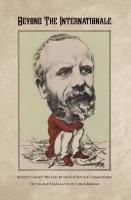
Loren Kruger is a Professor at the University of Chicago, specializing in interdisciplinary research that bridges Critical Theory, Postcolonial Studies , and Urban Performance . Her work spans African literature, modern drama, and transnational urban studies, with a focus on Johannesburg and Chicago as 'South Sides' of global significance. She holds a Ph.D. from Cornell University (1986) and has taught at UChicago since 1986. Key Research Areas: Critical Theory, Postcolonial Decolonization, African-American Theatre, Urban Studies Notable Contributions: Pioneering studies on comparative urban performance, translating revolutionary texts, and analyzing diasporic cultural legacies Her publications include Imagining the Edgy City (Oxford, 2013) and the recent Beyond the Internationale (2024), which explores Brechtian influences and urban resistance. Awards include the MLA Scaglione Prize (2005) and the Constantinidis Prize (2012). Current projects examine the Internationale in red world literature, theatre-politics intersections, and transcontinental family histories. Scientific Awards: MLA Scaglione Prize for Comparative Literary Study (2005) Philadelphia Constantinidis Prize (2012)
Wei-Cheng Lin is Associate Professor of Art History and the College at the University of Chicago , specializing in Chinese art and architecture. He serves as Faculty Director of the Dispersed Chinese Art Digitalization Project , sits on the steering committee of the Center for the Art of East Asia , and acts as Architectural Studies Advisor. His office is located in CWAC 268 with weekly office hours on Wednesdays. Educational background details are not explicitly provided in the text; however, he held an appointment as Assistant Professor of East Asian Art and Architecture at Iowa State University during 2006–2007. Lin’s research interrogates the intersections of visual and material culture in medieval Chinese Buddhist art and architecture and the ritual dimensions of Chinese funerary practices . Current book projects include Performative Architecture of China , which explores how architecture enacts meaning through historical performance, and Necessarily Incomplete: Fragments of Chinese Artifacts , which investigates the active roles of fragmentary artifacts in shaping multivalent cultural significance. Across more than twenty publications, Lin’s scholarship ranges from detailed studies of Mount Wutai and Dunhuang to theoretical inquiries into architectural historiography , materiality , and contemporary Chinese art . His work bridges art history, architectural history, religious studies, and digital humanities. Grants & Digital Initiatives: Faculty Director, Dispersed Chinese Art Digitalization Project (DCADP) — supported by the Cyrus Tang Foundation Manages DCADP publication series, including Beijing Zhihua Temple (2024) and Exhibiting East Asian Art in a Global Context (2025, co-edited with Chelsea Foxwell) Laboratories & Teams: Lin leads collaborative efforts through the Center for the Art of East Asia and the UChicago Center in Beijing , organizing exhibitions, international conferences, and digital humanities workshops that integrate art-historical research with cutting-edge visualization technologies.
Panpan Yang is a Lecturer in Arts and Visual Cultures of Modern China at the School of Arts, SOAS University of London. She joined SOAS in 2021 after completing her joint PhD at the University of Chicago under the direction of Wu Hung, Tom Gunning, W. J. T. Mitchell, Judith Zeitlin, and Dana Polan. Her interdisciplinary work bridges art history, screen studies, East Asian studies, and digital humanities, with a focus on innovative methodologies in art historical writing. Dr. Yang earned a dual BA from Peking University, double majoring in art and philosophy, followed by an MA from Tisch School of the Arts at NYU, and a PhD from the University of Chicago. During her undergraduate studies, she served as president of the Society of Dream of the Red Chamber Studies, which informed her secondary academic interest in Redology and the visual material world of the novel Hong lou meng. Panpan Yang's research explores how minor discourses can deterritorialize the terrains of both art history and screen studies. Her work demonstrates a multimethodological approach attentive to archival research, material practices, close visual analysis, computer-aided vision, and cross-cultural theorization. She is particularly interested in Chinese animation history, calligraphic imagination in contemporary art, and the intersections between traditional Chinese art forms and new media. Her publications reveal a consistent focus on Chinese visual culture across multiple media forms, with particular attention to animation, film, and calligraphy. Yang's work demonstrates how traditional Chinese art forms engage with contemporary digital media, creating new hybrid forms that challenge disciplinary boundaries. Her research shows a trajectory from historical analysis of Chinese animation to contemporary explorations of calligraphy in digital contexts, revealing the ongoing relevance of traditional Chinese aesthetics in modern media. Dr. Yang has received several prestigious awards for her scholarly and creative work: China's National Young Screenwriter Award Domitor Essay Award Dean's Distinguished Dissertation Award Nomination Honourable Mention from the Association for Chinese Animation Studies As a Principal Investigator, Dr. Yang leads the AHRC-funded research project "Stroke by Stroke: Calligraphic imagination in contemporary Chinese art and emergent media" (2023-25) with Shane McCausland. She was also a collaborating partner on the NEH-funded "Media Ecology Project." Her research has received additional support from the Getty Foundation and the Sino-British Fellowship Trust. At SOAS, she works closely with faculty and graduate students interested in Chinese arts and cultures, art theory, cinematic arts, and digital art history. Dr. Yang is currently developing innovative research at the intersection of traditional Chinese calligraphy and contemporary digital media through her AHRC-funded project. This work explores how calligraphic imagination manifests in contemporary art and emergent media contexts, creating new pathways for understanding Chinese cultural heritage in the digital age.
Serra Hakyemez is Assistant Professor of Anthropology and Global Studies at the University of Minnesota, currently on leave until January 2023. Her research examines the intersection of counterinsurgency warfare and judicial violence in Turkey's Kurdish regions, focusing on prison solidarity networks and decolonial resistance. She employs interdisciplinary methods combining political anthropology, legal studies, and ethnography to analyze state violence and resistance movements. Education includes: Ph.D. in Cultural Anthropology, Johns Hopkins University, 2016 M.A. in Sociology and Anthropology, Central European University, 2008 M.Sc. in Social Policy, London School of Economics, 2006 B.A. in Political Science & Business Administration, Bogazici University, 2005 Her research investigates the juridical and visual economies of counterinsurgent violence, with ongoing work on prison-based solidarity and insurgent justice frameworks in Kurdistan. Publications explore themes including feminist resistance in conflict zones, archival politics of state violence, and the anthropology of dissent. Awards include: ACLS Fellowship Wenner-Gren-Hunt Fellowship
Dr. Daniel Matlin is a Reader (equivalent to Associate Professor) in the History of the United States since 1865 at King's College London, affiliated with the Faculty of Arts & Humanities and the Department of History. He joined King's in 2012 after previous academic positions at Queen Mary University of London (as Leverhulme Early Career Fellow) and Cambridge University, where he served as Director of Studies at the Centre for History and Economics. His research examines the intersection of race, intellectual life, and urban space in 20th-century America, with specializations in: African-American intellectual/cultural history Civil rights and Black Power movements Historical constructions of race and Black diasporic identity Urban history (particularly Harlem and New York City) Jazz history and cultural expression Publication analysis reveals consistent focus on Harlem as both physical space and cultural symbol, with interdisciplinary approaches bridging history, visual culture, musicology, and urban studies. His works critically analyze racial representation, community formation, and the politics of space. Awards & Honors: Arthur Miller Centre First Book Prize for On the Corner: African American Intellectuals and the Urban Crisis Leverhulme Early Career Fellowship He actively supervises PhD students in African-American history, civil rights, black nationalist thought, and 20th-century cultural history. Grant-funded projects include 'Race Capital? Harlem as Place and Symbol since 1900.' Matlin engages extensively with public history through lectures at institutions like the National Theatre and Black Cultural Archives.